Stanbic Bank
Stanbic Bank
19.3 C
Kampala
Stanbic Bank
Stanbic Bank
Home Blog Page 2033

New research finds humanitarian assistance to refugees boosting Uganda’s economy

KAMPALA – A new study conducted in Uganda has found that humanitarian assistance for refugees creates significant economic benefits for the local economy, and these benefits are greater when the assistance is in the form of cash transfers and land for agricultural production.

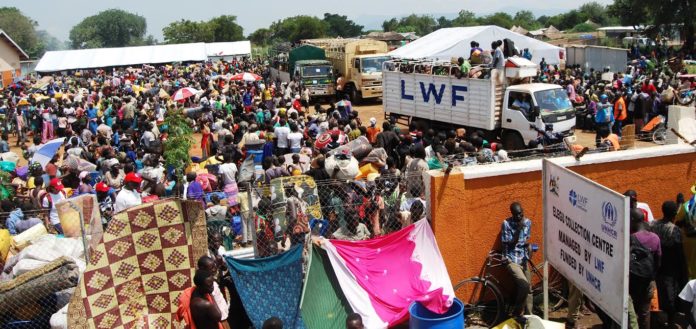
The study was conducted by a team of researchers from the University of California, Davis and the United Nations World Food Programme (WFP), with support from the government of Uganda.  Data was collected through hundreds of surveys in and around the Adjumani and Rwamwanja refugee settlements.

“This is the first time in Uganda that we have been able to calculate the economic impact of humanitarian food assistance,” said WFP Deputy country director Cheryl Harrison.

“It is also the first time that we have calculated the economic impact of Ugandan’s generous approach to providing agricultural land to refugees. The results show clearly that refugees benefit those countries that welcome them and give them what they need to build new lives.”

The study team found that the assistance given to the refugees produces an ‘income multiplier’ for host communities.  When WFP provided cash assistance, each dollar increased real income in and around the settlements by an additional US$1 and US$1.50. And when food was provided to refugees in kind, the corresponding increase was US$1.30.

“The multipliers are significant, regardless of whether a refugee family receives cash or food. When a refugee household receives cash from WFP, the annual income in the Ugandan economy increases by US$1,100 – and by US$850 when the assistance is given in the form of in-kind food,” explained the study’s lead researcher, Prof. J. Edward Taylor of the University of California, Davis.

WFP has been distributing cash among refugees, in collaboration with the Uganda Government and the United Nations High Commissioner for Refugees (UNHCR), since 2014. Cash-based transfers not only empower people by giving them the ability to decide for themselves what they eat, but boosts their purchasing power. This boost, as verified by the study, increases the strength of the refugees’ contribution to the local economy. Currently, WFP is assisting 650,000 refugees, ten per cent of whom are receiving their food assistance in the form of cash transfers. WFP is expanding its use of cash transfers to reach more than 200,000 refugees by early 2017.

Jaakko Valli, co-researcher and WFP’s refugee programme manager in Uganda, said there were also considerable economic benefits from the intense farming carried out by refugees on land provided by the Ugandan Government for their resettlement. While they are not necessarily more efficient than their Ugandan neighbours, Valli said, refugees realize higher yields because they invest considerably more labour. Like host-community farmers, refugees create income spillovers when they hire agricultural labour from other households and purchase agricultural inputs from local businesses. Refugees also contribute to local food supplies by selling some of their crops.

Each refugee household that has been given land by the government contributes up to US$220 to the Ugandan economy annually, depending on the settlement.

The USAID-funded study undertook field research between March and June this year. The research teams conducted extensive interviews with a sample of households, comprised of mostly Congolese refugees in Rwamwanja and South Sudanese in Adjumani. The team also interviewed local businesses inside the two settlements and within a 15-kilometre radius. Data from these findings enabled the researchers to construct a local-economy impact evaluation model from which the results were derived. The full technical report from the study is due to be published later this year.


 

Stories Continues after ad

Kato Lubwama to appear on Miles Rwamiti’s Spark TV show

EMBATTLED: Lubaga South MP Kato Lubwama with Miles Rwamiti.

Academically-embattled Lubaga South Member of Parliament is expected in Court on Monday where he was taken by a voter, a one Hassan Buwembo, who accuses him of lacking the requisite academic qualifications to be an MP.
Well, before appearing in court to clarify on his academic documents, the comedian-turned-politician will be on NTV’s sister station, Spark TV, where he is expected to talk about his education, including his performance at O’level. This despite the examinations body, UNEB, coming out and confirming the ‘London Shock’ actor miserably failed his S4.
Lubwama will be hosted by Miles Rwamiti on his show, ‘Koona Ne NTV’ that airs every Friday on Spark TV. The show starts at 10pm to past midnight.


Stories Continues after ad

NTV staff resigns

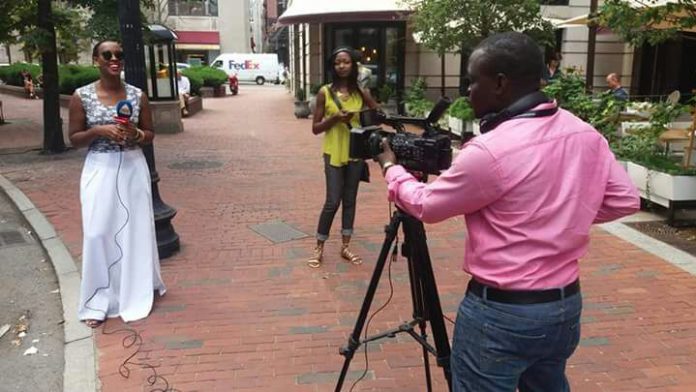
ON DUTY: NTV cameraman Serwanga on duty in the US at the UNAA convention.

One of NTV’s longest serving cameramen, Peter Serwanga, has finally thrown in the towel after the Serena-based station learnt that he had ‘disappeared’ in the US and therefore, did not wire his October salary.

Serwanga at work.
Serwanga at work.

Serwanga, who had been at NTV for over six years, was part of the station’s team that travelled to the US for the Uganda North American Association (UNAA) convention. However, just like most typical Africans, on getting to the West, he didn’t return.

At the time of travel Serwanga had secured two months leave, something that had enabled him to dupe his employers to pay his salary for September.

Also, since he wasn’t under any obligation to be at NTV offices Serwanga, whose company camera was returned from the US by colleagues, had successfully managed to convince all his workmates that he returned to Uganda then left for Juba for his personal businesses.

However, we can authoritatively confirm Serwanga stayed behind and is currently staying in Burlington, US. Even his former employers are aware of his whereabouts and have not paid him for October, so he finally tendered in his resignation.

“Throughout our lives we go through many changes including changes of home, city, country or work. But changes are needed in our lives to improve and gain more experience. Yet there are some changes that generate sadness or make us feel nostalgic. Working beside you has been a wonderful experience, I now have time to take a new direction. From heart I wish the best to you my friends, I will never forget the 6 years have worked at NTV-Uganda are very special, and each one of you have helped to make it so,” reads a statement to his workmates.

“With your encouragement and support, I not only performed my best, but also learned so many new things. I genuinely thank and appreciate the affection and camaraderie that you all have shown to me,” he added.

The UNAA convention was held in Boston last month and was attended by hundreds of Ugandans including over 30 Uganda Members of Parliament.

Meanwhile, six actors and actresses of the Ebonies drama group also stayed behind.

Stories Continues after ad

Katikiro Mayiga, ‘original Nkobazambogo’ feud

Buganda Katikiro Charles Peter Mayiga.

The appointment of youthful Charles Peter Mayiga as Katikiro of Buganda elated so many Baganda. And when he took up his job, he came up with the idea of Ettoffaali, generating a lot of revenue for the kingdom, in the process improving the financial status of Buganda whose previous main source of income was through the Buganda Land Board (BLB).

With the Ettoffaali money which was collected from both Baganda and willing non Baganda across Uganda and abroad, the kingdom, among other projects, completed the construction of Masengere Building, a perimeter wall around the Kasubi tombs and rehabilitating a number of Buganda traditional sites like the old palaces. Mayiga became even more popular; he even managed to strike a deal with President Yoweri Museveni, wresting from the state over 300 land titles belonging to the kingdom under what is commonly known as ‘Ebyaffe’.

However, despite all the achievements registered during Mayiga’s tenure, some people were offended and they accused the flamboyant Katikiro of ‘exploiting the poor Baganda and misappropriating the proceeds of Etofali.

One of those unhappy with Mayiga’s ways was outspoken Muslim cleric Sheikh Nuhu Muzaata Batte, who blamed him for ‘collecting money from poor Butambala residents yet they cannot even afford improving their welfare’.

The other altercation Mayiga has had to face is with the ‘original Nkobazambogo’, a grouping of youthful Baganda student activists to which he once belonged. According to the ‘original Nkobazambogo’, Mayiga was is not respecting the core values of their association, otherwise known by the acronym Bankosa, which only pays allegiance to the Kabaka, Ronald Muwenda Mutebi II and the kingdom.

According to the group, Katikiro Mayiga wants to ‘dilute’ the original association (Bankosa) “through the formation of his own new brand of Nkobazamboga with members loyal to him instead of Kabaka, they charge.”

William Wasswa Ndigeza Kigonya, a teacher of History and Christian Religious studies, and one of the members of Nkobazambogo, said the original Bankosa was the brainchild of Makerere students who were being sidelined in the university politics “due to lack of solidarity among themselves.”

In 1991 Nkobazambogo students association was formed, with the name derived from a legendary buffalo which had fallen into a pit and could only be rescued using a tether made out of its own skin. The point was made; Baganda students could only find an alternative out of political limbo through unity and solidarity.

In 2007, when Prince James Wassajja was a student at Makerere University, members of Bankosa met him and together they deliberated on how best they can involve in the Mengo government.

This arose from the need to have constant flow of information between the Mengo leadership and the youth.

With the help of Prince James Wassajja they made their way to the Mengo political establishment, taking up the unofficial role of protecting the Kabaka and the kingdom. They took up the assignment with gusto, with the most outstanding incidence witnessed after the 2011 general election, which involved the former Buganda state minister for youth, Mathias Mpuuga, who was elected to the national parliament.

At the time MP Mpuuga worked closely with Bankosa leader Elijah Kyobe, and even recommended some of them to the Buganda Lukiiko to represent Bankosa. Those recommended are still members of the Lukiiko.

“We in Nkobazambogo are like members of a presidential guard unit who cannot trust each other while on duty. The public is now wondering why the youth who claim to be protecting the King are conflicting with the Katikiro yet he is appointed by the Kabaka together with his ministers,” one of them said.

Another activist, Ronald Lumunye, the chairperson of Buganda Youth Council [BYC] and BYC lawyer for Kyadondo County said: “In a secret meeting which was for Nkobazambogo leaders the Katikiro instructed the youth minister to come up with a new revived Nkobazambogo with new guidelines.”

According to Mr Lumunye, the ‘new Nkobazambogo’ under Katikiro Mayiga has a different line of focus and hidden interests which are not clear since the old Bankosa is still on track.

The climax of this conflict has led to protests against the Katikiro resulting in arrests of those perceived to be against him. The most recent indicators of fallout were on Saturday October 22, when a group of youth who had invitation cards to attend the Nkobazambogo cultural gala at Janam School Bombo in Luweero, were arrested and detained overnight at Bombo police.

These included Dr Abdul Wagaba Musiita, chairman of KIU western campus Bushenyi; Joseph Njuki Musaazi, chairman of Rubaga; Ritah Nabaweesi, Treasurer UMCAT; Timothy Ssemanda of Buganda Royal; Hussein Kato Katumba of Salaf SS Namung’oona; Ibra Wasswa Ssemanda of Rubaga and James Frank Kasibante of UMCAT.

“Our colleagues who came in the next day carried with them the invitation cards and the police granted us a bond. We are meant to be cleared on November 4,” one of those arrested, said.

He added that after clearing with police they will proceed to Bugerere for the youth celebrations.

Efforts to talk to Katikiro Mayiga about this article were, by press time, futile.


Stories Continues after ad

EC’s Bukenya, Kaweesi top NIRA spokesperson job

TOP CANDIDATE: Electoral Commission Deputy Public Relations Manager Paul Bukenya

The Deputy Spokesperson of the Electoral Commission (EC) Paul Bukenya and the former head of communication in Parliament Hellen Kaweesi are the leading contenders for the post of National Identification and Registration Authority (NIRA).

According to sources, the two made the list after beating off strong challenge from several spokespersons of various ministries, departments and agencies (MDAs), and those from the public sector.

Bukenya has been at the electoral body for about five years, while Ms Kaweesi still works with Parliament, deputizing Chris Obore.

Stories Continues after ad

Club Guvnor murder suspect released on bail

CONVICTED Ivan Kamyuka with girlfriend.

Murder suspect Ivan Kamyuka, who allegedly stabbed to death city socialite Johnnie Ahimbisibwe at Guvnor Night Club, has been granted bail.

Kamyuka, who has been in Luzira prison since the incident, was granted bail today morning by the Criminal Division’s head judge, Justice Wilson Masalu Musene.

He was released on Shs5million bail while his sureties were ordered to sign a non-cash bond of Shs20 million each to ensure that Kamyuka returns to court for trial. Kamyuka has been ordered to report to court twice every month.

Kamyuka, 33, at the time a human resource manager at Lake Bounty Ltd left the country in shock last year when he allegedly used a glass to stab to death his former-friend-turned-foe over a woman.

The incident took place at Club Guvnor.

He was arrested and days later a charge of murder was preferred against him before being remanded to Luzira prison.

Part of the charge sheet states: ‘the suspect on August 2 at Guvnor Club located on 1st street Industrial Area, with malice aforethought, unlawfully killed Ahimbisbwe’.


Stories Continues after ad

KCCA sends home hundreds

COMPILED REPORT: Kampala Minister Beti Olive Kamya

Hundreds of workers at the Kampala Capital City Authority (KCCA) are set to lose their jobs, after a directive ordering all employees with a ‘pass degree’ to quit their posts in two months.

The directive comes in the wake of complaints by graduate candidates who successfully sat and passed Public Service Commission (PSC) interviews in 2012, but have never been taken on, leading to allegations of favouritism.

Those affected have since threatened to petition the IGG, while the Minister for Kampala Beti Kamya Turomwe has since promised to ‘look’ into the matter.

By press time it was not possible to get from KCCA spokesperson Peter Kaujju, as his known mobile number was ‘unavailable’.

In 2012 the KCCA advertised 1200 jobs and received an expectedly high number of graduate applicants, but many of those who passed the PSC interviews were never offered jobs.

Stories Continues after ad

Health ministry gets new PS

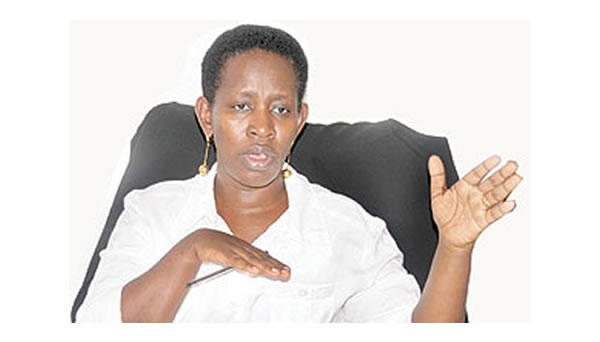
HEALTH PS: Dr Diana Atwiine

Doctor Diana Atwiine is the new Permanent Secretary of the Ministry of Health.

Dr Atwiine, hitherto the Head of the State House Health Monitoring Unit, replaces Dr Asuman Lukwago. By press time it was not possible to establish Dr Lukwago’s new assignment, but he has been a troubled man, usually engaged in spats with health ministry officials including the Minister Dr Jane Ruth Aceng.

Before her appointment as minister, Dr Aceng was the Director General of health services, a position junior to Lukwago’s, and this sent tongues wagging about the two not working in harmony.

Stories Continues after ad

Nakumatt attributes empty shelves on ‘depressed economy’

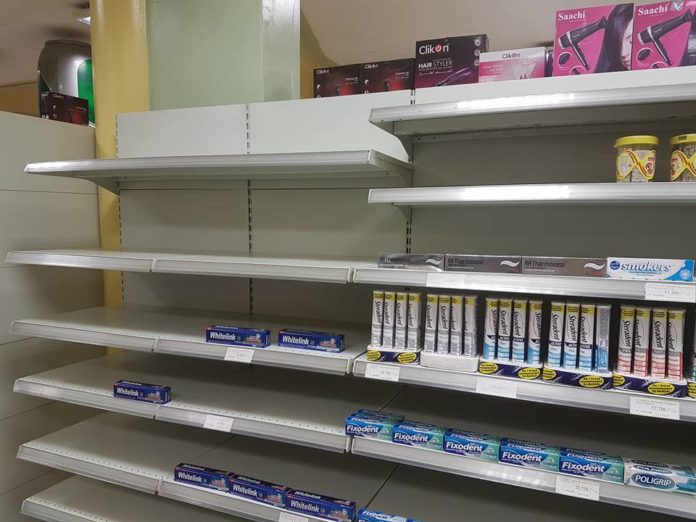
EMPTY: One of the shelves at a Nakumatt outlet.

“Is it the economy or Nakumatt mbra (Mbarara) branch is about to close?” celebrated radio and TV personality, Dave Kazoora asked recently on social media.

Unfortunately, it is not only Nakumatt Mbarara branch with empty shelves but actually all the retail outlets’ branches in Uganda.

Buzz has been making rounds that the retail outlet, which entered into Uganda’s market seven years ago, was selling its last stock then quit.

However, speaking about their situation, Nakumatt says the current economic situation in the country isn’t favourable for the company.

Through a statement issued Thursday, the retail outlet says that like any other business operating on the Ugandan market, Nakumatt Holdings is facing a number of unforeseen business challenges.

“These challenges range from a depressed economy, higher operating costs and extraneous factors including enhanced risk management due to prevailing security threats,” reads the statement in part.
They further state that at the moment they are restructuring, concentrating more on the products that are mostly bought by their clients.

“This will allow us to hold optimum stocks based on daily shop floor off take to streamline supplier payment systems by ordering stocks based on actual consumption trends while reducing on shrinkage.

“We are conscious that such financial restructuring remains a key imperative, thus our focus on long-term solutions, which are aligned to the overall business strategy. With the ongoing financial re-engineering engagements focused on accessing significant capital injection, we are confident that overall debt will further reduce once the process is concluded in the coming day.”

The management of the retail outlet also assured its clients that the process will allow them to regain their footing with full supplier settlements and ‘sustainably continue the aggressive expansion plan we have set in our 5 year business plan’.

Meanwhile, the Nakumatt economic woes come a few days after Bank of Uganda took over the management of Crane Bank, saying the move was in the interest of safeguarding depositor’s money.
It also comes a year after one of the biggest supermarket chain in the country, Uchumi, closed shop.


Stories Continues after ad

Kiir seeks to increase number of states

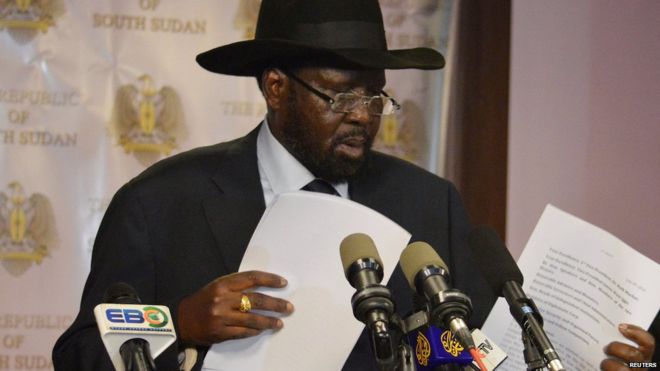
CALLED FOR CALM IN WAU: President Salva Kiir

A spokesman for South Sudan’s president has said a committee is looking at whether the war-torn country should add three or four more states to its current total of 28.

Ateny Wek Ateny said that a committee led by first vice president Taban Deng Gai was formed last week to study the issue, looking at whether to create one new state in Bahr el Ghazal, two in Upper Nile, and possibly one in Equatoria.
Ateny said the people, not President Salva Kiir, are asking for the new states because different ethnic groups have been contesting certain areas.

“In South Sudan, the creation of 28 states has brought jubilation, and has brought many people – not less than, more than – 80 percent of the people of South Sudan have appreciated the fact that the states were increased to 28,” said Ateny in a phone interview.

But many disagree with Ateny’s assessment, saying when Kiir took the unilateral move of increasing the number of states from 10 to 28 last year, he angered many, including opposition leader Riek Machar, who wanted 21 states.

And Cirino Hiteng, former deputy foreign minister of South Sudan, does not believe that another increase of states is going to solve the country’s problems, which include the ongoing conflict that has killed tens of thousands and displaced more than two million since December 2013, as well as annual inflation rate that has topped more than 600 percent.

University of Pretoria law professor and South Sudanese expatriate Remember Miamingi says Kiir’s move will increase conflict in the country. He argues that Kiir wants to increase the states in order to buy loyalty and support from those who will benefit from the corresponding new political jobs, albeit in a time of financial crisis.

“So it is a job creation, a job creation that has resource implications, and the little resources that we have, as you know, the government basically does not have the resources to finance the budget of this year,” said Miamingi. “And so to now create additional structures that demand money, is certainly quite unrealistic and is using, in an unfortunate way, public funding for personal and political reasons. And that is basically an abuse of his office.”

But Ateny disagrees with the idea that the president has sinister motivations behind the pending decision.

“But these are administrative units, that are to be created within the sitting government,” said Ateny. “There’s no reason why it is to be taken negatively.”
Kiir said last year that he acted within his mandate by increasing the number of states to 28. But Miamingi argued the president does not have the constitutional power of ‘altering the boundaries of the state’.

He also said there are two active cases in the Supreme Court of South Sudan that are challenging Kiir’s 2015 decision.


Stories Continues after ad