Stanbic Bank
Stanbic Bank
18.4 C
Kampala
Stanbic Bank
Stanbic Bank
Home Blog Page 617

Sudhir lauds Museveni for signing Landlord and Tenants Bill into law

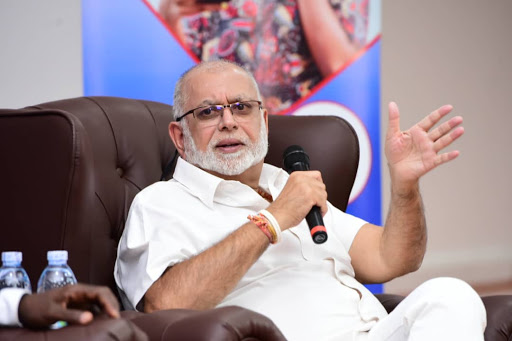
Group chairman, Ruparelia group of companies. Sudhir Ruparelia. One of the sponsors of the Expo

Property mogul Sudhir Ruparelia has lauded President Yoweri Museveni for signing the Landlord and Tenant Bill into law.

It was revealed by the Speaker of Parliament Anita Among, that President Museveni assented to the Landlord and Tenants Bill 2021 after a meeting at State House in Entebbe yesterday morning.

The Bill passed regulates the relationship between landlords and tenants, reforms and consolidates the law relating to letting of premises, provides for the responsibilities of landlords and tenants in respect to the letting of premises.

The landlords welcomed the new law saying it will streamline their relationship with tenants with each party aware of its responsibility.

Sudhir lauded President Museveni for signing the bill into law saying “it will finally bring sanity into the sector.”

“It will check landlords who were not respecting the law and their tenants. Most landlords do not give tenants agreements. We could be the only ones who have consistently given all our tenants agreements for more than 10 years,” Sudhir said.

“The law protects both tenants and landlords. The tenants will now know their rights. It will reduce the court cases between the two parties.”

The new law will also see a restriction of increment on rent being put to not more than 10 per cent annually.

Although the landlords are happy with the provision of increasing rent by 10 per cent annually, they expressed concern over the provision that bars them from forcibly evicting tenants who fail to pay rent.

Parliament also passed a provision that the currency of transaction between landlord and tenant shall be in Uganda Shillings.

The new law will also see penalties for landlords who are found liable of unlawfully evicting their tenants. This conditions the landlord to compensate a tenant three months equivalent of rent dues.

Furthermore, the law proposes that a notice for increment of rent should be issued 60 days before its implementation.

Stories Continues after ad

Land Commission officials face corruption allegations

Land Commission officials face corruption allegations

Officials at the Uganda Land Commission (ULC) have been accused of asking for bribes in order to pay out compensation for land.

Geoffrey Mugisa one of the registered proprietors and claimants of the Shs10.6 billion supplementary budget allocated to facilitate the land owners who sold their land to the government through the Uganda Land Commission (ULC) said in order to process his payments, officials from ULC asked him for a bribe.

Mugisa on Wednesday, 08 June 2022 appeared before the Committee on Commissions, Statutory Authorities and State Enterprises (COSASE) chaired by Hon Joel Ssenyonyi.

The committee is investigating the irregular payment of Shs10.6 billion to six land owners. The landowners are Stephen Nagenda, Twaha Lwakaana, Kosia Rwabukurukuru, Namuli Natalia, Julius Busulwa and owners of the Ndeeba Church and Lusanja land.

When he was tasked by the committee to explain how he got compensated and how he got his land of 208 hectares, Mugisa said that the process was tedious and frustrating and marred with calls for bribes.

Mugisa said that the Land Commission demanded 50 per cent of the Shs1.544 billion he was supposed to get from the sale of his land.

For the land valued at Shs1.544billion, Mugisa got an advance payment of Shs50 million in 2016 and the outstanding balance of over Shs1.4 billion in 2021 for his 208 hectares of land.

“Someone called Michael Obongomin called me and said I would not get my money just like that. At first, he asked for 20 per cent and then later 50 per cent of the total amount I was supposed to receive for my land,” Mugisa said.

Mugisa said he didn’t bow to pressure but his compensation took long.

Hon. Joel Ssenyonyi tasked Mugisa to provide evidence of the phone number and details of the agent seeking the bribe, his account number where the money was paid and his phone number.

The committee also tasked Mugisa to return with a written consent from his family who gave him the land and copy of the title among others.

Mugisa also claimed that his land was occupied by squatters and not the tenants by occupancy according to the report made by ULC before acquisition of the land.

The committee put Mugisa under oath as he failed to present documentation on how he got the land title, alongside the inconsistencies in his defence statements.

He, for instance, told the committee that the land was given to him as a young boy but the committee was shocked to find out that with nine other brothers, Mugisa inherited half of the family’s 500 hectares.

Tororo North county MP, Hon. Geoffrey Ekanya questioned the credibility of acquisition of the land.

“How sure are you that no one will come to claim the land as there is no direct evidence to show the real ownership of the land,” Ekanya asked.

Ssenyonyi has given Mugisa till Friday to present the necessary documentation.

The committee is also in the hunt for former ULC secretary and accountant for her role in the irregularities at the commission.

According to Ssenyonyi, Imaryo fled the country as soon as the investigations begun.

Ssenyonyi said that Imaryo had paid some monies before verification.

“She was being guarded by the military and she left through Nairobi. The Interpol has however, been involved and she will be gotten soon,” Ssenyonyi said.

Stories Continues after ad

MTN launches the Kabode Supa Smartphone on Mpola Mpola payment terms

A lady poses for a selfie with the MTN Kabode Supa Smartphone standing next to Kabode men. Kabode stands for strong meaning the phone is built to last long

Determined to boost digital inclusion in the country, MTN Uganda has today launched Kabode Supa smartphone under its “pay Mpola Mpola” device financings that allows customers to pay for their smartphone in installments.

With an initial deposit of only Shs 99,000, a customer can walk away with the Kabode Supa smartphone and make monthly, weekly or daily installments as low as Shs 833 for six months to own the device.

In addition, the Kabode Supa comes with 2GB free MTN data every month for the next seven months upon purchase. All data bundle purchases made in the first 3 months also come with 100% bonus.

MTN Kabode Supa is an internet-enabled smartphone with a 5 inch screen, 3GB RAM, 8GB memory space, 2Mega Pixels (MP) front camera and 8 MP back camera with a long battery life. 

The handset is the newest addition to the company’s family of the Kabode smartphones purchased through the mpola mpola scheme. 

Commenting about the new smartphone in Kampala today, Ian Mugambe, Segment Manager, MTN Uganda said the device financing scheme “mpola mpola”, aims to ensure that everyone has access to ICT and digital services, noting that the Kabode Supa is the latest smartphone MTN is offering customers on these favorable and affordable payment terms

“At MTN, we believe that everyone deserves to enjoy the benefits of a modern connected life so we are excited to champion smartphone adoption and penetration in Uganda in order to witness the next chapter in Uganda’s digital inclusion journey,” he said.

In 2020, MTN Uganda introduced a device financing scheme dubbed ‘mpola mpola’ with the aim of ensuring affordability of handsets for Ugandans across the country through accepting payment in installments.

The MTN Kabode Supa smartphone is available at all MTN shops countrywide. Upon payment of the initial deposit of Shs99,000, the customers goes away with their phone and completes payment through instalments of Shs 833 daily, Shs6,250 weekly or Shs25,000 for the monthly instalment option. 

Stories Continues after ad

UPL announces date for end of season awards

UPL end of season awards re-launch

The Uganda Premier League board has set the tentative date for the 2021/22 end of season awards.

Peter Kibazo, a UPL Board member, said the awards will be held on June 16th 2022 but added that due to various logistical reasons, it may be pushed few days ahead.

The League also confirmed the fans’ involvement in selection of the best performers for the season.

League manager Paul Kabaikaramu emphasized that all awards will decided on Credibility, Quality Accolades and Fan Involvement an explained how the fans will be part.

“The Public (fans) will nominate their best selection (player for example), then the panel will choose three players per category from the fans selection, then the public and other stakeholders will vote on the three nominees before the winner is announced on the Technical Panel.”

The awards return for the first time since the 2016/17 season when KCCA FC striker Geoffrey Sserunkuma was crowned the best player of the season.

Kibazo was full of praise for the awards main sponsors Pilsner.

“We have journeyed with Pilsner for the past seasons,” he started. “They have tested the waters; we started with individual awards for certain games – Pilsner Man of the Match – and that has been a success, and we are glad to have these season awards back,” he said.

The proposed venue for the awards that will climax an exciting season won by Vipers is Kati Kati Gardens in Lugogo.

The biggest award is the Player of the season which will go to the Best Player of the 2021/22 season, SUPL Finest XI (Best Eleven of the season) and Platinum Award are the other categories.

Best Goalkeeper, Defender, Midfielder and Coach of the season will be recognised.

Best young player, Top scorer (player with most goals), Most Assists, Fair Play team, Players’ Player (voted for by players), Coaches’ Player (voted by coaches).

The League Secretariat said they will in the due course release a voting link for the fans to use.

The Categories for the Pilsner Lager SUPL Season Awards:

Player of the Season

Top Goal scorer of the season

Most Assists of the season

Midfielder of the season

Defender of the season

Goalkeeper of the season

Coach of the season

Young Player of the season

Players’ player of the season

Coaches’ Player of the season

Fair Play Team of the season

UPL Best XI

Platinum Award

Stories Continues after ad

Custodian board Executive Secretary, Accountant arrested over extortion by State House

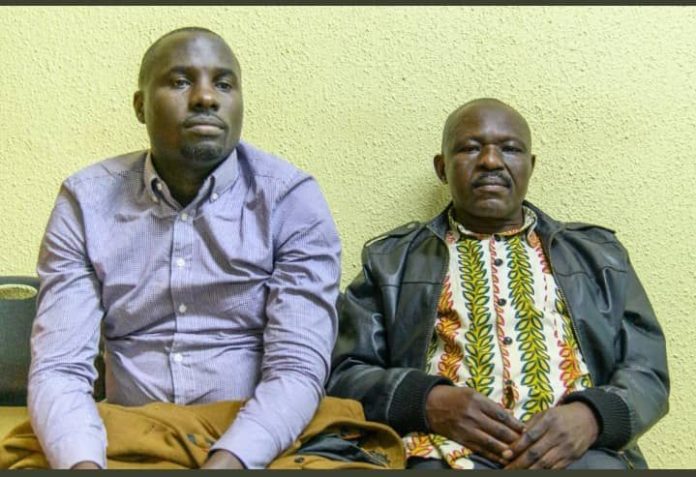
Custodian Board secreatry George William Bizibu (right) and his chief accountant were arrested for solicitng bribe

Two Custodian board officials have been arrested by the State House Anti-corruption unit over forgery and obtaining money by false pretence.

Executive Secretary of Departed Asian Custodian Board George William Bizibu and his chief accountant were arrested over extorting money based on forged documents.

Bizibu who is believed to be frontman of Finance Minister Matia Kasaija has been at the centre the controversial sale of properties.

It is alleged that the duo are found of defrauding people by issuing false allocation letters and reciepts after extorting huge sums of money.

“@AntiGraft_SH in liaison with @PoliceUg have arrested both the Executive Secretary & the Accountant of the departed Asian property custodian board for falsely obtaining money from various persons while purporting to allocate them properties. #ExposeTheCorrupt,” State House Anti-corruption unit tweeted.

Stories Continues after ad

Gen. Muhoozi Kainerugaba meets Uhuru Kenyatta

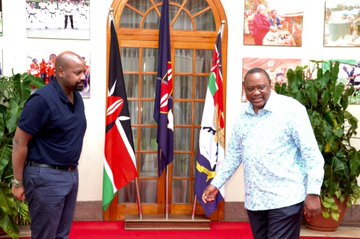
Gen. Muhoozi Kainerugaba meets Uhuru Kenyatta

The Senior Presidential Advisor for Special Operations and Commander Land Forces Lt Gen Muhoozi Kainerugaba has visited Kenya’s president, His Excellency Uhuru Kenyatta.

“It was an honour and pleasure to meet my big brother and friend President Uhuru Kenyatta in Nairobi recently. I also delivered to him a special message from H.E Kaguta Museveni,” Muhoozi tweeted.

The General made the announcement to visit Kenya earlier via his twitter handle on 17th May, 2022 and promised that after the visit there will be a big party to celebrate the unity between Uganda and Kenya.

“To all my thousands of Kenyan followers and relatives I shall be in my second homeland next week to meet my big brother. After that we need to have a big party to celebrate the unity between Kenya and Uganda!” he earlier announced.

This is the second time Gen. Muhoozi visited Kenya since he last went there this year in January,  where he was invited by H.E Uhuru Kenyatta (Kenyan president) during the inauguration of the Inland Container Depot in Naivasha.

The Commander has not only visited Kenya but also last year he visited Somalia where assessed UPDF troops in the newly liberated town of Bulo Marer, one of the major towns that were until recently still under the control of the terrorist group. He also congratulated all the troops and commanders that participated in battles for having done well and made UPDF proud.

Recently he visited Rwanda and held talks with President Kagame which yielded the restoration of bilateral ties between the two countries and the reopening of the Rwanda-Uganda border, which had been closed since 2019.

Stories Continues after ad

KCCA meets Napak District leaders over street children

KCCA meets Napak District leaders over street children

The leaders of Napak district have called for the demolition of squalor shelters which are being used to accommodate street children in Katwe and Kisenyi areas in Kampala.

Most of these street children who have been trafficked to the streets from Karamoja spend their night time in these areas where they are further abused sexually among other abuses.

The Napak district leaders led by their LCV Chairperson John Paul Kodet were on June 7 hosted by Kampala Capital City Authority (KCCA), officials from the Directorate of Gender, Community Services and Production.

The event held at Mayors Parlour discussed the rescue and resettlement of the Karamojong children from Kampala streets.

The engagement follows the rescue exercise carried out by the KCCA, two months ago where over 160 children were rescued and taken to Napak for rehabilitation.

It is upon this background that the leadership of Napak requested for an engagement meeting with KCCA and other stakeholders to discuss the issue of the street child.

The Minister of State for Kampala Capital City and Metropolitan Affairs, Kabuye Kyofatogabye attended the meeting, he was glad to see that the team from Napak came to Kampala to discuss with other stakeholders on how best to handle the issue of street children in Kampala and child trafficking in the Karamoja region. He however expressed his disappointment in the recurrence of the street children phenomenon in the city and promised to make time to also travel to Napak to touch base with the local leaders and some families of these children. 

He noted that children are the future of the country so it was very important as leaders to protect them and that government was coming up with restrictive measures against illegal movement of children to Kampala.

The KCCA Deputy Executive Director, Eng. David Luyimbazi welcomed Napak leadership and noted that the issue of street children is a big challenge faced by KCCA.

Luyimbazi expressed concern over the increasing cases of children being infected with various diseases like HIV as a result of engaging in illegal sex trade and other criminal related activities.

According to Luyimbazi a Medical team handling the children rescue exercise discovered that many of the street children have been infected with HIV.

Luyimbazi said the goal of KCCA is to attain a Smart City status, a thinking every individual need to own. This is a city without street children and an organised trade order.

He expressed his passion about the future of Ugandan children protected and urged stakeholders to take the matter seriously.

The Napak LCV chairperson Kodet, commended KCCA management for accepting to host them, and thanked the Deputy ED for being passionate on the issue of children especially those exposed to danger.

He proposed a stakeholder engagement and need to have annual review meetings to track the progress of the rescue and resettlement of the street children.

Kodet noted that as leaders of Napak, they are highly concerned with the issue of their children being on the streets of Kampala and yet most of them are coming from one district.

He also observed that some people are taking advantage of the children for economic benefit.

“Insecurity has been a push factor for most of the children from that region and as a result they find it very unappealing to live in the village. Those recruiting the children are based in Kampala with very strong links in Napak.” Kodet said.

Interventions are very important so that both health and economic needs of the children on the street are addressed, he added. He also revealed that three people have been arrested and are on trial on charges of child trafficking.

A team from Moroto Diocese also presented their findings on the intricacies that surround the street children problem and linked the trafficking to mainly women who they said were ruthless and had the support of some leaders in the Kisenyi and Katwe areas.

The deputy RCC of Kampala, urged the development partners to join hands in supporting the rescue exercise. He said he would be involved personally in order to close loopholes in the exercise with assistance from the security organs.

Stories Continues after ad

South Sudan Army deploys at Ugandan border as UPDF withdraws

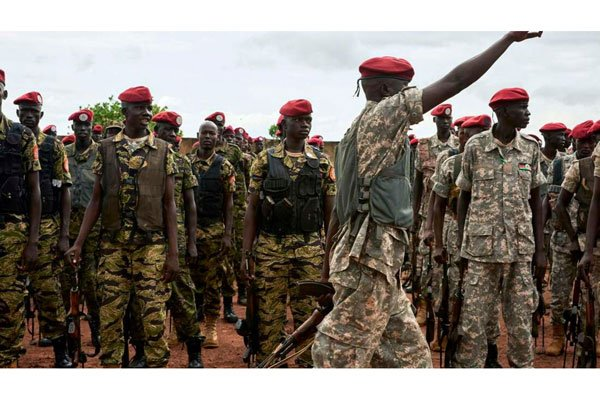
South Sudan Army

Local leaders in Magwi County of Eastern Equatoria State have said that the Uganda People’s Defence Force (UPDF) soldiers have withdrawn from the county back into Uganda and that the South Sudan People’s Defence Forces (SSPDF) had deployed along the common border to maintain security.

On Saturday, UPDF soldiers killed an SSPDF soldier and wounded two others after the two forces clashed in what local officials said was an incursion by the Ugandan army in Chubi village of the Owinykibul area in Magwi County.

Last week, residents in the Pogee border area in Parajok Payam accused the UPDF of encroaching into and carrying out patrols in South Sudan territory creating fear among the locals.

Major Godfrey Bongomin, the police inspector of Magwi County on Tuesday, 7th June 2022 said that the SSPDF had deployed along the border of the two countries and that calmness had returned to the area following the withdrawal of the UPDF.

“The situation along the border is somehow calm now. The soldiers (UPDF) who were deployed along borders have gone back to their original place (Uganda) and there is nothing like conflict or attacks,” he explained.

“Our people (SSPDF) are at River Chubi in Owiny and those people (UPDF) are across the river.  It was the UPDF who came towards our side and they fought and they ran back to their barracks.”

Meanwhile, Magwi County Commissioner David Otto Remson called for the coexistence of the border communities, a peaceful resolution of the matter, and proper demarcation of the border.

“The situation is already calm. I think the intervention of the government will ensure that both sides remain calm. I think a permanent solution is when the border is demarcated,” Remson said.

“The issue now is for me to engage my (Ugandan) counterpart so that the insecurity is reduced and the people coexist harmoniously,” he added.

Earlier, the Eastern Equatoria State government said the issue of the Ugandan army encroaching into South Sudan was not a state but a national issue.

Stories Continues after ad

Amnesty International: Ugandan authorities must stop criminalizing activists for protesting high cost of living

MP Adeke, Deputy Lord Mayor Doreen Nyanjura among those arrested for protesting high commodity prices.

Amnesty International has urged the Ugandan authorities to stop arresting politicians and activists solely for protesting the high cost of living and respect the rights to freedom of expression and peaceful assembly.

“The arrest and detention of these activists amounts to intimidation and harassment. This is a clear attempt by the Ugandan authorities to suppress freedom of expression, association and peaceful assembly,” Deprose Muchena, Amnesty International’s Director for East and Southern Africa said.

Police arrested the six women on 30 May 2022 at Mulago roundabout in Kampala while they held placards protesting inflation, high prices of essential goods and the continued detention of Kizza Besigye, the leader of the political pressure group People’s Front for Transition.

“The arrest and detention of activists amounts to intimidation and harassment. This is a clear attempt by the Ugandan authorities to suppress freedom of expression, association and peaceful assembly,” said Deprose Muchena, Amnesty International’s Director for East and Southern Africa.

“These six activists must be immediately released. Instead of criminalizing public criticism of inflation and the cost-of-living crisis, the Ugandan authorities should take steps to mitigate the impact of rising food costs on those who can least afford it.”

The six women include MP Anna Adeke, Deputy Mayor of Kampala Doreen Nyanjura and four women activists, Wokuri Mudanda, Susan Nanyojo, Mariam Kizito and Alice Amony. They were charged with inciting violence and unlawful assembly and remanded at Luzira Prison in Kampala.  Yesterday, the group was granted bail.

The protests were sparked by rising inflation, which grew from 2.7 per cent in January 2022 to 6.3 per cent in May 2022 and increased the cost of essential consumer goods. Food inflation disproportionately impacts people living in poverty, who spend a greater percentage of their income on food. While inflation is currently a global problem, governments have an obligation to ensure the right to sufficient and adequate access to food, including through international assistance. The arrested politicians and activists had criticized the Ugandan government’s response to rising food costs.

Ugandan police arrested Kizza Besigye at Arua Park in Kampala on 23 May, where he was addressing people in one of a series of protests about the economic situation.

On 12 May, the police had placed him under a “preventive arrest” which the Ugandan authorities use to preemptively prevent an offence.

On 25 May, Besigye was charged with incitement to violence in Buganda Road Court and granted a Shs 30 million (about USD 8,100) cash bail. He objected to this on the grounds that it was excessive and instructed his lawyers to apply for a review of the bail conditions. On 6 June, the High Court reduced the cash bail to Shs 3,000,000 (about USD 810).

“The Ugandan authorities must stop using preventive detention and criminal charges to deter people from exercising their rights to freedom of expression and peaceful assembly. The Constitution of Uganda obliges the state to ensure that Ugandans are able to petition the government, exercise their right to freedom of peaceful assembly, and to enjoy decent shelter, health and food security,” said Deprose Muchena.

“By arresting people who are concerned about the high cost of living, the Ugandan authorities risk seeming disconnected from the everyday reality of those living in poverty, including people who cannot afford to put a meal on the table.”

“By arresting people who are concerned about the high cost of living, the Ugandan authorities risk seeming disconnected from the everyday reality of those living in poverty, including people who cannot afford to put a meal on the table,” he added.

Protests continue to be criminalized in Uganda with no legal basis even after the country’s Constitutional Court declared Section 8 of the Public Order Management unconstitutional. It was thought that nullifying parts of the law would limit the power held by the Inspector General of Police to arbitrarily prevent or stop public gatherings and crack down on protests.

The state uses Section 83 of the Penal Code Act to charge people for incitement to violence to deter them from protesting.

Stories Continues after ad

Gov’t intensifies fight against high Aflatoxin levels in food stuffs

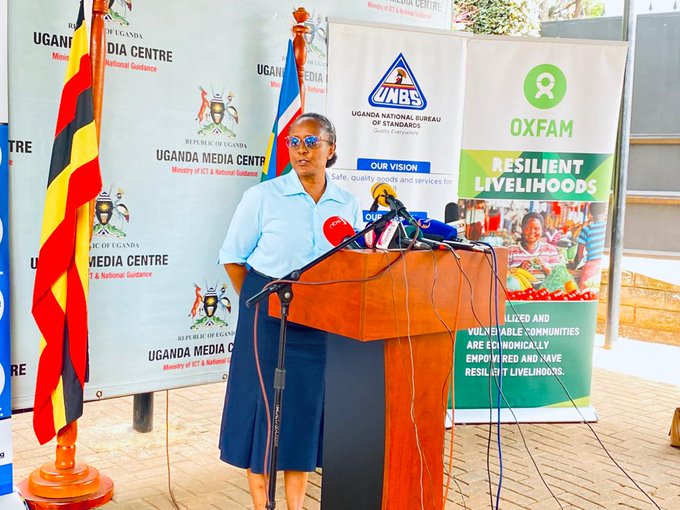
UNBS Deputy Executive Director Patricia Bageine Ejalu

The Government of Uganda, through the Ministry of Agriculture, Animal Industry and Fisheries (MAAIF) and Uganda National Bureau of Standards (UNBS), in collaboration with the Grain Council Uganda (TGCU), Uganda National Farmer’s Federation (UNFFE), Food rights Alliance (FRA), PELUM and ESAFF have embarked on a campaign to fight against the high Aflatoxin levels in food stuffs, to promote consumption of safe food in the country.

The efforts, supported by OXFAM, come at a time when Uganda joined the world to celebrate World Food Safety Day 2022 on June 7, under the theme: Safer food, better health.

Aflatoxins are poisonous substances produced by moulds when they infest produce that is not well-dried. High levels of Aflatoxins contaminate food crops like Cereals, legumes, oil crops and others, posing a serious health threat to humans and livestock. According to research, consuming foods with high aflatoxins levels increases the risk of contracting liver cancer and other related diseases, which could lead to death.

Besides health, high Aflatoxin levels are a major barrier to the exportation of Uganda’s agricultural produce to the East African Region and internationally.

UNBS Deputy Executive Director Patricia Bageine Ejalu said Aflatoxins pose a significant economic burden, which according to World Health Organization (WHO) 2018 report, causes an estimated 25 per cent or more of the world’s food crop loss, consequently contributing to hunger.

“Therefore, the campaign against high levels of Aflatoxins is aimed at creating awareness about this poison and training all stakeholders in the value chains, right from the farm to the final consumer, on how to handle food to avoid Aflatoxin contamination. This therefore calls for joint effort from every stakeholder: farmers, transporters, traders, manufacturers, Civil Society Organizations, the private sector, regulators and the consumers to join the fight against high Aflatoxin levels in food,” she said.

The efforts also contribute to the attainment of the National Development Plan III goal to ‘Increase household incomes and improved quality of life’ and Sustainable Development Goals: SDG 1 on No Poverty, SDG 2 on attaining Zero Hunger, and SDG 3 on Good Health and Wellbeing.

Key focus on the farmers;

Uganda is predominately an agricultural country, and almost everyone is involved in agriculture. While everyone is critical in the fight against aflatoxins, farmers are key stakeholders.

UNBS says farmers should adopt good agricultural practices that ensure the right moisture content in food to eliminate high Aflatoxin levels by doing the following;

· Ensure that food crops are harvested when dry

· Avoid storing food before thoroughly drying it

· Dry the food crops properly on tarpaulins, canvas, mats or in cribs

· Dry crops using improved technologies that reduce drying time

· Properly Cover harvested food during rainy seasons to keep it away from moisture

· Avoid storing harvested food on the floor because they get damp and the moisture provides a conducive environment for moulds. Store food on pallets.

· Check crop dryness using the salt method or moisture meter

· Regularly Clean, disinfect and repair the store

Traders and Manufacturers

· Traders and manufacturers should in turn, only purchase good quality produce from farmers and always offer better prices for well-maintained produce since this decreases the cost of quality maintenance for the trader.

· Acquire a moisture meter to test moisture content of the produce to ensure it is not more than the recommended 13%, and an Aflatoxin testing kit to ensure that the Aflatoxin levels do not exceed 10ppb, before in putting it in the production chain.

· Acquire and adhere to the relevant quality standards from Uganda National Bureau of Standards via https://webstore.unbs.go.ug and ensure that all the manufacturing processes meet the quality standards.

· Seek UNBS certification via https://cims.unbs.go.ug for the production processes and final products to ensure they are of good quality.

Transporters

· Protect produce from rain and dust by ensuring that it is correctly packaged in clean bags and covered.

· Ensure that the produce is dried to required moisture content before transportation.

· Use clean vehicles in good mechanical condition to avoid contamination.

· Offload produce as soon as possible, upon delivery.

Consumers

· Buy and consume foods certified by UNBS because you can guarantee safety of such products. Such goods have the UNBS Quality Mark (Q) affixed on the product packaging.

· Always report any distributor or dealer of expired or sub-standard products to the nearest police station and contact UNBS for redress on Toll Free Number; 0800133133

Patricia Bageine Ejalu said in a statement “Together, we call upon the government, development partners and other stakeholders to increase support to the value chains through research, extension, training, promotion of cooperatives, awareness and assistance in detecting and preventing aflatoxin so that foods produced and traded are safe for human and animal consumption and consequently Increase household incomes, improve food security and improve the quality of life as per the NDP III Goal.”

Stories Continues after ad