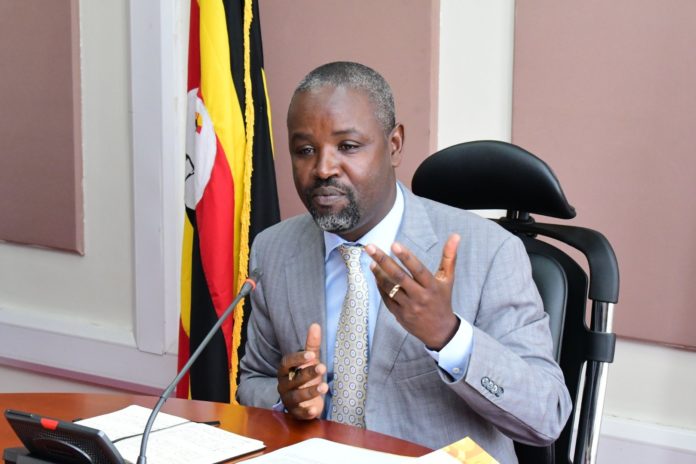
Deputy Speaker Thomas Tayebwa has interested Ugandans into investing in the stock markets, saying that this will facilitate the money multiplier effect while avoiding business losses.
“There are people who are good at multiplying money. So, if I planned to have 60 percent of my savings in the stock market, then that would mean I will give part of my money to multiply,” he said.
Tayebwa made the remarks on 07 June 2022, during the launch of Zaabu, an electronic platform through which people can invest in securities.
Zaabu, a brainchild of ALTX East Africa, is the first electronic system that will be used to facilitate trading in securities using mobile phones.
Tayebwa said that stocks, bonds and bills are the safest way for busy people to grow their businesses since they do not require supervision.
He added: “Stock markets will promote financial inclusion and also teach Ugandans how to save.”
The Chairman ALTX East Africa, Edward Kitimbo, said that the new system makes investing in stock markets affordable and easily accessible by majority of Ugandans.
“Our stocks have been focused on high income earners but we are now coming down to the bottom of the pyramid where many can afford to save at least Shs 15,000 every month,” Kitimbo said during the launch at the Golf Course Hotel in Kampala.
He explained that to use the Zaabu platform, the user only needs a mobile handset, from which one dials and logs into the stock exchange anytime and anywhere.
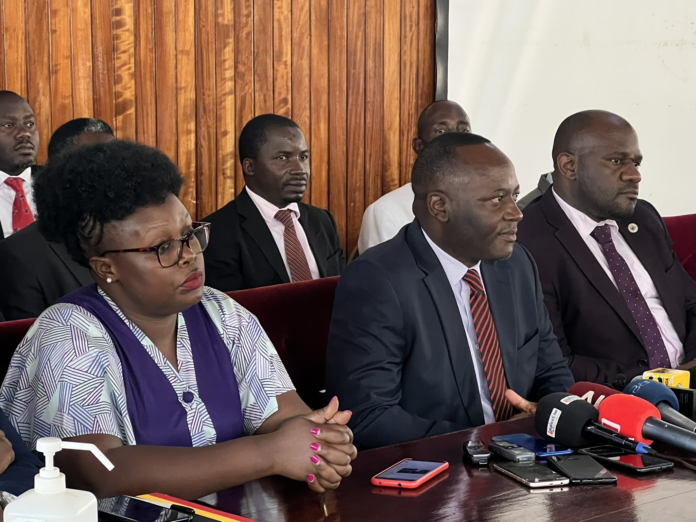
The Chairperson of the Committee on Finance, Hon. Keefa Kiwanuka pledged support towards the initiative and advised the company to raise any legislative concerns with Parliament.
Your Excellency the Vice President, Right Honourable Speaker,
His Lordship the Chief Justice Rt. Hon. Deputy Speaker,
Rt. Hon. Prime Minister,
Rt. Hon. Secretary-General of the NRM, Hon. Members of Parliament,
Members of the Diplomatic Corp, Ladies and Gentlemen.
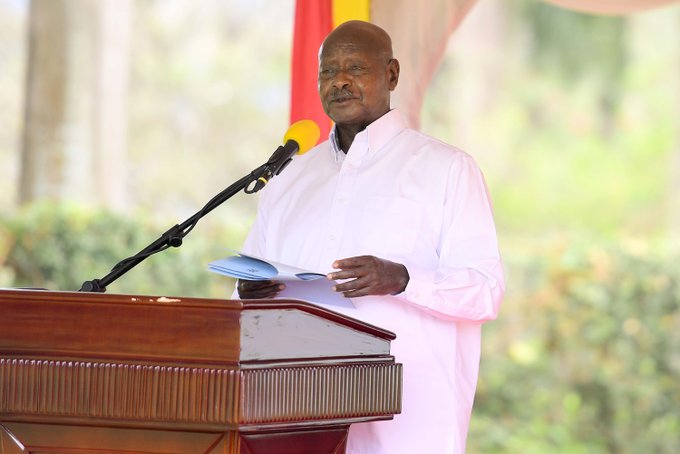
In fulfillment of the Constitutional requirement under Article 101 (1) of the Constitution of the Republic of Uganda, I am here to deliver the State of the Nation Address, 2022.
Greetings, to all the Ugandans. On an occasion like this, I am reminded of the parable in the Book of Matthew, Chapter 7 and Verses 24-27. This is the parable of two men – a foolish one and a wise one. The foolish man built his house on sandy ground and when a storm came, the house collapsed. The wise man built his house on hard ground and even when the storm came, the house withstood the force. The exact quotation goes as follows:
24 “Therefore everyone who hears these words of mine and puts them into practice is like a wise man who built his house on the rock. 25 The rain came down, the streams rose, and the winds blew and beat against that house; yet it did not fall, because it had its foundation on the rock. 26 But everyone who hears these words of mine and does not put them into practice is like a foolish man who built his house on sand. 27 The rain came down, the streams rose, and the winds blew and beat against that house, and it fell with a great crash.”
Similarly, when the NRM was fighting and when we took power in 1986, we put out the 10 points programme that was later summarized into the four principles of the NRM. Point No. 5 of the NRM 10 points programme, set out to build “an independent, self-sustaining national economy”, by creating backward and forward linkages in our economy. Later on, we summarized the 10 points into the four NRM principles of: patriotism, Pan-Africanism, social-economic transformation and democracy. Some myopic people, thought that this was sandy ground where the NRM had constructed the house of Uganda. However, the onslaughts to which Uganda has been subjected in the last 2 or 3 years, have proven that the Uganda house the NRM has constructed in the last 60 years, including the preparatory years before 1986, has been built on hard ground, indeed.
Remember, the locusts, the rising waters of the Lakes, the floating islands, the landslides, the terrorist bombs, the covid-19 and now the rising commodity prices artificially caused by the Ukrainian war. In spite of all these, the Ugandan economy, by the budget time in the next few days, will be standing at US$ 45.7billion by the exchange rate method and at USD 131.6 billion by the PPP method. This means that the GDP per capita is now $1046.
You remember, the entrance points for the lower middle-income status, is USD 1036. We have now passed that figure. Congratulations. However, to be declared a middle-income country, you need to sustain this for two to three consecutive years. I am confident, we shall over perform, in achieving that. Remember that our economy expanded in spite of the lockdowns caused by covid-19 and in spite of the ever increasing population; you can see that the size of the economy, when compared to the population that is always growing fast, has continued to grow and we have arrived at the boundary point as far as the middle income status is concerned. Before the global destabilization by the corona-19 and the Ukrainian crises, Uganda was a country of surpluses that were crying out for markets in the form of sugar, maize, milk, chicken, eggs, bananas, cement, mitayimbwa (steel bars), soap, beers etc., etc.
This global crisis actually presents Uganda with plenty of opportunities. I saw on the news, that Malaysia had banned the export of chicken and that India had banned the export of sugar. President Biden was crying for baby formula, etc. Many of these products are the ones that have been in surplus in Uganda. We just need to deal with a few quality and bio-hazard issues. The issue of aflatoxins, will be dealt with by proper harvest and drying methods as well as the method of embracing biotechnology. The door to our Dairy exports will be opened when we, the cattle owners, vaccinate our cattle twice a year. If the government does not have the money to pay for the vaccines, we the farmers can do it. With 1000 cattle, I would need Ushs15M (fifteen million shillings only) for FMD. Given the lucrative export markets that will become available, like the one of Algeria of USD 1.124 billion, this cost on the farmers, will make sense. The other crucial vaccine, will be the one of CBPP. With 1000 cattle, we need Ush 850,000 (eight hundred fifty thousand shillings only) in a year.
All this capacity that has enabled the house of the wiseman to withstand the force of the storm, is long before the implementation of our Parish Development Model, whose end result is to tap the production capacity of all the 7 million houses in Agriculture, relying on the high-value commodities of: coffee, fruits, dairy products, poultry, pigs, fish-farming and food growing for those of 4 acres and less. The ones with land that is more than 4 acres, can, in addition, grow sugar-cane, cotton, maize, tobacco, tea, cassava, bananas, ranching, etc., because the country needs these products for industry, food or as inputs into the intensive agriculture mentioned earlier – the agriculture of the seven high value activities. The agriculture of the commodities in the latter category, we describe as extensive Agriculture– where you get less money per acre per annum, but because of doing what you are engaged in on a large scale, you get good money. The activities of intensive agriculture, such as poultry, piggery, fish-farming, dairy farming of the zero-grazing type, need animal feeds, fish-meals, etc., that are from maize and other products of the extensive agriculture type.
Moreover, the wise man’s house is currently full of surpluses, without too much use of irrigation or the use of fertilizers. In the coming financial years, we are going to intensify the modest efforts we have already started on, in connection with irrigation. With irrigation, we have worked with the private sector to produce solar- powered water pumps that the rich farmers can buy and engage in mini-irrigation, farm by farm. Once the solar powered irrigation pumps are on the market, the Government will buy them for some of the co-operatives or farming villages, where one pump can be shared by a number of small farmers. We shall continue also developing the mega-irrigation schemes of the Mobuku type. Currently, 150 solar-powered water pumps have been imported. By the end of next year, 687 solar- powered water pumps will have been imported. Meanwhile, our private sector is building a factory for producing solar-powered water pumps and panels. The factory will be ready by the end of the year and it will produce 160,000 pumps per year. At the same time, we are continuing to repair and expand the old irrigation schemes and also build new ones. As of now, the following irrigation schemes are ready: Wadelai (Pakwach); Mubuku (Kasese); Ngenge (Kween); Doho (Butaleja); Rwengaaju (Kabarole); Agoro (Kitgum); Olweny (Lira); and Tochi (Oyam). Acomoi in Bukedea and Ataari in the district of Bulambuli and Lopei in the district of Moroto are being worked on. We intend to use the waters of the Kagyera River to support irrigation in Isingiro, the water of Lake Kyoga to support irrigation in Nakasongola district, the water of the Nile to support irrigation in Pakwach, Nebbi, Madi-Okolo and Obongi districts. The areas of Busoga, Teso, Bukedi and Lango, have got a lot of wetlands, that are now being misused for rice growing or under-used, that will be used as reservoirs for irrigation projects. Irrigation, mega and micro, is in order to enhance and also stabilize agricultural production by immunizing from the negative effects of erratic rainfall. On the side of fertilizers, the Usukuru hills project, has stagnated. We are, however, looking for a solution to that problem. There are a number of offers. Tororo will give us phosphorous, the associated gas that is found with our petroleum in Lake Albert, will give us the nitrogen and Lake Katwe will give us potassium.
With these efforts, you can visualize the magnitude of the agricultural production in Uganda. It will be massive. I can give one example. In the villages, production of bananas per hectare is 5.3 tonnes. However, Dr. Muranga, at Nyaruziinga, with Government support, produces 53 metric tonnes per hectare. This is where our industrial linkage with agriculture comes in. Our strategy is that anything agricultural that is not consumed fresh, should be processed industrially so that it is preserved to be able to reach distant markets and also to add value to the raw-materials. We have done this for milk, for cotton, for some fruits (e.g. Soroti), for sugar cane (tea-sugar, ethanol and industrial sugar), for some plantation products, for some bananas (wines, flour, sanitizers), for some of the maize (flour, animal feed, later ethanol, industrial alcohol), etc. This now brings me to the massive theft that has been going on with coffee. Right from 1986, I started the struggle to add value to our coffee because our cadres who were deployed there told me of the value differentials between our coffee sold as beans and what it would get when processed as soluble coffee, or any other type of final coffee, to be consumed. At that time, the kg of beans of coffee would give us USD1, while the same coffee processed would give USD14. Many times in meetings, I would point out that those who say they are donors, are actually donees, because, in every kg, Uganda was giving USD13 dollars to the outside World and also donating jobs. Whose children roast the green beans and grind them to powder in Europe? Are they our children? Whose electricity is used? I have checked the latest figure. There is a type of robusta coffee that is known as Screen 18. Sold as green coffee, after removing the skin, apparently, our people are being paid USD 3.34 per kg. When a kg is roasted in London and ground, it shrinks to 700grams and packed into packets of 300grams each. Each packet is sold at USD12, which means that 700grammes may fetch about USD30. Therefore, for what Uganda gets USD 3.34, the smart people of UK, get USD30. Each coffee bean that is sold in supermarkets abroad, takes away our phosphorous, our nitrogen, our potassium and other nutrients for 10% of the value at which the final consumer buys the product. 90% of the value of that product from our soils and 100% of the accompanying jobs that go with the roasting, grinding and packaging of the product at that stage, are all donated to the outsiders. The total value of coffee in the World is US$460 billion. However, of this figure, the coffee growing countries only take USD 25 billion.
Exporters of unprocessed raw-materials, where it is economic to add value, are exploiters. When we de-hust, roast, grind and pack here, Uganda will get more dollars and we shall also pay higher prices to our farmers. The farmers are now cheated because the biggest beneficiaries from our coffee are the external roaster, grinders and packers of coffee. The story about blending etc. is nonsense. That blending etc. is nonsense. That blending can be done here. We have both Robusta and Arabica. In any case, I hear that our good robusta is used to blend inferior coffees from other areas, but in Europe. It is this centuries-old haemorrhage that the Hon. Abed Bwanika was so passionately supporting here some weeks ago. It is this haemorrhage that the NRM opposed from the beginning in the point 5 of the NRM’s 10 points programme already referred to. We oppose this haemorrhage in all the raw-materials: milk, cotton, skins and hides, timber, iron ore (obutare), copper (ekikomo), gold, tin, lithium, wolfram, petroleum, etc. It is this haemorrhage that is responsible for the stagnation of Africa. The total GDP of Africa is USD 2.7 trillion, smaller than or equal to individual economies of Japan USD 5.06 trillion, that of India is USD2.66 trillion, UK USD 2.67 trillion, France USD 2.63 trillion, Germany is USD 3.85trillion, small South Korea is USD 1.63 trillion, USA USD 20.89 trillion and China USD 14.72trillion. Yet Africa is 12 times the size of India, with a population of 1,406,013,839 billion, that is 4 times that of the USA. The continued export of raw-materials by Africa is the new form of slavery. Export of value in exchange for no value (mirrors, combs for our ignorant chiefs in exchange for slaves) or for little value like now – 10% value of the final product. The export of raw-materials and slaves for the last 600 years is the cause of this stunting (okuningama).
Ever since 1986, I have been trying to get value adders to all our raw-materials. Sometimes I succeeded like with milk (Sameer, Brookside, Pearl, Kagate, etc.), Cotton (Nytil, Fine Spinners), wood (plywood in Katuugo), Palm Oil (Bidco, etc.), sugar (many companies), Petroleum (Refinery), Bananas (Dr. Muranga, Kyamuhangyire etc.), Skins and Hides (Nakyobe), Gold (six refineries), etc. With coffee, I tried so many groups – Nescafe, Nestle, Tata, Bancafe (Banya), Star Coffee (Tz-Bukoba), to no avail. When I met Madame Pinetti, she had no idea about coffee. I, however, could see that she had a wide network of contacts. I asked her to look into coffee. After sometime, she came back with a positive report that it was doable. Therefore, those attacking that project, are supporters of okukenenula, (ekyejwiiso) of Africa – perpetual bleeding. If they were not, they would have responded to our call of 1986 and after, to come forward and add value to coffee and seek government assistance. Instead of attacking the saviour (oyo anataasa), if you are genuine, join the liberation effort. It is criminal for anybody to continue arguing for the continued export of raw-materials in Africa when there is 90% more value in that product that you are giving to outsiders.
Apart from the huge expansion of the agricultural sector and the concomitant expansion of the agro-industrial sector, there are industries that we are promoting based on our minerals: oil and gas (refinery, petro-chemicals, fertilizers); iron-ore (steel – Kabaale); copper (the electrical industries – cables, transformers, electrical appliances); lithium (electrical car batteries); niobium (ingots, bars, billets, rods); tin (tin plates, buckets, cooking utensils); coltan (laptops, medical equipment, smartphones); wolfram(electric filaments, ammunition); etc., etc.
The work in the services sector is familiar to Honourable members in the form of tourism, transport (Airline, the railway, etc.), entertainment, etc.
With the masses, apart from the PDM, there is a programme of Emyooga – the 18 of them as listed here:
Boda Boda SACCO;
Women Entrepreneurs’ SACCO;
Carpenters’ SACCO;
Salon Operators’ SACCO;
Taxi Operators’ SACCO;
Restaurateurs SACCO;
Welders’ SACCO;
Market Vendors’ SACCO;
Youth Leaders’ SACCO;
PWDs’ SACCO;
Produce Dealers’ SACCO;
Mechanics’ SACCO;
Tailors’ SACCO;
Local Elected Leaders SACCO;
Veterans SACCO;
Journalists SACCO;
Performing Artists SACCO;
Fishermen’s SACCO.
The contact point for this effort is at the constituency. As you can see, the spectrum covers most of the modest artisanal skills that produce products for ordinary use.
The four sectors – commercial agriculture – big or small, intensive or extensive; industries – big or small, including SMEs and artisanship; services (transport, tourism, hotels, entertainment, professional services e.g. doctors, etc.); and ICT; if aggressively pushed, will cause massive social-economic transformation. I estimate that commercial agriculture alone, can create 50million jobs if you assume five million households engaged in small scale agriculture of the Rwengaaju type and each household employing 10 people. This would be a transitional situation because the developed economies, have small numbers of employees in agriculture and more numbers in services and industry, while under-developed economies, have many numbers unemployed or in “disguised unemployment” presented as “agriculture” and only few numbers employed in the four sectors: commercial agriculture, industries, services and ICT.
Apart from universal commercial agriculture; industries based on agro-processing, forest products, etc.; services; and ICT; there are industries that are based on the intellect of the human brain. The industries of electric and conventional automobiles (buses, mini-buses, trucks, motorbikes, etc.), the pathogenic economy (vaccines, pharmaceuticals, for humans and livestock), space science, energy (including nuclear energy) etc., have each, at least, a nucleus already laid down, as I speak today.
The Book of Galatians, Chapter 6, Verse 7, in the Bible, tells us that whatever a man sows, that is what he reaps (Buri muuntu weena ekyabiba, nikyo agyesha). How has the NRM brought Uganda to the door-step (ekisasi) of the middle income status from such a low base and in spite of so many challenges? The following are the reasons:
The correct ideology of the NRM rejecting the sectarian ideas of the past actors, insisting on Patriotism, Pan-Africanism, Social-economic transformation and democracy; this removed oburyaane (disharmony and tension) from the community and the country; that is why Uganda has no refugees living outside Uganda – even when we had Kony and ADF terrorism, we had internally displaced persons, within the country, they never run outside Uganda.
A strong Army that has ensured peace within Uganda, all the challenges notwithstanding.
A strong private sector, encouraged by the correct, pro-private sector policies of the NRM; most of the surpluses referred to above, have been generated by the Private Sector – farmers, manufacturers etc.
The correct Pan-Africanist ideology of the NRM that saw the revival of the East African Community, the creation of COMESA and the Abuja Treaty of 1991, that, eventually, saw the birth of the CFTA (the Continental Free Trade Area). Today, Uganda exports goods and services (2020/2021) worth: USD 1.27143 billion to EAC, USD 1.67271 to COMESA and USD 2.03397 billion to CFTA. Algeria has a market of USD1.124 billion for dairy products that only awaits us to solve the problem of FMD (ejwa) and CBPP (kihaha). Ethiopia has a dairy products market of USD 30.473M that only awaits a reliable road from the Kaabong-Kotido area, to Southern Ethiopia.
The correct NRM policy of emphasizing science in Education and prioritizing the better payment of
Government scientists if we do not yet have enough money to pay everybody. Africa was colonized and enslaved and People were exterminated, dominated or marginalized, not because they lacked story-tellers, comedians, musicians, witchdoctors and priests, Kings and Queens, soldiers, farmers, etc.; but because they lagged behind in Science and technology. Inability to see this, is a threat to our survival as free people, if not survival at all. Our lagging behind in the technology of gun-powder and guns, for instance, was one of the greatest handicaps. The Private Sector needs scientists, in addition to the managerial cadreship. The state economic and social infrastructure needs scientists– researchers; engineers, for electricity, engineers for water, etc.; doctors; vets; etc.
The correct strategy of the NRM developing the infrastructure – the roads, the railway, the electricity, the piped water, the telephones, the internet etc. The crucial roles of infrastructure are to enable (e.g. electricity) and connect (e.g. roads, railways, telephones) the producers of goods and services and their consumers and do so cheaply – so that the product is not overpriced and, therefore, competitive in the market.
We could have achieved much more if it was not for either the confused people or the enemies of Africa, many times, obstructing us. I, for instance, remember the sabotage of Uganda tempo of development by the 6th Parliament of 1999, on the 8th, in the month of November, the year 1999, when they blocked the agreement I had negotiated with AES to produce power at 4.9 American cents and Mr. Chat Chai of Malee Sampran Public Company of Thailand was chased by Parliament, whom I had mobilized with the late Mzee Mulwana to help us with milk processing. Dr. Muranga’s banana project, has been maliciously obstructed many times. Recently, we witnessed the mishandling of the coffee value addition effort. Uganda has made these gigantic steps, such obstructions notwithstanding.
When it comes to the recent high commodity prices, caused, initially, by the re-launch of the world economy after the two years of lockdown and, additionally, by the war in Ukraine, our decision, after careful analysis, is to avoid the traps of tax cuts and subsidies. Instead, we are doing two things. One, is to engage the global actors that have caused these artificial shortages. I have contacted some of the actors. I am glad H.E. Biden is going to Saudi Arabia, to meet the Crown Prince to get OPEC to pump more petroleum out of the ground. That would definitely help. Also, the Chairperson of the AU,
H.E. Mack Sall, met H.E. Putin in Sochi, Russia to ask him to assist in getting the wheat of Ukraine out of the Ports of Odessa and he has also talked to the Europeans to stop sanctioning wheat from Russia and fertilizers because Africa needs them. This is one of the correct ways. The other one, is to get our own substitutes – cassava and banana flour for bread and our own sunflower, soya beans oil as we wait for our more quantities of Palm Oil from Sango Bay, Mayuge, Buvuma, Maruzi, Bundibugyo, etc. Cutting taxes or subsidies, especially on imports, is suicidal because our people may buy carelessly and we end up draining our forex reserves. Moreover, cutting taxes or subsidizing, means taking away money from planned projects and putting it in consumption – fuel, bread, etc. That means, we stop, for instance, the following roads: Kigumba – Bulima – Kabwoya – Kyenjojo – 235km, Rukungiri-Kihihi-Ishasha/Kanungu (78.5 km), Masindi-Para (through the Murchison Park)(159km), Hoima- Butiaba-Wanseko (111km), Buhimba-Nalweyo-Bulamagi & Bulamagi-Igayaza-Kakumiro (93km), Masindi-Biiso, Hohwa-Nyairongo-Kyarusheesha-Butoole, Kabaale- Kiziranfumbi Roads(97km), Kapchorwa-Suam (73 Km), Atiak – Laropi (66km), Busega – Mpigi Expressway (23.7Km), Muyembe – Nakapiripirit (92km), Najjanakumbi – Busabala Road (11km),Kira-Matugga road and improvement of 5 No. junctions (21km), Rwenkunyu – Apac – Lira –Puranga (191Km), Moroto- Lokitanyala Road (42km), Rehabilitation of Mityana- Mubende Road (86Km), Alwii – Nebbi (33Km); or the following secondary schools: Noble Mayombo Seed Secondary School in Kabarole; Awara Seed Secondary School in Arua; Nairambe Seed Secondary School in Buvuma or Universities like Soroti University, Muni University; or cutting some money from PDM or Emyooga – meaning, money taken away from production to consumption, on account of a temporary problem. Let us maintain our momentum of development; the high commodity prices will be solved in other ways, some of them outlined above.
In foreign affairs, Uganda abstained in the votes in the UN on the issue of Ukraine. You must have heard the arguments of the two sides. We have communicated our views, confidentially, to the two sides – the Western Bloc and Russia. At some stage, we shall give our view publicly.
On the issue of security within the Great Lakes Region, in Regional Conferences like the one we had in Nairobi some weeks ago, we share our history with the African brothers and sisters. Some of the problems never get solved on account of mixing up three issues: armed conflicts for just causes, armed conflicts for reactionary aims and the use of terrorist methods whatever the nature of the conflict – just or unjust. The tendency, which is not correct, is to bunch up all conflicting parties as “negative forces”. Uganda is a good laboratory for all manner of conflicts. We have the just wars like the ones waged between 1971 and 1986, by the different fighting groups, against the regimes of Amin, Obote II and Okello.
Why just? It is because the fight was about the freedom to vote by secret ballot, for all adults above the age of 18, at regular intervals; the struggle against extra – judicial killings; the struggle against sectarianism that was enforced by arms; etc. The last elections were in April, 1962 and we never had any other elections until the 10th of December, 1980 and, even those were contested from the beginning of the process, to the end. We tried to talk to the groups that thought that they had the upper hand to no avail and, worse still, they would kill anybody with a different opinion (Kiwanuka, Bataringaya, Latim, Oryema, Kasura, Sebugwawo, Luttamaguzi, Nkangirwa, etc., etc.). We, therefore, had no alternative, but to fight. That is why between 1966 and 1986, Uganda was among the top four refugees – generating countries in the World at that time. At one time, Uganda had 500,000 refugees– almost the whole population of West Nile – in exile in Congo and South Sudan. While I do not want to talk about other African Countries, I am sure that I can safely cite at least, two examples: the struggle by the SPLM of Sudan against the Arab-Islamic chauvinist regime of Khartoum which was insisting that the very dark Dinkas, Shilluks, Nuers etc., of South Sudan, were Arabs and had to live under sharia law. How do you resolve that madness? How about the Whites in South Africa who said that the indigenous Africans could not have voting rights in the country of their ancestry? The answer was a just war in each of the above situations. You, then, have unjust wars of either aggression or of a reactionary nature – non – progressive. Take the colonial wars of conquest. Why were the colonialists conquering other countries? What rights did they have to do so? Then you come to ADF, Kony, Lakwena, etc. ADF said that they wanted to make Uganda, Islamic by force. Kony wanted to rule us by some commandments that were to be given by the Holy Spirit. Lakwena wanted “Government megwa” (our Government), by which she meant the Acholi tribal Government over the whole of Uganda. These were aims, all right; but they were wrong aims, oppressive aims, negative, unprogressive aims. They were, therefore, reactionary (kupinga maendeleo) aims and, hence, the wars fought in their implementation were unjust wars, just like the wars of colonial conquest.
Having talked about just and unjust wars, we also clarify the issue of terrorism. It is wrong to say that every armed group, is a terrorist group whether they are fighting a just or unjust war. Take Lakwena, for instance. Although she was fighting an unjust war of Acholi sectarianism, she was definitely not a terrorist because she was not using terrorist methods. Terrorist methods, mean using violence indiscriminately such as attacking non-combatants, killing prisoners of war or torturing them. Lakwena was confused, using the witchcraft of smearing her fighters with the Oil of Moya tree (Shea butter tree) and telling them that they were immune to bullets, but she was not a terrorist, because she was not targeting non-combatants, she was not killing prisoners of war (that is how Major Byensi survived) etc. Kony and ADF were, on the other hand, fighting both an unjust war but also a terrorist one. Why? It is because they were targeting non-combatants, killing prisoners of war etc. (the Atiak massacre, the Barlonyo massacre, the Kichwamba burning of 8 students in the dormitory, the Kiburara Seminary massacre, the abductions of young people to force them to fight for them, the abduction of sex slaves etc.). It is those acts that make a fighter a terrorist. Even if you are fighting for a just cause, if you target non – combatants, use forced recruitment other than conscription by the state, kill prisoners of war, take sex slaves etc., you become a terrorist. Therefore, in the whole of the Great Lakes area, the concerned groups should be audited as to whether they are fighting for a just cause or not and as to whether they are using terrorist methods or not. What is, then, the correct method of resolving such armed conflicts? What is our experience? Our experience and even other good experiences, show that combining both political and military methods, is the correct way. Especially for the non-terrorist armed groups, even when they are fighting for an unjust cause (sectarianism etc.), priority should be given to dialogue, leading to a political solution. Even for the terrorist groups, if they accept dialogue, it should be tried. It is through dialogue combined with military efforts that we reached solutions with Angello Okello, Bamuze, Musa Echweru, Benz, UFM, FEDEMO, etc.
Using force is like using surgery in medicine. Surgery is used as a method of last resort when less violent methods to the body can no longer work. Even, then, it should be used in a very restricted way, affecting only the sick part, not the rest of the body. East Africa under our current Chairman, H.E. Kenyatta, can resolve all these security challenges using appropriate actions – political methods where feasible and force where necessary. Uganda is ready and able to contribute. Congo and Uganda, since November, 30th, 2021, crushed the ADF in Eastern Congo. ADF cannot operate in large groups anymore in the three sectors of: Sector 2 – Ituri, Sector 1 and 2 – North Kivu. The ADF survivors have either gone into hiding or have fled beyond limit of exploitation. However, in small groups, I am told, the ADF is still sneaking back into sector – Mambasa territory and killing some unguarded villagers. There are easy solutions to such a problem that we used to deal with those small groups attacking the soft targets of unguarded wanainchi. We are discussing all this with the Government of Congo.
Within Uganda, we have strengthened security on the whole, including Karamoja and the surrounding districts. We have trained tens of thousands of LDUs that I passed out at Kaweweta, Labwordwong, Olilim, etc., recently and many of them have been absorbed into the divisions to boost manpower. As I have said repeatedly, the cattle – rustlers will soon lose appetite for the gun. However, the cattle rustlers and the other terrorists should be condemned and they should also condemn themselves because of okwetera endobo, bekuba – endobo (hurting one’s shin as you play football). In 1991, we reduced the manpower of the Army from 100,000 to 40,000 to save money by having less infantry so that we can buy better equipment on account of the situation in the Region at that time that had the potential for possible interstate conflicts. You could not fight such conflicts with just infantry (Soldiers just walking on foot). Even counter-insurgency needed some capacity of combined arms. That is how we were able to build the strategic elements of our Defence forces such as Air force, Artillery, tanks, Reconnaissance, etc. That is how we were able to achieve victories and cope with the dangerous security situations in the Region. Having smaller numbers and more equipment was a smart way of building a modern Army able to defend the borders of the country against external serious threats. The modern equipment alone, however, will not handle indisciplined elements, walking on foot, stealing cattle, killing people, raping women, etc. On account of the activities of those confused people, we are now forced to build up the manpower of the Armed Forces, far above the figure of 1991. That means a bigger wage bill, feeding, health, education for the children of the soldiers, accommodation, etc. This is the money we should be spending in Karamoja and other areas on the roads, the schools, the health centres, the PDM, the emyooga.
Indeed, the Karimajong have seen the tarmac road from Soroti to Moroto, from Moroto to Nakapiripirit; the electricity from Opuyo-Moroto, from Moroto to Kotido-Kaabong-Abim; they have seen the schools; they have seen the health centres; etc. It is Government money that has been doing all that. Nevertheless, we are now diverted by our indisciplined cattle rustlers to spend money on more soldiers (infantry). To fight what war and against whom? To fight a war of ignorance and fight against our expanded prosperity. All understanding people, should denounce this sabotage.
With what I have said above, Uganda is on the right path and has been for the last 36 years. We only need to be mindful of three points: the environment, corruption and chauvinism in business. You have seen what can happen to countries when they cannot produce their own food. There is no problem Uganda cannot solve, as I have stated above, as long as we are able to produce most or all of our food. To do this, you need soil and, above all, fresh water. This means environmental protection – protecting the wetlands – all of them, the river banks, the lake shores and the forests and also planting trees even in inhabited areas. I have warned all sub-county and miruka chiefs, as well as CAOs, not to forget the environmental officers, GISOs and DISOs, manning areas where I will discover encroachment on wetlands, will be sacked and, if legally possible, also criminally prosecuted. This is for all areas of Uganda except some areas of Busoga, Bukedi and Kigyezi where, historically, there was misguided Government encouragement of people going into wetlands to grow swamp rice and start dairy farms. Those areas of historical mistakes, will also be recovered by working with the stakeholders to shift to fish farming in the periphery of those wetlands, which activity is much more profitable, so as to allow the wetland regenerate. All the others must unconditionally leave the wetlands because nobody took them there and many of these are recent, which means they are doing it in deliberate defiance of plans to save their country. The swamp of Buseemba, between Kirolo and Kalasa, was the river crossing where machine-gunner Mondo Tumuhairwe used to do a lot of damage to the UNLA. There was not a single encroacher at that time. It is now invaded and so is Mayanja-Wenkalwe, Wabikokoma, etc. When I flew to Kiwoko, recently, I saw the swamps that feed into Mayanja, Makyebebe, Kizzikibi, etc., being encroached on. This is my last warning to the Local authorities all over Uganda. Damage to our Local water bodies affects 40% of our rainfall. How can we tolerate that? This is a danger to our very own existence. The global mistake – makers are endangering the globe and humanity with the greenhouse gases. Humanity will struggle against them. Why should we reinforce their mistakes with ours?
Another danger to our rapid social-economic transformation is the corruption of political actors and Public servants who do not only steal government money, thereby denying the population the services that money would have provided, but they also parasite on our business people. Business people and investors, do not feel beholden to these parasites. Expose both their requests for bribes and their schemes for frustrating those that do not pay bribes. Action will be taken for the benefit of the business atmosphere in the country.
Finally, on the strategic issues, I must point out the mistake of those who proclaim what they call “indigenous” business people as being more useful to the country than the “foreigners”. Some people even talk of: Factory y’Omuyindi” – an “Indian’s factory”. There are no Indian or Chinese factories etc. in Uganda. Indian and Chinese factories are in India and China respectively. Economics, helped us to understand this problem long ago by providing for us a measurement of the size of the economy with two measurements: GDP and GNP (Gross Domestic Product and Gross National Product). GDP refers to the value of all production of goods and services on our territory whether by our citizens or not. GNP is measurement of the value of the production of goods and services by our citizens whether on our territory or elsewhere. Economies that do not discriminate among wealth creators, prosper. The German Jew, by the names of J. Robert Oppenheimer, who was discriminated by the NAZI in Germany, is the one that helped the USA to develop a nuclear bomb. The people that should be discriminated are the unrepentant comprador bourgeoisie (the commission agents, the importers of foreign consumer goods that could be made here, the exporters of our unprocessed raw materials at 10% of their eventual value as final products). A foreign manufacturer of goods based in Uganda is more useful to the country than an importer of foreign consumer goods that can be made here who is a citizen of Uganda. However, patriotic importers, do not import perennially (endlessly). I was told that Dangote used to import cement, but graduated and became a cement manufacturer, not only in Nigeria, but in many parts of Africa. I was also told that in 1931, Samsung was importing textiles in South Korea. He graduated from that and became the big producer of electronic gadgets (computers, etc.). Let us stop “okutaha amaizi n’ebyondo”, “mixing water with mud”, by calling bad, “good” and good “bad”. Such countries stagnate. China developed because of the clear vision of Mao Tse Tung and Deng Hsiao Ping. Mao Tse Tung helped China by pointing out the positive alliance of the four classes: National bourgeoisie, Peasants, Proletariat and patriotic petty bourgeoisie against the parasitic comprador (agent) bourgeoisie that were working as foreign agents for other people’s interests.
Therefore, let all the NRM MPs and other positive elements, rally around the patriotic programme of the NRM that has transformed Uganda from the failed state of 1986, with the economy expanding in size 30 times plus in 30 years, in spite of the endless betrayals by certain elements. Those who cause frictions among the NRM fraternity, should be carefully examined. Why can’t you discuss any matter in non-antagonistic ways. Antagonistic ways only work for the enemy.
The bulk of the 11th Parliament have been acting positively. I congratulate everybody, especially the Speaker and the Deputy Speaker. I also congratulate the Vice President and the Rt. Hon. Prime Minister, the latter being leader of government business in Parliament. On account of this positiveness, parliament has passed the following legislations in the last 12 months:
Title
1.
The Administration of Parliament (Amendment) Bill, 2021
2.
The National Social Security Fund (Amendment) Bill, 2021
3.
The East African Crude Oil Pipeline (EACOP) (Special Provisions) Bill, 2021
4.
The Income Tax (Amendment) (No.2) Bill, 2021
5.
The Public Finance Management (Amendment) Bill, 2021
6.
The Landlord and Tenant Bill, 2021
7.
The Succession (Amendment) Bill, 2021
8.
The Mining and Minerals Bill, 2021
9.
The Electricity (Amendment) Bill, 2022
10.
The Physical Planners’ Registration Bill, 2021
11.
The Fisheries and Aquaculture Bill, 2021
12.
The Markets Bill, 2021
13.
The Supplementary Appropriation (No.2) Bill, 2021
14.
The Supplementary Appropriation (No.3) Bill, 2021
15.
The Supplementary Appropriation (No.4) Bill, 2021
16.
The Excise Duty (Amendment) Bill, 2022
17.
The Value Added Tax (Amendment) Bill, 2022
18.
The Tax Procedures Code (Amendment) Bill, 2022
19.
The Income Tax (Amendment) Bill, 2022
20.
The Stamp Duty (Amendment) Bill, 2022
21.
The Tax Appeals Tribunal (Amendment) Bill, 2022
22.
The Traffic and Road Safety (Amendment) Bill, 2022
23.
The Appropriation Bill, 2022
Some of these are very strategic for further growth of the economy. These include: the Law on the East African Oil Pipeline known as The East African Crude Oil Pipeline (EACOP) (Special Provisions) Bill, 2021 and the one that allows Industrial parks to get power direct from generation, bypassing UMEME. I thank and congratulate everybody that was involved.
In the coming year, the government will bring the following bills for legislation:
Title
1.
The Uganda Peoples’ Defence Forces Act (Amendment) Bill 2022
2.
The Social Impact Assessment and Accountability Bill
3.
The Uganda National Kiswahili Council Bill
4.
The Employment(Amendment) Bill
5.
The Occupational Safety and Health (Amendment) Bill
6.
The Workers Compensation(Amendment) Bill
7.
Labour Unions (Amendment) Bill
8.
The Culture and Creative Bill
9.
The Veterinary Practitioners Bill
10.
Animal Diseases Amendment Bill
11.
The Companies (Amendment) Bill, 2022.
12.
The Insolvency (Amendment) Bill, 2022.
13.
The Law Revision (Miscellaneous Amendments) Bill, 2022.
14.
Energy Efficiency and Conservation Bill(EEC)
15.
Amendment of Atomic Energy Act,2008
16.
Building Substances Bill,2022
17.
The National Health Insurance Scheme Bill,2019
18.
The Food and Drug Authority Bill,2017
19.
Health Professional Council’s Authority Bill,2016
20.
The Museums and Monuments Bill 2022
21.
The Nakivubo War Memorial Stadium (Amendment) Bill.
22.
Business Technical Vocational Education and Training (Amendment) Bill.
Semi – Annual Macroeconomic and Fiscal Performance Report FY 2022/2023
43.
Annual Budget Estimates FY 2023/2024
44.
The Appropriation Bill FY 2023/2024
45.
Treasury Memoranda FY 2023/2024
46.
Corrigenda FY 2023/24
47.
Income Tax (Amendment)Bill,2023
48.
Excise Duty(Amendment)Bill,2023
49.
The Value Added Tax (Amendment) Bill, 2023
50.
The Stamps Duty (Amendment) Bill, 2023
51.
Traffic and Road Safety (Amendment)Bill, 2023
52.
Lotteries and Gaming(Amendment)Bill,2023
53.
The Tax Procedures Code (Amendment) Bill 2023
54.
Tax Appeals Tribunal(Amendment)Bill,2023
55.
The Finance (Amendment) Bill, 2023
56.
Budget Speech for FY 2023/2024.
57.
The Supplementary Appropriation Bill FY 2022/23
58.
The Uganda National Council of Science and Technology(Amendment) Bill
59.
Competition Bill
60.
Consumer Protection Bill
61.
Legal Metrology Bill
62.
Industrial and Scientific Metrology Bill
Uganda and Africa are unstoppable. Long live Uganda, Long Live East Africa. Long Live Africa.
I thank everybody. After overcoming the consequences of covid-19 and the high commodity prices, we shall go back to our other manifesto issues e.g. free education. On corona, however, the public needs to be careful again. Why were people not putting on masks at Namugongo? We now, again, getting 2 deaths per week from corona. Be alert, again, please.
President Museveni has come out to defend Italian investor Ms Enrica Pinetti over the controversial agreement between the government and the Uganda Vinci Coffee Company Limited (UVCC).
On February 10, 2022, Finance Minister Matia Kasaija signed the Shs 284 billion Coffee processing deal with Enrica Pinetti to process and export Uganda’s coffee in Europe and Middle East. The deal attracted criticism from various players in the agricultural sector who described it as a bad deal.
However during his State of the Nation Address today at Kololo independence grounds, Museveni revealed that Pinetti had no idea about coffee but had a wide network of contacts and asked her to look into coffee and she returned with a positive report.
“Pinetti had a big network and I went ahead to consult her and she said it was doable. I am the one who told her about coffee, for her she was into hospitals,” the President said.
“When I met madam Pinetti, the woman you have been attacking, she had no idea about coffee. I asked her to look into coffee and she returned with a positive report.”
Museveni added he is the one who tasked Pinetti to look for potential investors to add value to Ugandan coffee.
“Those attacking the coffee project are supporters of the perpetual bleeding of Africa. I am ready to sit down with those coffee people. If you want to add value, I will support, but if you want to be a slave then I won’t support you,” Museveni said.
“When we roast, grind, and pack our coffee here, Uganda will get more dollars, and we shall also pay higher prices to our farmers,” he added.
According to the agreement, it gave Vinci company exclusive rights to buy and export all of Uganda’s coffee until 2032 and subject to renewal. The agreement also exempted Vinci from paying income tax, pay as you earn, excise duty, and remitting NSSF contributions. The document also provided a 5 per cent subsidy on electricity for the company.
The Finance Ministry was blamed for failure to consult all the stakeholders in the coffee sector and going on to sign on their behalf.
The Parliamentary Committee on Trade, Tourism and Industry also commenced investigations into the controversial coffee deal signed between Government and Uganda Vinci Coffee Company Limited (UVCC).
Chaired by Hon. Mwine Mpaka, the committee interrogated officials from UVCC where they unearthed several irregularities regarding the coffee deal and called for its cancellation.
ZTE wins “Best Mobile Transport Solutions to Connect 5G Services” award at 5G MENA 2022
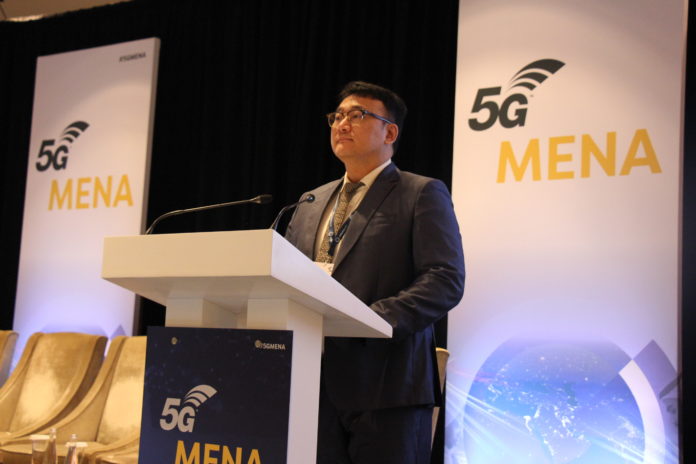
ZTE Corporation (0763.HK / 000063.SZ), a major international provider of telecommunications, enterprise and consumer technology solutions for the mobile internet,, today announced that it has won the “Best Mobile Transport Solutions to Connect 5G Services” award with its “5G Transport Network Enables Telco’s Digital Transformation” solution at 5G MENA 2022.
5G MENA is one of the most significant telecommunications industry events in the Middle East and North Africa, focusing on advancing and commercializing 5G networks.
The award recognizes ZTE’s innovation capability and leading position in the 5G transport solutions. To cope with the demands for digital transformation, ZTE proposes the 5G ready transport network solution, which adopts hierarchical decoupling and enables independent planning of the network layer, service layer, and management & control layer. The network resources can be configured on-demand, with open standard components. Users in different industries can make differentiated combinations of these components according to their needs.
ZTE has implemented the world’s first 120-channel 400Gbps OTN innovation pilot project, the 800Gbps trial in a live network in China and the single carrier 400Gbps DWDM network in Turkey. Also, ZTE has been working with top operators to verify and deploy IP network slicing solutions, and helping them reconstruct their operating model.
With advanced technologies in 5G transport networks and rich experience in network deployment, ZTE has been committed to becoming a driver of digital economy. ZTE will continue to work with its customers and partners to promote digital transformation and boost the development of the global telecommunications industry.
ZTE Corporation (0763.HK / 000063.SZ), a major international provider of telecommunications, enterprise and consumer technology solutions for the mobile internet has won the “Best Mobile Transport Solutions to Connect 5G Services” Award at 5G MENA 2022, with its “5G Transport Network Enabling Telco’s Digital Transformation” solution.
ZTE, as the diamond sponsor of the event, shared its rich experience and profound insights into 5G commercialization, 5G services and 5G private networks.
5G MENA, focusing on advancing and commercializing 5G, is the leading telecommunications industry event in the Middle East and North Africa. Over 250 operators attended the event, and more than 30 experts in the industry made their speeches or joined the discussion.
Mr. Zhao Tongyu, the CEO of Middle East Area at ZTE Corporation, gave a keynote speech entitled Driving the Commercialization of 5G in the Region. Mr. Zhao Tongyu shared the viewpoint about bridging the 5G commercialization gap in MENA Region. According to Mr. Zhao, “1+3+N” themes, specifically, one extremely network, three traction enabling 5G on fingertips, N industries embracing 5G, should arouse attention and be deeply explored.
Mr. Abdessattar Sassi, the CTO of UAE Office at ZTE Corporation, joined the discussion named Expectations and Reality from 5G Services. “5G brings tremendous opportunities to enterprises across the world,” said Mr. Abdessattar Sassi. “As we can see, factories are becoming smarter, ports more efficient, supply chains more resilient, and more industries are transforming with 5G, including our own factories at ZTE.”
Looking forward to the future of 5G, Mr. Abdessattar Sassi added, “With network slicing and the low latency communication of 5G SA, even more scenarios will be unlocked, such as remote machinery operation in hazardous conditions and high precision robotic control.”
Mr. Fabio De Gaetano, Chief Adviser of Cloud Core Network in MEA at ZTE Corporation, made one presentation about ZTE 5G private networks as a service. Mr. Fabio De Gaetano emphasized, “5G is a real game changer in the private network area. Compared to legacy solutions, which on site are based on wired+WiFi and use a VPN for remote access, 5G mobile private networks offer more security, more reliability, full mobility and higher speed. So now operators can leverage their 5G networks to provide private networks as a service for business customers. Also, 5G can be used in scenarios with the requirements of L2/L3 connectivity and deterministic low latency, which is quite common in many industrial scenarios, by adopting the time sensitive networks and 5G LAN approach.”
ZTE has been committed to becoming a driver of digital economy, together with its customers and partners to accelerate the 5G development in the Middle East and North Africa, and promote the digital transformation in the regions.
President Yoweri Museveni superbly addressed Ugandans on Sunday, May 22, 2022 regarding the current economic situation which has been typified, globally, by rising commodity prices; a matter that recalcitrant and gaffe-prone Kizza Besigye plus other less sagacious opposition oligarchs, who please in using others’ children in street violence and not theirs, have been shamelessly taking advantage of via street protests to rally unsuspecting folks.
Firstly, the impression Besigye and others with a cognitive deficit want to create that commodity prices are only rising in Uganda is fraudulent; those prices, including the cost of gas/fuel have been rising even in the western world sparking a plethora of intense public debate in those countries where empty supermarket shelves greet the public. International experts say that has resulted from mainly two things namely: the Covid-19 pandemic that drugged on for years plus the Ukrainian conflict which, together, have impeded the movement of commodities including oil. That has adversely impacted the global economy with spiralling energy and commodity prices hence disrupting the global logistical supply chains. Interestingly, Russia and Ukraine produce almost a third of the world’s wheat and barley and half of its sunflower oil; there are reportedly 25 million tons of grain idly sitting in Ukrainian silos currently, food that could be afforded to the ever-burgeoning numbers of the globe’s needy hence exacerbating food insecurity, Besigye and his ilk should know this had it not been for intellectual dishonesty. And that’s just one dimension; relatedly, the world’s energy crisis partly sparked by the Ukraine crisis and the attendant western sanctions against Russia have made the transportation of goods very expensive.
Secondly, angry Besigye and his ilk should do Ugandans a favour by proposing, through their party, (and I hear they have created another outfit besides the FDC they helped to found), how they would tackle the rising commodity prices if they were in government – their street protests are methodically antiquated. Relatedly, those street remonstrations are a surer way of dousing fire with petrol; Besigye’s selfish protests are injurious to the business community, some of whom have hefty and time-bound bank loans and attendant interest obligations.
So, if indeed Besigye is business-friendly and a patriot, he ought to do the honourable thing of stopping the no-sense of stampeding the business environment – that way, Besigye and his polity would be hailed as selfless nationalists who are not unhinged. Anything less, would be their mission un-driven.
Thirdly, the issue of rising commodity prices is not a partisan one as Besigye and others with minor intellectual resources would want us to believe; it requires a tested and safe pair of hands in managing national crises – which President Yoweri Museveni already exemplified by the dexterity and devoutness he had during the worst segment of multifarious insurgencies as well as the HIV-Aids, Ebola and Covid-19 pandemics to mention a few. His successful handling of those calamities and pandemics indelibly earned him accolades from the international community. Relatedly, social media pretenders who have been afforded ample commentary space quoted the president out of context on the bread/cassava debate; his good intention was to help citizens cope with this global price crisis by cutting “your court according to your cloth.” In the EU, governments have urged citizens to ration gas as a result of its rising prices; has Besigye heard about this? All partisan actions pointlessly taken regarding the price hikes, including Besigye’s street remonstrations and demurrals, will only exacerbate the prevailing volatility the very reason why security shouldn’t tolerate even a particle of that political indiscretion.
Fourthly, the bromantic duo, Besigye and his side kick -Elias Lukwago, who read from the usual script of disreputable remonstrations have assured means of survival since the former depends on a thriving string of businesses whose life-line flourishes in a free market and peaceful environment afforded to us by the Yoweri Museveni administration and the later, on the public purse. So, their egomaniacal appetite for stampeding others’ means of subsisting should be understood in that context. Elsewhere, we have seen the validation of the saying that “every cloud has a silver lining” where a larger portion of Uganda’s recessing opposition, including the Kamwokya group, has repudiated the duo’s political posturing of violent protests. Fortunately, Besigye’s following has, over time, shrunk to a bare minimum of idlers and hangers-on.
Lastly, the duo’s bombastic political posturing is badly misplaced and won’t succeed because: Ugandans are weary of anyone who would want to disturb their hard-earned peace in an act of self-infatuation.
At the invitation of the Government of the United Kingdom, troops from the Uganda Peoples’ Defence Forces led by Major Angella John Jovani took part in the Platinum Jubilee pageant that was held in London on Sunday June 5, 2022 as part of Her Majesty the Queen Elizabeth’s Platinum Jubilee celebrations.
Her Majesty the Queen became the first British Monarch to celebrate a Platinum Jubilee after 70 years of service having acceded to the throne on 6 February 1952 when Her Majesty was 25 years old.
The pageant was organised as a part of a series of celebrations that took place from 2nd – 5th June in honour of the Queen. The Pageant was the final event of the four-day celebrations for Her Majesty the Queen’s Jubilee.
There have been Jubilee pageants in London since the 19th Century when Queen Victoria’s Jubilees which set the tone for all those which have been marked subsequently.
Such pageants are largely ceremonial in nature, with troops representing the governments and peoples of nations in every part of Commonwealth. The vision of such pageants is to be carried forward in fresh and ever more inclusive ways, with servicemen and women joining together in goodwill and friendship with representatives from many other walks of life.
The UPDF team accompanied by the Uganda’s Defence Advisor to UK, Brig Gen James Kaija later paid a courtesy call at Uganda Mission London where they were commended by the Ag. High Commissioner, Amb John Leonard Mugerwa and staff for representing the country and were briefed about the Mission’s mandate.
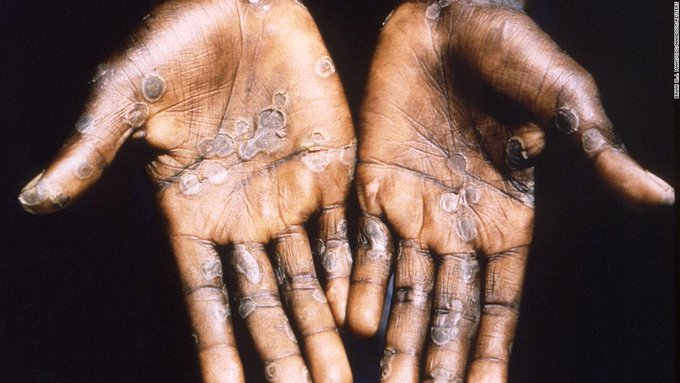
The Ministry of Health (MoH) on Monday June 6, 2022 said it has heightened surveillance following the spread of monkeypox in some parts of the world.
Dr. Henry Mwebesa, Director-General Health Services, said although Uganda has not registered any case, there is a need to increase surveillance after the disease spread to 23 non-endemic countries worldwide and eight endemic countries in Africa, including neighboring Democratic Republic of Congo.
“The Ministry of Health is working closely with partners to monitor the evolving situation of the monkey pox outbreak in different parts of the world,” he said in a statement issued.
The ministry, according to the statement, has intensified surveillance by all health workers to look out for patients with suspected signs and symptoms of Monkeypox.
Testing capabilities at the Uganda Virus Research Institute, the biggest laboratory in the country, have been strengthened to accurately diagnose Monkeypox.
Monkeypox, according to the statement, is a viral disease transmitted from animals to humans. It is spread from one person to another by close contact with lesions, body fluids, respiratory droplets, and contaminated materials such as beddings.
“Eating inadequately cooked meat and other animal products of infected animals is a possible risk factor,” added the statement.
Signs and symptoms include fever, rash, intense headache, swelling of the lymph nodes, back pain, muscle pains, and body weakness; 3-6 per cent of infected people succumb to the disease, the ministry said.
“Monkey Pox can be prevented by avoiding physical or direct contact including intimate or sexual intercourse with an infected person. If someone is suspected or confirmed as having Monkey Pox, they should isolate at home or in an appropriate facility until the scabs have fallen off, and abstain from sex, including oral sex,” the statement guided.
During the period of infection, patients must be offered supportive medical care to ease symptoms such as pain or itchiness and they should be monitored for early detection of any medical complications of the illness. If one develops a rash, fever or a feeling of discomfort, please contact your health worker and get tested for Monkeypox.
“The Ministry of Health is working with partners to closely monitor the evolving situation of the outbreak of Monkeypox in different parts of the world and the following interventions are being undertaken. Always use appropriate Personal Protective Measures when taking care of a patient who has tested positive for Monkeypox,” read part of the statement.
The ministry is strengthening testing capabilities at Uganda Virus Research Institute (UVRI) to test and accurately diagnose Monkeypox. There is also intensified surveillance by all health workers to look out for patients with suspected signs and symptoms of Monkeypox and report to the Ministry of Health through the formal reporting channels and intensified partner and stakeholder engagement with other Ministries, Departments and Agencies (MDAs) including the Wildlife Authority to strengthen surveillance both in the animal and human health sectors.
“The general public is advised to remain vigilant and report any suspected patients to the nearest health workers immediately,” the statement said.
The Opposition legislators have boycotted President Yoweri Museveni’s State of the Nation address over government’s failure to avail tangible solutions to the surging prices of commodities in the country.
Since the full reopening of the economy in January 2022, the country has witnessed a continuous upscale of prices of essential commodities where prices of soap doubled, fuel, sugar, cooking oil among others increased to over 30 per cent.
Matia Kasaija, the Minister of Finance Planning and Economic Development has since linked the shooting prices of commodities to the increasing prices of fuel and the ongoing Russian invasion of Ukraine. It must be remembered that before the Russia- Ukraine war, the prices had already shot up.
According to the Leader of Opposition (LoP) Mathias Mpuuga, they resolved to stay away from President Museveni’s address to Parliament as a way of expressing their displeasure at the head of state’s continued interference with the judiciary.
Following the arrest of the Kawempe North MP Muhammad Ssegirinya and Makindye East MP Allan Ssewanyana in September 2022, Museveni said despite being a constitutional right, murderers and rapists should not be released on bail. The two MPs are accused of murder, terrorism, abetting and aiding terrorism and others. They were granted bail and later rearrested. Mpuuga said they are standing in solidarity with the remanded legislators who are waiting to get justice.
“We are boycotting because of his failure to offer tangible solutions to the worsening economic situation in the country. While constitutionally it’s meant to be a State of the Nation Address, he has reduced it to a State of his feelings address that’s a huge constraint to us. We are aware that even today, he’s going to say that he has nothing to do to get the country out of the depression. We are not interested in dosing,” Mpuuga said.
Several opposition leaders who include the former presidential Candidate Dr. Kizza Besigye, Kampala Deputy Mayor Doreen Nyanjura, Soroti Woman MP Anna Adeke Ebaju and others have since been detained for protesting over the increasing prices of commodities.
Two students at Young Elite Primary School in Kasokoso and MH Junior School Nabbingo deliberately set their property in the school dormitories on fire because they were fed up with school.
The facts gathered indicated that on June 3rd, a 16-year primary 7 pupil, Mutwama Aminadabu, of Young Elite School, Kasokoso, packed his school items and returned home where he told his parents that he was no longer interested in school. They instead chased and forced him to return to school.
Upon reaching school, Mutwama set his properties on fire, which spread and burnt 7 other mattresses, clothes, school uniforms, 4 beds, 1 dispenser and part of the roof to the dormitory. Police said the suspect escaped from school and is still at large.
“It is fortunate that no pupils got injured since they were in class however, properties valued at approximately Shs10 million got burnt,” the Police spokesperson Fred Enanga said.
In a separate development, on June 4th at about 5 am, Muyanja Anani Aramathan, aged 11 and P.4 pupil of MH Junior School Nabbingo, informed his matron Nalwanga Cissy, about a fire outbreak in the dormitory.
“The matron found when the fire had just started burning the bed of Muyanja Anani and immediately put out by neighbors and the shool staff. A matchbox was recovered under the bed of Muyanja, who was fed up with the school and hated classes. He therefore, wanted to burn the school, so that they are sent home,” said Enanga.
The matter was reported to Kakungube Police by the Head teacher Nakhaima Aggrey.
Enanga said fires in schools can be a dramatic effect on the educational environment for the pupils and the staff. He urged Headteachers and school staff to closely watch out for pupils who have a dislike for classes and seek services of counsellors, parents and guardians, to help minimize the risks of arson in schools. “In addition, target hardening practices like deterring unauthorized entry into the school, buildings, ensure all combustible items are kept away from pupils and conducting fire risk assessments regularly,” he said.