Stanbic Bank
Stanbic Bank
26.6 C
Kampala
Stanbic Bank
Stanbic Bank
Home Blog Page 624

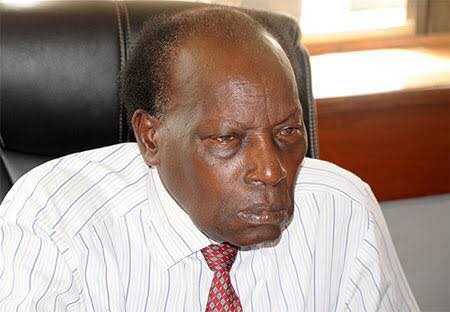
Former Judge Kanyeihamba seeks to withdraw bail petition against Museveni

Prof. George Kanyeihamba

The retired Supreme Court Judge Prof. George Kanyeihamba has asked the Constitutional court to drop his petition challenging President Yoweri Museveni and the National Resistance Movement-NRM’s move to scrap bail for capital offenders.

Kanyeihamba sued President Museveni, Attorney General and the NRM party saying they wanted to change the law so everybody is ‘guilty until you prove that you are innocent’ yet the law saying everyone is presumed innocent until proven guilty.

During the pre-hearing of the case on Monday, Justice Kanyeihamba told court that he intends to ask for an adjournment when it comes up for full hearing before the panel of five justices until when the government brings back the threats to scrap off bail.

“When we come back for the hearing, we shall ask the court to drop the petition and adjourn its hearing indefinitely because there is nothing to arbitrate on since we have learnt that the respondents have withdrawn their threats,” Justice Kanyeihamba told court.

Kanyeihamba said if the President wants to remove the right to bail, he should first withdraw Uganda from all international treaties that guarantee bail globally,” he said adding “that the removal of bail is a violation of human rights of capital offenders.”

The petition further stated that, although the Attorney General and the Government of Uganda have a right to limit fundamental rights and freedoms, it can only be done in line with Article 43 of the 1995 Constitution and International laws.

“Article 23 of the Constitution of Uganda guarantees and prescribes the Right of any person charged with a criminal offence to apply for bail, which the court can honor or deny,” reads in part the court document.

However the AG filed an affidavit of Ms Lucy Mbonye Nakyobe, the Head of Public Service and Secretary to Cabinet, who asked the court to dismiss the case against the sitting President since he is protected under the law.

She added that the petition is misconceived and it purports to challenge public statements of opinion and recommendations on proposed legislative reforms of the law governing bail, which have not been passed into law.

Court set June 16 for hearing of the case before a panel of five justices who include; Catherine Bamugemeire, Stephen Musota, Irene Mulyagonja, Muzamiru Kibeedi and Monica Mugenyi.

Stories Continues after ad

It isn’t Sudhir or any other Ugandan after my property – Bitature

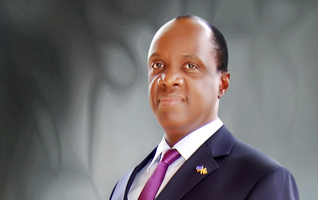
Businessman Patrick Bitature

Troubled businessman Patrick Bitature has come out to apologise to fellow businessman Sudhir Ruparelia.

There has been a social media campaign dragging in Sudhir’s name which was made worse with the revelation in the local press that the loan from Vantage was used to pay Crane Bank Limited.

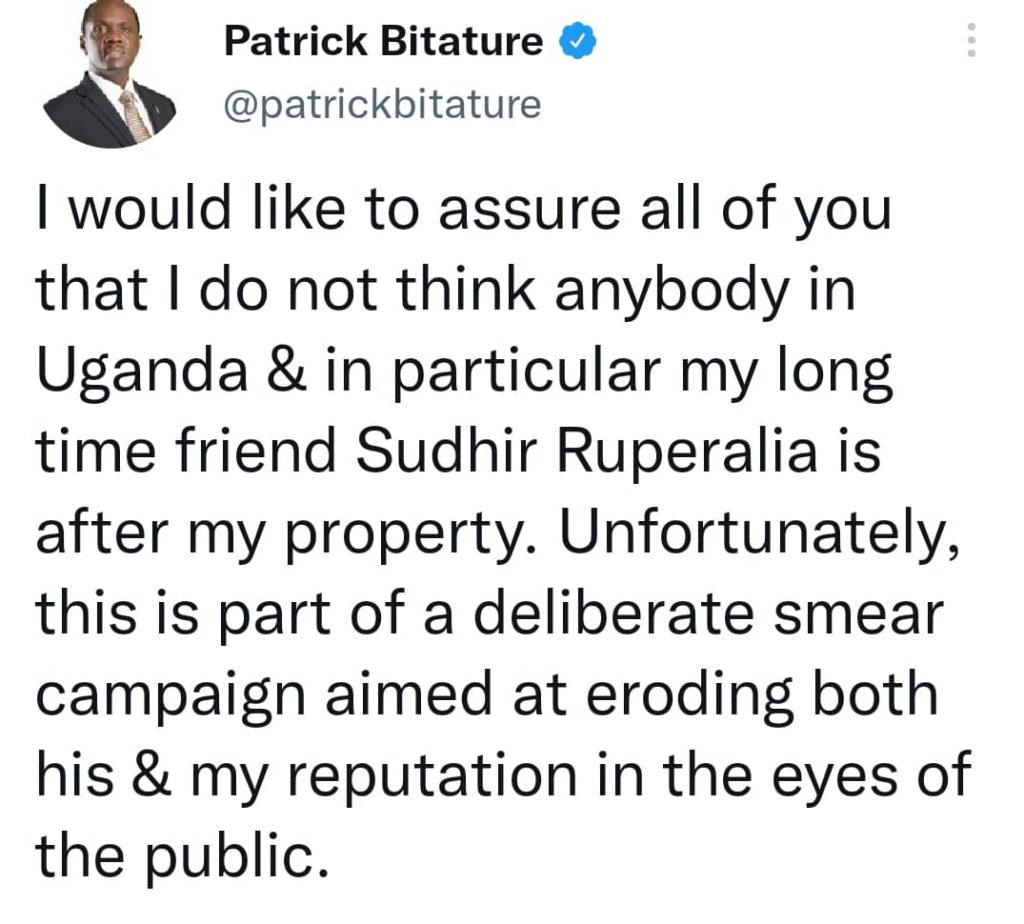
Bitature said in a tweet on his handle @patrickbitature that it was part of the deliberate smear campaign to drag Sudhir in his woes.

“I would like to assure all of you that I do not think anybody in Uganda and in particular my longtime friend Sudhir Ruparelia is after my property. Unfortunately, this is part of a deliberate smear campaign aimed at eroding both his and my reputation in the eyes of the public.”

In December 2014, Bitature’s Simba Properties Investment Company (SPIC) acquired $10 million loan from Vantage to pay an outstanding loan but also complete his Skyz Hotel in Kampala. Bitature at the time praised Vantage for the timely financial help. Now he does not want to pay the loan arguing that it is illegal, the date of repayment having elapsed in December 2019.

For instance, he has said part of the loan he acquired from Vantage was paid to Crane Bank Limited (CBL), formerly owned by Sudhir Ruparelia, the Chairman of Ruparelia Group. CBL was unfairly sold by Bank of Uganda (BoU) to DFCU in January 2017 in a transaction worth Shs200 billion, paid in installments.

But the turn of events, troubled City businessman yesterday admitted in a public statement that he legally borrowed money from Vantage Mezzanine contrary to his lawyer Fred Muwema who said Vantage was a ghost company.

Bitature who has come under public criticism says he is willing to settle the loan with Vantage despite the ongoing private prosecution initiated by Vantage.

“As part of its business expansion plans, Simba approached Vantage Capital in 2014, seeking an alternative to the more common and mainstream pure debt funding for business expansion. Consequently, a “Mezzanine Term Facility Agreement (MFTA)” was signed between Vantage Mezzanine Fund II partnership (“Vantage”) and Simba Properties Investment Company (Simba) for $10,000,000 to fund projects within the Group. These projects included the completion of Protea by Marriott Skyz Hotel and working Capital for our ElectroMaxx power Subsidiary. The agreement had a 3- year Moratorium (freeze) for repayment of both the principal and interest.”

Patrick Bitature who was ranked among the top “five Ugandan Multi-Millionaires” by Forbes Magazine in 2012 has opened up on his wealth, applauding Sudhir Ruparelia for the mentorship.

Bitature in a video where he was recently giving an inspirational talk to a number of graduates said Sudhir helped him to master the courage to invest in the real estate sector and property.

“He held my hand when I was going into property and I was scared,” says Bitature, adding that at the time he had made some good money after investing in MTN Uganda but he had not expanded his business portfolio as it is today. He is quoted by PML Daily news website.

He says that one day after having lunch with Sudhir at Speke Hotel, “he held my hand and we went to Kyadondo, a Kampala suburb, where Sudhir showed him “three properties in the row” and “said buy them”.

Bitature, who didn’t have enough money at the time (all the properties were above Shs100M) wanted to decline the offer, but when he told Sudhir that he didn’t have money, Sudhir promised to lend him more and top up what Bitature had.

Bitature says that he partly felt Sudhir Ruparelia was trying to set him up.

Stories Continues after ad

URA relaxes warehousing restrictions on old vehicles

Car bond

The Uganda Revenue Authority (URA) Commissioner-General John Rujoki Musinguzi has said the tax body reviewed its earlier directive to remove motor vehicles dating nine years old or more from the warehousing regime to adopting a one-year reduction approach on warehousing regime for the motor vehicles.  

Musinguzi said during an engagement with used car dealers at the authority’s headquarters in Nakawa.

With the new measure, which takes effect on 1st July 2022, motor vehicles older than 13 years shall pay taxes while at the first ports of entry into the East African Community (EAC).

Musinguzi also resolved to reduce the warehousing period of motor vehicles aged nine to 12yrs, to only six months without extension. The current practice allows an importer to warehouse such vehicles up to nine months.

“Considering the current economic landscape and the geo-politics that has caused creeping inflation in the country, it is imperative that URA adopts a more gradual but progressive approach to the restriction of warehousing of used Motor Vehicles,” Mr. Musinguzi said.

He further told the car dealers, that URA recognised the effect of the current global inflation, which is still affecting businesses in all sectors, the approach to adopt changes in the warehousing regime ought to be reviewed.

In a notice issued on 1st April, 2022, the tax authority directed all importers of cars dating nine years old or more to undergo Customs clearance and pay taxes at the port of entry into the EAC before such vehicles are allowed into Uganda. This was to take effect on 1st July, 2022 for private motor vehicles excluding commercial ones.

Consequently, on 5th May, 2022, the importers, under their umbrella body, Used Car Dealers Association of Uganda, petitioned the URA Commissioner General expressing dissatisfaction with the directive.

In the petition, used car dealers were concerned about the directive’s impact on the re-export business. They noted that 5,000 vehicles are re-exported to South Sudan, Democratic Republic of Congo and Burundi. Marvin Ayebale, the association spokesperson, said 83% of the re-exported motor vehicles fall in nine to 15-year category. He added that if the URA directive is adopted, a close to Shs120 billion  business faces a threat since vehicles intended for re-export would have to be cleared at the ports.

The vehicle dealers also sighted the Covid-19 pandemic and the current inflation occurring globally as one of the hindrances which may not favour clearing the motor vehicles at the points of entry. The car dealers stressed that the business was greatly affected and measures that require more capital at hand put the fraternity at risk.

The used car dealers welcomed the new resolution on warehousing without extension and said it was a more accommodative measure as opposed to earlier directive that was entirely abolishing warehousing.

The URA’s initial directive on motor vehicles dating nine years or more was meant to avert revenue loss which was caused by warehousing of motor vehicles for a period up to nine months. Government revenue was being held by delayed warehousing of such motor vehicles.

Stories Continues after ad

Museveni tips African leaders on fighting terrorism, coups at AU summit

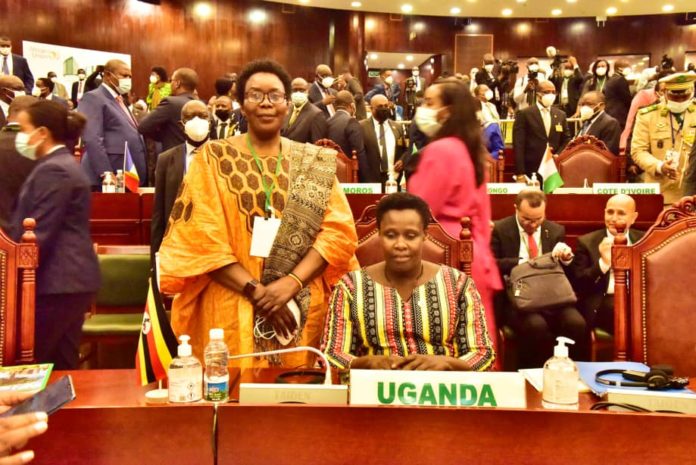
President Museveni was represented by his Vice President, Jessica Alupo.

President Museveni, represented by his Vice President, Jessica Alupo addressed the summit on three issues; terrorism, unconstitutional changes of governments in Africa and Russia-Ukraine conflict. Terrorism, coups, insecurity and armed conflicts featured high on the agenda at the just concluded African Union summit.

Several Heads of State and governments echoed sentiments to assess and address the threats of what is now seen as re-occurring phenomena, on the continent.

President Museveni, represented by his Vice President, Jessica Alupo addressed the summit on three issues; terrorism, unconstitutional changes of governments in Africa and Russia-Ukraine conflict.

On terrorism, Museveni stated that Uganda had managed to defeat the vice over the years including, terrorism sponsored by some international and regional actors.

This he said was achieved by building a strong and professional army which is equipped with the correct ideology of; non-sectarianism, nationalism, pan-Africanism, social economic transformation and democracy. As a result he added “we have legitimately managed to support some of our brothers in Africa in the fight against terrorism”. Museveni further added that African countries should build strong and professional armies with correct ideology to fight and defeat terrorism.

On the Unconstitutional Changes of Government, President Museveni issued a strong condemnation of unconstitutional changes of legitimate and democratic Governments, asking rhetorically, whose interests the coup makers were serving.

“Are the coup plotters better than those they are overthrowing?. Coup d’états are not the solution, they simply postpone problems. These Coups make Africa lag behind. Evidence suggests that elected Governments, despite some weaknesses, are more accountable to the people”. The President gave a historical context of Uganda, which from 1962 to 1986, had a lot of political turbulence and coups. “These military overthrows caused Uganda to lag behind,” Museveni asserted.

On the Russia-Ukraine conflict, President Museveni explained why Uganda chose to abstain from voting when the issue was raised at the United Nations, drawing from the experience of the 1962 Cuban missile crisis, when the US Government sought to overthrow President Fidel Castro causing Soviet Union to deploy missiles in Cuba to save the Government of Cuba. Uganda, therefore, is asking the Western powers two questions before we take a position. “As US is now saying that Ukraine is a sovereign state, in the same way “wasn’t Cuba a sovereign state?”.

Secondly, out of 44 million people in Ukraine, approximately 14 million are of Russian origin requesting Ukraine to be allowed to be bilingual just like Canada. “Why not allow Ukraine to be bilingual like Canada?” To date, Uganda is still waiting for responses to those two questions from western powers so that Uganda can take a position about the conflict.

He said that African leaders should not be afraid of doing correct things, simply because they are afraid of annoying western powers.“Leaders should instead do things because they are correct and in the interests of their people and, other external actors will understand our correct strategy in the long term,” Jessica Alupo read, on behalf of President Museveni.

On his part, Faki Mahamat, Chairman of the African Union Commission said terrorism is not weakening because of insufficient African solidarity, adding that the creation of the African standby force which since its creation is not yet operationalised, and “our fight against terrorism is slowed down by the absence of a strong commitment from the international community with the west’s double standards”.

Macky Sall, Chairperson of the African Union, also President of Senegal shared data from the African centre for the study and research on terrorism which indicated that terrorist attacks on the continent had grown from 508 in 2012 with 2563 victims, to 2034 attacks in 2021 causing 8631 deaths. The chairperson said it was necessary to change the doctrine of peace operations in Africa from “mandates and rules of engagement of operations that prefer peace keeping and not the fight against terrorism”.

President Sall also addressed the meeting on unconstitutional changes of Government, giving a deep context of the realities African countries are facing.

He called for an end “to the sacrosanct principle of noninterference in the internal matters every time the democratic legitimacy upheld by our texts is violated” saying it was an illusion to imagine that coups d’état are a solution to our problems; because, he said, “might does not make right or legitimacy any more than it can solve the complex issues of economic and social development”, H.E Sall further stated that democracy is basically weak, saying that “beyond the texts which give it form, it rests on subtle equilibrium between individual and collective liberties and the necessity to protect public order and institutions”.

Several other leaders addressed the meeting with different proposals, commitments and pledges on how to stop terrorism on the continent and, on how to effectively deal with unconstitutional changes of Government in Africa. Four AU member states-Mali, Guinea, Burkina Faso and Sudan are suspended because of coups.

Stories Continues after ad

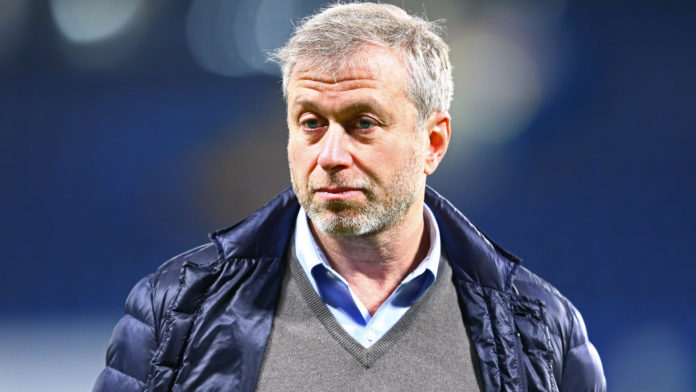
Chelsea takeover completed as Roman Abramovich era ends

Previous owner Roman Abramovich was sanctioned over his links to Russian president Vladimir Putin.

Chelsea’s £4.25bn sale to a consortium led by American investor Todd Boehly and private equity firm Clearlake Capital has been completed.

The club was put up for sale in March before previous owner Roman Abramovich was sanctioned over his links to Russian president Vladimir Putin.

Chelsea had been operating under a special government licence which would have expired on 31 May.

Boehly said that he was “honoured” and “wanted to make fans proud”.

The consortium fought off 11 serious rivals to become the new owners, in a sale process that started on 2 March and comprised more than 250 enquiries.

“We are honoured to become the new custodians of Chelsea Football Club,” he said.

“We’re all in – 100% – every minute of every match. Our vision as owners is clear: we want to make the fans proud.

“Along with our commitment to developing the youth squad and acquiring the best talent, our plan of action is to invest in the club for the long term and build on Chelsea’s remarkable history of success.

“I personally want to thank ministers and officials in the British government, and the Premier League, for all their work in making this happen.”

The UK government – which said last Wednesday it could issue a licence for the sale of the club – does not want Abramovich to receive any of the proceeds from the sale, which will instead go into a frozen bank account to be donated to charities supporting victims of the war in Ukraine.

Several parties expressed an interest, but Chelsea agreed to sell to the Boehly-Clearlake Capital consortium earlier in May, with Californian private equity firm owning a majority of the shares as it makes its first foray into sport.

Boehly, 48, is also a part-owner of seven-time baseball World Series champions the LA Dodgers, US women’s basketball team the Los Angeles Sparks and NBA franchise the Los Angeles Lakers.

He has also invested in Bruce Springsteen’s song rights, a sports betting firm and restaurant chains.

Other investors include US billionaire Mark Walter, a co-owner of the LA Dodgers with a stake in the Lakers like Boehly, and Swiss billionaire Hansjorg Wyss.

End of an era

Abramovich bought Chelsea for £140m in 2003.

Under his ownership, the club won every major trophy – two Champions Leagues, five Premier Leagues, five FA Cups, two Europa Leagues and three EFL Cups.

In August 2021 they won the Uefa Super Cup and in February their first Club World Cup.

Abramovich has appointed 13 managers and the club has spent more than £2bn in the transfer market under his ownership.

Chelsea’s women’s team, who became affiliated to Chelsea FC in 2004, have won five Women’s Super League titles and four FA Cups under Abramovich.

When an agreement for the sale was reached, he said: “As I hand over Chelsea to its new custodians, I would like to wish them the best of success, both on and off the pitch.

“It has been an honour of a lifetime to be a part of this club – I would like to thank all the club’s past and current players, staff, and of course fans for these incredible years.”

Stories Continues after ad

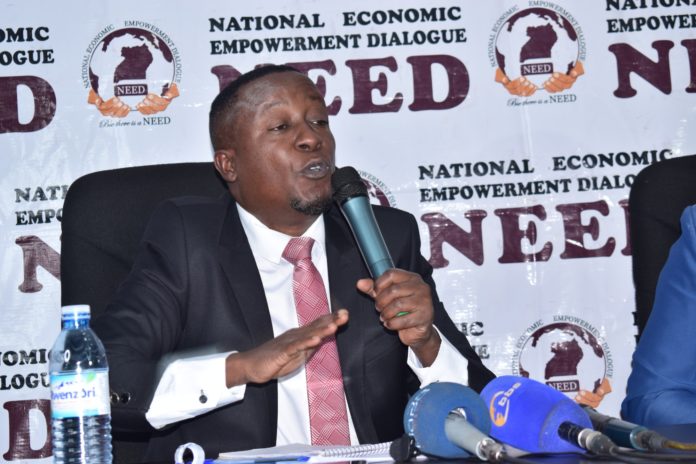
Joseph Kabuleta says every Ugandan is suffering including Banyankore

Joseph Kabuleta Kizza

The leader of National Economic Empowerment Dialogue (NEED) Joseph Kizza Kabuleta has revealed most people in Ankole sub-region are suffering despite the fact that President Yoweri Museveni is coming from the same region.

Speaking to journalists earlier today, Kabuleta attributed peoples suffering to the current bad leadership that supports segregation and sectarianism.

“People in Ankole are in abject poverty but a certain class of a few privileged people cover up the situation to make it look like all people from Western Uganda are well off,” he said at NEED headquarters.

“Not all people in Ankole have benefited from the NRM regime; most of them are facing the same problems faced by people in other regions. The privileges are enjoyed by the Bahima and Tutsi people who control everything in the Sub-Region,” he said.

He said Bahima’s 50 year grand plan which started as a rumor, truly exists and it’s being executed up to date.

“These people in 1992 came up with a 50 year master plan to rule Uganda. And part of that master plan was to give people their money to start a money lending business. They give you a rosy loan at an exorbitant interest so that you fail to pay back. When you fail, they take over your collateral such as land and buildings.

“They intentionally keep you in poverty so that when your child falls sick or you want to take them to school you will have to sell your land to them. A lot of public land is being taken by private people who are from/close to the ruling establishment. The concept of Uganda is slowly fading away. We now have the Bahima taking over everything,”

“We fight because our children shouldn’t be turned into slaves. These people’s vision is to turn Uganda into a Tutsi empire. We should not be superior or given privileges because of our ethnic background. We are fighting sectarianism and we are going to have justice anytime.”

The former Isingiro North contestant Prossy Ayebare said that the Ankole sub-region currently has two classes of people; Tutsi, Bahima (Masters) and Bakiga, Banyankore (Biru/slaves).

“The Banyankore and Bakiga are oppressed people, we have political, economic and social challenges . The Bahima and Tutsi are the ones who take decisions like who get what job, who joins the army among others.They are a small group of people with a lot of powers,” Ayebare said.

“When it comes on a national level, you take us (All people from Western Uganda) as superiors but in actual sense, it’s not the case. We are not allowed to vote in elections, Hospitals lack medicines, schools have no proper structures.”

She further accused the Bahima and Tutsi of sidelining the Banyankore and Bakiga when it comes to empowering the people of Ankole economically.

“Our animals are ever in quarantine. The Bahima/Tutsi do not pay taxes, don’t pay for water or electricity bills, the burden is always imposed on us by the Biru,” Ayebare added.

“When it comes to land grabbing, we suffer like the people in Buganda or any other part of the country.”

Edwin Akoragye, a resident of Biharwe in Mbarara city also expounded that the Bahima/Tutsi have a tendency of choosing specific sons and daughters from their families, give them scholarships to study in good schools and universities abroad as well as giving them capital to start businesses so that they can run the politics and economy of Uganda.

“If the whole country has gone to the dogs, why do you think it’s a different story in Ankole?” Akoragye wondered.

He further affirmed that there’s a deliberate move by a small group of people in Ankole to own and control everything in Uganda and make citizens paupers and slaves in the own country.

“There’s a plot in Ankole to plan for Kampala in the name of keeping it ‘clean’. They want to contract their people to peel all matooke from Rubindi. They want to supply already peeled matooke to Kampala. There’s an abattoir in Biharwe where they want all cattle to be slaughtered from. They want to supply ready to cook meat to Kampala. These people want to control everything starting from coffee, matooke, milk among others.”

“The issue of land grabbing is everywhere, Ankole inclusive. In Rwenjeru Ranch, one person was given 500 square miles free of charge because he rears Ankole cattle. He is very close to power. This is done at the expense of the poor people who are starving and have nowhere to till,” Akoragye divulged.

“Ankole people are not sectarian, we are good people. We are not like how some people portray us to be. Some people taint us to be rich yet that applies to only a few powerful people.”

Asuman Odaka, the NEED National Coordinator said they came up with the idea of profiling each region in order to downplay the speculation or reasoning that some citizens in specific areas are doing better than others.

“People from Bukedi think people from Ankole are well off. We focus on every region to show you that we are facing the same problems as Ugandans,” Odaka said.

Stories Continues after ad

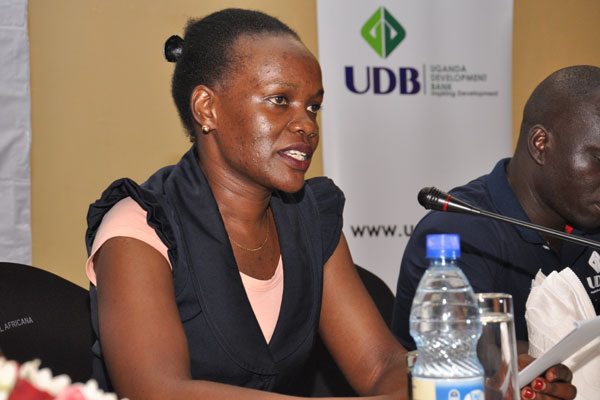
UDB in the spotlight over loan disbursements

CEO of Uganda Development Bank, Patricia Ojangole.

Uganda, like the rest of the world, is reeling from the shocks of the #Covid-19 pandemic that placed the economy in a chokehold. The recent Ukraine war has upended supply chains and sent fuel prices soaring to unprecedented figures. This has reverberated across the World with a deadly sting especially in low developed countries and strangulated the global safety net to buffer weak economies such as Uganda.

A huge chunk of corn and barley is trapped in Russia and Ukraine because of the war, while an even larger portion of the world’s fertilizers is stuck in Russia and Belarus. The result is that global food and fertilizer prices are soaring.

However, Uganda has a comparative advantage in Agriculture with its arable land and can go beyond the cliché of being the regional basket to supply East, Central and Southern Africa, and the rest of the world with organic food, fresh fruit and vegetables.

Uganda is also a jewel in the crown as a favourite tourism hotspot and growing fortunes in its minerals sector should ensure that the country makes the much-vaunted leap to middle-income status with ease.

However, there are two other critical sectors that must match our comparative advantage —the health and education sector. The #Covid-19 pandemic has already shown us why the health sector is a critical area that needs robust investment. Uganda spends billions of shillings treating VIPs in medical facilities abroad as the ordinary taxpayers languish in ailing hospitals. This is akin to medical apartheid. The other critical area is the education sector. As the bus departs towards the fifth industrial revolution, Africa can’t afford to continue lagging behind only offering a paltry 2 per cent of trade and services to the entire world and remain the poster-child of a neo-colonial agenda— a sanctuary for the developed world for its resources.

The cornerstones of a policy framework for developing a suitably skilled workforce are—broad availability of good-quality education as a foundation for future training—a close matching of skills supply to the needs of enterprises and labour markets— enabling workers and enterprises to adjust to changes in technology and markets— and anticipating and preparing for the skills needs of the future.

When applied successfully, this approach nurtures a virtuous circle in which more and better education and training fuels innovation, investment, economic diversification and competitiveness, as well as social and occupational mobility – and thus the creation of more but also more productive and more rewarding jobs.

Good-quality primary and secondary education, complemented by relevant vocational training and skills development opportunities, prepare future generations for their productive lives, endowing them with the core skills that enable them to continue learning.

As the #Covid-19 pandemic ravaged businesses and sales of SMEs cratered, President Museveni revealed that the government had capitalised Uganda Development Bank (UDB) to offer loans to some of the most critical sectors of the economy.

Amongst some of the most affected businesses were school institutions, some of which have defaulted in regard to loans from commercial banks leaving a huge gap in providing quality education to learners.

If UDB could lend to this critical sector, this could offer a saving grace to the vital education sector.

We must either commit to building a well-educated citizenry who can compete on merit globally or we shall perish with incompetent run-of-the mill products.

UDB needs to undertake a policy configuration to ensure that they don’t limit funding to upcountry schools but also look at Kampala and the greater environs such as Wakiso to provide loans to primary school institutions, which are the edifice of a competent human resource.

In any case, countryside schools are largely under Universal Primary Education (UPE), whose next phase should now cater for improving the qualitative aspects of teaching, infrastructure, the feeding and well-being of pupils.

Local entrepreneurs who are establishing schools in the city and the outskirts ought to be supported with UDB loans to meet the needs of the high-population explosion as more Ugandans migrate towards emerging towns and cities but to also cater for the quality education needs for the region, a good tribute that Uganda once enjoyed.

This fits well within the lofty 2040 National Development Plan.

However, UDB in 2020 approved loans and disbursed a total of Shs 444 billion.

The beneficiaries include Amour Traders limited, which received Shs 870,157,890, Kasawo Grain Millers got Shs1,030,000,000, Yellow Star Processing Limited Shs 500,000,000, NUMA Feeds (U) Limited got Shs 200,000,000, Arise and Shine Maize got Shs450,000,000, Agrinet received Shs148,592,000, Jesa Farm Dairy Limited was given Shs 15,377,550,179, Ask International Limited got Shs573,693,094, Aponye received Shs5,000,000,000.

Other recipients include Mulwana Foods Shs130,000,000, Post Bank Shs10,000,000,000, Besepo Shs529,406,700, New Bukumbi Shs 659,500,000, Niem Establishment Shs1,000,000,000 Akamwesi, Shs 20,795,200,000, Power Africa Shs300,000,000, Global Company Ltd 2,145,582,006, Smileplast Shs712,292,200, Nice House of Plastics Limited Shs3,750,000,000, Kiddawalime Bakery Limited Shs 4,961,129,110, Quality Plastics Shs21,587,271,579, Wandaz Products Limited, Shs113,714,472, Nice House of Plastics Ltd Shs 8,093,746,196,  Wandaz Products Ltd Shs 587,171,462, Kinkizi Traders Shs2,746,372,300, Kaizen Business Limited Shs 747,000,000, Manyakabi ACE Shs300,000,000, Abasaiija Kweyamba mubuku Farming Shs 400,000,000, Nyamitsindo Farmers’ Cooperative Shs 500,000,000, Honey Pride Shs169,838,828.

Others are Finance Trust Bank, which got Shs5,000,000,000, Highagro Agri (U) Limited got Shs389,999,353, Zigoti Coffee got Shs 6,799,295,404, Pillars Trading Company Limited received Shs 200,000,000 Hill-side Agriculture Shs3,268,805,982, Wazalendo Shs30,000,000,000, Hotel Africana Moroto Limited Shs2,904,244,705, Emburara Safaris Ltd Shs 1,100,000,000, Tembo Safari Lodge Limited Shs 510,000,000, Trisek Hotel received Shs932,597,737, Desert Breeze received Shs 2,581,740,000, and the he Alpha Leisure Center got Shs655,560,000

For instance, Kasawo Grain Millers got an approval of Shs 300,000,000 but received Shs1,030,000,000. Jesa Farm Dairy Limited got an approval of Shs7,424,000,000 but received Shs 15,377,550,179, Aponye received an approval of 4,287,983,616 but later got Shs5,000,000,000, Akamwesi got an approval of Shs 4,239,200,000 but received more than four times the amount, which stood at an astronomical Shs20,795,200,000, Global Company Limited got an approval of Shs948,500,000 but received a disbursement of Shs 2,145,582,006 and Quality Plastics got an approval of Shs 6,752,551,916 but received Shs21,587,271,579.

Whereas some deservingly got the loan disbursements, the jury is still out whether other firms were priority areas.

In a nutshell, the building blocks of any skills strategy must be solid foundation skills and stronger links between the worlds of education and work. This in turn requires good-quality education in childhood; good information on changes in demand for skills; education and training systems that are responsive to structural changes in economy and society; and recognition of skills and competencies, and their greater utilization in the workplace. To be effective, policy initiatives in these areas will also need to be closely linked with economic and social policy agendas.

Stories Continues after ad

Court finds Mathew Kirabo guilty of murdering Desire Mirembe

Desire Mirembe

Former Makerere University medical student, Mathew Kirabo, has today been found guilty of killing his girlfriend Desire Mirembe by Mukono High Court Judge, Henry Kaweesa Isabirye.

The murder took place on July 6, 2015.

However, Judge Kaweesa said that the sentence will be made after Kirabo’s arrest who is currently on the run.

Kirabo was granted a Shs150 million bail on November 24, 2016 to complete his studies and has been out of prison since, skipping court sessions on several occasions.

In 2021, court in Mukono heard Kirabo’s application in which he was seeking return of his passport so that he could travel to the United States of America for further studies. Court dismissed the application sparking fears that he would flee the country.

Kirabo killed Mirembe while he was still a student of Makerere University after the couple reportedly conflicted in their love affair. The head of State House Anti-Corruption Unit Col Edith Nakalema resurrected the murder case that had been forgotten for six years.

Both were second-year Makerere University School of medicine students and Mirembe was then aged 19. 2015 reports show that Mirembe was killed by Dr. Kirabo who dumped her body in Mabira Forest in Buikwe District.

Kirabo was arrested, and on November 30, the same year was committed to the High Court for trial. However, the court granted him bail and for yet unknown reasons the hearing of this case had become stale and since then the hearing dates had never been fixed.

Emmanuel Musoke (main complainant) also Mirembe’s father alluded that the suspect continued with his studies, graduated and is employed as a medical officer at Mulago Hospital yet his daughter is in the grave and justice had never been served.

After reviewing and examining all the evidence in the matter in March this year, Court assessors urged court to find Mr. Kirabo guilty for the heinous crime since all evidence pointed towards him.

The High Court in Mukono then set May 30, 2022 as the date for the ruling of the case.

Mirembe used to stay at Akamwesi Hostel in Wandegeya and before this death she texted her mother who lives in the US informing her that she had left for Jinja with a stranger however she was scared. That was the last message her mother received from the daughter before she learned of her death.

After much pressure on Kirabo who was then a student, he revealed where Mirembe’s body was. Her body was found dumped in a sugarcane plantation in Lugazi, Buikwe District.

Stories Continues after ad

Pilgrim collapses to death in Namugongo

ASP Luke Owoyesigyire - Deputy PRO KMP

A pilgrim has collapsed and died in Namugongo Parish, Kira Municipality Wakiso District today at about 11:30am.

Police at Kira Division identified the pilgrim as Arinitwe Jackline, 49 a peasant at Katokori Village, Kyanarwa Parish, Katanda sub-county in Rubirizi District.

According to the Kampala Metropolitan Deputy Police spokesperson, Luke Owoyesigyire, the deceased was among the 90 pilgrims who were trekking from west Ankole diocese for the martyrs’ day celebrations slated for Friday 3rd June.

“Her body has been conveyed to the city mortuary Mulago for Postmortem to help establish the exact cause of death,” Owoyesigyire said.

Police has advised all pilgrims to always rehydrate in a way of taking enough water and also have enough rest during the pilgrimage.

Stories Continues after ad

Miria Matembe on her knees, begs to meet Beti Kamya

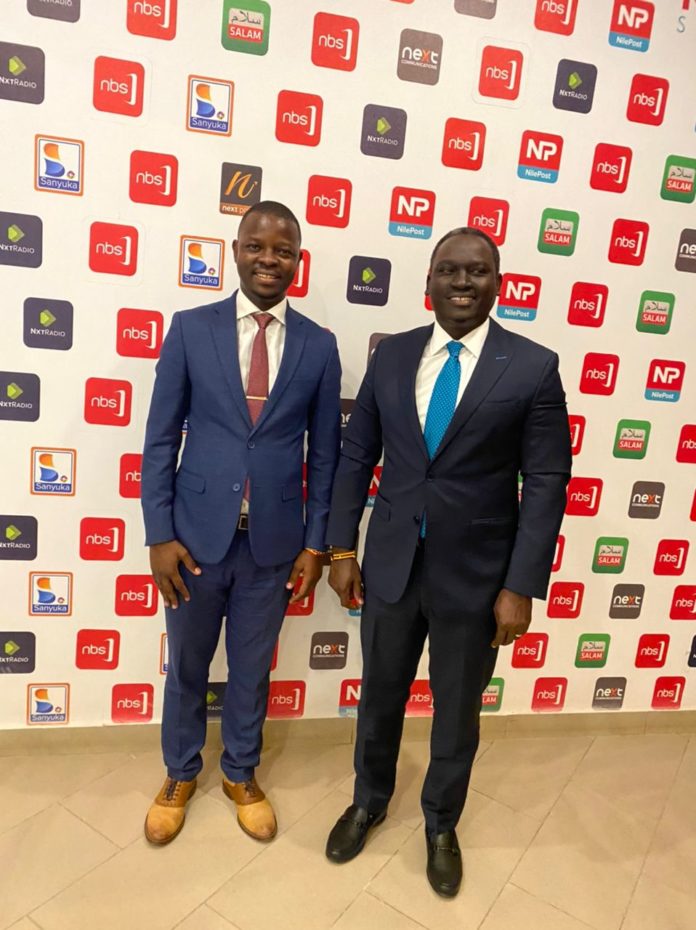
Next Media CEO Kin Karisa and City Advocate Ivan Okuda

Former Minister of Ethics and Integrity Miria Matembe is known for her cantankerous and no holds-barred approach to public debate but she seems to have touched a wrong nerve and found her match. Eagle Online can exclusively report that Matembe has, acting through her lawyers of Newmark Advocates, written to Kamya asking for peace talks and an out of court settlement.

On May 9, 2022, Matembe’s lawyers wrote to M/S Anguria & Co. Advocates, “our client has taken note of the subject suit against her for the alleged defamation of the Plaintiff. Our client is well aware of the position the two parties hold in the public especially being role models to women and girls in Uganda.”

The letter adds that in the interest of, “protecting and saving the image and resources of the two parties, our client has advised and believes that the issues raised in the subject suit can be handled and resolved in an in-house women’s manner.” Matembe then proposed a meeting to resolve the matter out of court.

On May 18, 2022, the IGG’s lawyers wrote back, “Please advise with exactitude, the specific terms that your client proposes,” adding, “on a more serious note however, please advise your client to desist from continuing with her malicious and defamatory campaign of misinformation and disinformation against our client and undermining the authority of the High Court by making public statements that defeat the spirit and essence of what she proposes in your letter.”

Kamya’s lawyers have now threatened to institute contempt of court proceedings against Matembe if she continues making prejudicial statements. This means that Matembe may follow lawyer Male Mabirizi in prison for contempt of court.

It was earlier reported in the media that Matembe, while addressing a conference at the launch of former presidential candidate Joseph Kabuleta’s new political formation, had bragged that she was not deterred by court and was going to ignore whatever is happening in the Kamya case and continue speaking her mind. She also said, according to press reports, that no one can use courts to intimidate or gag her because God gave her a mouth to talk.

As she was putting a strong face in public and speaking tough, secretly, Matembe was pressing the ‘save our souls’ button, pleading for peace talks and ceasefire.

When contacted, Anguria & Co. Advocates directed our reporter to Mr. Ivan Okuda, who is ‘counsel in personal conduct’ of the file. Asked how far the process of the peace talks had reached, Mr. Okuda replied in an email, “It is not our habit as professionals to discuss clients’ matters in the press. Litigation happens between the boardroom and court room not the newsrooms or social media so let’s leave court matters to court. I respectfully so submit.”

Recently, the Inspector General of Government (IGG) Beti Kamya dragged Matembe to the High Court in a defamation suit where the ex-minister of Kampala Capital City Authority and the Minister of Lands, Housing and Urban Development is demanding for Uganda Shillings one billion in compensation for what she says were “false, malicious and defamatory utterances” made by Matembe on NBS TV and NTV (Uganda).

The Deputy Registrar of the High Court’s Civil Division on February 21, 2022 ordered Matembe to file her defence, which she did. Shortly after, Kamya filed in court an application for an interim and temporary injunction where she is asking court to bar Matembe from continuing with what she describes as a malicious disinformation and misinformation campaign against her.

Matembe finds herself alone and frightened, left in a corner of bother to fight alone after Next Media Services, which had received a notice of intention to sue from Kamya admitted liability and asked to settle the matter out of court. Indeed, NBS’ CEO Mr. Kin Kariisa met Kamya’s lawyer Ivan Okuda and the matter was put to rest.

In the same vein, NTV (Uganda)’s lawyers also advised the Nation Media Group subsidiary that  a court battle with Kamya would be futile considering the gravity of claims that Matembe made which they could not approve in court. Again, NTV officially engaged Kamya’s lawyers and apologised to the IGG and hammered an out of court settlement. With the two giants opting not to waste time in court arguing in an ill-fated defamation law suit, Matembe is now left with egg on the face, after the media houses that would have swung their resources to support her left her abandoned and lonely.

Matembe will, in mid-June, defend herself in court on the application for an injunction that Kamya filed.

Stories Continues after ad