Stanbic Bank
Stanbic Bank
20.2 C
Kampala
Stanbic Bank
Stanbic Bank
Home Blog Page 644

14.9 million excess deaths associated with #Covid-19 in 2020 and 2021

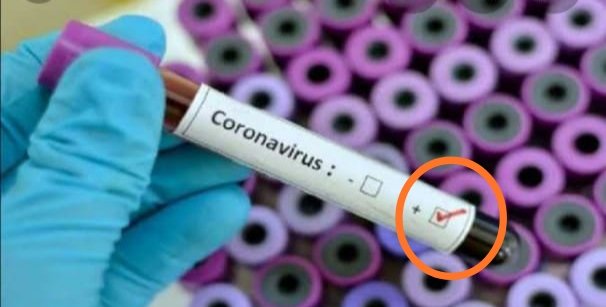
Covid-19 testing kits

New estimates from the World Health Organization (WHO) show that the full death toll associated directly or indirectly with the #Covid-19 pandemic (described as “excess mortality”) between 1 January 2020 and 31 December 2021 was approximately 14.9 million (range 13.3 million to 16.6 million).  

“These sobering data not only point to the impact of the pandemic but also to the need for all countries to invest in more resilient health systems that can sustain essential health services during crises, including stronger health information systems,” said Dr Tedros Adhanom Ghebreyesus, WHO Director-General. “WHO is committed to working with all countries to strengthen their health information systems to generate better data for better decisions and better outcomes.”

Excess mortality is calculated as the difference between the number of deaths that have occurred and the number that would be expected in the absence of the pandemic based on data from earlier years. 

Excess mortality includes deaths associated with COVID-19 directly (due to the disease) or indirectly (due to the pandemic’s impact on health systems and society). Deaths linked indirectly to COVID-19 are attributable to other health conditions for which people were unable to access prevention and treatment because health systems were overburdened by the pandemic. The estimated number of excess deaths can be influenced also by deaths averted during the pandemic due to lower risks of certain events, like motor-vehicle accidents or occupational injuries. 

Most of the excess deaths (84%) are concentrated in South-East Asia, Europe, and the Americas. Some 68% of excess deaths are concentrated in just 10 countries globally. Middle-income countries account for 81% of the 14.9 million excess deaths (53% in lower-middle-income countries and 28% in upper-middle-income countries) over the 24-month period, with high-income and low-income countries each accounting for 15% and 4%, respectively. 

The estimates for a 24-month period (2020 and 2021) include a breakdown of excess mortality by age and sex. They confirm that the global death toll was higher for men than for women (57% male, 43% female) and higher among older adults. The absolute count of the excess deaths is affected by the population size. The number of excess deaths per 100,000 gives a more objective picture of the pandemic than reported COVID-19 mortality data.

“Measurement of excess mortality is an essential component to understand the impact of the pandemic. Shifts in mortality trends provide decision-makers information to guide policies to reduce mortality and effectively prevent future crises. Because of limited investments in data systems in many countries, the true extent of excess mortality often remains hidden,” said Dr Samira Asma, Assistant Director-General for Data, Analytics and Delivery at WHO. “These new estimates use the best available data and have been produced using a robust methodology and a completely transparent approach.”

“Data is the foundation of our work every day to promote health, keep the world safe, and serve the vulnerable. We know where the data gaps are, and we must collectively intensify our support to countries, so that every country has the capability to track outbreaks in real-time, ensure delivery of essential health services, and safeguard population health,” said Dr Ibrahima Socé Fall, Assistant Director-General for Emergency Response. 

The production of these estimates is a result of a global collaboration supported by the work of the Technical Advisory Group for COVID-19 Mortality Assessment and country consultations. 

This group, convened jointly by the WHO and the United Nations Department of Economic and Social Affairs (UN DESA), consists of many of the world’s leading experts, who developed an innovative methodology to generate comparable mortality estimates even where data are incomplete or unavailable. 

This methodology has been invaluable as many countries still lack capacity for reliable mortality surveillance and therefore do not collect and generate the data needed to calculate excess mortality. Using the publicly available methodology, countries can use their own data to generate or update their own estimates. 

“The United Nations system is working together to deliver an authoritative assessment of the global toll of lives lost from the pandemic. This work is an important part of UN DESA’s ongoing collaboration with WHO and other partners to improve global mortality estimates,” said Mr Liu Zhenmin, United Nations Under-Secretary-General for Economic and Social Affairs. 

Mr Stefan Schweinfest, Director of the Statistics Division of UN DESA, added: “Data deficiencies make it difficult to assess the true scope of a crisis, with serious consequences for people’s lives. The pandemic has been a stark reminder of the need for better coordination of data systems within countries and for increased international support for building better systems, including for the registration of deaths and other vital events.”

Stories Continues after ad

17 set to retire from UPDF Armoured Brigade

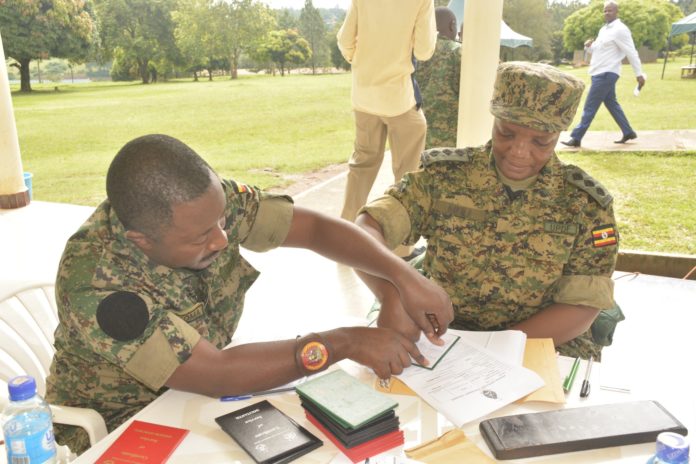
The Ministry of Defence and Veterans/UPDF retirement and discharge documentation team has interfaced with 17 officers and militants of Armoured Brigade Headquarters at Kassajagirwa in Masaka.

“Retirement is a break in service as you prepare to join the Active Reserve Force,” Col Griffins Kantinti the Brigade Operations and Training Officer (BOTO) reminded the impending retirees and dischargees in his address to them.

According to Col Kantinti, Armoured Brigade is a combat support arm that is deployed around all Divisions, Formations and Units. So, some of the impending retirees and dischargees under this Brigade have already been documented or will be documented from their respective formations where they are still providing that support element.

He urged the retirees to keep living with pride for having served under the mighty UPDF and particular important combat arm, the Armoured Brigade, whose slogan is “JOGOO WA MEDANI” (King of the Jungle), come passed 31st July 2022 the intended retirement day.

The BOTO also urged the impeding retirees to remain active, shun all factors and characters that could create instability in the Country, remain patriotic and loyal to the UPDF leadership, the Commander in Chief and the country.

The Commissioner Human Resource of the Ministry of Defence and Veteran Affairs MODVA Mr Anguzu Cox Alfred applauded the impending retirees and dischargees for diligently serving the nation and for their loyalty to the UPDF, its leadership and the country.

He asked them to remain good will Ambassadors of the UPDF and to remain financially upright. “Don’t get excited over the big sums of your gratuity, it is your money you have accumulated over the years in service so spend it wisely,” he cautioned.

The sensitization and documentation team is now on its second leg of the exercise in Western and South Western Uganda having accomplished work in Eastern and Northern Uganda.

Stories Continues after ad

Opec Prime cites malice in botched Naguru-Nakawa satellite towns

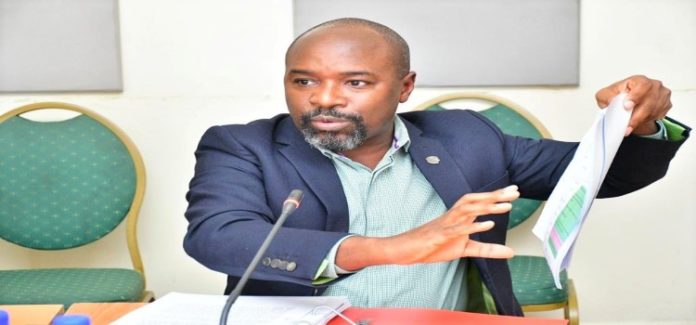
Opec Prime’s director, Hassan Kimbugwe, appearing before the adhoc committee

Officials from Opec Prime Properties Ltd, a company formerly contracted to develop ultramodern satellite towns in the Naguru-Nakawa housing estate, have told Parliament of a litany of frustrations they faced in their attempt to deliver the same in the capital, Kampala.

Opec Prime was awarded a contract and land in 2006 to construct 1,747 flats, bungalows, commercial buildings, a five-star hotel, a referral hospital, schools, houses of worship and recreational facilities in the estate.

However, before they could mobilise, their contract, extracted from a Public Private Partnership Agreement, was terminated in 2019 by Cabinet over alleged financial and technical incompetence.

Following allegations that part of the land had been irregularly given out to some investors, the then Deputy Speaker, Anita Among, constituted an ad hoc committee to investigate the matter.

According to Opec Prime’s director, Hassan Kimbugwe, while appearing before the Hon. Dan Kimosho chaired ad hoc committee investigating the illegal sale of land in the Naguru-Nakawa estate on Thursday, 05 May 2022, said the grounds on which their contract was terminated were baseless and out of malice by some government institutions.

“You can imagine, after winning the bid and signing agreement in 2006, it took five years to get the tittles of the land we were allocated,” said Kimbugwe.

Andrew Tendo, a consultant with Opec Prime said that since the project inception in 2006, Opec Prime has been involved in endless court cases, alongside delays by government to approve commencement of works.

“We constructed a slab upon approval by Kampala Capital City Authority but after construction, KCCA wrote to us that where the slab was constructed has been earmarked for a bus lane and that we should move it, yet for the past 10 years the bus lane has never been constructed,” said Tendo.

He explained that although Opec Prime had initially agreed to construct and sell off apartments at a subsidised price, government later on allocated part of their land to the Aga khan University, rendering the project unprofitable.

Kimbugwe added: “Once they gave away land to Aga Khan and still expected the developer to give out apartments at a subsidised price, it could no longer make any sense. The agreement was that we develop the land, recoup our profit and then give out the apartments at a subsidised price.”

MPs questioned Kimbugwe on why they did not oppose the government move to allocate land to the Aga Khan University in court and further wondered whether it was not a sign of financial incompetence to develop the land.

“Did you really have adequate money to build that satellite city? Government could have given them [Aga Khan University] land somewhere else?” asked Hon. Sarah Opendi (NRM, Tororo District Woman MP).

Bugiri Municipality MP, Asuman Basalirwa, asked Opec Prime why they would illegally lease government land to individuals as alleged by witnesses who appeared before the committee.

“The third parties are making complaints that you gave away government land. Did the law allow you to give out land?” asked Basalirwa.

Kimbugwe reiterated that Opec Prime was as per the agreement with government, allowed to sub lease to fellow co-developers who would express interest in developing structures within Opec Prime’s master plan.

He appealed to Parliament to consider visiting Opec Prime’s projects in other countries like Greece, United Kingdom and Germany among others.

Stories Continues after ad

New jobs, orders rise in April Stanbic PMI

Stanbic Bank

The Stanbic Purchasing Managers’ Index (PMI) rose to 53.9 in April from 51.9 in March on account of further improvement in private sector output and new orders as demand strengthened, helping generate new jobs.

Readings above 50.0 mean improvement in business conditions on the previous month while readings that are below 50.0 show deterioration, the Stanbic PMI covers the agriculture, industry, construction, wholesale and retail, and service sectors.

Ronald Muyanja, the Head of Trading at Stanbic Bank Uganda said, improving customer numbers enabled companies to secure greater volumes of new business at the start of the second quarter, in turn feeding through to higher activity.

“April saw output rise across each of the five sectors covered by the survey, a surge in new orders encouraged companies to expand their staffing levels and purchasing activity in April, with the latter also translating into higher inventories,” he said.

However, agriculture was the only category to buck the wider trend and post a fall in employment, according to analysis of data collected monthly from about 400 respondents in Uganda’s private sector.

Sustained recovery

Ferishka Bharuth, Economist Africa Regions at Stanbic Bank said the recovery in April compared to a month earlier marked the ninth consecutive month of improvement in business conditions.

“This was despite the rising input costs mainly driven by fuel prices in April. Again, businesses passed on higher input costs to customers, which resulted in a monthly increase in output charges,” she said.

Meanwhile, rising new orders encouraged companies to expand their purchasing activity at the start of the second quarter. Input buying increased for the seventh consecutive month, with growth broad-based across the monitored sectors.

April data pointed to a further rise in new business at the start of the second quarter with rise in new orders recorded in each month since August last year, with the exception of the construction sector which recorded a reduction in new business.

Price surge anxiety

There were widespread reports of higher fuel costs contributing to rising input prices in April. In addition, cement, iron bars, paper, soap, sugar, and other foods were often mentioned as having increased in price.

As has been the case in each of the past nine months, purchase prices rose in April.

Respondents signaled higher costs for a range of items, including cement, foodstuffs, fuel, iron bars, paper, soap, and sugar. Close to 40% of respondents noted a rise in purchase prices over the month.

Staff costs rose linked to higher workforce numbers. The passing on of higher input costs to customers resulted in a further monthly increase in output charges, the eighth in as many months. Selling price inflation was recorded across each of the five monitored sectors.

In response to a further increase in input costs, firms raised their own selling prices again in April, a trend noted in each of the past eight months, with the latest round of inflation broad-based across the five monitored categories.

Expectations of further improvements in customer numbers and new orders supported confidence in the 12-month outlook for business activity, though some respondents indicated that optimism was dependent on the costs of fuel and other inputs decreasing.

Sponsored by Stanbic Bank and produced by S&P Global, the survey has been conducted since June 2016 with the Headline PMI providing an early indication of operating conditions in Uganda’s economy.

It is a composite index, calculated as a weighted average of five individual sub-components: New Orders (30%), Output (25%), Employment (20%), Suppliers’ Delivery Times (15%) and Stocks of Purchases (10%).

Stories Continues after ad

Uganda Cup: Holders Vipers land Mbarara City in semifinal draw

Uganda Cup trophy

Uganda Cup holders Vipers Sports Club have been drawn against Mbarara City FC in the semifinals.

Vipers SC are seeking their first-ever domestic double after having already sealed the League title. The Venoms are 14 points ahead of second placed KCCA FC with two games to end the season.

To achieve this, they will have to negotiate past the Ankole Lions on a home and away basis.

The other semifinal clash will be between Booma FC a regional league side from Masindi against BUL FC.

Booma FC have punched above weight and will be hoping to extend their fairytale run in the Cup, going all the way to the final.

BUL FC are hoping to get back to the final for the second successive year. The Jinja based side were thumped 8-1 by Vipers last season.

According to FUFA Professional Leagues Manager, Shawn Mubiru, there shall be no extra time if the aggregate score is tied. Therefore, teams will go straight to kicks from the penalty mark.

“The semifinal games will be played on a home and away basis. In case of a tie after the aggregate score, teams will go straight to spot kicks to determine the winner,” he confirmed during the draw.

First leg games will be played between May 10-12 while return leg encounters will be held between May 17-19.

The final will be played on either June 11 or 12, 2022 at a venue yet to be confirmed.

All the four teams in the semifinals are guaranteed of a cash prize of Shs12 million with the losing finalist earning Shs25 million while the Winner will bag Shs50 million.


Semifinal
Mbarara City Vs Vipers
Booma FC Vs BUL FC

Stories Continues after ad

MTN Uganda to support Makerere University centenary celebrations

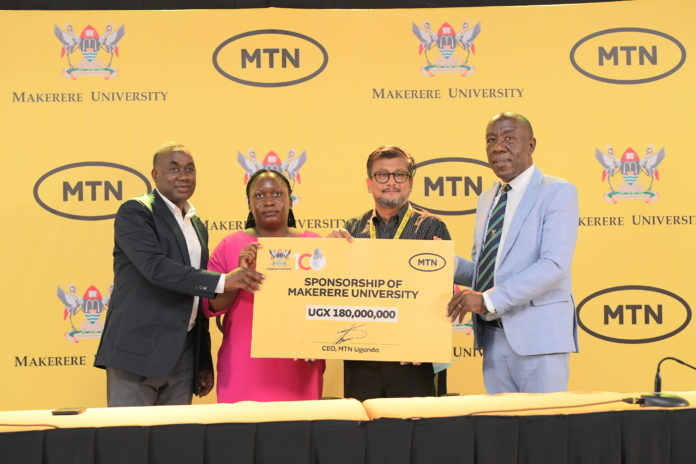
Somdev Sen MTN Uganda Chief Marketing Officer hands over a dummy cheque to Mak University team Awel Uwihanganye CEO, Mak@100 Secretariat(lst left), Hawa Ndagire Kajumba, Mak@100 Secretariat, Prof. Alinaitwe Henry

MTN Uganda has pledged to support Makerere University’s centenary celebrations through a sponsorship worth Shs180 million.

The sponsorship by MTN will be dedicated towards supporting the events organized by Makerere University in celebration of 100 years of its existence which include an exhibition showcasing the journey of Makerere at 100.

The exhibition which is scheduled to take place from 27th September to 10th October, 2022 at the Freedom Square, Makerere University will be held under the theme: “A Century of Service to Humanity.”

Speaking during the announcement ceremony held at MTN Headquarters, Somdev Sen, the MTN Uganda Chief Marketing Officer said as one of the leading employers in the country, MTN has taken the opportunity to appreciate the esteemed institution for its contribution to educating a sizeable population in the job market.

“This support to Makerere University is also very important to MTN as it is synonymous with our core values anchored on empowering and skilling youth to achieve sustainable societies, which is a key pillar of our organization strategy,” he said.

The commitment by MTN follows a stakeholder mobilization event organized by Makerere University in November 2021 during which a strategy for rallying key stakeholders to support and participate in the year-long anniversary celebration was launched.

Opening its doors to 14-day students in 1922, Makerere University has grown to become one of the most prestigious learning institutions in Africa.

In his remarks, Prof. Henry Alinaitwe the Deputy Vice-Chancellor Makerere University, who was representing the Vice-Chancellor, Makerere University, Professor Barnabas Nawangwe lauded MTN for its support, noting that the company’s dedication to supporting youth in Uganda was of mutual interest to the institution.

“Makerere University welcomes MTN Uganda’s support through this partnership that will benefit both the students at Makerere University and the youth in Uganda as a whole. This gesture acknowledges that you cannot talk about Uganda’s development and socio-economic transformation without involving the youth. Makerere and MTN are both in the business of giving the youth a platform to achieve their full potential. This partnership will therefore inspire our students and the youth in general to innovate and contribute significantly to the transformation of Uganda,” he said.

Professor Alinaitwe highlighted that the sponsorship from MTN Uganda is aligned to the Makerere University’s strategic plan (2020-2030), focused on making the institution research-intensive.  “MTN Uganda’s support to the Makerere@100 exhibition will in addition to enhancing the visibility of our research and innovations attract more partners from the private sector and business community to bolster our efforts to commercialize these research outputs.”

MTN Uganda for years has championed progress of the youth through various initiatives aimed at galvanizing their creative and entrepreneurial spirit with the most recent being the Nsindika Njake youth entrepreneurship show currently airing on NBS TV. The exhilarating show mentors young people by equipping them with practical business and technical skills with the goal of enabling job creators to curb youth unemployment.

Stories Continues after ad

Link bus operations suspended

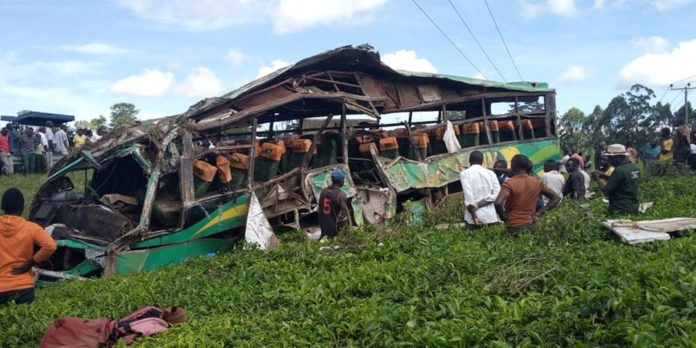
The Ministry of Works and Transport has suspended the operations of Link buses for mechanical examination following the increasing road accidents involving their buses.

Yesterday, 20 people were confirmed dead, out of whom thirteen were adults while 7 were juveniles. The accident involved a link bus Reg No. UBA 003S that was traveling to Kampala from Fortportal. It happened 2kms from Fortportal city at a place called Sebitoli.

The Minister of State for Works and Transport (Works), Ecweru Musa Francis said they are concerned about the frequency of the accidents on the roads and will conduct an investigation to ascertain whether it is regulation which isn’t adequate or is it enforcement or is it sensitization that is lacking.

“Link busses to be suspended for mechanical examination to ensure that they are safe to be on the road. We need to have discussions with bus company managers to have them appreciate that they have an obligation to safeguard the lives of their passengers,” Ecweru said.

“We dispatched teams of road safety engineers and experts to the scenes to investigate the causes of the accidents. I will personally lead a team to the scene in Kyenjojo this morning to critically establish what could have gone wrong and to prescribe remedies.”

“We very concerned about the frequency of the accidents on our roads, and the number of lives lost, on well paved roads. We will conduct an investigation to ascertain whether it is regulation which isn’t adequate or is it enforcement or is it sensitization that is lacking,” he added.

Stories Continues after ad

Uganda, UNHCR, and partners launch the 2022-2025 Refugee Response Plan

Refugees

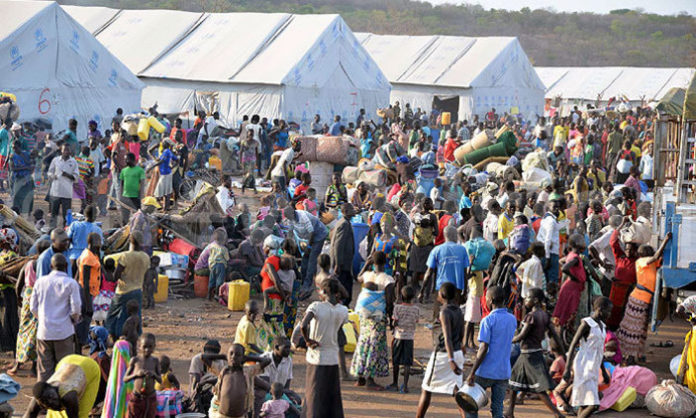
Uganda and the UNHCR, the UN Refugee Agency, and 68 humanitarian partners, have launched the Uganda Country Refugee Response Plan appeal (UCRRP) 2022-2025. The UCRRP is a framework aimed at responding to humanitarian challenges in a holistic, comprehensive, and integrated manner.

The Plan, which covers the period between 2022 to 2025, is meant to support the country in maintaining asylum space, providing lifesaving assistance, improving access to public services and strengthening peaceful co-existence and self-reliance of refugees and host communities.

Uganda continues to be Africa’s largest refugee-hosting country, with over 1.5 million refugees from South Sudan, the Democratic Republic of Congo (DRC), Somalia, Rwanda, Burundi, and other countries. About 93 percent of refugees live in settlements located in 12 districts of Uganda and most of those in the urban areas live in Kampala district.

“Government of Uganda has continuously demonstrated its unwavering support for people who are fleeing from danger and looking for safety and security, “said Esther Anyakun, the Minister of State for Relief, Disaster Preparedness and Refugees in the Office of the Prime Minister.

OPM and UNHCR coordinate all actors involved in refugee response in the country

She added, “Given the scale of the refugee presence in Uganda, urgent funding is required for the refugee response, to ensure that the women, men and children who have fled here continue to have access to protection services, and live saving assistance.”

Today’s humanitarian response plan appeals for USD 804 million for 2022, to address critical needs for protection, food, shelter, and essential household items.

“In addition to pressing humanitarian needs, refugees, their host communities and general population face exacerbated economic, environmental, and development challenges, that continue to require support in refugee hosting districts,” said Joel Boutroue, UNHCR Representative.

Funding will also support urgently needed healthcare supplies, water, sanitation, and hygiene services and contribute to promoting refugees’ socio-economic inclusion in Uganda, in line with Government’s commitments to achieving the goals of the Global Compact on Refugees (GCR) and its Comprehensive Refugee Response Framework (CRRF).

“Uganda has long been a global leader in its approach to peaceful co-existence and local settlement of refugees with the host communities. The Uganda model can only be sustained with funding proportionate to the scale of the refugee situation we face,” added Boutroue.

Stories Continues after ad

Crested Cranes provisional squad for Women’s Africa Cup of Nations summoned

Coach George Lutalo

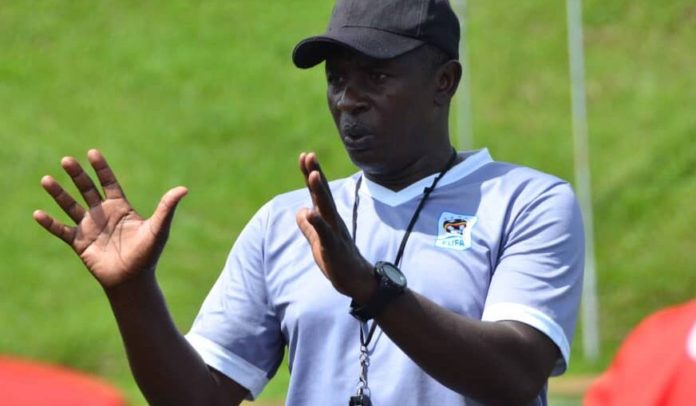
Crested Cranes head coach George Lutalo has summoned a provisional squad of 47 players to begin preparations for the upcoming TotalEnergies Women Africa Cup of Nations.

The squad summoned is composed of players featuring both in the domestic League (FUFA Women Super League) and a legion of foreign based players.

While announcing the squad at FUFA House, Mengo coach Lutalo indicated that the technical team has been following up on the players summoned and believes it is a good squad to perform.

“As the technical team we have made efforts to look at the players at their respective clubs and we are really hopeful that the team summoned will be able to deliver.” He stated.

The gaffer believes having the team play at CECAFA Women’s Championship will be a good opportunity to prepare well for TotalEnergies Women Africa Cup of Nations.

“It is a good chance for us to gauge ourselves and have good preparations for the final tournament. We know this region has very competitive teams that will give us the best challenge.” Lutalo indicated.

The Africa Women Cup of Nations will be staged in Morocco from 2nd – 23rd July and Uganda is in group A alongside hosts Morocco, Senegal and Burkina Faso.

The team will enter residential camp on Saturday, 7th May 2022. It should be noted that Uganda will host this year’s CECAFA Women’s Championship in Njeru from 22nd May – 5th June 2022.

Full Provisional Squad

Goalkeepers: Ruth Aturo(Katkan Tyovaen Palloillijat, Finland), Gloria Namakula (FC Tooro Queens, Uganda), Daisy Nakaziro (Uganda Martyrs WFC, Uganda), Daphine Nyayenga (She Corporate FC, Uganda), Vanessa Edith Karungi (Boldklubben AF 1893, Denmark)

Defenders: Asia Nakibuuka (Kawempe Muslim Ladies FC, Uganda), Shadia Nankya (UCU Lady Cardinals FC, Uganda), Aisha Nantongo (Kawempe Muslim Ladies FC, Uganda), Viola Namuddu (Makerere University WFC, Uganda), Harima Kanyago (Uganda Martyrs WFC, Uganda), Margaret Namirimu (She Corporate FC, Uganda), Lukia Namubiru (Kampala Queens FC, Uganda), Yudaya Nakayenze (Lindey Wilson College, USA), Salena Allibhai (KAA Gent, Belgium), Adrine Birungi (Gaspo FC, Kenya), Phoebe Banura (UCU Lady Cardinals FC, Uganda), Madam Christine (Gaspo FC, Kenya), Jolly Kobusinge (FC Tooro Queens, Uganda), Sumaya Komuntale (FC Tooro Queens, Uganda), Miriam Ibunyu (She Corporate FC, Uganda)

Midfielders: Resty Kobusobozi (FC Tooro Queens, Uganda), Rhoda Nanziri (Kawempe Muslim Ladies, Uganda), Naome Nagadya (She Corporate FC, Uganda), Joan Nabirye (Vihiga Queens, Kenya), Sheebah Zalwango (FC Amani, DR Congo), Tracy Jones Akiror (AFC Ann Arbor, USA), Shamirah Nalugya ( Kampala Queens FC, Uganda), Phiona Nabbumba (She Corporate FC, Uganda), Riticia Nabbosa (Lady Doves FC, Uganda)

Forwards: Sandra Kisakye (UCU Lady Cardinals FC, Uganda), Elizabeth Nakigozi (Uganda Martyrs WFC, Uganda), Lilian Mutuuzo (Kampala Queens FC, Uganda), Juliet Nalukenge (Chrysomolia FC, Cyprus), Natasha Shirazi (Maccabi Kishronot Hadera, Israel), Fauzia Najjemba (BIIK Shymkent, Kazakhstan), Viola Nambi (FC Dornbirn Ladies, Austria), Zaina Nandede (Kampala Queens FC, Uganda), Hasifa Nassuna (UCU Lady Cardinals FC, Uganda), Rita Kivumbi (Mallbackens IF, Sweden), Sharon Nadunga (Kawempe Muslim Ladies FC, Uganda), Sandra Nabweteme (Unattached), Favor Nambatya (She Corporate FC, Uganda), Fazila Ikwaput (Lady Doves, Uganda), Susan Atim (She Corporate FC, Uganda), Margaret Kunihira (Kampala Queens, Uganda), Grace Aluka (Olila High School, Uganda), Zaina Namuleme (Kampala Queens FC, Uganda)

Stories Continues after ad

Deputy Speaker irked by high interest payments to contractors

Deputy Speaker Tayebwa

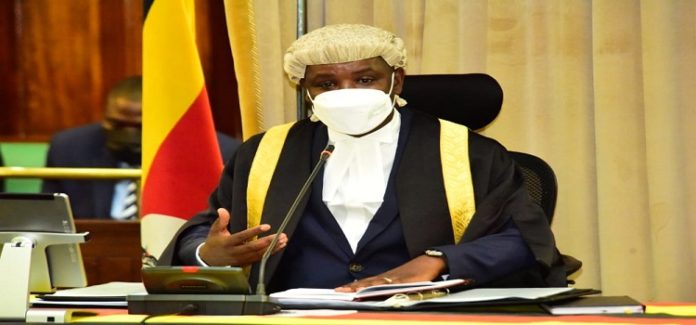
The Deputy Speaker, Thomas Tayebwa, has tasked the Committee on Physical Infrastructure to look into the expenditure on payment of interest to contractors, and provide solutions to reduce the loss occasioned to government.  

Tayebwa’s directive was prompted by a matter of national importance raised by Hon. Richard Sebamala (DP, Bukoto County Central), during plenary on Wednesday, 04 May 2022.

He was concerned that the Uganda National Roads Authority is spending up to Shs334 million daily in interest being paid to contractors.  

“This means that by the end of this year, we shall be paying Shs1 trillion to contractors in interest alone and this means that we shall not be able to maintain some roads,” Sebamala said.

Sebamala called on the finance ministry to intervene, by requesting a supplementary budget to clear all outstanding interests.

Tayebwa, however, said that besides the intervention from the finance ministry, the Committee on Physical Infrastructure should provide a report with recommendations on how government can minimise high expenditures on interest, as well as ways to clear outstanding interest fees to contractors.

“We are losing a lot of money because of contracts that the government entered into. Majority of these contracts were signed based on confirmation of counterpart funding but after the contracts are signed and at the execution level, there is no support from the partners,” he said.

He pointed out that some of the entities that are faced with such challenges are the Uganda National Roads Authority (UNRA) and water-related projects.

“Some of these contractors are comfortable because they will have borrowed this money at a much lower rate compared to the penalties and interest they charge,” said Tayebwa.

He also tasked the committee to investigate the case in which government is spending colossal money for deemed energy.

“We are paying hundreds of billions for power we have not consumed and yet we do not even have money for connecting people to energy. We have people who are saying connect us and we start consuming. That money which you are paying for unconsumed power should be used to connect power using the free connection policy,” said Tayebwa.

Meanwhile, during the same sitting, Tayebwa tasked the Third Deputy Prime Minister and Minister without Portfolio, Rukia Nakadama, to ensure that farmers are provided with coffee seedlings.

“These coffee seedlings and tree seedlings that you give us are one of the ways that MPs are able to engage and work with the communities. This is very important to us, we need seedlings,” said Tayebwa.

He directed the Prime Minister to provide a statement during the next sitting on Thursday, 05 May 2022, on government’s plan to provide seedlings to farmers.  

Tayebwa was giving guidance on a matter of national importance raised by the Kabula County MP, Hon. Enos Asiimwe.  

Asiimwe said that being a coffee season, efforts by farmers to get seedlings through the Uganda Coffee Development Authority (UCDA) have been frustrated.

“You are aware that a Coffee Policy was passed in 2017 with the objective of supporting farmers in terms of production and productivity. Farmers have requested seedlings from UCDA but they say they cannot procure seedlings because finance ministry has not released the funds,” he said.

He asked Tayebwa to compel the minister to release funds for procurement of the seedlings, saying that farmers have already invested in clearing gardens.

Hon. Denis Sekabira (NUP, Katikamu County North) said that he faced the same problem, after mobilising over 1,000 farmers who needed seedlings.

“I contacted the Executive Director of UCDA who told me that there is no money to procure seedlings. Unfortunately, nursery bed operators have seedlings and farmers are ready but UCDA is not ready to procure seedlings,” said Sekabira.

Nakadama, however, questioned why UCDA raised the issue of no funds, saying that farmers are usually given seedlings and payments done later.

“Why is it now that UCDA is saying that they do not have money? When you apply for seedlings, they are given to the CDO then payment is claimed later. I am also a farmer who has been giving out seedlings,” she revealed.

Stories Continues after ad