Uganda recorded 208 murders arising from domestic violence in 2025, representing a 13.7 per cent increase from 183 cases in 2024, according to the Uganda Police Force Annual Crime Report 2025.
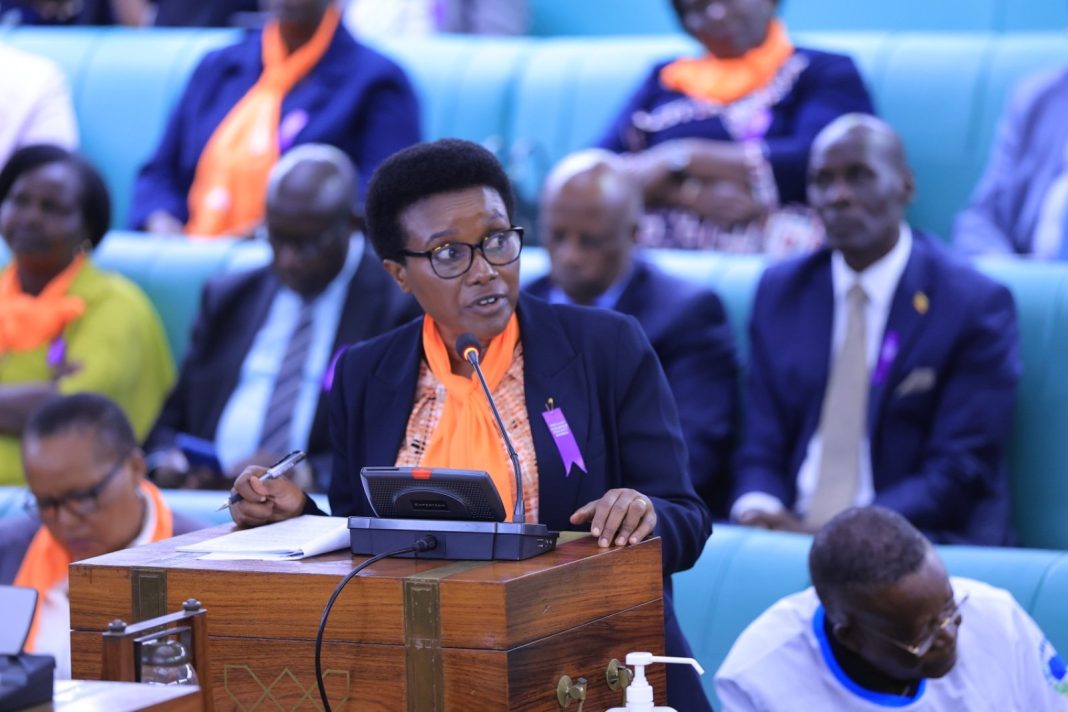
The figures were presented to Parliament by State Minister for Gender and Culture Mary Kuteesa, who warned that violence against women and girls remains a serious challenge despite a decline in several categories of reported sexual offences.

Kuteesa told MPs on Thursday, November 26, 2026, that the country lost 208 women to domestic violence during 2025, while six in every 10 married women have experienced physical or sexual violence, or emotional abuse, by a spouse at some point in their lives.
However, the police report provides a breakdown showing that the 208 victims comprised 92 adult women, 89 adult men, 14 male juveniles and 13 female juveniles. This means that women and girls accounted for 105 of the victims, rather than all 208.
The report also shows that North Kyoga registered the highest number of domestic violence-related murders with 28 cases, followed by Rwizi with 19, Rwenzori West with 16 and Aswa East with 15.

At district level, Mubende, Kyenjojo and Oyam each recorded 10 cases, followed by Kayunga with eight and Isingiro with seven.
The increase in fatal domestic violence incidents came despite a reduction in the overall number of domestic violence cases reported to police, which fell by 12.2 per cent from 14,073 in 2024 to 12,361 in 2025.
Kuteesa also reported an increase in emotional gender-based violence from 29 per cent to 33 per cent, highlighting the continued abuse experienced by women within relationships and marriages.
“In just 2025, we lost 208 women to domestic violence. Women in marriages are not happy, six out of 10 women in marriage have experienced sexual violence or emotional abuse,” she told Parliament.
Beyond physical and emotional abuse within homes, the minister raised concern over the growing use of digital platforms to perpetrate violence against women and girls.
She cited non-consensual sharing of intimate images, mobile money fraud, child sexual exploitation and abusive political trolling as some of the emerging forms of online gender-based violence.
According to a 2021 study by the Women of Uganda Network, 67 per cent of women who experienced online violence suffered stress, anxiety and depression, while some resorted to self-censorship or withdrew from social media platforms.
“As the country celebrates expanded smartphone access, internet and a rapidly growing number of Ugandans online, we must also note that violence has evolved with technology. The digital space has become a critical arena where women and girls face new forms of violence,” Kuteesa said.
She identified adolescent girls, older persons, persons with disabilities and refugees among those particularly vulnerable because of limited access to digital knowledge and support.
Kuteesa acknowledged that government-operated shelters for survivors of domestic violence remain inadequate, despite providing temporary accommodation for women escaping abusive homes.
“They are few, their capacity is small,” she said.
On sexual offences, the minister reported a 12.6 per cent reduction in cases, from 14,425 in 2024 to 12,606 in 2025. Defilement cases also declined by 14.8 per cent from 12,312 to 10,492 over the same period.
To address gender-based violence, Kuteesa said government was promoting women’s economic empowerment through programmes such as the Uganda Women Entrepreneurship Programme, Youth Livelihood Programme and the World Bank-funded Generating Growth Opportunities and Productivity for Women Enterprises (GROW) project.
“A woman who is economically empowered can walk away from violence. As we conclude budgeting, every ministry, sector and MP will understand that empowering women economically is key in eliminating GBV,” she said.
She urged Parliament to expedite the enactment of the Witness Protection Bill, Sexual Offences Bill, Legal Aid Bill and Marriage Bill, arguing that the proposed legislation would strengthen access to justice for women, girls and other marginalised groups.
The minister also questioned procedures that require survivors of sexual violence to travel long distances to health facilities before receiving medical attention and reporting cases, saying such requirements can undermine investigations and access to justice.
“Our mechanisms, be it in police or hospital check-ups, do not allow women to report and successfully get the case to court. It is almost unthinkable for a girl who has been defiled or a woman who has been raped to tell you to travel 30 kilometres to hospital before you shower. Some of these need to be resolved expeditiously,” she said.
Deputy Speaker Thomas Tayebwa deferred debate on the minister’s statement to next week, directing that the full statement be circulated to MPs to give them adequate time to study the issues and prepare their contributions.
The 16 Days of Activism against Gender-Based Violence is an annual international campaign running from November 25 to December 10. It seeks to prevent and end violence against women and girls, with this year’s campaign focusing on justice for survivors and ending impunity in both online and offline spaces.