


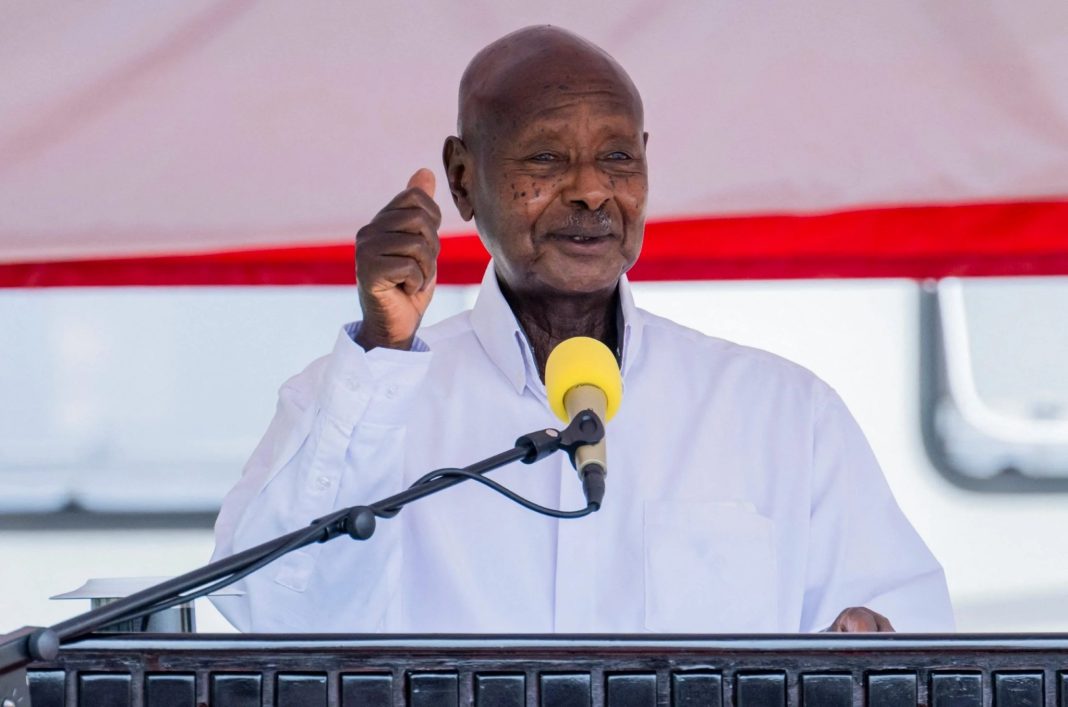
President Yoweri Museveni has called for reforms at the International Criminal Court (ICC) and accused some member states of misusing the institution and undermining its credibility through selective justice.
Museveni said Uganda remained committed to the Rome Statute and the fight against impunity but would continue pushing for reforms to ensure that all countries and situations are treated equally by the court.

In a letter seen by Eagle Online, dated November 15, 2026, addressed to the Assembly of States Parties to the ICC, Museveni said Uganda had supported the establishment and work of the court from the beginning but had become disappointed by how some member states were using it.
“From the beginning, Uganda has supported and continues to support the International Criminal Court and we even hosted the review conference where the Kampala Declaration was adopted. But over the years, we have felt let down by the misuse of the Court by some members,” Museveni said.
He added that Uganda’s support for the court was founded on its opposition to impunity, but questioned the institution’s usefulness in the current international political environment.

“Our support for the International Criminal Court is and has always been because we abhor impunity. But the misuse of the Court by some members has raised many questions about the utility of the Court in today’s world,” he said.
Museveni argued that the Rome Statute, which established the ICC, should be applied consistently by all member states, warning against selective application of its provisions in ways that undermine national sovereignty.
“We insist that the Rome Statute is a ‘set menu’ and there is no room for ‘à la carte,’ which undermines the sovereignty of States,” he said.
The President said Uganda had repeatedly proposed reforms aimed at making the court more effective and ensuring that all situations brought before it receive equal treatment.
“That is why we have continuously proposed reforms to the Court. These proposals are based on discussions on how to ensure an effective Court where all situations are accorded the same treatment. We believe in justice for all. As a sovereign country, we oppose selective justice,” Museveni said.
He maintained that Uganda would remain a member of the ICC despite its reservations, adding that the country would continue advocating for changes to the institution.
Museveni also reaffirmed Uganda’s commitment to confronting human rights abuses and holding perpetrators of serious crimes accountable.
“Uganda remains alert to manifestations of impunity and gross human rights violations and we have never hesitated to respond decisively to confront and defeat impunity and gross abuses of human rights,” he said.
Uganda was among the countries that supported the ICC’s work and became the first country to make a referral to the court under Article 14 of the Rome Statute. The referral concerned the situation in northern Uganda involving the Lord’s Resistance Army (LRA).
The President also highlighted Uganda’s domestic efforts to implement the Rome Statute, pointing to the enactment of legislation in 2010 that established the International Crimes Division of the High Court.
He said the division was intended to strengthen Uganda’s capacity to investigate, prosecute and punish serious international crimes within its own judicial system.
Museveni further cited Uganda’s role in the Cooperation, Complementarity and Gender Crimes Working Group, where the country serves as co-facilitator alongside Australia.
He said the initiative had increased engagement with ICC member states, civil society organisations and international and regional groups on strengthening domestic justice systems.
According to Museveni, strengthening national judicial systems would ensure that the ICC intervenes only in situations where countries are unwilling or unable to investigate, prosecute and punish those responsible for international crimes.
The President also highlighted Uganda’s experience with the Trust Fund for Victims, particularly the pilot reparations programme arising from the case against former LRA commander Dominic Ongwen.
He said lessons from the programme demonstrated how reparations could help victims and affected communities rebuild their lives after suffering serious crimes.
Despite his criticism of the court, Museveni reiterated Uganda’s commitment to meeting its obligations under the Rome Statute and called on member states to support the country’s candidate for a judicial position at the ICC.
He identified Uganda’s nominee, Rosette Muzigo-Morrison, as a qualified candidate for the court’s bench and urged other state parties to vote for her.
“One of our obligations is to identify qualified, experienced and competent candidates for judicial positions within the Court such as our current nominee, Ms. Rosette Muzigo-Morrison. I call upon all State Parties to vote for her to join the ICC Bench,” Museveni said.
The Assembly of States Parties is the ICC’s management oversight and legislative body, comprising representatives of countries that have ratified or acceded to the Rome Statute.


