Stanbic Bank
Stanbic Bank
18.3 C
Kampala
Stanbic Bank
Stanbic Bank
Home Blog Page 1115

Global coffee yields to decrease 0.9 percent in 2019/20

Mature coffee tree

World coffee output in coffee year 2019/20 is projected 0.9 percent lower at 167.4 million bags with a 2.7 percent decline in Arabica output to 95.68 million bags, while Robusta production is expected to rise by 1.5 percent to 71.72 million bags, according to the International Coffee Organisation (ICO).

ICO in its Coffee Market Report for October 2019 says South America’s production is expected to fall by 3.2 percent to 78.08 million bags, due largely to the decline in Brazil’s Arabica output in its off-year of the biennial crop cycle. While Production from Asia & Oceania is projected to grow by 1.9 percent to 49.58 million bags due largely to a recovery in Indonesia’s output while Viet Nam is expected to remain stable.

Central America & Mexico could see an increase of 0.9 percent to 21.54 million bags.

Africa’s output is estimated to decline by 0.6 percent to 18.2 million bags. Increases in production from Ethiopia of 1.2 percent to 7.55 million bags and from Uganda of 1 percent to 4.75 million bags will likely be offset by declines from other African producers. Côte d’Ivoire’s output is projected to decrease by 4.1 percent to 2 million bags, following an increase of 41.6 percent to 2.09 million bags in 2018/19. Tanzania could see a decrease of 17.9 percent to 924,000 bags in 2019/20 as its Arabica crop enters an off-year.

World production in coffee year 2018/19 is estimated at 169 million bags, which is 5.4 percent greater than in 2017/18. Production of Robusta increased 11 percent in 2018/19 to 70.67 million bags. Arabica production rose by 1.7 percent to 98.33 million bags, as declines from Honduras, Mexico and Peru offset the increase from Brazil.

World coffee consumption

Meanwhile, according to the report, world coffee consumption growth is likely to slow in 2019/20 in line with the slower growth expected for the global economy, and demand is projected to increase by 1.5 percent to 167.9 million bags.

Compared to an average annual rate of 2.1 percent in the previous 10 years, growth in global consumption in 2018/19 and 2019/20 is estimated to be slower. World consumption in 2018/19 grew 1.7 percent to 165.35 million bags, and in 2019/20, it is expected to rise by 1.5 percent to 167.9 million bags.

Global coffee demand

Global coffee demand is expected to be affected by a slowdown in global economic growth, particularly for emerging markets and developing economies, as described by the International Monetary Fund in its October 2019 World Economic Outlook. In 2019/20, coffee demand in Asia & Oceania is projected to grow by 3 percent to 37.84 million bags, and in North America by 1.7 percent to 30.97 million bags. Africa’s demand for coffee is estimated to grow by 1.8 percent to 11.94 million bags, and Central America and Mexico’s demand by 1.4 percent to 5.47 million bags and Europe’s by 1.2 percent to 54.54 million bags. However, consumption in South America is likely to remain stable at 27.14 million bags in 2019/20.

Global coffee exports

Global exports in September 2019 declined by 3.1 percent to 9.29 million bags. Robusta shipments fell by 12.9 percent to 3.02 million bags, and Colombian Milds decreased by 8.5 percent to 1.08 million bags. However, exports of Other Milds increased by 5 percent to 1.98 million bags while Brazilian Naturals grew by 5.2 percent to 3.21 million bags.

Despite the fall in September shipments, total exports for coffee year 2018/19 reached a new record of 129.43 million bags, 8.1 percent higher than in 2017/18. Shipments of both Arabica and Robusta increased in 2018/19, by 12.3 percent to 85.01 million bags and 0.9 percent to 44.43 million bags, respectively.


Stories Continues after ad

BOU lauds credit institutions as they accumulate Shs963b in assets

Customers in banking hall

All credit institutions remained adequately capitalized as at end of June 2019 and held strong liquidity buffers. The sub-sector registered significant growth in total assets from Shs624.5 billion as at end June 2018 to Shs963 billion as at end June 2019, says the Bank of Uganda (BOU) in its Financial Stability Report for June 2019.

The report attributes the increase to a new entrant in the subsector.

Net loans and advances for the sub-sector, according to the report,  increased from Shs.337.7 billion to Shs596.4 billion over the period under review, while total deposits rose from Shs437.8 billion to Shs.463.1 billion.

Capital Adequacy

As at end June 2019, the credit institutions sub-sector’s core and total capital adequacy ratios stood at 21.9 percent and 23.5 percent respectively, an improvement compared to 20.9 percent and 22.5 percent as at end June 2018.

Asset Quality

The sub-sector’s Non-Performing Loans (NPL) ratio stood at 4.2 percent as at end June 2019, up from 4.1 percent in the previous year. Non-performing loans in the sub-sector increased from Shs13.7 billion as at end June 2018 to Shs25.6 billion as at end June 2019, largely due to one institution, whose asset quality deteriorated, accounting for 85.3 percent of the sub-sector’s total non-performing loans.

Profitability

On aggregate, Credit institutions registered a net profit of Shs7.5 billion in the year to June 2019. The cost-to-income ratio remained high and was in part attributed to high costs of deposits. Interest income was the main source of income for credit institutions, rising to 83.6 percent of total income during the second quarter of the year 2019.

Liquidity

The Credit Institutions’ aggregate ratio of liquid assets to total deposits stood at 52.9 percent as at end June 2019, well above the minimum prudential requirement of 20.0 percent. Liquid assets increased from Shs208.7 billion to Shs244.7 billion in the year to June 2019. The sub-sectors total loans to deposits ratio was 126.3 percent mainly due to one institution which had a high ratio, as its loans were largely financed by borrowings.

MDIs see total assets grow to 642.3 billion

All five licensed Microfinance Deposit-taking institutions (MDIs) remained adequately capitalized in the year to June 2019. Total assets held by MDIs increased to Shs642.3 billion from Shs.562.2 billion largely due to growth in gross loans by Shs55.2 billion and fixed assets by Shs.14.9 billion.

Capital Adequacy

On aggregate, the sub-sector’s core and total capital to risk-weighted assets ratios stood at 41.8 percent and 45.0 percent, compared to 44.4 percent and 48.0 percent as at end June 2018, respectively. Both ratios were above the statutory minimum requirements of 15 percent and 20 percent, respectively.

Asset Quality

The MDIs portfolio-at-risk ratio improved to 3.9 percent from 4.4 percent due to an increase in gross loans by Shs55.2 billion. The ratio of provisions to non-performing loans stood at 88.3 percent, indicating adequate provisions to cover potential credit losses.

Earnings

Aggregate net profit after-tax was up by Shs1.7 billion and amounted to Shs9.1 billion as at end June 2019. This was due to a more than proportionate increase in total income of Shs10.0 billion, compared to an increase in total expenses of Shs8.1 billion. Four of the five licenced MDIs were profitable during the period under review.

Liquidity

All MDIs maintained liquid asset ratios in excess of the statutory minimum requirement of 15 percent of total deposit liabilities. Total liquid assets held increased by Shs7.4 billion to Shs.156.3 billion largely due to an increase in investment in government securities. However, the liquid assets-to-deposits ratio declined to 63.4 percent as at June 2019 compared to 68.9 percent as at end June 2018 while the ratio of total loans to total deposits stood at 77.4 percent, below the 85 percent prudential limit.

The Retirement Benefits Sector

The sector comprises 63 licensed retirement benefits schemes with a total of Shs 13.0 trillion assets under management (AUM) as at end June 2019. Assets in the retirement benefits sector rose by 4.1 percent over the past four quarters to June 2019. The sector posted a 1 year median return of -11.8 percent, 15.6 percent and 9.8 percent compared to -8.8 percent, 10.9 percent and 9.6 percent for quoted equities, fixed income and money markets respectively.

Systemic market assessment

Asset allocation for retirement benefits schemes continues to depict a heavy bias towards fixed income securities with government securities accounting for 74.6 percent.

Investments in quoted securities are the second largest accounting for 13.5 percent of the total sector investment. The performance of equities largely mirrored that of the Kenyan stock market due to the large proportion (70 percent) of quoted equities held in Kenya.

The insurance sector

The insurance industry registered 9.1 percent growth in total assets at the end of June 2019. Similarly, total industry gross written premiums (GWP) increased by 12.2 percent to Shs.495 billion in June 2019, from Shs.442 billion in June 2018.

Non-life GWP increased by 8.4 percent Shs USh.310 billion to sHS336 billion while life GWP increased by 24.7 percent from Shs99 billion to Shs124 billion during the same reference period.

In addition, health maintenance organization (HMO) GWP increased by 9.0 percent from Shs28.5 billion to Shs35.6 billion while specialist Micro insurer GWP amounted to USh.29 million in June 2019.

Between June 2018 and June 2019, the industry’s net incurred claims increased by 5 percent, from Shs131.2 billion to Shs137.7 billion. This was attributed to a rise in the non-life net incurred claims and HMO which rose by 17.2 percent and 27.6 percent over the same period. On the other hand, the life net incurred claims declined by 22.2 percent from Shs46.4 billion to Shs36 billion.

According to the report, management expenses for the sector stood at Shs121.2 billion, with the specialist micro insurer accounting for the largest proportion of these expenses.

Stories Continues after ad

Uganda and Equatorial Guinea pave way for Africa’s oil future

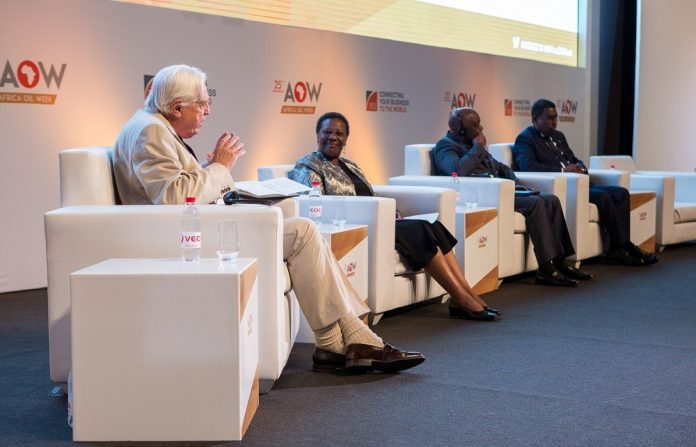
Uganda’s Minister of Energy and Mineral Development Irene Muloni, is leading Ugandan delegation

Africa Oil Week got off to a high profile start with a prestigious Ministerial and VIP Symposium on the in Cape Town, South Africa. Over 200 senior executives from International Oil Companies (IOCs)  and National Oil Companies (NOCs) along with ministerial delegations from leading African nations joined to look for solutions to Africa’s energy challenges.

Amongst the traditional African oil giants were several countries that have been rapidly growing their oil and gas credentials in the form of Uganda and Equatorial Guinea.

Uganda joins the exporters club

The prospects for the hydrocarbon sector in Uganda are looking bright – Uganda will soon export its first crude oil from its Lake Albert oil discovery to the international market, making it one of the countries to have joined the oil exporting countries after the government came to an agreement with Tanzania that enables it to transport its crude oil through the East African Crude Oil Pipeline (EACOP), a 1,445-kilometre pipeline from Hoima, Uganda, to the port of Tanga in Tanzania is the proposed route.

“It is exciting times for Uganda, we are now preparing for production,” Hon Irene-Margaret Muloni, minister of energy and mineral development, Uganda, says. “It has taken us some time, but we are there. The exploration discovered six billion barrels and we have plans to recover about 1.4 billion of these. And now the issue is to get that out of the ground. We’ve already agreed with Tullow, Total and CNOOC the way forward to commercialise that oil.

“We need two big destinations. One is access to the international markets through the pipeline to add value and ensure security of supply within the East Africa region. Also, we are importers of petroleum products now, so we have a refinery under development.” That refinery is planned for Kabaale in Western Uganda’s Hoima district, along the eastern shore of Lake Albert, close to the border with the Democratic Republic of Congo. Once the refinery is completed, expected to be in 2022, it will produce kerosene, gasoline, diesel, heavy fuel oils for Uganda and other local markets. In addition to the refinery an airport, hospital and a 100-megawatt thermal power plant are being constructed.

“For these two big projects the pipeline is more advanced with the FEED signed and an intergovernmental agreement with Tanzania. We are now negotiating the host government agreements between us and setting up the private companies that are going to own and operate the pipeline. For the refinery we’ve already approved the configuration of the refinery that will handle 60,000 barrels per day. Those two projects are ongoing and as a country we are preparing the infrastructure.”

With the Lake Albert oil beginning to flow, Uganda has set its sights on further resources and in May announced a second licensing round for additional oil exploration in five blocks in western Uganda that will be announced before the end of 2019. “It is all about attracting companies to come and join us in the exploration. We have only licenced about 15% of the resources but the appetite is there because the parameters are world class. The success rate when you drill is hovering around 85%, meaning every time you drill a hole there is a good chance of success.”

More from Equatorial Guinea

Later this month Equatorial Guinea will announce the winning bids for its 27 oil and gas licences. The bidding round is reported to have attracted a high level of interest, especially among Chinese oil and gas companies following a roadshow in Beijing.

“We have many companies who have expressed an interest,” Hon Gabriel Mbaga Obiang Lima, Minister of mines, industry & energy, Equatorial Guinea says. We have pre-selected some of these because we see the most serious companies, but the important thing is that the key blocks have already attracted interest.”

Equatorial Guinea is already home to several majors including ExxonMobil. Kosmos, Marathon and Noble and hopes to attract several more in this latest round.  “We are doing well, and we are delivering great revenue,” Gabriel Mbaga Obiang Lima adds. “But the issue here is what we are going to do in the future. Two of the fields are mature fields and we need to decide about them going forward. That revenue has allowed us to carry out investment in our infrastructure, but we are still keen on bringing in more companies.”

This year has been the Year of Energy 2019 in Equatorial Guinea, that saw several high-level investment conferences and roadshows in Malabo and internationally, and they are following that up next year with the Year of Investment 2020. “It has been very successful,” the minister explains. “A lot of people have heard more about what to do and we have been able to promote more content. We have also been able to prepare ourselves for the next year, 2020, which is going to be the investment year. We are looking to build refineries which will be the next stage of our development.”

Two of the challenges that often curtail investment in Africa are stringent local content rules and a regulatory framework that can be fluid. For Equatorial Guinea the subject of local content is not an issue according to Gabriel Mbaga Obiang Lima. “We have a limited population so local content have been mainly focused on a specialised sector such as the service industry,” he explains. “In general, I can say that more than 90% of the companies have done a very good job regarding local content that we’re happy with.”

As for the regulatory regime, Equatorial Guinea are going to be working next year on the new law. “We believe that our national companies will work more efficiently if, rather than having regular responsibility from a minister, it will be controlled by a law.”

Equatorial Guinea and Uganda were amongst almost forty ministerial delegations in attendance at the symposium. It was a fertile breeding ground for the movers and shakers of the industry and amidst the presentations, cocktails and networking, new deals and partnerships were being forged that could bear fruition over the coming months.

Stories Continues after ad

MTN unveils voice bundles for clients to call across all networks in Uganda

a lady making a call

In a move aimed at giving customers even more value, MTN customers are set to talk more this festive season following the launch of revolutionary daily voice bundles that give customers the freedom to make calls to both MTN customers and those on other networks, using the same voice bundle and at no additional cost.

Under the theme “More supu in your MTN daily Voice Bundles”, the new offer from MTN is the first ever such service that complements the government’s efforts to reduce the cost of making calls to Ugandans. Commenting on this new development, MTN Uganda Chief Executive Officer, Mr. Wim Vanhelleputte said, “For the first time ever, the cost of calling an MTN number is the same as that of calling other mobile networks in Uganda. Customers will still pay the same amount of money for their daily bundles, get the same number of minutes except that some minutes can now be used to make calls to numbers on other networks in Uganda”. In either instance, the minutes can be used to call both mobile and fixed numbers.

Until now, MTN has offered customers competitive daily voice bundles designed to fit their budgets and communication needs. These promotional on-net and off-net daily voice bundles however, further emphasize MTN’s intention of making communication more affordable.

“We are offering competitively priced voice bundles to our customers but are continuously looking for even more ways of giving more value to our customers. This offer demonstrates our efforts to continue being the network that gives more “supu” (more value) in our services”, added Wim.

MTN daily voice bundle costs range from as low as Shs500 for 6 minutes to Shs2,000 for a duration of 60 minutes valid for 24 hours. This promotional offer however means that some of these minutes in the daily voice bundles can be used to call other networks though a customer can still choose to use all the minutes to call MTN to MTN numbers. This offer undoubtedly, makes MTN daily voice bundles the best option on the market today. It offers customers great value, allowing them the flexibility to call numbers of their choice without worrying about additional costs.

“It’s opportune that this offer comes to the market as we draw close to the festive season, when the need for customers to talk to family, friends and conduct business is high. MTN is glad to be the network that adds more “supu” to your festivities,” concluded the MTN Uganda CEO.

What you need to know!

  1. The offer is effective November  6, 2019 for a limited period applies to MTN daily voice bundles.
  2. To activate a daily voice bundle, customers dial *160*21#
  3. What does a customer get when they activate a daily voice bundle now?
  4. Customers can buy as many minutes as they like, both for themselves or any other MTN customer.
  5. This offer is applicable to daily voice bundles only. Minutes can be used to call either mobile and fixed lines both on MTN and to other networks. The customer also has the choice of using all their minutes (in the voice bundle) to make MTN to MTN calls.
  6. This is a promotional offer.
Stories Continues after ad

Rugby 7s team off to South Africa for Men’s Sevens tournament

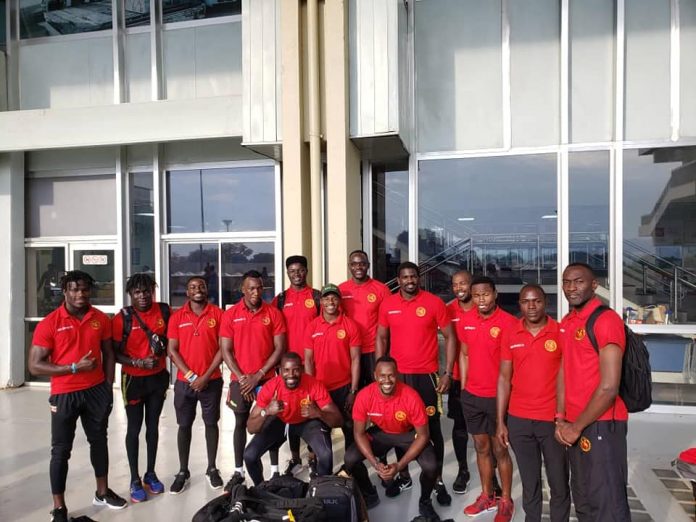
rugby 7s team photo before departing for south africa

The Uganda Rugby Cranes 7s Men’s squad has departed to South Africa for the upcoming 2019 Rugby Africa Men’s Sevens Tournament scheduled for 8th and 9th November.

Uganda will open their campaign against Mauritius on 8th November 2019 at 9:44am Ugandan time at the Bosman Stadium in Johannesburg.

14 African teams in total will compete at the Africa Men’s Sevens tournament 2019 for the gold medal to qualify directly for the Tokyo 2020 Olympic Games.

The silver medalist will have another opportunity to qualify for the Olympic Games by competing in a global repackage tournament that will take place in June 2020.

As well as providing a route to Tokyo 2020, the Africa Men’s Sevens best two teams will be in the mix for the World Rugby Sevens Series qualifier tournament.

Participating teams are; Ghana, Botswana, Cote d’Ivoire, Kenya, Madagascar, Mauritius, Morocco, Namibia, Nigeria, Senegal, Tunisia, Uganda, Zambia and Zimbabwe.

The Uganda Rugby Cranes will be led by Captain Michael Okorach and managed by Tolbert Onyango as the head coach.

The Uganda Rugby Men’s 7s squad: Ian Munyani, Massa Isaac, Ogena Pius, Aaron Oforywoth, Adrian Kasito, Aredo Joseph, Levis Ocen, Ssebuliba Lawrence, Odongo James, Kevin Kerumundu, Philip Wokorach, Okorach Michael (Captain).

Coach: Tolbert Onyango

Team manager: Michael Wandera

Physio: Noah Kayongo

Stories Continues after ad

Embrace forensic technology to combat crime Maj. Gen. Sabiiti

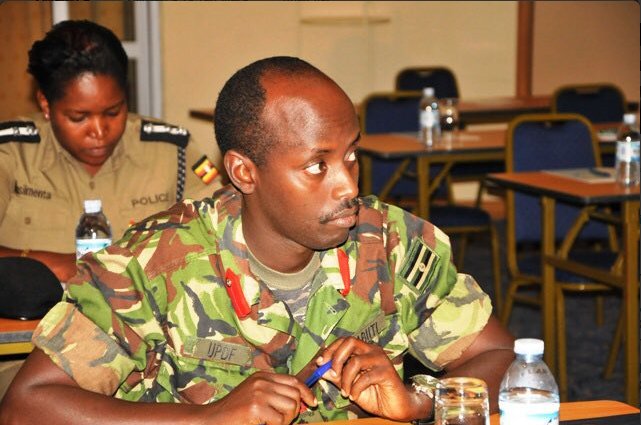
Brig. Sabiiti Muzeeyi

The Deputy Inspector General of Police (DIGP), Maj. Gen. Sabiiti Muzeyi has urged people to embrace forensic medicine Science to help in the fight against crimes in the East African region.

“Uganda Police is a key stakeholder in the administration of justice and thus seeks to extensively utilize forensic techniques and approaches in the course of criminal investigations,” Maj. Gen. Sabiiti made the remarks while representing the Inspector General of Police, Martin Okoth Ochola at an Awareness Forensic Medicine and Science workshop held at Imperial Royal Hotel, Kampala.

The four days awareness workshop was organised by Makerere University Kampala in partnership with Cukurova University.

Sabiiti added that modern policing has seen increased utilization of forensic techniques in investigations and the scientific evidence it produces play an important role in criminal justice.

Forensic Medicine Science takes shape at a time when the government of Uganda is implementing directives of the President to establish an Ultra-Modern forensic facility that will deliver world-class forensic services in the administration of justice.

Sabiiti appreciated the academia for embracing forensics Medicine to help in the implementation of justice system in the country.

“Uganda Police is delighted that the academia in Uganda has taken a keen interest in nurturing the required forensic practitioner human resource to manage this infrastructure alongside others such as CCTV systems,” he said.

The DIGP said that with a constant stream of new technologies and scientific development, there are ever increasing areas of application of forensics in investigation whereby you can find trace of evidence that would have been invisible, even to experts a few years ago.

“The quality of forensic evidence, integrity and expertise of the people involved are very crucial aspects, thus the need to train and retain the best of our scientists who exhibit strong morality, integrity, wisdom and depth in knowledge.”

He stressed that local, national, regional and international cooperation will only be effective if forensic information can be shared accurately, quickly and effective.

“Information must meet strict quality requirements because the porous national borders, we have are not a barrier to crime, and security agencies regularly share information and intelligence about crime and criminal activities.

Adding that, “shortfall in quality can undermine mutual trust and by extension, weaken regional and in tarnation cooperation.”

Stories Continues after ad

Parliament castigates police, calls for explanation of Besigye’s brutal arrest

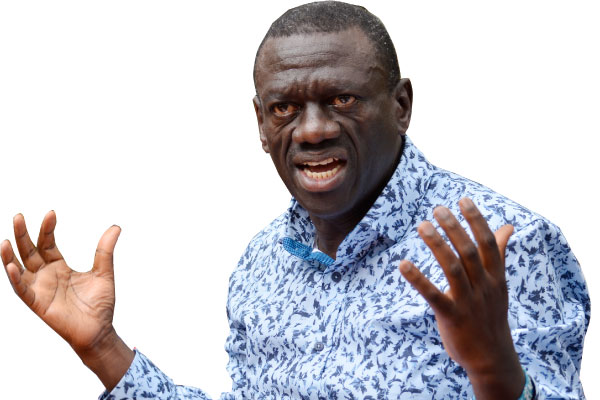
Dr. Kiiza Besigye, the former FDC president

Members of Parliament have castigated the manner in which police operatives days ago mistreated the former President of the Forum for Democratic Change (FDC) Party, Dr. Kizza Besigye, calling on government to reign on the police officers who use excessive force when dealing with civilians.

The Uganda Police officers were on Monday captured by the media smashing Dr Besigye’s car windscreen and subduing him with water explosions, on his way to the Mandela National Stadium, Namboole for an earlier planned meeting.

The Leader of the Opposition, Betty Aol Ocan, while submitting a statement on the Besigye ordeal,criticised the police for ignoring FDC’s notification for a meeting and going ahead to brutalise party delegates.

“Three weeks ago, the MP for Kiira Municipality, Ssemujju Nganda, wrote to the Police informing them of an impending FDC meeting in Namboole on November 4,2019, but Police never replied the notification,” said Ocan, adding that, “even communication to Assistant Inspector General of Police, Asuman Mugenyi and the Minister of Internal Affairs as early  October 30, 2019 did not yield anything.”

Ocan was furious that the Police disregarded the provisions of the law and instead proceeded to spray tear gas on party delegates who she said had converged to discuss pertinent party matters.

“It was shocking to be told on Monday that our meeting cannot take place and no reason was given to the organisers but only to see images in the media of the Police using teargas to disperse delegates.”

NRM, Kajara County MP, Michael Timuzigu warned that the manner in which Besigye was handled could have led to his death or left him permanently maimed. He further warned the efforts being utilised to harness foreign revenue from tourism are in vain if the security agencies do not refrain using excess forces.

“We are trying to promote tourism so as to get foreign exchange but there is no way you are going to attract tourists when there is chaos in this country,” said Timuzigu.

Several opposition MPs testified the times they witnessed the Police dispersing gatherings unlawfully and expressed fear that their campaigns in the next elections could be frustrated.

Butambala County MP, Muwanga Kivumbi noted that action is needed to have the Police adhere to the Public Order Management Act, accusing the force for consistently violating the law.

“The law does not give the Police powers to prohibit gatherings, but gives it power to regulate gatherings,” he said.

The Speaker of Parliament, Rebecca Kadaga, demanded commitment from government on political parties’ participation in the next general elections.

“This country wants to know if we are practicing a multi-party system. We have about 38 parties, five of them are in Parliament, parties are funded by government and the time table from the Electoral Commission is out. We need to know are parties allowed to meet?” Asked Kadaga.

At the end of the debate on the matter yesterday, the House summoned the Minister for Internal Affairs, to explain the justification for Police’s conduct in Besigye’s arrest.

Stories Continues after ad

Minister Kasaija appoints new Road Fund boss

Dr. Eng. Andrew Naimanye

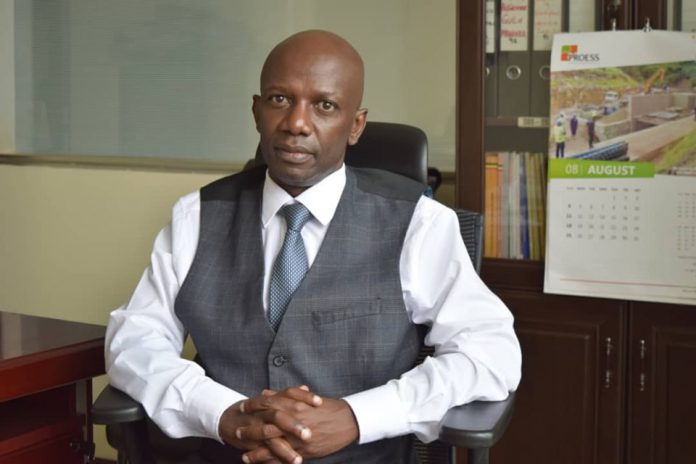
The Minister of Finance Planning and Economic Development, Matia Kasaija has appointed Dr. Eng. Andrew Naimanye as the Acting Executive Director of Uganda Road Fund effective November 1, 2019.

Dr. Eng. Andrew was appointed on the recommendation of the Fund’s board of directors who convened and deliberated to second him for the post.

Dr. Eng. Andrew Naimanye was educated at the University of Leeds, United Kingdom (UK); as a Civil Engineer, Transport Planner, graduating with a BEng, an MSc and a PhD in Economics.

He also holds an MBA (Finance) and undertook both his ‘Ordinary’ and ‘Advanced’ Level education at King’s College, Budo. He is a UK Chartered Engineer (CEng) and a Registered Engineer (REng) in Uganda

As the pioneer Head of Programs at Uganda Road Fund, for the last 10 years, Dr. Eng. Andrew Naimanye has overseen Road Maintenance Work plans financing amounting to Shs3.2 trillion.

Before joining the Road Fund, he worked in UK for 12 years for various FTSE listed Civil Engineering consultancy firms rising up to Associate Director at Waterman Group.

Stories Continues after ad

Museveni lauds MUK researcher on Ebola, Marburg viruses’ test kit

Museveni lauds MUK researcher

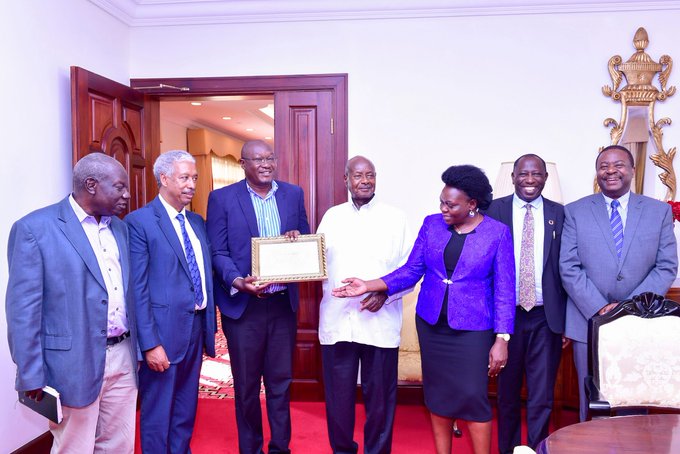
President Yoweri Museveni has congratulated Dr. Misaki Wayengera, a Researcher at Makerere University College of Health Sciences, for his efforts in developing a rapid test kit to diagnose the deadly Ebola and Marburg viruses.

“I want to congratulate our scientists for engaging in ground breaking research and producing a lot of products. The Government will fund you. It is the issue of prioritization and putting the money in the right place,” he said.

The President was speaking during a meeting at State House, Entebbe to recognize Dr. Misaki Wayengera who recently won the World Health Organization (WHO) high innovation challenge in Product Development Category that took place at the WHO Africa Regional Headquarters in Congo (Brazzaville).

President Museveni said that the Government of Uganda will support the efforts of the researchers by establishing a manufacturing facility that will enable them to put all the products together.

He commended Dr. Wayengera and his team on the achievements realized adding that the research can bring in a host of benefits to society because the products form the core that addresses many human challenges such as hemorrhage fevers and HIV afflictions that immensely affect the world.

The President observed that Uganda has, on several occasions, been attacked by epidemics, including Ebola and Marburg, resulting in the deaths of trained preventive workers and wananchi.

State Minister for Health, Hon. Sarah Ochieng Opendi, saluted Dr. Wayengera and his team for the innovation saying their efforts will go a long way in easing the diagnosis of viral hemorrhage fevers such as Ebola and Marburg.

Dr. Wayengera, on his part, thanked President Museveni for recognizing their efforts and his support. He said that the Rapid Test Kit, will eliminate all the viruses of Ebola adding that the kit s easy to deploy in rural village settings where there are no laboratories and expertise.

The meeting was also attended by WHO Representative and Head of mission in Uganda, Dr Yonas Tegegn, Prof Charles Ibingira who is the Principal of Makerere University College of Health Sciences, Prof. Pontiano Kaleebu, Director of Uganda Virus Research Institute and Prof Wilson Byarugaba.

Stories Continues after ad

Wefarm secures US$13m in funding to scale its smallholder agricultural ecosystem

participants at wefarm function

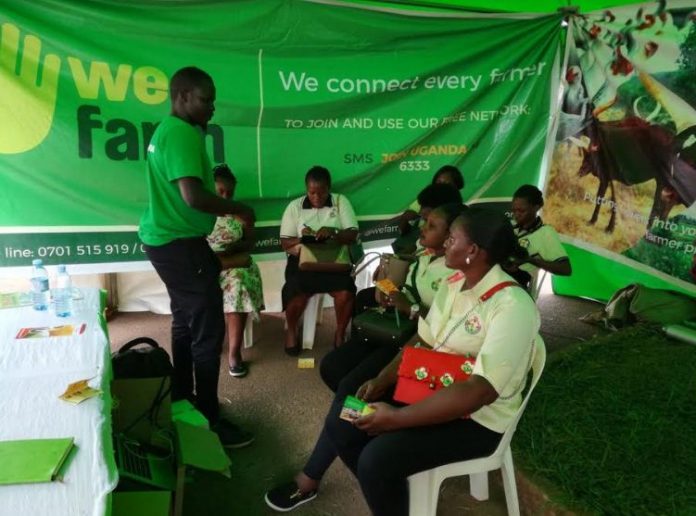
Wefarm the digital network for global small-scale agriculture, today announced it has raised $13 million in a Series A financing round led by Silicon Valley venture capital firm True Ventures.

This financing round will help Wefarm further scale its network of 1.9 million farmers, and its newly created Marketplace, to connect farmers in Africa, even those without internet access, to the information, products and services they need to be more successful. Investing alongside True Ventures are AgFunder and June Fund, among others. The company received significant follow-on investment from LocalGlobe, ADV and Norrsken Foundation.

Founded in 2015, Wefarm is on a mission to create a global eco-system for small-scale agriculture. With more than 1 billion people directly involved in small-scale farming, it is the biggest industry in the world. Wefarm is building the network of trust for those farmers.

Wefarm Marketplace allows farmers to easily access quality products and services, such as seeds, fertilizers and a range of other non-agricultural items from trusted retailers and brands. In line with Wefarm’s bottom-up model, all products, services and retailers on the platform have been recommended by Wefarm users and can even be purchased through SMS.

Disproportionally, smallholder farmers lose too much time and money due to fake or faulty agricultural products. Farm yields in many parts of Africa are just one-fifth of farm yield in the United States or Europe. Poor-quality seeds and fertilisers also limit growth in plants and animals. Given that smallholder farmers grow roughly 70 percent of the world’s food, Wefarm intends to use its technology to help close this yield gap.

The company’s funding announcement coincides with another notable growth milestone of reaching $1 million in total sales from the Wefarm Marketplace in just eight months since launch; that’s faster growth than both Amazon and eBay in their early stages.

With Marketplace sales growing at more than 40 percent month on month, the business is on a rapid growth trajectory. Over the next 12 months it aims to diversify into supporting farmers with both financing and delivery, as well as enabling them to trade the commodities and crops they grow, with the goal of becoming a key part of the global supply chain on behalf of the farmer.

Wefarm CEO and Founder Kenny Ewan believes the platform’s Marketplace will grow into an expansive ecosystem for smallholder farmers.

“If we can inspire 100 million farmers to work together on one platform, we can fundamentally shift global agriculture and trade in their favour, and this round of funding will take us even closer to bringing this vision for improved farm yields into fruition,” said Ewan. “It’s about harnessing AI to champion human intelligence. Our network of trust empowers farmers to find solutions to problems by knowledge sharing. In tandem, the marketplace will give them access to first-rate products that help to deliver better produce. The combination of the two has limitless potential to influence and fight the major agricultural crisis we face.”

“We are enormously inspired by how Kenny and the Wefarm team have empowered the world’s farmers, and we see great potential for their future,” said Jon Callaghan, co-founder of True Ventures. “The company is not only impact-driven, but the impressive growth of the Wefarm Marketplace demonstrates exciting commercial opportunities that will connect those farmers to more of what they need to the benefit of all, across the food supply chain. This is a big, global business.”

Stories Continues after ad