Stanbic Bank
Stanbic Bank
24.5 C
Kampala
Stanbic Bank
Stanbic Bank
Home Blog Page 1122

PLE: Archbishop Ntagali prays for candidates of Kampala Parents’ School

Archbishop of Church of Uganda, The Right Rev. Stanley Ntagali praying for P7 pupils of Kampala Parents School.

The Archbishop of Church of Uganda, The Most Rt. Rev. Stanley Ntagali, has in a prayer,  anointed and dedicated primary seven candidates of Kampala Parents’ School (KPS) to God ahead of Primary Leaving Examinations (PLE) that kick off next Monday.

The dedication service kicked off at 7:00 am in the Main Hall with praise and worship songs, led by the pupils’ choir. The 236 prepared candidates are among several others that will sit for the exams administered by the Uganda National Examinations Board (UNEB).


The Archbishop being welcomed by the Principal Daphine Kato and School Director Sheena Ruparelia


With sermons derived from the book of Proverbs Chapter Two, the Archbishop urged all candidates to do their best and trust in the Lord Jesus Christ if they are to succeed in the forthcoming exams. He applauded the school for keeping children from all religions, saying the Bible teaches children will inherit God’s kingdom.

“It is my prayer that the lord grants knowledge to remember all you have read in the past years and stay focused for achievement of your dreams,” he prayed.

P7 Candidates

The school Principal, Kato Daphine, lauded the Archbishop for special moment of dedicating candidates to the Lord, “This is a special moment, thank you for accepting our invitation may the good Lord bless you,” she said.

She called on parents to bring more children to the school, saying it is on international standard with well facilitated buildings, library and committed to delivering best education services to both local and international pupils.

School Director Sheena Ruparelia and the parents praying for the candidates

Reminiscing her seven year education journey at the school, the students’ representative who is also a candidate, Natasha Byarugaba, said, “It is like yesterday when them to the school and crying to go back with their parents after being dropped at school gate.”

“The Principal has always been there for us every morning to receive us, guide, and encouraging and giving us a good morning as we step into school,” she said.

during the prayers at the school

She pledged never to disappoint their teachers after seven years of study. She also thanked parents who stood with them as they braved the cold mornings to bring them to school.

The state minister of land, Persis Namuganza who is also a parent at the school, lauded the school for helping government in providing quality education to Ugandan children.

“’This is a good school, last year my son scored four aggregates and this indicates that this is a good school with favorable environment that allows children to learn. To all parents, thank you for choosing Kampala parents,” she said.


Stories Continues after ad

Global smartphone market returns to growth of 2 percent in Q3

smartphones

The global smartphone market returned to growth in the third quarter, rising 2 percent to 366 million units shipped worldwide, according to research from Strategy Analytics. This is the industry’s first positive growth for two years. Samsung maintained first position with 21 percent global market share, Huawei rose to a record 18 percent, and Apple took third place with a 12 percent market share.

The market researcher sees worldwide demand for smartphones recovering, due to strong price competition among vendors and new innovations such as larger screens and 5G connectivity.

Huawei showed the strongest growth among the top vendors, with shipments up 29 percent to 66.7 million, driven by growth on its home market. Its market share rose by nearly 4 percent points year-on-year to 18.2 percent.

Samsung also showed growth, of 8 percent to 78.2 million units, thanks to strong demand for the Galaxy Note 10 and A series smartphones. Its global smartphone market share rose to 21.3 percent from 20.1 percent a year ago.

Apple remained in third place, despite a fall in iPhone shipments of 3 percent to an estimated 46.9 million. Strategy Analytics said Apple appears to be stabilizing, due to cheaper iPhone 11 pricing and healthier demand across Asia and the US. Apple’s market share dipped to 12.4 percent from 13.0 percent a year ago.

Xiaomi maintained fourth place, capturing 8.8 percent of the global smartphone market, slightly down from a year ago. Xiaomi is losing ground in core markets of India and China, due to fierce competition from Huawei, Realme and others. Oppo took fifth place with a market share of 8.0 percent, slipping from 8.7 percent share a year ago, due to pressure from Huawei in China.

Stories Continues after ad

Clean the informal sector for inclusive economic development

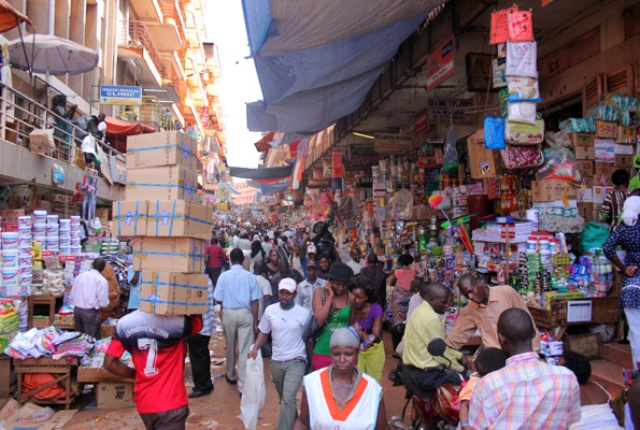
Traders-go-about-their-businesses-in-Kampala

By UDN

The informal sector has in many ways superseded the formal sector and is now the face of modernity rather than its antithesis. By informal economy we mean an amalgamation of unregistered and unlicensed self/family-owned micro, small and medium enterprises not protected by the State. They don’t enjoy any social benefits, and often have no titled or registered assets. This means they are inherently vulnerable, highly mobile, and insecure. As a consequence, these unregulated entities don’t pay taxes, their employees are excluded any social safety nets and they lack the protection accorded by formal labor contracts. It is easy to underestimate the contribution this sector makes to the Ugandan economy.

Uganda’s large informal sector is a cache of untapped revenue potential

Despite government’s recognition of the informal sector, there is need for clarity on the strategic direction for addressing informality. According to the National Strategy for Private Sector Development, FY 2017/18, the informal sector contributed a significant share to GDP (43.9%) in FY 2014/15 which is sizeable posing a big challenge in competition to formal enterprises. The private sector economy is largely characterized by Micro Small and Medium Enterprises (MSMEs), with low productivity and high informality. Up to 80 % of the economy is comprised of informal businesses, who transact in cash making it difficult to track and asses them for tax leaving much of the tax burden to the formal sector.

Many informal small enterprises are family owned and often do not have a fixed address and a range of factors have further stifled the MSME growth, including the high level of informality, over protection of foreign investors, long procedures for starting a business, low innovation and productivity, government’s domestic borrowing and credit access challenges.

Informal sector, channel for depriving government of tax collection

The World Bank (2017) noted that the majority of informal firms are evading taxation and therefore depriving formal firms of their hard-earned profits. On the other hand the informal economy is conducive channel for providing a good blend for illicit activities, including illicit financial flows which deprive government of tax collection. MSMEs typically have a high mortality rate with 90% operating for less than 20 years.

Many informal small enterprises (manufacturers, wholesalers, retailers, agricultural produce dealers) are family owned and often do not have a fixed address. The construction sector for example is one of the fast growing sectors but the service is provided informally implying loss of Government revenue. The transport sector also remains unregulated with no clear records of ownership. This means that a lot of taxable transactions are not traced. This is where the real economy thrives. By their nature, it’s difficult for tax authorities to track them hence lower revenues realized than the potential. Stringent measures by URA further frustrate small businesses and the difficult registration process marked by burdensome compliance procedures, complex tax regulations, and corruption also causes many to prefer informality in Uganda.

Recommendation

Government should;

Devise a strategy of tracking all economic activities contributing to growth and drawing them into the tax bracket by implementing an effective process of business registration. A conducive atmosphere for all businesses to thrive must be availed through making access to credit cheaper and supportive registration measures to boost investment in local enterprises. These approaches will enable the mobilization of revenue into the consolidated fund for service delivery.

Adopt an effective measure to regulate economic activities and no enterprise should be permitted to operate without a Taxpayer Identification Number (TIN). URA should devise a mechanism of providing tax clearance certificates to business owners which should be presented before renewing a license to encourage compliance.

Government needs to set up lawful associations within the transport business to coordinate and regulate the industry as well as collect taxes.

Widening financial reach has great input on economic growth and this calls for a deliberate policy transition of the role of sub-national government, from merely being a regulator of businesses to a facilitator of private sector growth and job creation. Therefore, investing in coordinated transport and economic infrastructure together with land use management, empowering domestic firms to improve productivity, and capacitating institutions and coordination structures should be implemented to stimulate growth.

UDN (Uganda Debt Network) is a civil society organisation that tracks Uganda’s debt transactions.

Stories Continues after ad

Panic as top politicians, security and army officials are ‘reportedly’ on America’s travel ban

Former Inspector General of Police-Gen. Kale Kayihura who is already on the list


There is panic within the Kampala government as reports emerge that top officials are likely to face a travel ban by the United States.

According to credible sources, Eagle Online has learnt that majority of the people on the said travel ban list are top army generals, politicians and security officials.

This website has also learnt that a top army general who works with one of the security agencies was recently denied a visa by the American Embassy and the said incident has left the Kampala regime baffled.

“We were shocked as to why this young army general who is not associated with any incident was denied a visa. And this isn’t the first time because even in cabinet, a significant number of ministers have recently been bounced at the visa office of this embassy” a source with government told Eagle Online

Another credible regional security expert based in one of the neighbouring countries disclosed to this website “The ongoing embarrassment isn’t only limited to those serving but it also targets those that have served and retired but whose record is associated with impunity” he said before adding “It is a matter of betrayal, this whole unfolding is because of one them (officials) thought he was betrayed and so it is a payback time. So he decided to release all the top secrets and this triggered the ban”

Last week there were allegations that a senior cabinet minister and a state minister were denied visas at this embassy.

What is making the ‘rumour’ credible is the recent travel sanctions imposed on former Inspector General of Police (IGP) Gen. Kale Kayihura.

Stories Continues after ad

Kenzo contemplates attending Rema’s wedding

Eddy Kenzo and Rema

Award winner Eddy Kenzo whose real name is Edirisa Musuza, has said he will attend Rema Namakula’s Introduction ceremony if he is invited in good faith. Kenzo said on Thursday while holding a press conference at Mestil Hotel in Kampala.

HiS ex-fiance, Rema Namakula introduced her new catch Dr Hamza Sebunya to her guardians early October where the public relations officer of Kibuli Muslim Sect, Sheikh Nuhu Muzaata Batte insulted Africa’s top singer. Muzaata has since then apologies to Kenzo.

Kenzo and Rema have a daughter out of their relationship and was present as her mother introduced Dr. Sebunya.

Stories Continues after ad

50 Boeing planes grounded globally as wing-related cracks discovered

Aircraft

Boeing has confirmed that it has grounded over 50 of its planes around the world, after wing-related cracks were discovered, while the company’s CEO has admitted to making safety mistakes.

It’s the US aviation giant’s 737NG (Next Generation) model that is now under scrutiny. It’s a precursor to the infamous Boeing 737 MAX, which killed 346 in two crashes in Indonesia and Ethiopia, and has been grounded since March.

Boeing spokesperson told AFP that some 1,000 planes worldwide had “reached the inspection threshold”. The problem these inspections zeroed in on was the so-called ‘pickle fork’ – a part of the plane that connects the fuselage to the wing.

The US aviation authority this month ordered checks of Boeing 737NG planes that had made over 30,000 flights.

Meanwhile, the company’s CEO was testifying before a US House panel on Wednesday, where he said the company made some mistakes on the key-safety system known as MCAS.

“I am responsible. These two accidents happened on my watch. I feel responsible to see this through,” Dennis Muilenburg admitted, refusing to step down.

Two deadly crashes involving Boeing’s newest 737 MAX 8 airplane in less than six months puts the credibility of the manufacturer in jeopardy. The fatal Ethiopian Airlines accident claimed 157 lives in March followed a similar crash in Indonesia, which killed all 189 people on board in October.

Stories Continues after ad

Civil society, MPs review progress of 10th Parliament as term nears end

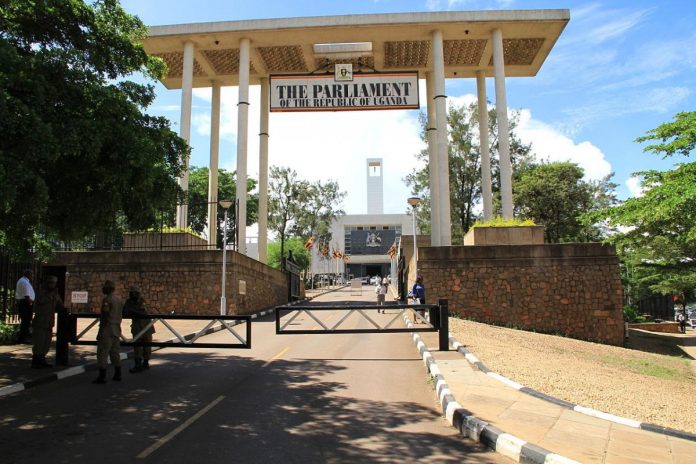
Parliament of Uganda

Members of Parliaments (MPs) and the civil society organisations (CSOs) are reviewing the performance of the 10th Parliament, with prominence being given to ways of deepening citizen involvement.

The 3rd Annual Legislative Sector Review, running under the theme, “Legislating for good governance and sustainable development” saw the discussion of MPs pay, the institution’s budget and citizen involvement in the activities of the legislature.

The Clerk to Parliament, Jane Kibirige, said the year’s review is critical as resolutions will feed into the next phase of the sector’s strategic plan.

“The timing and discussions of this 3rd review are critical to the works of Parliament in three ways: first, it focuses on the mid-term performance of the 10th Parliament…feed into the design of the priority areas of the sector and the formulation of the next strategic plan,” said Kibirge.

Prominent in the discussion was the issue of MPs emoluments, which is an emotive issue that has seen Parliament suffer criticism from a section of the public and members of the civil society.

MP Jacob Oboth Oboth (IND. West Budama County South), also Chairperson of the Committee on Legal and Parliamentary Affairs, blamed CSOs for habitually bashing MPs on the issue of their emoluments without suggesting alternatives.

“Those who are bashing us do not understand the issue of the independence of Parliament; how do you place the issue of Parliament’s budget under another authority,” he said.

“Parliament currently has 3 per cent of the National Budget and most of its priorities are unfunded, how do you relate that with the criticism we always receive for some of the entitlements we earn?” he added.

The Director of Clerks, Emmanuel Bakwega, suggested an alternative to end the current impasse over budget allocation to MPs.

“I think there should be a way to resolve this issue permanently through legislation and expressly including a certain percentage of the Gross Domestic Product (literally the monetary value of the economy) and then Parliament works within that,” said Mr Bakwega.

MP Hellen Asamo (NRM, PWD Eastern Region) said as people with disabilities, Parliament has done so much with regards to making the institution physically accessible, but that the biggest problem is with access to documents and other services that are needed to aid PWDs.

MPs and stakeholders agreed on the need to enrich Parliament with human and financial resources, which they said are important in as far as getting Parliament closer to the people and dealing with post-legislative scrutiny.

MP Agnes Ameede (NRM, Butebo District) said going forward, Parliament should increase the number of research officers to better the quality of output at Parliament.

The review runs from October 30, 2019 to November 1, 2019.

Stories Continues after ad

Mowzey Radio killer sentenced to 14 years in prison

The late Mowzey Radio

Godfrey Wamala alias Troy who was early this week convicted with manslaughter over the death singer Moses Sekibogo alias Mowzey Radio has been sentenced to 14 years in prison.

Wamala was on Monday this week found guilty of manslaughter and not murder which he had been charged with.

Justice Jane Abodo of Entebbe High Court on Thursday stated that Wamala did not have malice aforethought to kill Mowzey despite the fact that the late singer died following a bar brawl in Entebbe.

Wamala is to spend 13 years, three months and four days in prison because he has already served one year, eight months and 26 days in Kigo Prison.

Wamala has a right to appeal if he’s not satisfied with the decision.

Stories Continues after ad

URA issues tough measures on paying foreign clients without tax clearance certificate

Henry Martin Saka

The Uganda Revenue Authority (URA) in letter dated October 25, 2019  and addressed to all banks  warned financial institutions on section 134(D) of the income tax act.

Under Section 134 (d) and regulation number 164 of the Income Tax Act, a taxpayer transferring funds in excess of 2500 currency points from Uganda to outside is required to obtain a clearance certificate from the URA Commissioner General.

“The purpose of this letter is requirement for implementation of the provision. The requirement is that before transferring any funds in excess of Shs50,000,000…from Uganda to a place outside Uganda, the above tax clearance certificate should be presented by your clients and verified for authenticity by yourselves,” said Henry Saka, URA Commissioner Domestic Taxes.

Saka has urged commercial banks to resolve the issue as required by the law, warning that failure to respond is an offence. “Please take note that failure to comply with the obligations of the law is an offence,” he said.

Saka has copied the letter to Director Bank Supervision at the Bank of Uganda which regulates the banking industry.

Stories Continues after ad

University Football League final postponed

university football league

The 2019 University Football League (UFL) final that was scheduled for Sunday 3rd November at the Mandela National Stadium have been postponed.

This follows the resting of the Namboole Stadium pitch for refurbishment following the recent heavy rains that left it in a poor state during the Masaza Cup final over the weekend.

Namboole stadium management has embarked on the refurbishment of the pitch and it will be rested for two weeks for it to be in perfect shape when the Cranes host Malawi in the 2021 Afcon qualifiers on 17th November.

The third place play-off match of the UFL was also slated for the same date with the final but has also been postponed.

The final is between Uganda Christian University (UCU) and St. Lawrence University while the third place play off is between Bugema University and Uganda Martyrs University.

The UFL Organising Committee is in the process of securing an alternative venue.

Among the options being considered are Wankulukuku stadium, KCCA FC Stadium, St. Mary’s Stadium Kitende, FUFA Technicla Centre Njeru, Bugembe Stadium, Luzira Prsion grouns and Wakissha stadium.

Stories Continues after ad