Stanbic Bank
Stanbic Bank
18.7 C
Kampala
Stanbic Bank
Stanbic Bank
Home Blog Page 1183

Business: Top investment hospitality markets released

Wayne Troughton, CEO, HTI Consulting


Acknowledged as one of the continent’s leading hospitality investment experts, Wayne Troughton of HTI Consulting shared unique insights on the Top 5 and Bottom 5 Hospitality Investment markets in Africa ahead of the 10th annual African Property Investment (API) Summit) in Johannesburg on 2 & 3 October.

Recognised as Africa’s premier investment showcase for African real estate over the past decade, the two-day event is celebrated as a deal making platform for investors looking to access opportunities and developers seeking to attract capital.

According to Troughton, the hospitality sector continues to attract investment from a broad spectrum of international and African investors says Troughton.

“We are tracking investment from structured funds, predominantly from Europe and the Middle East; an increasing percentage of High Net Worth Individuals (HNWIs) from Europe, Middle East, and Africa itself), Owner operators that invest from Europe, Africa and the USA), as well as Family Offices Middle East, the UK, Europe, and SA.”

The most popular investment opportunity at the moment includes midscale urban hotel assets of 150 rooms, which are located close to corporates, conferencing centers and transport nodes.

Top Hospitality Investment Markets in West Africa

According to Troughton, the Top Investment Hospitality Markets in West Africa are Abidjan, Dakar, Cape Verde and Accra, while the bottom five are Bamako, Niamey, Ouagadougou and Conakry.

Top Hospitality Investment Markets in East Africa 

In East Africa, the Top Investment Hospitality Markets are Kampala, Addis Ababa, and Dar es Salaam, whilst the bottom are Nairobi (over supply) and Kigali (over supply and limited demand).

Addis Ababa 

With the current highest Average Daily Room rates (ADRs) on the continent, Addis Ababa is touted as an attractive option, but Troughton cautions that the market remains challenging due to a lack of forex, which is resulting in developers battling to complete their hotel developments. However, he notes that if a developer has the proper and adequate financial backing and the correct project team to get a half completed development finalized,  then the “opportunity is there,” he adds.

Dar es Salaam 

A market with plenty of opportunity, the city has performance challenges in recent years due to a lack of direction in policy for private sector, increased supply in the CBD node and reduced levels of demand. Whilst the CBD node is experiencing occupancy and ADR pressure, the outlook on the Peninsula is more optimistic.

Kampala 

As one of the next hubs for investment, Kampala’s current limited branded supply, and with the oil prices entering a recovery period, the City provides a “strategic and attractive opportunity for investors,” says Troughton.

Kigali

If an investor is able to buy an unbranded hotel in Kigali and adequately convert into an international brand then there is upside if well located. Whilst the Government in Rwanda remains pro-active in attracting investment and high economic growth is projected, the growth is off a low base and demand volumes for the City remain limited when compared to other East African cities.

West Africa

Currently, the most attractive markets are Cape Verde, Senegal, Benin and Ghana. While other markets provide opportunity, the possibility of security or political unrest can hamper performance and cashflows for long periods.

As an industry platform for deal making, Troughton hopes to use the API Summit platform to meet and engage with investors whom are active and operate in the hotel and mixed-use real estate development market. Adding that, “We would like to meet and talk with bankers interested in exposure in the African hotel space, and for them to connect me with their colleagues in other African countries.”

Stories Continues after ad

Mr President don’t forget my husband’s contribution to the liberation

President Museveni

Two ladies Susan Namono Wagima ( the late IGP Maswele’s widow and Beatrice Nandudu are born in Sironko district. The widow’s NRA bush narrative is attached. She should therefore be allowed to re-tell the story to the main man (Author of Luwero war machinery).

Nandudu Beatrice is a gospel artist who fuses tradition and Christianity to deliver interesting message(s). One such piece is “Arabica Coffee” without which there would be no independence for Uganda in 1962 that she presented at her last year’s launch at Uganda Museum on 1st of July 2018. She should be programmed to present the same song at Independence Day celebrations in Sironko on 9th October, 2019.

  1. “You cannot see the skin of a cock until the wind blows”

30 years of a widow’s best kept secret

We lived at the police fire brigade headquarters at Queen’s clock Tower off Entebbe road in Kampala. I later got a job as banker in Kampala but continued to live with the family.

On one ordinary day during the regime of Marshal Idi Amin, there was the fierce Nakivubo fuel tanker inferno and my husband headed the operation that eventually controlled and put off the fire. I was married like any other woman except that I was married to a senior police fire man. A police fire man who used to rescue and ferry National Resistance Army Combatants under the pretext of putting off city and rural fires in the country

President Idi Amin having been very pleased with his performance promoted him (Mr. Maswere) as head of Uganda police fire brigade).

After the fall of Idi Amin’s government, my husband and the whole family fled to the country side. I and the children relocated to live in the village with my father’s family. Micheal went to live though clandestinely with a police colleague, the late Sakwa at Namunsi on Mbale- Soroti road.

The ensuing governments of Yusuf Kironde Lule, Godfrey Lukongwa Binaisa and Paul Muwanga eventually recalled the police officers who were on the run back into service. They (officers) reluctantly went back but fearing that they were being set up for arrest.

Fortunately for the officers, those regimes desperately needed their service because the latter had no other options but to re- instate professionals into public service.

The 1980 general elections was another turning point for Micheal Maswere’s family. Doctor Milton Obote was sworn-in but his opponents disputed the results and many of them including Prof. Y.K.Lule, Kakooza Mutale, Kayiira, David Nkwanga and Yoweri Museveni reneged and decided to take the option of an armed struggle.

During this time, the family lived under constant risk as we regularly received and hosted strangers in the fire police barracks and when we inquisitively inquired from the head of the family (Mr. Maswere) would refer to his popular house motto above “You cannot see the skin of a cock until the wind blows”

It was after the National Resistance Army (NRA) had taken over the capital –Kampala that the family discovered that the strangers the family was regularly hosting were actually the NRA combatants more especially the Namugongo – based Black Bombers headed by then Commander Matayo Kyaligonza.

The family had lost one of our daughters,  Rita Khainza to a stray bullet at the storied residence but were unable to proceed for the funeral in Mbale because of then insecurity in the rest of the country.

Their (NRA) cover was blown out that occasion when the new president (Museveni) gave our family military escorts that assisted us transport the body to Bugisu for burial.

One of the strangers we used to host was delegated by the president to come to the vigil and this time he was in combat uniforms and this was Matayo Kyaligonza of the black bombers Unit of the NRA.

When the family returned from the burial, the President (Yoweri Museveni) summoned then  his  new  friend Micheal Mawere Wateya ( my husband) to State House where the latter was notified that he was being considered for appointment as the first ever Mugisu Inspector General of Police (IGP). I personally did not go with him but he was accompanied to meet the president at State House by two relatives: one Yona Wilson Wasikye  a retired  police officer  from Busoba and Mr. Silver Weasa  Nangoye a nephew and former NRA war contact  from  Busano.

Since Muzee Maswele’s death on 31st  January, 2011,  the widow is in a sorrowful  state with her  family in Bugema where he was laid to rest because the deceased’s  pension was freezed the same month and we (family)  continue to lament why the president and commander  – In-chief, Yoweri Museveni  has never to date come to mourn with the family.

Even on the insistence of the president for Maswere to take the top job of IGP   in the presence of his relatives, the former declined and preferred to be Deputy Inspector General of Police (DIGP) – Operations instead.


Susan Namono Wagima (Mrs. Susan Maswele)

Stories Continues after ad

Proscovia Nabbanja confirmed CEO at UNOC

Ms. Proscovia Nabbanja


Uganda National Oil Company (UNOC) has confirmed the appointment of  Ms. Proscovia Nabbanja, as the Chief Executive Officer (CEO) of the company, a month after the resignation  of Dr. Josephine Wapakabulo.

Ms Nabbanja was on August 12, 2019 appointed the acting CEO of the company after Dr. Josephine Wapakabulo resigned from office.  At the appointment, Nabbanja, 41, was the Chief operating Officer Upstream at UNOC.

According to a statement released by UNOC, the board of directors is confident that Ms. Nabbanja’s appointment will propel the company to greater heights given her vast Knowledge, drive and experience in the petroleum industry.

“Ms Nabbanja has been tasked with ensuring UNOC becomes a profitable company that brings value to its shareholders and implementing the company’s five-year strategy.” read in part of the statement.

Nabbanja a geologist with 19 years’ experience in the Oil and Gas industry has been substantively the Chief Operating Officer Upstream at UNOC for the last three years.

She formerly served as a Principal Geologist in the Petroleum Exploration  and Production Department under the Ministry of Energy and Mineral Development, and headed the Technical Division that was at the forefront of reviews of technical proposals especially field development plans and petroleum reservoir reports.

She additionally headed the estimation and reporting of the oil resources and reserves in the country, and field operations monitoring and management of petroleum data. She holds a BSc (Chemistry, Geology) – MUK, MSC Petroleum Geoscience – Imperial College of Science Technology and Medicine, DIC, Dip Petroleum Management and Operations, and an MBA from the Imperial College Business School, London.

“We are confident about Nabbanja’s abilities the UNOC Board Chairman stated, and UNOC has got a solid foundation to continue in a seamless manner he told the staff during Dr. Josephine’s farewell party.” The board noted during her appointment as the acting CEO of company.


Stories Continues after ad

Nakaayi wins 800m gold for Uganda at 2019 IAAF World Athletics Championships

Halima Nakaayi

Ugandan athlete Halimah Nakaayi won the women’s 800m race, making it the biggest surprise in the ongoing IAAF World Athletics Championships Doha 2019 at the Khalifa International stadium in Doha.

Uganda never had a World Championships finalist in the women’s 800m. Nakaayi and Winnie Nanyondo were the first to represent the country in the race.

Pre-race favourite Ajee Wilson took command after the break, with Jamaican Natoya Goule closely in tow. About 250 metres into the race Nakaayi tucked in behind the pair and lodged herself comfortably.

Wilson kept the pace fast and forged on, passing the bell in 57.94, maintaining her lead down the back straight. But Nakaayi kept the pressure on, shadowing the American through the bend, seemingly waiting for the opportunity to pounce. Wilson began to labour at the top of the home straight, giving Nakaayi an opening. She took it with about 30 metres to go, chugged by and held on to reach the line in 1:58.04, a national record.

On the outside, Raevyn Rogers blew by the field to finish second in 1:58.18, while Ajee held on for third to secure a 1-2 finish for the US.

“I was feeling so good, I knew something special was going to happen tonight,” said Nakaayi, whose only previous big meet medal came at the All Africa Games in August, where she took bronze. “So I just kept pushing and pushing. I was feeling strong and in the end I got it.” Nakaayi is quaoted by the IAAF website.

Winnie Nanyondo, the second Ugandan, was fourth in 1:59.18. A few minutes later she joined her teammate for a celebratory dance in front of a swarming pool of photographers. She returns to action on Wednesday in the heats of the 1500m, her stronger event.

Other runners representing Uganda – Boniface Abel Sikowo, Albert Chemutai and Benjamin Kiplagat will compete in the heats of the 3000m steeplechase on Tuesday.

Stories Continues after ad

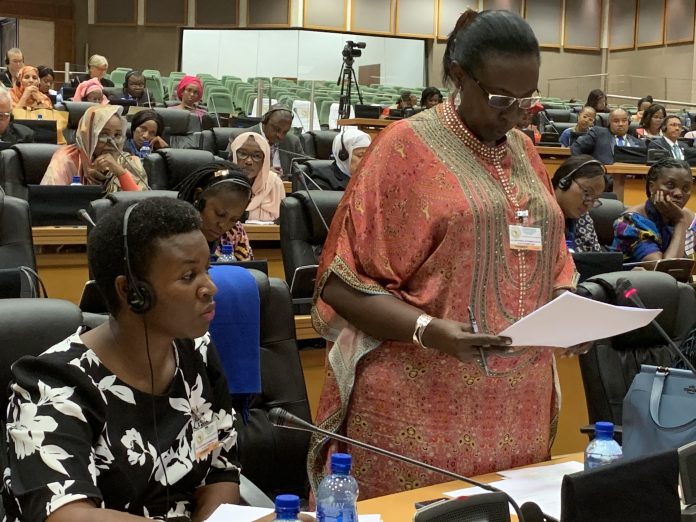
Parliament to host Speakers from Islamic countries

Kadaga and Ssebaggala during the presser.


Parliament of Uganda will this week host the 42nd Parliamentary Union of the Organization of Islamic Cooperation (PUIC, OIC) Executive Meeting.

The Kampala Meeting will among others discuss cooperation among countries, human rights, and support to education and health facilities

Addressing the media, the Speaker of Parliament, Rebecca Kadaga said that the conference which runs from October 1-2, 2019 will discuss the report of the PUIC Secretary General.

“The conference will also follow up the Rabat Declaration adopted by the 14th PUIC Conference and following up the report of the 3rd Extraordinary Meeting of the PUIC Executive Committee,” Kadaga said.

The Rabat declaration that was reached at in Morocco, aimed at emphasizing the cooperation of OIC member states, to ensure that they stick to the core values of the foundation that embrace unity in diversity in regards to PUIC.

Kawempe North Member of Parliament Latif Ssebaggala, said that Uganda has benefited from the OIC in many ways.

“By being member of the OIC, we as a country benefit a lot in terms of having more educational centres like the Islamic University In Uganda (IUIU), support to the heart institute and health facilities in Kayunga and Yumbe, as well as interest-free loans,” said Ssebaggala.

The two day conference will attract over 40 speakers, deputy speakers and Members of Parliament from Algeria, Burkina Faso, Gambia, Iran, Lebanon, Libya, Malaysia and Mauritius. The others are from Morocco, Niger, Pakistan, Saudi Arabia and Turkey.

The Parliamentary Union of the OIC Member States (PUIC, PUOICM) that was established in Iran on June 17, 1999, with its head office in Tehran is composed of Parliaments of the Organization of Islamic Cooperation (OIC) member states.

During their previous meeting in March at the 14th Session of the PUIC Conference in Rabat, Morocco, Speakers of Parliaments, heads and members of delegations reiterated their commitment to the fundamental principles of non-interference in the internal affairs of other states, respect for the territorial integrity and sovereignty of other states, resolution of conflicts through peaceful means and dialogue.

According to the meeting declaration, the Speakers also re-asserted their determination to continue efficient contribution to the improvement of the work of the United Nation (UN) and its specialized agencies, particularly in domains as concern the establishment of world peace and regional security and observance of human rights.

Stories Continues after ad
KCCA, Proline wait on draw to confirm Caf Confed cup opponents

CAF pots


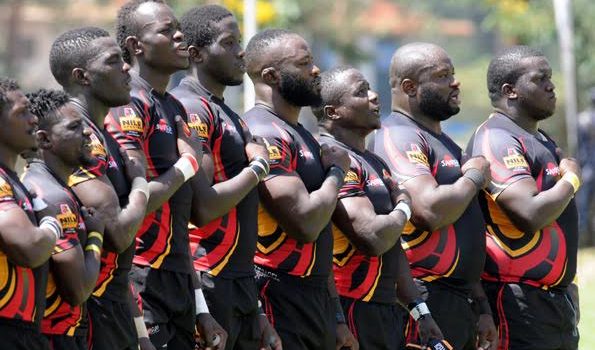
Uganda Premier League sides KCCA FC and Proline FC will have to wait until next Wednesday to confirm their opponents in the CAF Confederations Cup tournament.

KCCA dropped from the Champions League to the second tier of Africa’s premier club competition, after being eliminated on away goals rule by Angolan side Petro de Luanda while Proline progressed to the play-off stage after edging out Rwanda’s AS Kigali with a 3-2 aggregate win.

The draw will be held on 9 October. The first legs will be played on 27th October with the second legs scheduled for 3rd November.

The 16 winners of this play-off round will advance to the group stage.

The winners of the 2019–20 CAF Confederation Cup will earn the right to play against the winners of the 2019–20 CAF Champions League in the 2020 CAF Super Cup. Egypt’s Zamalek are the title holders.

Pot 1; From confedrations cup: RS Berkane (Morocco), Al-Masry (Egypt), Hassania Agadir (Morocco), Zanaco (Zambia), Enugu Rangers (Nigeria), Djoliba (Mali), Paradou AC (Algeria), ESAE (Benin), DC Motema Pembe (DRC), FC San Pédro (Ivory Coast), Pyramids (Egpyt), Bandari (Kenya), Bidvest Wits (south Africa), TS Galaxy (South Africa), Proline (Uganda), Triangle United (Zimbabwe).

Pot 2: Dropped from Champions League: Guinea Horoya (Guinea), Enyimba (Nigeria), Gor Mahia (Kenya), KCCA (Uganda), Asante Kotoko (Ghana), UD Songo (Mozambique), Young Africans (Tanzania), Elect-Sport (Chad), Cano Sport (Equatorial Guinea), Al-Nasr (Libya), Fosa Juniors (Madagascar), FC Nouadhibou (Mauritania), Côte d’Or (Seychelles), ASC Kara (Togo), Green Eagles (Zambia)

Stories Continues after ad

FIFA order Cardiff to pay Emiliano Sala transfer fee

Sala


English club Cardiff City must pay French club Nantes an initial six million euros ($6.5 million) in their dispute over the payment of the transfer fee for Emiliano Sala, FIFA said on Monday.

The amount corresponds to the first instalment of the 17 million-euro fee Cardiff had agreed to pay Nantes before Sala died in a plane crash on January 21 while travelling to join his new club.

The announcement from world football’s governing body followed a meeting by its Players’ Status Committee.

Nantes had previously appealed in February over Cardiff’s failure to pay the 17 million euros they said was owed because Sala had already signed for the Welsh side.

“In a meeting held on 25 September 2019, the FIFA Players’ Status Committee established that Cardiff City FC must pay FC Nantes the sum of EUR 6,000,000, corresponding to the first instalment due in accordance with the transfer agreement concluded between the parties on 19 January 2019 for the transfer of the late Emiliano Sala from FC Nantes to Cardiff City FC.” Part of the fifa statement reads

“The FIFA Players’ Status Committee, which never lost sight of the specific and unique circumstances of this tragic situation during its deliberations on the dispute at stake, refrained from imposing procedural costs on the parties.

“The findings of the decision were notified to the parties concerned today. Within a deadline of ten days, Cardiff City FC and FC Nantes can request a copy of the grounds of the decision, which can be appealed to the Court of Arbitration for Sport in Lausanne.” Fifa statement concluded

The plane Sala was travelling on came down in the English Channel during a night-time flight.

His body was recovered, but that of the pilot, David Ibbotson, has never been found.

A report by Britain’s Air Accidents Investigation Branch in August said that Sala and the pilot were likely exposed to “potentially fatal” levels of carbon monoxide on the plane.

In the aftermath of the tragedy, Cardiff were relegated from the Premier League after just one season back in the top flight.

Stories Continues after ad
From Kenya and Uganda, mobile money spreads to Asia

Graph showing mobile money performance


Thanks to mobile money, any person with a basic phone can now make cash transfers, pay bills, and send money to family members abroad without having a bank account. This is a game-changing innovation, particularly for the world’s poor as it is easy and cheap.

Our chart of the week from the IMF’s Financial Access Survey shows the growth in mobile money accounts across regions. While mobile money continues to grow in its epicenter in Africa, it’s also taking off in Asia. Mobile money is just one aspect of the survey, which also provides a wealth of information on the access to and use of basic financial services, including breakdowns by gender.

Asia’s mobile money uptake

Over the past five years, mobile money has gained traction in South Asia, which is experiencing an average annual growth rate of 46 percent in mobile money accounts the highest across all regions. Bangladesh, Indonesia, and Pakistan are a few examples of countries experiencing high mobile money growth in Asia.

Mobile money services grew early on in sub-Saharan Africa because some countries lacked deep banking penetration. The launch of M-PESA in Kenya in 2007 completely transformed the way the unbanked access financial services.

After a rapid expansion in Kenya, Tanzania, and Uganda, mobile money has spread to other parts of the region. In fact, sub-Saharan Africa still leads in the number of mobile money accounts and in some countries, mobile money accounts now surpass bank accounts.

Mobile money also continues to grow in some fragile states.

Factors behind rapid uptake in new frontiers

In Afghanistan, for example, where only 200 out of 1,000 adults have bank accounts but more than 80 percent of the population has access to a cellular phone, mobile money is picking up. The value of mobile money transactions grew by a factor of four in the past five years to 1.2 percent of GDP in 2018.

The ability of mobile money services to reach remote customers has contributed to this growth. Mobile network operators employ agents typically small, local retail stores to offer services even in remote areas where banks have limited reach.

In Afghanistan, there are, on average, three mobile money agents compared to one or less automated teller machine or commercial bank branch every 1,000 square kilometres. This expansion in mobile money services has helped meet a significant pent-up demand for financial services.

With mobile money becoming more pervasive, governments will need to create regulations to protect new customers against fraud and liquidity risks the inability of service providers to return funds on demand.


Stories Continues after ad
WHO launches digital app to improve care for older people

WHO


As the world marks International Day of Older Persons, the World Health Organization (WHO) has launched a package of tools, including a digital application to help health and social workers provide better care for older people.

The innovative interactive digital application known as WHO ICOPE Handbook App provides practical guidance to address priority conditions including mobility limitations, malnutrition, vision and hearing loss, cognitive decline, depressive symptoms and social care and support. Used in conjunction with a package of tools including a new handbook, the app will accelerate training of health and social workers to better address the diverse needs of older people.

“It is essential that services for older people are included in universal health care packages. At the same time there needs to be good coordination between the health and social services to provide optimal care when needed. The new package of tools supports healthy ageing with a person-centred and coordinated model of care” says Dr Anshu Banerjee, director of the department of Maternal, new-born, child and adolescent health and ageing at WHO

The world’s population is ageing at a fast pace. By 2050 one in five people will be over 60. The number of aged over 80 is projected to triple from 143 million in 2019 to 426 million in 2050. While every older person is different physical and mental capacity tend to decline with increasing age.

“Such innovation will enable older people to continue doing the things they value and prevent them from social isolation and care dependency,” says Dr Islene Araujo de Carvalho, group lead on ageing and integrated care at WHO. “Intervening close to where older people live, with active participation of the community and older persons themselves, is essential for a personalized care plan.”

The Integrated Care for Older People package of tools is the result of two years of extensive consultations with leading experts and stakeholders including civil society representatives.

The 2030 Agenda and the Sustainable Development Goals recognize that development will only be achievable if it is inclusive of people of all ages. Empowering older persons and enabling their full participation and social inclusion in good health are ways to reduce inequalities.


Stories Continues after ad

Bill Gates bestowed with Africa’s financial inclusion medal of honor

Portrait of Bill Gates


HiPipo, through its Include Everyone program is delighted to celebrate global business leader Bill Gates with a Digital Impact Awards Africa honor, the ‘Africa’s Financial Inclusion Medal of Honor.’

The Africa Financial Inclusion Medal of Honor is awarded to an individual or organization that is has made exceptional contribution to Africa’s Digital space, by specifically taking lead in ensuring that there is provision of affordable, reliable and accessible financial services across the continent.

According to GSMA 2018 report, mobile money is now available in 100 countries through over 300 services globally. The number of verified mobile money accounts is reaching a total of half a billion globally with strong growth in Sub-Saharan Africa.

This fast-growing mobile money penetration that has greatly improved financial inclusion to the poorest of the poor is thanks to the tremendous work done by development partners that have invested time and money in research and delivery of sustainable financial solutions for the poor.  Notable among such partners is the Bill & Melinda Gates Foundation.

The different researches and productions/live projects that the Bill & Melinda Gates Foundation is supporting are mammoth contributions that demonstrate how different industries can innovate and positively transform life using mobile financial services.

It is against this background that Digital Impact Awards Africa appreciates this noble contribution and thus presents the “Africa’s Financial Inclusion Medal of Honor, 2019” to Bill Gates, the Co-chairman of the Bill & Melinda Gates Foundation.

The Medal of Honor was accompanied with a Special Fiber Mosaic Art Piece

It is an original and unique piece with a patterned surface consisting of various simple patterns of quite collaborated color effects made with small pieces of banana fibre, plywood and glue.

Godfrey Kabaale Phipo crafted the best ever most durable, greatest looking, most admirable medal to celebrate Bill Gates. In his own words,

“This art piece is a patterned surface made with small pieces of banana fibre, stuck on plywood with art glue. This art piece took me 6,570 man hours to finish. It required a detailed and customized attention for any slight distraction would make me lose truck. This art piece will forever be a very special art piece to me because it has made me discover the potential I never imagined I had.”

The Digital Impact Awards Africa honor and special mosaic art piece was received by Dr. Warren D. Carew, Vice President – Payment at ModusBox on behalf of the Gate Foundation at the recently concluded 6th edition of Include Everyone Summit and #DIAA2019.

Since their inception, the Digital Impact Awards Africa (DIAA) have enjoyed increasing international recognition. Today they are among the most respected and sought-after prizes bestowed.

Their prestige, acknowledged within Africa and rest of the world, has grown over the years because the public and digital industry recognizes the DIAA as an award based on technical achievement and because care has been taken to preserve the integrity of the DIAA. Specifically, the Digital Impact Awards Africa has carefully limited reproductions of the DIAA statuettes.


Stories Continues after ad