Stanbic Bank
Stanbic Bank
17.4 C
Kampala
Stanbic Bank
Stanbic Bank
Home Blog Page 1235

Azuri Technologies Launches PayGo Solar Satellite TV in Zambia

AzuriTV launch in Lusaka, Zambia

By Our Reporter

Azuri Technologies, a provider of pay-as-you-go solar home solutions to off-grid households across Africa, officially launched its 24-inch solar satellite television and home lighting system in Zambia at the British High Commission in Lusaka.

The TV launch in Zambia comes on the heels of Azuri’s announced strategic $26 million equity investment, accelerating the company’s expansion plans across sub-Saharan Africa.

The investment will help more off-grid customers across Zambia benefit from affordable, clean and reliable energy, as well as having access to modern energy-efficient appliances.

Azuri CEO Simon Bransfield-Garth said: “Azuri believes African consumers, regardless of wherever they may live, should be able to access affordable modern digital services and devices that have a positive impact on daily life and on livelihoods.”

“Pay-as-you-go solar power is connecting off-grid households to the modern digital world through reliable, clean energy and highly efficient products such as AzuriTV which delivers social and economic benefits that many urban users have experienced for years.”

Minster for Energy, Hon. Matthew Nkhuwa said: “Renewable energy such as that offered by Azuri can is a catalyst for rural development through improved access to information, improved productivity and new employment opportunities, as well as supporting Zambia’s commitment to mitigating climate change.”

AzuriTV was the first complete solar TV and satellite package designed and developed for off-grid consumers in Africa. Azuri customers pay for their solar and satellite TV service through regular weekly instalments, and once the system is paid for, all energy generated going forward is free of charge.

British High Commissioner, Fergus Cochrane-Dyet OBE said: “Solar power has the potential to transform the lives of millions of people who are still living off the grid.”

“Azuri embodies the pioneering spirit of innovation for which the UK is globally renowned. The launch today showcases the cutting-edge technology and expert services that British firms can offer to rapidly expanding markets across Africa.”

Azuri is a leading commercial provider of pay-as-you-go solar home systems to off-grid consumers across sub-Saharan Africa since 2012. Working in partnership with locally-based distributor Kazang Solar, Azuri and has been delivering affordable, clean energy to Zambians since 2016.

According to a recent study by Efficiency for Access Coalition, televisions are the second most desired off-grid appliance by consumers, with only solar lighting being ranked more highly.

Shamba Shape Up, one of East Africa’s most popular rural programmes offering farming tips and advice, which is available to AzuriTV customers, reports that 80% of viewers on average increase income, produce and or food for their households by making simple changes recommended by the show.

The AzuriTV package includes a 24-inch solar TV with 49 popular Zuku satellite TV channels and over 50 radio channels, and comes complete with solar home lighting, rechargeable radio, torch and mobile phone charging. The complete package costs as little as K98 per week.

Combining the latest solar innovation and mobile payment technology, Azuri delivers reliable, renewable and distributed power to the millions who have no access to modern powered services. Azuri operates in five key territories; Kenya, Nigeria, Zambia, Tanzania and Uganda with East Africa Headquarters in Nairobi, Kenya and West Africa Headquarters in Lagos, Nigeria.

Stories Continues after ad

Address governance issues at BoU to stop scandals: MP Abdu Katuntu urges gov’t

The Bugweri County Member of Parliament (MP) Abdul Katuntu, says there is an urgent need for government to address Governance issues in the Bank of Uganda (BoU) if the scandals rocking the institution are to be curbed.

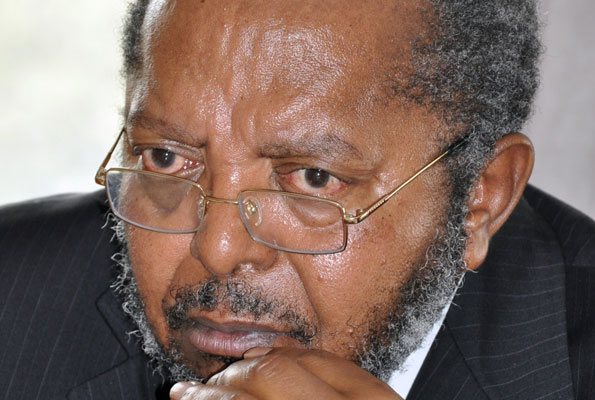
Katuntu, who chaired parliament’s Committee on Commissions Statutory Authorities and State Enterprise (COSASE) said yesterday during the plenary that the current BoU board is led by the Governor Prof. Emmanuel Tumusiime-Mutebile as Chairman, which means, Katuntu said, Mutebile reports to himself.

In the COSASE report handed over to government after the probe of BoU over the controversial closure of seven commercial banks, MPs recommended that that anomaly be corrected. Government is yet to act on that report. Kasekende deputizes Mutebile on the BoU board. “BoU officials are very powerful and only report to themselves,” Katuntu said.

Katuntu further said there is a fight between Mutebile and his Deputy, Dr. Louis Kasekende over succession. Mutebile is set to retire in 2021 while Kasekende’s contract runs out in 2020. Kasekende was expected to succeed Mutebile, but with the scandals rocking BoU right now, a new face is likely to be brought in, according to sources close to the appointing authority.

The MP made the remarks while contributing to the debate on the controversy surrounding the extra cargo that was transported on the charted flight transporting newly printed Ugandan currency notes to Uganda. BoU chartered a plane to transport 20 pallets containing Ugandan currency from France. However, there were 25 pallets aboard the plane when it finally landed at Entebbe International Airport raising suspicion that BoU officials could have printed extra cash for themselves.

Preliminary investigations so far say the extra pallets belonged to 13 agencies and private individuals including the United Nations, United States Agency for International Development (USAID), Ministry of Health, APTECH and Mandela Millers among others.

However, Katuntu said the Governance issues at BoU and the fact that the BoU Board doesn’t report to anyone including the President and Finance Ministry makes them untouchable.

He said while probing the sale of the defunct banks, they encountered several threats includes calls to stop the probe, but Parliament threw its weight behind the committee.

Katuntu’s statement comes after the Minister of Finance in charge of Planning, David Bahati said Government was still investigating the issue of the extra pallets. Bahati urged Ugandans not to speculate on the matter but wait for police investigations.

The Government Chief Whip, Ruth Nankabirwa demanded that Government be given a time frame, under which to report to Parliament. She also demanded that Government releases details of the extra pallets instead of keeping information from the Public.

The Speaker of Parliament Rebecca Kadaga gave the Government up to mid-July to present a detailed statement in regards to the BoU investigations over the currency consignment saga where about Sh90 billion is alleged to have gone into private pockets of BoU officials.

Three BoU officials, including the executive director currency, Charles Malinga Akol, have so far been charged and released on bail. Mr Malinga was charged jointly with Francis Kakeeto and Fred Vito Wanyama, both bankers at Central Bank branch in Mbale.

Stories Continues after ad
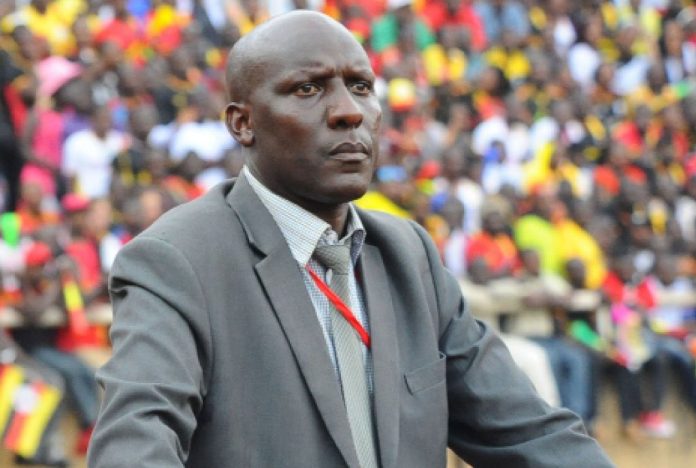
UBC is negotiating to air AFCON on credit

The home of UBC

The National Broadcaster, Uganda Broadcasting Corporation (UBC) is negotiating with the Confederation of African Football (CAF) to broadcast African Cup of Nations (AFCON) on credit.

UBC broadcast AFCON 2019 for three days and stopped for failure to clear Euros 350,000 to purchase rights to broadcast the Africa Cup of Nations (AFCON).

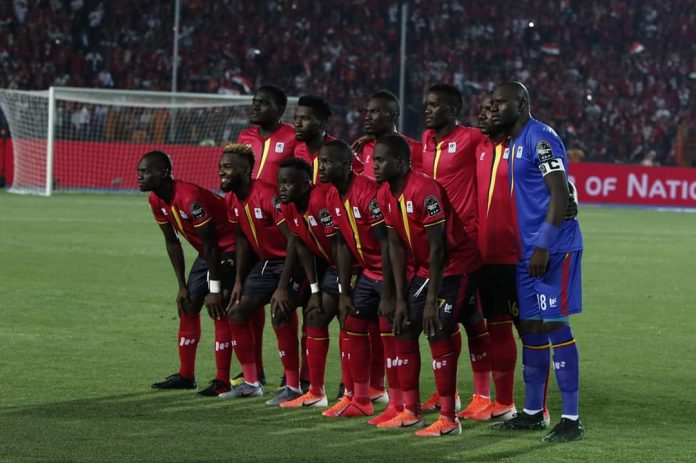
This has come at a time when Uganda Cranes is eager to play against the Warriors of Zimbabwe for their second group A game of the 2019 Africa Cup of Nations.

Cranes opened their campaign win with an emphatic 2-0 win over DR Congo at the Cairo International Stadium over the weekend and come into the next match looking good to make it two out of two.

Last week, parliament revealed that Ugandans will watch AFCON that kicked off on Friday, 21 June 2019 live from Egypt for free following after it directed government to money for national broadcaster to purchase rights to air all the games.

The revelation was made after UBC had petitioned the Speaker of Parliament, Rebecca Kadaga, requesting for funds to pay for the rights to air the games. Kadaga said the national broadcaster was desperate to broadcast the games live due to their big viewership.

The Minister of ICT was directed by Parliament to process a request to fund the games and update the House on the progress.

The state broadcaster says that the matter would be resolved soon.

Stories Continues after ad
Beauty queen ‘raped by ex-President’

Fatou Jallow

A 23-year-old former beauty queen in The Gambia, Fatou “Toufah” Jallow, has said she was raped by ex-President Yahya Jammeh when he was in office.

Her testimony is part of a Human Rights Watch and Trial International report that details another alleged rape and sexual assault by Mr Jammeh.

The BBC tried to contact Mr Jammeh, who now lives in exile in Equatorial Guinea, about the allegations.

A spokesman for his APRC party denied the accusations made against Mr Jammeh.

“We as a party and The Gambian people are tired of the steady stream of unfounded allegations that have been reported against our ex-president,” said Ousman Rambo Jatta, in a written statement to the BBC.

“The ex-president has no time to react to lies and smear campaigns. He is a very respectable God fearing and pious leader who has nothing but respect for our Gambian women,” the deputy APRC leader said.

Ms Jallow told the BBC she wanted to meet Mr Jammeh, 54, in court so he could face justice.

“I’ve really tried to hide the story and erase it and make sure it’s not part of me.

“Realistically I couldn’t so I decided to speak now because it is time to tell the story and to make sure that Yayha Jammeh hears what he has done.”

She said she also wanted to testify before The Gambia’s Truth, Reconciliation and Reparations Commission (TRRC), which has been set up by President Adama Barrow, who won elections in December 2016.

The TTRC is investigating human rights violations alleged to have been committed during Mr Jammeh’s 22-year rule, including reports of extrajudicial killings, torture and arbitrary detention.

He was forced from office in January 2017 after regional powers sent in troops when he refused to give up power.

‘Marriage refusal’

Ms Jallow said she was 18 when she met Mr Jammeh after winning a beauty pageant in 2014 in the capital, Banjul.

In the months following her coronation, she said the former president acted as a father figure when they met, offering her advice, gifts and money, and also organising for running water to be installed in her family home.

Then at a dinner organised by an aide to the president, she says he asked her to marry him. She refused and rebuffed other enticements from the aide to agree to the offer.

Ms Jallow said the aide then insisted she attend a religious ceremony at State House in her role as beauty queen in June 2015. But when she arrived, she was taken to the president’s private residence.

“It was clear what this was going to be,” she said, describing Mr Jammeh’s anger at her for rejecting him.

Ms Jallow says he slapped her and injected her in her arm with a needle.

“He rubbed his genitals in my face, pushed me down to my knees, pulled my dress up and sodomised me.”

‘Protocol girls’

The young woman says afterwards she locked herself at home for three days and then decided to flee to neighbouring Senegal.

Once in Dakar, the Senegalese capital, Ms Jallow sought the assistance of various human rights organisations. Weeks later, she was approved protection status and moved to Canada, where she has been living since.

Human Rights Watch (HRW) and Trial International say Mr Jammeh had a system in place to abuse women, where some were put on the state payroll and worked at State House as so-called “protocol girls”, who had some clerical duties but were mainly on call to have sex with the president.

The BBC could not verify the allegation, but a former Gambian official, who agreed to speak on condition of anonymity, said he was aware of “inappropriate things” happening at the presidency: “Protocol staff were mostly women and they were hired to satisfy the president’s fantasies.”

He remembered seeing Ms Jallow at State House, sometimes at “odd hours”.

Another woman, hired as a protocol officer at the age of 23, told HRW she was forced to have sex with Mr Jammeh in 2015.

The woman, who asked not to be named, said that one day the president called her into his room: “He started undressing me and saying that he was in love with me, that he will do anything for me and my family, that I should not tell anyone because if I do I will face the consequences.

“I felt I had no choice. That day he slept with me without protection.”

‘Some felt honoured’

Another woman who worked as a protocol officer said that they knew if one of them was called it was for sex.

“Some wanted it. They felt honoured or wanted the money,” she told HRW on condition of anonymity.

She described how she was sexually assaulted by the president at his summer house, Kanilai, in 2013 when she was 22: “One evening, a presidential aide called me and told me to come with her to the president’s private apartment. He asked me to undress.

“He told me that I was young and needed protection so he wanted to apply spiritual water on me.”

In an encounter the next day, she started crying as Mr Jammeh began to touch her body. He became angry and sent her away.

She says she was later sacked and a promised scholarship cancelled.

TRRC Executive Secretary Baba Jallow has told the BBC that the commission, launched eight months ago, will focus on sexual violence in September.

“We are aware of allegations involving Jammeh but we have not heard victims on the record yet. Investigations have already started but at this stage we can’t say who is involved and how many victims there are,” he said.

Ms Jallow wants to create an atmosphere where women will feel safer to talk about rape and sexual assault: “It’s a step-by-step thing and the first part is to acknowledge it happened.

“When many other women speak up and it becomes safer and safer,” she told the BBC.

President Barrow has said he will await the report of the TRRC before considering whether to pursue Mr Jammeh’s extradition from Equatorial Guinea.

Stories Continues after ad
BoU currency saga: Kasekende pleads with board to save him

Former BoU Deputy Governor, Dr. Louis Kasekende.

As more Bank of Uganda (BoU) officials and others continue to be summoned by police’s CID, sources say the Deputy Governor, Dr. Louis Kasekende, has written to his supervisors, the board, asking that they support in his prayer that he does not appear before the investigators for questioning as regards the on-going currency saga where some officials have already been charged.

Sources say that Kasekende is against appearing before the CID investigators on the grounds that he didn’t participate in the transfer of the printed currency from France to Uganda, much as he sanctioned the paper work of the printing of the shillings notes.

Yesterday BoU Executive Director Currency Operations Charles Malinga Akol was released from the Anti-Corruption Court in Kololo on a cash bail of Shs40 million even though sources say he is the one who reported to Governor Emmanuel Tumusiime-Mutebile about the anomaly in the currency consignment that arrived on April 26, 2019.

Other two officials who were charged at Anti-Corruption court on allegations of inclusion of unauthorised cargo on BoU chartered plane, Francis Kakeeto, a branch manager at Mbale and Fred Wanyama were freed on cash bail after they were first denied bail by magistrate Herbert Asiimwe.

Prosecution alleged that on April 26, 2019 between France, Belgium and Entebbe airport, the duo while on assignment by their employer to carry out a pre-shipment inspection of printed materials in France, in abuse of the authority to offices did an arbitrary act prejudicial to the interest of their employer and allowed the inclusion of unauthorised case on a cargo plane fully chartered by BoU.

And in the alternative, it’s alleged that they failed to refute and report the inclusion of unauthorised cargo on a plane fully chartered by BoU.

BoU officials were dispatched to travel to German aboard a chartered airplane to ferry the printed cash to Uganda and upon reaching German, the Uganda team that was led by a one Dr. Barenzi who is the deputy director in charge of operations. Dr. Barenzi represented Malinga.

It is said upon getting the German, Dr. Barenzi and another officer allegedly printed money to a tune of Shs90 billion in excesses and some of the said Shs90 billion was used for purchasing goods which were as well loaded into the chartered plane.

Investigators are trying to establish how such big sums of money could be printed without the knowledge of the top leaders of the bank including both the Governor and his deputy. However, by the time of the incident, Governor Mutebile had sought for leave as he was seeking medical treatment abroad. It is said his deputy Dr. Louis Kasekende was in-charge.

Stories Continues after ad

Vipers SC sign Allan Kayiwa from Tooro United

Allan Kayiwa

Vipers Sports Club have confirmed the signing of forward Allan Kayiwa from Tooro United on a two-year deal.

Kayiwa was officially unveiled on Wednesday to his new teammates by Vipers head coach, Michael Nam Ouma, at the club training.

The forward joins The Venoms as a free agent thus becoming their first signing in this transfer window.

He has been a subject of interest from other league opponents but made a choice to ply his trade at the Kitende-based side and was elated upon arrival.

“I have made the best choice to join this great club, it’s my new home and am so excited to be here. I am ready for the new challenge as well,” Kayiwa said.

The youngster broke on to the local scene in 2015 from Soana Young, his former club’s academy team and proved his worth in the senior team, subsequently attracting interest from many rival clubs.

Kayiwa has been at least the most consistent player at Tooro United for the last two seasons averaging 8 goals and assists per season.

He is known for his vision, eye for goal plus skill on the ball and can play upfront and on the flanks thus his addition will help to minimize the offensive problems at Vipers in the coming season.

He was part of Uganda Cranes team during the recently concluded Cosafa tournament and featured in the plate semifinal against South Africa.

Player Profile

Name: Allan Kayiwa

Date of Birth: October 7th, 1997

Nationality: Ugandan

Position: Forward

Strength: Dribbling

Former teams: Soana Young (2012-15), Soana FC then 2015 – 2019 Tooro United.

Stories Continues after ad

Neymar accepts pay-cut in ‘verbal agreement’ with Barca – reports

Neymar is ready to cut his salary by 12 million euros to leave Paris Saint-Germain as part of a “verbal agreement” reached between the Brazilian and Barcelona, according to reports in the Spanish press.

PSG are yet to sanction the sale of their star striker, who they paid a world record 222 million euros to sign from Barca only two years ago.

But Neymar is reportedly eager to return to Spain and Barcelona are prepared to take him back, with Spanish sports newspaper Diario Sport claiming a five-year contract has been agreed.

The newspaper says the terms include Neymar reducing his salary from around 36 million euros at PSG to the 24 million euros he received at Barca in 2017, while also dropping his 26-million euro court case against the Catalan club.

Neymar claims he was due the amount before leaving as a loyalty bonus.

Barcelona sports newspaper Mundo Deportivo has reported Neymar will also have to make a public apology to the club’s fans for the manner of his departure.

The 27-year-old had spent four years at Camp Nou, winning the Champions League in 2015 and two La Liga titles. He had formed a brilliant attacking trio alongside Lionel Messi and Luis Suarez.

Any return for Neymar would likely require Barca to raise funds through sales. Antoine Griezmann is expected to join from Atletico Madrid for 120 million euros while Frenkie de Jong has already signed for 75 million euros from Ajax.

Stories Continues after ad

Politics: Nathan Nandala Mafabi hits at Museveni over Besigye, alleges president wants to kill BCU

Mr. Mafabi

By Nathan Nandala Mafabi

In 2000, while working at the World Bank, I heard that Dr Kizza Besigye would contest for the national presidency in 2001, and I affirmed that he would be my candidate.

Earlier on in 1996, while still working at the Ministry of Finance, I had met Dr. Besigye as we investigated tax fraud in an organisation called Danze. This organization was run by high-profile people in government and business moguls. Goods imported by this company would be registered as ‘goods on transit’ yet they were being sold here in Uganda. The government officials would falsify stamps from exit points like Koboko and Mutukula, claiming the goods had left the country.

When we did the investigation, the Government of Uganda had been defrauded of 152 billion shillings. During this investigation, we even met President Museveni, since we had received information that some of the players were soldiers. It was only later that we learnt of the President’s involvement in the whole scam, and that Danze had been formed to mobilise money for his 1996 presidential election!

Why Dr Besigye

As indicated, during this investigation, I met Dr Besigye who was supposed to give us information about Danze. Instead, he not only offered us key information about Danze but availed us details of theft in Coffee Marketing Board (CMB).

That time, coffee would disappear from Kampala to Mombasa or in the sea. Interestingly, the trucks, the drivers and the ships would never disappear! It was Dr Besigye who told us that disappearance of coffee was a Museveni venture meant to cheat the taxpayer. After declarations of disappearance of coffee, the government would pick money from the Treasury to pay farmers. By then, their methods were not as advanced as today’s, where the Governor BOU is simply ordered to release money. When Dr Besigye disclosed this information, it dawned on me that there were still some honest people in this country. A senior official of CMB involved in that scam is currently chairing the board of a bank which was also bought from government at zero price.

You may also recollect that in 1999 Dr Besigye had penned an article, criticising the NRM for veering off the course they had set out to achieve in the Bush War—and for his honesty, he had been threatened with a Court Martial. So when in 2001 Dr Besigye declared that he was going to run against Mr Museveni, I couldn’t hesitate to support him.

Together with Mr Garuga Musinguzi and others, we mobilized resources to run that campaign. At the end of the race, we “lost”. Not because we had genuinely lost but because of the combination of factors. Dr Besigye’s candidature frightened Mr Museveni so much that he unleashed all manner of brutality against his opponent. In western Uganda, voter turn up was 120%. As the courts later ruled, that particular election was a pack of irregularities. My hope in that election was that Dr Besigye should have won so that I would serve as a civil servant in his regime.

But his loss and the glaring electoral irregularities propelled me into elective politics, if not for anything, at least to make a humble contribution in changing the way our country was being run. I decided to run for the Budadiri West parliamentary seat, in a race where my opponent mocked me for being “too light”. He chided me, saying nobody would waste a vote on a person who can’t stand on and break a dry banana leaf! However, at the end of the campaign, I emerged winner.

When I joined Parliament in 2001, I was the only new MP tasked to chair a committee. I was voted Chairperson of National Economy Committee. It was during this tenure that I discovered how government was using the common person to get loans which would never reach the intended beneficiaries. This is how, together with the team, we changed the rules, demanding that no loan would be procured unless the intended beneficiaries were aware. The committee I chaired rejected 11 loan requests we thought were simply going to burden the tax payer. Of course the State never liked this.

Another significant and yet low development in this time was the lifting of presidential term limits in 2005. Before our colleagues in the NRM did the dishonourable act of amending the Constitution to offer Museveni a life presidency shot, I was approached by State operatives with an offer of two billion shillings and a ministerial slot if I could back the “third term” project. I told them my conscience had no price and I later learnt, this angered the powers that be very much.

It was also in this period that I moved a motion in Parliament against selling Uganda Commercial Bank, arguing that this was a people’s bank. It was a hot debate, but while we lost, we are sure history will one day bail us out.

During this time, Reform Agenda merged with the Parliamentary Advocacy Forum (PAFO) to form Forum for Democratic Change (FDC). Our courtship with state violence had begun. For example while in Jinja, popularising PAFO, the government mobilised thugs to attack us. They hit my jaw so badly that I had to undergo serious medical treatment.

In December 2004, FDC was registered and we hit the campaign trail the following year. However, it was a difficult campaign. Our chief mobiliser, Dr Kizza Besigye, had been arrested on trumped-up charges and he was behind bars. During the nominations, some people were of the view that two sets of signatures be sought so that if Dr. Besigye was denied registration, we would front another candidate. I was one of the people who objected to this arrangement, because in it, I saw a ploy to condemn our leader to eternal jail. Our view was that if the worst came to the worst, we would rather not participate in that election than leave Dr Besigye languish in jail eternally. On realizing that we were unlikely to front another candidate, the Electoral Commission accepted to register Dr. Besigye while in jail. In in its typical confusion, the government through the Attorney General had indicated that Dr Besigye could not be nominated whereas his junior gave a contrary view—which thankfully was upheld.

More hurdles, however, awaited us. Our chief mobiliser was in jail, or even when he was freed, spent most of his time in court. Our campaign suffered a shortage of funds. We were on the verge of humiliation. To salvage the situation, I decided to mortgage my petrol station for 700 million shillings which we used to run the campaign as we sought other support elsewhere.

Unlike in 2001, the presidential and parliamentary elections in 2006 were conducted concurrently. Little did I know that as I sought to defend my Budadiri West seat, my actions and decisions in the National Economy committee had hurt President Museveni so much that among others, he had blacklisted me against returning to Parliament. Others on that list were Hon. Augustine Ruzindana, Maj. (Rtd) John Kazoora, Hon. Jack Sabiiti, Hon. Salaam Musumba among others. A lot of pressure was exerted on me and fearing that I was going to be killed, both my parents developed low blood pressure and died. My father died on Jan 19th 2006, and a month later on 14th Feb 2006, my mother also died. Nine days after my mother had died, the people of Budadiri massively voted me back to Parliament. I got over 40,000 votes as my closet challenger got 4,000 votes.

In the 8th Parliament, the party gave me an opportunity to serve as Chairperson of Parliamentary Accounts Committee (PAC). When I assumed leadership of PAC, there was a backlog of uncleared work dating to 2000 but by the end of my tenure, we had cleared that backlog and attended to our own work. As you know, it was at this time that the anti-corruption fight took a national character as we took many heavyweights to task over stolen money—including causing the imprisonment of a Vice President. We are proud that we made Ugandans aware of how wide corruption had eaten not just the centre of this government, including its top-most echelons, but also all other units. It is now our duty to ensure we get rid of all these wrong elements.

I am glad that the anti-corruption stance we took in the 8th Parliament is now being fanned by many of my colleagues. The struggle to root this vice from our midst is critical. We must all do what is within our means to ensure we have a country where public funds are respected and used for the purpose they should.

But if winning the election in 2006 was gigantic, five years later, I would come against every form of state-inspired violence, intimidation, militarism and bribery as I battled a Cabinet minister for my parliamentary seat. Sironko, my home district, turned into a barracks of sorts in February 2011 as army tankers and mambas were deployed on village paths—all in the name of denying me a parliamentary seat. A vote in my constituency was going for 50,000 shillings as the NRM broke the coffers to buy nearly each voter in my area. But being the wise people they are, my voters saw a golden opportunity in recovering some of their stolen taxes, but while firmly sticking to the issues. They would pick the money and later joke among themselves, at drinking joints, how Nandala had given them money. At malwa joints, they would ask each other, “How much has Nandala given you today?” The one with most “income” that day would then buy a round of drinks as they looked forward to reaping more the following day.

My record of development in Bugisu is unmistakable and this was not lost on the voters. It was no surprise then that when the final results were announced, I had more than triple the votes my opponent, a senior government minister, had.

But this civic competence of Budadiri West and Sironko was not by accident. We had done enough mobilisation and sensitization before voting. The voters knew that bribes thrown at them was simply their money and they were under no obligation to be swayed by it. People were manning polling stations as early as 5.00am. Even as the army fought and shot at me, they stayed in the queues, swearing to vote for me, even if I were dead!

We had also ensured that we nominate 10 or more agents at every single polling station. As one person stepped away, another was on standby. We cornered our opponent. There was no way they could do any mischief.

Realising that rigging would not work, the army scaled up the violence; our agents were arrested and people roughed up. Unwilling to stand the oppression, our supporters retaliated, cornering soldiers and beating them. In the melee, I was shot in the leg and a journalist who was covering the fracas shot in the stomach. Up to today, the government has never explained what soldiers were doing at polling centres.

This mobilisation and vigilance bore fruit. Our party won all the three parliamentary seats in Sironko District; we won the LCV seat, we have 21 LCIII chairpersons out of the 28 in the district and 41 councillors. Of the 127 polling stations in the constituency, we won at 124 of them. If there is any lesson we learnt from this race, it was the fact that we can NEVER get victory on a silver platter. Organisation and mobilisation are key, if our party is to take power.

Battles with Mr. Museveni for Bugisu Cooperative Union (BCU)

In 2008, when union members took a decision to have new board members, government postponed elections six times because of the fear that Nandala could win. Finally, they had no alternative but to organize the election. Four days to elections, all delegates were ferried to hotels in neighbouring districts of Tororo, Iganga, Jinja, and Soroti. The most targeted delegates were people from my zone. This meant that I had no voters to canvass votes from.

Since 1954, voting rules had been that each of the nine zones votes for one board member, who then joins other members from other zones to constitute an executive. This time round, however, the voting pattern was changed. Everyone present would vote both board members and its chairperson.

So come voting day and the drama started. The first showdown was on the election of zone board members. Out of the 104 members from my zone, I had accessed only 20. As I stood in the line to be voted, I knew my fate was sealed. Five of my group members had already lost and I was the sixth. Some people urged me to shift from my queue, saying it was jinxed, but I told them I would go down with my colleagues.

Events, however, took a strange turn. One old but vocal member who had been given 20 million shillings to vote against me, probably battling with his conscience, boldly declared, “I cannot sell Bugisu”, and crossed over to my side. He added that the cash inducement given to him was taxpayers’ money, before scores of other members switched to my line. My opponent in this race, like it was in the 2011 parliamentary election, was Minister Beatrice Wabudeya. She had never sold even a kilogramme of coffee, but here she was masquerading as a coffee farmer, seeking management position in a coffee farmers union! When votes were counted, I had sailed through as board member for my zone.

President Museveni, who had camped in Mbale, was informed that I had won the first round. He urged his members to ensure that I am not elected as BCU Board Chairperson. Instead when the vote was called, I was endorsed as chair with an even bigger margin. Mr Museveni did not wait for the declaration of the winner—we simply saw his helicopter take off!

When I assumed leadership of BCU, it was indebted to the tune of 1.7 billion shillings. Within two years, I had cleared this debt and turned the organization from loss-making to a profit making venture. In two years, we had made a profit of over 2.5 billion shillings. The price of coffee rose from 800 to 12,000 shillings a kilogramme. A person with 1,000kg was assured of 12 million shillings. People built houses, bought cars and yes, others married more wives.

No surprise then those farmers decided to rename Arabica coffee as “Nandala”. Perhaps the most important contribution to the community was that BCU revived the students’ scholarships. We paid fees for over 200 students in higher institutions of learning every year. A scared Museveni said these were many students (perhaps comparing with his mismanaged, tribalistic State House scholarship scheme) and reasoned that in five years, we would have an unrivalled force. Little did he know that we just sought to help improve our community. He accused me of using BCU money to finance FDC activities just because the previous board that was NRM-inclined had done exactly that. He has caused endless inquiries that have failed to find any mud to throw at me. The fate of our union hangs in balance as Museveni does everything within his means to kill it.

Stories Continues after ad

AfDB approves $24.7m for Water and Sanitation development in South Sudan

Mr. Benedict Kanu AfDB Country Manager for South Sudan

Agencies

The Board of Directors of the African Development Bank on June 20, 2019, committed US$24.7 million to finance the South Sudan Strategic Water Supply and Sanitation Improvement Project.

The Strategic Water Supply and Sanitation Improvement Project will support the rehabilitation of approximately 50km of the Juba town distribution network and related works, including metering and public water collections outlets. The project will also cover feasibility and engineering design for two other towns under the jurisdiction of South Sudan Urban Water Corporation. The project will additionally cover the development of solar powered water distributions systems and sanitation and hygiene promotion in high-density rural communities surrounding Juba, as well as capacity development in the relevant water institutions.

Implementation will commence during the 2019/2020 financial year, with the Ministry of Water Resources and Irrigation and the South Sudan Urban Water Corporation serving as the executing and implementing agencies, respectively.

South Sudan’s capital city of Juba, like many urban centers in the country, suffers from the effects of years of armed conflict and under-investment in the development and maintenance of basic water infrastructure. Increased numbers of displaced people and rapid urbanization have placed considerable strain on existing urban water supply infrastructure and the illegal supply of untreated water drawn from river Nile by private water tanker operators is common in the city and its suburbs.

On completion, the project will directly benefit 300,000 people in Juba and the surrounding rural Jubek state. The nearly US$2 million grant will ensure that schools and communities in eight targeted rural areas of Jubek state, will benefit from 40 public/institutional latrines blocks to be constructed, as well as hygiene education.

“The incorporation of a rural water and sanitation component in areas that are relatively safe to reach indicates that the project opens a pathway for more support for rural WaSH going forward,” said Osward Chanda, Manager for the Water Security and Sanitation Division at the Department of Water Development and Sanitation.

“By helping to improve the quality and delivery of urban water supply services in Juba city and strengthening rural water supply and sanitation services, the project will greatly assist its target population,” said Bank Country Manager for South Sudan, Benedict Kanu. He added that it will help in combatting diseases, reducing health costs, improving quality of life, as well as helping women save time and increased convenience due to closer water supply outlets.

Since 2012, the Bank has contributed more than $136.79 million in development aid across various sectors in South Sudan. Bank support has focused on capacity building, infrastructure development, and creating conditions for promoting peace, stability and state building, among the Bank’s strategic priorities.

The project aligns with South Sudan’s National Development Strategy (2018-21) and the orientation of the Bank’s 2012-18 Country Strategy Paper, which was extended in May 2019 to 2021. Both strategies emphasize nation building through capacity building and infrastructure development.

Stories Continues after ad

KCCA renews contracts for waste collection companies

Uganda has a garbage disposal problem.

Kampala Capital City Authority (KCCA) has renewed contracts of the three solid waste companies for 12 months effective June 2019 to June 2020, the latest press release says. The initial contracts lasted four years ending June 2019.

Kampala is subdivided into seven Solid Waste Management service zones managed by three concessionaires (Nabugabo Updeal Join Venture, Homeklin Uganda Limited and Kampala Solid Waste Management Consortium).

The Kampala City Council Solid Waste Management Ordinance of 2000, mandates KCCA and its agents to ensure that solid waste in Kampala is collected and conveyed to treatment installations to satisfy both public health and environmental conservation requirements.

The Ordinance also mandates KCCA to contract services of private parties (as delegated agents) to invest and undertake business operations along the waste management chain.

The primary sources of municipal solid waste (MSW) generation are private households, transient population, market places, commerce, industry, public administration, kindergartens & schools and hospitals among others.

The press release says: “KCCA urges the public on the following; As responsible citizens we need to take responsibility for the garbage we generate and pay for its collection, the community is encouraged to segregate their waste at source and mobilize communities to responsibly manage their waste…the public should allow concessionaires to execute their contracts.”

Kampala needs about 65 trucks to manage garbage generated daily, the city acting executive director Kampala Capital City Authority (KCCA), Eng. Andrew Kitaka said recently while receiving three more trucks from Lake Victoria Environmental Management Project (LVEMP II), a project implemented under the Ministry of Water and Environment to reduce pollution on the lake.

KCCA in the press releases, warns the public against littering the city. “Anybody found littering the city or disrupting collection of solid waste by KCCA or its agents will be culpable,” says the press release.

Latest statistics show that the city with a population of about 1.5 million people, generates about 1,200–1,500 tonnes of garbage on a daily basis while KCCA collects about 400-500 tonnes of garbage on a daily basis leaving about 60% of the garbage uncollected. “The uncollected garbage to some extent results into indiscriminate disposal of garbage by the public as they have nowhere to put it, a report says.

Stories Continues after ad