Stanbic Bank
Stanbic Bank
21.3 C
Kampala
Stanbic Bank
Stanbic Bank
Home Blog Page 1252

WHO: Expanding access to health services with self-care interventions

At least 400 million people worldwide lack access to the most essential health services. By 2035, there will be an estimated shortage of nearly 13 million healthcare workers. Around 1 in 5 of the world’s population will be living in settings that are experiencing humanitarian crises.

At the same time, new diagnostics, devices, drugs and digital innovations are transforming how people interact with the health sector.

In response to this, WHO launched its first guideline on self-care interventions for health, with a focus in this first volume on sexual and reproductive health and rights. Some of the interventions include self-sampling for HPV and sexually transmitted infections, self-injectable contraceptives, home-based ovulation predictor kits, HIV self-testing and self-management of medical abortion.

These guidelines look at the scientific evidence for health benefits of certain interventions that can be done outside the conventional health sector, although sometimes with the support of a health-care provider.  They do not replace high-quality health services nor are they a shortcut to achieving universal health coverage.

What is self care?

Self care is “the ability of individuals, families and communities to promote health, prevent disease, maintain health, and cope with illness and disability with or without the support of a health-care provider”.

Self-care interventions represent a significant push towards new and greater self-efficacy, autonomy and engagement in health for self-carers and caregivers. In launching this guideline, WHO recognizes how self-care interventions could expand access to health services, including for vulnerable populations. People are increasingly active participants in their own health care and have a right to a greater choice of interventions that meets their needs across their lifetime, but also should be able to access, control, and have affordable options to manage their health and well-being.

Access for the most vulnerable

Self-care interventions are a complementary approach to health care that forms an important part of the health system. Self care is also a means for people who are negatively affected by gender, political, cultural and power dynamics including those who are forcibly displaced, to have access to sexual and reproductive health services, as many people are unable to make decisions around sexuality and reproduction.

Promoting a safe and supportive enabling environment in which they can access and use health interventions when and where they choose to, improves autonomy and helps improve the health and well-being of these vulnerable and marginalized people.

The importance of self-care interventions for health policy, financing and systems has thus far been undervalued and its potential not fully acknowledged, despite the fact that people have been practicing self care for millennia.

WHO’s first consolidated guideline on self-care interventions for health – starting with the importance of sexual and reproductive health and rights – is a step in placing people at the centre of health care, bringing quality interventions to them, while maintaining the accountability of the health system.

WHO is assessing the role of health providers and the competencies they need to support self-care interventions. To date, the evidence suggests that self-care allows health providers to serve greater numbers of people and use their skills where greatest need exists.

The guidelines will be expanded to include other self-care interventions, including for prevention and treatment of noncommunicable diseases. WHO is establishing a community of practice for self-care, and will be promoting research and dialogue in this area during self-care month (24 June to 24 July).

Stories Continues after ad

Public hearings an effective way to have citizen participation

Mr. Woira

For quite a long time, I have been wondering how public can have their issues considered in decision making. Local Ugandans cannot easily submit their views to parliament but can instead decide to be frequent radio and Television callers who lament, share ideas and finally send greetings to our loved ones on talk shows where certain resourceful debates are being aired.

Last week, I spent some time in the Albertine region in the districts of Kikuube (Kyangwali Sub County) and then Hoima (Buseruka Sub County) just to have a feel of these public hearings that were organized by the Petroleum Authority of Uganda, National Environment Management Authority and other stakeholders for the Kingfisher project.

A public hearing is an open forum, typically held to inform the decision-making process by the government, or a government agency, or an organization that is planning to undertake a major construction project with significant impacts. The hearing is organized and held by the government agency or organization in the area where the development will take place and have the greatest impact, and is open to anyone to attend.

Now back to the sessions that happened on 19th and 21st June in Kikuube and Hoima districts. Ever since Uganda woke up to the news of having confirmed commercial oil in the year 2006, all of us have always been happy to have this blessing, that a few unpatriotic politicians refer to as a curse in some countries. Several stages like exploration, and appraisal having been concluded, and now we are at the development stage. During this stage, the facilities/ infrastructure to facilitate production of the petroleum resources that have been discovered on our Uganda soil will be constructed.

The Kingfisher project’s main objective is to establish petroleum production facilities and support infrastructure in specific areas in Kikuube and Hoima districts. The Public hearings therefore, provide an opportunity of dealing with the issues and concerns of the public in order to make sure that by the time we start enjoying fruits from our oil most of complaints against the processes being carried out have been addressed.

It’s based on the above that the Petroleum Authority of Uganda organized the public hearings to present, discuss and receive feedback on the Environment and Social Impact Assessment (ESIA) report that was carried out on the Kingfisher Development project.
Yes, this is a very welcome engagement and it gives hope to all natives of these areas that are directly affected, that the government and the oil companies will ensure that impacts such as loss of land to the project will be addressed through adequate compensation, resettlement and livelihood restoration. In addition, citizens can add their voice to the report submitted to Government by the oil company during the public hearing, and also get immediate responses or clarifications on their issues before the final ESIA report is submitted to NEMA for a decision.

I personally think that the Public Hearings were successful because the sessions were well publicized in the local and national media. The ESIA was also produced in a summarized and simplified version, in both English and the local languages which were distributed before, during and after the public hearings. The level of publicity, in turn, determines how well attended the hearing can be, and indeed there was a lot of advertising which really made a very good number of citizens to attend the sessions and openly say what they feel about the project. The two hearings brought together over 10,000 people.

The people in Kikuube and Hoima expressed their views in response to the Environmental assessment report and other issues affecting them as people in the oil rich areas and this will help the Authority together with the Kingfisher project to deal with all the issues presented by the locals in the project affected area so that by the actual construction start, everyone supports the project in the Albertine.
The participation of citizens in public policies is an opportunity not only to educate them, but also to increase their empowerment. However, the best way for deploying participatory policies, defining their scope and approach, still remains an open and continuous debate concerning the issues contained in the project which is a very good model that NEMA and PAU have used.

Over the recent years, the role of government has been constantly challenged, with an increasing emphasis on engaging citizens and empowering stakeholders during the planning and deployment of some developmental programs. The society has always demanded an increased participation and accountability in public policies and at the same time, complex and specialized issues emerge in this environment and risky decisions need to be quickly made.

The demand for good public policies has become more complicated, requiring more ability and skill from managers and policy makers who need to have serious well organized engagements with members of the public before some decisions are being taken. Last week as I was sharing ideas on Eastern Voice radio, Bugiri, and emphasized that in order to protect the public interest, participation is a mechanism for ratifying issues with stakeholders and increasing transparency and compliance.
Democratic control mechanisms may be adopted to guarantee a legitimate regulatory action, through which the interests of the citizens concerned are expressed. Some of these mechanisms are public hearings where everyone says what they feel and then the concerned parties weigh in and see how the issues of the people are being considered while also looking at the developments being made in these areas.

Now, basing on what happened in Hoima and Kikuube as the people were submitting on the various issues that they have concerning the oil projects, I think the same can be applied to all ministries, departments and agencies before the final decisions are made because if locals are not engaged in the decision making then that causes serious troubles in future and it also distances them from contributing towards what happens in their country.
Our members of parliament that we vote to be our voices camouflage when they arrive in Kampala, they decide without consulting us the voters, they only come back home for burials and now these act as their public hearings because it’s on such occasions that members of the society express their views concerning several issues that they affect their areas.

If we are looking for continued participation of citizens as a country, public hearings emerge as one of the most important tools for direct participation because they are among the most traditional methods for citizen participation in many parts of the world. We therefore require such hearings at all levels of government and avoid the thinking that all citizens’ issues are being presented to the concerned parties by some of our leaders.

Michael Woira
Patriotic Ugandan

Stories Continues after ad

UTL Saga :Minister Anite insists Bemanya should be sacked, says gov’t officials have formed cartel to buy assets of company

Evelyn Anite

Despite today’s reply from the Deputy Attorney General Mwesigye Rukutana that the Minister of Finance has no powers to remove Twebaze Bemanya, the Administrator of Uganda Telecom Limited (UTL) from office, State Minister for Privatisation and Investment insists that the official must be sacked from that office.

Anite in her second letter has written to the Attorney General, William Byaruhanga, saying that she instructed him to court to replace Bemanya.

“Refer to my letter of June 28, 2019…in regard to the captioned. I candidly instructed you as a Government lawyer to urgently apply to court to replace the current Administrator within the context of section 172 of the Insolvency Act, 2011 and Insolvency Regulations 161(1). The foregoing was after a decision had been taken by Government to remove Mr. Bemanya Twebaze, the official receiver and current administrator and immediately replace him with an individual that we will indicate,” reads part of Anite’s letter.

“The purpose of this letter is to implore you to have the petition to remove the Administrator of Uganda Telecom filed in Court without further delay,” she writes.

Anite says the reply from the Deputy Attorney General Rukutana was simply an opinion that could not stop Bemanya from being sacked. “I received a completely offside reply…from the Deputy Attorney General in regard to my instruction. I will respond to litany of fundamentally flawed innuendos…he listed separately. It is indeed surprising that your Deputy interpreted my communication as a request for opinion,” she writes.

Anite said Rukutana’s response points to a confirmation of a views shared in meeting chaired by her boss Matia Kasaija where it was said that Bemanya is crooked lawyer who is entrenched in Attorney General’s office. “It also points to a common view that a cartel in sections of government is keen to have UTL liquidated and sell to themselves the strategic assets of the company and people of Uganda.

In a letter dated June 26, 2019 and addressed to the Attorney General, Minister Anite directed him to get immediate get replacement for Bemanya, saying all the concerned parties have lost confidence in the administrator and therefore, can no longer work with him.

“Reference is made to the letter of the Hon Minister of Planning & Economic Development to you dated 20 June regarding Uganda Telecom Limited (UTL)… In effect, a decision has been taken to remove Mr Bemanya Twebaze, official receiver as the current administrator and to immediately replace him with an individual that we will indicate.

The purpose of this letter is to request you to urgently apply to Court to replace the current Administrator within the context of Section 172 of the Insolvency Act, 2011, and the Insolvency Regulations (161 (1)),” read the letter in part.

“I will be pleased to swear an Affidavit to support the Application where the supporting reasons will be elaborated. I implore you to have the petition filed without any delay to ensure that the Administration of the Company progresses without any issue. I will appreciate your prompt response,” she wrote.

In reply to the minister, the Deputy Attorney General Mwesigye Rukutana in a letter dated June 28, 2019 says: “I have noted with concern that you have encountered considerable difficulty dealing with the administrator and have completely lost in his ability to continue to serve in that capacity. Unfortunate as it sounds, under our law, the removal of an Administrator from office is provided for under Section (174) (1) (c), of the Insolvency Act. It is noteworthy that under the law, a creditor would be a person listed as competent to apply to court to remove an Administrator from office. Whereas government entities may be listed creditors they have separate legal status. Accordingly a shareholder in this instance the Minister of Finance Planning and Economic Development has no locus to apply to court to remover the Administrator from office.”

Rukutana in the letter says that the fact that Finance Ministry consented to the extension of the contractor of Bemanya on two occasions, is prove that he has been doing his duties as assigned. The minister could only sack him if he had failed to do his duties.

Rukutana has also told Anite that the Speaker of Parliament Rebecca Kadaga ruled on the same matter on June 2019 where she clearly said the Administration is the court-controlled process that can neither be interfered with by the legislature nor the executive. “In light of Right Hon. Speaker’s ruling on this matter, your instruction to me may be perceived as contempt of parliament,” he said.

He has further advised Anite to refrain from interfering in UTL’ administration, saying that the interference may hinder the process of sourcing for the funds to revive the telecom company. He says it may also lead to legal challenge by creditors but also attract liability on government.

As a recap, Mauritius Telecom was recommended to takeover UTL after it offered to invest US $100 million for three years with considered assets of US$45 million. The telecom firm the 6th last best evaluated bidder.

The Financial Intelligence Authority (FIA) in its due diligence report submitted to President Yoweri Kaguta Museveni cleared Mauritius Telecom as the “only credible and financially stable company among the evaluated companies.” Mauritius Telecom was considered as the last best evaluated basing on its capital of US$100 million and assets of US$45 million takes over UTL.

This recommendation drew queries since the best evaluated company from USA, Hamilton Telecom offered capital investment of US$285 million for a period of 3 years and its considered assets stand at US$70 million.

The other four evaluated companies include; Afrinet Communications Limited which proposed to inject US $150-$300 million with assets of US $67 million and acquiring 68 per cent of shares, Teleology Holdings with a consideration for assets of US $60.5 million and investing capital worth US $230 million and acquiring 67 per cent of shares, Neubacher Montage LLP offered assets of US $60 million and proposed capital investment of US $211 million taking 68 per cent of shareholding and lastly Baylis Consortium with US $55 million assets and US $120 million capital investment acquiring 70 per cent of shares for five years.

It must be noted that the total debts of UTL stand at US $147 million with five creditors who include; Government US $53.61m, NSSF US $2.84 million, ESATD/PTA Bank US $8.91 million, UCECPS US $3.34 million and others US $77.86 million.

It is against this backdrop t government tasked the line ministry, Ministry of Finance to seek for a potential investor to recapitalise UTL after the Libyans pulled out last year. UTL had been declared bankrupt.

The responsibility of hunting for a partner was handed over to Anite who through a court process placed UTL under an administrator because the company was financially distressed and technically insolvent.

Bemanya was appointed Administrator and tasked to make the company healthier and attract investment before sourcing for a strategic partner.

Conditions

Whereas the process was in advanced stages of selecting an investor to recapitalise UTL, several investors set conditions to partner and revamp the defunct parastatal.

Among the conditions include; extension of service license for 20 years, expansion of frequency bandwidth- spectrum, tax waivers on import duty for equipment for four to seven years, the resultant company to become the sole provider of ICT services to government and access and uses national backbone infrastructure.

17 companies showed interest in taking over the liabilities of UTL but only six were considered as the best evaluated to investment their capital and revamp the company.

The administrator, then requested the Financial Intelligence Authority headed by Sydney Asubo to institute an investigation on the six telecom firm to ascertain whether their financial muscle and capability to run UTL.

Stories Continues after ad

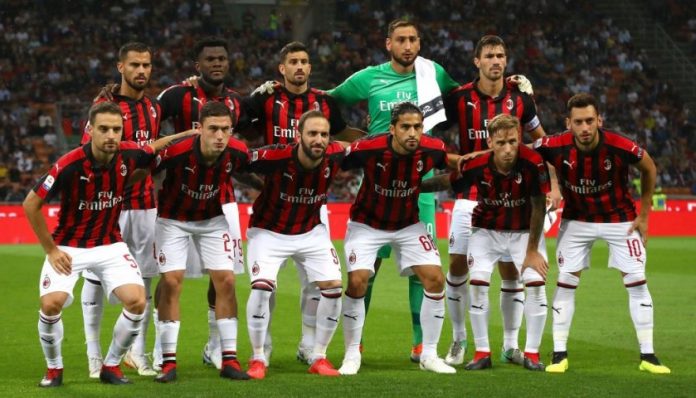
AC Milan banned from Europe for financial fair play violations

AC-Milan

AC Milan were banned from European football for next season on Friday over breaches of financial fair play rules, CAS, the top court for sport, announced.

European football’s governing body UEFA had accused the club of violating financial fair play (FFP) regulations over the past three seasons and the Court of Arbitration for Sport ruled in their favour.

“AC Milan is excluded from participating in UEFA club competitions of the sporting season 2019/2020 as a consequence of the breach of its FFP break-even obligations” for the past three seasons, the court ruled.

UEFA initially found the Italian giants, who had qualified for the Europa League next season, guilty in June last year of violating financial rules which broadly limit club expenditure to club income in any given year.

However, CAS referred the matter back to UEFA judging that an European ban was disproportionate.

Ultimately UEFA action against the club was suspended pending the outcome of arbitration, resulting in Friday’s decision following agreement between UEFA, the club and CAS.

The announcement follows the club’s adoption of spending curbs in recent months designed to return its finances to a better state and which saw the departure of coach Gennaro Gattuso.

The Serie A giants, who missed out on a Champions League spot by one point to city rivals Inter, are one of several clubs, including Paris Saint-Germain and Manchester City, to have been investigated for breaching UEFA’s rules, whereby clubs cannot spend more than they generate by their own means.

AC Milan have fallen foul of UEFA’s financial rules since they spent 200 million euros ($225 million) on transfers in the summer of 2017.

The club insist however that their finances should improve under American hedge fund Elliott Management Corporation, who took control last summer when former Chinese owner Li Yonghong defaulted on the loan he had taken to buy the club in 2017 from former Italian prime minister Silvio Berlusconi. – AFP

Stories Continues after ad

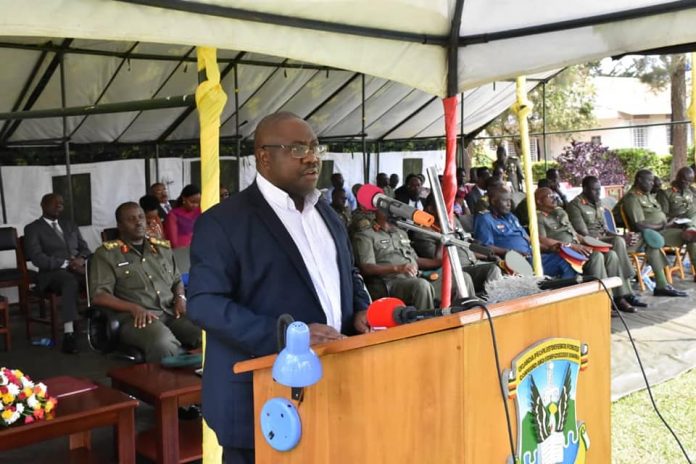
Gov’t to continue funding training of UPDF officers – Minister

igye addressing the guests

The Minister of Defence and Veterans Affairs, Adolf Mwesige, has said government will continue to fund the training of officers of the Uganda People’s Defence Force (UPDF) in a bid to professionalise the force.

The minister said yesterday during the graduation ceremony of 42 Senior Officers who have successfully completed a one year Senior Command and Staff Course at Senior Command and Staff College, Kimaka.

Mwesige, said that this course is a clear reflection that East Africa Community integration is a success since it has drawn students from the entire East African Region and South Africa.

He applauded the UPDF as an institution for the tireless efforts to maintain peace in Uganda and the entire region. He lauded Uganda’s development partners such as; the US, UK, China, India, Egypt and others for supporting the UPDF in form of training and equipment.

He acknowledged the contribution from Makerere University Faculty of Social Sciences for partnering with the college to offer an affiliated Master’s Degree program at the college.

The Chief of Defence Forces (CDF) Gen. David Muhoozi said that training is at the core of capacity building and professionalism in UPDF.

Gen Muhoozi further said that UPDF has now improved training by standardizing the way it teachers in conformity with other colleges in the region. “We have strived to improve training by empowering the teaching staff with other foreign partners like India, Tanzania and Kenya,” he said.

The Commandant of the college Lt Gen. Andrew Guti, while welcoming guests said that the 42 students who successfully completed the course were drawn from all East African Community partner states as well as the Republic of South Africa.

Stories Continues after ad

Al Ahly eye Uganda’s Desabre, Fufa to demand $100,000 in compensation – reports

Desabre Sebastien in the middle training with Cranes players.

Record eight time CAF Champions League winners Al Ahly SC of Egypt are keen on acquiring the services of Uganda Cranes head coach Sebastien Desabre as their new manager.

This report comes amidst tense relations between Al Ahly and current manager Martin Lasarte after an embarrassing CAF Champions League quarter-final exit last season to Mamelodi Sundowns.

Ahly fans in Egypt are not happy with the Uruguay-born manager and are calling for his axing which has put the club’s executive board under immense pressure to act.

The 42-year-old French man is currently with the Uganda Cranes in Afcon and has caught the attention of the Egyptian based club after a good performance in the AFCON tournament so far.

Al Ahly officials have been reported to be considering approaching Desabre for talks after the African Cup of Nations which is taking place in Egypt according to football-256.

It has also been reported that the fee which will be tabled by FUFA is believed to be in the range of US$100, 000 (about Shs370m) if Desabre is to be released out of his contract.

Desabre has acquired experience in African football after coaching clubs like Ismaily in the Egyptian Premier League, ASEC Mimosas in Ivory Coast, CS Garoua in Cameroon and ES Tunis in Tunisia, JS Saoura in Algeria and Wydad Athletic Club in Morocco.

Stories Continues after ad

Jackson Mayanja lands coaching job in Tanzania

Jackson Mayanja being unveiled.

Tanzanian Premier League side, Kinondoni Municipal Council (KMC) FC, have acquired the services of Ugandan tactician Jackson ‘Mia Mia’ Mayanja on a one-year contract.

He replaces Etienne Ndayiragije who joined another Premier League side Azam FC at the end of the season.

The Dar-es-salaam based side will feature in the Tanzania Mainland Premier League season and the Caf Confederations Cup for the 2019/20 season.

Mayanja will begin with the Cecafa Kagame Cup tournament in Rwanda by locking horns with Sudan’s Atlabara FC on July 7. KMC are in group A alongside Rayon sports (Rwanda), TP Mazembe (DR Congo) and Atlabara (S.Sudan).

Mayanja together with Allan Kabonge guided Kyetume FC to the Uganda Premier League from the Fufa Big League last season but was replaced by George ‘Best’ Nsimbe.

Mayanja is a CAF ‘A’ licensed coach and has previously managed at Lyantonde (URA), Kiyovu, Bunamwaya (Vipers), KCC, Kololo SS, Kagera, Coastal Union, Simba (Tanzania) and was also the Uganda Cranes assistant coach for over six years.

During his playing career, Mayanja featured for Kololo S.S, KCC FC, Al Masry (Egypt), Esperance (Tunisia) & Lowi FC (Oman).

Stories Continues after ad

Talks ongoing for Beyonce to stage music concert in Uganda

Beyonce

American singer, songwriter and actress, Beyoncé Giselle Knowles-Carter is likely to perform in Uganda in January next year if the ongoing negotiations related to the business are concluded successfully, this website understands.

The proprietor of KT Event Musa Kavuma says he is in the final discussions with Mr. Mathew Knowles, the father of Jay-z’s Wife who doubles as her manager.

Kavuma says the manager has no objection to his daughter performing in Uganda even though he has suggested Kavuma coordinates with other east African countries of Uganda, Kenya, Tanzania, Rwanda or any other African country so that she performs there after Uganda.

Knowles said it will be costly for particular Country or music promoter to host her and her band. The two have since not set date for the show that is expected to take place at Kampala Serena Hotel.

Beyoncé’s Biggest Billboard Hits include; Girl Destiny’s Child, Ring the Alarm, Diva, until the end of Time, Best thing I never had, Cater 2 U among other songs.

Beyoncé rose to fame in the late 1990s as lead singer of the R&B girl-group Destiny’s Child. Throughout her career, Beyoncé has sold over 100 million records worldwide as a solo artist. She further sold 60 million records with Destiny’s Child, making her one of the best-selling music artists of all time.

She is a multi-platinum, Grammy-Award-winning recording artist who is acclaimed for her thrilling vocals, videos, and live concert shows. The Recording Industry Association of America recognized Beyoncé as the Top Certified Artist in America during the 2000s decade.

In 2009, Billboard named her the Top Radio Songs Artist of the Decade and the Top Female Artist of the 2000s decade. Among numerous awards and accolades, Beyoncé has won 23 Grammy Awards and is the most nominated woman in the award’s history.

She is also the most awarded artist at the MTV Video Music Awards, with 24 wins, including the Michael Jackson Video Vanguard Award. In 2008, she was awarded the Legend Award for Outstanding Contribution to the Arts at the World Music Awards.

In 2011, Beyoncé was presented with the inaugural Millennium Award at the Billboard Music Awards. In 2014, she became the highest-paid black musician in history and was listed among Time’s 100 most influential people in the world for a second year in a row.

Forbes ranked her as the most powerful female in entertainment on their 2015 and 2017 lists, and in 2016, she occupied the sixth place for Time’s Person of the Year.

In 2016, she was awarded the Fashion Icon lifetime achievement award from the Council of Fashion Designers of America. With the release of Lemonade, Beyoncé became the first and only musical act in Billboard chart history to debut at number one with their first six solo studio albums.

Stories Continues after ad

Minister Anite dealt blow, told she has no powers to sack UTL’s Administrator

URSB's Bemanya at a past event, whom Minister Anite seem to be against.

The State Minister for Privatisation and Investment Evelyne Anite has been told that she has no supervisory powers and therefore has no powers to sack Twebaze Bemanya, the administrator of Uganda (UTL) and that her quest to relive Bemanya of the role may be regarded as contempt of parliament.

In a letter dated June 26, 2019 and addressed to the Attorney General, minister Anite directed him to get immediate replacement for Bemanya, saying all the concerned parties have lost confidence in the administrator and therefore can no longer work with him.

“Reference is made to the letter of the Hon Minister of Planning & Economic Development to you dated 20 June regarding Uganda Telecom Limited (UTL)… In effect, a decision has been taken to remove Mr Bemanya Twebaze, official receiver as the current administrator and to immediately replace him with an individual that we will indicate.

The purpose of this letter is to request you to urgently apply to Court to replace the current Administrator within the context of Section 172 of the Insolvency Act, 2011, and the Insolvency Regulations (161 (1)),” read the letter in part.

“I will be pleased to swear an Affidavit to support the Application where the supporting reasons will be elaborated. I implore you to have the petition filed without any delay to ensure that the Administration of the Company progresses without any issue. I will appreciate your prompt response,” she wrote.

In reply to the minister, the Deputy Attorney General Mwesigye Rukutana in a letter dated June 28, 2019 says: “I have noted with concern that you have encountered considerable difficulty dealing with the administrator and have completely lost in his ability to continue to serve in that capacity. Unfortunate as it sounds, under our law, the removal of an Administrator from office is provided for under Section (174) (1) (c), of the Insolvency Act. It is noteworthy that under the law, a creditor would be a person listed as competent to apply to court to remove an Administrator from office. Whereas government entities may be listed creditors they have separate legal status. Accordingly a shareholder in this instance the Minister of Finance Planning and Economic Development has no locus to apply to court to remover the Administrator from office.”

Rukutana in the letter says that the fact that Finance Ministry consented to the extension of the contractor of Bemanya on two occasions, is prove that he has been doing his duties as assigned. The minister could only sack him if he had failed to do his duties.

Rukutana has also told Anite that the Speaker of Parliament Rebecca Kadaga ruled on the same matter on June 2019 where she clearly said the Administration is the court-controlled process that can neither be interfered with by the legislature nor the executive. “In light of Right Hon. Speaker’s ruling on this matter, your instruction to me may be perceived as contempt of parliament,” he said.

He has further advised Anite to refrain from interfering in UTL’ administration, saying that the interference may hinder the process of sourcing for the funds to revive the telecom company. He says it may also lead to legal challenge by creditors but also attract liability on government.

As a recap, Mauritius Telecom was recommended to takeover UTL after it offered to invest UA$100 million for three years with considered assets of US $45 million. The telecom firm the 6th last best evaluated bidder.

The Financial Intelligence Authority (FIA) in its due diligence report submitted to President Yoweri Kaguta Museveni cleared Mauritius Telecom as the “only credible and financially stable company among the evaluated companies.” Mauritius Telecom was considered as the last best evaluated basing on its capital of US $100 million and assets of US $45 million takes over UTL.

This recommendation drew queries since the best evaluated company from USA, Hamilton Telecom offered capital investment of US$285 million for a period of 3 years and its considered assets stand at US$70 million.

The other four evaluated companies include; Afrinet Communications Limited which proposed to inject US $150-$300 million with assets of US $67 million and acquiring 68 per cent of shares, Teleology Holdings with a consideration for assets of US $60.5 million and investing capital worth US $230 million and acquiring 67 per cent of shares, Neubacher Montage LLP offered assets of US $60 million and proposed capital investment of US$211 million taking 68 per cent of shareholding and lastly Baylis Consortium with US $55 million assets and US $120 million capital investment acquiring 70 per cent of shares for five years.

It must be noted that the total debts of UTL stand at US $147 million with five creditors who include; government US $53.61m, NSSF US$2.84 million, ESATD/PTA Bank US $8.91 million, UCECPS US $3.34 million and others US $77.86 million.

It is against this backdrop t government tasked the line ministry, Ministry of Finance to seek for a potential investor to recapitalise UTL after the Libyans pulled out last year. UTL had been declared bankrupt.

The responsibility of hunting for a partner was handed over to Anite who through a court process placed UTL under an administrator because the company was financially distressed and technically insolvent.

Bemanya was appointed Administrator and tasked to make the company healthier and attract investment before sourcing for a strategic partner.

Conditions

Whereas the process was in advanced stages of selecting an investor to recapitalise UTL, several investors set conditions to partner and revamp the defunct parastatal.

Among the conditions include; extension of service license for 20 years, expansion of frequency bandwidth- spectrum, tax waivers on import duty for equipment for four to seven years, the resultant company to become the sole provider of ICT services to government and access and uses national backbone infrastructure.

17 companies showed interest in taking over the liabilities of UTL but only six were considered as the best evaluated to investment their capital and revamp the company.

The administrator, then requested the Financial Intelligence Authority headed by Sydney Asubo to institute an investigation on the six telecom firm to ascertain whether their financial muscle and capability to run UTL.

Stories Continues after ad

Journalist claims President Kagame does not understand difference between human rights and development. He writes as below:

Journalist claims President Kagame does not understand difference between human rights and development. He writes as below:

The Rwandan President has rubbished external human rights reports, saying his country has experienced infrastructural developments. Mr. President, Human Rights and Development are two different things!

There is no doubt that President Kagame has done a great job in the area of infrastructure development in Rwanda. Many people wrote off Rwanda after the 1994 massacre, but the president has succeeded in turning the narrative. Today, the country does not look like one that experienced such a devastating civil war like it did in 1994.

One area however where President Paul Kagame has continued to receive hard knocks is that of human rights and his handling of the opposition.

It is not news that the president treats those who do not share his opinion as criminals and enemies of the state. This is uncalled for, especially in a country that claims to practice democracy.

Many human rights organizations and activists have continued to criticize Kagame for his actions and human rights violations. The president has continued to remain adamant and refused to yield to the calls that try to remind him that he is no longer the military leader he once was.

One point of the defense the president always falls to is that of infrastructural development. Accuse Kagame of human rights violations and he will tell you that you are against the infrastructural developments in the country!

Perhaps the president needs a lecture on the difference between human rights and development. He needs to understand that one does not cover up for the other.

Again, the president has lashed out on a recent human rights report on the country. This time, the report came from the European Union (EU). The recent EU Human Rights Report placed Rwanda as a country of concern which experienced a large number of human rights violations.

President Paul Kagame has referred to the report as ‘Ridiculous ‘and ‘Rubbish’.

As usual, he accused the EU of turning a blind eye to the development the country has experienced since the 1994 civil war. What the president doesn’t understand is the fact that this is entirely a different matter.

The president made his opinions known during an interview with France24’s Catherine Nicholson on the sidelines of the European Development Day in Brussels.

Kagame said that Rwanda was a different country compared to what it was 25 years ago, challenging Nicholson to look at what he called Europe’s failing human rights record, especially its treatment of migrants.

“Europe is violating people’s rights, with this problem of people being bundled and sent back to sink in the Mediterranean and so many people being mistreated in your own country.

“You (Europe) really need to stop this superiority complex nonsense about human rights. You think you’re the only ones who respect human rights, and all others it’s about violating human rights. No, we have fought for human rights and freedoms of our people much better, and more than anyone including you people who keep talking about this nonsense.

“Where we have taken a country and where it is now, speaks for itself”, Kagame said.

The president needs a lecture on the difference between development and human rights, don’t you think?

Written by Amenna Dayo, africanexponent.com

Stories Continues after ad