Stanbic Bank
Stanbic Bank
25.1 C
Kampala
Stanbic Bank
Stanbic Bank
Home Blog Page 1314

Rugunda praises businessman Kavuya for donating health centre to Rukungiri

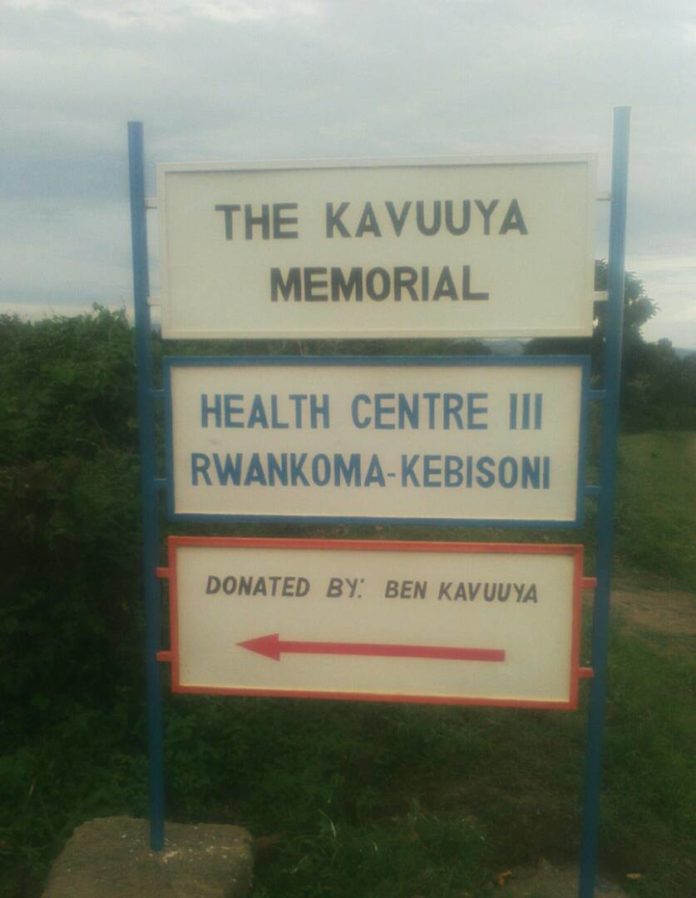
Dr. Rugunda and Mr. Kavuya at the openning of the Kavuya memorial health centre 3 in Rukungiri.

Prime Minister Dr. Ruhakana Rugunda has praised city businessman, Ben Kavuya for donating a health facility to Rukungiri district to supplement on government efforts of provision of health services to the people.

The PM was in Rukungiri on Friday to open the health facility.
“I must say that I am impressed by Mr. Kavuya’s big heart of giving back to society and I thank him for the contribution to support government’s programme of providing health facilities in every sub-county” Dr. Rugunda said at the opening of the Kavuya memorial health centre 3.


Mr. Kavuya solely constructed the Kavuya memorial health centre 3 in Rwankoma Kebisoni in Rukungiri in memory of his father. The City businessman has donated a similar health facility to Lyatonde district.

Kavuya who is property developer and real estates’ dealer donated the two health facilities after establishing that the two districts lack the medical amenities. Earlier last year, the Vice President, Edward Sekandi opened Lyatondo facility. According to health officials, the facility has improved the health standards the district. Lyatonde is one of the districts without health centre five.

Kavuya commonly referred to as chairman is the founder member of Legacy Group. He is responsible for overseeing the development of Rutungu Investments from a small start-up business with a few employees to a multi-million empire as it stands today.

Stories Continues after ad

What next for Crane Bank’s Shs570b bad book?

The Former Crane Bank Ntinda branch, which DFCU took over and illegally rebranded in its name, was ordered by the court to vacate and compensate Meera Investments because the property belongs to Meera.

When the Bank of Uganda closed Crane Bank Limited (CBL) on October 20, 2016 and sold it to rival Dfcu bank, CBL had an estimated Shs570 bad loan book even though that would be reduced to Shs458 billion.

However, according to the Auditor General John Muwanga’s special audit report on defunct banks, BoU agreed to transfer CBL assets at Shs200 billion to Dfcu bank which money was to be paid to BoU using CBL’s bad book.

The above transaction where Dfcu bank was shielded from paying interest, has been termed as irregular by the report of the Committee on Commissions, State Authorities and State Enterprises (COSASE) because the supposed buyer took CBL assets at no cost all.

The COSASE reports says BoU “lent” Dfcu bank CBL’s assets. The report which was debated in parliament for more recommendations faults BoU for selling off banks including CBL in a casual way with BoU officials failing to produce minutes and records of transactions.

The transaction concerning CBL as established by the Auditor General was done based on the inventory report and due diligence carried out by Dfcu bank, BoU having neglected its duty to evaluate CBL assets. That meant that the buyer set the sale price, which was accepted by BoU that claims it spent Shs478 billion on CBL during the period CBL was under statutory management, BoU have transferred CBL assets to Dfcu bank on January 25, 2017.

According to the AG, without the valuation of CBL assets by BoU, he found it hard to establish how terms of the transfer of assets and liabilities in P & A were determined. But It also came to light that under P & A Dfcu bank was supposed to take over the entire bad book of CBL later could only absorb only Shs200 billion of the bad book, raising further questions on the principles of prudence, fairness and transparency about the whole process.

It should be remembered that COSASE said that whereas the outstanding liability owed to BoU by CBL was Shs478 billion, Dfcu bank only assumed liability of Shs200 billion. This MPs noted it resulted in a financial disadvantage to BoU and CBL, which must be addressed by the powers that be as the loss was caused by BoU itself.

COSASE in its report fault BoU for selling CBL assets and liabilities in a casual way without even recording minutes of engagement with Dfcu bank and as such the MPs on the committee recommend that BoU should compensate CBL shareholders for the loss it incurred as BoU and Dfcu bank traded assets of their bank without following the provisions and guidelines of the Financial Institutions Act, 2004.

Meanwhile the Auditor General’s special audit report on Shs478 billion BoU claims to have sunk in CBL as liquidity support and other intervention costs, says that Shs320.8 billion remained accounted for and Shareholders of CBL claim the money is not reflected anywhere on the accounts during the statutory takeover.

The Auditor General said he was unable to rely on the draft financial statements provided by CBL statutory manager to confirm the receipt and expenditure of the Shs478 billion as the audited report of the period starting January 1, 2016 and January 25, 2017 were not submitted by auditing firm KPMG.

With such explanations, CBL stands to be compensated as figures from BoU don’t add up. This stands as BoU and CBL shareholders are in court of the closure of CBL. So what next for BoU and Dfcu as far as the bad book is concerned? will the shareholders of CBL ever be paid their money collected from the bad debts? Will BoU and Dfcu bank respect the resolution of COSASE on the matter as well as return the branches of CBL that are uner Meera Investment back to the rightful owner? these are some of the issues likely to be at the centre of the legal battles as CBL shareholders wait to be compensated.

Stories Continues after ad

Gov’t to promote local content schemes for youth

Young people

The government has pledged to promote local content reservation schemes for the Ugandan youth in the public procurement at local and national levels as way of enabling them provide services and goods for projects in sectors like the oil and gas sector, among others.

According to the government Spokesperson Ofwono Opondo, this was agreed on yesterday as Cabinet noted the performance of the Youth Livelihood Programme (YLP) for the financial year 2013/14 and financial year 2017/2018.

The Cabinet also approved the performance improvement measures to be incorporated in the YLP and these include among others: Reducing the minimum group size to five youth from 10 to enhance group cohesion; allowing youth who may not be from the same village, but have projects of common interest to form groups and access funding, if they live within the same parish/ward Disbursing funds directly to group accounts (from the Ministry Project Account in Bank of Uganda to Youth Interest Groups Accounts).

Also approved was to maintain only group members as signatories to group accounts (Chairperson, Secretary and Treasurer); increase of the resource allocation for institutional support to 20 percent from the current 10 percent to provide sufficient resources for training , technical support and supervision of groups;

Cabinet also agreed to integrate the use of technology through developing ICT platforms for monitoring project implementation as well as Mobile Money for easing the repayment process especially for hard to reach areas.

YLP was launched in 2013 earmarking a total of Shs265 billion to benefit the youth through livelihoods, skills development and institutional capacity building. The purpose of the YLP was to empower youth in Uganda to harness their socioeconomic potential, increase self-employment opportunities and income levels.

Stories Continues after ad

Six signals that your startup could be the next Google

Martin Zwilling

By Martin Zwilling

I tell entrepreneurs that Google was an “exception” to all the investment and startup rules, but I’ve always wondered what it takes to be an exception. Since every business is built by unique individuals, I’m totally convinced that exceptional people are the key to an exceptional company.

To check out the Google founders, and because I still see so many business plans that are modeled after Google (more search engines, and more billion dollar growth models), I had to take a look at the classic book about them a while back, called “Inside Larry & Sergey’s Brain,” by Richard L. Brandt. It didn’t disappoint me.

This book was not sanctioned by Larry Pageand Sergey Brin, so it’s not a love story. All the controversy is highlighted, but the message still seems to be that these guys were and are exceptional in their efforts to build a company. Here are some lessons from the book that all entrepreneurs should wish they could emulate:

Independently outstanding, but complementary founders. Larry is the primary thinker about the company’s future direction, and still weighs in heavily on key hiring decisions. Sergey, a mathematical wizard, is the arbiter of Google’s technological approach. Both have a deep sense of moral values and ethics, and work well together.

Unique business tactics. Technology alone does not make a great company. Business tactics do. Google developed the most profitable form of advertising anyone had ever seen, ads selected real-time based on search terms. They focused on small advertisers looking for bargains. The model was a perfect fit for the Internet Age.

Survived phenomenal early growth. In 2003, just four years old, sales hit $1.5 billion, profit was $100 million, and it had taken over some 80 percent of the world’s search queries. Google now employs about twenty thousand people. Most founders don’t survive this kind of growth and change, but Larry and Sergey are still a well-balanced machine, with a net worth of over $50 billion each.

Leaders loved and hated at the same time. Larry and Sergey have been wickedly clever. They break the mold. They challenge old industries and make a lot of enemies. They’re ruthless businessmen. Yet through it all, they’re idealists, believers in the power of the Internet to make the world a better place.

Founders surround themselves with the best people. Early on, they were able to get money from the likes of Andy Bechtolsheim and John Doerr. They convinced Eric Schmidt to take the reins with them for growth as interim CEO and Executive Chairman for years, and had Dr. Larry Brilliant to set up the philanthropic arm. Amazing.

Continue to think big. According to the book, both founders continue to think big. Some of their ideas are as flighty as space travel; others are as grounded as the DNA that makes them who they are. No one proclaims to know where its leaders will take Google and Alphabet next, but everyone expects more great things.

Even the pros should probably pay attention here, to sharpen their game and to improve the accuracy of their assessments about people in general, as well as Google’s motivations and intentions. I think Larry and Sergey have shown a relentless focus on innovation that puts them miles ahead of competitors on all fronts.

I challenge each of you, as you reflect on your own vision and entrepreneurial plans, to take a lesson from Larry and Sergey. Do you have the intestinal fortitude to walk away rather than be “corrupted by financial interests,” or to ignore conventional wisdom and follow your own instincts?

If so, then you too may be the exception that even the best and the brightest will line up to support. This world needs more exceptional people. Act like one and you too may be one.

The writer is a veteran startup mentor, executive, blogger, author, tech professional, professor, and investor. Published on Forbes, Entrepreneur, Inc, Huffington Post.

Stories Continues after ad

Corporate Taxation in the global economy

Christine Lagarde

By Christine Lagarde

The public perception that some large multinational companies pay little tax has led to political demands for urgent action.

It is not difficult to see why.

Let me highlight three reasons why a new approach to international corporate taxation is urgent.

First, the ease with which multinationals seem able to avoid tax, and the three-decade long decline in corporate tax rates, undermines faith in the fairness of the overall tax system.

Second, the current situation is especially harmful to low-income countries, depriving them of much-needed revenue to help them achieve higher economic growth, reduce poverty, and meet the 2030 Sustainable Development Goals.

Advanced economies have long shaped international corporate tax rules, without considering how they would affect low-income countries.

The International Monetary Fund (IMF) analysis shows, for example, that non-OECD countries lose about US$200 billion in revenue per year, or about 1.3 percent of GDP, due to companies shifting profits to low-tax locations.

These countries need a seat at the table. The Platform for Collaboration on Tax, a joint effort by the IMF, World Bank, OECD and the UN is helping on this front.

Third, an impetus for rethinking international corporate taxation stems from the rise of highly profitable, technology-driven, digital-heavy business models.

These business models rely heavily on intangible assets, such as patents or software that are hard to value.

They also demonstrate that assuming a link between income and profits and physical presence has become outdated.

This in turn has sparked fairness concerns. Countries with many users or consumers of digital services find themselves with little or no tax revenue from these companies. Why? Because they have no physical presence there.

So, we clearly need a fundamental rethink of international taxation.

Yet this means countries must work together. Making progress requires coordination among all, and in the right direction.

New IMF research analyzes various options in the context of three key criteria: better addressing profit-shifting and tax competition; overcoming the legal and administrative obstacles to reform; and ensuring full recognition of the interests of emerging and developing countries.

The current international corporate tax architecture is fundamentally out of date. By rethinking the existing system and addressing the root causes of its weakness, all countries can benefit, including low-income nations.

The writer is the President of IMF

Stories Continues after ad

Works Ministry to take over East African Civil Aviation Academy in Soroti

East African Civil Aviation Academy.

Cabinet yesterday approved the proposal by the Ministry of Works and Transport for the government of Uganda to take over the ownership of the East African Civil Aviation Academy (EACAA), Soroti.

According the government Spokesperson who doubles as the Executive Director of the Uganda Media Centre, Ofwono Opondo, the benefits of the takeover will enable the country:

Train commercial Pilots and Aircraft maintenance Engineers for the Uganda Peoples’ Defence Air Forces, Uganda Police Air Wing , the Executive (Presidential) Jet, commercial and general aviation as well as feeding into the newly revived Uganda Airline; maximize the benefits from investments made by Government of Uganda at EACAA since 1977; save the country colossal sums of foreign exchange which would be used for training pilots and Aircrafts Maintenance Engineers abroad/overseas;

And strengthen the Civil Aviation Authority (CAA) as well as promote Uganda’s image and credibility as a centre of excellence in the aviation industry.

Cabinet also approved the guidelines for the negotiation of loan and grants by the government which will provide for: Secure financing on affordable terms; ensure that Loans and Grants are negotiated and closed with affordable rates and better terms and conditions and avoid unnecessary risk to Government and to resolve foreseen implementation related issues.

Also approved was the transformation the Presidential Initiative on Banana Industrial Development Project (PIBID) into the Banana Industrial Research and Development Centre (BIRDC) for industrial application as a successor body with a legal mandate as detailed in the BIRDC’s Strategic Plan for FY 2019/2020 to 2023/2024. The transformation will: Provide Leadership in Research and Development over the banana theme; generate competitive agribusiness models for rural transformation and commercialization; unpack and transfer appropriate technologies to entrepreneurs across the sector.

Cabinet further approved the National Climate Change Bill, 2018. The bill will; provide a legal frame work for enforcing climate change adaptation actions through which Uganda will be able to make adjustments in natural or human systems in response to actual or expected impacts of climate change in a manner that will reduce harm or exploit potential opportunities and enable Uganda pursue its voluntary mitigation targets of reducing national greenhouse gas emissions.

Stories Continues after ad
Tanzania President rewards Taifa Stars players with plots of land after Afcon qualification

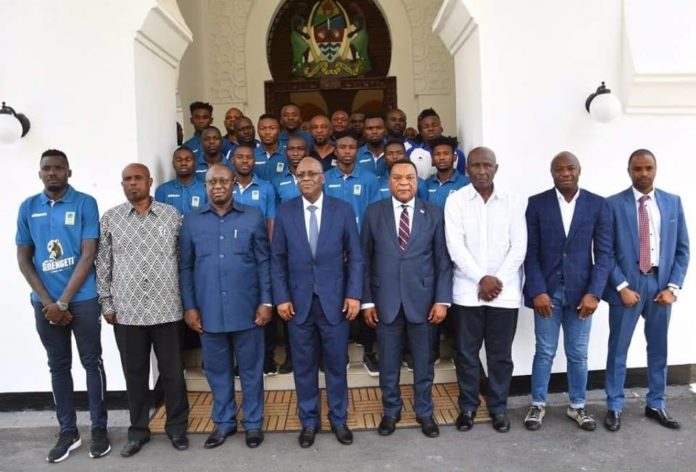
President Magufuli and the team.

Tanzania President John Pombe Magufuli has awarded each Taifa Stars player with a piece of land in appreciation for qualification to the 2019 Africa Cup of Nations in Egypt.

The Taifa Stars beat cross-border rivals Uganda 3-0 in Dar es Salaam in an encounter on Sunday to qualify for the Africa Cup of Nations finals for the first time in 39 years.

Saimon Happygod Msuva, Erasto Nyoni and Aggrey Morris scored for the hosts at the Taifa National Stadium.

After the historic win, the team met the President at the State House on Monday, who has awarded them with a piece of land each in Dodoma.

“I didn’t have a plan to call the team to State House because they lost to Lesotho, a small country. On the Matchday, I opted to watch the game from home as I was afraid, we would be embarrassed again. But all the pain is gone now after the win over Uganda,” Magufuli is quoted by ITV Tanzania.

“These players have impressed me, and I think they deserve a reward. I am going to award them on behalf of the whole nation. The playing unit will get a piece of land in Dodoma where they will build their houses.

“Qualifying for Afcon is just the beginning of the fight, all the Tanzanians are happy and I would like to congratulate them for the support and patriotism which they showed during the match.”

Tanzania finished second in Group with eight points from six matches. The side is managed by former Nigeria international Emmanuel Amuneke.

Four countries from East Africa; Kenya, Uganda, Tanzania and Burundi have all qualified for the tournament which will be played in Egypt from 21 June to 19 July 2019.

Stories Continues after ad
52 South Sudanese to benefit from Africa entrepreneurship programme

TEF PROGRAMME 2019

By Julius N. Uma

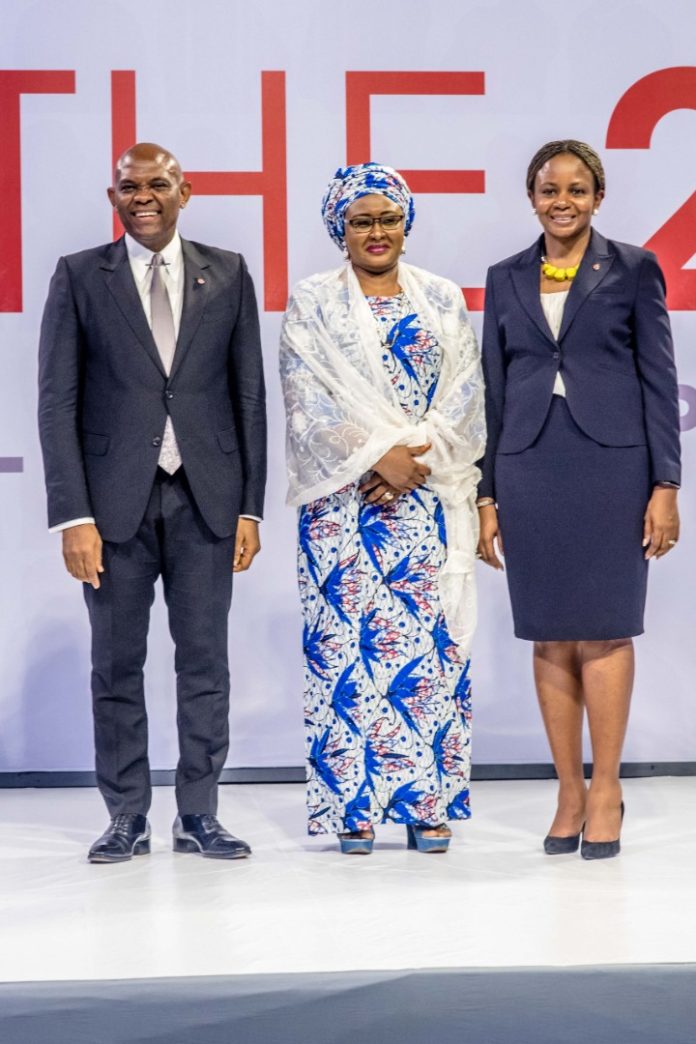
March 22, 2019 (ABUJA/JUBA) – 52 South Sudanese are among the 3,050 African entrepreneurs selected to join the fifth cycle of Tony Elumelu Foundation (TEF) $100million entrepreneurship programme.

This year, TEF said in a statement, over 216,000 applications were received, a rise from last year’s 151,000. Also nearly 90,000 were submitted by female entrepreneurs, an increase of 45 per cent, illustrating the foundation’s strategy to achieve greater gender balance.

The selected entrepreneurs will each receive non- refundable $5,000 of seed capital, access to mentors, and a 12-week business training programme, directly focused on the needs of African entrepreneurs.

“Every year, we face an almost impossible task – to select 1,000 entrepreneurs, from the hundreds of thousands that apply. Our entrepreneurs are hungry to effect change. We know we are only scratching the surface, we see the depth of entrepreneurial talent, that all of us – government, business indeed African society, must harness to transform our economies and livelihoods,” TEF founder, Tony O. Elumelu, said during Friday’s announcement of the winners.

He added, “We must rally together to empower them and accelerate the change we want on the continent”.
Ifeyinwa Ugochukwu, TEF’s incoming CEO said the foundation entrepreneurship programme has so far successfully empowered 7,520 entrepreneurs in the first five years of the 10-year programme.
Meanwhile, Aisha Buhari, the wife of the Nigerian President commended the programme’s impact on the continent, charging the selected entrepreneurs to contribute to Africa’s advancement.

“Indeed, I am confident that these Tony Elumelu entrepreneurs will inspire deep confidence and be of immense value not just to Nigeria but to the entire continent,” she said.
Founded by African investor and philanthropist, Tony O. Elumelu, TEF is the leading African philanthropy committed to empowering African entrepreneurs. The foundation is reportedly guided by the philosophy, Africapitalism, which proposes that the private sector holds the key to unlocking the sustainable development of Africa.

The Foundation’s growing list of partners include, the International Committee of the Red Cross (ICRC), the United Nations Development Programme (UNDP), the Federal Republic of Benin (Seme City), the Anambra State Government, Indorama, the Government of Botswana and African Development Bank (AfDB).
Since its inception in 2015, at least 7,520 entrepreneurs have been empowered by the foundation, with support from its partners.

Stories Continues after ad
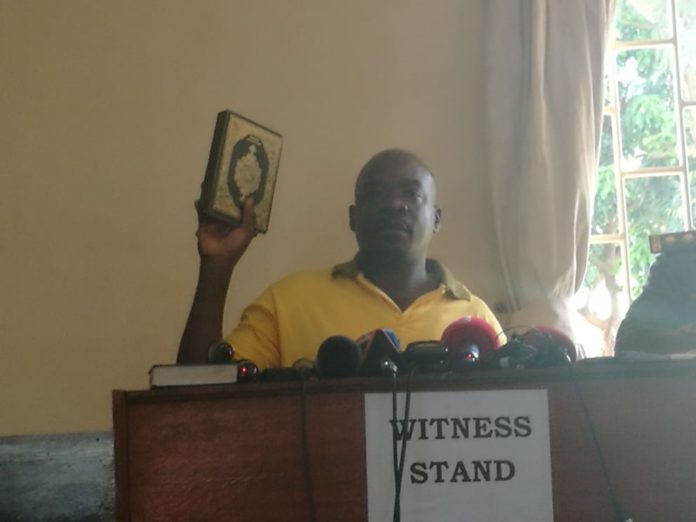
General Court Martial remands Kitatta to Luzira prison amid protests

Abdu Kitata in the dock

The chairman of General Court Martial, Lt Gen Andrew Gutti, has ordered for transfer of the embattled patron of Boda-Boda 2010, Abdullah Kitatta to Luzira maximum prison over allegations that the facility was putting his life in danger.

His transfer followed a request made by army’s prosecutor Capt. Samuel Masereka who informed court that it’s now safe to remand Kitatta to Luzira prison as his case is coming to an end.

Capt. Masereka revealed that Kitatta was transferred to military detention facility following previous attempt on his life however, said that he will be safe since security has been boosted at Luzira prison.

Kitatta’s lawyer Shaban Sanywa argued the decision to transfer his client without guaranteeing him safety saying Kitatta was transferred form Luzira prison for his safety.

He objected to the transfer of his client however, Court chairman insisted and remanded him to Luzira till April 8, 2019 when his will came up for hearing.

Conversely, prosecution closed its case after three of their witnesses declined to testify against Kitatta. The witnesses included; Sargent Allan Matsiko, one of Kitatta’s bodyguards, Private Kenneth Okello who was reportedly in charge of the Armory where the said guns were obtained and the Manager of Vine Hotel where Kitatta was allegedly nabbed from.

Speaking journalist Sanywa said his client would be safe if he was remained in military detention facility other than any other facility.

Kitatta was in January arrested by a joint force of Uganda People’s Defence Forces (UPDF) and Internal Security Organization (ISO) and is currently facing five counts including failure to protect war material and being in unlawful possession of military stores contrary to the UPDF Act.

His co-accused include Sowali Ngobi, Amon Twinomujuni, Joel Kibirige, Matia Ssenfuka, Hassan Ssebata and Johnson Kayondo. The others are Hassan Ssengoba, Sunday Ssemwogerere, John Ssebandeke, Hussein Mugema, Fred Bwanika and Ibrahim Sekajja.

Stories Continues after ad
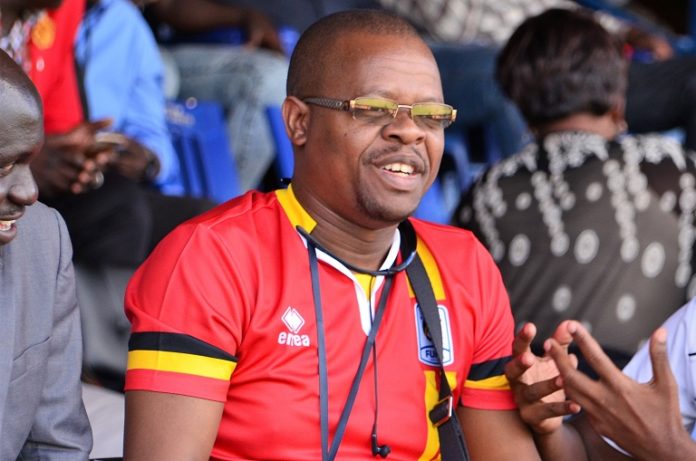
Magogo despises Cranes performance against Tanzania amid match-fixing claims

Moses Magogo

The President of Federation of Uganda Football Associations (FUFA), Moses Magogo has expressed his disappointment over Uganda cranes’ defeat against the Taifa stars of Tanzania in the last game of 2019 Afcon qualifiers.

Coming into the game, Uganda had already qualified for Afcon but was humiliated 3-0 with goals from Saimon Happygod Msuva, Erasto Nyoni and Aggrey Morris at the Taifa National Stadium.

The result left many Ugandan football fans on social media saying the match was allegedly fixed to help neighbours Tanzania qualify for the Africa Cup of Nations for the first time in 39 years.

But Eng. Moses Magogo took his disappointment on his Facebook account saying FUFA ought to understand why cranes team was beaten when all allowances and outstanding bonuses were fully paid before the match.

“This is the worst result of the Uganda Cranes in my administration. No one can feel more disappointed than me. As administration, we provided everything the technical team and players wanted.” Eng. Magogo wrote.

“The coach asked for a camp in Egypt, we provided it. Bonuses of 2500 USD per player for the win and 1500 USD for a 0-0 draw were announced before the match of Tanzania,” reads part of the statement.

Magogo said he will listen to any explanation why it is not the coach and the team responsible for this dismal performance but the FUFA President and/or the administration.

“We are as football fans are hurt by the bad results. We are also football fans sometimes in disagreement with the decisions of the coaches but we support them because they are the most technical. Now is the time for the coaches to explain their selections and tactics but not before the match.” He said.

He said FUFA will wait for the technical explanations from the technical team of the match. “Now is the time for the coaches to explain their selections and tactics but not before the match. We will wait for the technical explanations from the technical team of the match. It is Our Game, It is Our Country” He concluded.

This is the first time East Africa will be represented at Afcon by four nations; Uganda, Tanzania, Burundi and Kenya. The tournament will be played from 21 June to 19 July in Egypt.

Stories Continues after ad