Stanbic Bank
Stanbic Bank
27.7 C
Kampala
Stanbic Bank
Stanbic Bank
Home Blog Page 1496

Ochola calls for cooperation among regional police chiefs to fight criminality

IGP Okoth Ochola

The Inspector General of Police Martin Okoth Ochola has called for cooperation among Police Chiefs in the region for effective fight against organised crimes.

Ochola made the remarks at the 3rd Police Chiefs’ Retreat of the Eastern African Police Chiefs Cooperation organisation (EAPCCO) in Khartoum, Sudan.
Ochola said cooperation remains one of the most significant tools available to police in the fight against transnational organised crimes.

“In the face of growing globalization technological advancement, regional economic blocs that advocate for greater integration, the blurring of national borders and many other well intended policies, criminals have increasingly found it easy to operate in the international arena,” He noted.
The retreat was flagged off by President of Sudan, Omar Al Bashir and chaired by Okoth Ochola is aimed at discussing law enforcement challenges affecting the region and to formulate strategies for better cooperation in the face of growing global and regional security threats.

Under the theme ‘Security Challenges in the East and Horn of Africa and their impact on the Regional Stability’, Ochola urged his counterparts to critically address the issue of technology saying it is one of the vehicles that is used by criminals to execute their missions.

“A criminal, either acting alone or in cahoots with others dotted across the globe has the ability to commit crimes in multiple installations at the same time without even setting foot there,” said Mr. Ochola

Stories Continues after ad

KCCA FC Chief Executive Officer resigns

Josephine Namukisa

KCCA Football Club CEO Josephine Namukisa has resigned from her position with just two weeks left to the kick-off of the 2018/19 StarTimes Uganda Premier League season.

The club, in a statement confirmed that it received and accepted the resignation of Namukisa as the acting CEO of KCCA FC.

Namukisa was appointed as the club’s CEO in June 2017 after long serving David Tamale left the club.
The Board of Directors at the club has then made two appointments. Ms Anisha Shahir Muhoozi will be the new CEO in an acting capacity and she will be joined by Moses Kaddu. Kaddu will also serve as the Acting Manager of Operations and Administration.

Ms. Namukisa made history in Ugandan Football when she became the first female CEO of a major Football Club in Uganda and played a vital role in the club’s development.

During her time, KCCA made history by becoming the first Ugandan club to qualify for the CAF Champions League group stages. The club also won the Stanbic Uganda Cup but lost out on the league to SC Vipers.

Stories Continues after ad

The 2018 Ruforum young African entrepreneurs’ competition set for October

RUFORUM

As part of efforts to showcase and promote youth innovations in enterprise development and business incubation, the Regional Universities Forum for Capacity Building in Agriculture (RUFORUM) will for the second time recognize 20 young entrepreneurs through the RUFORUM Young African Entrepreneurs 2018 Competition (RUYAEC).

The young entrepreneurs will be recognised in Nairobi Kenya during the Sixth African Higher Education Week and RUFORUM Biennial Conference scheduled for 22-26 October
“RUFORUM and stakeholders in Agricultural and Higher Education sectors recognize the transformative potential of entrepreneurship in addressing youth unemployment in Africa. As such, empowering and involving young people in enterprise development will stimulate economic growth,” says a press release.

According to the press release, there are several efforts geared towards incubation of agribusiness and entrepreneurship except that they are accorded less visibility that could easily catalyze the much needed resourcing to facilitate take-off. It is for this reason that RUFORUM has put up the RUYAEC.

The selected young entrepreneurs will each receive a recognition award, a cash price award to grow their enterprises and have opportunity to pitch their enterprises innovativeness to a global audience in attendance at the conference.

The 20 selected business enterprises will be facilitated with an all-expense paid trip (air ticket, conference registration, and hotel costs) to participate at the Conference.
The first competition which was organised in 2016, attracted a total of 756 applications from 38 countries. The 10 most competitive youth enterprises were awarded prizes during the Fifth Africa Higher Education Week and RUFORUM Biennial Conference that was held in Cape Town, South Africa.

The 2018 RUYAEC builds on the previous effort in 2016. The competition is open to a broad range of focus areas including: innovations in agribusiness, ICTs, health, engineering, natural resources, meteorology, urbanization, green economy, and transport, among others. The competition attracted 1332 youth from 46 countries, 42 in Africa.

Established by African university Vice Chancellors in 2004, RUFORUM is a consortium of 85 African universities operating in 36 countries on the continent with a vision to create “a vibrant agricultural sector linked to African universities which produce high-performing graduates and high-quality research responsive to the demands of Africa’s farmers for innovations and able to generate sustainable livelihoods and national economic development”. RUFORUM Secretariat is hosted by the Ministry of Education and Sports in Uganda with Secretariat at Makerere University in Kampala.

Stories Continues after ad

Standard Chartered Bank launches Shs420m for girls’ business start-ups

Minister Mukwaya (middle) launching the fund

Standard Chartered Bank in partnership with BRAC Uganda has launched a girl child empowerment fund of US $113,000 (Shs420m) through the Goal programme aimed at further empowering girls with business start-ups.

The fund was launched by the Minister of Gender, Janat Mukwaya at Sheraton Kampala Hotel during the event attended by clients of the Bank, BRAC Management and staff, staff of the Bank, meida as well as the girls who have benefited from the fund since it was launched.

Last year, the bank launched a pilot on empowerment by adding a module on entrepreneurship where it provided 250 girls with start-up kits and financial education to out of school girls with the aim of making them financially independent.

“The success of this pilot is what has informed our decision to invest a further Shs420 million in supporting 250 girls in business start-ups and the up-skilling of 3,000 girl entrepreneurs with Financial Education,” according to officials.

While explaining the Goal project to the guests, the Country Representative BRAC Uganda, Ms. Hasina Akhter said that the intervention was necessary and timely as Uganda is witnessing increasing numbers of adolescent girls who are forced to leave school to look after their families, are married off or are compelled to engage in hazardous working environments because of the poverty their families are facing.

“There are so many secondary school-age children remaining out of school in Uganda and increasing numbers are being married before the age of 18 – this poses a serious threat to their lives, health and future prospects,” Ms Akhter said.

While addressing guests, Standard Chartered Bank’s CEO, Albert R. Saltson said educating girls and giving them the tools to shape their own future has an incredible multiplier effect on economic growth.
“Educated women are healthier, as are their children, who are more likely to attend school and study. Investing in girls can result in increased prosperity and diversity. We recognise that gender equality is critical to economic growth,” Saltson said.

Research, he said, has shown that countries around the world could achieve gender parity and global annual GDP could increase by as much as $12 trillion by 2025. Gender equality is directly correlated with stronger national competitiveness.

“Many of the markets where we have our footprint have low levels of gender equality; we are, therefore, uniquely positioned to help facilitate gender parity and tackle some of the factors preventing women from achieving gender parity in the labour market including lack of education, disease, cultural bias, gender-based violence and poverty.” he said.

Saltson further said that research demonstrates one of the most impact ways to enable women and facilitate economic equality is to ensure equal access to education. Countries with more equal education have on average a 23 per cent greater income per capita.

Standard Chartered Bank’s decision to implement the Goal project is as a result of the urgent need to address issues affecting adolescent girls in Uganda, said the official.

Goal supports girls to take their first steps as leaders in their families, communities and economies, he said.
Goal is a sport-for-development programme that provides financial literacy and life skills training to adolescent girls. Through a combination of sports and life skills training, Goal aims to empower and equip adolescent girls with the confidence, knowledge, and skills they need to be integral economic leaders in their families, communities, and societies.

Stories Continues after ad

ULS calls on security agencies to protect citizens

Simon Peter Kinobe

Uganda law society has condemned the brutal assassination of Buyende district police commander ASP Muhammad Kirumira and a one Resty Nalinya.

The two were on Saturday gunned down by unknown assailants travelling on motor bikes as they headed to their homes. Kirumira and Nalinya were respectively laid to rest on Sunday and Monday at their ancestral homes in Mpigi and Gomba districts.

In his message, the President for ULS Simon Peter Kinobe said the deceased were robbed off their constitutional rights of life in contravention to article 22 of the 1995 constitution.

“No one therefore, has a right to take a life of another in a manner in which the deceased’s lives were taken. Such cold blooded murders are not only criminal but have great disregard to human dignity and rule of law which have increasingly decline in the country,” he said in a statement.

He called upon security and intelligence agencies to diligently and lawfully carry out duties of protection and preservation of lives of citizens. He also implored police to carry out investigations and publish its findings.

“Members of the public are urged to remain calm and alert and refrain from violent acts, mob justice and intolerance,” he wrote.
Kirumira joined police in 2005 after being spotted by the former Assistant Inspector General of Police (AIGP) Andrew Felix Kaweesi who was also assassinated by unknown gun men in March 2017.
He rose to fame when he wedged a war against thieves in the areas of Nansana, and old Kampala before his transfer to Buyende district.

In January this year the self-proclaimed, ‘ mwoyo gwa ggwanga which loosely mean a patriot’ said “if correcting the image of police requires some of us to be sacrificed, my burial place is Mpambire, Mpigi district that is where people can take my body,” and indeed he was laid to rest in the exact place under the mango tree.

Stories Continues after ad
BoU backs 0.5% tax levied on mobile money

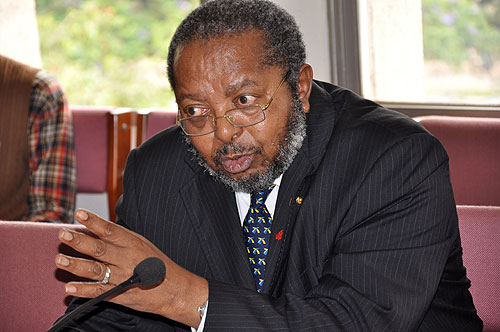
BoU Governor Emmanuel Tumusiime Mutebile

Governor Bank of Uganda Emmanuel Tumusiime Mutebile has backed 0.5 per cent tax that is levied on mobile money withdrawal services.

In an effort to have self-sufficiency in budget, this financial year, government introduced social media and mobile money tax. With social media platforms such as WhatsApp, Twitter, Facebook, YouTube, Viber and Skype among others have been subjected to a daily levy of Shs200 as mobile money transaction have been subjected to a 1 per cent excise duty.

However, after various protests against and denial of the ministry of finance about the newly introduced tax, Museveni said the one per cent on mobile money tax was a miss communication adding that he meant 0.5 per cent.
He ordered for refund of 0.5 per cent of the tax incurred while transacting on mobile money will be refunded to all people who were deducted one per cent on mobile money transaction.

Later Excise Duty (Amendment) No.2 Bill 2018 that is seeking for reduction of one per cent tax levied on withdraw of cash using mobile money, was drafted and referred to the Committee on Finance, Planning and Economic Development the is chaired by Musasizi Henry for consideration.
State Minister for Finance David Bahati and the Governor Uganda Mutebile presented draft proposals to the finance committee of parliament saying they will empower BoU to supervise payment systems and supervisory oversight over mobile money sector.
They contended that the decision was reached after vast consultations among stake holders the financial sector.
Earlier in August BoU revealed that the constituted tax was negatively affecting the economy since people were not carrying out transaction and it was the easiest way on access money everywhere any time.
Government however, expects to generate Shs951 billion from all the proposed new policy measures and another Shs272 billion from administrative efficiency. In the financial year 2018/19, government plans to collect a total of Shs16.2 trillion tax revenue, which is a task the Uganda Revenue Authority (URA). In the current financial year that ends in early June this year, URA was tasked to collect just above Shs15 trillion as tax revenue.

Stories Continues after ad
Uganda must acquire new spying skills

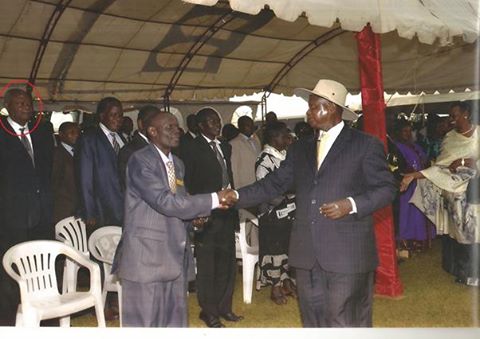
HULLO: President Yoweri Museveni greets the author Mr Nabende Wamoto.

By Nabendeh Wamoto S.P

Armed 24,000 reservists (Local Defense Units) to be deployed in the troubled and insecure areas of Kampala and Wakiso maybe too much of gun power since this would translate into 3 divisions which is equivalent to half of the total strength of Uganda Peoples’ Defense Forces (5 divisions). This pronouncement was made by H.E President Museveni in his 09th September, 2018 State of the Nation Address (SONA) in the post-assistant superintendent of police (ASP) Mohammad Kirumira gruesome murder on the evening of Saturday 8th September, 2018.

For the nation to survive there must be strict ability to gather, evaluate, interpret and understand her (country’s) general environment more specifically that of security and defense. There is a total global paradigm shift from the traditional 3Cs (Command, Control and Coordination) to now the popular 3Ds (Detect, Delay and Deter) and Uganda must not be left behind in this new formula to pursue the same.

In my view and looking at the patterns of events, criminals appear to have superior skills (training) very advanced and well organized which to me require less gun power with more intelligence. The patterns are that initial victims such as the Muslim Sheiks, senior State Attorney Joan Kagezi were gunned down in mid-evening hours.

AIGP Andrew F. Kaweesi, Maj. Mohammed Kiggundu were extinguished in mid-morning hours of the day.
Retired Col. Ibrahim Abiriga and now ASP Mohammed Kirumira reversed back to mid-evening again. The President applauded (Mrs.) Catherine Bamugemereire’s land inquiry job, mentioned but not to satisfaction the ongoing selfish competition amongst national investigative agencies and failure to facilitate competent delivery of intelligence, briefly mentioned the lack of human resources in 1986 when NRA was forced to make a stopover at Nagalabi-Buddo to mobilize a backup bank of opposition professionals to assist in governance before the final assault for the Kampala takeover, also complained about the noisy prayers by the Pentecostal (Balokole) Christians, foreign influenced Non-governmental organizations (NGOs) that hire youth to destabilize national peace and security through burning of tyres on the highways, roads and looting shops and from street vendors.

To a lay Ugandan, intelligence is to be alert on enemy action which must be timely and above all useful. Contrary to the general public’s perception that intelligence is organized terror and scare machinery, actually intelligence (prophesy) is key to war or insecurity.

Availability of intelligence is of paramount importance in destroying enemy communication signals, receiving warning orders, selecting enemy ambush areas, appreciation of ambush plans, preparation and staging of ambushes, formation of strike (killing) groups, establishment of reserve groups, laying of equipment needed for ambush, issuance of operation orders to the concerned human resources (troops), rehearsal of action and battle discipline.
Nabendeh Wamoto S.P
0776-658433
simonwamoto@yahoo.co.uk

Stories Continues after ad
Uganda to host CAF referees course

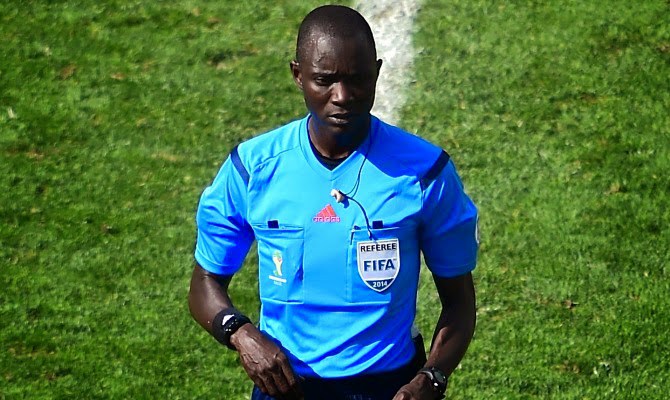
Caf Referee

Uganda is set to host the CAF Young Talent Referees course and it will be the first time that such a course will be hosted by Uganda where a total of 34 referees from across the continent have been confirmed.

Two Ugandans Isa Masembe and Shamirah Nabadda will be part of the referees group while Constance Catherine Adipo is among the five instructors and Referee Training Course (RTC) officials.
The other referees are expected to have arrived by 13th September 2018 ahead of the planned opening ceremony the following day.

The five-day course will be held in Kampala and will begin on Friday 14th and end on Tuesday 18th September.
The CAF Deputy Secretary General in charge of football and development Anthony Baffoe said all the referees will undergo medical, physical, theoretical and technical tests during the course.
An Yan Lim Kee Chong (Mauritius), Felix Tanagwarima (Zimbabwe), Cherifi Nasradine (Algeria) and Pierre Alain Mounguengui (Gabon) are the other instructors and RTC officials.

Male Referees:
Nabil Boukhalfa (Algeria), Ligali Adissa Abdoul Raphiou (Benin), Tirelo Mositwane (Botswana), Georges Gatogato (Burundi), Daurte Fabricio (Cape Verde), Bilal Abdallah Ismael (Djibouti), Mahrous Mahmoud A. H. Ahmed (Egypt), Mogos Teklu Tsegay (Eritrea), Atcho Pierre (Gabon), Huraywidah Abdulwahid (Libya), Dahane Beida (Mauritania), Ali Moussa Mohamed (Niger), Artan Omar Abdulkadir (Somalia), Christopher Harrison (South Africa), Haythem Guirat (Tunisia)

Assistant Referees:
Eric Aymavo Ayamr (Benin), Kitso Sibanda Madondo (Botswana), Habib Sanou Judicael Oumar (Burkina Faso), Herve Kakunze (Burundi), Brahim Ahmat Adam (Chad), Martin Mukala (DR Congo), Ditsoga Boris Marlaise (Gabon), Babajee Ram (Mauritius), Akerkad Mustapha (Morocco), Mutuyimana Dieudonne (Rwanda), Dos Reis Montenegero Miro (Sao Tome and Prinicipe), Van Wyk Mervin John (South Africa), Soud Iddi Lila (Tanzania), Hassan Khalil (Tunisia), Isa Masembe (Uganda)
Female Referees:
Atman Lamia (Algeria), Abebe Tsehaynesh (Ethiopia), Madu Ndidi Patience (Nigeria), Amara Hedia (Tunisia), Shamirah Nabadda (Uganda)

Stories Continues after ad

Kagina rendered jobless as gov’t scraps UNRA, other agencies

UNDER SPOTLIGHT: UNRA Executive Director Allen Kagina.

Uganda National Roads Authority strongwoman, Allen Kagina who many considered untouchable has been sent parking with a host of others in the ongoing disbandment and rearranging of government agencies.

UNRA which Kagina headed was the biggest beneficiary of the national budget Shs3.2 trillion in the 2018/2019.
Cabinet yesterday approved the recommendations and implementation plan for the rationalization of government agencies, commissions and authorities.

According cabinet spokesperson who doubles as the Minister for ICT Frank Tumwebaze, the rationalization process covered 153 agencies, commissions and Authorities and it is expected to increase efficiency and also save government about Shs1 trillion.

In a meeting was chaired by president Museveni, ministers resolved that the disbanding or merging dozens of government agencies will align the functions, structures, plans and budgets of government institutions based on national strategic goals and priorities for efficiency in the provision of public service.

“Government is streamlining and removing the layers of administration however agencies will keep their technical functions, we want a lean and effective government,” he said.
Tumwebaze said agencies have been taking about 37 per cent of the entire national wage bill, therefore, if one was a very good Executive Director in an agency, he will be on as a commissioner in a ministry.
Click below to read full cabinet statement
Press Statement
Tumwebaze said disparity on supervision by the ministries; varying salaries are among critical reasons for resolving and retaining of government agencies.
Ministry of Public Service Permanent Secretary, Catherine Bitarakwate Musingwiire noted that there is also the option of re-designation and therefore, one can easily be re-designated into another position as commissioner in any given government agency. Eagle Online broke this story and for further reference click https://eagle.co.ug/2018/08/31/cabinet-approves-disbandment-of-unra.html

“UNRA is among those agencies that will be absorbed into Ministry of Works. However some agencies have been retained for certain reasons, for instance if it is a money making agency, for example new vision which are also involved in various trainings,” she said.
Dissolved agencies.

Uganda National Roads Authority
Uganda Road Fund
Uganda Railways Corporation
Transport Licensing Board
Uganda Registration Services Bureau
Uganda Electricity Generation Co Limited
Uganda electricity Transmission Co Limited
Uganda Electricity Distribution Co Limited
Rural Electrification Agency
Lotteries and Gaming Regulatory Board
Departed Asians Properties Custodian Board
National Agricultural Advisory Services Org
Uganda Trypanosomiasis Control Council
Dairy Development Authority
Uganda Coffee Development Authority
Cotton Development Organisation
National Identification & Reg Authority NGO Bureau
National Information Technology Authority
Uganda Aids Commission
National Drug Authority
Uganda Blood Transfusion Services
Uganda Industrial Research Institute
Uganda National Council for Scie & Tech
Uganda Land Commission

Retained Agencies

Kampala Capital City Authority
Uganda Communication Commission
Uganda National Bureau of Standards
Uganda Bureau of Statistics
National Medical Stores

Stories Continues after ad

Uganda to host global logistics convention

Merian Sebunya, the board chairperson who is accused of intimidating staff in disregard of the law.

Uganda is set to host global logistics convention that is aimed at providing opportunities for the public, private sector, development partners and civil society organizations to promote mutual understanding and create shared course of action.

Speaking at Sheraton hotel, Chairperson National Logistics Platform and board member Private Sector Foundation (PSFUG) Merian Sebunya said the convention brings together all players in the freight and logistics industry to discuss and stop time wastage.

The convention is an annual freight logistics event of the Federation of East African Freight Forwarders Associations and will be organized by Uganda Freight Forwarders Association (UFFA) under the National Logistics Platform in collaboration trade mark east Africa.
“Kenya and Uganda jointly are able share data and manage the Electronic Cargo Tracking System (ECTS) with introduction of Integrated Customs Management System (ICMS) security of cargo guaranteed,”

She called for benchmarks and shared best practices to put into practice to improve their operations in Uganda towards economic growth in the industries to be put in place.
Last year, Trade Mark East Africa transitioned from the 2010- 2017 Strategy which focused on reduction in time and costs to import a container to the 2018-2022 Strategy that is focusing on driving job creation.

The Executive Director Private Sector Foundation Gideon Badaggawa said an economy cannot thrive without transport no matter what you are dealing in, “you will not be able to transport goods from Uganda to Kenya and to the rest of East Africa. Uganda is in the middle of the East African Community,”

In respect of economic growth, he said Logistics are critical in improving competitiveness adding that its activities directly serve the goal of making the economy dynamic by increasing investments and net exports, “Logistics play an integral role in the business lives of all countries, ensure proper planning, the flow of goods, services and information,”
He said Government highlighted that local content should be prioritized when it comes to anything in the field of logistics.

Stories Continues after ad