Stanbic Bank
Stanbic Bank
17.6 C
Kampala
Stanbic Bank
Stanbic Bank
Home Blog Page 1519

FUFA postpones SC Villa presidential elections

SC-Villa logo

The Federation of Uganda Football Association has postponed SC Villa presidential elections due to the organizers’ not following the FUFA Statutes for guidance on how to hold elections.

SC Villa Jogoo was supposed to elect a new club president on Saturday, July 14, at Masaka Royal Gardens.

In a communication by the FUFA CEO Edgar Watson, the local football governing body directed SC Villa to follow the FUFA Statutes for guidance on holding the elections.

Part of the letter to SC Villa reads; “The FUFA Statutes (Art. 18 par 1, 4, 5 & 6) provides for the Members of FUFA to be subordinate to FUFA and that their (Member) Statutes and amendments thereof shall only come into force after the approval of FUFA.

It has come to the observation of FUFA that Sports Club Villa, intends to organise elections of its bodies.

FUFA has further observed that the member is in contravention of the FUFA Statutes.
In order to ensure good governance, protect the interests of Sports Club Villa and return to normalcy, FUFA hereby requires the following;

1) A comprehensive review, approval and/or ratification by FUFA of the Statutes of the Member before elections of the bodies of the said Member may proceed to be organized.

2) That the process of review, approval and/or ratification of the Statutes by FUFA and election of the bodies of the member are completed by 31st December 2018.”

This means that Eng. Ben Misagga who took over in August 2014, will still be recognized as the club president until at least 31st December 2018.

“In order to ensure continued management of the day-to-day business of the Member, FUFA shall continue to recognize the current president and management of the member until elections in accordance with the FUFA approved and/or ratified Member Statues are concluded but in any case not later than 31st December 2018.

FUFA will avail legal guidance in the process of the comprehensive review of the Member Statutes.

As a member of FUFA, kindly note that non-compliance may lead to sanctions as provided for in the FUFA Statutes.” The letter further reads.

Only two candidates; Ben Misagga and a one Sostine Atwine had picked the nomination forms. Eagle Online understands that Mr. Atwine was Misagga’s proxy in the race.

Stories Continues after ad

India becomes EBRD’s newest shareholder

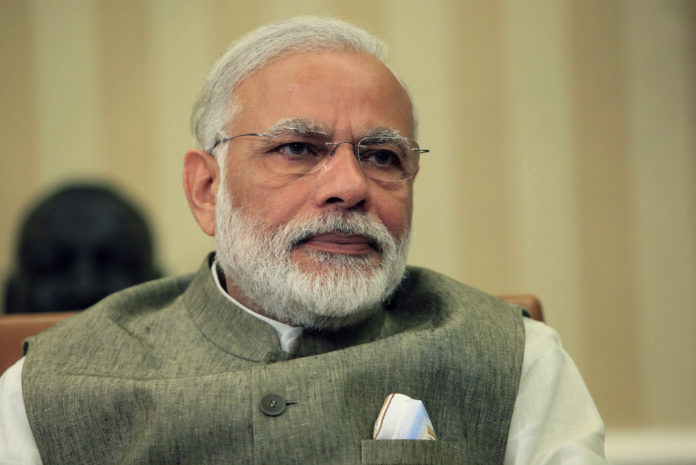
Indian Prime Minister Narendra Modi.

India has become the 69th shareholder of the European Bank for Reconstruction and Development (EBRD), paving the way for more joint investment with Indian companies across the EBRD’s regions.

The Indian government applied for EBRD membership in December 2017. The EBRD Board of Governors, which represents all of the existing shareholders, voted unanimously in favour of the country’s application in March 2018.

India takes a shareholding in the EBRD but it will not be a recipient of EBRD financing.

EBRD President Sir Suma Chakrabarti welcomed India as the Bank’s 69th shareholder today, saying that this step would benefit both the Bank and the country: “We are very proud and happy to welcome India to our Bank,” he said. “This day opens a new chapter in our relations, allowing us to build further on already very close ties.”

The EBRD held its inaugural business forum in Mumbai on June 22, 2018, to mark India’s membership of the Bank.

The conference, co-hosted with the Federation of Indian Chambers of Commerce and Industry (FICCI) and with the support of the Export-Import Bank of India, was held under the banner of: “Mobilising private sector finance in the EBRD region and how Indian companies can benefit”.

The EBRD has long worked with top-class Indian companies on investments in the EBRD’s countries of operations, which comprise 38 economies stretching across three continents. The Bank has cooperated with Indian enterprises on joint projects worth almost €1 billion, including investments with Tata, SREI, Jindal and Mahindra and Mahindra.

The EBRD is also working closely with leading Indian organisations, such as FICCI, the Confederation of Indian Industry (CII), the Associated Chambers of Commerce and Industry of India (ASSOCHAM), and the International Solar Alliance (ISA).

Stories Continues after ad

Indian diplomat bows to pressure, expands list of PM Modi visit committee members

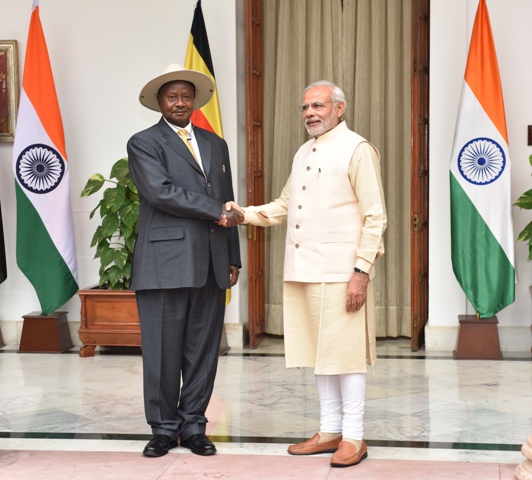
India's Prime Minister Narendra Modi receives President Museveni at his residence at Hyderabad in New Delhi India Oct 28, 2017 where the two leaders held bilateral talks. PPU Photo

The Indian High Commissioner to Uganda Ravi Shankar has bowed to pressure and expanded the list of Core Committee members by adding six more others.

The committee is preparing to welcome India’s Prime Minister Narendra Damodardas Modi.

The first list had just over 10 members mainly drawn from the Indian Association. The list now has 21 members. Those opposed to the first list contested that it did not include other Indian associations and bodies in Uganda. Also cited was corruption due to non accountability of collected funds previously by the said association leadership.

Other representatives on the earlier list came from associations like; Lohana Community and North Gujarat Association.
Those who have been included are; Jitu Sorathiya, Paresh Mehta, Sanjay Adhiya, Nareshbhai Patel, Daxesh Patel and Raju Hirani.

Mr Shankar confirmed the six new names in a letter of July 11, 2018. “In continuation of my earlier message of June 20 2018 on the above subject, it has been decided that the following six members will be co-opted in the Core-Committed with immediate effect,” he wrote.

Those who had opposed to the first committee said some of the members wanted to use Prime Minister Modi’s visit to Uganda to gain personal business deals at the expense of others. They said that the committee had not exhibited any transparency so far. They complained to the High Commissioner through a letter on July 5.

“We the undersigned heads/office bearers of various communities strongly protest and express a great sense of dissatisfaction in the manner in which the core committee was nominated by your good offices, despite discussions and agreement of Mr. Vijay Chauthaivale that is at least 20 leaders from various communities, associations and bodies be nominated,” the letter read in part.

Some of the complainants said then that Shankar was silently dealing with Singh Katongole, Pradeep Karia, a Director of Property Services to deny those opposed to his way of doing things an opportunity to interface with.

Modi will visit Uganda in the last week of July. His visit is expected to improve relations between Uganda and India in areas such as tourism, agriculture, business and health.

Stories Continues after ad

Agencies forge partnership to build resilience of fishers and fish farmers

Lake Victoria was once inhabited by more than 500 species of endemic cichlids.

The International Center for Living Aquatic Resources Management (WorldFish) and the UN Food and Agriculture Organization (FAO) on Wednesday agreed to boost their efforts to build the resilience of fishers and small-scale fish farmers, promote sustainable aquaculture, and improve fish value chains arounf the world.

The partnership will harness the power of research in fisheries, aquaculture and fish value chains to improve programmes and policies for the benefit of millions of fishers and fish farmers belonging to some of the world’s poorest communities.

Worldwide, nearly 60 million people (14 per cent of them women) are directly employed in the fisheries and aquaculture sector.

Launched this week, the latest edition of FAO’s ‘The State of World Fisheries and Aquaculture’ report projects that by 2030 combined production from capture fisheries and aquaculture will grow to 201 million tonnes.

That is an 18 percent increase over the current production level of 171 million tonnes. But future growth will require continued progress in strengthening fisheries management regimes, reducing loss and waste, and tackling problems like illegal fishing, pollution of aquatic environments, and climate change, the report adds.

“FAO and WorldFish are natural partners with highly complementary objectives and a common goal of ensuring food security and access to fish from sustainable food systems,” said Árni Mathiesen, FAO Assistant Director-General, Fisheries and Aquaculture.

“This partnership is a fantastic opportunity to enhance the impact of fish on the well-being of millions of consumers, producers and fishery-dependent people worldwide. It combines WorldFish’s research skills and experience with FAO’s policy-making capacity for greater impact,” said Gareth Johnstone, Director General of WorldFish.

The partnership will focus on: enhancing the role of fish in improving people’s food security, nutrition and livelihoods;

providing policy advice to countries and to drive high-level dialogue on fishery and aquaculture developments; support countries to develop projects and programmes in sustainable aquaculture, small-scale fisheries and fish value chains.

Initiatives will have a global and a regional reach, with a particular focus on Asia – the region with the most fishers and fish farmers, representing 85 per cent of the people employed in fisheries and aquaculture worldwide.

Stories Continues after ad

DFCU shareholders doubt $25 million on IT upgrading

dfcu bank

Some of the major shareholders of DFCU Bank are up in arms against top managers for spending US $25 million (about Shs95 billion) to upgrade its core banking software, it has been revealed.

The investment of that money helped DFCU to move from version 7 of its Infosys’ Finacle core banking platform to version 10. But some shareholders say most of the money could have gone to those involved in the procurement process.

The system incorporated Crane Bank’s operations as well. Crane Bank had been using the Bankmaster core system from Finastra (formerly Misys) for a number of years. In 2013, it embarked on a core software replacement project with Temenosand its T24 platform, but this project did not come to fruition as the bank was liquidated by the Bank of Uganda collapsed amidst allegations of corruption and fraud. The case is now in court.

The new development comes at the time when some major shareholders are in disagreement over the bank’s finances, with some poised to pull out. It is said top shareholders are fighting over the Shs127 billion net profits earned in the year 2017.

Britain’s Commonwealth Development Corporatrion (CDC) has indicated it want to exit and is hunting for possible buyers of its shares in DFCU. CDC says the option of floating the shareson the Uganda Securities Exchange is open as well should they fail to find a buyer or buyers that can take over the shares at once.

“With the knowledge of the company and Arise B.V., we have held preliminary discussions with a small number of potential investors.

Two of those potential investors, Cranemere Africa Limited and responsAbility Investments AG (the Strategic Investors), would like to be formally introduced to DFCU’s board and move into a due diligence phase. We therefore request that DFCU’s management support the due diligence process with the Strategic Investors.

Clearly all discussions and disclosures should be subject to confidentiality agreements between DFCU and Strategic Investors and should take place within the regulatory framework set by the Uganda Securities Exchange and the Capital Markets Authority,” CDC’s recent letter read in part.

According to Irina Grigorenko-CDC’s investment director who wrote the letter to the bank chairman Elly Karuhanda, no transaction has yet been approved by its investment committee. Any decision by CDC to sell its shares in DFCU would be subject to the approval of the investment committee of the terms of the sale as well as the agreement of legal documentation.

Meanwhile new details show that CDC Group advised managers at DFCU not to buy Crane Bank but they went against its advice, which is one of the reasons they are quitting. DFCU bought off Crane Bank in January 2017.

CDC, according to insiders at DFCU had opined that DFCU would still make reasonable profits even if they didn’t buy Crane Bank. The company at the time anticipated that bringing Crane Bank onboard would increase operational costs and this according to insiders has happened as Crane Bank branches have increased labour costs and others.

“That is one of the reasons why CDC could be pulling out though they have not come out clearly to say so,” said an analyst.

“The bank became overstretched because Crane Bank had at least a branch in every district in Uganda so it had reached a point that DFCU could no longer sustain the situation and it’s the reason very many workers lost their jobs,” a source said.

DFCU is said to be in dire need of money for lending to its customers.

While addressing the media recently, Karuhanga said CDC’s exit strategy of reducing shareholding is affecting the banking operations.

Stories Continues after ad

End of the road for NRM’s Singh Katongole after embarrassing defeat in LC1 election!

Singh Katongole

Ugandans held Local Council (LCI) elections Tuesday but the biggest loser among the candidates countrywide was NRM’s former treasurer Singh Katongole. He must be very embarrassed.

Katongole is a former Member of Parliament (Rubaga North) who was yesterday embarrassed as residents of Makamba Zone could not vote him, despite investing so much money in the campaign where he hoped to be elected village chairman.

Katongole was accused of ballot stuffing and ghost voters from his home. Katongole was standing against the popular incumbent Ms Proscovia Lukwago for the position of LC1 Chairman.

Mr Katongole survived being lynched by angry residents, who accused him of electoral malpractices and hiring non-residents to vote him. The residents accused Katongole of tampering with the voters register, and transporting voters from other areas so that they could vote for him, which ended up in a riot at Makamba Zone polling stations.

Katongole in 2011 was withdrawn from Parliament following a petition by current Rubaga North MP Moses Kasibante on issues related to electoral malpractices including voter bribery and ballot stuffing.

Katongole has once again rejected by the local population due to his failure to observe the electoral law. In 2016, Katongole could not be NRM’s flag bearer on grounds that he lacked proper academic papers.

As the Indian Prime Minister Narendra Modi prepares to visit Uganda this month, all is not well with Katongole as he has been accused by some members of the Indian community of sidelining them for personal gain.

However, Katongole’s embarrassing defeat in the LCI election makes a big statement as regards his political journey. Many are saying the defeat could have marked the end of his political journey more especially that it taught him that use of money is not enough to win an election.

Stories Continues after ad

Bobi Wine, activists’ anti social media protest cut short by police

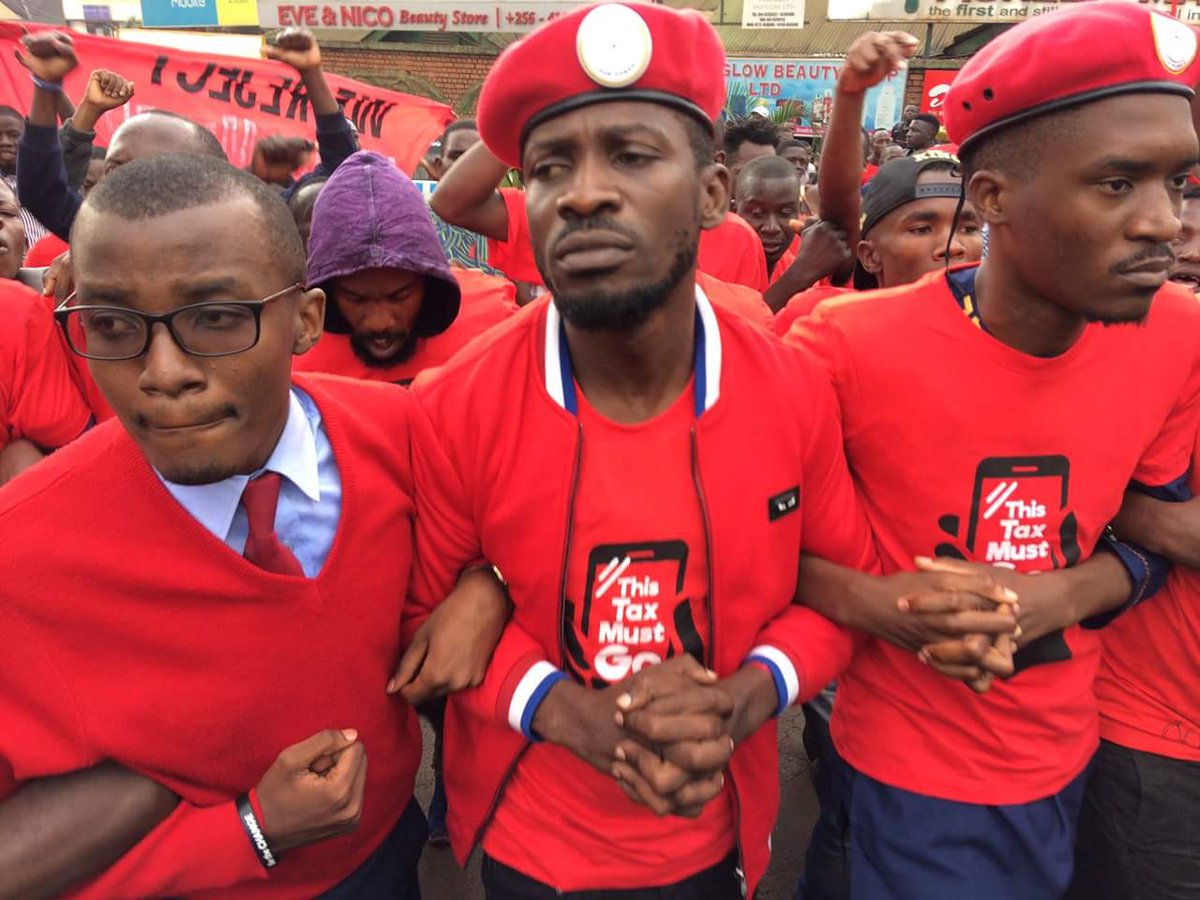
Member of Parliament, Kyagulanyi Ssentamu aka Bobi Wine, tussling it out with Police during the 'this tax must go' peaceful demonstration.

Kampala: Police has disrupted the procession of activities that were protesting against the newly introduced social media and mobile money tax in the Kampala.

This financial year, government introduced social media and mobile money tax. With Social media platforms such as WhatsApp, Twitter, Facebook, You Tube, Viber and Skype among others have been subjected to a daily levy of Shs200 as mobile money transaction have been subjected to a 1 per cent excise duty.

Upon implementation, a group of activities led by Kyadondo east MP Robert Kyagulanyi aka Bobi Wine, journalist among individuals declared the tax as barrier that will block government’s goal of financial inclusion and they launched ash tag ‘this tax must go’.

Early today, the group wearing red branded tees took to Kampala road chanting ‘this tax must go’ as they marched toward city square where they hoped to gather and speak out against the new social media tax.

The marching was flagged off by Bobi Wine. However, at city square chaos ensued as police fired teargas trying to disperse them.

Parliamenterian Bobi Wine leading a front in the ‘this tax must go’ demonstration. On the left, in spects, is journalist Raymond Mujuni.

The legislator, NBS’s journalist Raymond Mujuni, NTV’s journalist Joel Senyonyi were arrested however police led by DPC Joseph Bakaleke failed to put them in the mobile police cells that had been brought.

“My brother I am not fighting you, I am fighting for you,” said Bobi Wine as they tried to force him into a mobile police cell.

Activists later engaged into running battles with police as the crowd gathered to rescue Bobi Wine and the group. The group over powered police and left them to go.

He was availed a black jacket, cap and disappeared into the crowd as police checked in all places around hoping that he is still dressed in red.

According to Kampala metropolitan polices Spokesperson Luke Owesigire, one person and a brother to Bobi Wine, Fred Nyazi has been arrested. He said police has summoned the legislator for inciting violence.

Stories Continues after ad

Seven reasons to not give up too soon on your new venture

Martin Zwilling

By Martin Zwilling

Most of the young entrepreneurs I know are classic proof of the old adage that people tend to overestimate what they can do in a short period, and underestimate what they can do over a long period. They become frustrated when they are unable to build their startup in a weekend, and give up way too soon when the path to real success seems to be interminable.

Both problems can be mitigated by learning the power of frequency, as defined in the classic book by Jocelyn K. Glei, “Manage Your Day-to-Day,” which asserts that working consistently and frequently on something makes it possible to accomplish more, with greater originality, than spasmodic bursts of effort. A successful startup needs to be a daily task, with consistent focus.

I suggest that the following key reasons from Glei for how the habit of frequency fosters both productivity and innovation in general, apply especially well to an entrepreneur starting a new business:

Frequency makes starting easier. Getting started is always a challenge. It’s hard to convert an idea into a business, and it’s also hard to get back into the groove with all the distractions of other activities and your “real job.” If you block out time every day to focus on your startup, you keep your momentum going, and start seeing long-term progress.

Frequency keeps insights current. You’re much more likely to spot opportunities for innovation and to see new trends in the marketplace, if your mind is constantly humming with issues related to the startup. Frequent discussions with peers and customers on open questions will keep you from being led astray by your own biases.

Frequency keeps the pressure off. If you’re producing just one page, one blog post, or one sketch a week, you expect it to be good and final, and you start to worry about quality. It’s better to write 100 lines of new code every day, recognizing that you will have to iterate to perfection, rather than expecting a week of work to happen all in one night.

Frequency sparks creativity. You might be thinking, “Having to work frequently, whether or not I feel inspired, will force me to lower my standards.” In my experience, the effect is just the opposite. Creativity arises from a constant churn of ideas, and one of the easiest ways to get results is to keep your mind engaged with your project.

Frequency nurtures frequency. If you develop the habit of working frequently, it becomes much easier to sit down and get something done even when you don’t have a big block of time; you don’t have to take time to acclimate yourself. The real enemy of progress is the procrastination habit, which should be replaced with the frequency habit.

Frequency fosters productivity. It’s no surprise that you’re likely to get more accomplished if you work daily. The very fact of each day’s accomplishment helps the next day’s work come more smoothly and pleasantly. By writing just 500 words a day in a blog, I suddenly realized that I had enough for a book in just a few months.

Frequency is a realistic approach. Frequency is helpful when you’re working on a startup idea on the side, with pressing obligations from a job or your family. It’s easier to carve out an hour a day, than to set all else aside for a week in the early stages of your startup.

Don’t be like many of the people that we all know who feel like they are working at a breakneck pace all day, every day, but have very few tangible results to show for their efforts. Every entrepreneur needs to build a proactive daily routine, while being able to field a barrage of messages, and still carve out the time to do the work that matters.

Another enemy of progress in startups is the curse of perfectionism. Some entrepreneurs never start, waiting for that ideal moment, when there are no distractions. Some are lost in the middle, obsessing over every step, and some never finish, always refining and adding, rather than learning from a minimum viable product. Thus the need to combine frequency with pragmatics.

If you can manage your day-to-day routine with frequency, rather than let reactive chaos manage you, you will find that your creative mind is sharpened, and your focus on the new venture will generate the “change the world” results that attracted you to this lifestyle in the first place.

The Writer is a veteran startup mentor, executive, blogger, author, tech professional, and Angel investor. Published on Forbes, Entrepreneur, Inc.

Stories Continues after ad

Over 1,000 youth to attend URA financial literacy conference in Kampala

URA Commissioner General Doris Akol

The Uganda Revenue Authority (URA) has organised a one day conference aimed at empowering Ugandan youth with financial literacy to help them develop their ideas into business.

Themed Skilling Uganda’s Youths with Financial Discipline and a Mindset for Business Success, the conference planned for July 12, targets youths aged 18- 35. Over 1,500 of them are expected to attend.

The event will be held in the UMA Multi-Purpose Hall, Lugogo, Kampala. The conference targets youths in universities and other institutions of higher learning, graduates, and those already with business ventures.

According to Assistant Commissioner Public and Corporate Affairs, Vincent Seruma, the purpose is to inspire and empower Ugandan youth to create their own jobs instead of becoming job seekers.

The lack of financial literacy and business skills stands out as an impediment to youth business startups. This therefore calls for deliberate and intentional effort to equip them with the requisite business for success skills, experts say.

Topics for discussion include identifying, developing and sustaining a viable enterprise, surviving youth pressures, developing a successful mindset and how to balance career, family and business. Other core issues to be discussed are; how do you translate an idea into a business, defining a market, branding, product presentation, curbing expenses, managing credit and finances.

URA’s Commissioner General, Doris Akol will give the keynote address. The guest of honor is expected to be Florence Nakiwala Kiyingi, Minister of State for Youth and Children Affairs.

Discussants lined up are; Ruth Matovu Biyinzika (Skilling Uganda, PSFU), James Abola (Team leader, Akamai Global) – Financial Management, Michael Niyitegeka (ICDL Africa Country Manager, Uganda) – IT, Alice Karugaba – Director Nina Interiors (Business finance) and Dr. Sarah Nkonge Muwonge (Family business).

According to Seruma, to inspire the participants, youth, who are excelling in business, will give testimonies regarding their businesses. They include; Maxima Nsimenta (CEO of Livara Natural and Organic), Fatuma Namutosi (Executive Managing Director – ‎Byeffe Foods Company Ltd), Robert Kasibante (MD, Victory School of Beauty), Simon Sekankya (MD Hardware World), Dr. Joseph Kizito (Wonder Pig) – Product development and innovation and Anita Beryl Ahikiriza (Managing Director, Beryl Quoture).

Amid the conference, youth entrepreneurs will showcase their products and services.

Stories Continues after ad

Minister Kasaija begs suspended UIA boss to handover office tomorrow

To leave Office: UIA ED, Jolly Kaguhangire

Finance Minister, Matia Kasaija has written to suspended Uganda Investment Authority boss Jolly Kaguhangire being her to handover office to another officer to enable investigations into her conduct while still in office.

However, the same office was broken into by the board chairman who installed the acting ED.

“Reference is made to the letter Ref. UIA/BOD/06/2018 dated June 26, 2018 and addressed to you and subsequent meeting with H.E. the President last Thursday July 5, 2018 in regard to the above subject matter. As agreed in State House, this is to request you to hand over office to Mr Basil Ajer, the Director SME and STI on Wednesday July 11, 2018 at 2.30pm.” Kasaija wrote on July 9, 2018.

He added “Please take this matter in good spirit as it is a process to determine whether the accusation against your office and person bear any substance or not”. A copy of which was copied to the President, Minister of State for Privatisation and Investment, the Permanent Secretary and Secretary to the Treasury, chairman of UIA nad Mr Basil Ajer.

Kasaija said that on completion of the interdiction period, and issuance of the report, of which by copy of the chairman, UIA should produce within the agreed period of three months, the decision will be taken on the way forward on her employment with UIA. “So I urge you to be fully cooperative as the investigations go on”.

When contacted for a comment, Ms Kaguhangire said it is confusing for her to be asked to handover office and yet they had broken the office to install another person.

“I really don’t understand why I am being asked to handover office and yet there is nothing to handover since the office was broken into and someone else is using it. But for me I am a law abiding citizen and i am watching the events as the happen” Ms Kaguhangire told Eagle Online.

Kaguhangire was interdicted last month by UIA Board headed by Emely Kugonza who issued the interdiction letter.

The investment agency has been marred by several allegations of corruption and nepotism mainly in the restructuring process that started last year.

In May Privatisation and Investment State Minister, Evelyn Anite penned a letter to the UIA Board Chairman, Emely Kugonza over accusations surrounding restructuring.

“Reference is made to the ongoing restructuring process of the Uganda Investment Authority and the attached letters alleging undue interference in the process,” part of the letter dated May 24th 2018 said.

Stories Continues after ad