Stanbic Bank
Stanbic Bank
18.9 C
Kampala
Stanbic Bank
Stanbic Bank
Home Blog Page 1531

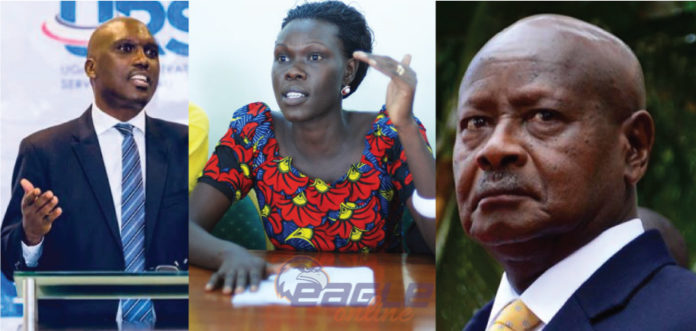
Anite rejects Bemanya bribe reports to Museveni

Kampala: Uganda Registration Services Bureau’s Bemanya Twebaze is not particularly a popular man. At office, staff loath the sight of him because of nepotism and tribal favoritism.

So when they heard about what happened in a meeting at State House, many went into a frenzy.

On Monday the President called him to a cabinet meeting together with Junior Finance Minister Evelyne Anite (for investment), and Justice and Constitutional Affairs minister, Gen Kahinda Otafiire to discuss the status of the the limping Uganda Telecom Limited.

Being the receiver of collapsing government parastatals, Mr Bemwanya was naturally the first to take cue when the item was called by the chair.

A source who attended the meeting said he started off by thanking the President “for leading and steering the country with such tremendous competence.”

Then, as he settled into explaining why the UTL issues are not being sorted out as first as it was expected, Mr Bemanya started pushing the blame on the hysterical Anite saying she was some kind of a stumbling block for the process.

Before he could even finish, Minister Anite shot up and accused him of having receiving a bribe from one of the investors interested in having a piece of the UTL cake.

“Your Excellence Mr Bemanya is not being honest with the truth but let me help him say it so that he is set free,” a source quotes Anite to have started her missive.

“He got a bribe from one of the investors and he called me that we share and I quicken the process but me I refused and since that day he and his investors now hate me. He is now here trying to portray me as the one failing the project,” she said and fell back in her seat.

There was a little bit of silence. Bemanya blankly stared in space with no come back. Just as he was mustering courage to stand probably respond to what had been said, the President, our source said, cleared his voice, picked up his pen and said, as he scribbled in his notebook,

“Well, that is a serious allegation and we shall not leave it hanging. We need to have it investigated and if it is true, corrective steps should be taken.”

For now, Mr Bemanya is safe. He will have to make a defense before the investigating team and depending on the findings, he will either lose his job or stay.

In May, a Mauritius firm that was among the first to bid to be given UTL come out accusing Minister Anite of throwing a spanner in the bidding process that should have produced the best bidder.

The firm said the minister brought in two new firms that did not participate in the four rounds of the bidding process and wanted them to be included.

The Mauritius firm argued that by bringing the two firms at the last minute and therefore weakening their chance of getting the deal, Anite had usurped the powers of the Provisional Administrator Bemanya Twebaze who is also the executive director of the Uganda Registration Services Bureau.

UTL went into receivership effective April 28, 2017, following its heavy indebtedness amounting to Shs533 billion.

Stories Continues after ad

Police releases MP Nambooze for further treatment

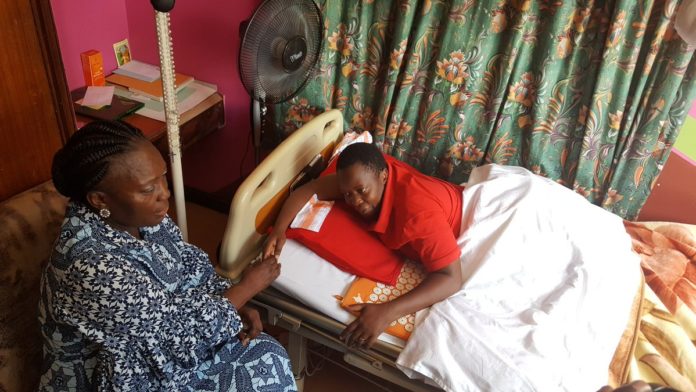
FLASHBSACK: Speaker Rebecca Kadaga visits Mukono Municipality MP Betty Nambooze, who was injured when SFC officers stormed the August House to forcefully evict opposition MPs.

Ailing Mukono Municipality legislator Betty Nambooze has this evening been given police bond and required to report at Criminal Investigations Department Kabuli on June 29, 2018.

Her release follows a group of activists and legislators intervention advocating for her release from Kiruddu Hospital for further treatment.

Over the weekend, the Executive Director of Mulago Hospital Dr. Byarugaba Baterana issued a statement allowing her to go further treatment.

Nambooze was arrested on June 13, 2028 from her home in Mukono and detained at Naggalama police station over statement made before and after the gruesome gun down of Arua Municipality Member of Parliament, Ibrahim Abiriga and his brother Said Kongo Buga.

Nambooze who was charged with incitement to commit an offence and was that evening released on police bond. However, she was re-arrested on June 14, 2018 and detained at Naggalama again.

In police cells, Nambooze sickness worsened as her life started deteriorating leading to her admission in Kiruddu Referral Hospital where she has been guarded by police officers.

Earlier in the day the Spokesperson for Parliament, Chris Obore said the August House was willing to contribute towards her treatment in India, “last year Parliament paid Shs100 million towards her treatment,” he said.

Stories Continues after ad

IGG Mulyagonja fails to name corrupt officials behind Museveni as plans to replace her emerge

Justice Irene-Mulyagonja during interview

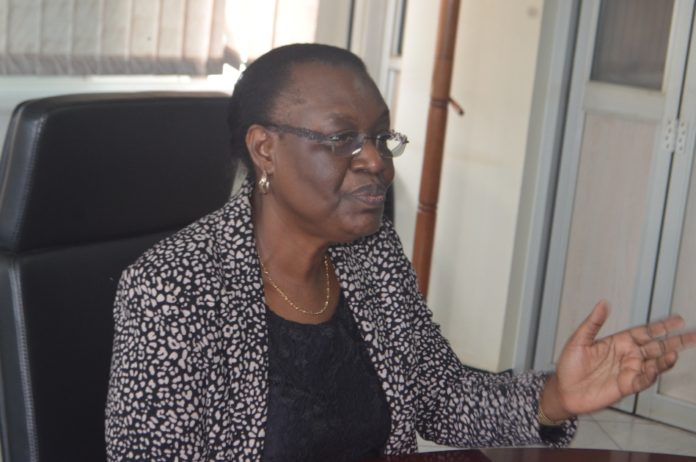
The Inspector General of Government Justice Irene Mulyagonja has failed to name corrupt officials that she said were hiding behind president Museveni.

Now emerging reports indicate the Museveni is scouting for her replacement.

Mulyagonja made the statement early this month following president Museveni’s attack on her office during the State of the National Address (SONA), faulting her for the escalating cases of corruption in the country.

Museveni has since then instituted a parallel anti-corruption committee squad led by former Secretary General of Uganda National Teachers Union (UNATU) James Tweheyo, Captain Martha Asiimwe and Sister Akiror. The President said the new team has been directed to provide their phone numbers to the public. The public is encouraged to report any corruption cases that come to their attention to the unit.

Museveni said he decided to form a separate committee to receive corruption complaints after establishing that the poor performance of the inspectorate. “What happened to the IGG? Why don’t the victims of corruption report those incidents to the office of the IGG? That was the purpose of that office; to protect the public from corrupt officials; to protect the investors against corrupt officials,” Museveni said on June 6 while delivering the SONA.

During the event held at the Serena International Conference Centre, Museveni questioned the credibility of the IGG’s staff. “Are her staff credible? Why does the public not trust that institution? We need answers”, he said. But those questions angered the IGG who in an effort to defend her slowness in catching corrupt officials said some were so much close to the president.

Asked recently why she has failed to name a single individual hiding behind Museveni to carry out corrupt officials as she alleged, said the inspectorate was doing its works to combat corruption in the country.
At the announcement of anti-corruption committee in state house, Mulyagonja said the committee would help catch the thieves around the president.

Reports say Justice Mulyagonja has told parliament she won’t seek for another term of office, having been appointed to that post in on April 12, 2012.

As Justice Mulyagonja prepares to leave office, the public is anxiously waiting whether she will release the report on the investigation of the former Bank of Uganda director of supervision Justine Bagyenda who is alleged to have amassed wealth through improper means.

Meanwhile Museveni seems to be determined to fight corruption and inefficiency in his government. The latest is the Board of directors of the Uganda Investment Authority (UIA) to decision to suspend the executive director, Jolly Kaguhangire, over allegations of corruption and mismanagement of the authority.

She was suspended for three months, according to a letter dated June 26 and signed by Emely Kugonza, the UIA board chairman.

Basil Ajer, a director in charge of SMEs will act as Executive Director in this period. Kaguhangire was appointed in April 2017 and in this short period she has had a torrid time. She has been accused of abuse of office, tribalism, insubordination and a litany of other charges. It should be remembered that Museveni launched a hotline in UIA to be used by the public and investors to report corrupt officials. The soldiers were to manage the hotline.

Museveni also in a surprise twist of events in March made a statement by sacking former Inspector of Police Gen. Kale Kayihura who now is in the hands of the military. Kayihura is in custody with police operatives who were so close to him and were considered as untouchable. They face several charges in the General Court Martial.
There is also reported sacking of Uganda’s Standard Gauge Railway project coordinator Kasingye Kyamugambi because of incompetence as well as corruption related cases. Analysts say the president is not happy with the slow implementation of the project.

In March this year Museveni ordered for the suspension of the Director for Citizenship and Immigration Control, Godfrey Sasaga and the Commissioner for Immigration, Anthony Namara after security investigations revealed that foreign operatives used Ugandan passports to deport Rwandan asylum seekers in Uganda. There was also alleged fraud by the officials in the procurement of e-passports.

In August 2017, Museveni fired former fired the Permanent Secretary, Ministry of Energy and Mineral Development, Dr. Stephen Isabalija, a decision analysts said was based on the messy handling of the procurement process for the oil refinery lead developer could have played a hand in Isabalija’s sacking. Mr. Isabalija was only 10 months old into the job, after replacing the long serving Fred Kabagambe Kaliisa during a reshuffle of Permanent Secretaries in November last year. Kabagambe Kaliisa is now a Senior Presidential Advisor on Oil and Gas.

Analysts have told this website that more top government executives stand to lose their jobs as there is a clandestine operation on-going to clean the civil service of corrupt and inefficient officers who Museveni thinks are failing his campaign pledges despite being allocated resources to do the their work. During his inauguration he said his term of office would be that of hard work (Kisanja Hakuna Mchezo).

Stories Continues after ad

Over 70 per cent of Ugandans have access to improved water source-new survey

Three out of four or 74 per cent of Ugandans have access to an improved water source, according to the new findings released by Twaweza in a research brief titled, “Clean and Safe? Ugandans’ experiences and opinions on affordable access to clean and safe water”.

The brief is based on data from Sauti za Wananchi, Africa’s first nationally representative high-frequency mobile phone survey. The findings are based on data collected from 1,971 respondents across Uganda in January to February 2018.

The research brief shows that Ugandans in urban areas (86 per cent) are more likely to use improved water sources than those in rural areas (69 per cent), as are richer Ugandans (84 per cent) compared to poorer ones (71 per cent). Improved water source in the report means; one that provides cleaner and safer water.

It says 24 per cent overall have access to piped water but this is much higher in urban areas (46 per cent, compared to 15 per cent for rural citizens) and among richer Ugandans (51 per cent, compared to 14 per cent of poorer citizens).

Nonetheless, the report indicates that in both urban and rural areas, boreholes are the main source of drinking water for more households (rural 38 per cent, urban 23 per cent) than any other type of source. Even in urban areas, just 2 percent of households have water piped into their dwelling. One out of six rural households (15 per cent) depends on surface water sources such as rivers, streams, dams and lakes, though this water can be very unclean.

The brief says that rainwater can provide an affordable and accessible alternative source of clean water; and eight out of ten households (78 per cent) do harvest it. However, less than One per cent use it as their main source of drinking water. Further, for most households (69 per cent), the rainwater ran out after a week or less, the last time they collected it. Less than one out of ten households (seven per cent) was able to use it for a month or more.

The research shows that rural areas are also disadvantaged in terms of time. It takes 1 hour and 11 minutes on average to collect water in rural areas compared to 49 minutes in urban areas. Despite these differences, a similar and substantial proportion of rural (14 per cent) and urban households (10 per cent), as well as richer (10 per cent) and poorer (15 per cent) households have to spend over two hours collecting water.

In one out of four households (25 per cent), the responsibility for collecting water falls on the women, the female head of household or the wife of the household head. And in nearly two out of four households (48 per cent), children are fully or partly responsible for this task.

The research report shows that nationwide and in rural areas, the two main challenges cited by citizens in accessing clean drinking water are linked: a shortage of water points (43 per cent) and distance to water points (39 per cent). In urban areas, the cost of water (36 per cent) and irregular supply (29 per cent) are mentioned the most.

According to the brief, a large majority of Uganda’s households (70 per cent) treat their water before drinking, to make it safer. This is again higher in urban (82 per cent) than in rural (65 per cent) areas. It is also higher among wealthier households (89 per cent) than among the poor (52 per cent). Most of these households boil their water (60 per cent).

Overall, citizens are not satisfied with the trends in access to water. Four out of ten citizens (40 per cent) say their access to clean and safe water has become worse over the past 12 months, compared to three out of ten (30 per cent) who say it has improved.

Similarly, half of citizens (47 per cent) are not satisfied or not at all satisfied with the performance of their local government in terms of providing water services. A minority – one out of four households (28 per cent) – are satisfied or very satisfied with their local governments water services.

Marie Nanyanzi, Sauti za Wananchi Officer at Twaweza, said: “On the positive side, rates of access to improved water sources are high by regional standards and, according to other data sources, appear to have been steadily rising in both urban and rural areas. On the other hand, many citizens still use surface water; spend hours collecting water and find the number of water points insufficient and the cost of water high. And citizens are dissatisfied with how water services are being managed.”

Dr Mary Goretti Nakabugo, Uganda Country Lead of Twaweza and Regional Manager, Uwezo East Africa, said: “Despite some important successes, the story around access to water is one of manifest inequity, with rural areas facing more marked challenges than urban areas across many dimensions.

In addition, the slower rate of growth in access to improved water in urban areas presents challenges for the future with population growth and increased rural to urban migration. The government will need to double down on efforts in both rural and urban Uganda to ensure that the hard-won gains of the last 20 years are not eroded.”

Stories Continues after ad

Corruption in Iganga district is getting out of hand

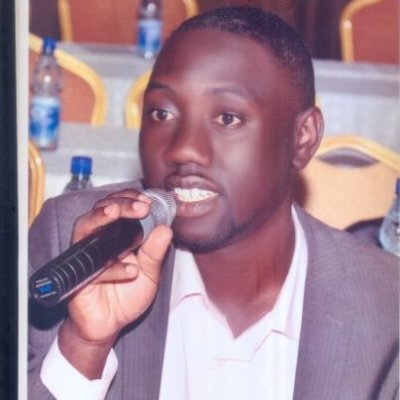
Mr. Michael Woira

By Michael Woira

Corruption within a country is best described as the ruthless mismanagement and pilfering of public funds and resources for personal gain to the disregard of its citizens, depriving them of their constitutional human rights.

In the presence of Good Governance, there is honesty, integrity, transparency, accountability, and responsiveness. Corruption brings a gradual change for the worse, a demoralizing process, destabilizing a society and rendering great harm to a nation.

Corruption has strong connections between officials, politicians, and criminals, infiltrating every aspect of a vulnerable society. Corruption affects us all. It threatens sustainable economic development, ethical values and justice; it destabilizes our society and endangers the rule of law.

In Uganda, it is not a new phenomenon and has spread its roots in government and private sectors. I’ve seen well mannered, educated, and humble individuals turn to quite the opposite as soon as they enter into politics or government positions. This is what our country has become, normal individuals in suits and ties who seemingly are above the law and above the people of this country.

The country seems to have become infected with the widespread disease of corruption that has been brought in by the enemies of development who only care about themselves forgetting that what they do now will also affect the next generations to come.

The community in which I grew up and studied from, the dirty, non-developing municipality Iganga is a community of people and an array of places which I have grown to know and love. A town produced by the value, worth and sacrifice of some proud citizenry, a community that has placed its development and upliftment in the hands of opportunistic politicians ruled by self-interest and a community with leaders who act as parasites on the people that they lead.

During the many years that I have been living in this town, local government officials have been involved in escalating and numerous controversial scandals on issues of alleged mass land scam, selling of government properties, selling jobs and opportunities, awarding tenders to themselves or even friends and family members, manipulation of town council files, favorable treatments and nepotism.

Controversial development allowing the destruction of our natural resources, poor infrastructure and building quality of town projects, illegal garbage disposal, non-accountability of revenues such as bridge tolls, grants, etc. and pocketing vast sums of money from foreign investors which never trickle down to the local economy and the masses have happened in the presence of many concerned locals who should have been ambassadors of development but just look on as such evils are happening in our district.

A few weeks back, I attended a radio talk show in Iganga on Eye FM and was having a discussion on the progress of the youth livelihood program with the youth chairperson but I was surprised to know from the concerned person that the program has failed because the real local youth have not received the funds but the leaders in the area have come up with their own groups that have finally received the funds leaving out the real people meant to receive the money.

As we proceeded with the debate I inquired from the chairperson to at least tell the listeners about any few known youth in the municipality who have gained from the funds but he could not disclose any because even he, himself failed to secure money for his projects because of the much corruption by the seniors in the area.

In some other incidence I have always heard from the corridors and believe it is very true that some road funds that were meant for renovating some roads in the municipality were being diverted to sort some court compensation issues that the municipality was battling with some years back after losing a case to Mr.Tusubira who was the town clerk of the municipality for some time.

With this level of corruption, the town of Iganga has become riddled with many health and environmental problems, a steady increase in slow development, an ever increasing crime rate, high inflation, roads in disrepair, and deplorable housing conditions for the general workforce population who keep the trade industry going.

But according to me, we really need to involve an informed, participatory citizenry to eliminate the opportunity for thievery and greed. It is my opinion that some local consultation process and public hearings be set to keep the citizens informed and abreast of the policies, tendering procedures and budgetary issues, which should be evaluated by a proper auditing commission. Appropriate harsh punishment should be considered and enforced for violation of these laws.

The people of our beloved nation and respective areas where we reside deserve political leaders that will be responsive to their needs and less susceptible to corruption. If our leaders in Iganga realize that they were voted to serve us, then I think this town will convert from being the dirtiest, ugliest town to one of the most neat, nice looking town with good planned infrastructures.

Mr MICHAEL WOIRA works at Uganda Media Centre as a Media liaison officer

Stories Continues after ad

Namutumba conman runs out of proverbial nine lives

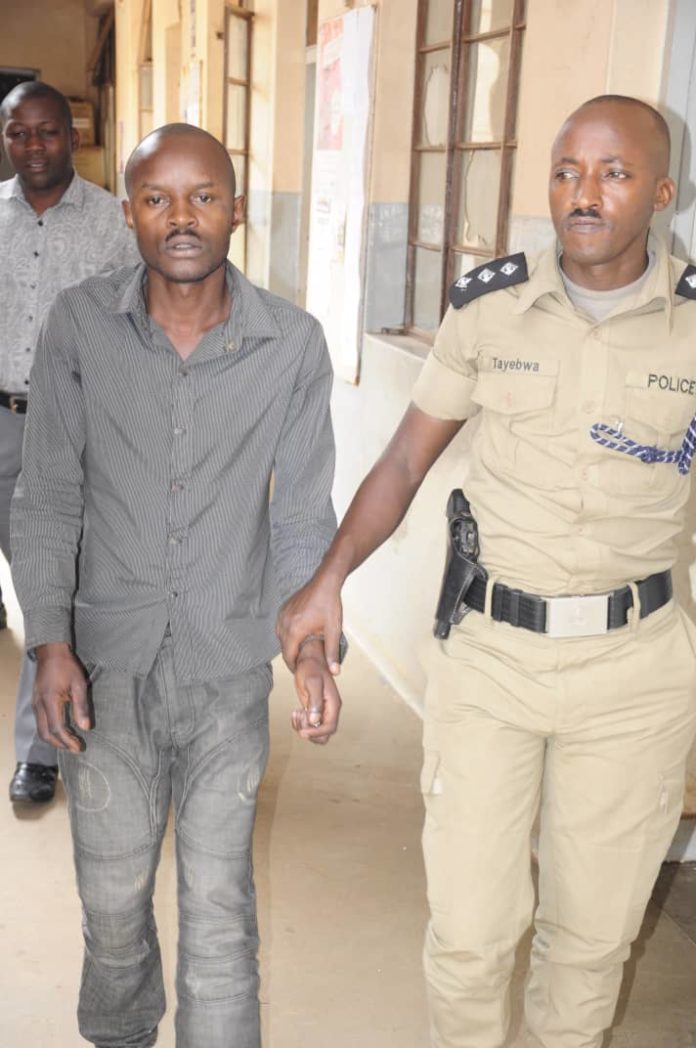
Geoffrey Kalele a resident of Namutumba District has been arrested for allegedly operating a Facebook account in the names of the IGP.

Mr Geoffrey Kalele a resident of Namutumba District has been arrested for allegedly operating a Facebook account in the names of the IGP.

The CID spokeman, Vincent Ssekate said that Kalele opened up a facebook account in the names Martin Okoth Ochola between March and June and has been using it to defraud the public.

Kalele also has been using the fake account to give orders to officers and some unsuspecting officers would follow them.

After his arrest, Kalele accepted his crime and confessed to coning and defrauding people.

He had so far collected Shs700,000 from the public which he used it to pay school fees for his children.

Stories Continues after ad

Suspected authors of death notes denied bond file sent to DPP

26-year-old Doreen Nakisige together with 30-year-old friend, Sanyu Namuganza are in police custody.

Jinja: Jinja north division police have declined to grant bond to the two women who confessed to being the authors of written death threats that have been causing panic and tension in Buwenge town council.

The 26-year-old Doreen Nakisige together with her 30-year-old friend, Sanyu Namuganza both residents of Munyegera zone in Buwenge town council were detained yesterday.

The duo landed in trouble after confessing that they are the authors of the written threats to murder, dumped at the doorsteps of their neighbour Zaituna Tibasiima a teacher at New Glory primary school and resident of the same zone.

Tibasiima and the entire town of Buwenge was in panic when she returned from school only to find the letter and a bunch of matooke beside it. In the letter, the authors said; “we have also given you this bunch of matooke to have it for your last supper before we come and murder you.”

But moments later, the suspects telephones her asking not fall for the prank they had had pulled off solely to scare her.

Their relatives have since been trying all possible ways to have them out in vain.

But the OC station at Buwenge police, Henry Magoola says the police cannot release them until the Directorate of Public Prosecution advises them otherwise.

“We cannot release them because of the nature of their case. It can even cause mob justice,” he said.

This Investigative website has learnt that the duo’s case file has been already forwarded to the Resident State Attorney of Jinja for perusal.

“And I am asking the RSA not to recommend that we release them. We are aware sometimes suspects bribe to have their cases killed but this one please we don’t want to hear that,” he added.

Over the last three months, similar scare notes have been strewn in different parts of Busoga many of them warning residents of attacks on and murders of especially women and young girls.

Stories Continues after ad

DRC and UN Economic Commission for Africa lays foundation to bust Country’s economy

Congo’s Minister of Planning, Statistics Regional Integration Ms. Ebouka-Babackas Ingrid Olga Ghislaine

Democratic Republic of Congo (DRC) and UN Economic Commission for Africa (ECA) have laid a foundations for the formulation of Congo Vision 2047, the country’s long-term framework to build a peaceful nation, diversified and globally competitive economy.

The move was reached after a thorough consultation that was conducted by UN officials to understand country’s political and socio-economic context to trigger structural transformation.

Speaking at the laying of the of the strategy, Antonio Pedro an officer from Central Africa of ECA said it is reassuring to see that the National Development Plan (PND) has chosen human capital development and economic diversification as the two priorities for the short-term 2017-2022 Plan.

“Rapid industrialization and the horizontal and vertical diversification of the economies of the Congo and other Central African countries, through harnessing the full potential of the region’s endowments in natural resources and exploring the trade and market access opportunities,” he said in Yaoundé, the capital of Cameroon.

He said Congo is currently experiencing macroeconomic instability linked to its overdependence on the exportation of crude oil for its own development, the move is linked with regional and global value chains, all in synchrony with the ECA-inspired Douala Consensus that calls for rapid economic diversification in Central Africa.

Congo’s Minister of Planning, Statistics Regional Integration Ms. Ebouka-Babackas Ingrid Olga Ghislaine acknowledged the urgency for Congo to tailor its development vision in the frame of structural transformation.

The Minister expressed appreciation to the Commission for accepting to support Congo in its effort to piece-together and roll-out its development vision of overarching development model that would end oscillating of Central African economies into moments of spikes and slumps due to over dependence on raw materials for revenue.

Stories Continues after ad

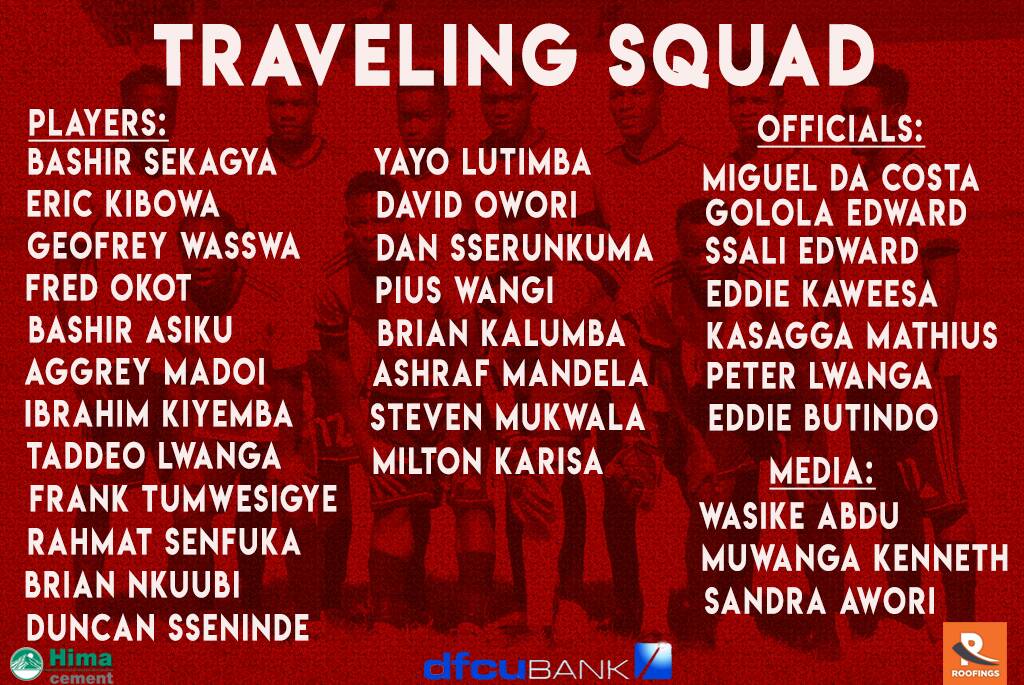
SC Vipers name squad for CECAFA Kagame Cup

Vipers star Sekisambu not in squad due to a proposed move to Gor Mahia

The CECAFA Kagame club cup returns this year in Tanzania after a two-year break.

Twenty players have been named by Miguel Da Costa to travel to Dar es Salaam, Tanzania and take part in the upcoming regional club cup championship.

First choice goalkeeper Ismail Watenga misses out with striker Erisa Ssekisambu who is linked with a move to Kenya’s Gor Mahia.

The Venoms are in Group A and will open their campaign on Friday against Zanzibar’s JKU FC.

Vipers squad for cecafa championship

The CECAFA Club Cup is a football club tournament organised by CECAFA. It has been known as the Kagame Interclub Cup since 2002, when Rwandan President Paul Kagame began sponsoring the competition.

Azam FC from Kenya are the defending champions after they defeated Gor Mahia 2-0 while Simba from Tanzania are the record holders of the competition winning it six times.

The last time a Ugandan team won the championship was back in 2005, Police FC under Sam Timbe by defeating Moro United 2-1 in the final.

Djibouti was the initial host but it is believed the tournament’s broadcast partner Azam TV influenced the change for security reasons.

The competition will be played from 30th June to 14th July, 2018.

SC Vipers fixtures:
29th, June: Vipers Vs JKU FC
1st, July: Vipers Vs Azam FC
4th, July: Vipers Vs Kator FC

Groups
Group A: Azam FC (Tanzania), Vipers SC (Uganda), JKU FC (Zanzibar), Kator FC (South Sudan)
Group B: Rayon Sport (Rwanda), Gor Mahia (Kenya), Lydia Ludic (Burundi), Ports FC (Djibouti))
Group C: Singida FC (Tanzania), APR FC (Rwanda), Simba SC (Tanzania), Dakadaha (Somalia)

Stories Continues after ad

Mobile money drives financial inclusion-Finscope Uganda survey

According to the Finscope Uganda 2018 report, the percentage of the adult population with access to formal financial services has more than doubled since 2006.

Kampala: According to the Finscope Uganda 2018 report, the percentage of the adult population with access to formal financial services has more than doubled since 2006.

However, formal sector financial inclusion is dominated by the use of mobile money, which provides only a limited range of financial services, largely payments and the opportunity to save money on the mobile phone.

The survey report launched at Kampala Serena Hotel on June 27, 2018 shows that only 11 percent of the adult population in Uganda use a commercial bank or micro deposit taking financial institution and only 3 percent of the adult population in the country who borrow money do so from a commercial bank.

“These findings suggest that the focus of public policy should be to try and broaden the range of financial services to which the population has access particularly from formal sector financial institutions which can offer a degree of prudential management and customer protection which is not available from the informal sector,” said Bank of Bank of Uganda Deputy Governor Dr Louis Kasekende.

The report provides accurate and detailed information on access to, and usage of financial services by the population of Uganda, as well as other relevant characteristics of the population. The information is derived from surveys based on a representative sample of the population comprising approximately 3,000 adults.

The Finscope survey also found that the breadth of access to financial services is quite wide in Uganda, with 78 percent of Ugandan adults having access to some form of financial service from the formal or informal sectors, and that 58 percent of adults have access to some form of formal financial service.

Commenting further on the report, Kasekende said that if the people who own and work in the household enterprises have no access to financial services, their capacities to engage in business would be stifled. “Hence if the promotion of financial inclusion can strengthen the access to financial services of the household enterprises in Uganda, it should help these enterprises to flourish and generate more output and boost the incomes of their owners and operators,” he said.

He said financial services can also be of benefit to consumers, enabling them to smooth consumption in the face of shocks to their income and to meet unanticipated requirements for spending, such as to pay medical bills, as is noted in the Finscope Report.

However, he said there are dangers that come with financial inclusion services. “Consumers may contract debts which exceed their capacity to repay. Hence it is essential that efforts to promote financial inclusion are accompanied by programmes to enhance financial literacy and consumer protection,” he said.

He said that the main reason why most formal sector financial institutions have only a limited reach among the population, is due to the fact that cost of serving low income customers in rural areas outweighs the very limited income streams that can be generated through the provision of financial services to them.

He said broadening access to financial services is only likely to take place if financial institutions can develop innovative ways to reduce the cost of delivering financial services to low income customers or if the incomes of the financially excluded increase, so that they can afford to purchase more services. Mobile money is an example of a technological innovation which has dramatically reduced the cost of delivering financial services to customers, albeit for a rather limited range of services.

Finscope Uganda 2018 report provides information which can help to make public policies designed to promote financial inclusion and broaden access to financial services more effective. It also provides valuable information about the market for financial services to financial service providers in the private sector.

Stories Continues after ad