Stanbic Bank
Stanbic Bank
18.9 C
Kampala
Stanbic Bank
Stanbic Bank
Home Blog Page 1755

HMU boss blasts doctors over Shs 48 million salary demand

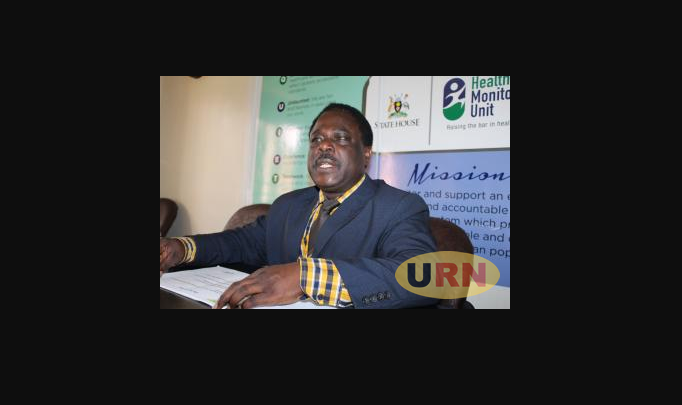
BLASTED UMA LEADERS: Dr Jackson Ojera Abusu

The Director, Health Monitoring Unit (HMU) in the Office of the President, Dr Jackson Ojera Abusu, has blasted leaders of the Uganda Medical Association (UMA) over demands made that government increases salaries of medical doctors to Shs48 million per month.

Dr Abusu said the current state of the Ugandan economy cannot pay a doctor such amount money, even as some government officials today earn above that figure.

“Shs48 million is simply unsustainable for a developing country like Uganda,” he says, adding that UMA should not hold the Treasury at ransom.

“We would like to state categorically that while we associate with the plight of doctors and have actually been at the forefront in urging the government for better remuneration, we find some of the actions of UMA leadership as grossly misleading, frivolous and undermine public confidence in the health care sector,” he said in a Tuesday press release.

Dr Abusu said UMA should not advocate for the improvement of the emoluments of the medical personnel as it is not the official body to do that job.

“We are not aware if indeed this body (UMA) is registered as a labor union,” he said, arguing that it should be the Uganda Medical and Dental Practitioners Council to take grievances of medical workers to government since it was established under the laws of Uganda.

He said that if UMA members decide to strike as declared earlier, the patients in Ugandan hospitals will suffer worse. “We believe there are more appropriate avenues of engaging government,” he said.

According to Dr. Abusu, doctors who neglect patients leading their death stand to be punished. “We have noted with concern that whilst a good number of medical professionals are doing a commendable job, there is also a rise in cases of professional malpractice, often leading to rash and negligent deaths,” he says.

He asked UMA to desist from what he called ‘criminal activities’ including calling for strikes. He said that whereas the professional council can investigate the administrative issues in the medical profession, it does not take away the jurisdiction of police and courts of law to handle the criminal aspects involved.

Dr Abusu’s response comes following the recent media reports in which UMA said it would soon call to action all doctors employed in the public service to lay down their tools if their salary demands are not met.

He said Government is already working on a proposal to harmonize all civil servants pay, including doctors. He has appealed to health workers to exercise more patience and continue to carry out their duty of treating Ugandans bearing in mind the Hippocratic Oath.

“UMA should work hand in hand with other statutory bodies to ensure the highest ethical and professional standards,” he said, adding that the UMA should desist from inciting its members to strike without consultation with the Medical and Dental Practitioners Council.

In the same vein, he said, UMA should desist from passing off as the official body of doctors mandated by law.

“UMA should not over step its jurisdiction,” Dr. Abusu said.

HMU-led Recoveries

Meanwhile, Dr Abusu says HMU has since 2009 made asset recoveries worth Shs15.862 billion, of which three billion was hard cash. The other recoveries were medicines, health supplies, equipment.

Further, he said, a total of 22,348,728 nets were distributed in 7,912,026 households in 111 districts and that over Shs 37m that had been stolen in the process by sub-county supervisors, recovered.

He said Mbarara, Sheema, Kasese, Bundibugyo, Kagadi, Wakiso and Kampala will receive nets by December this year.

In 2016/ 17,  Dr Abusu says the HMU recovered GAVI funds worth Shs 846.396 million  which was unaccounted for from 80 districts and Shs13.266 billion meant for Polio and measles vaccination programs.

In August this year, he added, the unit recovered unaccounted funds worth Sh 13.058 million in the Teso Region . They had been given to Pentecostal Assemblies of God in Kaberamaido, Serere DLG, Vision Terudo in Ngora, and Kumi DLG by Baylor College.

Investigations and legal actions since 2009 led to 610 cases of which 249 have been prosecuted, 93 convicted, 14 acquitted, 42 cases dismissed, 36 handled administratively and 36 cases still pending, Dr. Abusu says.

The unit also recovered 11 stolen hospital beds worth Shs.18m for Mulago Hospital; hospital beds worth Shs.19m for Kayunga district, a fibre boat worth Sh.120m donated to support referral of maternal and child emergencies in Namayingo district and vehicle worth Shs30 million-belonging to the health ministry.

 

Stories Continues after ad

Unlocking Africa’s potential: OMFIF index uncovers untapped opportunities

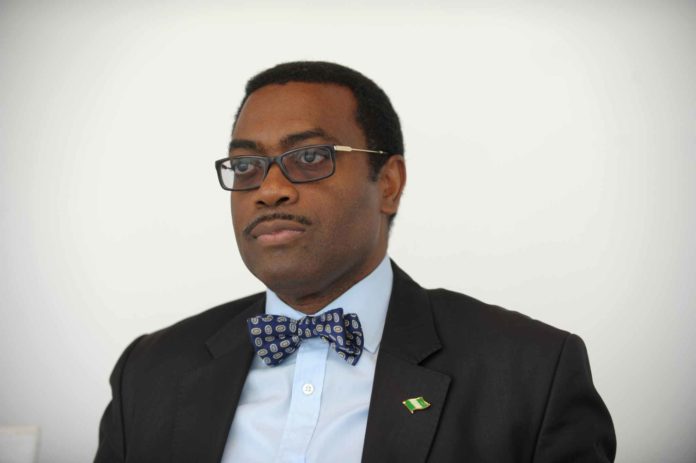
Dr. Akinwumi Adesina

By Dr Akinwumi Adesina

Africa’s financial markets have remained resilient and innovative in the face of global growth challenges. However, they remain fragmented and shallow compared to their equivalents in Latin America and Asia. The African Development Bank’s own African Financial Markets Initiative was launched in 2008 to build and develop local currency bond markets across the continent. The initiative is organized around two pillars, namely the African Financial Markets Database and the African Domestic Bond Fund Project.

It should be noted that Africa’s capital markets have grown significantly over the past three decades to around 30 from just five stock exchanges in the 1980s. The total amount of issued sovereign bond markets has increased significantly to more than US$200bn in 2016 from US$28bn in 2000. This includes 94% of bonds with less than one year in 2000 to about 76% in 2016. Moreover, the African Financial Market Database has grown to 43 countries in 2015 from 22 countries in 2012.

Resilient, broader and deeper financial markets are essential to Africa’s transformation. The achievement of the African Development Bank’s ‘High 5’ operational objectives for accelerating Africa’s economic transformation (light up and power, feed, integrate, industrialise and improve the quality of life for the people of Africa) depends critically on financial markets playing a greater role in financing the continent’s real economy.

The Bank’s goal is to support 20 capital markets across Africa over the next decade through a broad-based approach, addressing market development challenges, including those identified in the various indicators of the six pillars of the Barclays Africa Group Financial Markets Index which the Official Monetary and Financial Institutions Forum (OMFIF) has produced. That is why the African Development Bank actively works with the public and private sector to support market reform programs such as policy modernisation and new frameworks governing capital markets. Flexibility in accessing capital markets is key to unlocking domestic savings and attracting foreign investment.

Africa’s transformation requires significant resources. To achieve universal energy access by 2025, for example, requires innovative mechanisms to mobilise US$30bn-US$55bn annually in domestic and international capital. This calls for a shift of resource mobilisation, deploying robust and resilient financial systems and capital markets. The private sector will need to bear much of the load.

Through expert analysis of the African financial markets, the Barclays Africa Group Financial Markets Index draws global attention to the considerable investment opportunities and uncovers the untapped market potential. This inaugural report from OMFIF, covering 17 growth markets across the continent, provides an excellent basis for the acceleration of the delivery of the Bank’s ‘High 5’ strategy.

Dr. Akinwumi Adesina is President of the African Development Bank.

Stories Continues after ad

Investors love to fund solutions that are scalable

By Martin Zwilling

Investors will tell you that they love to put money into startups that are scalable, and ready to scale. But what does that really mean? Simply stated, it means that your business has the potential to multiply revenue with minimal incremental cost. Ready to scale is when you have a proven product and a proven business model, about to expand to new geographies and markets.

A software product is a classic example of a scalable solution, since it costs real money to build the first copy, but unlimited additional copies can be quickly cloned for almost no incremental cost. Most consulting services, like marketing, are not scalable, since they must be delivered by experts, and cloning experts is slow and expensive. Investors don’t invest in services startups.

Here are some pragmatic tips on how to make your startup more scalable and investable:

If you need investors, start with a scalable idea. Just because all your buddies think an idea is cool, that doesn’t mean it is scalable. Investors like ideas based on market research from outside experts, like , proclaiming an opportunity worth considerable amount of money with a double digit growth rate. These are more likely scalable and investable.
Build a business plan and model that is attractive to investors. I see too many business plans that are really product plans for customers, touting free services and long feature lists. It’s hard to build and scale a business on free high-support products. Scalable businesses have high margins (over 50%), low support, and minimum staffs.
Use a minimum viable product (MVP) to validate the model. No product, even with a large opportunity, is ready to scale until you can show it working, with multiple customers paying the full price, to validate the business model. Count on multiple pivots with real customers, before you get it right, before you ask for investor money to scale.
Build a strong team to take yourself out of the critical path. If you are still spending most of your time working “in” your business, rather than “on” your business, then you are not yet ready to scale. Show that you have and can continue to hire the right people to run the scaled business without you being everywhere and making every decision.
Outsource what is non-strategic to optimize leverage. Smart entrepreneurs never outsource their core competency, and never rely on intellectual property they don’t own. They also don’t try to do everything in-house, since growing all the expertise you need is slow and expensive. Scaling requires leveraging outside resources.
Focus on marketing and indirect channels to get the message out quickly. Direct marketing is generally not scalable, especially on low-cost high-volume products. These days, heavy marketing is always required to make your startup visible and scalable amid the flood of information from all sources to all customers. Word-of-mouth does not scale.
Automate to the max. A startup that is labor intensive and staff intensive is not scalable. Start early looking at production automation, proven process technologies, and minimum staff approaches, before you begin scaling. Document processes and build online training videos so new people can come online quickly and consistently.
Attract and relish investor funding. Organic growth (reinvesting profits only) will not allow you to build the “hockey stick” growth curve desired by premium buyers at exit, or financial analysts positioning you for public stock sale. You will give up some control with investors, but their expertise and experience is usually more than worth the cost.
Consider all possibilities for licensing and franchising. Many markets already have major players, so figuring out how to make them partners is much more effective for scaling than trying to out-market them. In other areas, once you have a documented and proven model, franchising will let you scale much faster than managing every location.
Define a business that is open-ended and continuously improving. If your startup sounds like a one-trick pony, it won’t be perceived as scalable. Don’t try to solve every customer problem at the same time, but build a strategy and plan that shows continuous innovation, leading to follow-on complementary solutions well into the future.
Let me make one thing clear – not everyone needs or wants investors, or a highly scalable business. Ninety percent of small businesses today are family businesses, which can be very successful, satisfying, and small by design. It’s a strategic decision. If your passion is to change the world, or even dominate an industry, scalability is the only way to multiply your arms and legs, and the hours in your day. Are you feeling the need yet in your own startup?

Stories Continues after ad

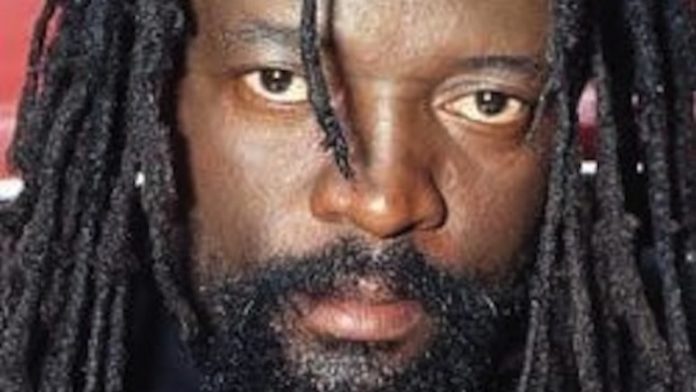
Tribute to Lucky Dube: The unsung hero of African liberation

Lucky Dube

The thing about crime is that it hits when we least expect it, and it has a tendency of leaving us feeling shattered.

In history, tomorrow is a day one of Africa’s best or if not the best singer Lucky Dube, was murdered in cold blood by materialistic criminal gangs in South Africa. In 2007, Lucky Dube was killed in a botched hijacking, and all his killers wanted was just a vehicle! Dube will be making 10 years tomorrow since he was brutally brought down by an assassin bullet.

To Africans Lucky Dube was a comrade, and the pain of losing him wasn’t only felt by his immediate family but all humanity felt the pain, given that he met death from the same criminals he sung about.

Lucky Dube, whose lyrics played the airwaves in the 1980s, 1990s and even 2000s, sung about inequality in society and above all his songs energized the oppressed to soldier on. In liberations, several factors matter and in the case of Southern Africa and in particular South Africa, Dube’s music was a key factor in demobilizing the Apartheid regime.

He particularly sung about the unity of a new unity government in South Africa after the release of iconic Nelson Mandela. Lucky Dube also thrilled other African countries among them Uganda, which will forever remember him, just like he sang in his ‘Remember Me’.

Indeed, Lucky Dube used to move audiences at the then Nile Hotel (Serena Hotel) he almost brought down Nelson Mandela Stadium, Namboole, as he truly represented Madiba.

Lucky Dube, you are the unsung hero of African liberation and we truly remember you.

Rest in Peace.


Stories Continues after ad

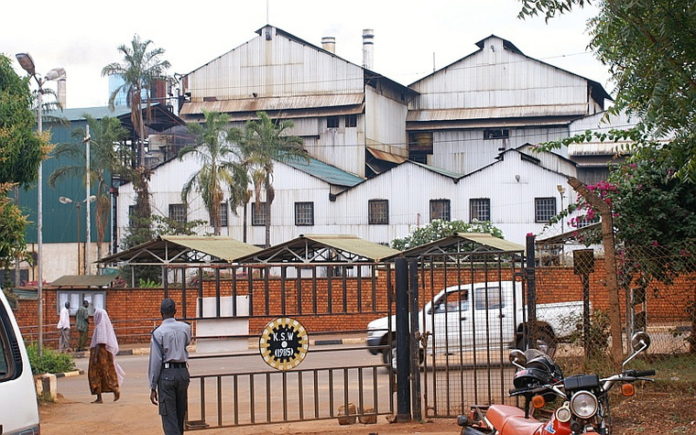
Kakira Sugar Works to lay off 4,000 employees

Kakira Sugar Works headquarters

All is not well at Kakira Sugar Works as management there has warned in a letter that it intends to lay off over 4,000 employees as a result of the factory’s failure to break even financially due to stiff competition from new entrants in the area.

The letter dated October 16, 2017, addressed to the Secretary General of National Union of Plantation and Agricultural Workers (NUPAW-U) Joram B.Pajobo, requesting him for a meeting to discuss the impending lay off of the workers, says: “We are writing to request for a meeting with you to discuss our current plight of failing to break even financially in our operations and resulting inevitability to lay off not less than 4,000 employee.”

The managers at one of the country’s biggest sugar manufacturers want to meet Mr Pajobo on October 26 at their head offices at Kakira to discuss the issue that if the solution is not sought, it will impact negatively the families of the over 4000 employees. Mr Pajobo is also Member of Parliament representing Workers.

The managers at the factory in a letter blame their economic losses on what they referred to as the rampant licensing of new sugar factories in the area it operates, saying this has been done in disregard of the sugar zoning policy. “The sugar policy was approved by the Cabinet in August 2010 and has still not been enacted into an Act,” the letter reads in part.

They say the delay in in acting on the sugar Act has compounded the challenges faced by the sugar industry in general.

They are irked by the fact that new sugar factories have installed large capacities despite not having their own nucleus estate. “This has inevitably created a huge shortage of sugarcane and has compelled us to crush immature cane,” the letter continues, adding that this has resulted in both the company and farmers making loss.

The letter further says the company now operates at 50 per cent capacity due to lack of enough sugar cane to crush, forcing it to lay almost half of its labourers.

Kakira Sugar Works has always attacked Mayuge Sugar Industries for encroaching its sugarcane out growers and land ownership.

In the letter, the company says it paid taxes worth Shs100 billion in 2016 despite not operating at full capacity. “If we were operating at full capacity in our own zone, we would be paying in excess of Shs240 billion in taxes to government,” they say in their letter.

The sugar policy recommends that sugar factories are established within a radius of at least 50 kilometers from one another. But according to Uganda Sugar Manufacturer’s Association, the industry has not been well regulated leading to collusion and distortion of the out grower systems on which old factories have survived for sugar cane.

Management at the company say they intend to inform relevant authorities about the impending sacking of the employees, majority of who are casual workers, among other challenges cited.


Stories Continues after ad

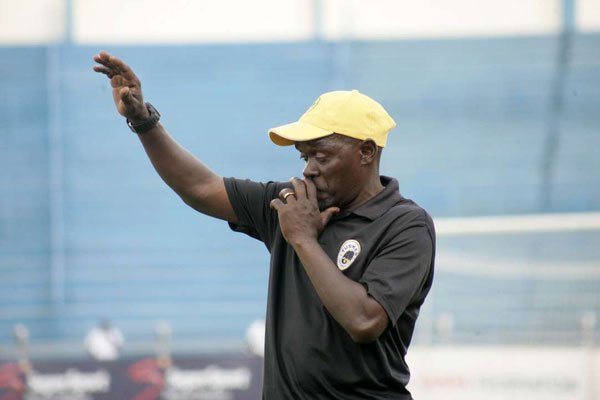
Kenya’s Tusker FC suspends Ugandan tactician George ‘Best’ Nsimbe

Tusker FC suspended head coach George ‘Best’ Nsimbe

Kenyan football club Tusker FC have suspended head coach, Ugandan tactician George ‘Best’ Nsimbe until the end of the season over the ‘too many old payers’ comment.

Nsimbe was quoted by a section of the media saying the club had “too many old players” and that they needed younger players to mount a strong title challenge next year. The comments did not go well with some of the senior players.

Nsimbe joined Tusker at the beginning of the season for a two-year deal, replacing fellow countryman Paul Nkata, who won the league and cup double. Nsimbe started on a poor note, bowing out of the CAF Champions League in the first round qualifier to lowly AS Port Louis from Mauritius.

The Ugandan tactician has been working under increasing pressure for a disastrous season where Tusker are currently 6th with 43 points after 29 matches played.

“The decision on Nsimbe’s future at the club will be made at the end of the season,” said the club’s CEO Charles Obiny in an interview.

The reigning SportPesa Premier League (SPL) champions have appointed Nsimbe’s assistant Francis Baraza, as the caretaker coach until the end of the season.

Stories Continues after ad

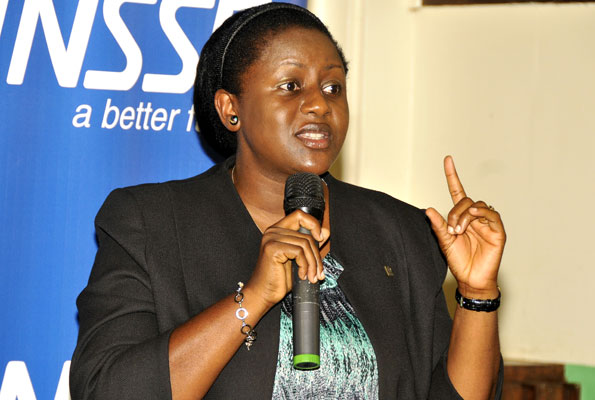
Tracing Geraldine Ssali Busuulwa’s warpath to her exit from NSSF

Ms Geraldine Ssali Busuulwa.

Geraldine Ssali Busuulwa was appointed Deputy Managing Director of the National Social Security Fund (NSSF) in 2011 by the then Finance Minister, Syda Bbumba.

On October 29, 2014, she was re-appointed to the same position after a ten-month period served as Acting Managing Director as the Board was in the process of searching for a substantive MD. At a time Mr. Richard Byarugaba was out of office, waiting for the renewal or non-renewal of his contract. 

The root cause of Ms Ssali’s wars with NSSF Board

After a ten-month search, Richard Byarugaba was re-appointed Managing Director and Ms. Ssali was reappointed as his deputy. This, according to insiders in NSSF, did not go down well with Ms. Ssali, perhaps, having tasted the benefits that come with the NSSF top job. Her wars with the NSSF Board then started, and according to a source, she then started exhibiting acts of ‘gross insubordination contrary to the Fund’s Human Resource Code of Conduct’ (the Fund’s Human Resources Manual on Policy & Procedures), something that led to her suspension on March 14, 2016. At the time the Board also cited Section 63 of the Employment Act (2006), before sending her on suspension.

While on suspension, Ms. Busuulwa was not allowed to conduct any business on behalf of the Fund or appear at office until her issues were sorted out by the Board. But this did not please her. She had to fight on. And Court would be her destination for relief.

Going to court 

In May 2016, Ms. Ssali filed cases in court to have her suspension lifted, and indeed, secured a temporary injunction stopping her suspension. This, reportedly, did not please the current finance minister Matia Kasaija, who asked her to withdraw all the court cases filed against the NSSF Board, in order for her to be reinstated.

But sources say neither Ms. Sali nor her lawyers filed any withdrawal documents with court. In the meantime, the Fund, through its lawyers, shared a draft consent order with Ms. Ssali through her lawyers but no response came forth. “Unless she complies with the directive as agreed with the Minister, she cannot be allowed back to office,” said a statement from the NSSF said at the time.

However, that was no deterrent; having secured the injunction, Ms. Ssali attempted a forceful come back into office but security officers at the Workers House told her they were ‘under strict orders’ to keep her away. Ssali was in the company of her lawyers, and to the Board this was gross indiscipline:  she had undermined the Board’s authority vested in them by the Minister. 

Shs 1 billion demand

In the ensuing period Ms. Ssali petitioned court to order her supervisors to pay a fine of Shs1 billion and compensation for contempt of court. According to Ms. Ssali, the decision to suspend her was taken after court had issued a temporary injunction to stop her suspension from duty.

Particularly, in the application filed through KM Advocates and Solicitors, Ms. Ssali wanted the NSSF board chairperson Patrick Kaberenge, the MD Richard Byarugaba, jointly with the NSSF, to pay the Shs1 billion fine and compensation.

Ms. Ssali wanted court to declare that the trio disobeyed a court order that reportedly quashed the Board’s decision to deny her access to office.

Shs200 million demand to withdraw the case

In August 2016, Ms Ssali through her lawyers, said she wanted to first be paid Shs200 million  that court awarded her for wrongful interdiction before she would withdraw the case against the Fund.

She also wanted the Board to withdraw an appeal contesting the Shs200 million award. But at the time Ms Ssali was back working and enjoying all benefits that the Fund offered to her as deputy managing director. These actions, the Board felt, were not from a worker who had NSSF at heart or somebody on reconciliatory path. It was becoming hard to work with her, or so they thought.

“We had discussed before court to seek an adjournment since her (Ssali) lawyer is absent. However, we also tried to talk to her on withdrawing all cases against the Fund since she is already back in office and enjoying the benefits… and she said we should first pay her the Shs200m award that court ordered NSSF to pay her and also withdraw the appeal contesting the same [the Shs200m award],”a city lawyer representing the NSSF at the time said. 

Appraisal for top managers 

As Ms Ssali was engaging the Board through her compensation battles, the Board was planning an appraisal for the top three managers at the Fund, something she seemed to unaware of. Time had come in October for the Board to renew contracts of the top managers and therefore the appraisals were a necessity. Ms. Ssali’s performance over the recent years was found wanting, oscillating between A and C, the Board declared. And the Board had no choice but to let her exit NSSF. 

Letter to the Finance Minister 

A letter to finance minister Matia Kasaija said: “Ms Geraldine Ssali Busuulwa 43, Deputy Managing Director contract should not be renewed but allowed to exit from the Fund. Her performance over the last three years has been just good enough between (A and C) even though she contests that assessment for some period, and most of it alluded to good performance of her direct reports/subordinates.”

The Board added: “During the meeting where the three managers were appraised, Wabwire and Byarugaba were found to have performed excellently and therefore, they have been recommended to retain their job. For Ms Ssali, during her three year contract, she didn’t impress the board and more so, she was abrasive,” the sources, speaking on condition of anonymity, told EagleOnline. The appraisal finally had Ms Ssali kicked out of NSSF. 

Extended court battle

Media reports indicate Ms Ssali plans to go to court over the Board’s failure to renew her contract, but analysts say that this time she is not likely to succeeded, given the appraisal’s ratings.

When the Eagle Online contacted Ms Ssali to give comment for this story, she declined and switched of her phone.


Stories Continues after ad

Lift travel ban on Chad, PAP tells US

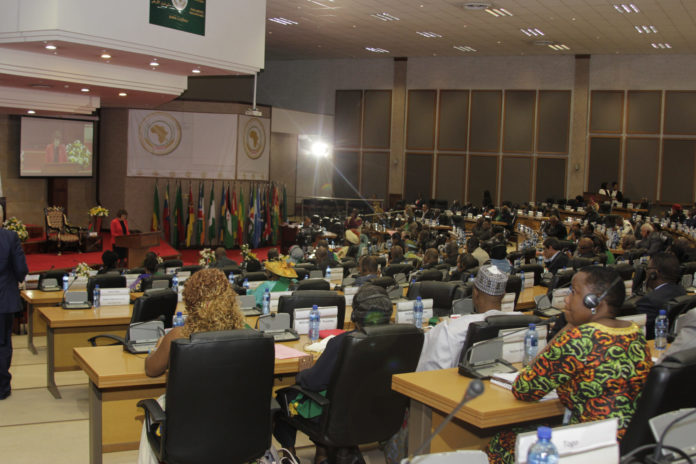
PAP session, Midrand South Africa

The Pan African Parliament has expressed shock at the decision by the United States to ban Chadians from entering the US and has adopted a motion calling for the immediate lifting of the travel ban.

The motion, which was moved by Hon. Sekou Fantamadi Traore (Mali), expresses solidarity and unwavering support of PAP to the government and people of Chad and calls on the US to rescind its decision to include Chad on the list of countries whose citizens are not allowed to travel to the United States.

In March this year, the US issued the Executive Order, which came into effect on 25 September 2017. The ban was premised on grounds that Chad does not share public safety and terrorism related information. This brings to eight the countries with travel restrictions, namely, Chad, Libya, Iran, North Korea, Somalia, Syria, Venezuela and Yemen. The White House called the ban “a critical step toward establishing an immigration system that protects Americans’ safety and security.”

Meeting in Midrand, South Africa on Monday, 16th October 2017 in its Fifth Ordinary Session, the MPs argued that Chad’s commitment to combating terrorism by deploying its defence and security forces side by side with the regions military forces, points to good intentions by the country and therefore does not deserve such high handedness by the US.

Legislators reasoned that the action by the US to impose travel restrictions on Chad is one of many of its interventionist policies on the sovereignty of African nations.

“The US must be disabused of its attitude of making itself the self-appointed police of the world. This ban is testing the resolve of Africa as a continent. It may be Chad today but tomorrow it will be another country,” said Hon. Hunadi Mateme (South Africa).

“How about us reminding them to focus on governing their country because since their last election, they are yet to embark on governance; they are still in the election mood. They must also move in step with other countries in as far as human rights is concerned. They preach democracy in their country but kill and main people in other parts of the world,” she added.

Just only last week, the PAP MPs had patted themselves on the back for leading a delegation of legislators to the United States and successfully negotiating the lifting of sanctions on Sudan. The African MPs that included Hon. Anifa Kawooya (Uganda) described to the US Congress real life testimonies about the effect of the sanctions on the people of Sudan.

“I will fight for their justice and I call upon all of you, just like we put up a spirited fight in the US Congress in ensuring sanctions on Sudan were lifted, that we do the same for Chad,” Hon. Kawooya said.

According to Chief Fortune Charumbira (Zimbabwe) such action by the US is a manifestation of lack of respect by the West on Africa. He said it was improper for the US to impose such restrictions on Chad without the African Union expressing itself on it.

Professor Morris Ogenga Latigo (Uganda) re-echoes similar opinions. “If really there was a crisis, given the status of Chad in it holding the Chair of the AU, the US ought to have consulted with some key countries such that they take a considered decision,” he said, “Unfortunately for the US, policies at the moment are being driven by the impulsiveness of President Trump who allows his Foreign Secretary to go to negotiate with Koreans and then tells him ‘don’t waste your time’. That is the tragedy of American leadership in the world at the moment.”

Legislators said it was a paradox that instead of supporting the efforts made by the President of Chad with his peace and security forces in combating terrorism in Africa, the US president had unfairly imposed sanctions for inexplicable reasons against Chadian people.

In collective approbation, the PAP said the action constitutes a violation of human rights and affects the free movement of people.

PAP President Roger Nkodo Dang said there is a need for Africans to be united and support all countries that are faced with sanctions.

Uganda’s Members to continental legislature include: Hon. Jacquiline Amongin (NRM, Ngora); Prof. Ogenga Latigo (FDC, Agago North); Hon. Anifa Bangirana Kawooya (NRM, Ssembabule); Hon. Felix Okot Ogong (NRM, Dokolo South) and Hon. Babirye Kadogo (Ind. Buyende).


Stories Continues after ad

Stanbic contributes Shs225m towards cancer, maternal health

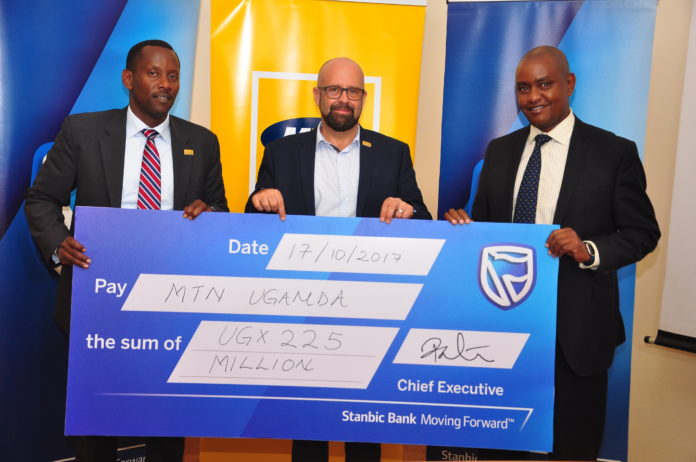
The Stanbic Bank cheque

Stanbic Bank Uganda, a partner and supporter of the MTN Kampala Marathon, has contributed Shs225 million towards this year’s activity.

The money will be used to combat the exposure of school going children to cancer caused by asbestos roofing in Kampala and improving maternal health services at Kiswa and Komamboga Health centres.

The contribution was presented by Stanbic Uganda Corporate Investment Banking Head, Edwin Mucai during an official handover ceremony held at the Stanbic Bank Head Office.

Speaking at the occasion, Mr. Mucai said the bank was proud to partner with MTN to sponsor a world class event that attracts fun runners and elite athletes from across the globe.

“As a bank, we have supported the MTN Kampala Marathon since its inception and are proud to be associated with the various causes over the years which have supported the vulnerable in our communities,” Mr. Mucai said.

He said Stanbic plans to build on the 14-year of the partnership, with the bank staff turning up in big numbers to participate in the marathon.

“I am pleased to announce that we contribute the largest number of runners from a single company with over 200 staff members who participate annually. We therefore, encourage the public to participate, run and support this noble cause,” Mr. Mucai added.

Anthony Katamba, the MTN General Manager, Corporate Services thanked Stanbic Bank for its continued support of the MTN Marathon over the years.

“We appreciate the partnership Stanbic Bank has provided through the years by proving shared effort is what is needed to transform lives in our communities,” Mr. Katamba said.


Stories Continues after ad

NHCC to build 5m units in 10 years – Finance Minister

Finance Minister Matia Kasaija, speaking at the opening of the 33rd Annual African Housing Conference

The Minister of Finance Matia Kasaija has called for investments by local construction companies, saying  the move is an important ingredient in leveraging the housing multiplier effect.

According to the Minister, the National Housing and Construction Corporation (NHCC) planning to build five million houses in a projected period of 10 years in Uganda

Mr. Kasaija, who was speaking at the opening of the 33rd Annual African Housing Conference slated for 17th to 19th of October at Kampala Serena Hotel, also implored Ugandan engineers to tap into the lucrative market, and to form companies that will enhance infrastructural construction to develop the  economy.

“Government gives money to foreign companies to construct roads yet Ugandan local companies  could have built those infrastructures and invest their earnings in Uganda rather than those who earn here and invest in their countries of residence,” he said adding that the government was currently undertaking the construction of 32 new roads, a figure that will likely shoot up to 40 roads ‘when we add oil roads’.

The minister disclosed that according to the Uganda Housing Policy, one million housing units in Uganda are of substandard quality.

Further, Mr. Kasaija noted that  access to financial services had improved with lower interest rates, adding however, that Africans are poor at saving.

“Africans, let us learn to save money now; Ugandans, no one owes us a living, we have to live on our own, let us start saving because we entirely depend on ourselves,” Mr. Kasaija advised, and noted that affordable housing and construction is through cheap building materials and affordable mortgages.

According to NHCC, by 2020, the housing requirement in Kampala will be at 750,791 units, other towns 1,092,318 units, rural areas 8,482,889 units and nationally 10,325,990 units.
NHCC believes it will multiply its housing stocks by 10 to 15 per cent in the next seven years.
Housing experts say there is need for reasonably priced housing solutions as house prices continue rising between 10 and15 per cent per year, a figure that is unequal to household income.

The annual conference brings together key players in the continent’s housing and housing finance industry to discuss better ways of housing in Africa.

Stories Continues after ad