Stanbic Bank
Stanbic Bank
20.1 C
Kampala
Stanbic Bank
Stanbic Bank
Home Blog Page 1757

Police issues arrest warrant for Sekikubo, Tinkasimire

'Rebel MPs' Theodore Ssekikubo and Muhammad Nsereko

The Criminal Investigations Directorate of Police has this afternoon issued an arrest warrant for Lwemiyaga County MP Theodore Sekikubo and Buyaga MP Barnabas Tinkasimire, after the two failed to appear at the headquarters in Kibuli for interrogations over ‘offensive communication’ in respect to the lifting of the age limit that is capped at 75 years.

On Monday police summoned National Resistance Movement (NRM) ‘rebel MPs’ led by led by Kampala Central legislator Muhammad Nsereko and his colleagues Barnabas Tinkasimire (Buyaga West), Theodore Sekikubo (Lwemiyaga County) and Allan Sewanyana  (Makindye East) but only two, Nsereko and Sewanyana, showed up.

Police Standards Unit’s (PSU) spokesperson Vincent Sekatte acknowledged the issuing the arrest warrants, adding that it has been copied to the Deputy Speaker Jacob Oulanyah’s office.

The two legislators can enjoy the prefix of parliament despite stationing of the police pickups outside waiting to arrest them.

The NRM rebel MPs insist Article 102 (b) of the Constitution should be maintained, but most of their colleagues want it expunged, something that has led to speculation that they want to the way for President Yoweri Museveni, who is now 73 years, to contest for presidency in 2021.

This afternoon over 300 members of the NRM parliamentary caucus resolved to support a motion seeking to introduce a bill to lift the age limit. Only seven members opposed the move while two abstained, according to the  NRM Chief whip Ruth Nankabirwa.

And tomorrow Igara West MP Raphel Magyezi is expected to seek leave of Parliament to introduce an omnibus Private Member’s Bill to amend Articles 102 (b), 108(3a) and 108(4).

The current Constitution provides, among other requirements, that only persons aged 35-75 years are eligible to stand and be voted as president.

The incumbent Yoweri Museveni is 73-years-old who has been President of Uganda for over 30 years would be ineligible to stand in 2021 if the Constitution is not amended.


Stories Continues after ad
NRM Caucus votes to support age limit removal

MP Raphael Magyezi addresses the media at parliament yesterday.

The NRM parliamentary caucus has resolved to support a motion seeking to introduce a bill to lift the age limit.

In a meeting held at the President’s Office, out of over 300 MPs only seven opposed the move while two abstained.

This has been confirmed by the NRM Chief whip Ruth Nankabirwa.

Igara West MP Raphel Magyezi is expected to seek leave of Parliament to introduce an omnibus Private Member’s Bill to amend Articles 102 (b), 108(3a) and 108(4) tomorrow.

The current Constitution provides, among other requirements, that only persons aged 35-75 years are eligible to stand and be voted as president.

The incumbent Yoweri Museveni is 73-years-old who has been President of Uganda for over 30 years would be ineligible to stand in 2021 if the Constitution is not amended.


Stories Continues after ad
Cuisine Love: Exploring the popular food cuisines in Kampala

Uganda-local-food

By Cynthia Tumwine

Food brings people together and one of the most fun things to do is try out new cuisines with loved ones. To be able to experience different cultures, the history told in the making of different dishes, the art in the presentation, religious beliefs and geographical impact on how the food is made is truly amazing. Food will tell you a story about the people that make it and instantly you are transported to their world. There are several cuisines around the world but let’s look at some of the popular cuisines in Kampala specifically.


  1.       Local Cuisine is the most popular cuisine of choice here in Kampala. Uganda has a rich variety of foods that are delicious and very nutritious that most people prefer. Matooke, pilao, yams, sweet potatoes, irish potatoes with sauce like groundnuts, beans
  2.       Indian Spice. For the Indian Cuisine characterized by its very spicy nature, it could be eaten as an individual portion or eaten as group too. If you cannot handle spicy food then Indian food is not the cuisine for you.
  3.       Ethiopian food is mostly comprised of vegetables, irish potato and often very spicy meat dishes served with sour dough-flat bread called injera. Culturally, Ethiopians eat exclusively with their right hands, using pieces of injera to pick up bites of the side dishes it is served with.Utensils are optional when eating Ethiopian food.
  4.       Italian Cuisine another great pick that is popular amongst Kampalans. For many people Italian food basically means one thing to them; pasta. There are several pasta dishes and each is made in a different way whether it’s spaghetti bolognese or chicken pesto it is al delicious. Another popular Italian dish loved by many is Lasagne.
  5.       Chinese Cuisine is characterised by a communal way of eating. The majority of the meals are eaten in a group setting and are served in large portions meant to be shared. Two unique things to note about the Chinese cuisine is the revolving table that is common in many Chinese homes and restaurants used to pass the food from one person to another. Also the use of chopsticks instead of a regular knife and fork, a truly special culture of eating shared with the Japanese as well. A standard Chinese meal of starters for example spring rolls (vegetable, chicken or beef) to the main dishes for example sweet and sour chicken, vegetable rice, fish and pork could feed three to four people.


Everyone would like to be able to spend their days relaxed on a beach in some exotic location or even have just one day off to enjoy a moment of peace in the comfort of our homes eating food they love and enjoy. Unfortunately life requires us to work hard and make ends meet so we can feed our loved ones making us too busy at times to enjoy these luxuries. That being said this shouldn’t stop you because Jumia Food came to solve all these problems, one click and time is saved and yet you can still enjoy your favourite cuisine.


Stay Adventurous!

The writer is the PR Manager at Jumia Travel Uganda


Stories Continues after ad

Partner with the morally upright, opposition urged

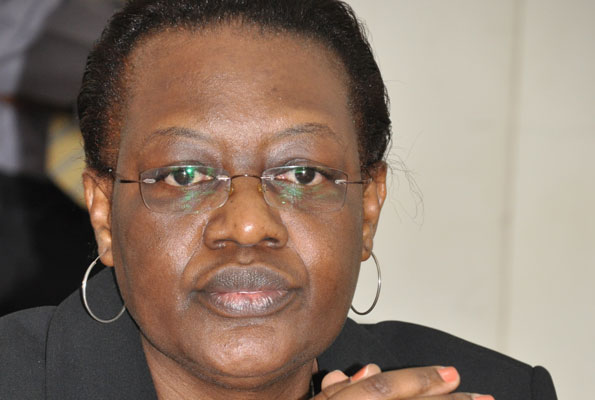
Angeline Osegge making her remark.

ABUJA, NIGERIA: Opposition politicians should ally with morally upright civil society organisations and religious based groups in order to favourably compete for power, the Second Deputy Speaker of the Parliament of Ghana, Alban Bagbin, has said.

Mr Bagbin, who was presenting a paper on ‘government and opposition: Roles, rights and responsibilities,’ said that civil society organisations and religious groups possess the moral high ground needed to win over people.

“The opposition should try as much as possible to partner with the civil society, particularly the intelligentsia and faith based organisations, who are on moral high ground that is needed to win elections,” he said during the second day of a benchmarking workshop for selected leadership of opposition in parliament.

The workshop is being held at the National Institute for Legislative Studies in Abuja, Nigeria. MPs in attendance include the Chairperson, Public Accounts Committee, Angeline Osegge;. Silas Aogon (Ind, Kumi Munic); Fred Tumuheirwe (Rujumbura) and Santa Alum (UPC, Oyam district). The MPs serve on the accountability committees of Public Accounts; Commission, Statutory Authorities and State Enterprises; and Government Assurances and Implementation.

Bagbin, the MP for Nadowli-Kaleo in the Upper West Region in Ghana, was Majority Leader during the National Democratic Congress government, which lost to the New Patriotic Party in the December elections. He was elected Deputy Speaker of Parliament.

He said that the opposition must seek allies and avoid trying to lean on the side of the majority especially in the House.

“People should see you doing the right thing based on honesty and integrity; once you get the moral high ground, whether the president is listening to you or not, persons listening to you will force him to listen to you,” said Bagbin.

Opposition MPs wondered how they could speak with a single common voice on various issues, whereas they belong to different parties.

Osegge said that although elected legislators have the mandate of the people, they have no power of execution since they do not control the funds.

“And whenever there is poor or dissatisfaction in service delivery, the nearest picture or person to government that can be identified is the Member of Parliament,” she said.

Tumuheirwe wondered how party structures can be strengthened to avoid parties built around strong personalities crumbling when those parties lose power.

“How do you ensure that members do not desert a party when it is not in power?” he said adding, “And how do you articulate government programmes or positions and remain relevant in your own party (that is in the Opposition)?”

Santa Alum (UPC) said that sometimes individual MP’s position may be different from that taken by the party on whose ticket the member stood for election.

Sentell Barnes, Resident Country Director of International Republican Institute, recommended that MPs must always be involved in the decision making of their parties, and that parties should allow their legislators to side with their voters in cases where they disagree with the party position.


Stories Continues after ad
President Museveni’s address to the UN General Assembly

President Museveni gives an address on the sidelines of the UN General Assembly in New York

Excellencies Heads of State and Government;

President of the UN General Assembly;

Secretary General of United Nations;

Distinguished delegates;

Ladies and Gentlemen.


FOCUSING ON PEOPLE STRIVING FOR PEACE AND A DECENT LIFE FOR ALL, ON A SUSTAINABLE BASIS


I congratulate H.E. Mr Miroslav Lajčák on his election as President of the 72nd Session of the UN General Assembly and assure him of Uganda’s support.  We are confident that he will lead the Assembly effectively and successfully. I would also like to express our gratitude to H.E. Mr Peter Thomson, for his leadership of the 71st Session. I pay tribute to the Secretary-General, H.E. António Guterres, for his personal dedication and commitment to the work of the United Nations.


The theme for this Session, “Focusing on People: Striving for Peace and a Decent life for all on a Sustainable Planet” is very pertinent.


I am happy this topic is being discussed. I have always wondered why the elites in the different countries of the world do not see this.  Who would lose if all the people on the globe led a decent life of:


(a)    having 2,000-2,500 calories per day for an adult person;

(b)    having immunization for all the immunizable diseases;

(c)    accessing education for literacy, numeracy and skills

as a minimum;

(d)    having a health unit within the radius of 5 kilometers from where one lives;

(e)    having access to clean electricity, away from charcoal, fire-wood and the dirty kerosene;

(f)     having access to a well paying job;

(g)    having a decent 3 bedroom house for each family;

(h)    having access to clean water;

(i)     every person having not to worry about war, terrorism and crime;

(j)     every producer of a service or a good that is needed for use having the right of access to markets?

(k)    all countries had good transport and other elements of infrastructure; and

(l)     all of us insisting on protecting our mother nature so that it can also look after us?

To what extent would this effort at global affluence stimulate business?  How much cement, steel, copper, food, etc., would we need and how would all that impact business?  Why do we have only bad businessmen who do not have efficient spectacles that can see these business opportunities in global affluence?

As a milk and beef producer, only a few months ago, I was cautioning my fellow farmers against excessive greed as far as the price per litre of milk and per kg of beef were concerned.  The more buyers we would have for our products, the more prosperous we would be.  We would, therefore, be both good business persons and good Christians.

Parasitism is the only obstacle to global affluence, prosperity and peace.

On the dangerous situation on the Korean Peninsula, where very dangerous instruments of mass extermination are paraded around by the two contending sides, I have one question.  Who would lose if North Korea and South Korea, those kith and kin, were left alone to discuss their re-unification? The Korean nation came into existence ever since 1234 AD.

They were temporarily divided towards the end of the 2nd World War.  Why should this division be allowed to be permanent and a source of dangerous tensions?  A unified Korea would be a very strong nation.  Why do some actors fear strong nations in the world?  Why should the Koreans themselves (North and South) allow external forces to continue to divide them?  We always strive not to allow actors, foreign or local, to divide the African peoples, regardless of the complications involved.  When you hear that Uganda accommodates many African refugees, it is on account of a conscious ideological position ─ not to allow any actors to divide us.  We only fight traitors.  Who has been hurt by a unified Vietnam since 1975 although the method of their unification was not the best one?  Who has been hurt by the re-unification of Germany in 1990?

On the small issue of enforcing sanctions against North Korea, Uganda is in compliance. We do not have to trade with North Korea.  We are, however, grateful that, in the past, the North Koreans helped us to build our tank forces.


I thank you.


Stories Continues after ad
Museveni wants Trump to prioritise economic infrastructure for developing countries

President Museveni addresses US Investors

President Yoweri Museveni has told American investors that he would like President Donald Trump to prioritize economic infrastructure development to help lower the cost of doing business in developing countries.

The President was yesterday addressing the Uganda Investors Roundtable organized and hosted by Norton Rose Fulbright, a leading international law firm in the United States of America and the US chamber of Commerce in New York at the sidelines of the 72nd, session of the United Nations General Assembly.

When asked by moderators Ikenna Emehelu and Clare Karabarinde what he would tell Trump to prioritize, the President responded, “Economic Infrastructure development”.

“I would tell Trump to prioritize infrastructure. We have been a little bit frustrated by western governments and companies that were not clear about the bottlenecks we had to deal with. One of the bottlenecks is the private sector. If you want to promote the private sector you need to talk about profits. In order for the private sector to make profits they need to lower costs of doing business, low costs of electricity, transport and labor,” he said.

The President said one of the challenges Uganda needed to tackle was electricity but the country did not get cooperation from the western countries in the 1960s, 70s and 80s.
“Western countries would only support social development such as schools and health centers but not economic infrastructure. If you support health and education but do not support the economic infrastructure how will I sustain the social sectors if the economy is not growing,” he said.

The President said it’s never too late for western governments and companies to participate both through soft loans to the government or develop them as EPP projects where the private sector works with the government.

“The aim of investing in infrastructure is to have low costs of production so that the private companies can make profit. Private companies should come and invest in manufacturing, services, hotels and ICT,” he said.

The President was amused when the organisers played his famous ‘You want another rap lyric popularly known as Mpenkoni’ before letting him answer more questions on investment opportunities in Uganda.

“Business is about two people; the buyers and the consumers. If you have got these two people then you have potential for good business. If I produce a good or service you need someone to buy it if you don not have enough buyers then you become bankrupt. That is why therefore people in US and Europe need to know about Africa. Africa is a land that is four times the size of the USA. The population of Africa is today 1.3 billion and will be 2.5 billion by 2050,” he said.

The President emphasized the need for market access for Africa pointing out blocks such as COMESA, EAC and SADC that are available for investors.

“When I come to talk to you I do not come to talk to you about Uganda alone. Uganda is a land of 40 million people but once you invest in Uganda you will sell in East Africa, and even COMESA the bigger market,” he said.

President Museveni said Uganda has got all sorts of investment opportunities including in agro processing, minerals including in the petroleum and gas sector, electricity sector and rail transport.

The Norton Rose Fulbright were represented by Peter Martyr, the Global Chief Executive of Norton Rose Fulbright, Gov. George Pataki, former governor of New York State and Senior Counsel at Norton Rose Fulbright and Scott Eisner from the US Chamber of Commerce

The firm has more than 4000 lawyers in 33 countries across Africa, United States, Europe, Canada, Latin America, Asia Pacific, Africa, the Middle East and Central Asia.

Investors where from companies like The Blackstone Group,  Sithe Global Power, Symbion Power,  Denham Capital Management, General Electric, John Deere, American Tower, Africa Integras, Kuramo Nile Capital, 8B  and several other major companies, to discuss investment opportunities within the infrastructure, energy, mining, healthcare, ICT and agriculture sectors in Uganda.

The meeting was attended by Uganda’s Minister of Foreign Affairs Hon. Sam Kutesa, the Minister for Finance Matia Kassaija and Uganda’s Permanent Representative to UN Adonia Ayebare.


Stories Continues after ad
Parliament moves to investigate BOU over huge expenditure on external legal services

THERE IS NEED FOR PRUDENTIAL EXPENDITURE: BoU Governor Emmanuel Tumusime -Mutebile

Parliament will later today debate a motion seeking to initiate investigations into Bank of Uganda’s expenses to hire two law firms to defend the bank in a case against city tycoon Sudhir Ruparelia, in a case involving the Crane Bank that is now in receivership.

Listed as item No.4 on the Order Paper, Parliament will seek to constitute a select committee to inquire into why the BoU paid a humongous figure of Shs2.8 billion to MMAKS and AF Mpanga Advocates.  The money was paid in two installments, with Shs1.3 billion paid last year, while Shs1.5 billion was paid in the current financial year.

Yesterday, the Committee on Commissions, Statutory Authorities and State Enterprises led by Bugweri MP Abdu Katuntu quizzed BoU Governor Emmanuel Tumusiime-Mutebile and the central bank’s Director of the Legal Department for paying the billions to external lawyers despite having a full-fledged legal department ‘with the best lawyers in the country’.

According to Katuntu, the BoU is well-facilitated and has opportunity to train its own lawyers which can help the bank avoid spending on external lawyers. “You would rather grow your own capacity,” he said.

The two external law firms came in the spotlight after Mr. Ruparelia accused lawyers Timothy Masembe Kanyerezi and David Mpanga, of MMAKS and AF Mpanga Advocates respectively, of conflict of interest in the Crane Bank case that is now before the Commercial Division of the High Court.

Mr. Ruparelia wants the two law firms off the case, saying they were previously hired by the Crane Bank where he was a Director, and are therefore privy to sensitive information obtained during the period they were hired by the bank.


Stories Continues after ad
Jamaica’s Reggae maestro coming to Kampala

Popular reggae artiste Omar Riley aka Tarrus Riley

Popular reggae artiste, Omar Riley aka Tarrus Riley will be performing in Uganda in October, a source close to the organisers has said.

One of his songs, ‘Just the Way You are’ is already an anthem of sorts in Uganda, receiving regular airplay on almost all platforms.

Tarrus is also known for other hits like; Can’t Sleep Without My Lady, Center Of Attraction, Cool Me Down, Dangerous Love, Don’t Come Back, Don’t Shoot, Dream Woman, Far Away, Feeling Nice, Fly Di Gate, Getty Getty and Gimme Likkle One Drop.

The son of veteran reggae singer Jimmy Riley, Tarrus was born in Bronx, New York, and raised in Jamaica.

Tarrus made his recording debut as a teenager, and in 2004, released his debut album, Challenges. He has consistently racked up awards for his work and some of his accolades include Best Singer, Male Vocalist, Cultural Artiste, Song of the Year, and Best Song.

Some of the awards institutions which have rewarded Tarrus include the Youth View Awards, The Star People’s Choice Awards, EME Awards, and the Reggae Academy awards.


Stories Continues after ad
Minister Kivejinja evacuated to Kampala hospital

3rd Deputy Premier and Minister for East African Affairs Al Haji Ali Kirunda Kivejinja

The Minister for East African Affairs Al Haji Ali Kirunda Kivejinja who was involved in an accident at Magamaga has been referred to discrete hospital in Kampala for further treatment.

The minister was heading to Kampala after campaigning for National Resistance Movement (NRM) candidates George William Wopuwa (LC 5) and Grace Namukhula Watuwa, who are vying for the respective parliamentary seats in the newly created district of Namisindwa.

The minister’s vehicle Reg. No. UG 0019L and a tractor Reg. No. UAN 051P that were involved into the accident at around 8:00pm were towed away to Magamaga Police Station.

Following the accident yesterday evening, the minister was taken to Nile International Hospital as police tried to establish the cause of the accident.


Stories Continues after ad

KCCA pick up first win of the season to go top

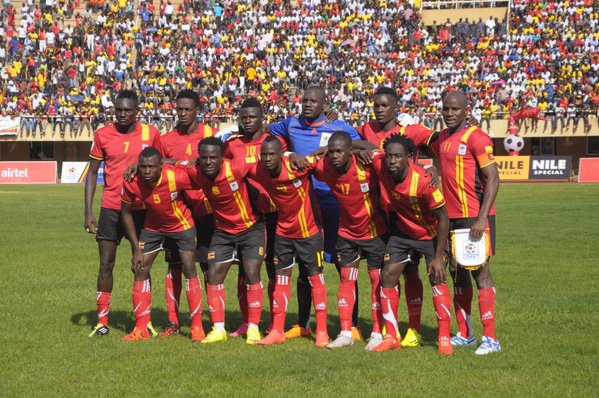
KCCA celebrate one of the goals

Reigning champions KCCA FC recorded their first win of the season against Onduparaka in the third game of the season after consecutive draws against Maroons and UPDF in the opening two matches.

Derrick Nsibambi, Muzamiru Mutyaba, Jackson Nunda and Tito Okello were all on target for Mike Mutebi’s side. Mohamed Rashid pulled one back for the visitors at Lugogo.

KCCA move top of the Uganda premier league table with 5 points, level with second placed Mbarara FC but lead on goal difference.

Maroons and URA were involved in a dull goalless draw in the Uganda Premier League on Tuesday at Luzira Prisons ground after both sides suffering their first defeats of the new campaign over the weekend.

Soana also registered their first victory of the season with a 1-0 win against Masavu at Kavumba Recreational Stadium on Tuesday evening with a late penalty from Forward Emmanuel Kalyowa.

Nelson Ssenkatuka scored for Bright stars against Mbarara City as they drew 1-1 away to Mbarara.

The league returns on Friday with a continuation of match day three games including Police hosting Proline at Namboole.

Match day three results:

Mbarara City 1-1 Bright Stars

KCCA 4-1 Onduparaka

Soana 1-0 Masavu

URA 0-0 Maroons


Friday, 23 September:

Vipers SC Vs SC Villa

UPDF FC Vs Express FC

Kirinya Jinja SSS FC Vs BUL FC

Police FC Vs Proline FC

Stories Continues after ad