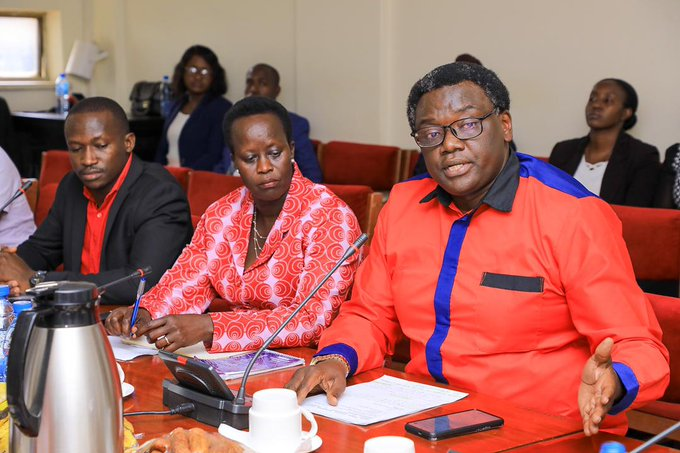
UPC Secretary General, Fred Ebil and party whip, Sandra Alum Santa before Legal and Parliamentary Affairs Committee
within opposition’
Opposition political parties have opposed the proposals in the Administration of Parliament (Amendment) Bill, 2024 that was moved by Mityana South County Member of Parliament, Richard Lumu Kizito noting that it will cause opposition within opposition and chaos.
The bill seeks to among others provide for the election of the Leader of the Opposition (LoP) and other positions reserved for the Opposition in Parliament.
The Forum for Democratic Change (FDC), Uganda Peoples’ Congress (UPC) and the Alliance of National Transformation (ANT) argued that the bill is in bad faith, undermines multi-party democracy and seeks to destroy the opposition.
The three parties presented their proposals to the Legal and Parliamentary Affairs Committee on Thursday October 10, 2024.
The President of ANT, Maj. Gen. Mugisha Muntu who appeared before the Legal and Parliamentary Affairs Committee said the bill should not be passed.
“It is a recipe for disaster; when you elect the LoP different from the one preferred by the leading party in the Opposition, you are creating two power centres and weakening the party,” he said.
Muntu argued that by passing the law, Parliament will have interfered in fixing internal issues of political parties proposing that parties should be left to apply their manifestos, constitutions and other internal arrangements and select their leaders.
“If there are any internal challenges within National Unity Platform, it should be left to deal with those internal contradictions as long as it is applying methods consistent to good governance.
The environment is not even ripe for political parties to thrive, we should be very careful with this law,” he said.
The President of the FDC party, Eng. Patrick Amuriat decried the already shrinking civic space for the opposition in exercising their fundamental rights and stated that the bill will worsen the situation.
“The bill is seen as part of a broader attempt by government to stifle political participation. The more you reduce the already little space for the opposition to thrive, you are pushing them to look at alternatives. This is dangerous for both democracy and the stability of the country,” Amuriat said.
FDC contested the bill which Amuriat said goes against the well-known and time tested best practices of good governance of the Commonwealth.
“Our contestation is on why we want to depart from the known norms practiced everywhere in the Commonwealth. As FDC, this makes us suspicious,” Amuriat said.
The UPC Secretary General, Fred Ebil said the bill is a distraction at a time when the country should be discussing electoral reforms and the 2026 general elections.
“In his bill, Lumu thinks there will be cohesion within the opposition but in UPC, we believe it will be more divided as those who will lose in the race will go to court. For the sake of the multi-party system, we should let the appointment of the LoP remain as it is,” said Ebil adding that, ‘the bill was brought in bad faith, it is redundant, it undermines multi-party democracy and destroys the opposition as it causes division’.
The UPC party whip, Sandra Alum Santa said the political party with the highest numerical strength should be left to choose the LoP.
“We want to respect the party with the numerical strength to select the LoP. We feel that if you allow an election by all opposition MPs with several contestants it will create chaos and division. This is not what we want in the opposition,” Santa said.
Bukooli County MP, Solomon Silwany reiterated that there are opposition MPs who say they need accountability from the LoP and that it can be obtained when they participate in his or her election.
Lumu in his bill, wants the Leader of the Opposition elected by all opposition MPs because he or she superintends all members of the opposition in Parliament and leaving the selection to the opposition party with the highest numerical strength, would disadvantage other parties.
The bill also seeks to provide additional grounds upon which the LoP my cease to hold office, requires the Shadow Cabinet to be approved by members of the opposition parties in Parliament and further requires the LoP to consult opposition political parties represented in Parliament when appointing chairpersons and deputy chairpersons of standing committees of Parliament, among others.
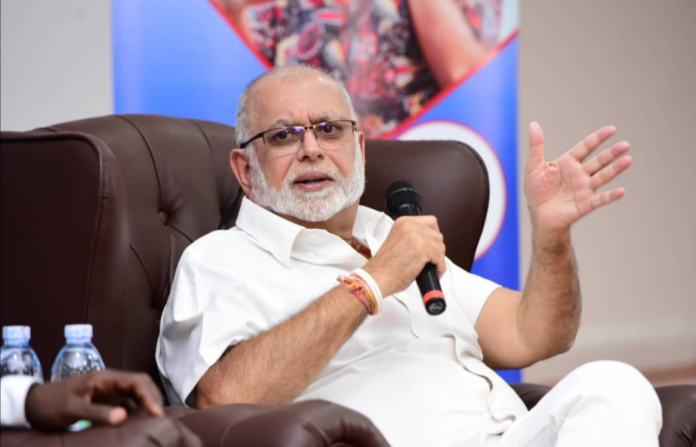
City Tycoon Sudhir Ruparelia has called for the legal recognition of the Asian community as one of Uganda’s tribes.
His call stems from the deep-rooted history and significant contributions made by Asians, particularly of Indian descent, in Uganda. Despite their expulsion in 1972 by then-president Idi Amin, many returned after his fall, reestablishing businesses and contributing to the economy.
Ruparelia’s proposal reflects a desire for the Asian community to be fully integrated into Uganda’s national identity and legal framework, acknowledging their long-standing presence and cultural impact.
In the video, Ruparelia highlighted that Asians have been part of Uganda’s society for over 120 years, making up 0.001% of the population. He stressed their significant contributions to the country’s economy, saying, “We need an identity in this country just like others who migrated to Uganda and got recognized.”
Dr. Ruparelia pointed out that while Asians make up a small fraction of Uganda’s population, they contribute significantly to the country’s revenue.
“Asians are 0.001% of the total population of the country, but we contribute 60 to 65% of Uganda’s revenue,” he said.
When asked about his deep connection to Uganda, Ruparelia said, “Uganda is my home, and that alone shows how much I love it. I can live anywhere, but Uganda is always my first home. I have homes in England and Dubai, but Uganda remains my first choice.”
Recently, while receiving the Pan Africanist Entrepreneur Award of the Year at the PAP Global Awards 2024 gala night in Kampala, Sudhir Ruparelia echoed that Indian recognition as a tribe will show a sign of respect, unity and honor for their contributions to Uganda.
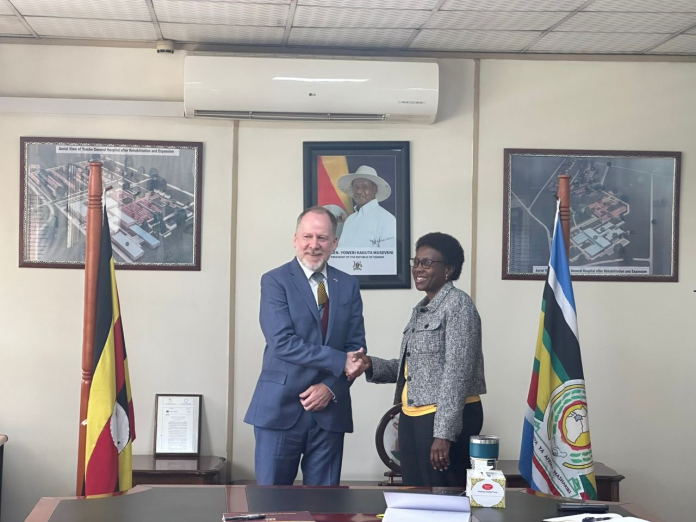
UK High Commissioner to Kampala with Uganda Health Minister, Dr. Jane Ruth Aceng.
The British High Commission in Kampala has announced that the United Kingdom-UK will provide 1,000,000 Pound sterling (£1m) about Shs4.8 billion to Baylor College of Medicine and the Infectious Disease Institute to support Uganda’s response to the current Mpox outbreak.
The support delivered through these expert partners will be aligned to the Government of Uganda’s overall Mpox response plan. The funding will strengthen co-ordination of the response; surveillance, and risk communication and community engagement.
Philip Smith, the Acting British High Commissioner to Uganda said that it is critical that the United Kingdom work with the Government of Uganda to counter this outbreak and that the funds will be used to strengthen on-the-ground response efforts in the affected districts, ensuring a swift and efficient approach to the outbreak.
“We are pleased to announce that this additional funding is being released immediately to support a timely response. The UK’s support will work in affected districts to improve the response to the outbreak on the ground. The UK will stand with the Government and people of Uganda in tackling this outbreak,” Phillip Smith said.
Jane Ruth Acheng, Minister for Health acknowledged the long-standing partnership with the UK in responding to public health crises and expressed appreciation for the timely financial assistance provided through Baylor Uganda and the Infectious Disease Institute.
She added that the support will be crucial in tackling the outbreak effectively and mitigating its impact on the population.
“We acknowledge that our collaboration with the UK dates back several years. The UK has always been a key partner with the Government of Uganda on our outbreak response. We appreciate the £1 million contribution via implementing partners Baylor Uganda and Infectious Disease Institute in supporting us to respond efficiently to the Mpox outbreak,” Aceng said.
Increased advertising by companies during September played a role in sustaining strong business output and attracting new clients as the headline Stanbic Bank Purchasing Index (Stanbic PMI) dropped slightly to 54.2 compared to the 56.3 posted in August. The threshold for a positive business outlook is 50.0.
Christopher Legilisho, economist at Stanbic Bank, said, “Strong business output and new order growth were linked to robust client demand, reinforced by effective advertising. Firms foresee healthy client demand conditions over the coming year, with plans to increase investment in advertising and new products. Employment remained healthy in September, with firms stepping up purchases and inventory stocks on the expectation of sustained strong demand.”
The Stanbic PMI is compiled by S&P Global from responses to questionnaires sent to about 400 purchasing managers. The sectors covered by the survey include agriculture, mining, manufacturing, construction, wholesale, retail and services.
The PMI is a weighted average of the following five indices: new orders (30%), output (25%), employment (20%), suppliers’ delivery times (15%) and stocks of purchases (10%).
According to the latest survey, the Ugandan private sector remained in growth territory during September. The continued improvement in business conditions was driven by expansions in output, new orders, and employment. Demand strength also supported positive output expectations for the year ahead, as firms foresee increased business activity.
Parallel to shorter lead times on inputs, companies continued to raise their purchasing activity amid greater new orders. In turn, firms sought to build inventories further to support future output.
Ugandan businesses are now stepping up their input buying again in a bid to boost inventories further. The rise in purchasing activity came amid another improvement in vendor performance.
Meanwhile, despite broadly unchanged staff costs, higher purchase prices pushed total operating expenses up. In line with higher overall input prices, companies signalled a renewed rise in output charges.
Legilisho said, “Both input and purchase prices increased relative to August, reflecting higher prices for raw materials as well as higher utility bills. Wage prices broadly stagnated in September as businesses increased output prices, thereby passing the higher costs on to consumers. Positively, this did not translate into high inflation during the month as the rate of inflation declined to 3% year-on-year (y/y) in September from 3.5% in August.”
Although growth in output was broad-based by sector, construction firms noted a renewed decline in new orders during September.
Overall input costs continued to increase in September, as has been the case in each month since August 2021. Panellists commonly stated that higher utility bills (including water and electricity) and supplier prices were driving factors behind inflation.
Whilst staff costs broadly stagnated on the month, purchase prices rose further and pushed up total input costs.
Amid accommodative demand conditions, firms sought to pass through higher costs to customers. Selling prices increased in September, following a brief decline in August.
In line with greater new orders, Ugandan companies expanded their workforce numbers in September. The current sequence of job creation was extended to a year and a-half.
Sufficient capacity enabled firms to resume the depletion of backlogs of work, following a rise in August. Supporting the rise in employment was further business confidence in the year-ahead outlook for output. Optimism reportedly stemmed from planned investment in new products and more planned advertising.
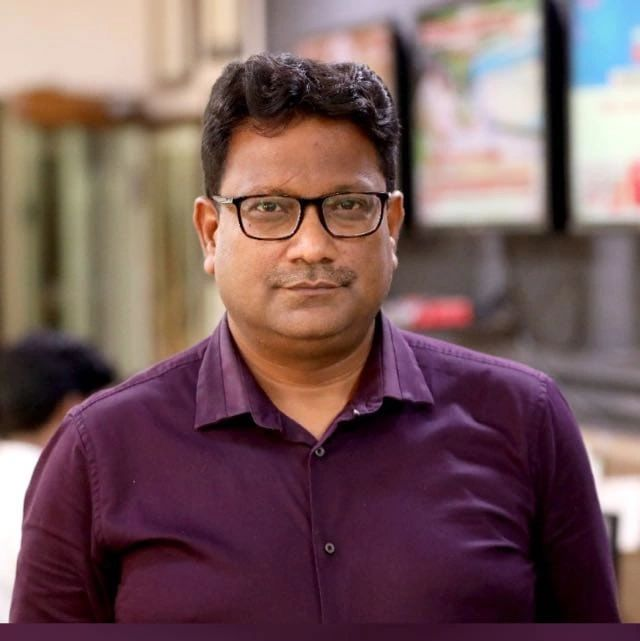
Airtel Uganda has appointed Soumendra Sahu as its new Managing Director, effective December 1, 2024.
Mr. Sahu succeeds Manoj Murali, who is retiring after a four-year tenure marked by significant growth and success where Airtel Uganda experienced an 8.3% compounded annual growth rate in revenue, from Shs1.296 trillion in 2020 to Shs1.784 trillion by the end of 2023.
The company’s net profit also grew at a compounded annual average rate of 10.8% during the same period.
Mr. Sahu brings over 23 years of experience in the telecommunications industry, having worked with notable companies such as Tata Docomo, Reliance Communications, and Asian Paints.
Most recently, he served as CEO at Bharti Airtel’s Gujarat Circle in India, where he honed his leadership skills and developed a deep understanding of the telecommunications sector.
“Airtel Uganda has made significant strides under Manoj’s leadership,” said a company statement.
Added, “Soumendra’s appointment signals our commitment to continuity and growth.”
Mr. Sahu’s appointment comes at a time of increasing competition in Uganda’s telecommunications sector.
Industry analysts say his wealth of experience and expertises position him well to build on Mr. Murali’s successes and propel Airtel Uganda toward further growth and innovation.
Airtel Uganda is a subsidiary of Bharti Airtel, one of the world’s largest telecommunications companies.
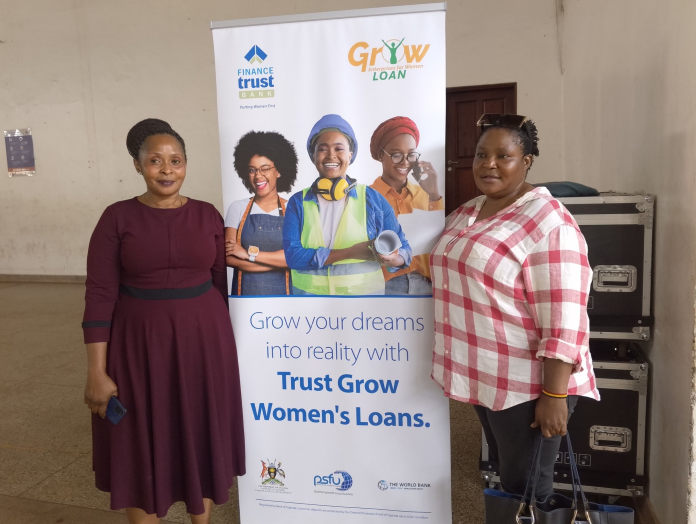
The Ministry of Gender, Labor and Social Development has disbursed Shs18.98 billion to over 1,100 women entrepreneurs under the Generating Growth Opportunities and Productivity for Women Enterprises (GROW) Project.
In a press release on the project’s progress, Aggrey Kibenge, the Permanent Secretary in the Gender Ministry, revealed that over 1,100 women entrepreneurs had benefited from the project between August and September.
“By September 25, 2024, the funds had reached 1,193 women entrepreneurs. Of these, 83% received loans between Shs4 million and Shs20 million. Loans ranging from Shs20 million to Shs40 million were extended to 132 women, while 66 women accessed larger loans of up to Shs200 million” he said.
The International Development Association of the World Bank funds the project.
Under the initiative, the government aims to support women, including refugees, through increasing their access to entrepreneurial resources to grow their businesses.
The project is implemented by (MGLSD) in partnership with the Private Sector Foundation Uganda (PSFU) through the Participating Financial Institutions (PFIs).
Kibenge outlined several benefits designed to reward prompt loan repayment.
“Women who repay on time will see a reduction of 5% on their loan value. Refugee women and those from the most impoverished regions, such as Karamoja, Busoga, and Bukedi, are eligible for grants reducing their loan burden by up to 10%. He added that the funds are being disbursed through 279 branches of these PFI’s across the country, with microfinance institutions and SACCOs being brought on board to reach underserved areas.
About the collateral concerns which had been a barrier for many women, Kibenge said that the government has worked with financial institutions to accept alternative forms of collateral, such as untitled land, business assets, and group guarantees.
According to Kibenge, the adjustments aim to make loans more accessible to women transitioning from smaller government programs like the Parish Development Model (PDM) and Uganda Women Entrepreneurship Program (UWEP).
Two of the five banks Centenary Bank and Finance Trust Bank have already exhausted their initial allocation of six billion shillings each.
KPMG is currently conducting due diligence on the loan disbursement before releasing the next funds to the two institutions.
Beyond financial assistance, the GROW project is also offering entrepreneurship training and technical business support. Currently, more than 4,000 women have received training in business skills, and the project is working with various Ugandan agencies to help entrepreneurs with business registration, certification, and product development.
The GROW project continues to roll out across Uganda, with more services planned to be available by next month. The initiative is not only enhancing women’s access to capital but also providing them with the technical and business skills necessary for long-term success. All services under the project, including training and loans, are provided free of charge.
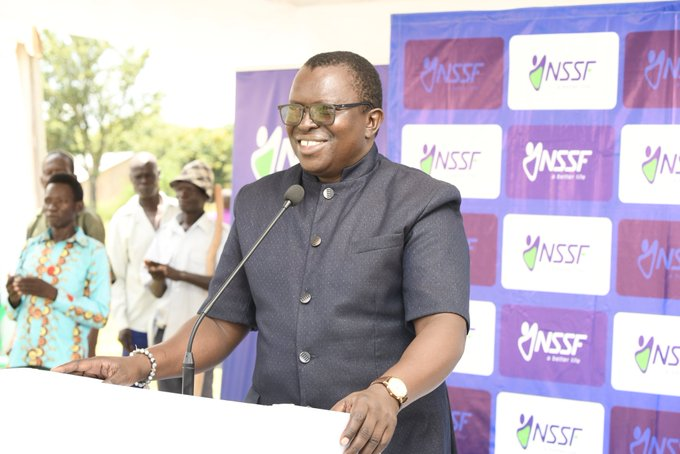
The National Social Security Fund (NSSF) is targeting to grow its assets under management to Shs50 trillion by 2035 from the current Shs22.1 trillion attained as of June 30, 2024.
Dr. David Ogong, Chairperson of the Fund’s Board of Directors, stated that this ambitious target can be achieved through increased member savings and strategic investments in areas such as real estate and equities.
He emphasised the importance of raising awareness to encourage more people to save with NSSF. The Fund’s member contributions rose by 12.2 percent, increasing from Shs1.72 trillion in the Financial Year 2022/23 to Shs1.93 trillion in the Financial Year 2023/24, according to audited financial statements.
At the launch of a livelihood project in partnership with Dero Amon SACCO at Amunga Primary School in Okwang Sub-county, Otuke district, Ogong, representing the Minister of Gender, Labour, and Social Development, Betty Amongi, expressed confidence that NSSF can accumulate assets of Shs50 trillion.
He said the Fund’s Vision 2035 aims to achieve three key objectives: growing the Fund’s assets to Shs50 trillion, extending social security coverage to 50 percent of Uganda’s working population, and achieving a service satisfaction level of 95 percent by 2035.
“As a board, we intend to engage as many people as possible in the informal sector. We want you to be organised so that you set aside a portion of your earnings for the future,” he said.
Meanwhile, the project launched in Okwang Sub-county aims to encourage community engagement in income-generating activities and will benefit 11,000 members of Dero Amon and Dero Kec SACCO.
“The goal is to organise SACCO members, support them, and provide inputs like seeds for commercial production so they can generate income and save with NSSF,” Ogong explained.
He also highlighted that globally, about 55 percent of people lack social protection, with a significant number employed in the informal sector, including agriculture and manufacturing. In Uganda, approximately 80 percent of the workforce is in the informal sector, with many lacking social security coverage. “We want to bring these individuals on board,” he added.
Patrick Ayota, NSSF Managing Director noted that with the amendment in the NSSF law, people like boda boda men, small holder farmers and women groups in areas like Otuke can now save for their future and improve their lives.
“I am glad to say we have registered over 10,000 members. If you look at the young people here, they are the future of this country. We don’t want to wait for them to grow to learn financial literacy. We are going to develop a program for area schools to learn how to make money, grow money and save money,” Ayota said.
Otuke County Member of Parliament Paul Omara commended the partnership supporting Dero Amon SACCO, reinforcing the need for collective efforts in improving social security for all.
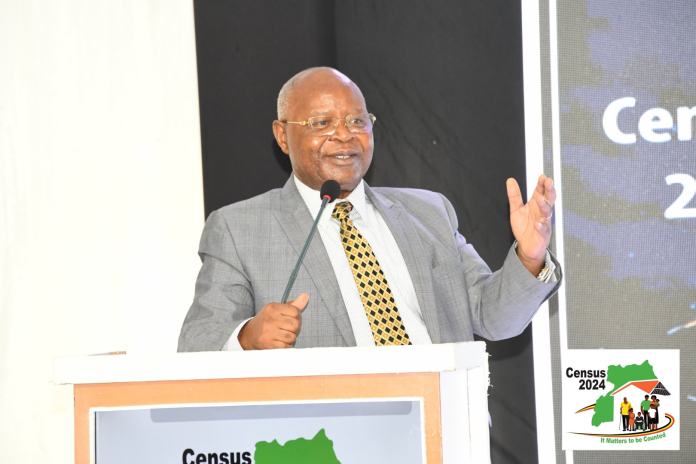
The Executive Director of the Uganda National Bureau of Statistics (UBOS) has admitted that the final report of the 2024 census had some errors but said this will not force him to resign.
Dr Chris Mukiza said the errors were simply human where the numbers of two tribes were allocated to one another.
“The population of the Bakiga was swapped with that of the Bagisu, and it is a human error. I am convinced we did a very good job,” he told journalists in Kampala on Tuesday.
“The only problem was at the final reporting stage, and nobody saw it. The population of the Bakiga was swapped, and that was all. That doesn’t dent the credibility of the census report. We need to style up as a country,” he added.
The provisional results, released less than a week ago, indicated that the Bagisu tribe’s population had reduced to 2,096,149 in 2024, down from 2,390,975, while the Acholi were reported at 1,941,913, down from 2,131,443 in 2014. Regarding religious denominations, the report showed increases in the number of faithful in some of the dominant religions in the country.
Vincent Fred Ssenono, the UBOS Deputy Executive director, explained that the population of almost all major tribes grew from the 2014 data. “There was a 2.4% growth rate for Baganda, Banyankore, Basoga, Bateso, and Bakiga. All indicators show growth in almost all tribes in a similar way.”
“As UBOS, we say to err is human. When you note an error, you call the public and inform them. There was no error in the number of Catholics, Anglicans, and Muslims as had been claimed.” Ssenono said.
UBOS officials insisted that the error was a minor issue and should not be overblown. They maintained that the data is credible and that acknowledging and understanding the error is what matters.
Dr Mukiza said that he would not resign over a human error, despite demands from some sections of the public. “I am one of the best statisticians, by the way, and if you want to find a better one, I wish you good luck.”
The executive director emphasized that the census results were accurate, and the error only occurred in the data process, at the very tail end of the exercise, going unnoticed during earlier stages.
He added that the bureau is yet to release the final results report, which is expected in December. He explained that a significant amount of data has not yet been released.
“We shall still come back in December with the final report, explaining all the other indicators, and there’s a lot of data that we have not given you.” he said.
President Yoweri Museveni has congratulated his son, the Chief of Defence Forces, Gen. Muhoozi Kainerugaba, for his effective leadership in rationalizing the Uganda People’s Defence Forces (UPDF) parade as witnessed during the 62nd Independence Day celebrations. Museveni made the comments during the 62nd Independence Day celebrations held in Busia under the theme ‘Independence Day: A Recommitment to secure and fortify our Destiny.’ Museveni praised Muhoozi’s efforts in introducing new aspects to the parade, such as updated marching routines and military songs. “I want to congratulate the new CDF, Gen. Muhoozi Kainerugaba for rationalizing the parade and making it shorter. I want to congratulate the army too, now that they have completed their work, they have moved on,” Museveni said. He added that the old parade was inherited from Ugandan brothers, but it is time to reform it. Museveni’s congratulatory message highlights Muhoozi’s dedication to maintaining the professionalism and neatness of the force, which reflects positively on the UPDF’s historical legacy and ability to modernize traditional ceremonies while preserving the army’s heritage. In response via his X (formerly Twitter) handle, Muhoozi appreciated, saying, “We (UPDF) thank His Excellency Kaguta Museveni for recognising and appreciating the new parade drills.” Museveni also highlighted that the government is planning to persuade regional leaders so as to construct roads linking East Africa to the Central Africa Republic (C.A.R) and beyond. “We aim to persuade the governments of Congo and South Sudan to work on roads from Arua to Isiro in Congo- and on to Obo in the Central African Republic,” he said. He also asked Uganda Airlines through their cargo planes to look into the possibility of opening routes to C.A.R, noting that this would boost trade. Museveni also emphasized the importance of African economic and political integration in regard to the two historical missions; prosperity for the African people and strategic security. “All patriots and Pan Africanists in Uganda should link up with our brothers and sisters in Africa to work for the economic integration of the whole of Africa hence leading to the political federation of Africa,” Museveni said.
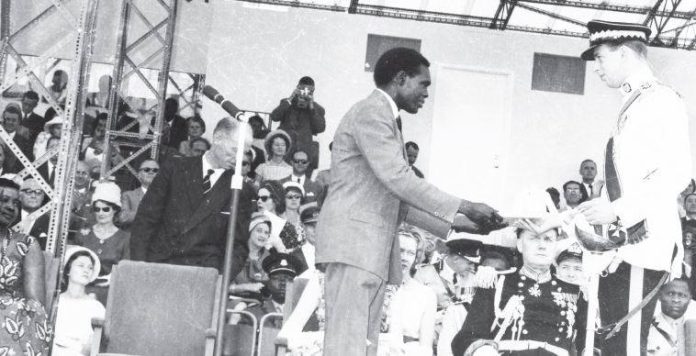
Milton Obote receiving instruments of power from the British on October 9, 1962.
On October 9, 2024 Uganda will celebrate 62 years of self-rule under the theme “Independence Day: A Recommitment to Secure and Fortify our Destiny”.
Background
On October 9, 1962, the Duke of Kent, handed over Instruments of Power for our Independence to Dr. Milton Obote on behalf of Her Majesty the Queen of the United Kingdom of Great Britain. Thousands of Ugandans converged at Kololo Independence Grounds at midnight of the 9th of October, 1962. These were part of the historic moment to witness the lowering of the British Union Jack and maiden hoisting of the Black, Yellow, Red Flag of the independent Uganda.
Prior to granting Uganda independence, the period from 1940 to 1954 marked an era of political re-awakening for self-rule in the Country. This process started when the Colonialist were pressurized by the indigenous people to allow the three prominent Ugandans to join the Legislative Council in 1945 and these included; Mr. Michael Earnest Kawalya Kaggwa (Katikiro of Buganda Kingdom), Mr. Petero Nyangabyaki (Omuhikirwa of Bunyoro Kingdom) and Mr. Yekonia Zirabamuzaale (Secretary General of Busoga Kingdom).
Besides, the struggle led by the late Ignatius Musaazi; late Kivu, late James Miti and the late Semakula Mulumba started around the same time. Other than these initial efforts, some other Ugandans had started a local movement called the Batakabbu in the late 1940s whose objective was to fight against suppression of rights of the indigenous communities by Colonialists. These agitated to be allowed to process Cotton and Coffee as well as access loans from the first Savings and Credit Bank which was then a preserve of Europeans and Asian Traders. These early efforts eventually led to the formation of Uganda National Congress (UNC) in 1952 which was later followed by the Democratic Party in 1954.
Motions demanding independence were also being moved from time to time by Y.S. Bamutta of UNC from Masaka; Dr. B.N. Kununka, Milton Obote, George Magezi, Cuthbert Obwangor, William Rwetsiba, Balaki Kirya, Joyce Mpanga and others. These were the main speakers in the Uganda Legislative Council (LEGCO) on the motions demanding independence. The other notable persons who contributed towards attainment of Independence included: late Ruande, Yekosofat Engur and Apollo Kironde among others. The late Ruande was leading the Labour Union in Uganda which also had network with Labour Union in Kenya which was led by late Tom Mboya. Their effort had earlier led to the formation of the Uganda National Congress which was led by the late Ignatius Kangave Musaazi and late Abukar Mayanja as the Secretary General followed by the Democratic Party.
In 1955, after the return of the Kabaka of Buganda from exile, the 1955 Namirembe Agreement was promulgated where among the many issues, Uganda would become Independent after six years. This finally led to the expansion of LEGCO in 1958 to sixty Members which set pace for self-governance in March 1961 led by late Ben Kiwanuka and eventually the interim government that led to the elections of April, 1962. This watershed moment has been and continues to be the central point of our national unity; political and socio-economic direction.
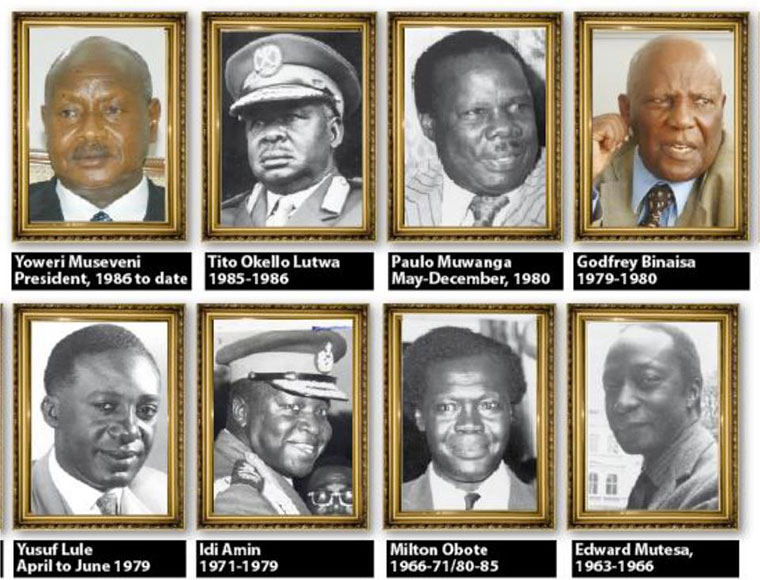
The peaceful gaining of Independence from British Colonial rule notwithstanding; Uganda’s immediate post-Independence political history was characterised by putsches, dictatorship, contested electoral outcomes and civil wars. There were eight changes of government within a period of twenty-four years (from 1962-1986), five of which were violent and unconstitutional.
Colonialism had far-reaching social, economic, and political impact. It bequeathed the country a negative legacy of ethnic division, skewed development, elite polarisation, a narrow economic base, and a weak State apparatus. Rather than reversing this negative legacy, immediate postcolonial leaders in Uganda made it worse by formenting further ethnic division and conflict; adopting an uncompromising approach to issues of national importance and adopting disastrous economic policies such as move to the left of 1969, 1970 Nakivubo pronouncement for Nationalisation of Companies and unplanned expulsion of Asians in 1972. This further weakened an already weak state apparatus, and the consequences of such moves were recurrent violence, economic decline and stagnation, and perennial political instability.
The false start and exactly what went wrong
Uganda’s post-independence history of conflict and war was profoundly shaped by its colonial experience. The single most important fissure, which repeatedly inhibited elite unity, was that between some Baganda monarchists and other ethnic groups, especially between some Baganda elite monarchists and aspirant elites from other regional/ethnic backgrounds.
No immediate post-independence regime was able to secure peace and stability in the country without accommodating the interests of the Buganda monarchy. The Baganda elites generally saw the monarchy as representing their own interests including control over some of the most productive lands as well as having privileged access to education and other resources underpinning their wealth as well as social dominance. Republican coalitions under Milton Obote during his first and second period of government saw efforts to consolidate power at the level of the State. While the authoritarian regime of Idi Amin violated the human rights and democracy.
By the time NRM captured Power in 1986, Uganda was a failed State. The Government of NRM came up with a Ten Point Programme which has now transformed this Country from a backward poverty stricken bedeviled by Political, Social and Economic conflicts. Nonetheless, neocolonialism was more prevalent after independence which affected our self-determination; politically, economically and socially.
The failure of successive regimes to build effective and disciplined armed forces within the state created more problems to the subsequent governments. Again, post-independence state builders were not able to break from dysfunctional patterns bequeathed by the colonial authorities whereby ethnic minorities were over-represented in the military and police. Indeed, Obote’s reliance on the military to achieve his political objectives both reinforced the ethnic character of the military (diminishing its legitimacy) and politicised the military.
The short-lived Uganda National Liberation Front (UNLF), which overthrew the Amin regime with the backing of Tanzania Peoples’ Defence Forces, again failed to build a unified, disciplined and inclusive army across ethnic and regional divides, likewise Obote during his second rule of government also failed. One important reason for President Museveni’s success in consolidating peace was due in no small part to the creation of a disciplined armed force, which broke from past patterns of ethnic recruitment.
President Yoweri Museveni and the taming of the “the mad tiger” Uganda
President Yoweri Kaguta Museveni is a man of strong convictions and rare courage. He takes risks and pursues national interests above his personal comfort and safety. He is a results-oriented leader, whose calling to politics is born out of deep and unwavering commitment to finding lasting solutions to the challenges of society basing far back from 1964 when he was a student at Ntare High School.
He displays exceptional understanding of the historical and social challenges of African societies. This is what inspired his direct involvement in the liberation and emancipation of his countrymen and women.
His political awareness and ideological orientation became more focused during the three years (1967 to 1970) he spent at the University of Dar es Salaam. The university provided a very conducive atmosphere for Pan-Africanism and anti-imperialism. While there, he became the president of the University Students’ African Revolutionary Front (USARF), a forum that provided him mentorship from President Julius Nyerere, and besides reading Books of the Walter Rodney who was the Lecturer by that time at Dar es Salaam University, who wrote a Book on ‘How Europe under developed Africa’ and other Writers like Frantz Fanon who wrote a Book called ‘the Wretched of the Earth’ and other News Letters by Chairman Mao Tse-tung. His interaction with late Eduardo Mondlane of Mozambique and Mohamoud Abdulrahman, first Minister of Foreign Affairs of Tanzania after Independence also shaped his political awareness.
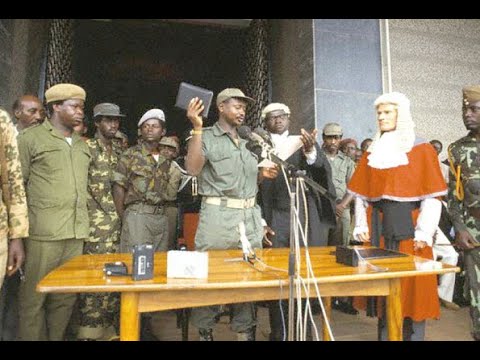
There it is while at this university that he developed far-reaching Pan-Africanist and revolutionary ideas. President Museveni was instrumental in forming FRONASA (Front for National Salvation), which was the core among the 23 fighting groups, together with the Tanzanian People’s Defence Forces, ousted Idi Amin’s regime in April 11, 1979.
On 29th January 1986, Gen. Yoweri Kaguta Museveni became President of the Republic of Uganda after leading a protracted five-year liberation struggle that started out with only 27 guns. Upon coming to power, he laid a firm foundation for reconciliation and national harmony, proving that people of differing cultural, religious and political allegiances can form a broad-based government.
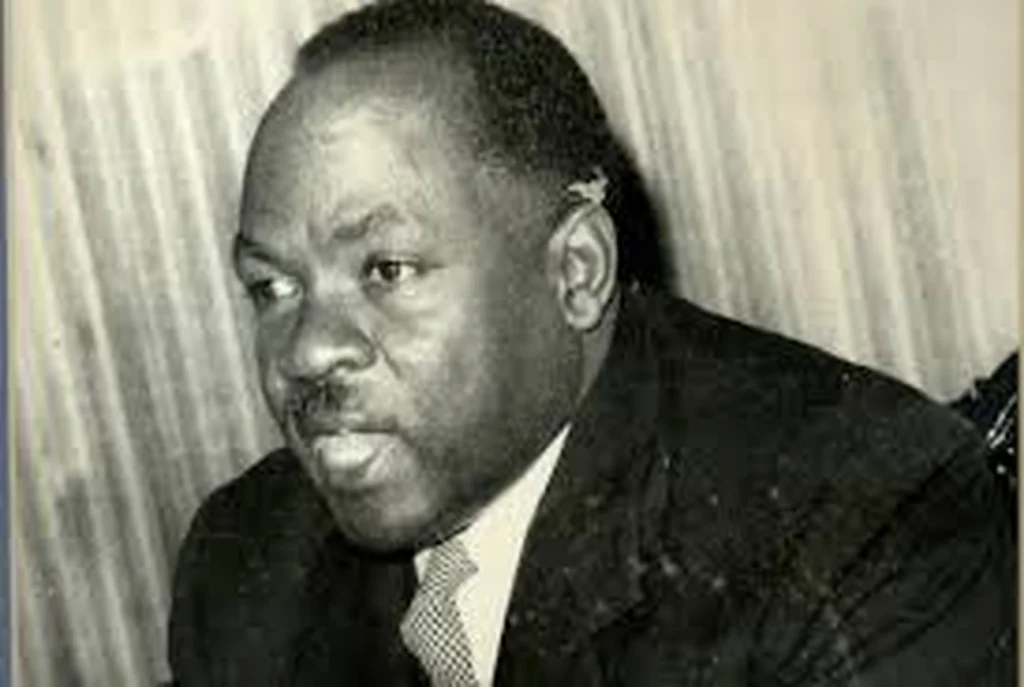
Ben Kiwanuka
Since 1986, the NRM, under the leadership of President Museveni has demonstrated the revolutionary effect that good leadership can have on a country. He inherited a country and an economy in ruins. The colonial enclave economy had almost disappeared by the time the NRM took power. Under President Museveni’s leadership, the NRM initiated socio-economic policies designed to combat key challenges, including insecurity of person and property, extra-judicial killings, and rampant shortages of essential commodities.
Uganda, under President Museveni’s leadership, has registered tremendous and steady progress in all sectors of the economy. The size of the economy has grown close to tenfold since 1986. The GDP per capita has quadrupled. Ugandans today live healthier and longer lives. They are better educated. Children no longer die of preventable diseases and are attending school free of charge. Infrastructure has tremendously improved. The total tarmacked road network has increased five-fold, including the Musita – Mayuge – Namayingo – Busia Road. Electricity shortages are no more, instead the country is exporting surplus power to the neighboring countries. Tele-communication has improved, almost every adult has a phone.
Uganda has significantly contributed to continental and regional peace, security and stability. For instance, Uganda supported the African National Congress (ANC) of South Africa by hosting ANC fighters and training them for the liberation of South Africa against apartheid. Uganda also contributed to the restoration of peace in Rwanda, resettlement of refugees who had spread across East Africa and ending the genocide.
Under the leadership of President Museveni, the Uganda People’s Defence Forces (UPDF) has played a vital and positive role in ensuring peace in the Democratic Republic of Congo, South Sudan, Somalia, Sierra Leone, Liberia and Central African Republic.
Today, Uganda is a host to about 1.5 million refugees because it is a safe country, unlike the days when her own people filled the refugee camps in the region. Uganda has been lauded internationally as a model for its refugee hosting policy.
President Museveni is a strong advocate of African unity and integration. He is among the African statesmen increasingly credited for championing African unity. Indeed, African diplomats fondly refer to him as “the African Bismarck”. He is driven by the urgent need to permanently cure Africa’s vulnerable position in the global arena of economic and political giants.
He is deeply concerned that Africa is still an easy prey for plunder and marginalisation, as long as the strides towards economic and political integration remain lethargic. This explains his passionate fight against the subsistence mindset of our communities, and championing prioritisation of infrastructural development, in addition to his efforts towards the pacification of conflict-ridden neighbours and tireless call for regional integration. His transformative leadership has earned him several accolades.
On January 21, 2020, President Museveni received The African Leadership Magazine Award, in London, in honour of his contribution to the liberation struggles of Africa and good leadership skills. He has therefore, successfully ensured security, democracy and delivery of social services for the betterment of Ugandans. It is no accident, therefore, that Uganda is today enjoying peace from corner to corner of the country and with its neighbours.
The economy
Uganda’s economy has been impressively growing by average of 6 percent over the 30 years. As a result of this robust growth, the size of the economy is now estimated at Shs 202 trillion (USD 53.3 billion), and our target for the next 15 years is Shs. 500 trillion. If Ugandans agreed to share this GDP equally, each citizen would enjoy a GDP per capita of USD 1,146. The improved performance of the economy is on account of higher growth in all sectors. Services, agriculture, and industry, are estimated to grow at 6.6 percent, 5.1 percent, and 5.8 percent, respectively. In particular, growth in the services sector has been impressive, mainly driven by strong recovery in retail and wholesale trade, tourism as well as communication and real estate activities. Growth in industry was mainly driven by manufacturing, construction and mining, while increased production of food and cash crops, as well as livestock supported growth in the agriculture sector. Agriculture’s performance is estimated to have expanded at 5.1 percent this year. This is also attributed to streamlined implementation of the Parish Development Model (PDM) and SACCOs.
Health
Access to and utilization of health services has significantly increased with the population living within a 5km radius of a health facility increasing to 86 percent in the recent years. The health infrastructure network has improved in the country and currently consists of 2 national referral hospitals, 19 regional referral hospitals, 193 HC4s (medical officers present), and 1250 HC3s (clinical officers present).
Significant progress has also been made in the provision of specialized medical care in cardiology and gynecology. A modern state of the art women’s hospital with a capacity of 320 beds was opened in Mulago in 2018. The heart and cancer institutes of Mulago Hospital have also been expanded and improved. This has increased access and utilization of health services. In-patient malaria deaths have reduced tremendously largely due to the effective distribution of insecticide treated nets (ITNS). HIV deaths have been reduced by 64% since the peak in 2004.
In addition, infant mortality has gone down to 33 deaths per every 1000 live births. Maternal mortality decreased from 336 deaths per 100,000 live births, and stunting has reduced from 33 percent to 29 percent, respectively. The aggregate impact of all this has been the increase in life expectancy by 9 years to 63.3 years.
Transport infrastructure
The total paved national road network stands at 6,338 km, representing over 30 percent of the national road network. More focus is now on maintaining of the existing roads, building of a few new strategic roads, accelerated rehabilitation of the Metre Gauge Railway, and commencement of construction of the Standard Gauge Railway. Entebbe International Airport has also been expanded and modernized to match global standards and another International Airport in Hoima (Kabalega) is in completion stages. This heavy investment in the Transport sector has been part of the modernization of agriculture and improved household incomes.
Energy Development
The country’s power generation capacity has increased by 600MW from 1,378.7MW to 1,978.1MW following the connection of Karuma Hydropower Dam to the national grid. The electricity transmission capacity has now increased to 4,218 km of high voltage from 3,500 km in 2020. Electricity shortages are no more, instead the country is exporting surplus power to the neighboring countries.
Industrial development and manufacturing
Uganda’s tenfold growth strategy is stepping up efforts to accelerate diversification of the economy, add value to raw materials to boost exports and import substitution to continue reducing our import bill, and also build more basic industries to produce items that Ugandans use on daily basis such as sugar, soap, cooking oil, clothes, medicines, construction materials, etc. Our industrialisation efforts are being undertaken mainly through the private sector, but with the State playing a de-risking role. Government through the Uganda Development Corporation (UDC), is undertaking targeted investments to increase Uganda’s manufacturing capacity. This intervention basically is aimed at improving our exports and decreasing the imports, so as to attain a stable balance of payment.
Information and Communications Technology (ICT)
The following have been achieved in the ICT sector: i) A total of 4,354 Km of optic fiber cable have been laid across the country connecting 1,523 key Government service delivery units to the National Backbone Infrastructure; ii) The internet penetration in the country has increased to 64 percent, and the share of Government services provided online is now at 40 percent. A PDM Information System has been developed and rolled out in all the 10,585 parishes across the country.
Finally, as we celebrate 62 years of Independence, we need to keep the momentum and if need be double our effort to fully transform and fortify the economic development and economic growth of our motherland Uganda. The fundamentals of our economy have been worked on, it is now poised to accelerate towards takeoff, powered by value addition to our agricultural raw materials and the abundant natural resources as well as growth in industry, tourism and innovations by our scientists.
Finally, it is our plea that majority of Ugandans should fully engage in Agriculture and Animal Husbandry, and desist from culture of laziness and work hard to improve their household income.
The Theme for the celebrations is “Independence Day: A Recommitment to Secure and Fortify our Destiny”.
References for your use as you celebrate independence
Karugire, S.R. 2003. Roots of Political Instability in Uganda. Kampala: Fountain Publishers.
Kasozi, A. B. K. 1994. The Social Origins of Violence in Uganda. Kampala: Fountain Publishers.
Kyemba, H. 1997. A State of Blood: The Inside Story of Idi Amin. Kampala: Fountain Publishers.
Mutibwa, P. 1992. Uganda Since Independence: A Story of Unfulfilled Hopes. London: Hurst and Co. Publishers.
Museveni, Y. K. 1997. Sowing the Mustard Seed: The Struggle for Freedom and Democracy in Uganda. Oxford: Macmillan Education.
Golooba-Mutebi, F. 2007. ‘Uganda in 2005: Political, economic and social trends’, in H. Charton and C. Médard (eds), L’Afrique Orientale: Annuaire 2005. Paris: L’Harmattan.