Stanbic Bank
Stanbic Bank
19.2 C
Kampala
Stanbic Bank
Stanbic Bank
Home Blog Page 1819

Spain revives war crimes indictment against 40 Rwandan army officers

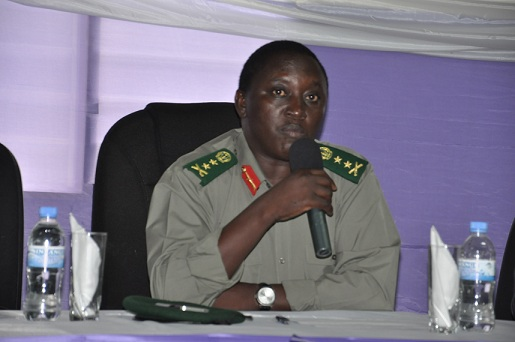
RPA RENEGADE: Lieutenant General Faustin Kayumba Nyamwasa

Three years after Spain’s conservative government drastically watered down its universal jurisdiction laws, a Spanish court has revived an investigation into 40 Rwandan military officials including the renegade former Rwanda Patriotic Army (RPA) Chief of Staff Lieutenant General Faustin Kayumba Nyamwasa, accused of committing terrorism against Spanish citizens.

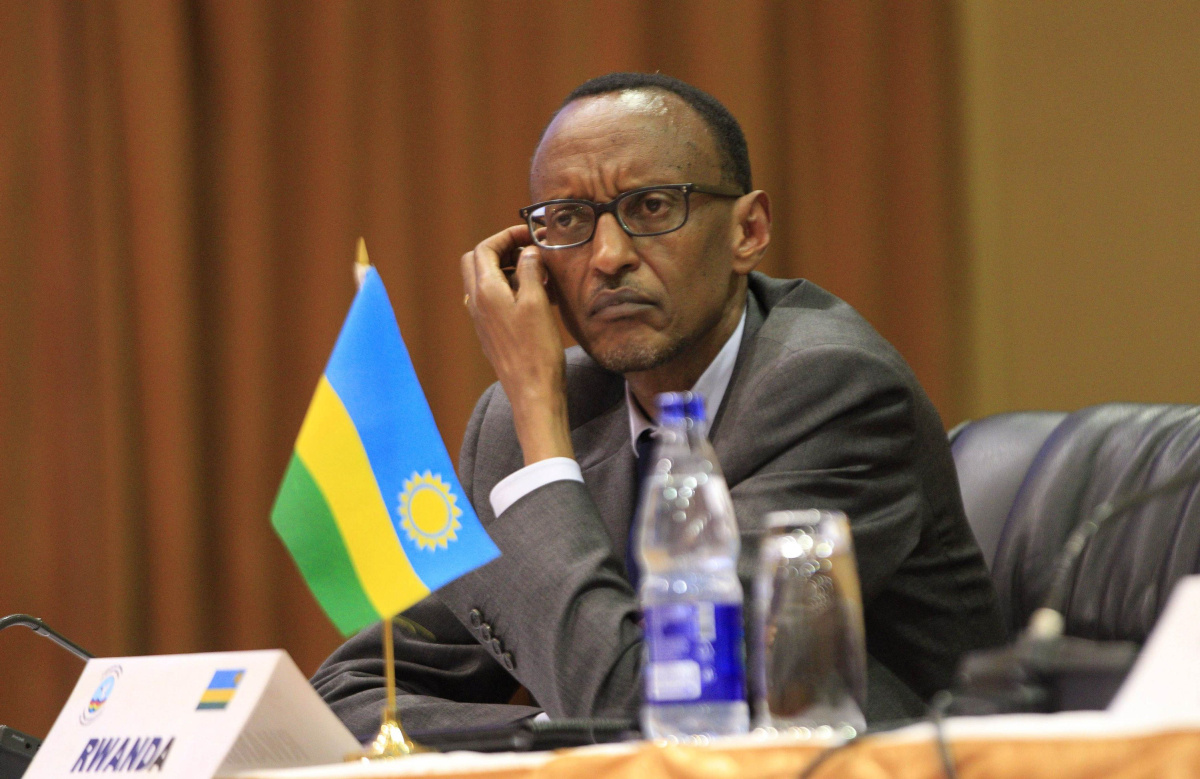
RPF/A Leader: Rwanda President Paul Kagame.

The decision by three judges on Spain’s national court was issued on June 29, 2017, and will be sent to investigating magistrate Fernando Andreu Merelles for approval, said Jordi Palou Loverdos, a lawyer for families of Spanish victims, in an interview.

In 2008, Judge Andreu gained international acclaim when he indicted 40 military officials of the ruling Rwandan Patriotic Front (RPF) on charges of genocide, crimes against humanity, and terrorism dating from the 1990s. The case initially stemmed from the murder of nine Spanish citizens in Rwanda and neighboring Democratic Republic of Congo, but widened in scope to prosecute RPF military officials for more serious war crimes against Rwandan and Congolese civilians.

In 2014, in a bid to improve economic relations with China and the United States, the Spanish People’s Party eroded the country’s doctrine of universal jurisdiction, which had long sought to investigate crimes beyond its borders and hold abusive leaders accountable. The changes in legislation restricted the courts’ ability to prosecute atrocities committed abroad because they required that defendants be Spanish or be residing on Spanish territory.

Human rights defenders slammed the legislation, and lawyers contested the amendments in constitutional court.

Palou Loverdos said the national court’s decision to reopen the investigation into Rwandan military officials was made possible by two legal provisions: (1) the principle of “passive personality” which enables Spain to assert jurisdiction in cases when terrorism is committed against Spanish citizens abroad, and (2) the possibility of extraditing a leading suspect in the murders of the nine Spanish nationals.

The decision will allow Judge Andreu to issue international arrest warrants against at least 22 RPF officials indicted in 2008 on charges of terrorism in relation to the murders of Spanish citizens, according to Palou Loverdos.

While there is no new change in Spain’s laws, the decision is a new interpretation of universal jurisdiction, he explained.

“This is a new interpretation of international and national law. This means that we still hope for justice. We began this case on behalf of Spanish citizens, then worked for Rwandan and Congolese victims as well. We are still on the same path,” Palou Loverdos said.

The decision by Spain’s national court was issued after Palou Loverdos submitted a new request involving General Kayumba Nyamwasa, Rwanda’s former defense chief who was indicted by Spain for his leading role in ordering the killing of Spanish citizens. Nyamwasa fled to South Africa in 2010 after falling out with Kagame. In June, South Africa’s Supreme Court withdrew his refugee status and gave the South African government six months to reconsider his status. Nyamwasa has faced three attempts on his life while residing in South Africa, allegedly at the hands of Kagame’s operatives.

“We hope to have an active extradition of Kayumba Nyamwasa at last. South Africa is a state party to the European Extradition Convention so theoretically there is an international obligation of South Africa to deliver General Nyamwasa to the Spanish authorities or prosecute and judge him there for the same crimes.”

The Spanish legal team faces major judicial hurdles. No government in Europe, North America, or Africa was willing to extradite any of the 40 Rwandans indicted in 2008 on war crimes. Kagame has benefited from widespread international support despite well-documented human rights abuses committed by his military intelligence apparatus for 27 years in Rwanda and two decades in neighboring Congo. He and his commanders have enjoyed de-facto immunity from prosecution at the International Criminal Tribunal for Rwanda and the International Criminal Court (ICC).

Former spy chief Lt. Gen. Karenzi-Karake.

Yet in a surprise move, Emmanuel Karenzi Karake, Kagame’s former spy chief, was arrested in London in June 2015 on the basis of a European Arrest Warrant issued by Spain. The Spanish indictment alleged that Karake worked with Nyamwasa in ordering the killing of three Spanish nationals for the NGO Doctors of the World and was ultimately responsible for the murder of Canadian Priest Guy Pinard in northwestern Rwanda in 1997. Defectors of Kagame’s Tutsi-led regime have testified to the court that Pinard and the Spanish citizens were targeted because they were aware of RPF killings of Hutu civilians at the time.

Cherie Blair, the wife of Britain’s former Prime Minister Tony Blair, defended Karake against the charges. Two months later, a London court dismissed the case on a technicality and Karake returned home where he officially advises Kagame on defense and security policies.


Stories Continues after ad

MP Kyagulanyi takes on Museveni over ‘ideology’

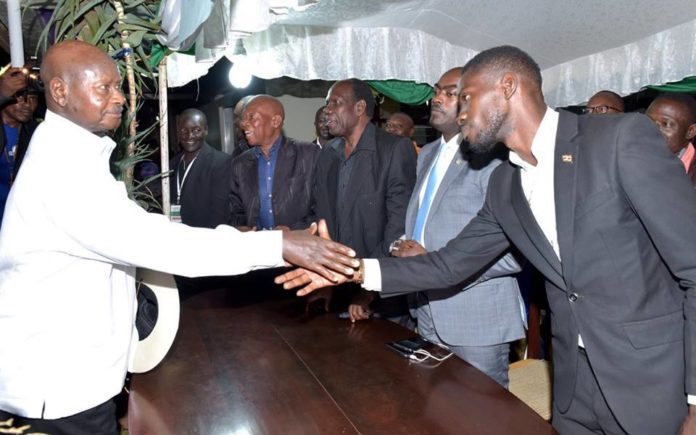
'EXCHANGED MISSIVES: President Yoweri Museveni greets 'Ghetto President' Robert Kyagulanyi aka Bobi Wine

The recently-elected Member of Parliament for Kyadondo East has started off his duties by ‘punching some holes’ in President Yoweri Museveni’s 30-year public service record.

In a largely low-toned but bare-knuckled response to Museveni’s recent multi-faceted missive on the Kyadondo East by-election that has since gone viral, Kyagulanyi told the President that his victory was determined by the will of the people after the MP promised to address their concerns.

In Museveni missive of July 10 he had written about among other issues, unemployment; corruption; crime and the disconnect between public officials and the populace, issues which the MP lurched onto to counter the President.

In the missive Mr. Museveni had also particularly castigated the media including the government-owned The New Vision, for the coverage accorded the by-elections, insinuating there was biased reporting that favoured MP Kyagulanyi.

But MP Kyagulanyi would hear nothing of the President’s complaints, so he responded and posted his missive on social media, where at a certain point he also advised the President not to amend the Constitution to seek ruling beyond the mandatory 75-year age cap.

‘Mr. President, I have read your article dated 10th July, 2017 on the recent by-elections. I thank you for congratulating me on my victory in the Kyadondo East polls. For emphasis, it is not me who won but rather the ideas which I presented to the electorate. It was especially a victory of a people determined to get involved in how they are governed,’ MP Kyagulanyi wrote.

He added: ‘What happened in Kyadondo East was not a reflection that the media had been ‘freed’. It was partly because of the extra ordinary nature of that election that print and digital, local and international media widely covered it. Our campaign inspired the people, even beyond the constituency, because we correctly diagnosed the problems of our society, understood people’s frustrations and identified with their struggles.

In the process we were able to effectively suggest practical solutions to improve the conditions of our people. Although you would have wished to see the NRM and its candidate dominate headlines, the media should be balanced while reflecting the wishes and aspirations of the people, which is what our campaign offered. The press could not be expected to headline stale ideas which people had rejected. I therefore applaud them for rejecting intimidation and other machinations to fulfil their duty to society’.

MP Kyagulanyi’s full letter below.

Mr. President, I have read your article dated 10th July, 2017 on the recent by-elections. I thank you for congratulating me on my victory in the Kyadondo East polls. For emphasis, it is not me who won but rather the ideas which I presented to the electorate. It was especially a victory of a people determined to get involved in how they are governed.

While I agree with some aspects of your article, I don’t agree with many of the conclusions you draw. For example, I agree that unemployment, corruption, increased levels of crime and leaders not connecting with the population are serious issues. These are not mere gaps but are grave questions of national importance which must be addressed. I am constrained to respond to some of your points, mainly three.

Firstly Mr. President, you castigate the media for covering our campaigns very widely and accuse them of not being happy when the NRM wins by-elections. In this regard you single out the New Vision. Anyone who has been to Uganda or who has followed our politics knows that this is not an accurate analysis. Rather than focus on the recent by-election, it is better for one to consider our electioneering process and politics in general.

It is on record that due to direct and indirect pressure from the government, in most cases media coverage favours the NRM. Only last year, the European Union Observation Mission said this of the 2016 elections; “…the overall reporting environment was conducive to self-censorship and yielded coverage overwhelmingly in favour of the incumbent and the NRM. Thus, despite the fact that more than 300 media outlets operate in Uganda, the variety of information available across the media landscape was constrained, limiting voters’ ability to make an informed choice.”
On its part, the Supreme Court while noting that this issue has been recurrent, held that state owned media failed to give balanced coverage to all presidential candidates as required by law.

Therefore, despite the progress made with regards to media freedom, the NRM gets more coverage on a daily.
What happened in Kyadondo East was not a reflection that the media had been ‘freed’. It was partly because of the extra ordinary nature of that election that print and digital, local and international media widely covered it. Our campaign inspired the people, even beyond the constituency, because we correctly diagnosed the problems of our society, understood people’s frustrations and identified with their struggles.

In the process we were able to effectively suggest practical solutions to improve the conditions of our people. Although you would have wished to see the NRM and its candidate dominate headlines, the media should be balanced while reflecting the wishes and aspirations of the people, which is what our campaign offered. The press could not be expected to headline stale ideas which people had rejected. I therefore applaud them for rejecting intimidation and other machinations to fulfil their duty to society.

Secondly, Mr. President, in your article, you talk about the question of ideology versus biology and the role of youth in politics.
In sum, your argument is that the solution to society’s problems lies in ideas and not in the physical/ biological state of the actors. This is indeed true but my point of departure lies in so far as you seem to think that the present young people lack in ideology. You seem to suggest that the NRA/M ideology is superior and forget that as society evolves better ideas crop up and they should be given opportunity to flourish.

Even then, the NRM hasn’t fared very well with what you identify as the core principles of your ideology- patriotism, Pan-Africanism, social-economic metamorphosis and democracy. Many would agree that these are noble ideals, the problem being that the NRM prefers to constantly talk and sing about them and not practice them. Had you fully implemented them no doubt our society would be much better.

You have laboured to point out leaders who rose to positions of responsibility in their youthful years and did great harm to society. You give examples of Ssekabaka Mwanga, Ssekabaka Mutesa II, Obote, Ibingira, Amin and John Kakonge. I definitely DISAGREE on your conclusion here.
As a student of Uganda’s constitutional history, I know that the crises our society went through in the past years were caused by many factors beyond the leaders of the times. Because of constraints in time and space I will not discuss them here.

However, while it is true that correct ideology overrides biology, the biggest question is ‘WHAT IDEOLOGY?’ You rightly point out that the electorate is losing interest in issues of identity of religion or tribes as basis for electing leaders. Again, rather than look at it as an achievement of your government, I think of it more as a natural result of our population demographics and their struggles. Our society is more blended today as a result of intermarriages between people from different backgrounds(I am an example). You note that 78% of our population comprises of youth.

Many of them are unemployed or underemployed. The hustle for them is real. They have to make ends meet and are definitely uninterested in chauvinism of any kind. I do not want to say that you do not fully understand this but it is rather troubling how you choose to downplay it.

Our society has moved on and new issues are emerging. The generation of the 1960s and 1970s had to respond to challenges of that time and we are grateful to those of you who rose to the occasion and played a role. However, the challenges of our time require a new kind of ideology and approach.
We are talking about a generation where technology is evolving at a terrific speed. A generation which must struggle with the effects of climate change! Today’s generation has to deal with complex issues in science and technology. Young Africans must find out what economic models work best for their times and work hard to improve the living conditions of our people.

As someone who has interacted with so many of these young Ugandans, I know that they have great ideas on how to get there or at least have some idea which simply needs an enabling environment for it to blossom. I do not think that Ugandan youth or Africans generally have a gene for slowness or stupidity.
As someone who has led an African country for over three decades, you might be better placed to explain why youth on other continents are inventing and innovating useful products every day, for which we pay a lot of money.

Part of the problem has been that the NRM views money as the solution to everything in itself. Only God knows how many funds you have put in place for innovation, prosperity, etc. only for them to fail flat. In any case most of that money is lost through corruption.
We must rethink our education system. Those UPE and USE schools might not help the situation in their current state.
Now, almost all these young people were born when you were President and they unfortunately have to put up with a system which tries to respond to challenges of the 21st century using the approaches of the 20th century! Their ideas are viewed as disruptive and discomforting. They are not understood by the leaders most of whom are out of touch with the world reality.

This is why we have been saying that the government is not in touch with the people who they claim to work for. For example, every day I interact with those ‘slum dweller’ youth you talk about. (I prefer to call them GHETTO YOUTH).

Despite lack of advanced education for most of them, these are people with great ideas. They have ideas for innovation and transformation. They have a proper ideology!
But they have been left out completely.

No one listens to them. In supporting me massively, those people were just yearning for a microphone (obwogelero/obugambiro) so that they could also be heard.
They could no longer afford to see government only through its officials who drive through the ghetto in their expensive, guarded vehicles with tinted glasses, moreover paid for by tax payers.
They need a leadership which works for them.

My humble view Mr. President is that those who govern us today should first of all appreciate the fact that the TIMES HAVE CHANGED and involve young people in making decisions for their country.
This ‘lack of proper ideology argument’ has been used far too long to keep them outside.

This is a contradiction given that in the initial years of your government, most people in leadership were just over 30 years of age. Key government positions were occupied by young men and women who in their prime were able to do a lot of good things for the country.

Most Ugandans would find it unbelievable that at only 36 Suleiman Kuggundu (RIP) was Governor Bank of Uganda, Gen. Mugisha Muntu was Army Commander at 31, Dr. Kiiza Besigye was deputy minister for internal affairs and national political commissar at 30, Dr. Crispus Kiyonga was minister for finance at 34, etc.

I am mindful of the contribution of those who were slightly older and society needs both the old and the young.
Elders are capable of providing wise counsel. However, younger people with vigour and fresh ideas should be given opportunity to take the lead. Therefore rest assured that many young Ugandans are able and in fact ready to steer their country forward.
It would be better if they are given the opportunity, PEACEFULLY, and without requiring the country to go through turmoil whenever one generation has to pave way for another.
It is for this reason that I join most Ugandans to request that you stick to your promise and not tamper with the Constitution to remove the age-limit provision for presidency. The country will be grateful for your service when you retire peacefully and let a new breed of leaders with generation-relevant skills and ideas take charge of the affairs of our mother land.

I might understand that your frustration with the generation is born out of the nature of leaders you mostly interact with. Our society is unfortunately dominated by two kinds of leaders.
The first category is the hardliners whose stance is that everything about Uganda is wrong. I do not subscribe to that notion because in seeking a way forward for a better country, we must be willing to talk to each other, being aware that all of us have our failings.

The other category are those leaders who come to you only for monetary favours, whether they belong to the ruling NRM or the opposition.
As a result, many politicians are viewed as buyable and unprincipled.

Uganda today does not need these two kinds of leaders. It simply needs principled leaders who engage with respect for each other and only for the good of the country and not for their own benefit. There are very many such Ugandans. We should only give them opportunity.

Finally on the question of our supporters heckling you at Zirobwe Road junction, I hope you are aware of the events of that day. Whereas I do not condone violence or bad politics, many times our people are provoked by state agencies.
On that day my supporters were charged because we were supposed to hold our rally in Kasangati and the police decided to unlawfully block me from holding it there because you were expected in the area.

That said, Mr. President, you must also note that some of this conduct comes out of deep seated frustration and anger by the people about how they are governed. A powerless, suppressed people may heckle a Head of State simply because that’s the only opportunity they ever got to have their leader listen to them since the government is very far from them.

Many years ago you justified your going to the bush thus, “If you have a government has closed off all other channels of peaceful change, what else could we do, except to surrender, to resign ourselves to slavery? And we couldn’t do that as long as people were willing to fight.”

I think that is the message you should read in those people who heckled you. Today they have no guns but many feel as oppressed as you felt in 1981. A tired people using whatever tool with in their power to express their discontent.
Hopefully we can rethink these things and all of us strive to build a better country.
As it has been put before, it’s time to focus not on the NEXT GENERAL-ELECTION but rather on the NEXT GENERATION.


Stories Continues after ad

22 Ugandans to be hanged in China over drugs

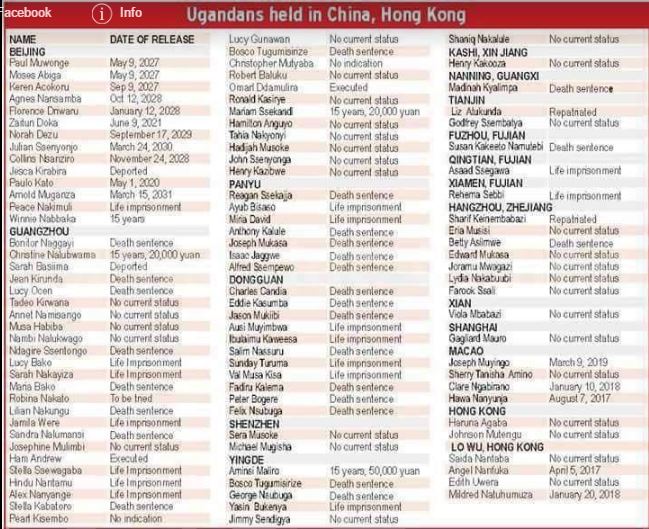
IN REAL DANGER! The list of Ugandans facing drug related charges in China as of February this year.

Twenty two Ugandans may be hanged in China for alleged drug trafficking.

According to sources, those to be hanged include Bonitor Naggayi, Jean Kirunda Ndawula, Lucy Amor Acen, Gertrude Ndagire Ssentongo, Bako Maria Paira, Lillian Nakungu Deborah, Sandra Nalumansi, Reagan Ssekajja, Anthony Kalule, Joseph Mukasa Mulindwa and Isaac Jagwe.

Others are Alfred Ssempewo, Charles Candia, Eddie Kasumba, Jason Mukiibi, Nassur Salim, Faridu Kalema, Peter Bogere, Felix Nsubuga, Madinah Kyalimpa, Susan Kakeeto and Betty Asiimwe.

By February this year there were one hundred Ugandans languishing in jail in China and Hong Kong, among them 47 women. Most were charged with trafficking in drugs and faced the death sentence and life imprisonment.

By press time efforts to contact the Ministry of Foreign Affairs over the matter were futile but in an earlier communication the ministry officials had indicated that talks were underway between Uganda and China, to have some of those serving time in jail complete their sentences in Uganda.


Stories Continues after ad
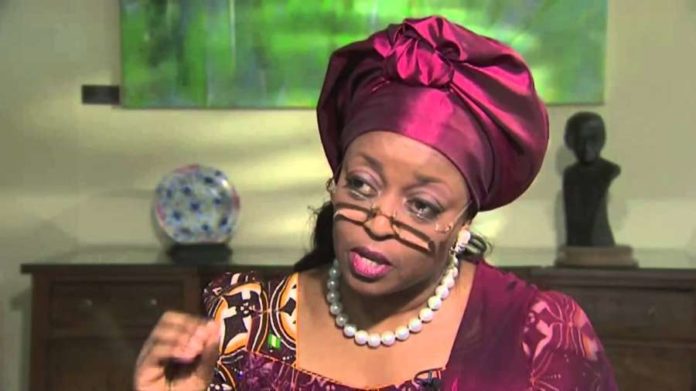
Former Nigerian oil minister faces multi-million bribery allegations

IN TROUBLE: Nigeria's former minister of petroleum, Diezani Alison-Madueke,

Prosecutors in the United States have provided details of how Nigeria’s former minister of petroleum, Diezani Alison-Madueke, and her two businessmen-allies, Jide Omokore and Kola Aluko, lavished billions of naira on property and luxury items in the U.S. and United Kingdom.

The trio have, in the last two years, been at the centre of many investigations and court actions around management of Nigeria’s oil industry.

Last year, the Nigerian government filed for a court order for world-wide seizure of multi-billion naira asset linked to the two men, described as close allies of ex-President Goodluck Jonathan and Mrs. Alison-Madueke.

In a civil forfeiture notice filed by the US Department of Justice, (DoJ), prosecutors narrated how the two businessmen allegedly conspired to bribe the former minister purchasing property worth millions of dollars in London for Mrs. Alison-Madueke and her family.

Prosecutors described the two men as financiers of the former minister’s lavish lifestyle’.

The two are accused of buying a total of four residential properties in and around London worth 11.45 million, and furnished them with furniture, artwork and other luxury items, the Financial Times reports.

In one day in May 2012, Mr. Aluko was said to have wired $461,500 and $262,091 to two furniture stores in Houston from a Swiss bank account, on behalf of Mrs. Alison-Madueke, the civic complaint claimed.

The bribe, according to prosecutors, was in exchange of $1.5 billion worth of oil deal awarded to two shell companies linked to the two men.

Prosecutors described the two companies as “unqualified” for the deal but were nonetheless given the contracts for sale of crude oil worth $1.5 billion.

The businessmen then allegedly plotted more shell companies to launder the proceeds through the United States.

Media reported on how Mr. Omokore was quizzed by operatives of EFCC over allegations of fraud and diversion through his company, Atlantic Energy. Mr. Omokere was later charged to the court alongside his alleged accomplices.

U.S. prosecutors are now moved to seize $144 million in asset linked the two men, comprising a 200-foot yacht and a Manhattan property one block from Central Park, describing them as fruits of an international bribery scheme.

Among the asset is Mr Aluko’s vessel, Galactica Star, described as “world’s largest fast displacement yacht”, along with condominium units in Manhattan and real estate in Southern California.

“The United States is not a safe haven for the proceeds of corruption,” acting assistant attorney-general Kenneth Blanco was quoted as saying, adding: “If illicit funds are within the reach of the United States, we will seek to forfeit them and to return them to the victims from whom they were stolen.”


Stories Continues after ad
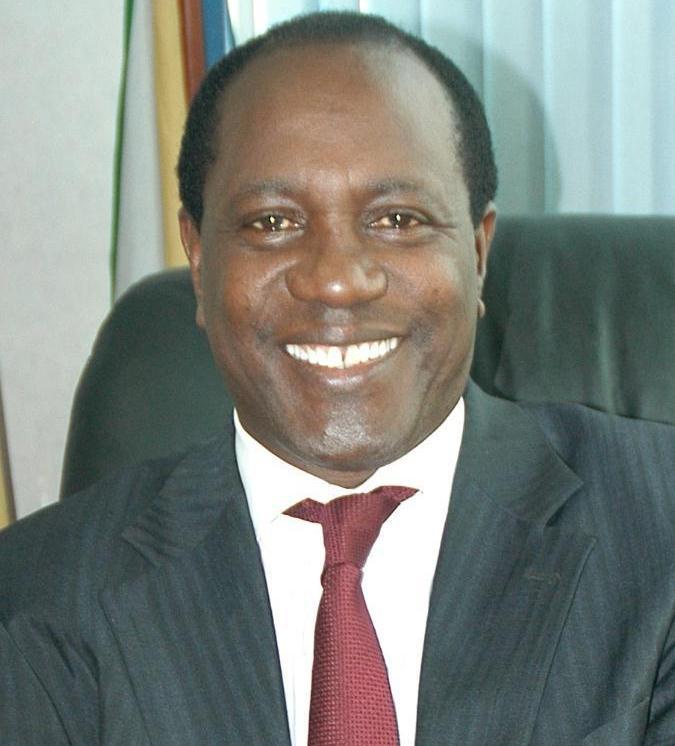
Grace Mugabe hurt in accident

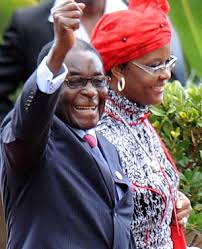
OUSTED AND DISGRACED COUPLE: President Mugabe and his wife Grace. Photo/news24.com

Zimbabwean President Robert Mugabe’s wife Grace was injured in what officials called a freak accident as she left the airport with her husband following their return from Singapore.

Mugabe had gone to Singapore on July 7 for a medical check, his third such trip this year and was accompanied by his wife.

State television ZBC quoted Mugabe’s spokesman George Charamba saying that the veteran leader’s wife ‘suffered some soft tissue bruising on the right ankle as a result of a freak car incident at the Harare International Airport soon after arrival’ from Singapore.

“The accident occurred as the First Family was about to leave the airport for the residence,” ZBC website reported, without giving details of what happened.

Grace Mugabe was taken to a local hospital where she was treated for the bruises and discharged.

The report did not say whether Grace was traveling in the same car with Mugabe although the two usually use the same presidential limousine when traveling together.

“At the time of her discharge, she complained of pain from the hurt ankle,” ZBC said, adding that Mugabe, his daughter and son-in-law, accompanied Grace to the hospital.

Charamba could not be reached for comment.


Stories Continues after ad
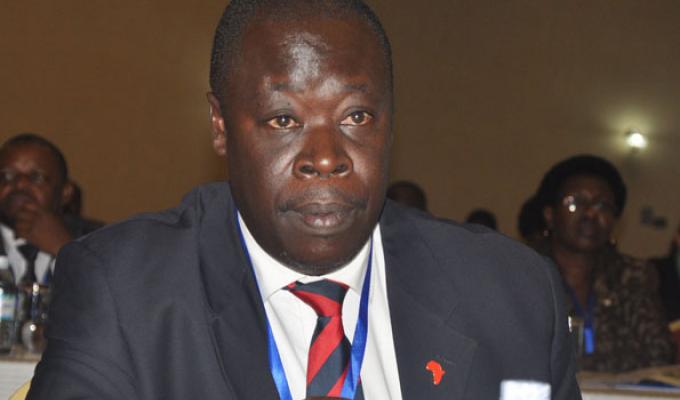
Gen Kayihura did not ban age limit debate – Police

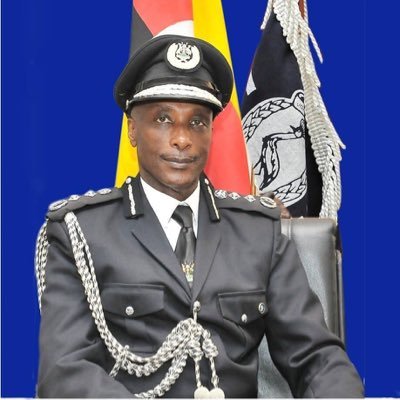
Being Investigated: Former IGP Gen. Kale Kayihura

Following criticism from the public, the Uganda Police has distanced itself from media reports indicating that the Inspector General of Police, General Kale Kayihura, last week banned Ugandans from debating the age limit for presidency.

Quoting a newspaper that wrote: ‘Age limit debate is strictly in Parliament but not in schools or villages,’ police Spokesperson Asan Kasingye issued a press release today, distancing Gen. Kayihura from the said words.

‘The IGP did not use those words as alleged by the journalist at any one time and neither did he communicate to anyone on phone,’ part of the press release states.

Further, Kasingye said Gen. Kayihura has not ordered any of his officers to ban public debates in universities and other platforms.

‘Ignore the baseless and unfounded stories’ he said.

It is instructive to note that some Ugandans, mostly those in opposition, have accused the Uganda Police of being partisan and favouring the ruling National Resistance Movement (NRM).

The Constitution of Uganda says any one aged 75 and above cannot run for the presidency of Uganda, but unconfirmed reports indicate Ugandan parliamentarians, majority of them from the ruling NRM, want to amend the particular provision to enable Mr. Museveni run for president in 2021.

The NRMovement has been in power since 1986 when it toppled the Tito Okello government.

Meanwhile, President Museveni was elected last year for what is supposed to be his last term of office because in 2021, he will be above 75 years, making him ineligible to participate as candidate for President.

However, some Ugandans think Museveni still has much to offer to the country and therefore want him to contest come 2021.


Stories Continues after ad
Ugandans tell government to remove potholes on roads

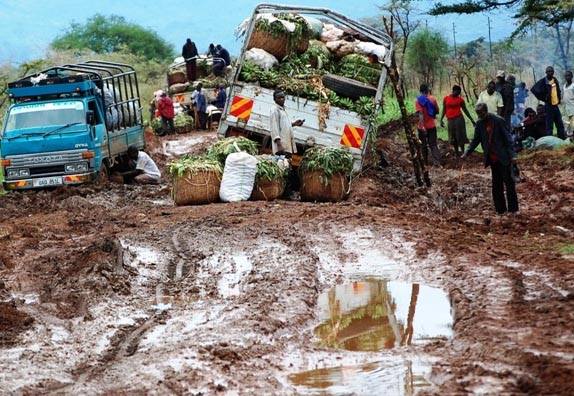
BAD ROADS: Vehicles stuck in muddy road. The report implores government to improve infrastructure such as roads

A recent survey carried out on the roads usage shows that majority Ugandans want the government to seal the potholes and widen the narrow roads.

According to the 2016 Road User Satisfaction Survey that was carried out by CrossRaods on behalf of the Uganda Road Fund (URF), 62.7% of those interviewed said they were unhappy with the potholes, narrowness of the roads, poor drainage systems and poor road maintenance.

The survey indicates that the percentage of people who are dissatisfied with the roads dwindled to 37.3 percent in 2016 from 53.2 percent in 2015.

The survey also indicates that only 48.3 percent of Ugandans felt Safe on the Ugandan roads, compared to 51 percent in 2015. Reasons for feeling unsafe included bad driving by motorists, congestion of cyclists, lack of walkways.

Further, the survey indicated that road users from eastern Uganda were the ‘least satisfied’ while those from the western part of the country were the ‘highly satisfied’ users.


While launching the survey, the URF Executive Director Eng. Micheal Odongo, said the report would help government budget for all roads in the country.

“Most of the factors stated are just maintenance factors. Issues of dust, potholes can easily be dealt with if there was money to do the maintenance,” Odongo said, urging the government to consider the views of road users and avail the funds to improve the road network.

The Minister for Finance Matia Kasaija, who officiated at the launch, said the road maintenance fund would be increased in the next financial year.

“Roads are the main catalyst for development and economic growth hence the need for us to continue prioritizing our infrastructure development,” Minister Kasaija said in reference to the suggestions raised in the report.

The survey which started in 2012 is done annually by CrossRoads with support from United Nations and Department for International Development (DFID).

Uganda’s road network is the most used means of transport for humans and mainly agricultural products as the country does not have well developed railway, water and air transport system.

In the 2017/18 national budget government provided Shs4.8 trillion on works and transport, up from Shs3.8 trillion in the financial year 2016/17.

The major highway roads are managed by the Uganda National Roads Authority while districts manage local feeder roads.


Stories Continues after ad

Iranians seek mineral and oil investments in Uganda

DFCU Chairman Dr Elly Karuhanga

The Islamic Revolution Mostazafan Foundation has expressed interest in investing in various projects in Uganda including in the mining and petroleum sectors.

A three-man delegation from the Foundation was in the country and met the Uganda Chamber of Mines and Petroleum (UCMP) Chairman Dr Elly Karuhanga, who outlined to them the investment opportunities available.

“With Uganda eyeing first oil in 2020, the opportunities in the oil sector are immense,” Dr Karuhanga told the Iranians, adding that other than the oil refinery and oil pipeline projects, other supportive infrastructural projects like roads, the railway and energy are in the offing.

Other opportunities, Dr Karuhanga said, exist in logistics management, foods and beverages, security, finance, human resource, waste management and crane services.

“At least up to USD20 million is expected to be invested in Uganda to help the oil industry take off smoothly,” he said, inviting the guests to partner with UCMP in the mining and oil sectors.

Dr Karuhanga said Uganda also has minerals like iron and steel, copper, limestone, gold, tin, tungsten and Columbite Tantalite (Coltan), and that investing in value-addition to such minerals would provide great returns to the Foundation.

Speaking during the meeting Mr Seyed Mortaza Mortaza, the Iranian Ambassador to Uganda noted that the country offers great business prospects for Iranians, adding that the two countries enjoy strong bilateral ties.

The Mostazafan Foundation is the second largest commercial enterprise in Iran, controlling 150 companies spread across assorted sectors like agriculture, foods and beverages, mining, petroleum and manufacturing.


Stories Continues after ad

Kalungu by-elections’ registration extended

NULLIFIED ELECTION: Justice Lawrence Gidudu

Due to higher numbers of applicants at the update centers since the beginning of the exercise in preparation for the by-election of the Kalungu district chairman, the Electoral Commission has extended the update period by an additional three (3) days, up to Monday July, 17.

According to the EC, the update will be conducted at the update stations in each parish in Kalungu district starting at 8:00am till 6:00pm, throughout the extended period and including the weekend.

Last year the Masaka High Court Judge Lawrence Gidudu nullified the election of Emmanuel Musoke as the Kalungu district chairman.

And in May this year Justice Gidudu’s ruling was upheld by Court of Appeal judges Steven Kavuma, Elizabeth Musoke and Paul Mugamba, paving the way for a by-election.

Stories Continues after ad

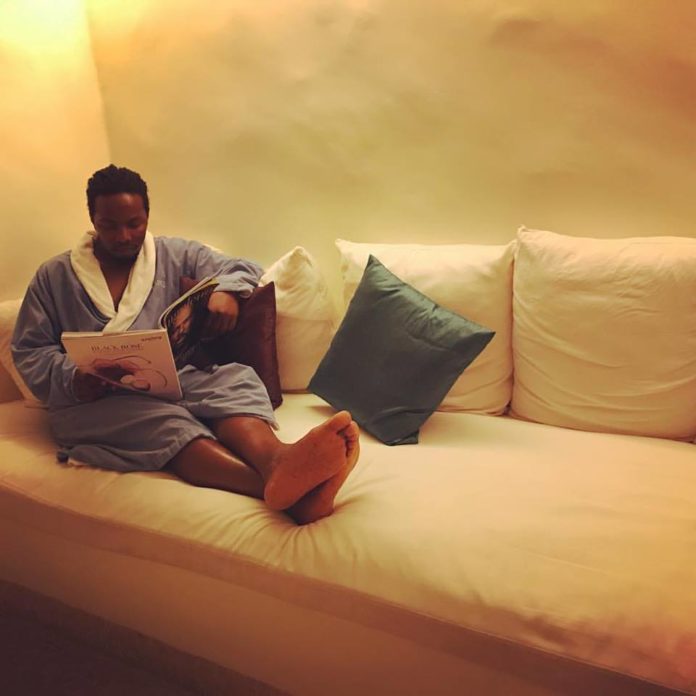
Rapper GNL Zamba ‘eyes’ BOU Governor Mutebile’s job!

TWO DEGREES: GNL Zamba reading books at home

As pressure continues to pile on the Governor Bank of Uganda, Emmanuel Mutebile over the Crane Bank Scam, one person has already expressed interest in the position and guess who it is? Rapper GNL Zamba!

GNL Zamba says that being a holder of two degrees, and one who run ‘Baboon Forest’ as chairman and Chief Executive Officer, Zamba believes he can comfortably replace Prof. Mutebile because he is well versed with ‘stock exchange and international banking’.

“If I can’t replace Governor Mutebire, I think NEMA and the ministry concerned with our wildlife and environment will be a natural fit. I am one of the few artistes in Uganda who can explain GDP, Balance of trade, Devaluation and Sustainable Development without going to Google,” he boasted about his credentials on social media.

However, one fan had this to say; “Explaining GDP and balance of trade!!! Come on, you can do better than that!! That’s f5 economics…..”

Reacting to the comment, GNL Zamba said: “Right now your leaders can’t even pronounce the word ‘Diligently’, they say ‘Delident’ at every swearing in ceremony. That is how bad it is. Me offering my candidacy is like giving you a professor when you are asking for an SST teacher.”

Do you think GNL can salvage our deteriorating economy?


Stories Continues after ad