Stanbic Bank
Stanbic Bank
19.6 C
Kampala
Stanbic Bank
Stanbic Bank
Home Blog Page 185

West Nile legislators criticize charges imposed on travelers through Murchison Falls National Park

Members of the West Nile Parliamentary Caucus have strongly criticized the government’s decision to impose fees and time restrictions on the use of roads passing through Murchison Falls National Park, arguing that it unjustly targets citizens. 

The lawmakers asserted that as taxpayers, they should not be treated like poachers for simply using the roads within the park.

Among the MPs raising concerns were Isaac Otimgiw (Padyere County), Lillian Paparu (Arua District Woman Representative), George Bokha (Obongi County), Musa Noah (Koboko North), Isaac Etuka (Upper Madi County), Jennifer Driwaru (Maracha District Woman Representative), Jackson Atiima (Arua Central), and Geoffrey Feta (Ayivu Division). The group voiced their frustrations during a press briefing at Parliament, highlighting the hardships faced by residents following the closure of Karuma Bridge.

“We are not poachers. We are citizens of this country, and this national park is no different from others. We should not be charged for using roads through it,” Lillian Paparu stated.

Paparu also questioned why only travelers to Northern Uganda are subjected to these fees when other national parks do not impose similar charges. She referenced the Masindi-Para Road, which was constructed after the government compensated the Uganda Wildlife Authority (UWA) and called for consistency in policy across all parks.

“When the Masindi-Para Road was built, the government compensated UWA. Why are we now being charged here while others across the country use national park roads without paying? We demand free passage,” Paparu added.

Geoffrey Feta, Chairperson of the West Nile Parliamentary Caucus, highlighted the economic consequences following the September 23, 2024, closure of Karuma Bridge by the Ministry of Works and Transport, which resulted in a 35% increase in transport costs to West Nile.

“The alternative route through Kafu has driven up the cost of transporting goods and people, causing a sharp rise in the prices of essential commodities like sugar, cooking oil, and rice. This will have a detrimental effect on the economy of Northern Uganda and, particularly, West Nile,” Feta explained.

The MPs further criticized UWA’s decision to limit travel through the Tangi-Kikomanyombo Gate to between 7:00 a.m. and 7:00 p.m., a restriction they say forces travelers to incur additional accommodation costs and encourages speeding, increasing the risk of accidents.

“UWA needs to reconsider these time restrictions and extend the travel window from 6:00 a.m. to 8:00 p.m., allowing passengers and vehicles more flexibility and reducing unnecessary costs,” Feta urged.

Concerns were also raised about the safety of travelers along the Kafu-Masindi Road, with truck drivers reportedly being ambushed by robbers. The MPs called on the government to enhance security along these routes and allow free access through the Masindi-Kikomanyombo Gate for all vehicles until Karuma Bridge reopens.

Jennifer Driwaru emphasized the toll these extended travel routes are taking on the health of patients, particularly expectant mothers and those requiring urgent medical attention in Kampala. She also stressed the lack of an emergency air ambulance service in West Nile.

“These policies are severely impacting our people, especially those with medical emergencies who must endure long journeys for treatment. The government must realize that these are taxpayers and voters who deserve better,” Driwaru said.

Previously, lawmakers from the Acholi and Lango sub-regions protested the Shs25,000 fee charged to travelers passing through Murchison Falls National Park after the Karuma Bridge closure. They expressed concern over the heavy financial burden placed on both passengers and vehicle owners, with bus operators paying Shs210,000 per trip and smaller vehicles being charged Shs40,000, leading to an overall spike in transport costs to Northern Uganda.

However, the State Minister for Wildlife and Antiquities Martin Mugarra Bahinduka while addressing journalists, said the Uganda Wildlife Authority-UWA will continue charging vehicles transiting through Murchison Falls National Park.

Mugarra said although they acknowledge the need for people to transit through the park unimpeded, they also have to balance between this and wildlife conservation.

“UWA has provided an alternative route through the park at free cost using the Bugungu gate. This route is about an extra 30 km to Kampala if one travels through Hoima. Given the travel through Kichumbanyobo gate is an additional 50 kilometer in the park and at the speed limit of 40 kilometer per hour, it will take the same time, if not shorter, to pass through the Bugungu gate and with numerous advantages to both people and wildlife,” Mugarra said.

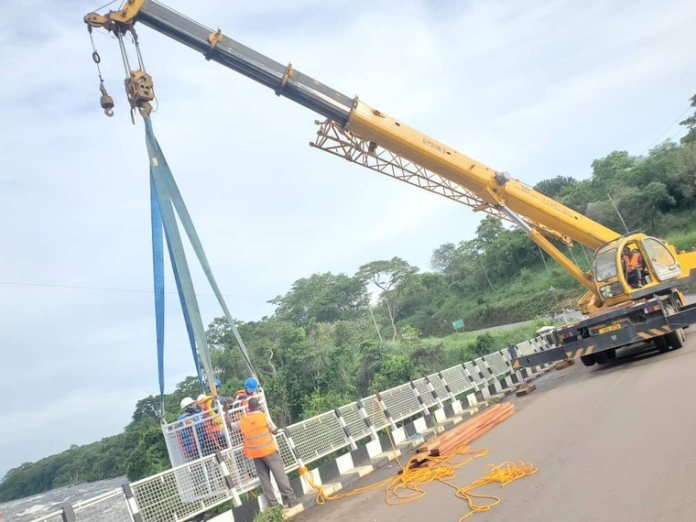
Built in 1963, the Karuma Bridge serves as a vital gateway to Northern Uganda, and its closure on Monday September 23, 2024, has sparked public outcry, a concern echoed by MPs during the plenary session on Wednesday, 25 September 2024.

Stories Continues after ad

Museveni to introduce law to regulate money lenders as he meets Chief Justices Forum at Munyonyo

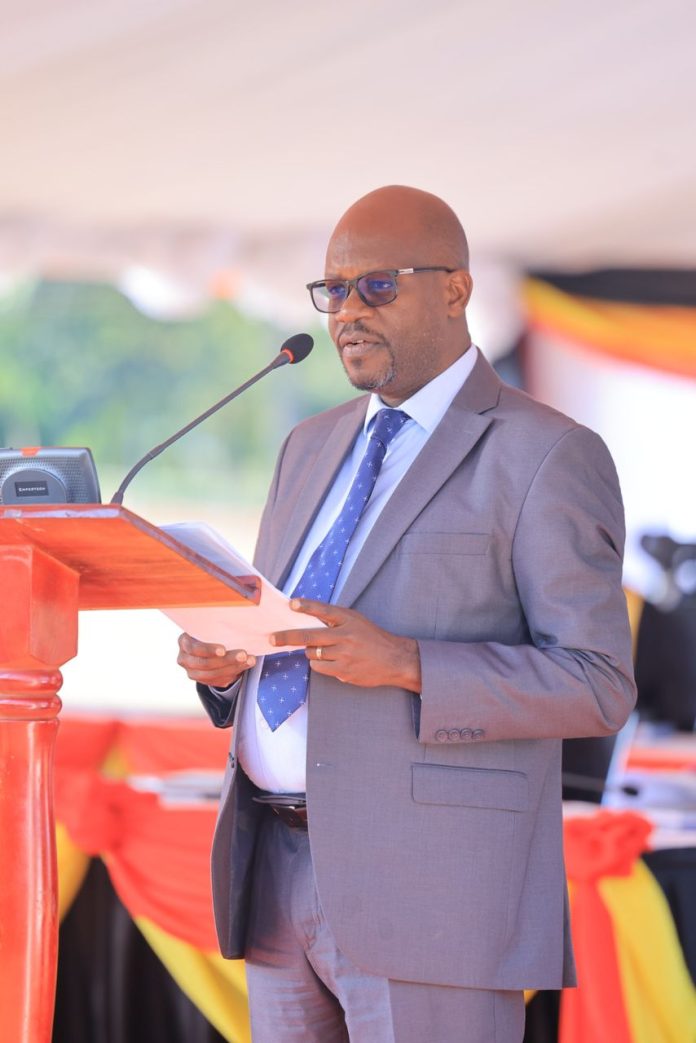
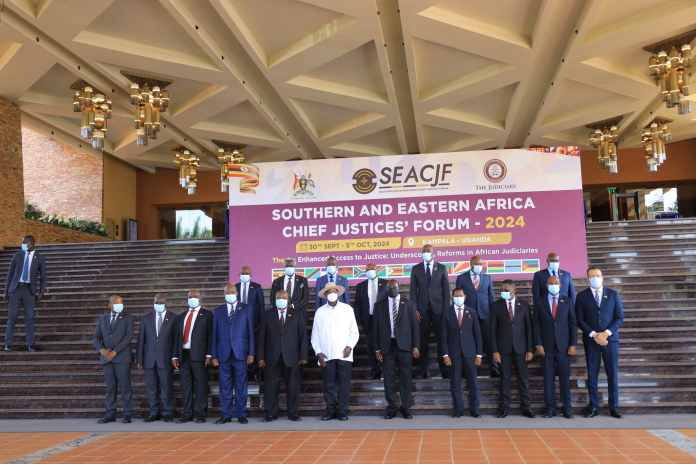
President Museveni while officially opening the 19th Southern and Eastern Africa Chief Justices Forum (SEACJF).

President Yoweri Museveni has announced plans to introduce a law aimed at regulating extortion by money lenders.

Museveni made the revelation while officially opening the 19th Southern and Eastern Africa Chief Justices Forum (SEACJF) under the theme “Enhanced Access to Justice: Underscoring Reform in African Jurisdictions” at Speke Resort Munyonyo.

“I want to bring a law to fight money lenders. Money lenders are becoming a problem, they go to our villagers and cheat them, charge them extortionately yet our inflation rate is very low at 3% or even lower but you find these people charging them 240%” he said.

He added, “Of course we are going to make the law” noting that money lenders are claiming there is a document they are following which was signed by an ‘illiterate villager’ in which a lending contract is hidden as a purchase contract.

Last week while commissioning the Karuma hydropower project, Museveni Ugandans in the agriculture sector only borrow money from Uganda Development Bank, PDM and Emyooga SACCOs since they have low interest rates.

“The money lenders are your enemies and I am going to do something to them. I am going to crush the money lenders. They are criminals,” he said.

Highlighting other issues, Museveni urged the guests to embrace University education as a better mechanism to fight Gender Based Violence.

Speaking at the event, Chief Justice of Uganda, Justice Alfonse Chigamoy Owiny – Dollo said that SEACJF was established in 2003 as an association that brings together Chief Justices and Judges from over 16 countries to discuss contemporary issues affecting justice delivery in the region.

He added that the forum helps the leaders to deliberate on contemporary issues affecting justice delivery in different countries and also presents an opportunity for harnessing collective wisdom experience for the distinguished participants.

“We are constantly reminded of the profound responsibility that calls for willingness to learn from one another and change our mindset where necessary,” Owiny – Dollo said.

He highlighted the challenges affecting the judicial system such as inadequate court infrastructure, case backlog, geographical barriers, poverty, high cost of legal services, gender chauvinism, poor technological systems, interference with judicial systems, corruption, ignorance and under-staffing.

Stories Continues after ad

Minister Tumwebaze urges coffee farmers to register as Uganda seeks to maintain competitive edge in EU market

Minister Tumwebaze

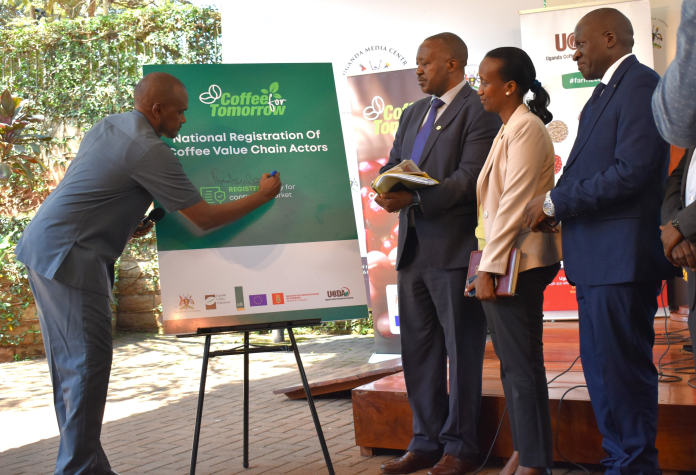
The Minister of Agriculture, Animal Industry and Fisheries, Frank Tumwebaze, has emphasized the importance of national coffee registration for maintaining access to the European Union (EU) market. With over 60% of Uganda’s coffee exports going to the EU, compliance with EU regulations is crucial.

The EU’s Deforestation Regulation, set to take effect on December 30, 2024, requires Uganda to prove its coffee is produced sustainably. To achieve this, the government has allocated resources to register all coffee farmers and implement a National Traceability System.

Minister Tumwebaze has urged coffee farmers to participate in the registration process, which is expected to enhance sustainability, improve market access, and ensure regulatory compliance. The registration exercise is being conducted by the Uganda Coffee Development Authority (UCDA) and partners.

The benefits of national coffee registration include improved market access, ensuring continued access to the EU market, Uganda’s largest coffee export destination.

“It also promotes enhanced sustainability by encouraging environmentally friendly coffee production practices,” Tumwebaze said—adding that registration ensures regulatory compliance with the EU’s Deforestation Regulation requirements and provides increased transparency through traceability of coffee from farm to market.

By registering, coffee farmers will contribute to Uganda’s efforts to maintain its competitive edge in the global coffee market. “We have to show that there’s something we are doing to comply with EUDR requirements,” he said.

Uganda is the 7th largest coffee producer globally and 2nd largest in Africa, with approximately 1.8 million smallholder farmers cultivating coffee on 353,907 hectares of land. Coffee exports for the twelve months of the financial year 2023/24 totaled 6.13 million bags worth $1.14 billion.

The registration process will capture geolocation data for all production plots where coffee or related products are cultivated.

A team of enumerators will carry out the registration process on behalf of UCDA and industry players.

Minister Tumwebaze appealed to all leaders, coffee value chain actors, and district local government leaders to support this registration exercise. He emphasized that this is a win for all.

The government has allocated resources for registration, with funding support from Development Partners and mobilization efforts by Civil Society organizations.

Stories Continues after ad

MP Lumu gets Certificate of Financial Implication to introduce bill for election of Leader of Opposition 

MP Richard Lumu.

Mityana South Member of Parliament Richard Lumu has been granted a Certificate of Financial Implication to introduce a Private Member’s Bill to provide for the election of Leader of the Opposition by the members of the opposition in Parliament from among the members of the opposition in Parliament.

In July 2005, Uganda transitioned from the Movement political system to a multiparty political system through a national referendum.

The adoption of the multi-party system of governance saw the amendment of the 1995 Constitution of the Republic of Uganda to create the office of Leader of the Opposition in Parliament and subsequently, in 2006, the amendment of the Administration of Parliament Act, Cap. 272 to provide for the office of Leader of the Opposition.

“I have received the Certificate of Financial Implication from the Ministry of Finance, I have really been disturbing the Minister, and the Minister has responded positively. Definitely, they have removed some of my propositions. For example, I wanted an additional commissioner; they have removed that one,” Lumu said. 

After obtaining leave by Parliament in August 2024, Lumu explained that his proposal would require the main opposition party to propose three names and allow MPs to choose from them.

“The proposal that requires amending the Constitution, I am going to present them differently in the near future because I didn’t want to mix them up because I will face the same fate that was faced by my brother Medard Sseggona. So, I have separated the two, and I am bringing them in different intervals,” he said.

In his initial proposal, Lumu also proposed to increase the number of members of the Parliamentary Commission to represent all other small political parties in Parliament because the current composition grants the NRM Party three slots, while the other one slot is taken up by the main opposition party.

Lumu, however, revealed that the Ministry rejected some of his proposals, like increasing the number of members of the Parliamentary Commission, as such a move would impose a charge on the consolidated fund.

Stories Continues after ad

Onapito Ekomoloit to be buried in November

RIP Onapito.

The burial of Onapito Ekomoloit, the former Nile Breweries Board Chairperson, Presidential Press Secretary and respected legislator is scheduled for November.

The revelation was made by the Minister for the Presidency, Milly Babalanda, following a family meeting.

In a statement on Monday, September 30, Minister Babalanda revealed that discussions were held between Ekomoloit’s family, their lawyer, and the National Organising Committee (N.O.C) at the Cabinet library, concluded that the burial plans would respect the wishes laid out in Ekomoloit’s will.

“After consultations involving the family, the legal representative of the late Onapito Ekomoloit, and the N.O.C., it has been agreed that the burial will be in late November, as stipulated in his will. Further details will be provided by the N.O.C., family, and Parliament early next month. Our thoughts and prayers remain with the bereaved family during this difficult time,” Babalanda stated.

Ekomoloit, who passed away on the morning of September 27, had a varied and notable career in journalism, politics, and business. He began as a senior reporter at The Monitor (now Daily Monitor) and went on to establish his own publication, The Crusader.

Last week, President Museveni granted Ekomoloit an official burial recognizing his significant contributions to the country.

His political journey saw him serve as the Presidential Press Secretary, later being succeeded by Tamale Mirundi. After his tenure in public service, Ekomoloit joined the corporate sector as the Director for Corporate Affairs at Nile Breweries, eventually becoming the Board Chairman upon his retirement—a role he held until his untimely demise.

Ekomoloit’s death is a significant loss to Uganda, and particularly to the Teso community, where he was revered for his contributions to the region’s development

Stories Continues after ad

UPDF concludes documentation exercise for retiring disabled officers

Documentation of retiring officers.

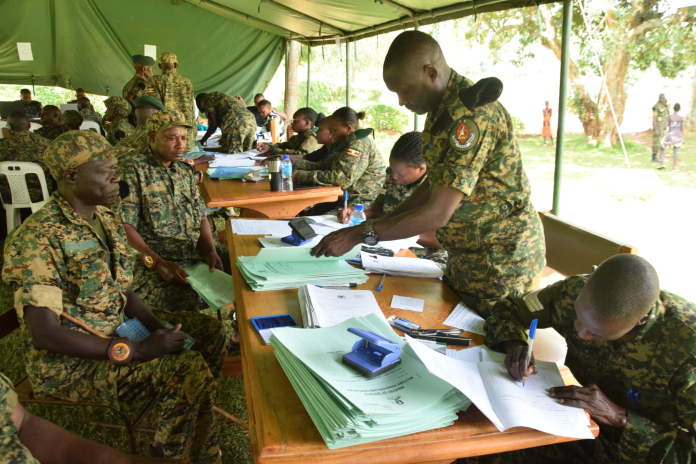
The Uganda Peoples’ Defence Forces (UPDF), through its Directorate of Pension, Gratuity, and Compensation (DPGC) has concluded the sensitisation and documentation exercise for Non-Commissioned Officers (NCOs) at the Defence Rehabilitation and Vocation Centre (DRVC) in Mubende.

This marks a significant moment as the UPDF becomes the first to organise a dignified send-off for disabled officers.

Brig Gen Julius Biryabarema, Director of Pension, Gratuity, and Compensation, reassured the NCOs, who are set to retire on 31 October 2024, that the delay in their retirement, particularly for those with disabilities, was not due to the government’s reluctance but to ensure they received proper rehabilitation and essential support. This includes providing equipment such as wheelchairs and artificial limbs to help ease their transition into civilian life.

“Now we have an existing policy that caters to their needs during retirement,” Brig Gen Biryabarema stated, highlighting the significance of this exercise in preparing retiring officers to reintegrate smoothly into society.

He stressed that the pre-retirement programme helps them transition from the structured military environment to civilian life, enabling them to manage their post-service lives effectively.

The Brig Gen urged local communities to welcome these veterans warmly, noting that the army is deeply connected to the very communities from which its personnel are drawn. 

He also expressed gratitude to the families of the retirees for their unwavering support during their loved ones’ service, encouraging the officers to use their leadership skills, discipline, and experience to drive social and economic change in their areas, rather than remaining idle.

Brig Gen Biryabarema advised retirees to remain connected through Wazalendo SACCO for access to affordable loans, avoiding the high costs of commercial banks. He emphasised that they should take pride in their well-deserved retirement, using their time to contribute to the development of their communities.

Brig Gen Moses Kwikiriza, Commandant of the Defence Rehabilitation and Vocation Centre, expressed thanks to the Commander-in-Chief for ensuring that disabled veterans receive a well-earned retirement package. 

He encouraged the retirees to take advantage of the country’s prevailing peace by engaging in revenue-generating activities and using their skills and experience to positively impact their communities.

Brig Gen Kwikiriza also cautioned the veterans to safeguard their pension earnings from fraudulent individuals, urging them to be vigilant in protecting their hard-earned benefits.

Stories Continues after ad

Housing Finance Bank Secures Two Wins at the World Economic Magazine Awards 2024

Housing Finance Bank has emerged as a standout winner at the World Economic Magazine Awards 2024, receiving two prestigious accolades: Best Mortgage Loan Bank Uganda 2024 and Best Customer Service Bank Uganda 2024.

The World Economic Magazine Inc. Awards aim to highlight and acknowledge the spirit of industry disruptors across the global financial marketplace. The awards honor the efficacy of both B2B and B2C businesses, as well as thought leaders who redefine their values to thrive in today’s dynamic ‘innovative economy.’ Honorees are chosen solely based on merit, recognizing businesses, services, and individuals who excel and go above and beyond to ensure client satisfaction.

Housing Finance Bank has long demonstrated high levels of customer centricity through its operations, products, and services. In 2023, the complaint resolution rate reached an impressive 99%, while customer satisfaction improved from 79% in 2022 to 83% in 2023. This success stems from the unparalleled support, including a round-the-clock call center that is always ready to assist customers at any hour, responsive social media channels, and a dedicated WhatsApp platform. The accolade for Best Customer Service Bank Uganda 2024 is a testament to the bank’s hard work and investment  to continuously improve customer experience through innovation.

With 57 years of experience in mortgage provision, Housing Finance Bank has continually strengthened its position in the sector. The bank recognizes housing as a crucial element of the National Development Plan III, which aims to enhance household income and employment for sustainable socio-economic transformation. It is with this track record that the bank was honored as the Best Mortgage Loan Bank in Uganda for 2024.

In an interview, Michael K. Mugabi, Managing Director of Housing Finance Bank, stated, “As of December 2023, we had a total loan portfolio amounting to UGX 414.192 billion, disbursed to over 1,712 homes, bringing the total number of loans to 10,000 homes over the last 5 years. Our goal is to ensure a sustainable future for all. We are future-proofing the bank for generations to come by spearheading several new initiatives, such as our home loans, which offer many competitive benefits, incremental loans, and land loans, among others.

One of the bank’s key innovations is the Zimba Mpola Mpola product, designed to meet the incremental building needs of many Ugandans. This solution allows customers to access affordable financing that aligns with their income, making housing more accessible. The response to Zimba Mpola Mpola has been very positive, with considerable customer interest because of of attractive features including the 3 days turnaround time, payable in up to 3 years, an affordable interest rate and customers can borrow as low as UGX 200,000 and as much as UGX 50M.

As Uganda stands at an urbanization rate of 5.2%, one of the highest in Africa, the demand for housing is increasing significantly. This surge in demand is exacerbated by a substantial housing deficit, currently exceeding 2.4 million units and growing by 200,000 units annually.

To salvage this deficit, the bank has innovated a wide range of home loan products to meet all customer housing needs. The loans are very flexible, affordable, and accessible. For example, they offer a long repayment period of up to 25 years, allowing for high loan amounts of up to 80% of the property’s value. Repayments are structured to be no more than 35% of your ascertainable gross income, with payments made on a reducing balance basis in predictable equal monthly installments, all at a competitive interest rate.

“Participating in the World Economic Magazine Awards is an excellent way to showcase our accomplishments over the past year and demonstrate our commitment to promoting business excellence,” concluded Mugabi.

Stories Continues after ad

UBOS to release final population census results on October 3

The Uganda Bureau of Statistics-UBOS has revealed that it will release the final 2024 notional population and housing census final results on Thursday October 3.

In June, UBOS released preliminary results of the census indicating that the total population currently stands at 45.9 million.

Addressing journalists, UBOS spokesperson, Didacus Okoth said in accordance with the census roadmap, they are now ready to release the final results on October 3, 2024 at Kampala Serena Hotel.

 “This is in line with our census roadmap. The final census report will answer the three questions of how Ugandans are living, what they own and where they access services,” Okoth said.

He said the preliminary results only touched on how many Ugandans are and where they are including population size, sex, age and where the people are located.

According to UBOS, the main report will give a detailed analysis of the population in the country.

“The final report will have rich information for planning and investment decisions which require statistical information. It will give figures for referencing for the next 10 years and for benchmark purposes for other surveys until the next census.”

“For example, we were asking people about mental health and the main report will provide information on how many are disturbed mentally. It will also show how people are accessing services like education and health among others, by what distance do children move to access primary and secondary school, how are people living? How many have permanent structures? All these will be provided by the detailed report.” Okoth said.

Stories Continues after ad

Unsafe abortion, sexual violence on rise among Kirungi fishing community

Fishing community at Kigungu landing site.

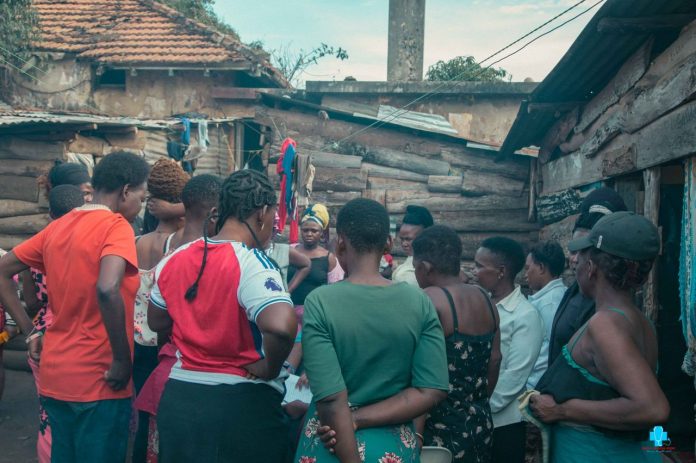
At least five cases of unsafe abortion and sexual violence have been reported at the Kigungu landing site, Eagle Online has learnt.

Revelation was made by Innocent Tusiimire Kakuru, a medical officer at Mirembe Medical Chambers Kigungu.

A report by the Ugandan Ministry of Health showed that 8% of maternal deaths were caused by unsafe abortion. Uganda restricts abortion; however, the restrictive law does not stop people from seeking abortions, but it means that they are often forced to use unsafe procedures outside of the healthcare system.

Kigungu being a landing site, the activity of prostitution among others is so high, and being in that field is not by choice but personal challenges that bring them into the system. 

Sex workers face a number of challenges, which include violence from their clients who pay for a service and later turnaround to reclaim their money back. This has resulted in a fight, and it brought harm to that woman. They were brought here, and we gave them first aid and complete treatment. It is costing them because they wanted money, but they end up again using it for treatment.

According to Kakuru, there is a high rate of bacterial infection commonly known as urinary tract infections (UTIs) such as candidiasis and gonorrhea and sexually transmitted diseases the likes of HIV/AIDS and syphilis.

“60% of the women in Kigungu have UTIs. We treat them, but there are scenarios where, due to inadequate funds, one gets a dose that can bring some sort of relief without completing the desired dose. The number of people that need to be treated is always greater than the available drugs. So, in the long run, there is a shortage, and we end up telling them to purchase drugs on their own,” he said.

Due to partnerships with family medical points and the Red Cross, the facility tests and treats some diseases that are giving them a hard time. However, due to the high population, they find it hard to offer them treatment.

This publication learned that at least 80% of the women at the landing are using protection, and the uptake of condoms is high. 

“We always have inadequate condoms for both parties. There is a situation whereby we had an outreach, but after a few days, we had a shortage of condoms.

Condom usage depends on the season. There are situations where there is enough fish, so fishermen get enough money. When they get enough money, that means the rate at which sex is played is higher,” he said.

A sex worker who battered her client for the weekend said the client agreed to pay her for the activity, but after he beat her to reclaim his money. 

With a bruised face and fresh cuts, the lady said she reported the matter to the Kigungu police post; however, the culprit has not been apprehended. 

“I know him. I reported the matter to the police but I have no money to facilitate his arrest and trial,” she said.

“This is one of our monthly hotspots where we talk to sex workers about their sexual reproductive health issues. We all know, sex work is one of the major economic activities, and their challenges usually revolve around sexual and reproductive health, unintended pregnancies, and unsafe abortions,” Polly Nabwire, the communication officer at Family Medical Point, said.

She said there is a scarcity of condoms, and they always get sexually transmitted infections. So, when we hold these sessions, we give them accurate information about how they are supposed to take care of their health.

“We bring this information to them and ensure they access these services whenever they need them.” She said.

Stories Continues after ad

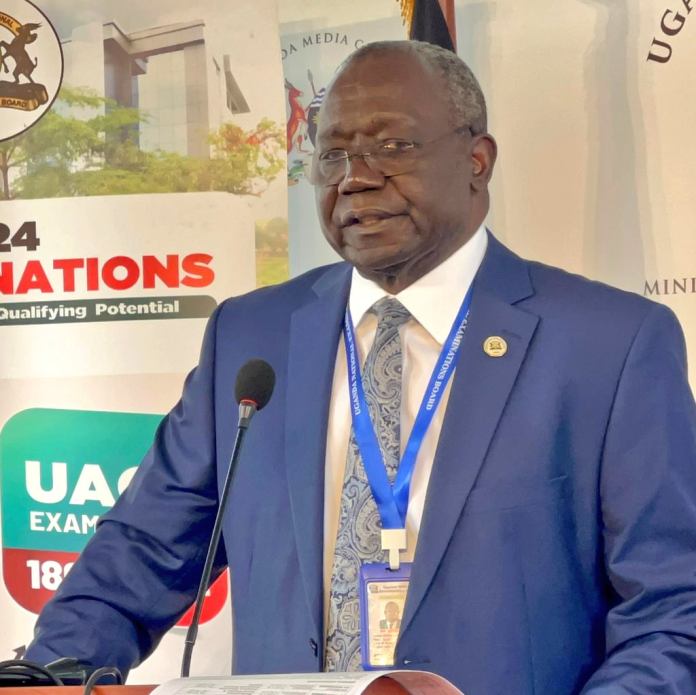
UNEB releases exam timetables for 2024 exams

The Uganda National Examinations Board (UNEB) has released examination timetables for candidates in Primary Seven, Senior Four, and Senior Six final exams.

This is the first time that UNEB will be examining candidates of lower secondary curriculum for the award of Uganda Certificate of Education.

Speaking at the event, UNEB Executive Secretary, Dan Odongo said, “Unlike previously when we had three sets of examinations, UNEB will this time round conduct Four Examinations (4Es), the UCE Examination based on the NLSC and the UCE (transitional examination), based on the old curriculum.

 He added, “We have recorded a very significant increase in candidature at UACE level this year, with 142,017 candidates, compared to last year’s candidature of 110,579. This reflects an increase of 28.4%.”

He noted that at PLE level, the increase stands at 6.6% with a total of 798,763 candidates registered.

In terms of funding, 698,808 (53%) of the total candidature are funded by the government under the Universal Education Programs, while 621,592 (47%) are privately sponsored.

“The transitional examination is aimed at giving an opportunity to those that needed to repeat or those that missed the examination in 2023 for various reasons. This is a one –off examination under the old curriculum,” Odongo noted.

The exams will take place between October and November. Senior Four candidates will have their briefing on October 11, with the Uganda Certificate of Education (UCE) exams starting on October 14. This year marks a significant transition, as it is the first UCE exam conducted under the new lower secondary curriculum.

With just two weeks to prepare, approximately 300,000 students are registered for the UCE exams, alongside 10,000 students taking transitional examinations under the previous curriculum.

The introduction of the new curriculum has led to uncertainty among schools, students, and parents regarding exam expectations and outcomes. Many schools, especially in rural areas, face challenges such as a lack of instructional materials, inconsistent grading and assessment guidelines, and concerns about student preparedness for this critical academic phase.

The new curriculum focuses on practicals, hands-on approach that enhances critical thinking and problem-solving skills.

Stories Continues after ad