Let us wake up and wake up everybody
Greetings,
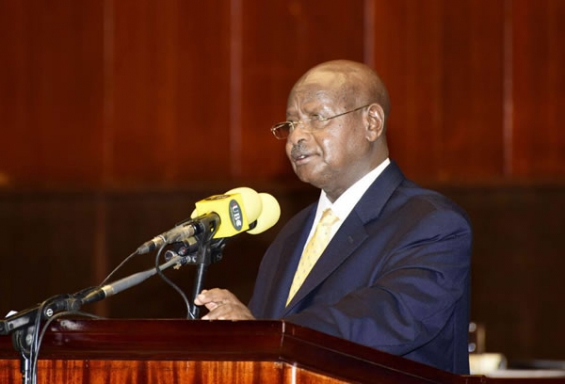
Madam Speaker, in fulfillment of the Constitutional requirement under article 101 (1) of the Constitution of the Republic of Uganda, I am here to deliver the State of the Nation Address, 2017.
Madam Speaker and Hon. Members of Parliament, on 8th June 2017, the Minister of Finance, Planning and Economic Development, will present to this August House and entire Nation, the Budget for FY 2017/2018. He will detail what has been achieved and what we intend to achieve in the coming Financial Year.
Since the last State of the Nation address, a number of Ugandans, including former Ministers and Members of Parliament, have departed from this earth.
I extend my condolences to their families and to the entire country. Let us stand up for a minute of silence in their memory.
On this occasion of the State of the Nation address, I will just summarize what the NRM was telling the population during the elections of last year. In order to guarantee prosperity of our country, we need to remember five issues. These five are: peace; development of the infrastructure and the human resource; wealth creation; jobs creation; and market access. Sometimes, we package them differently as ten strategic bottlenecks.
Peace means absence of war but it must also includes absence of lawlessness. The NRA/UPDF has ensured peace in the country by defeating Kony, ADF and disarming the cattle rustlers in Karamoja. The UPDF has the capacity to ensure that nobody disturbs the peace of Uganda. However, as you saw recently, there has been a spike of lawlessness in the country involving the murder of AIGP Kaweesi, Sheikhs, Major Kiggundu, Joan Kagezi, Chairman Okware in Namayingo, Rwamutwe in Bushenyi, the town clerk of Gulu, the Eritrean businessman, etc. There were also numerous break-ins in homes and some people were throwing leaflets threatening violence. In Mukono, there was the increased stealing of vanilla from the gardens. Some people started panicking. When I went to the home of the late Kawesi, I told you of the gaps that were still in our law and order architecture. These gaps were unattended to until recently, not because they were not known, but because of lack of funding on account of competing demands.
Here, I am talking of the technical means for the Police Force and the counter-terrorism capacity of the country. Without going into details, I can point out to the Hon. Members, the absence of cameras in the towns and the highways. These gaps put alot of burden on the CID to discover the one that committed the crime depending on eye-witnesses and other clues. The cameras would hasten to the identification of anybody who commits a crime in the towns or the highways. This is a gap I have given instructions to close. Meanwhile, the rich businessmen and residents that can afford should install cameras around their businesses and residences. They greatly assist. The Police will also acquire greater forensic technical capacity the details of which, I would not like to go into here. Using the limited means available to the Police, in the form of Police dogs to detect explosives, scanners, metal detectors, etc., the Police backed by the UPDF, when there is good planning, can guarantee security against any lawless or terrorist actions. The recent peaceful holding of the Martyrs Day, where an estimated three million people turned up, shows that Police and the UPDF already have good capacity, the gaps already mentioned notwithstanding.
Nevertheless, the Police and the intelligence services have been rightly criticized by the public for being lax in handling information given to them by the public, sometimes leaking this information, corruption in the form of extorting money from the public, high-handedness in dealing with the public and protecting criminals or allowing criminals to infiltrate the Police. The Police leadership must, therefore, carefully listen to the public and clean up the few rotten elements.
Otherwise, I can inform the public that, ever since 1980, when we started recruiting educated people into that force, the Police has got a very large number of capable cadres. Those who taint their hand with hobnobbing with criminals will only let themselves down. The Police Force will continue to grow stronger as it was planned to do by the UNLF in 1980 and, subsequently, by the NRM ever since 1986. The Police do not have to wait for the crime to be committed. Through good intelligence, most crimes can be prevented. Most of the suspects arrested after the murder of Kawesi and others, even if they were not involved in the killing of Kawesi, they had committed other capital offences, many of which carry death sentences or life imprisonment. Why, then, were they still in circulation? That means somebody was not doing his or her work.
The attempt by the criminals to cause rural scare by throwing leaflets, stealing vanilla from the gardens, occasional murders and rape, is easier to deal with because the villages are not as congested as the towns. Indeed, 78 suspects have been arrested for being involved in crime in the Masaka and Mpigi areas. Our massive security apparatus comprised of the Police, the crime preventers and the UPDF, with very little mobilize, can easily handle that village thuggery.
The other day, I was in Kalerwe and the youth there were complaining of the Police arresting them for being “idle and disorderly”. This must stop completely. Some of the youth are idle because they do not have jobs. Why arrest them for that? The revolutionary should be like “fish in water”. A revolutionary should never be “fish in no water”.
You should never talk harshly to the people. Always maintain a harmonious relationship with the people. I started relating with the youth in Kampala in 1968, in Katwe. The NRM cadres in Kampala have not properly followed the earlier work of Fronasa in Kampala. Our first NRA Commander, Ahmed Seguya was from Katwe. I had trained him in Mozambique in 1971-72.
The issue of alleged torture by the Police, was addressed by myself in the usual NRM/NRA way. We always combine educational methods (sensitization) and administrative methods (punishments, demotions, etc,). When these reports came up, I carried out analysis of torture and how it, actually, impedes successful investigations. That is a very powerful message because it addresses the whys and the why-nots of an issue. It addresses the “Policeman of the mind” rather than just the “Policeman of the body”. I saw some NGOs and allied persons pouring scorn on my methods and recommending only fascist methods of arrests and imprisonment without education. Could these “experts in-everything” tell us why the UPDF is able to operate in Somalia, Central African Republic, Congo, South Sudan, etc. without complaining? Is it because of high pay or fear of imprisonment? Do these “know-it-alls” remember that our Army is a volunteer Army? Do they know that one can make much more money in the private sector than in the army? Let the “know-it-alls” be informed that the UPDF does what it does because of conviction. Okunyonyora (to explain, to sensitize) has been the life and blood of Fronasa, of the NRA, of the UPDF. To end this point, be informed that Uganda is free of war and it will remain so and the spike in lawlessness is being defeated even before we fill all the gaps and will be totally defeated when the gaps are filled.
Uganda will be like in one old song of the Banyankore which went as follows: “Muyogo na Muyuumbu ei abaan bariisa ente” ─ Muyogo and Muyuumba (part of present-day Ntungamo) were so peaceful that children were brave enough to look after cattle because there was no threat.
When it comes to the development of the infrastructure and the human resource, I want to inform the Ugandans that here we are talking about the physical infrastructure (roads, electricity, water-works, the railway, the telephones, etc) and developing our human resource through education and improved health. The development of the infrastructure is so crucial because, as I have told you numerous times, it lowers the costs of doing business in the economy and, therefore, maximizes the profits of companies. Lower costs of electricity, transport, etc., means higher profits for the entrepreneurs. I want to salute the Parliament of 2006 and the subsequent Parliaments. They saw and supported the logic of boosting expenditure on roads of Shs398 billion in 2005/2006 to the present level of Shs3,442 billion. On account of this and in spite of the corruption, just using government of Uganda money, we have tarmacked the following roads: Kampala-Mityana; Kampala-Masaka; Kampala-Kafu-Karuma-Gulu; Jinja-Kamuli; Iganga-Kaliro; Tororo-Mbale-Soroti; Ishaka-Kagamba; Mbarara-Kikagate; Matugga-Semuto; etc,. These are roads that are already finished. In addition, solely using Uganda government funds, we are in the process of tarmacking the following roads: Mpigi-Sembabule-Villa Maria; Musita-Mayuge-Namayingo-Majanji-Busia; Soroti-Katakwi-Moroto; Olwiyo-Anaka-Gulu-Kitgum-Musingo; Nakapiripirit-Namalu-Muyembe; Mubende-Kakumiro-Kibaale-Kagadi-Ndaiga; Nyakahita-Ibanda-Kamwengye – Fort Portal, etc., etc.
All these and the others not mentioned are being done solely with the Uganda government money. There are other roads being done with the support from the international institutions but most of the time with co-funding from GOU. These are: Gulu-Atiak-Bibia; Kiguumba-Masindi-Hoima; Kagadi-Kyenjojo; Ntungamo-Mirama hill; Rukungiri-Kihihi-Ishasha-Kanungu-Rugyeyo-Nyakisheenyi; Rwenkunyu-Masindi-Port-Apac-Lira-Puranga-Acholibur; Kapchorwa-Suam; etc., etc. Some of the roads that were internationally funded are already finished and they include: Fort Portal-Bundibugyo; Mbarara-Kabaale-Katuna; Kabale-Kisoro-Bunagana-Kyanika; etc. The World Bank wants to help us re-tarmack, strengthen and widen Tororo-Mbale-Soroti-Lira-Kamudini roads.
I am most grateful to the international partners for this solidarity. However, the Ugandans financing their own projects, gives me alot of satisfaction. It is a good harbinger of the good things to come. What is happening in the sector of roads is replicated in the sector of electricity. Using the Uganda Government money from the Energy Fund, we have supported the expansion of generation of power e.g. in Nyagak where the licensed developer could not complete the project but, especially, in the area of building transmission lines. Using Uganda Government money, we have extended transmission lines to the following areas: Kakumiro, Kibaale, Kagadi, Muhoro – Buzizi tea factory to Kyenjojo; Kanungu-Rugyeyo tea factory; Rukungiri-Kanungu; Mpanga small hydro-Kamwenge-Kahunde and Kahunde sub-station; Buseruka small hydro-Hoima; Kyabugimbi-Buhweju tea factory; Kakumiro-Birembo-Nalweyo; Sironko-Nakapiripirit; Amudat-Soroti-Amuria; Napak-Moroto-Katine; Lwala-Kaberamaido; Amolatar-Dokolo; Katwaki-Napak-Moroto; Mbale-Bufumbo-Bukonde-Manafa-Lwahaha border post; Bugiri-Wakawaka landing site; Kamuli-Bukungu landing site; Kitgum-Padibe-Kitgum Parabeki; Lira-Aloyi-Apala; Ibanda-Kabujogera-Kamwenge; Bukwiri- Kyankwanzi; Kayunga-Busana; Muhanga-Kamwezi; etc., etc.
The proportion of the population that now have electricity is 20.4% compared to 4 per cent in 1986.
Transport, as already pointed out in respect of the roads, is another cost pusher when it comes to business. A 40 ft container costs US $ 3500 from Mombasa to Kampala by road compared to US $1,500 by rail when the standard gauge railway is ready and will only take one day. A similar container on the Peking (Beijing) – Shanghai line would cost US $1,500 for transport. That is why we are working for the standard gauge railway.
The ICT issue is now addressed since we completed the ICT backbone. The cost of telephones and internet use should go down compared to what it was when we were using the satellites. I am here, therefore, to inform the Ugandans that the NRM has been working systematically to make Uganda a low cost economy in terms of electricity, transport and ICT connections. The labour is cheap. The only expensive element we need to deal with, is the cost of money ─ in terms of interest rates. This will be solved by capitalizing the Uganda Development Bank (UDB). This coming year, the Treasury put Uganda Shs50 billion in the Uganda Development Bank.
Having dealt with the cost pushers on the infrastructure and financial side, we need to report on what we have done on the human resource side. The population of Uganda was 14 million in 1986. It is now 40 million.
Why has it grown so much and so quickly? Answer: peace and immunization. I hope the new leadership in the Ministry of Health will, at last, implement the NRM strategy on health. Our strategy has always been based on prevention rather than cure. The measures of prevention other than immunization include: nutrition, hygiene, clean water, behavior change, anti-malaria measures and a responsible lifestyle.
The literacy rate is already 75 per cent. What we are going to work on is more and more skills. The literacy rate is from the expanded education system ─ a total of 3,070 Secondary schools (government and private), a total of 19,718 Primary schools (government and private), a total number of 142 Technical and other Tertiary Institutions (government and private) and a total of 45 Universities (government and private).
It is issue three that is still a problem. We still have a big proportion of people who are not engage those who are so engaged, are doing so sub-optimally ─ not fully utilizing the potential of their assets. Two examples can show the magnitude of the under-utilization.
Dr. Muranga at Nyaruziinga is now harvesting 53 metric tonnes of banana per hectare per year. Her neighbours, the Banyankore, are only harvesting 5 tonnes. There are 1 million Frisian cattle and cross-breeds in Uganda today. If each one was producing 20 litres of milk per day, our dairy production would stand at 6.5 billion litres per year, assuming 30 per cent of the Friesian herd would be milking at any given time. Yet our total milk yield is still at 2 billion litres per annum. We are, of course, congratulating ourselves because it rose from 200 million litres in 1986.
There are four sectors of wealth clusters: agriculture, industry, services and ICT. Uganda today has got a huge number of young people. How pleasing it is to see them!! The only problem is that so many of them do not have either wealth or jobs (obugaga oba emirimu). Yet Uganda is enriching other countries by excessively importing products and services that your own children can produce if assisted by the State. I have already done my small experimentation. How much furniture does Uganda import from China and Dubia? How many pairs of shoes does Uganda import from outside? How many metres of textile does Uganda import? How much pharmaceutical units does Uganda import? How much vaccines for humans and livestock does Uganda import? How much glass, how much fertilizers, how much steel? How many auto-mobiles, how many motorcycles? How many, even, bicycles? How much processed coffee and processed fruits? Is it a wonder that many of our young people neither have jobs nor wealth?
The answer is that we have donated both the wealth and the jobs to the outsiders. When I talk of imports, do not think that I am confining myself to import substitution. I have never been in that category. Apart from the internal market, we must also target the regional and the international markets. What I am saying is that Uganda is uniquely endowed to enjoy comparative advantages in many of these production lines.
As I speak today, we already have good investors for steel, fertilizers, glass, coffee, cotton, maize, milk, cooking oil etc. Amosi Dairies is exporting milk products to the USA; Mukwano is exporting cooking oil to the European Union; many factories were exporting fish before it was undermined by bad fishermen in the Lake.
However, for shoes, furniture, automobiles, motor-cycles, computers etc., we are still depending on endless imports which cause so much haemorrhage and yet we have the capacity to compete in these fields if everybody wakes up.
Using only Shs271 million through my State House Comptroller, I have bought common user machines for the furniture makers of Nsambya. This is one group with 2,000 members. I have given support to 105 groups in the Katwe area with a membership of 1,570 and to 17 groups in the Najeera area with a membership of 510. The Katwe ─ Najeera area groups are, mainly, in metal cutting, bending, etc. In Katwe, I used Shs375 million and in Najeera, I used Shs337 million.
Apart from supporting groups that are already engaged in artisanal efforts, through my State House Comptroller, I am now supporting 711 young girls to do: baking, embroidery, textile weaving, shoes making, knitting, etc,. Every intake of 6 months costs us Uganda Shs486 million, including giving them lunch and daily transport of Shs. 2,000 per person. This is Kampala based. We want to decentralize to the Kampala divisions.
This will mean that these youth are transformed from being idle and unemployed into wealth creators and job creators. Remember that one’s wealth in agriculture, industry, services or ICT, creates jobs for many. When I am a farmer, the farm is my wealth. It also creates jobs for others. When I am a factory owner, the factory is my wealth; but it also creates jobs for others. When I own a hotel, the hotel creates jobs for others. When I run a Business Process Outsourcing (BPO) business, that business creates jobs for others. The huge reservoir of the unemployed and property less youth is a huge opportunity.
We should transform them into wealth creators and job creators. They are the ones to save us from imports and also generate exports using our huge natural resources and our comparative advantages.
Yet, the money required is not so much as already pointed out above. In Najeera, I spent Shs337 million; Shs375 million in Katwe; and Shs271 million in Nsambya. These figures included cash for their SACCOs, common user machines and, in some cases, work site sheds.
In job creation and wealth expansion, we shall not only depend on converting our youth to wealth and job creation. We shall aggressively also attract FDI (Foreign Direct Investments). These can move things faster. They have the money, the technology and the contacts for the markets. Now that we have the electricity, once we have solved the issue of the high price of electricity, we shall be competitive. We shall also review the landing fees for aircrafts at Entebbe and the ground handling fees. That airport must be competitive.
It is not wise to overprice yourself out of business. However, for the FDIs to flow in, we must purge out all the corrupt official in the UIA, in the Ministry of Finance, in NEMA, etc. They are the ones that have been delaying and frustrating investments. How shall we know them? We shall know them by their fruits. Their actions will tell us who they are. You delay an investment for two days, we know who you are.
You have seen how I have been using little money to convert the youth from propertylessness and unemployment to wealth creation and job creation. The girls who are being trained will be equipped with the necessary gadgets once they qualify, similar to what we had done to other groups but, this time, in their own respective trades. Why can’t we use the huge monies for women groups, for the youth, for the SACCOs, etc? In addition to converting our youth from idleness to wealth and jobs creation as well as attracting FDIs, we shall also encourage our present members of UMA, who are 700 in number, to expand, diversity and deepen their operations. Those engaged in exporting wet-blue leather, should make final leather so that our massive move on making shoes by our youth utilizes our leather. Kilembe mines must produce the 99.9 per cent pure cathode copper rather than the 94 per cent pure blister copper because the former can directly be used in our cables industry at Lugazi rather than having the irrationality of copper producers having to import copper ingots for use in our cables industry. That was the case in the 1960s when we were producing and smelting copper but not to the final degree. The Gold Refinery recently commissioned at Entebbe is a good example because the gold produced there is pure enough to be used in coins, jewellery, etc., away go into the dams, the high-rise buildings, the railway, etc. Our sugar producers should further refine sugar to produce purer sugar for use in beverages or for pharmaceutical. Our beverages industries and our pharmaceuticals industries are rendered expensive on account of importing pharmaceutical grade sugar from outside.
Our sugar producers cannot, however, do this if they are still being disturbed by pirate sugar companies that were licensed by our system to operate in the traditional sugar producers’ zone of cane. We are going to rationalize this dangerous chaos to the sugar industry. With pharmaceutical grade sugar, medical drugs that need syrups will cost-effectively be made here. The soda industries will benefit from the industrial grade sugar. Some of our industrialists (old or new) should go into making industrial and pharmaceutical grade starch for industrial and pharmaceutical use. Human drugs ─ companies are inconvenienced by having to import starch from outside. Yet, we have our cassava and maize waiting to be turned into starch. Could Dr. Muranga’s banana starch help us in this? Local starch would make the drugs cheaper by 30 per cent and, therefore, more competitive.
On this occasion, I will not speak alot on agriculture because OWC is already on directly. The steel from Sukulu (Tororo) will straight the move to tackle the 69 per ecnt of our population who are subsistence farmers whose muziro (totem) has been money. May be, on another occasion, I will give details of what OWC has done.
As far as agriculture is concerned, I will only mention three areas. One, we should remember that there are richer farmers who do not benefit from OWC. These need separate support through low interest money in UDB. They need this money to do bush-clearing, pasture development, water excavation, accessing chemicals for crop parasites, etc., etc. Part of the capitalization of UDB by government will do this. I have also discussed with PTA and SADC Banks on this issue.
The other issue is irrigation. We cannot depend forever on rain-fed agriculture. In the second season of last year (Ituumba) when there was stampede about the “drought”, there were at the same time the second highest recorded water-levels since 1900. The water level last year, in the first season (Katuumba), at Entebbe reached the level of 12.70 metres. That water level was only exceeded by the record water level of 1964 when it reached 13.65 metres at Entebbe. In fact, since I follow those issues, I was very worried that the landing sites and piers would be swallowed up by the water as happened in 1964. Indeed, part of the shoreline was flooded. Even today, the water level at Entebbe is at 12.13 metres. Ever since 1964, the water level in Lake Victoria has never gone back to its 1959 level of 10.76 meters or that of 10.28 meters in 1923. Therefore, to talk of “drought” in Uganda is an irrationality. The answer is irrigation. I am glad the government is working on this. The plans for the irrigation schemes of: Pabbo, Ongom, Biiso, Labori, Namalu, Musamya, Kibiimba and Matanda are at the feasibility and design stages. Designs for the following irrigation schemes are already finished: Mobuku II, Doho II, Wadelai, Tochi, Rwengaju and Ngenge. There are also 130 micro irrigation schemes in various districts. Other designs to be done are: Rwebincuuncu, Mabira, Atari, Acomai, Geregere, Ojama, Kyenshama, Kyahi, etc. These do not include the mega irrigation schemes around the Rwenzori, the Elgon, the Agoro and the Kigyezi Highlands as well as bulk water transfers for Kagyera, Nakasongola and Kakyeera areas. More importantly, working with industrialists, we are developing solar powered water pumps that can be used by individual farmers. I am looking forward to throwing away my diesel water pumps when the cheaper solar pumps are available. I could then irrigate my pasture and crops.
With the diesel pumps, I have confined myself to only filling the cattle dips. The Ministries concerned have pledged to finally work on some of the industrial parks such a Namanve, Luzira, Mbale, etc. We are also expecting our Kiira electric car, Kayoola mini-bus and pick-up in 2018. The Automobile Industrial Park is being developed in Jinja, for tick control.
The fourth issue is to remember that, in order to supply the industries, our agriculture must wake up and behave industrially. We, for instance, are now required to supply cattle for the abattoirs that are springing up and also supply the Chinese market where our people have got orders for beef where a Kg is now US $11.5. With 14 million cattle, this should not be a problem because you can easily sell off 20 per cent per annum and it will not affect the national herd. 20 per cent of the national herd is 2.8 million. Therefore, supplying a factory that needs 146,000 per year is not a problem. However, somebody must concentrate those cattle so that the factory gets its 400 cattle per day that it needs. We have directed NEC to do this. Everybody should support them. Even private fatteners of bullocks can be licensed to feed these factories and also the export market.
In all this, I have not yet commented on the oil and our other minerals. Having agreed on the pipeline, we are set to move. This oil will make it easy for the Uganda State to fund infrastructure and innovation in Science.
The fifth crucial issue is market access. Under our 10 strategic bottlenecks that we identified long ago, limited market access is one of them. Recently, in Dar-es-Salaam, I pointed out that in order to guarantee our prosperity, we must ensure that our products access the internal market, the regional one and the international one. Trade is about mutual support if it is fair trade. The EAC market of 170 million people gives us a good base to negotiate with others ─ the Americans, the EU, the Chinese, the Indians, the Japanese, the Russian, etc. Once somebody buys what you produce, he is supporting your prosperity. The reverse is the case if you buy what he is producing. You are supporting his prosperity ─ you are creating jobs for him and giving him that that should be yours.
Let us wake up and wake up everybody.
As far as the legislative programme of the government is concerned, here below are the Bills:
PROPOSED LEGISLATIVE PROGRAM /FOR FINANCIAL YEAR 2017/2018
| S/NO |
MINISTRY |
| A |
MINISTRY OF FOREIGN AFFAIRS
|
| 1 |
Management of Uganda Government properties abroad “Overseas properties and Immunities Bill. |
| 2 |
The Uganda Institute for Diplomacy and International Affairs (UIDIA), Bill. |
| 3 |
Foreign Service Bill |
| B |
MINISTRY OF GENDER, LABOUR & SOCIAL DEVELOPMENT |
| 4 |
Social Impact Assessment and Accountability Bill. |
| 5 |
The National Council for Disability Amendment Bill. |
| 6 |
Community Mobilization and Empowerment Bill |
| 7 |
The Traditional and Cultural Leaders (Amendment) Bill. |
| 8 |
The Occupational Safety and Health (Amendment)Bill |
| 9 |
The Labor Disputes (Arbitration and Settlement) (Amendment) Bill. |
| 10 |
The Employment (Amendment) Bill. |
| 11 |
The Workers Compensation (Amendment) Bill. |
| 12 |
National Youth Service Scheme Bill |
| 13 |
National Youth Council (Amendment) Bill. |
| 14 |
Uganda National Cultural Center (Amendment )Bill, 1959 CAP 50 |
| C |
MINISTRY OF PUBLIC SERVICE |
| 15 |
Public Service Pension Fund Bill, |
| 16 |
Salaries and Allowances (Specified officer) Bill cap 291 of 1999 |
| 17 |
The National Records and Archives (Amendment) Bill. |
| T |
MINISTRY OF FINANCE, PLANNING & ECONOMIC DEVELOPMENT |
| 18 |
Bank of Uganda (Amendment) Bill. |
| 19 |
National Payments Systems Bill. |
| 20 |
Investment Code (Amendment) Bill, |
| 21 |
Micro Finance Deposit Taking Institutions (Amendment) Bill. |
| 22 |
Financial Leasing Bill |
| 23 |
Motor Third Party Insurance Bill. |
| 24 |
Income Tax (Amendment) Bill, 2018 |
| 25 |
VAT (Amendment) Bill, 2018 |
| 26 |
Excise Tariff (Amendment) Bill, 2018 |
| 27 |
Stamps Duty (Amendment) Bill, 2018 |
| 28 |
Finance Bill, 2018 |
| 29 |
Tax Procedures Code (Amendment) Bill, 2018 |
| 30 |
Supplementary Appropriation Bill, 2018 |
| 31 |
Appropriation Bill, 2018 |
| 32 |
Institute of Procurement Professionals of Uganda (IPPU) Bill |
| 33 |
Annual Budget Estimates for FY2018/19 – Motion |
| 34 |
Corrigenda for FY2018/19 – Motion |
| 35 |
Budget Speech FY2018/19 – Motion |
| 36 |
National Budget Framework Paper FY2018/19 – Motion |
| 37 |
Semi Annual Budget Performance Report FY2017/18 – Motion |
| E |
Ministry of Agriculture, Animal Industry and Fisheries |
| 38 |
Agriculture Extension Bill |
| 39 |
The NAADS Amendment Bill. |
| 40 |
The Universities and Tertiary Institutions (Amendment)Bill. |
| 41 |
Fisheries Bill |
| 42 |
National Coffee Bill |
| F |
Ministry of Justice and Constitutional Affairs |
| 43 |
Constitution (Amendment) Bill. |
| 44 |
Administration of the Judiciary Bill. |
| 45 |
Geneva Conventions Act (Amendment) Bill. |
| 46 |
The National Legal Aid Bill,2015 |
| G |
Ministry of Tourism, Wildlife and Antiquities |
| 47 |
Uganda Wildlife (Amendment) Bill. |
| H |
Ministry of Lands, Housing and Urban Development |
| 48 |
Uganda Land Commission Bill |
| 49 |
Land Lord –Tenant Bill |
| I |
Ministry of Water and Environment |
| 50 |
NEMA Act (Amendment) Bill. |
| 51 |
The Climate Change Bill. |
| 52 |
Water Act (Amendment) Bill. |
| J |
Ministry of Trade, Industry and Cooperatives |
| 53 |
New Sugar Bill. |
| 54 |
Consumer Protection Bill. |
| K |
Ministry of Works and Transport |
| 55 |
Uganda Construction Industry Commission (UCICO) Bill. |
| 56 |
The Engineers Registration Act (Amendment) Bill. |
| 57 |
The Draft Roads (Amendment)Bill |
| 58 |
Building Control Bill |
| 59 |
The Civil Aviation Authority (Amendment) Bill |
| 60 |
Traffic and Road Safety (Amendment) Bill |
| L |
Ministry of Education, Science, Technology and Sports |
| 61 |
National Curriculum Development Centre (NCDC) (Amendment) Bill. |
| 62 |
Physical Activity and Sports (PAS) Bill. |
| 63 |
Uganda National Examination Board Act (UNEB) Amendment Bill. |
| 64 |
The Nakivubo War Memorial Stadium (Amendment) Bill. |
| M |
Ministry of Internal Affairs |
| 65 |
Government Chemist Agency Bill. |
| 66 |
Uganda Citizenship and Immigration Control Act (Amendment) Bill. |
| 67 |
Small Arms and Light Weapons Control Bill. |
| 68 |
A policy framework on poison information management in Uganda (to guide the government Analytical Laboratory in establishing the National Poison Information Centre) |
| N |
The Office of The President (Directorate for Ethics and Integrity |
| 69 |
The Inspectorate of Government (Amendment) Bill. |
| 70 |
The Asset Recovery Bill. |
| O |
Ministry of Health |
| 71 |
National Specialized Hospital Bill |
| 72 |
National Health Insurance Bill |
| 73 |
Indigenous and Complementary Medicine Bill |
| 74 |
Mental Health Bill |
| 75 |
National Food and Drug Authority Bill |
| 76 |
Public Health Act |
| 77 |
Health Tertiary Institutions Bill |
| 78 |
Organ and Tissue Transplant Bill |
| 79 |
Uganda Health Services Management Institute Bill |
| 80 |
Pharmacy Bill |
| 81 |
National Health Laboratories Services Bill |
I thank you.
Stories Continues after ad