Stanbic Bank
Stanbic Bank
23.9 C
Kampala
Stanbic Bank
Stanbic Bank
Home Blog Page 1860

Former South Korea President Geun-hye goes on trial

Former South Korea president Park Geun-hye (Centre) with President Museveni and wife Janet Museveni when the former visited Uganda . She is now on trial for corruption.

South Korea’s former leader Park Geun-hye abused her power and pressured companies to pay her tens of millions of dollars in bribes, a prosecutor has told a Seoul court at the start of her corruption trial.

If found guilty of taking bribes from business leaders, including Samsung Group scion Jay Y. Lee — one of the key accusations that led to her impeachment — Ms Park faces more than 10 years in jail.

Park, the country’s first democratically elected leader to be removed from office, is charged with taking bribes worth about $40 million from Lee alone.

Park has denied any wrongdoing and pleaded not guilty at the trial, and her lawyers rejected the 18 charges against her in pre-trial proceedings.

Lee also rejected charges he bribed Ms Park in return for favours for Samsung.

Park’s court appearance is the first time she has been seen in public since her arrest in March.

She arrived at court handcuffed and wearing a navy pantsuit, her hair held back in a bun and her face showing little sign of make-up.

In the courtroom she sat grim-faced, her eyes puffy, looking straight ahead, next to a lawyer sitting with Choi Soon-sil, the friend accused of colluding with Park to take bribes.

The two, who are being reunited for the first time since the scandal erupted in public in late October, did not acknowledge each other or exchange words as they entered the courtroom.

“I don’t have any occupation,” Park said when the presiding judge asked her to state her basic personal information.

Media reported Park said she did not want a jury trial.

Defendants have the right to be tried by a jury although its decision is not binding and can be changed by the presiding judge.

Many Park supporters were seen on the court grounds and at the entrance of the holding facility where Park has been held, waving the national flag and demanding her release.

The first day of the trial comes two weeks after the election of President Moon Jae-in, who promised to get tough on chaebol bosses who commit crimes.

Park was arrested on March 31, three weeks after she was removed from office by a Constitutional Court ruling and after a warrant judge decided she posed a flight risk and was likely to tamper with evidence.

Media reports said she spent her time in her prison cell awaiting trial reading the English dictionary and keeping away from the news available for inmates.

A lottery last week for 68 public seats available for the trial drew more than 500 people, most of them young people in their 20s and 30s.

Heo Go-eun, a 22-year-old university music major said she had cut her classes that day to enter the lottery.

“This will remain a page in history and I wanted to see for myself Park on trial,” said Ms Heo, adding she had participated in the candlelight rallies last year that drew millions of South Koreans to the street in peaceful protests.


Stories Continues after ad

Fans bash Sheebah over live performances

'IN ACTION': Sheebah Karungi

Celebrated female musician, Sheebah Karungi has been castigated by fans over her live performances.

The outrage was sparked off after one of her recent live performances, where she appears struggling to perform her own songs. And fans are not taking any of this; they say her vocals during live performances are the direct opposite of her vocals on her audio songs. It’s against that background that they have now advised her to stick to lip syncing than embarrass herself through live performances.

Walz Pollo Sheebah cannot sing live, we got so much disappointed at Bayimba festival of the arts when she was slotted for the main stage and Apollo Kagimu one of the best reggae artist in Uganda was put on a smaller stage just because he isn’t so mainstream and the outcome? Sheebah was flatting.
Seruga Titus I agree 100% this lady doesn’t practice her vocals. She needs a vocal trainer. Ugandans should also start accepting positive criticisms like these otherwise defending something we all see is not right is only an abuse of your love to the person. I personally like dancing to her music but can’t spend a coin on her show coz I know she will not sing to her best.

Some however, sympathized with Sheebah and advised her to embark on training vocals or join a church choir.

Ssebaduka Ronald Myles Naturally, she’s not a singer but a dancer. So computer does the work in studio, unfortunately she can’t carry the same computer on stage.

Apo Hillary All I see she knows her weakness so let her leave live music coz it embarrasses…live (music) is for only those with natural talent.

Kamau Andrew Chege she doesn’t train her vocals. She needs to train with either a choir or a band, most studios enhance the sound and help flatting musicians by recording in bits.

Diana Grace Graceful She’s not in my list of singers or vocalists….but she’s a good performer and creative…….


Stories Continues after ad

Museveni calls for unity in diversity in South Sudan

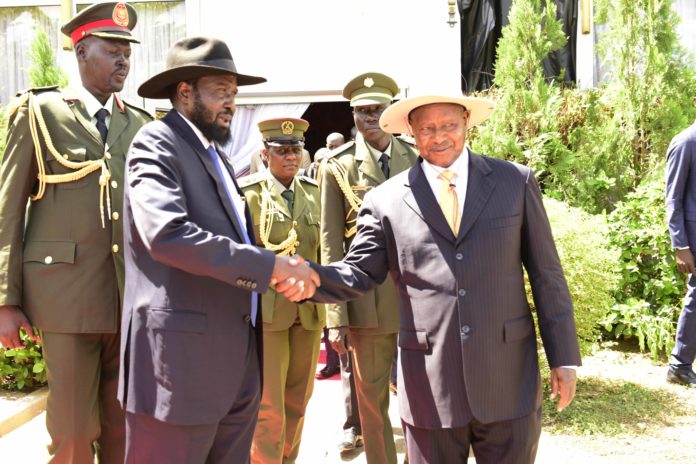
US POINTS MAN IN REGION: President Yoweri Museveni with his South Sudan counterpart Salva Kiir

President Yoweri Museveni has urged the people of South Sudan to embrace unity for prosperity and development warning that the misuse of identity can paralyze and endanger their nation.

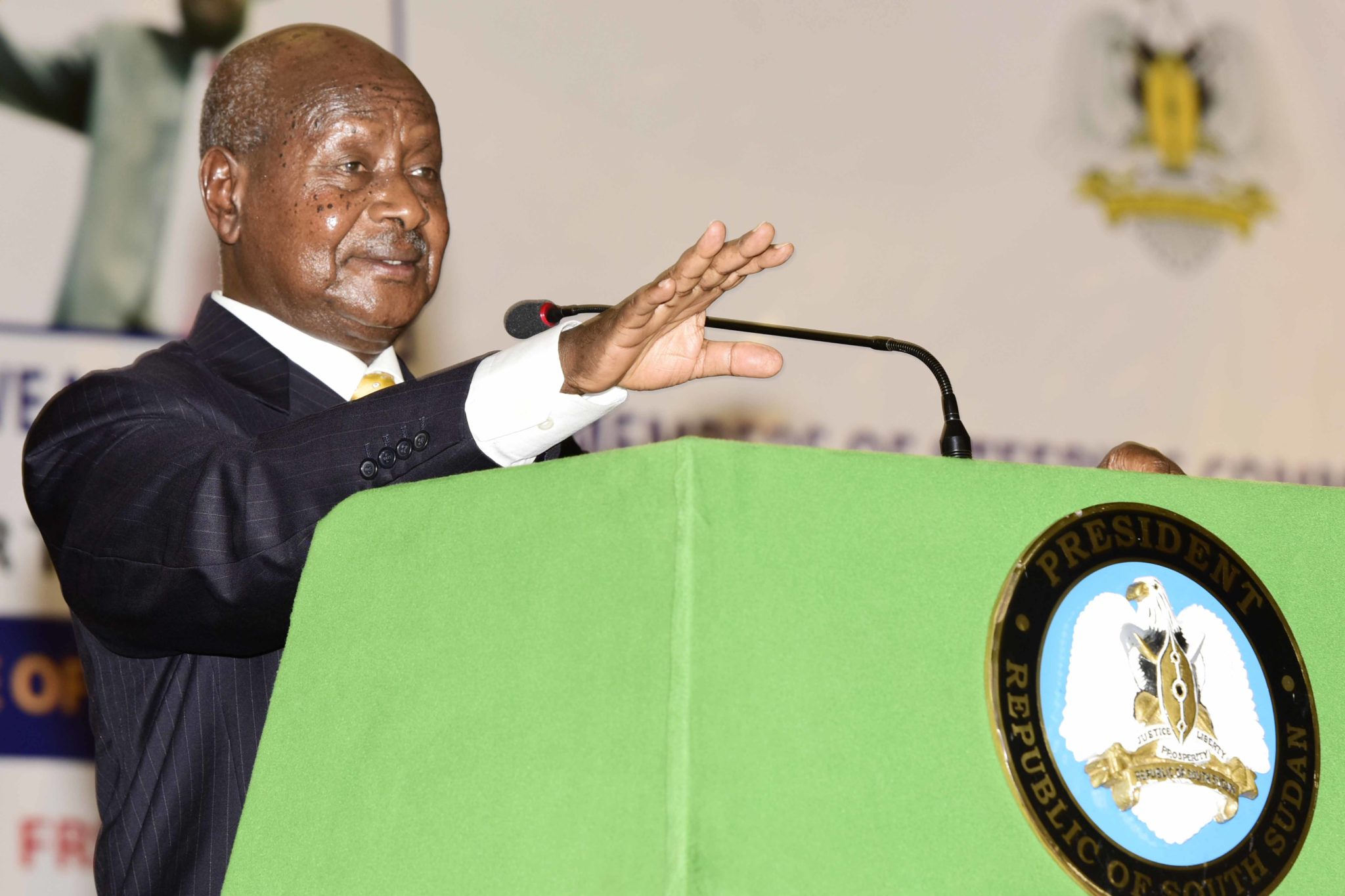
President Yoweri Museveni addresses delegates of the 94-member steering committee for national dialogue

“There are three problems; misuse of identity. This can paralyze and endanger any nation. Why insist on identity at the expense of other people. The issue of identity broke up Sudan,” he said at the launch of South Sudan’s National dialogue and swearing in of the steering committee members.

The President arrived in the South Sudan Capital Juba direct from Dar es Salaam where he assumed the EAC chairmanship, to attend the ceremony at the invitation of President Salva Kiir.

The launch was held at the Freedom Hall in Juba under the theme: ‘Redefining the basis of our unity and sense of common purpose through the national dialogue’.

“Yes identity is important but it can be misused. Why are you not concerned about prosperity, about common interests? Emphasizing identity and forgetting common interests is very dangerous. Our other disadvantage is backwardness in technology and science,” he said.

The President said he came to Juba to lend his support to the effort to promote dialogue for peace.

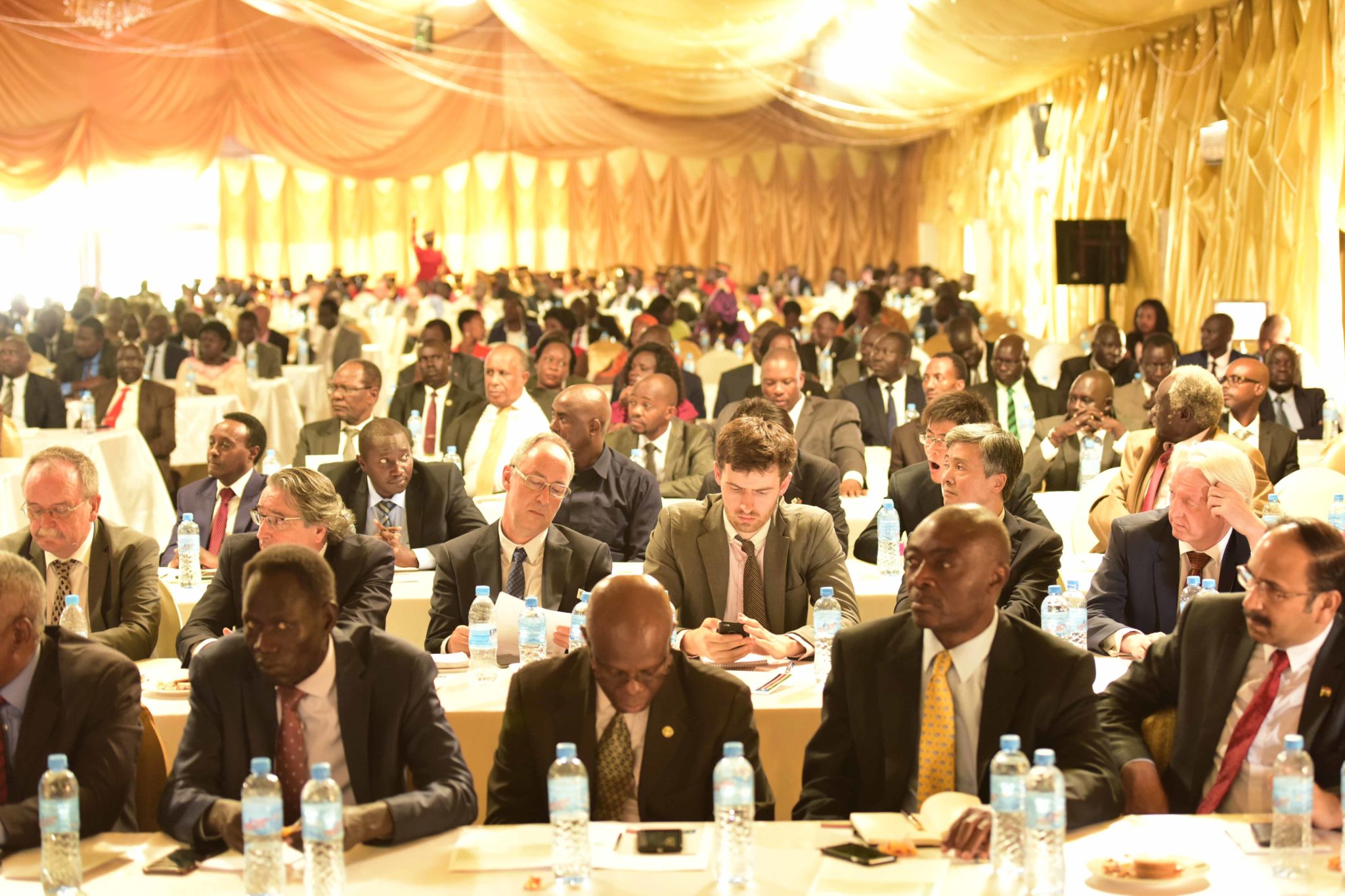
Members of the steering committee for national dialogue and other delegates at the swearing in 

A 94-member steering committee for national dialogue was sworn in to start the work of bringing harmony and peace to the people of South Sudan. The committee co-chaired by H.E Molana Abel Alier and H.E Angelo Beda Bangboru comprises of distinguished members of the country including religious leaders and professionals as well as politicians. Among them is Mrs. Rebecca de Mabior, widow to fallen leader of South Sudan John Garang De Mabior.

The National dialogue initiated by President Kiir is both a forum and process through which the people South Sudan shall gather to redefine the basis of their unity as it relates to nationhood, redefine citizenship and belonging, as well as restructure the state for national inclusion.

President Museveni who was chief guest commended President Salva Kiir for initiating the national dialogue and called on the people of South Sudan to support SPLM.

“SPLM is a strong movement and has respect of the people of South Sudan that is why it won by over 99 percent. Where did you get all that support…the Dinkas, Nuer and people from Equatorial province. How can you let them down? This is very good political capital which you cannot squander, you should revive SPLM and weed out all those subversive ideas, ” he said.

The President also warned against tolerating impunity in cases of killings, rape and defilement especially by armed forces calling for strict discipline to gain the confidence of the masses.

In his speech, President Salva Kiir congratulated the committee and the secretariat for accepting the national duty and said “the people of South Sudan look up to you to help deliver peace and reconciliation among them.”

President Kiir also called upon national leaders to embrace the spirit of national unity and join the national dialogue so as to end the violence in the country.

He also declared a unilateral ceasefire to create an environment for an inclusive dialogue and to facilitate the movement of humanitarian aid to famine stricken areas.

“Declaring national dialogue was based on our belief that solutions to the internal conflict in South Sudan are within our reach and that we are ultimately responsible for resolving our internal matters. We have witnessed that imposed solutions can divide and sow seeds of hate and fear among us. It is imperative that we, as south Sudanese, take responsibility for brining lasting peace to our beloved nation,” he said.

The national dialogue shall undergo three different stages; the first phase shall largely deal with grass root consultations to map out grievances that are unique to each community. The second step will be to convene regional peace conferences and the third and final stage will be to convene national conference which will tackle the remaining issues that will not have been addressed at the subnational level as well as adoption of resolutions made.

President Kiir said that the Presidency remains committed to provide guidance and leadership through moral, political and financial support to the committee.

“As your government, we are taking charge of our country and we are taking full responsibility for ending the on-going crises, including the war, famine and economic challenges we are facing,” he said.


Stories Continues after ad

Kiir promises to release political prisoners

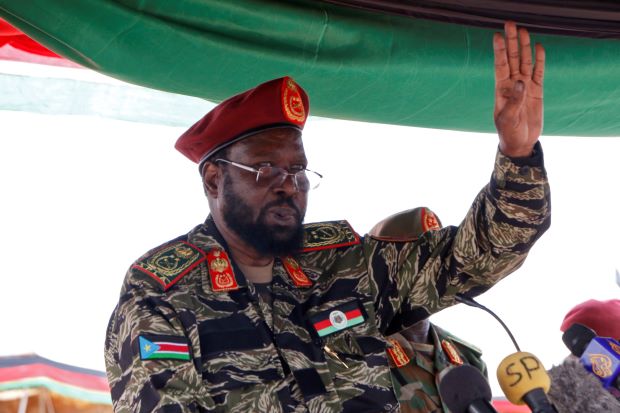
REJECTED CALLS TO STEP DOWN: South Sudan President Salva Kiir.

The president of war-ravaged South Sudan declared a unilateral ceasefire and promised to release political prisoners, but with no sign of a political deal with rebels it was not clear whether a truce would take hold.

South Sudan has been mired in a civil war since 2013, when President Salva Kiir fired his deputy, Riek Machar. The conflict, fanned by ethnic rivalries, has sparked Africa’s worst refugee crisis since the 1994 Rwandan genocide and plunged part of the country into famine.

“I directed the prosecutor general to immediately review the cases of those who have committed crime against the state, commonly known as political prisoners, and ensure the necessary steps taken are taken to lead their release,” Kiir said in a speech in the capital, Juba. He added: “I am also declaring unilateral ceasefire effective from today.”

South Sudan analysts expressed scepticism that Kiir’s announcement would lead to long-lasting peace.

Kiir has declared ceasefires before and he has yet to release any political prisoners, said Alan Boswell, a South Sudan expert who authored a paper for the Small Arms Survey on the most recent failed peace deal in 2016.

Kiir’s speech offered no hint that he was willing to negotiate with the disparate rebel groups, the largest of which is led by Machar, Boswell said. Machar is an ethnic Nuer while Kiir is a Dinka.

In April 2016 the United States and other Western nations backed a peace accord that saw Machar return to the capital and again share power with Kiir. But the deal fell apart less than three months later and Machar and his supporters fled the capital, pursued by helicopter gunships.

Since then, the conflict has become increasingly fractured, with a patchwork of ethnic militias fighting in different parts of the oil-producing country.

“There’s no good incentive for the opposition movements to put down their guns because they’re not being offered any political settlement,” Boswell said.

The UN has warned the ethnic violence spill into genocide.


Stories Continues after ad

Zari begs Ugandans to respect Ivan Semwanga’s privacy as his health deteriorates

DURING HAPPIER TIMES: Ivan Semwanga and Zari Hussein. The latter is under 'fire' from Ivan's relatives

Having undergone an operation on his head last week, the health status of the Chairman of Ugandans in South Africa Ivan Semwanga, is not showing signs of improvement, prompting his ex-live-in girlfriend Zari Hassan to intervene.

Sources say that despite earlier signs of recovering from the operation that left a huge scar on his skull, his health worsened Sunday, leaving many including Zari, the mother of his three children, worried.

The fear was exacerbated when images from Semwanga’s sickbed leaked to the public; in the photograph, Ivan, who appears to be in a coma, is seen with a huge cut on his head.

His ex Zari, who is taking care of him says the photos are likely to have been taken by one of his visitors at hospital and she has since pleaded with the public to respect Ivan’s privacy and stop sharing the images.

Ivan was admitted to Steve Biko Hospital, South Africa two weeks ago after suffering from a stroke. He has remained in coma since and friends say he ‘badly’ needs prayers.


Stories Continues after ad

Stella Nyanzi unleashes venom as Makerere students remanded again

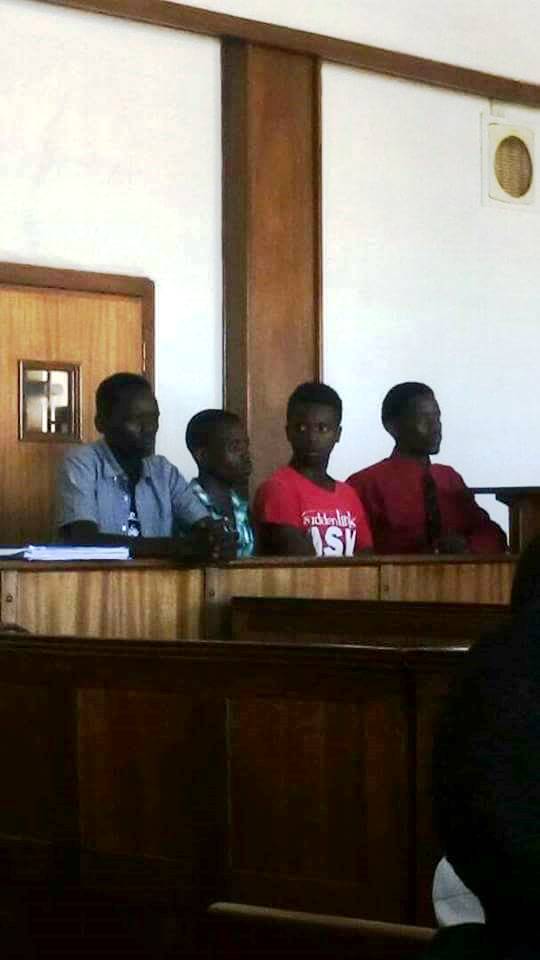
IN THE DOCK FOR SUPPORTING STELLA NYANZI: Edmund Kahigi, Roy Rugumayo, Steven Ariho and Hannington Magarura were arrested at Buganda Road Court

The hearing of bail application by Makerere University students accused of holding an ‘unlawful procession’ has failed for the second time, drawing criticism from some members of the public including Makerere University researcher, Dr. Stella Nyanzi.

The four, Edmund Kahigi, Roy Rugumayo, Steven Ariho and Hannington Magarura were arrested at Buganda Road Court on May 10, when they held a protest demanding for the release of Dr. Nyanzi, who was then on remand at Luzira charged with cyber crimes that include offending the ‘First Family’.

The quartet arrived at Buganda Road Court today for their bail application before magistrate Gladys Kamasanyu, but the case was adjourned to Wednesday for both hearing and trial. Nonetheless, their efforts appear to have paid off as Dr. Nyanzi, who had been in detention for over a month was released on bail the same day they protested.

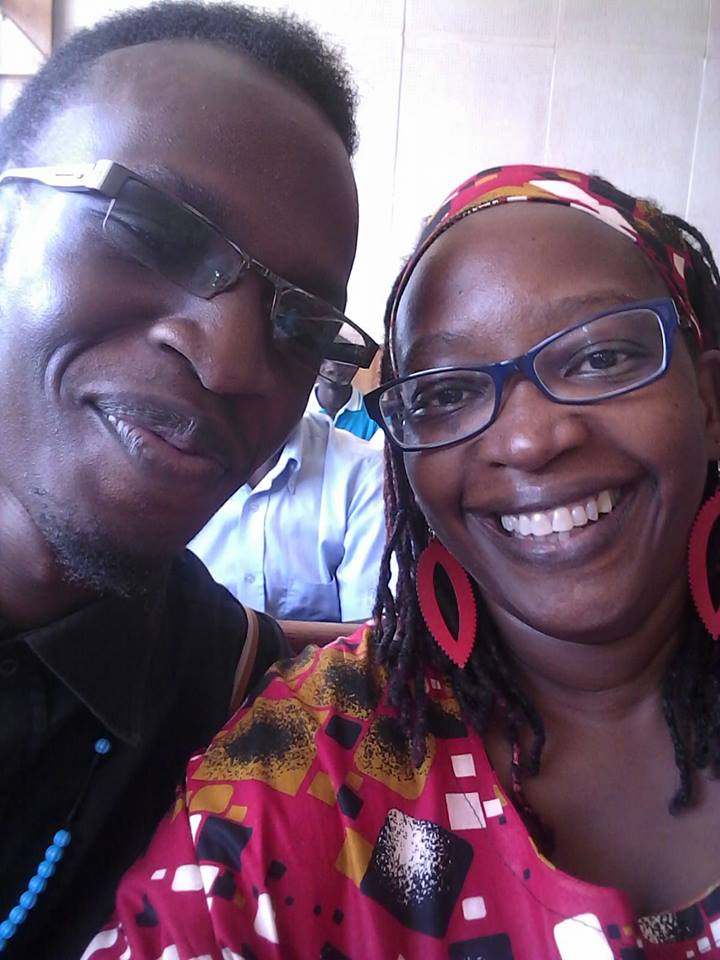
Dr. Stella Nyanzi together with a sympathizer and colleague of the remanded Makerere University students at court today

And today Nyanzi was among the people who turned up at court to show her empathy and she just couldn’t hide her disappointment.

“I am seated on a wooden bench on the side of freedom in Buganda Road Magistrates’ Court, in solidarity with the four students of Makerere University who were arrested on 10th May 2017 for holding a peaceful demonstration against my own arrest and imprisonment. Shame on Uganda for arresting and intimidating brainy daring thinkers who hold peaceful protests against Museveni’s dictatorial family-rule,” she fumed.

“The four students were denied bail and instead remanded to the ugly underbelly of the state called Luzira Prison. Imagine imprisoning university students for exercising their constitutional rights to hold peaceful demonstrations!”

Reacting to the continued remand of the students, Makerere University LC5 Councillor Doreen Nyanjura had no kind words for the magistrate.

“The four Makerere University students have yet again been sent back to Luzira Prison, these students have already missed course works and tests, they begin exams this Friday! Two weeks back the Magistrate, Kamasanyu Elizabeth denied them bail because she was tired and yet she also had a report to present in the High Court! Today, this very arrogant Magistrate denied the students bail because she wants to handle the trial and bail application at the same time!”

The students are represented by Legal Aid boss, Isaac Semakadde.


Stories Continues after ad

FDC opens ‘black book’ for the tortured under NRM regime

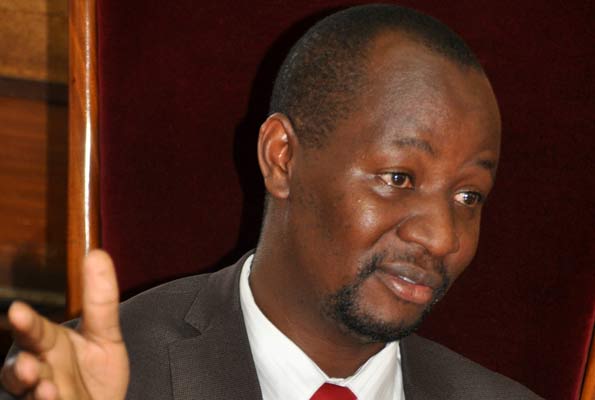
PRESENTED LACKLUSTRE EVIDENCE: Kira Municipality MP Ibrahim Ssemujju Nganda

The Forum for Democratic Change (FDC) has opened a black book, where it will keep details about the victims of torture under the National Resistance Movement (NRM) regime.

Addressing the media at the FDC headquarters in Najjankumbi, spokesperson Ibrahim Ssemujju Nganda said the party arrived at the decision after realizing that there was organized torture of Ugandans currently going on in several places, gazetted and ungazetted, including at the Nalufenya Police and Detention Centre in Jinja.

This is not the first time a major opposition party in the country is opening a ‘black book’; in the 1980s the Democratic Party under Paul Kawanga Semwogerere ‘opened’ a black book to keep details about the people who had gone missing during the second Uganda Peoples Congress (UPC) regime of Apollo Milton Obote between 1980 and 1985. However, to date nothing is known about the DP Black Book.

“The party has established a book for registration of suspects and all who have gone missing in President Museveni’s regime,’ Ssemujju Nganda said adding that the FDC will liaise with family members of the suspects to monitor developments related to their relatives’ prosecution.

The legislator also demanded for the arrest and prosecution of the police officers who engaged in the torture of suspects at Nalufenya police station in Jinja.

For several weeks now the media has been awash with stories of torture at the Nalufenya police and detention centre following the massive harm caused to Godfrey Byamukama, the mayor of Kamwenge Town Council and other suspects that are linked to the murder of Assistant Inspector General of Police (AIGP) Andrew Felix Kaweesi who was gunned down on March 17, 2017.

Meanwhile, the legislator has lauded the government for the disconnection of unregistered simcards, but warned that there should be an orderly approach towards issues of national importance.

“Being a victim of simcard disconnection, I advise the state to first issue National Identity Cards to all Ugandans followed by disconnection other than issuing deadlines before the massive issuance of the IDs,” he said.

Stories Continues after ad

ANC plans to expand Zuma powers

WANTS EXPANDED POWERS: Embattled South Africa president Jacob Zuma

Big Brother is on the way: the ANC plans to expand the powers of the president’s office, which will see the country’s Number 1 becoming even more powerful at all levels of government, but especially in provincial affairs.

In the past, President Jacob Zuma was criticised for centralising the control of all state-owned enterprises to his office. The opposition parties regarded this as another attempt to bring corrupt “state capture” elements into state entities.

There have also been tussles between the ANC-led national government and the DA-run Western Cape on jurisdiction in particular areas. A new ANC discussion paper envisages the establishment of a presidential commission on provinces to review the powers and functions of all three spheres of government. But it will zoom in on provincial roles and responsibilities.

The discussion document emanates from the ANC’s national subcommittee on the legislature and governance policy and was released in Johannesburg by subcommittee chairperson and Communications Minister Ayanda Dlodlo.

The document is part of preparations for the party’s national policy conference, to be held in June at Nasrec, south of Johannesburg. The policy conference would precede the ANC’s much-anticipated national elective conference in December.

Dlodlo said: “Given the scale and complexity of government’s delivery across three spheres of government and the state-owned enterprises, the strategic centre of power in the presidency must be strengthened to drive the implementation of the National Development Plan, and align planning and policy, resource allocation and enforcement.”

“The aim here is to improve the alignment and integration of policies and development across spheres and sectors of government.”

The process would entail modernising the public service. The capacity of the National Council of Provinces (NCOP) would be enhanced so that it is an active centre of provinces and municipalities.

The NCOP is equivalent to the former apartheid-era senate, and it has representatives directly from the provinces, while the municipalities are represented in the body by the South African Local Government Association.


Stories Continues after ad

Kadaga orders rules committee to summon Tumwebaze over contempt of Parliament

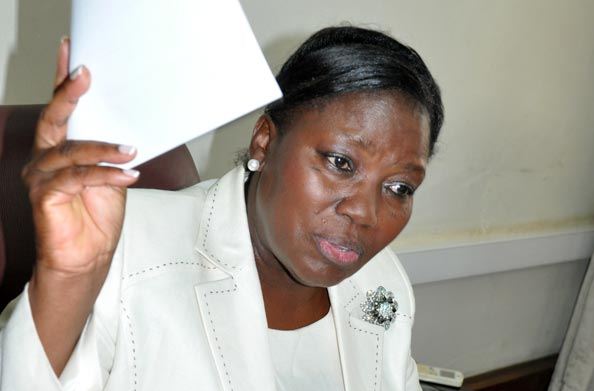
Speaker Rebecca Kadaga.

The Speaker of Parliament has directed the House Rules Committee to summon ICT Minister Frank Tumwebaze for contempt of Parliament over sim-card registration.

Following Tumwebaze’s statement today insisting that all unregistered sim cards be disconnected come midnight, the Speaker of Parliament directed house rules committee to summon him for contempt of the August house.

Yesterday Parliament chaired by Kadaga, moved a motion with an anxiety of the government to extend the deadline of sim card registration for at least one year however, legislators statement was discarded and under looked.

Today in the afternoon, Minster Tumwebaze issued a statement at Uganda Media Center that the government will not tamper it’s with its programme to extend the  set date of unregistered sim card disconnection claiming that Ugandans have had enough time to register and verify their cards.

Stories Continues after ad

Kanyeihamba: I miss Crank bank, DFCU has no customer care

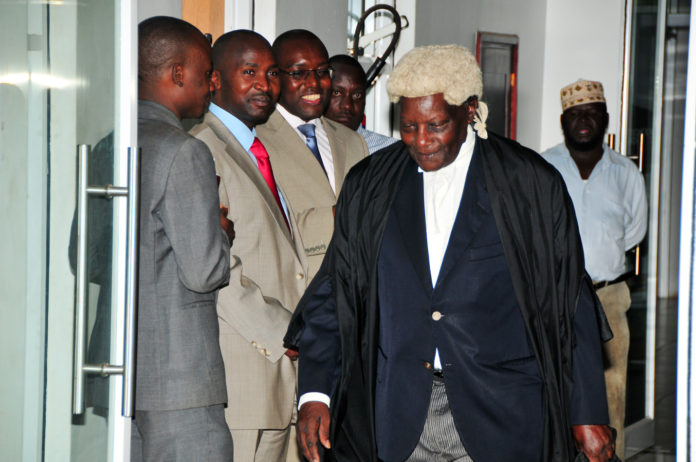
Rtrd Supreme Court Judge Prof George W. kanyeihamba arrives at the Court.

Retired justice of the Supreme Court George Kanyeihamba has bashed DFCU bank for lack of customer care.

Kanyeihamba took it on social media praising Crane bank which was taken over by DFU due financial constraints saying it would take time for any other bank to emulate Crane.

‘’On going to carry out my transaction as usual at Nsambya, I was surprised to find once located branch of Crane bank sealed and blocked off with iron sheets without any directions to where the bank migrated to’’.  Kanyeihamba said. He however called his former manager at Crane bank for directions.

Adding “I was banking with Crane bank which even now it has gone down they had the most efficient customer care. I was advised by the senior manager of Crane bank that there is no problem and that I should continue with DFCU but when I went there, there, the premises were blocked off with iron sheets no entry and no sign post like Crane Bank”

Justice Kanyeihamba narrated how nasty DFU employee threw a cheque at him that he had presented to be helped claiming that there is no time to handle his problem and referred him to his former manager of Crane bank Nsambya branch.

Hardly a year after its takeover,Ugandans are feeling the impact left by Crane Bank.

“A young man came and I asked for assistance, but he said there is no manager but I asked again whether there was nobody to help, the boy said we don’t have time to handle customers like the way you are demanding. When I insisted, he just threw the cheque at me”

He in turn demanded for the transfer of his bank account to Stanbic bank.

Crane bank was a commercial bank in Uganda, licensed and supervised by the bank of Uganda, the central bank and national banking regulator.it was one of the banks that spearheaded other banks in the past 10 years.

In January 2017, DFCU took over the bank, which had been the statutory management of the Bank of Uganda because the bank’s liabilities exceeded its assets

Justice Kanyeihamba, lauded Crane bank saying it was the only bank with efficiency and bright system of treating and receiving customers.

Stories Continues after ad