Stanbic Bank
Stanbic Bank
17.6 C
Kampala
Stanbic Bank
Stanbic Bank
Home Blog Page 1866

Museveni address on UK-Somali conference

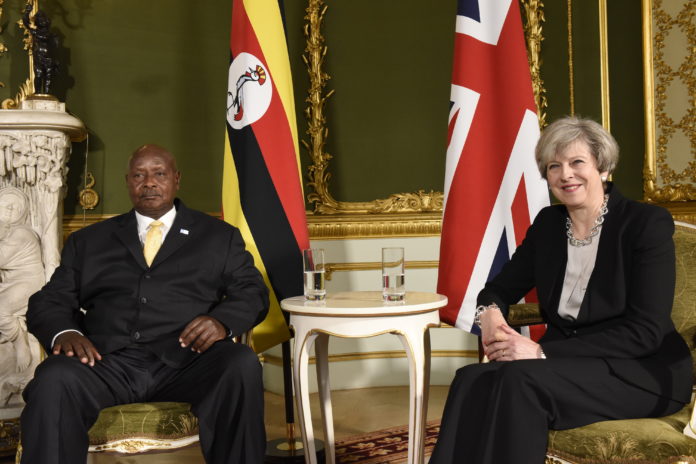
President Yoweri Museveni has met United Kingdom Prime Minister Theresa May at the sidelines of the International Conference on Somalia

President Yoweri Museveni has met United Kingdom Prime Minister Theresa May at the sidelines of the International Conference on Somalia currently taking place at Lancaster House in London.

The bilateral meeting between the two leaders focused mainly on the situation in Somalia and the conflict in South Sudan, which has generated close to a million refugees making it the second-largest refugee-hosting country in the world after Turkey.

The international conference on Somalia opened today in London and is organized under the auspices of the UK and the United Nations as part of efforts to put Somalia back on track.

The conference has brought together Heads of State and Government from across East Africa and other key partners, along with senior figures from international organisations.

Below is President Museveni’s statement on the Somalia Conference today, 11th May 2017

Excellencies Heads of State and Government;

Distinguished Heads of Delegations;

Ladies and Gentlemen.

 Uganda was the pioneer troop contributing country with the leading elements of our first contingent landing in Mogadishu on the 6th of March, 2007.

Many observers were convinced that our effort was hopeless, if not suicidal.  We were, however, confident of the correctness and feasibility of our decision.  This was due to our knowledge of the African peoples, those people that have inhabited this area for the last 4 million years.

Many of the African societies live symbiotically with one another, utilizing their diversity for mutual benefit.  Bigotry, which seems to characterize some societies in the world, is not common in African societies.  I normally tell my Moslem friends that, according to my culture my list of haram (ebihagaro) is much longer than theirs.  It is not only pigs that we regard as haram.  Our list includes: fish (ebijongoma) which we regard as snake; chicken (because it is a bird that are always flying) and if you eat it you are likely to be restless and unsettled; mutton; etc., etc.

Nevertheless, we used to rear chicken for use in divination in the traditional religions. Moreover, our people would happily donate chicken to our neighbouring communities who relish the consuming of those creatures. The same applied to fish, mutton, etc. In other-words, our philosophy was: “live and let live” ─ enjoy your rights but do not interfere with the rights of others.  Our communities specialize in skills and products and exchange ─ goods and services. That is how we were able to build a strong civilization that withstood the assaults we suffered from the slave-trade, colonialism and the local tyranny of our myopic and ego-centric chiefs.

Therefore, when we heard of the bankrupt ideology of bigotry being pushed by groups from Asia and the Middle East being imposed on the people of Somalia, we had to send a clear message to them and Somalia was one of the rendezvous points between the two diametrically opposed world outlooks: live and let live or chauvinism.

Since that time, the following have been achieved:

The Troops Contributing Countries have increased to five. These are: Uganda, Burundi, Kenya, Ethiopia and Djibouti.

The Somali Government moved from exile in Kenya where it had been based to Mogadishu since 2007.

The International Organizations also relocated to Mogadishu from Nairobi-Kenya.

Many Al-Shabaab dominated areas have been liberated. The Ugandan contingent alone stretches from Mogadishu to the Sea Port of Barawe.  This is not to talk of the areas liberated by the brother contingents from Ethiopia, Kenya, Burundi and Djibouti.

There are many noticeable reconstruction activities in many parts of Somalis, especially in Mogadishu, in the form of private buildings, roads, a modern Airport, etc.

Businesses are thriving in Mogadishu.

Indirect elections have taken place a number of times since 2000. The most recent election was the one of President Mohamed Abdullahi Mohamed (Farmajo) and the new Parliament.

The menace of piracy at Sea has been tamed.

However, our strongly held view is that it is not enough to check Al-Shabaab. Somalia must heal completely and stand on its own feet.  In our view, there are a number of bottlenecks that stop the complete healing of Somalia.

The absence of patriotic, pan-Somali political parties.

There may be individuals who have got a pan-Somalia outlook.

These individuals, however, need to form political Parties with a patriotic, national outlook, away from the bankrupt ideology of clanism being pushed by opportunists.  The recent election of the President by an overwhelming consensus seems to be a healthy seed for the future.  This patriotic idea, however, needs to be translated into political organizations.

The same patriotic ideas must then be infused in the Somali National Army recruited on a quota basis from all parts of the country.

This Army needs officers, NCOs, specialists in addition to ordinary soldiers.

The multiplicity of trainers (from different countries) of the Somali Army needs to be coordinated by the Somali Command around a Somali forces military doctrine so that it becomes a cohesive force with a clear historical mission.

The Somalis need to resolve the issue of whether they will re-build the Somali Army by pay or patriotism. If it is by pay, who will pay them? Is the Somali State able to pay a large Army on that big territory of 637,657sqkms it needs so as to pacify the whole country? The present partial pacification of the country is not good enough.

Can the international community agree to pay a large Somali Army for some years so that the wholly liberated Somali territory can be used to generate revenues to pay the public servants and also cope with other obligations?

The Somali Army and the soldiers from the TCCs could be further equipped to do more road projects in the areas of their responsibility along with the local authorities so that the country is opened up.  They can also build schools and health centres for the benefit of the people. The liberation has to resonate with the people in the countryside.

In the meantime, the TCCs should be supported sufficiently, their small numbers notwithstanding, to use force multipliers (gun-ships, attack planes, air-lift means) to further weaken Al-Shabaab, in their remote hide-outs.  Our concept of counter-insurgency is to have mobile forces to hit the enemy and zonal forces to ensure that the enemy does not re-infest the area.  It should be the Somali Army to provide these zonal forces.  If they cannot do it yet, what should we do?  That is why we propose long jump operations to eliminate them by surprise attacks. It is better than giving them extended holidays without any punishment for their mistakes and allowing them to create liberated areas by default.

There is the short term issue of the drought.  We need to provide relief so that the long-suffering people of Somalia do not die from this additional problem.

Apart from the drought, however, the international community could harness the power of the Somali business class.  Do the Somali businessmen supply the massive relief items that are delivered to Somalia?  Or is it the foreign businesses that supply these items?  Our view is that the harnessing the power of the Somali business class would not only be good for the economy of the country but would also be good for the politics of the country.

Yoweri Museveni

I thank you.


Stories Continues after ad

UNBS, South Sudan standards body sign MoU

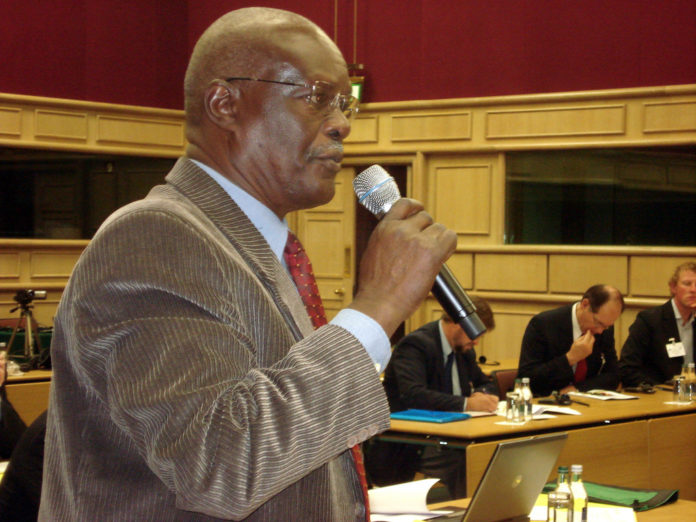
EMPHASIS ON STANDARDS: UNBS Executive Director Dr. Ben Manyindo

The Uganda National Bureau of Standards (UNBS) and South Sudan National Bureau of Standards (SSNBS) have entered a Memorandum of Understanding (MoU) on standardization and conformity assessment on at the UNBS headquarters, Bweyogererewas signed was signed May 10 by Dr. Ben Manyindo, Executive Director Uganda National Bureau of Standards and, Dr. Mary Gordon Muortat, Executive Director South Sudan National Bureau of Standards, who represented their countries respectively.

The signing of this MoU signals a commitment by the two standards bodies to work together on issues of standardization and conformity assessment (testing, certification and inspection), metrology, calibration and training.

”South Sudan National Bureau of Standards expects to learn from UNBS because they have been here for a while; they have the technical know-how so we are ready to learn’’ Dr. Mary Gordon Muortat said.

This co-operation and mutual interest aims to enhance and strengthen technical cooperation with the aim of exchanging necessary information and expertise between the parties within the framework of the East African Community. ‘We want cooperation from each side especially the technical lines. We are all party to the EAC and to supporting each other to grow the standardization agenda to be able to help the aspects of trade and consumer protection within the region.’ Dr. Manyindo, highlighted.

The Memorandum of Understanding foresees enhanced cooperation on a number of standards related topics, from harmonization of specified standards with international standards, mutual recognition of test results, quality marks, product verification, metrological assessment and calibration of the measure instruments; to research and cooperation.

Stories Continues after ad

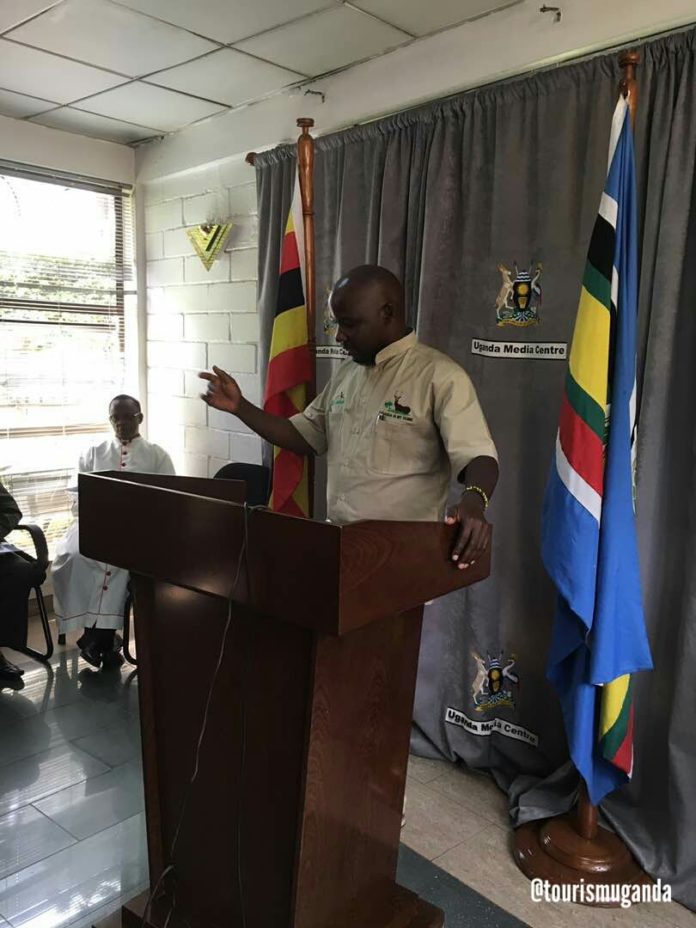
Tourism ministry steps up preparations for Martyrs Day

GETTING READY: State Minister for Tourism Godfrey Kiwanda Ssuubi addressing the press at the Media Centre

The Ministry of Tourism is to promote religious tourism centers and activities ahead of Martyrs’ Day on June 3.

The day is celebrated annually in commemoration of the Uganda Martyrs who were executed on the orders of Ssekabaka Mwanga II, the then King of Buganda in November 1885 and January 1887, because of their religious beliefs.

Uganda Martyrs were a group of 23 Anglican, 22 Roman Catholics and over 100 Muslims. This year the Roman Catholic Church has chosen the theme: ‘Stand firm in faith’ while Church of Uganda chose the theme: ‘Martyrs don’t die in vain’, derived from Philippians 1:21.

The Catholic Church activities to mark the day will begin with a walk on May 27, while the Anglicans will conduct outreaches for the youth and children ahead of the commemoration, and, while addressing the press at Uganda Media Centre the Minister State Minister for Tourism Godfrey Kiwanda Ssuubi said government is going to fund preparations for both denominations.

Minister Suubi noted that government had improved the facilities at Namugongo including the Basilica, sitting areas, water sources, roads and security.

Further, according to the Minister, the activities carried out there generate foreign exchange which is in turn invested in other sectors of the economy.

This year Hoima Diocese will lead the Roman Catholic Church celebrations; Namirembe Diocese will lead the Anglicans while the Uganda Muslim Supreme Council has chosen June 1 as the day to remember those who died for Islam.

The chief celebrant at the Anglican Martyrs Day commemoration will be Archbishop of the Church of Uganda His Grace Stanley Ntagali and the Bishop of Butare in Rwanda is expected to attend.


Stories Continues after ad

Fraud, greed failed Wizkid’s show in Uganda – Suudiman

A Billboard announcing Wizkid's performance at the concert that was scheduled in Uganda on December 3, last year.

It’s now six months since Wizkid failed to perform in Uganda, leaving many of his fans disappointed.

Events organiser Suudi Lukwago aka Suudiman, who has been involved with the industry for over ten years, said Wizkid’s failure to travel to Uganda was after he realized that he had been defrauded.

“Wiz Kid’s management was told that he was to perform in a night club. (When he previously came to Uganda during the Guinness Made of Black campaign, he performed in one of the small halls at Golf Course Hotel). With that lie, they negotiated a huge discount of 40%. As if that wasn’t bad enough, the booking for Wiz Kid, who was the most popular in Africa at the time, was made in Rwanda (where he performed) by people who are amateur in the business. They comprised a singer who isn’t familiar with Wiz Kid’s management and two naïve officials from Face TV,” Suudiman revealed today.

He says he knew it a month in advance that the artiste wasn’t going to travel to Uganda because he was in contact with Wizkid’s management.

“I knew, a month before the concert that Wiz Kid wouldn’t come for the Uganda concert. Owing to the pre-event hype, a close corporate friend invited me to Cooper Chimney restaurant at the Lugogo Cricket Oval. He wanted to come on board as a sponsor and asked me, as someone who has previously organized international shows to investigate and find out whether payment had been made for the artiste to come to Uganda. The show had been advertised well and he was keen to come on board. However, since he had lost money before in similar deals, he never wanted to take chances.

“When I called my sources in Nigeria and the US, I landed on the truth. The organizers, Face TV were telling lies. When I called them, they rubbished me and my concerns. I asked them about WizKid’s play list for the concert and whether they had been in contact with the band director, and they were ignorant and showed me attitude. Unknown to them, I was in touch with someone in Wiz Kid’s camp two weeks to the stipulated date of the concert, but they confessed they were not even rehearsing for the concert. Then it dawned that Ugandans are being taken for a ride. I would be lying if I tell you how much money exchanged hands or what was on the documents reflected in the lawsuit reflected the real sum disbursed to Wiz Kid’s management team.”

Scheduled for last December, Wizkid’s show was to celebrate StarTimes 6th Anniversary in Uganda. Close to 25,000 Ugandans paid for the “Wiz Kid Live in Kampala” that never came through.

“Many Ugandans by nature are the forgiving and forgetful type. After close to 25,000 Ugandans paid for the “Wiz Kid Live in Kampala” concert in December 2016, only for him not to turn up at the last minute, it appears a closed chapter. If Star Times had worked with reputable people, all we would have now would be good memories of the concert. KT or Balaam Barugahara would have pulled off a better job. When I read of the arrest warrant by Face TV, I concluded they are jokers who need to be answerable for tainting the name of Star Times. It is almost six months since the incident, but what has been done to date to bring him to book? Some of this broad day light thuggery needs to be investigated by the IGP,” added Suudiman, who has flown in quite a number of foreign artistes including R.Kelly, Brick n’ Lace, Busy Signal, Kevin Lytle, Burna Boy, Timaya among others.

Stories Continues after ad

Madhvani Foundation launches Shs700m scholarship for varsity students

Madhvani Foundation Board Chairman Gerald Sendawula

It is often said the strength of any country lies within the education of its youth. However, many underprivileged students never complete education to the level of university.

It is for this reason that the Madhvani Foundation scholarship program is offering 700million shillings, a golden opportunity to underprivileged but brilliant students this year.

On behalf of the five Board members, the Chairman Gerald Sendawula launched the Madhvani Foundation scholarship fund for the academic year 2017/2018, saying: “the Foundation is proud to have supported over 2,000 underprivileged Ugandan students from different universities studying both scientific and technical courses.  The scholarship scheme’s fund amount has grown from 300 Million shillings since 2003 to 700 Million Shillings to date.”

Over the last 15 years the Scholarship Program has witnessed incredible success stories including that of Martin Muganzi, a 2003 beneficiary.

He is currently inspiring the youth to become job creators other than job seekers, and has established a vocational enterprise for apprenticeship in Kalerwe to equip students with tailoring, carpentry and agricultural skills.

“Having come from a single parent family, school fees was a challenge but the Madhvani Foundation gave me a chance to make it in life and today  I am passionate to help inspire the youth into their future,” he said.

Beatrice Apoto, the Madhvani Foundation administrator listed science and technical disciplines open for sponsorship as  Agriculture, Biology, Chemistry, Actuarial Science, Architecture, Veterinary Medicine, Commerce, Hotel Management, Pharmacy, Nursing, Engineering, Food Science and Technology, Information Technology, Environment, and Medicine.

She emphasized that students legible for the scholarship are undergraduate students who have completed first year of studies at a Ugandan University, and graduate applicants who have been either admitted and/or registered for graduate programmes.


Stories Continues after ad

Libya, Mali to deport over 5000 Nigerians

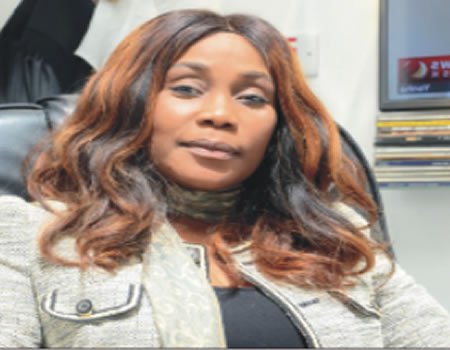
WARNED ON DEPORTATIONS: NAPTIP Director-General Julie Okah-Donli

The National Agency for the Prohibition of Trafficking in Persons (NAPTIP) has said it is expecting not fewer than 5,500 Nigerians to be deported from Libya and Mali.

According to reports, NAPTIP Director-General Julie Okah-Donli made the revelation during a visit to the agency’s Lagos office.

Okah-Donli says the rate of deportation of Nigerians across the world is becoming alarming and something needs to be done quickly, adding that those to be returned to the country are facing various offences ranging from non-possession of valid travel documents, smuggling of migrants and human trafficking

Stories Continues after ad

Uganda to benefit from gorilla tracking permit hike in Rwanda

THE SILVER BACK: Habituated Gorillas are the most famed primates after man.

Tourism and travel experts have said the increase in gorilla-tracking fees announced by Rwanda will benefit the tourism industry in Uganda.

Early this week the Rwanda Development Board announced the doubling of the price of a tracking permit, from US750 to US$1500.

Gorilla tracking is one of Rwanda’s biggest foreign exchange earners but the experts say that with Uganda maintaining the permit at US$600, tourists are likely to opt for the northern neighbour. “No doubt hundreds of primate operators are hastily re-arranging their itineraries to switch countries,” Paul Goldstein, a leading adventure guide and wildlife photographer, was quoted as saying.

Further, the experts say that the move by RDB will also affect local tourism, seeing as it is that a permit for indigenous Rwandans that has been going for US$36 has also been raised to US$1500.

And, in a bid to tap into the lucrative gorilla tracking the Uganda Tourism Board quickly reminded intending trekkers that the Ugandan permit was still priced at US$600.

“Remember; our gorilla tracking permits still go for $600, and this would guarantee you an experience like you have never had anywhere before,” the UTB wrote on its Facebook page.

The habituated gorilla is the most famed primate after man and currently there exist about only 800, found in Uganda, Rwanda and the Democratic Republic of Congo (DRC).

Stories Continues after ad

President Museveni in the UK for conference on Somalia

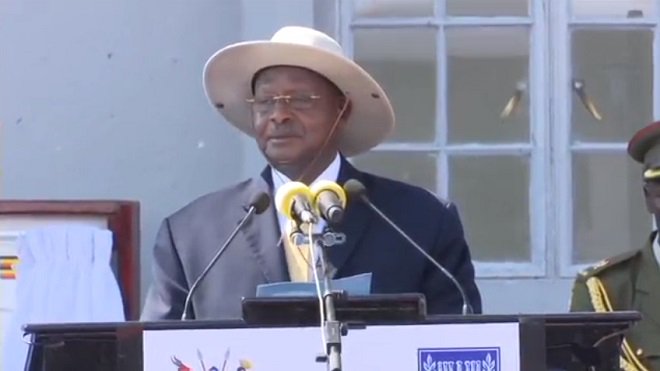
President Yoweri Museveni

President Yoweri Museveni is in London, United Kingdom for a two day working visit during which he will attend and address the Somalia Conference taking place at the Lancaster House today.

The President, who is accompanied by the First Lady and Minister of Education and Sports Janet Kataha Museveni was received by Lord Dolar Popat, Member of the UK House of Lords, H.E Peter West the UK High Commissioner to Uganda, Uganda’s High Commissioner to the United Kingdom Prof. Joyce Kakuramatsi Kikafunda and the Minister of Defence Adolf Mwesige.

The President will also hold a bilateral meeting with the United Kingdom Prime Minister Theresa May focusing on South Sudan and Somalia before both leaders attend the opening ceremony of the London Somalia Conference at Lancaster House. He is expected to hold various bilateral meetings with among others the UN Secretary General Antonio Guterres and the UK Secretary of State for Foreign Affairs Hon. Boris Johnson

Uganda was the first country to deploy troops under AMISOM into Somalia in March 2007. So far, Uganda has provided all four AMISOM Force Commanders with the most recent being Lt. Gen. Andrew Gutti who was replaced by Lt. Gen. Silas Ntigurirwa from Burundi.

The Ugandan contingent remains the largest contingent in AMISOM with 6,223 troops based in Sector 1 which comprises of Banadir (Mogadishu), Middle and Lower Shabelle regions.

Until now, Uganda has deployed 12 battle groups into the Mission area, with the recently deployed Battle Group 12 joining their Burundian counterparts in Baidoa.


Stories Continues after ad

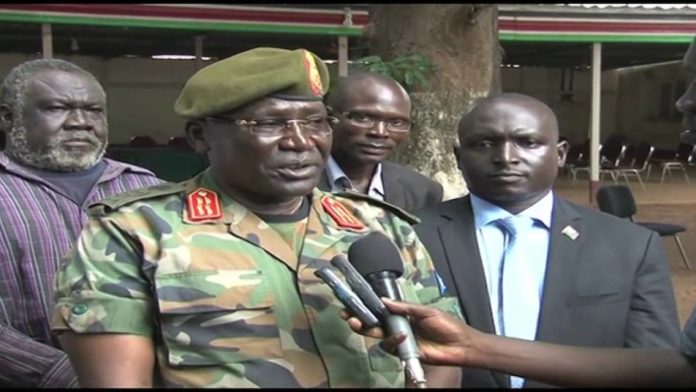
I am not joining rebellion – former SPLA commander

EXILED: Former SPLA Commander Gen. Paul Malong

South Sudan’s sacked former army chief Paul Malong sought to allay concerns he might join a revolt after leaving the capital Juba soon after his dismissal, saying he had no ‘problems’ with the government.

Malong’s removal followed several resignations by senior generals in recent months alleging tribal bias and war crimes as South Sudan’s civil war dragged on. Some said they might join the revolt against President Salva Kiir.

Malong left Juba in a convoy of several vehicles for his native Aweil state in the country’s northwest after Kiir sacked him on Tuesday, giving rise to speculation he might also revolt.

“Whatever has been said, there is no reality, because if I wanted to have a problem that problem should be in Juba,” he told Radio Miraya FM, a United Nations radio station.

He did not respond to the reporter’s question on whether he would return to Juba.

Earlier, Defence Minister Kuol Manyang Juuk said he had spoken with Malong and convinced him to return to Juba, but that it was unknown when that would happen.

Malong, who was replaced as army chief by General James Ajongo, could not be immediately reached for comment. Ajongo is a member of an ethnic minority, the Luo, also from Aweil.

South Sudan, which obtained independence from Sudan in 2011 and is the world’s youngest nation, has been mired in civil war since 2013 when Kiir, an ethnic Dinka, fired his deputy, Riek Machar, from the rival Nuer community.

The move triggered a conflict that has pitched parts of the oil-producing country into famine, paralyzed public services and forced 3 million people – a quarter of the population – to flee their homes. The United Nations has said the violence amounts to ethnic cleansing and risks escalating into genocide.

In February, the military’s logistics chief Thomas Cirillo Swaka resigned, citing rampant human rights abuses by Kiir’s armed forces and the dominance of the president’s Dinka group.

His announcement triggered a spate of further resignations by generals and civil servants who made similar accusations against the government.

Officials in Juba have played down the significance of Malong’s removal, calling it “normal practice”.

Ajongo joined the Sudan People’s Liberation Army, the formal name of the South Sudanese military, in 1983, when the SPLA was still a rebel group fighting for independence from Sudan.


Stories Continues after ad

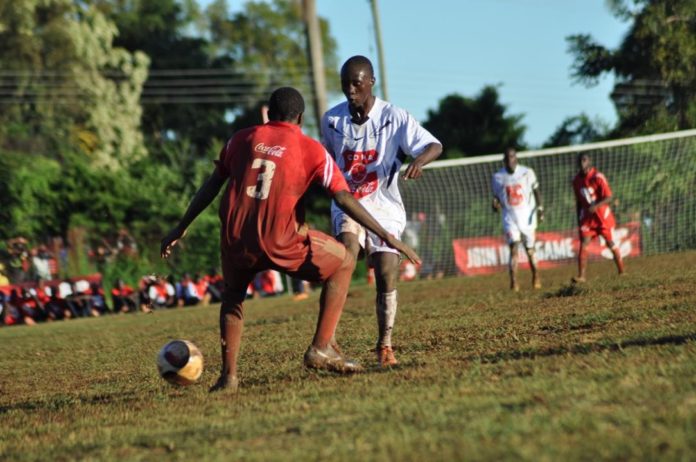
Coca Cola National Football Championship attracts 58 schools

Masaka SS and Yale SS players battles for the ball during the Copa Coca-

Fifty eight school teams have converged in Masaka town for the 2017 edition of COPA Coca-Cola grassroots football tournament national championships which commenced yesterday at Masaka Recreation grounds.

The kick-off match that was attended by local area leaders including the Resident District Commissioner (RDC) Lt. Joe Walusimbi and District Police Commander (DPC) as well as officials from the National Council of Sports, FUFA, ASHU and Coca-Cola Uganda, the kick-off ceremony,saw hosts Masaka S.S defeat Mukono-based Yale High thanks to a high display of talent from Alison Kyeyago who scored Masaka’s only goal.

Speaking on behalf of Coca-Cola Uganda, Mr. Robert Muwagula, Regional Manager, thanked all the guests and dignitaries for showing up in large numbers to witness the launch of the 2017 nationals.

“For more than two decades, this tournament has nurtured hundreds of Ugandan youth and we at Coca-Cola Uganda pledge to continue with this grassroots football initiative,” he said.

The guest of honour, Masaka RDC Lt. Walusimbi thanked Coca-Cola for choosing Masaka to host the tourney, and assured all participants of top notch security throughout the tournament.

COPA Coca-Cola is an international youth football tournament and a global celebration of football passion. It unites more than 1 million teens in over 60 countries around the world, and aims to provide both the means and the opportunity for young teens to be optimistic about their future while encouraging values that are the foundation of life and sportsmanship.

This tournament is the world’s largest brand-supported grassroots football tournament, led by global beverage giant, Coca-Cola, and has, over the years, built values such as team spirit, friendship and respect among the youthful participants.


Stories Continues after ad