Work in the areas around Uganda Broadcasting Corporation (UBC) has almost come to a grinding halt, because of President Yoweri Museveni’s impending visit to the Subway Restaurant.
Traffic at the two roundabouts, the one near Oasis Nakumatt Mall and the one at the UBC junction is immobile, as police and members of the presidential guard are diverting cars mainly for people working around those areas. The other roads closed include the one from Grand Imperial Hotel roundabout going down towards the Serena Conference Centre, and the road coming in from around the MTN headquarters.
Because of the diversion, even the roads in the surrounding areas are congested, with very slow traffic movement since 7.00pm.
“If this is what it means, let the President work from Entebbe; a whole workforce in the capital city cannot waste all this time because the President is going to visit just one place,” one of the motorists was overheard shouting at a policeman, at the top of his voice.
Linda Nabusayi Wamboka, the Presidential Press Secretary posted that Mr. Museveni was due at Crested Towers to visit projects under the Presidential Initiative to Skill the girl child.
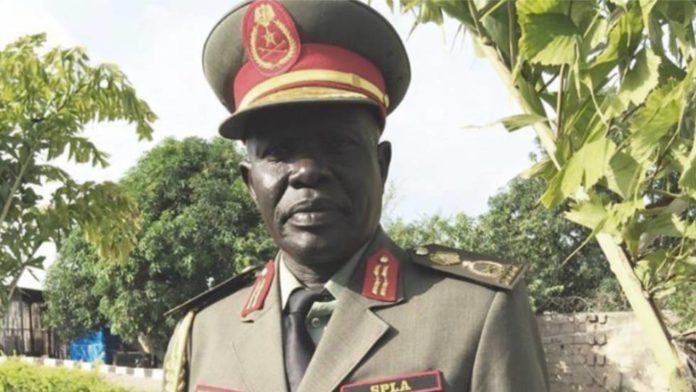
ADVERSELY MENTIONED: Lieutenant General Malek Reuben Riak, the Deputy Chief of Defense Staff and Inspector General of the Army
A new investigative report released by The Sentry, ‘Making a fortune while making a Famine’ reveals documents that indicate a top South Sudanese army general has amassed and offshored millions of dollars through an array of questionable business enterprises while the country suffers from devastating war and famine.
The focus of The Sentry’s investigation, Lieutenant General Malek Reuben Riak, promoted on May 24, 2017 to Deputy Chief of Defense Staff and Inspector General of the Army, has been identified by the UN as one of those responsible for the violence that helped spark civil war and the resulting famine. Documents reviewed by the Sentry indicate that the general, whose official duties include weapons procurement and military logistics, has engaged in an array of lucrative side businesses in mining, engineering, construction, energy, and explosives. The documents revealed in The Sentry report indicate that the South Sudan army (SPLA) has directed foreign companies to purchase explosives from a private company owned by Lt. Gen. Reuben Riak.
The report calls for the US and other governments to more effectively use the tools of financial pressure—specifically network sanctions like asset freezes targeting a network of individuals and entities, rather than a single person) and anti-money laundering measures—to impose consequences on any and all South Sudanese officials, senior military officers and their networks who have gotten rich while nearly half the country’s population, an estimated 7.5 million people, face starvation and are in urgent need of assistance.
John Prendergast, co-founder of The Sentry and Founding Director at the Enough Project, said: “The documents revealed in The Sentry report concerning Lt. Gen. Reuben Riak illustrate a broader pattern in South Sudan in which powerful officials work closely together in a relatively small network and preside over the country’s violent kleptocratic system of government. The documents indicate that, by using international facilitators, these officials can get rich while the rest of the country suffers the consequences of a brutal civil war and a horrific famine. Network sanctions should be imposed on Lt. General Reuben Riak, his companies, and his associates, in order to send a strong message to the South Sudan government that business as usual is no longer acceptable, and going forward there will be steep and escalating consequences.”
J R Mailey, Senior Investigations Manager at The Sentry and Senior Policy Analyst at the Enough Project, said: “Today, top generals responsible for South Sudan’s famine are promoted and rewarded, rather than held to account. Meanwhile, the documents described in The Sentry report indicate that many of these same military officials are involved in questionable business transactions in the very same sectors they are meant to safeguard from corruption. Action is needed to alter the incentive structures of those responsible for atrocities, famine, and continued conflict in South Sudan. Without consequences, we have no reason to believe that the highly lucrative but destructive conduct illustrated in the documents will change.”
REPORT HIGHLIGHTS:
Documents revealed by The Sentry indicate that Lt. Gen. Reuben Riak has used international banks to move millions of US dollars and to conduct business with international investors. Foreign governments—especially the U.S. government—are in a position to curb his ability to access the international financial system.
Documents indicate that Lt. Gen. Reuben Riak controls a private business called Mak International Services that sells explosives to private companies operating in South Sudan—an arrangement that, the documents suggest, has been not only endorsed but also promoted on an exclusive basis by the military in which he holds a key leadership role.
Documents indicate that Lt. Gen. Reuben Riak sits, along with several other senior generals, on the board of a holding company that has joint ventures with foreign investors and appears to be active in South Sudan’s mining and construction sectors.
Documents also indicate that Lt. Gen. Reuben Riak’s family members appear to be representing his interests on several commercial ventures, often alongside the family members of other senior government officials in South Sudan.
Documents show that Lt. Gen. Reuben Riak and members of his family jointly own businesses with members of the political elite in neighboring Ethiopia, Kenya, and Uganda.
Ensuring that financial institutions are effectively blocking illicit transfers is in the national security interest of the United States and other countries, as the same loopholes that allow kleptocrats to move their ill-gotten gains through US banks also empower terrorists, traffickers, organized crime syndicates, and other bad actors.
Members of the Rich Gang, with the late Ivan Semwanga (middle) show off their dollars
With the death of their chairman Ivan Ssemwanga, many believe that marked the collapse of the showy socialites’ group, the ‘Rich Gang’.
But speaking out for the first time since Ssemwanga’s death, members of the group maintain it’s here to stay.
“Ivan Ssemwanga died of hypertension (locally known as pulesa). All rich people suffer from this ailment. But this is not the end of Rich Gang. It is here to stay for generations. One of the things loved most by our late colleague was popping Champagne and his favourite game was throwing money. In show of our love for him, we had to do what he liked most and that is popping Champagne and throwing money (into his grave),” a member said while appearing on BBS TV.
And to those who are criticizing them for their actions, they had a response for them as well.
“To those slating us for doing what we love, saying it’s bad (to pour expensive Champagne and throw money in the grave) when some people are suffering and starving, we are not politicians. If the government is not capable of taking care of them, then they should blame their leaders not us….” he advised.
“Is there anyone helping us? Then you should be blaming your leaders. If their government is too poor to take care of them, then it should write to us as Rich Gang and we see how we can help it….”
The June 1 FIFA Rankings released have seen Uganda move one place up from the 72nd to the 71st position, with a total of now 478 points.
Uganda also remains the best among the East African countries, according to FIFA.
Kenya improved by four places from the 78th to the 74th slot, Rwanda dropped 10 places to 128th, Tanzania dropped four places to 139th, South Sudan dropped one place to the 147th while Burundi currently is in the 148th position, dropping four places from 144th last month.
Uganda’s next opponents on Saturday in an international friendly match Ethiopia dropped one place to 125th.
Meanwhile, Senegal who play Uganda on Monday June 5, 2017 in another international friendly, improved by three places to 27th.
Uganda Cranes first opponents in the AFCON 2019 qualifiers, Cape Verde dropped two places to the 84th positon.
Egypt is the best ranked nation in Africa at 20, Senegal follows closely at 27th, African champions Cameroon at 32nd, Nigeria at 38th, while Congo DR stands at 39th, completing the Africa’s top five countries.
New Zealand was the most improved country after moving up by 17 slots to 95th with Mauritania the worst after dropping 13 places to 104th.
The best 5 countries in the world remain the same: Brazil, Argentina, Germany, Chile and Colombia, respectively.
The next FIFA rankings will be released on July 6, 2017.
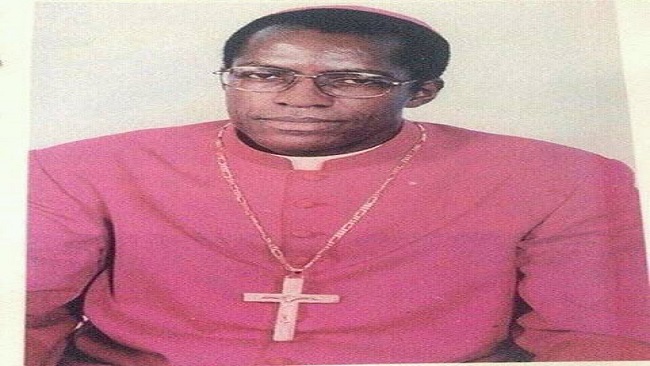
Bishop Jean-Marie Balla of the Catholic Church in Cameroon.
The note by the Bishop and the spot where his car was found suggested suicide
Bishop Jean-Marie Balla of the Catholic Church in Cameroon has reportedly killed himself under a bridge at Ebebda, some 78 kilometers from the nation’s capital, Yaoundé.
The prelate’s car and a statement left by him saying “I am in the water” suggested that the Roman Catholic Bishop of Bafia committed suicide.
Balla was appointed Bishop of the Bafia Diocese with a Christian population of over 200,000 in 2003.
He was born May 1959 in Oweng Mbalmayo.
He was originally from Mbankomo in the Mefou-Akono Division (Central Province).
In addition to studies in Philosophy and Theology at the Major Seminary at Nkolbisson, he held a Diploma in Social Sciences and Management from the Catholic Institute of Yaoundé.
He was ordained priest in 1987 by the late Arch Bishop Jean Zoa.
The vehicle of the Bishop of Bafia was found on May 31, 2017 beside a bridge at Ebebda, a small locality in the department of Lekié, Central region.
According to the Senior Divisional Officer for Mban and Inoubou, Maurice Tchoffo, it is difficult at the moment to know what really happened to the Man of God.
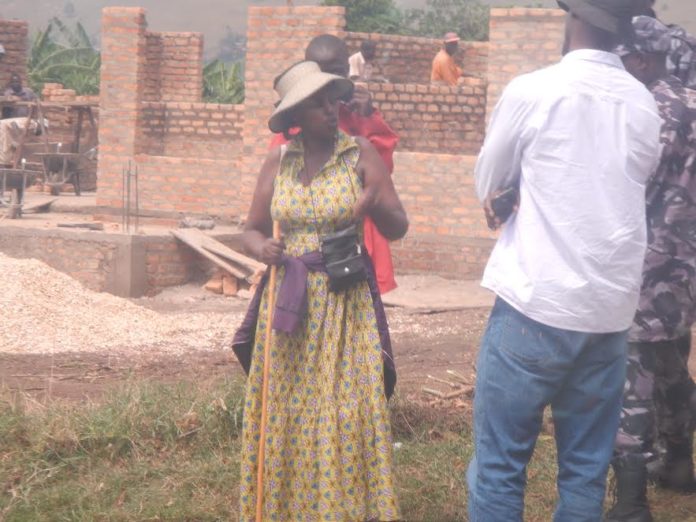
Mrs Lutaaya confronting Alfred Ibingira as police looks on.
Ugandan nationalist and Independence statesman Grace Ibingira might be 22 years dead but all is not well at his estate, as three of his surviving sisters have descended on land he inherited from their father Alfred Katebalirwe, and threatened to throw off Ibingira’s heir Alfred Ibingira and his two siblings.
According to an impeccable source, the three sisters: Mrs. Muriel Baingana, Mrs. Victoria Lutaaya and Mrs. Sheeba Rukikaire, all married, claim that the senior Ibingira obtained the land in Rutooma-Kashaari fraudulently and insist that according to the laws of Uganda they, as the late Katebarirwe’s daughters, are entitled to their father’s estate.
Mrs Lutaaya’s house on the contested land in Rutooma
Further, according to the source, in March this year, the three stormed the property and started constructing a house under the supervision of Mrs. Victoria Lutaaya, on the said land that was titled by Grace Ibingira in the 1970s. They gave the Ibingira siblings seven days to vacate the land amid claims of Alfred wanting to sell off the property.
“Upon his father’s death, the late Grace Ibingira inherited the estate. He subsequently titled it in the 1970s and the family has had quiet possession until shockingly in March 2017, the three illegally trespassed onto the property and forcefully started to construct a house supervised by Mrs. Victo(ria) Lutaaya. Ownership of the land is in the names of Ibingira’s children; the lawfully mandated administrators and they have not handed over their title,” the source said.
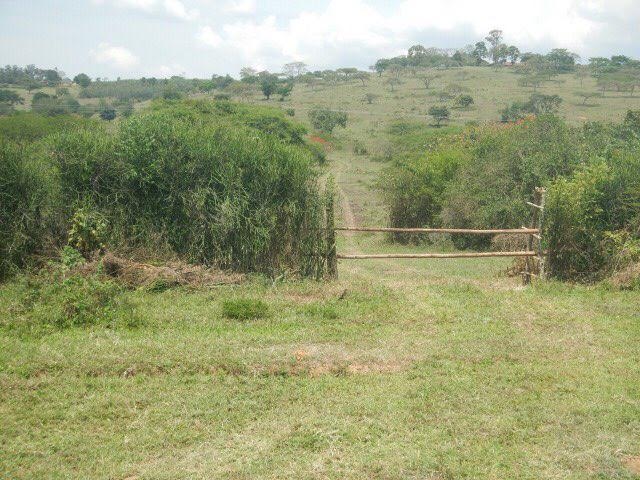
Late Grace Ibingira’s farm in Rutooma Mbarara district that has pitted his sisters against children.
However, according to the source, the sisters have already erected a structure, which development has been challenged by Alfred Ibingira.
“Building started in early March 2017, just in front of the late Ibingira’s house with builders brought in from Kampala. They cut the border fence and made their own access road. The structure currently stands ready for roofing.
When contacted for a comment over the squabbles within the family, Alfred Ibingira refused to give details saying his lawyer, Justus Karuhanga was best suited to talk.
Asked why they resorted to fight over the estate of their departed brother, Mrs Lutaaya was noncommittal saying the matter was not for media consumption.
“I am sorry the story is not for media” she said before hanging up on phone.
Mrs Muriel Baingana on her part said “I don’t know why you should ask me because these are family matters”
The source added: “Alfred Ibingira then presented his letters of administration to police to stop the construction. Mrs. Victo Lutaaya, in a meeting at the Police Station, is quoted as saying; ‘Life has brought me to this point’. She said she left her husband retired Brigadier Andrew Lutaaya three years ago and he has not given her any property and proved too difficult. She decided this was a better tactic to get property.”
This is the second time Ibingira’s sisters have sued him for fraud, source said.
“Exactly five weeks after Ibingira was buried in 1995, they delivered the first letter suing their brother for fraud.
After failing to show up in the Mbarara court for the first hearing in February 1996 and several times thereafter, the three sisters suddenly dropped the case. Now, twenty years later, the three women are building by force on their nieces and nephews land,” the source said, adding a security guard working for Alfred Ibingira had been arrested on the ‘orders of a certain Colonel’ after the building the sisters had erected on the contested land, was partially destroyed.
“Muriel Baingana has stated that she has filed for letters of administration of her late father’s estate hoping that this will over-ride and cancel the letters of administration that the Ibingira children have,” the source said, adding: “Sheba Rukikaire is also said to harbor concerns that since Alfred (Ibingira) is not yet married he has no attachment to the place and that her father’s name will die out.”
“The three sisters complain that there have been no new developments on the land yet they placed a caveat that is still in effect today,” the source said adding: “The acreage the three sisters are attempting to grab also eats up the land belonging to the children of their other late brother Major Rutasyangabo Katabarwa.”
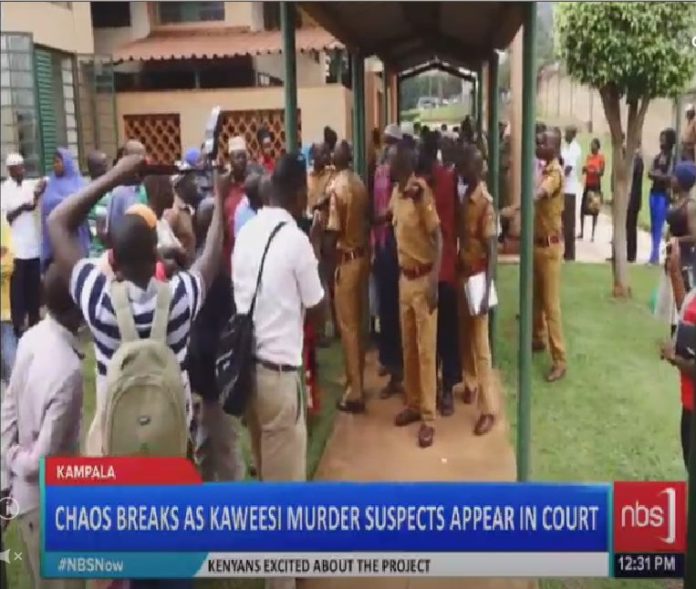
CHAOS: relatives of the incarcerated suspects linked to the murder of AIGP Andrew Felix Kaweesi protest at Nakawa Court
There has been chaos at Nakawa court after the magistrate adjourned a case against 17 suspects linked to the killing of Assistant Inspector General of Police (AIGP) Andrew Felix Kaweesi.
On their third appearance before Grade One Magistrate Noah Sajjabi, relatives and friends threatened to abandon children at the court premises, saying that they are fed up of the continuous adjournment of the case. The case had earlier been adjourned to June 15, 2017.
The suspects’ relatives, who were stopped from greeting those incarcerated, demanded for a speedy trial, telling the magistrate that their children lack food and are not going to school.
This is not the first time for the relatives to express emotion; during the second hearing, they cried after seeing the prisoners inflicted with wounds on their bodies.
AIGP Kaweesi was gunned down on March 17 together with his body guard Keneth Erau and his driver Godfrey Mambewa.
Since then, over 40 suspects have been arrested and more than 30 have been tried and prosecuted.
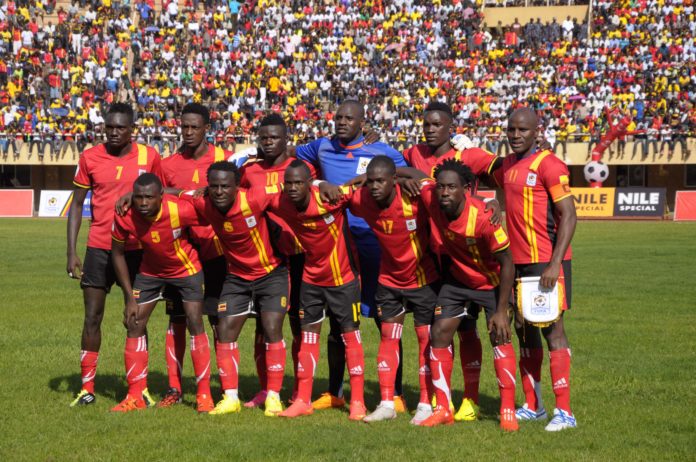
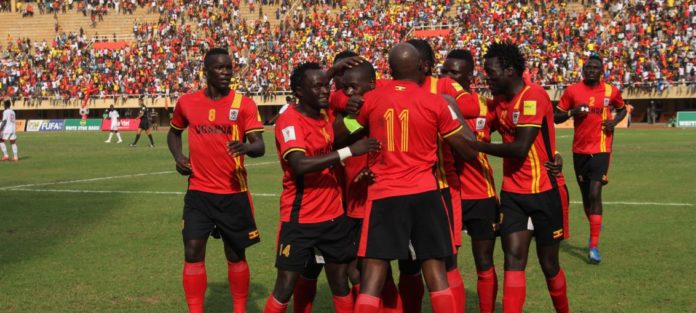
STRATEGISING: The Uganda Cranes side that travels to Ethiopia for an international friendly
The Uganda Cranes continues preparations for their final AFCON 2019 Group L qualification match against Cape Verde.
The national team won 1-0 against KCCA in a match played at the training ground of Namboole Stadium in the final match of their residential camp on Wednesday afternoon.
After that a strong cranes team of eighteen players was named by the Cranes coach Micho Sredojovic for the two upcoming international friendlies before they kick off their qualification campaign.
The team will depart today for Addis Ababa for an international friendly with Ethiopia scheduled on Saturday, June 3, 2017 at Hawassa International Stadium.
On June 6, 2017, the Cranes will play their last international friendly against Senegal in Dakar before they set off for Praia, Cape Verde on the June 7.
Sources said other senior players will join up with the national team in Dakar, Senegal and others in Praia for the must-win game for the Cranes.
Saturday, 3rd June 2017:
International friendly match,
Ethiopia Vs Uganda Cranes – Hawassa International stadium (4pm)
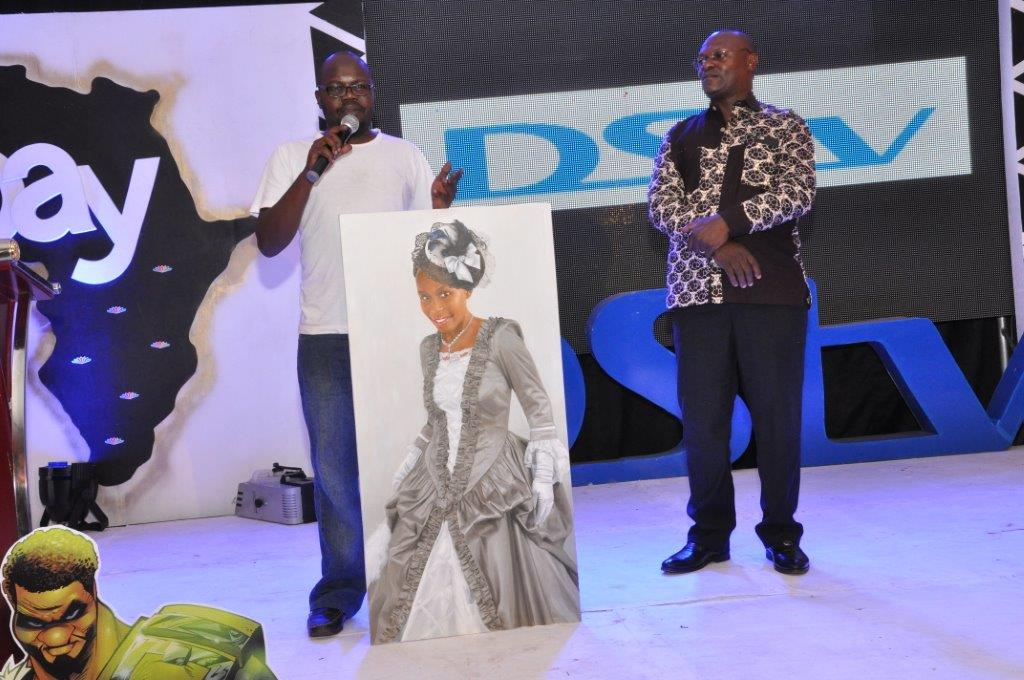
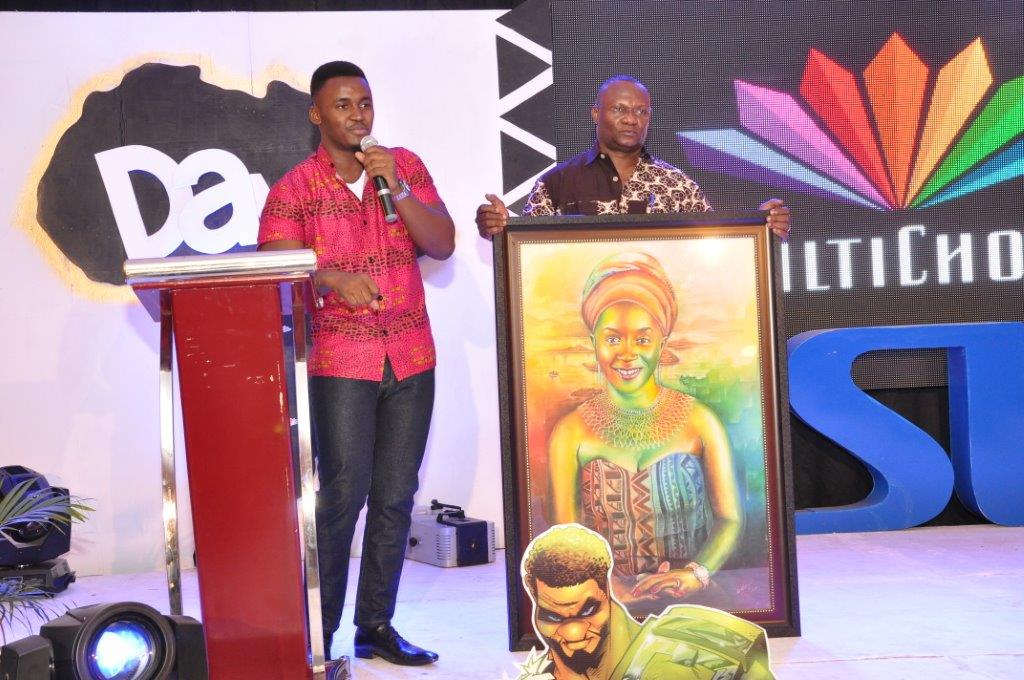
The South African High-Commissioner-to Uganda 3rd-left-unveils-the-master-art-piece-alongside-MultiChoice-officials-and-prominent-guests-at-the-MultiChoice-Africa-Day celebrations yesterday
Marcus Garvey, a an American proponent of Black Nationalism once stated that: “A people without the knowledge of their past history, origin, and culture is like a tree without roots”.
It therefore came as no surprise when MultiChoice Uganda, the leading video entertainment company, celebrated this year’s Africa Day in honour of African Art under the theme ‘Artistry at its prime’.
Apollo an artist showcases one of his masterpieces at the MultiChoice Africa Day celebrations.
Guests were treated to artistic work and cultural dances by various Ugandan performers at the event which was held at MultiChoice Head Office in Kololo.
Speaking at the event, the South African High Commissioner to Uganda Prof Major General Lekoa Solly Mollo, who was the guest of honour, noted: “African culture and norms are part of our identity, and therefore cannot be phased out. Art allegory has been used to educate generations and the world about our cultures and social values. Art doesn’t not only come through paintings, sculptures but is manifested in the language we speak and inter- connection of humans and nature. That is why we appreciate companies like MultiChoice when events such as these are celebrated.”
Dr. William Kalema, Director MultiChoice Uganda said MultiChoice is an African company committed to the continent.
“We strive hard in promoting local content and innovation on a variety of our channels including Africa Magic, Maisha Magic, Trace Mziki, History Channel, and Ebony, platforms where various artists are given an opportunity to entertain audiences through arts and culture, music, film and drama,” Dr. Kalema said.
He added: “It is such an honor to witness a diverse range of human activities that create visual and performing artifacts. The ability to express imaginative and technical skill intended to be appreciated for its beauty and emotional power is something that we have learned not to take for granted over time, more so; those elements that speak into African culture. We appreciate our very own artists in their different capacities.”
In her presentation Tina Wamala, MultiChoice Public Relations and Communications Manager said: “Every year Africa as a whole celebrates Africa Day in the month of May to honor and appreciate who we are and the unique qualities that bind Africa as one.”
She added: “This year as MultiChoice Uganda we celebrate African Art with a theme ‘Artistry at its Prime’ as a way of appreciating the different art talent out there that inform and remind us of our African culture and social values. As MultiChoice, we are always looking out to promote talent and today we have created a platform for some of the talented Ugandan artists with the opportunity to display and showcase their artistic skills before our guests.”
“We look forward to unveiling more talent out there as a mark of the boundless abilities within Africa,” Ms Wamala noted.
Darsan, one of the artists with his great work while Abbey Mukiibi looks on at the MultiChoice Africa Day celebrations.
Africa Day is celebrated across the continent, commemorating the founding of the Organization of African Union which was pioneered in 1963 with the aim of celebrating unity among Africans, by bringing the continent together.
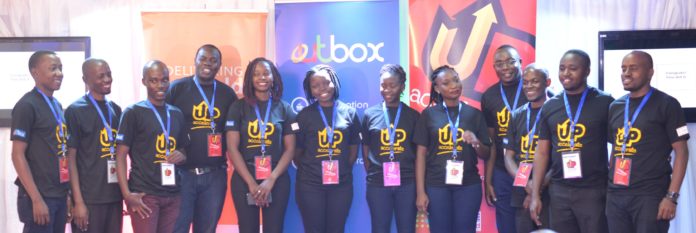
The United Nations Population Fund (UNFPA), in collaboration with Outbox, a local business incubator has awarded US$10,000 (about Shs35million) to four groups of Ugandan youth innovators.
Members of one of the winning teams
The four teams are Ecosmart Pads; Bloodfinder; M-scan, and Health Data Harvestor, and address challenges in: improving access to essential maternal medicines, health supplies and improving the use of data in healthcare planning, monitoring and delivery.
Their solutions include: recycling sugarcane bargasse collected from sugar factories and using it to make bio-degradable pads that will hit the market at half the price of the existing pads on the market; enabling organisations that manage distribution and storage of blood catalog and track availability of blood through an online platform to support emergency responses.
They also develop an ultrasonic probe and software to support ultrasound scanning in low resource areas so as to address the problem of inadequate ultrasound services and a web based platform/ mobile app that addresses the problem of manual patient data collection by digitizing this process for medical professionals consecutively.
“Investing in a healthier and more educated population and enabling young people to access opportunities for employment and entrepreneurship, will provide young Ugandans with a favourable environment to thrive in business and private life, and to make informed and safe decisions regarding their sexual and reproductive health,” said Davide Piga, UNFPA ESARO Innovations and Knowledge Management Specialist.
Meanwhile, also unveiled is the final three ‘Up Accelerate’ teams that have gone through an intense 4 months of proficient mentorship, business training, technical guidance and product development.
This marks the beginning of the second cycle that witnessed yet another set of 10 teams who pitched their innovations at an independent panel of judges.
Before a panel of judges,DrugDash, a decision support system for health facilities and drug distribution organisations to capture stock data returns.
The second innovation group is Streamline, a web and mobile application that supports health workers to easily collect data and TEHECA,a provider of care assistants who serve to provide alternative patient care to expectant and new mothers, have showcased their expertise which is key to enable them build partnerships and raise follow-on funding for sustainability.
To demonstrate the progress by the teams, Streamline is deployed to two hospitals in Mbarara and being used by up-to 35 healthcare workers. DrugDash is currently being deployed to up-to ten health care facilities in Bukedea to support thirty (30) health workers.
TEHECA has reached up-to 600 people through their awareness campaigns, and are supporting up-to 5 expectant mothers.
“I am excited by the dedication demonstrated by the three teams leaving the program, despite the intensity and short amount of time in the program, the teams were able to build their products and test their solutions with real customers,” said Richard Zulu, Outbox Team lead.
Outbox will continue to support these teams during their market pilots through mentorship, technical guidance and development of networks.
Up Accelerate is a one-year innovative program comprising 2 cycles of which the first started in November 2016 and has been successfully accomplished. It is part of a regional initiative by UNFPA East and Southern Africa Regional Office, with funding from UKAID.
The program has also been developed with support from Ministry of ICT and National Guidance, and implemented by Outbox to explore new and engaging ways to tackle pressing sexual and reproductive health (SRH) challenges in Uganda, while promoting social entrepreneurship among young people. The second cycle is set to run up-to September 2017.