Stanbic Bank
Stanbic Bank
21.4 C
Kampala
Stanbic Bank
Stanbic Bank
Home Blog Page 1918

Mandatory vehicle inspection is unlawful and a rip off

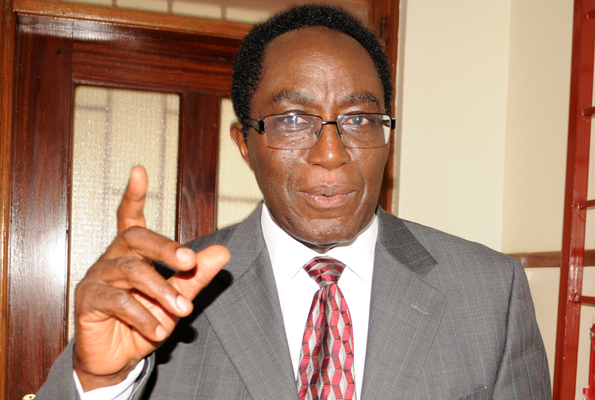
WONT REGISTER SIM CARD: Controversial city lawyer Andrew Karamagi

On December 9, 2016, a Swiss company, Societe Generale de Surveillance (SGS) held an inauguration ceremony for its first motor vehicle inspection station in Kawanda, north of Kampala.

The company has been contracted by the Ministry of Works to conduct mandatory inspections, ostensibly to curb the high rate of accidents and emissions, both of which are apparently caused by vehicles in poor mechanical condition.

My contentions against this scheme revolve around three points:

Abdication of responsibility by public institutions:

In an effort to understand the institutional framework that governs (public and private) transportation, physical infrastructure, licensing, regulation and taxation, I cast my net deep into the sea of the Policies and Laws of Uganda and I found four institutions in my net: in no particular order, I found the Uganda Police Inspector of Vehicles, Customs Department of Uganda Revenue Authority, Uganda National Roads Authority, Uganda National Bureau of Standards as well as the National Road Safety Council. The Traffic and Road Safety Act 1998 as well as the Import Inspection and Clearance Regulations 2015 were also particularly helpful.

Summarily, the aforementioned public bodies are mandated and owe Ugandan taxpayers a duty of care with regard to the durability of public infrastructure (roads and accessories like traffic lights), automobiles on the market, quality of the fuel that cars consume as well as registration and licensing.

Has the Uganda Police Inspector of Vehicles been rendered useless? Have the Uganda National Bureau of Standards and the Customs Department at URA abandoned their roles of ensuring that all imported products are mandatorily inspected and their fitness for purpose established before they get into the market?

If these two haven’t abandoned their statutory duties (see Section 3(e); 3(f) and 43 of the UNBS Act, Chapter 327 of the Laws of Uganda), why should we pay twice for a service that was already provided and paid for by the end-user at the point of purchase?

How will the cash-strapped National Road Safety Council which received a paltry one hundred and fifty million shillings for Financial Year 2014/2015 function when part of its mandate has been outsourced to a private player, SGS?

Incoherent public policy

The argument by then Minister of Works John Byabagambi to the effect that the inspection is being undertaken to curb accidents and emissions is reflective of an acute lack of understanding on the part of those who purport to be in charge of our public affairs.

Because of the prevailing taxation regime, it is easier to buy a used (reconditioned) vehicle in Uganda today than a new car.

Would it not make more sense to reform the tax code with a view to encourage Ugandans to buy new, first hand cars which are safer and more environmentally friendly? Instead, one public institution charges unconscionable tax rates for new cars (thereby forcing buyers to purchase older cars) while another institution punishes them by charging them for mandatory vehicle inspection for buying older and less environmentally friendly cars! These two angles are treated as entirely unrelated. One institution is anxious to hit revenue collections by all means while others are starved of funds and rendered useless.

Misuse of public offices

This is not the first such haphazard scheme insofar as public and private transportation is concerned. Years ago, road users were stampeded into installing seatbelts. Owners of heavy commercial vehicles had to incur an extra cost of purchasing and having a speed governor fitted.

The ostensible reasons of road safety were clouded by the questionable circumstances surrounding the award of this tender and the abrupt conclusion of the exercise. It did not help matters when it was widely rumoured that a businessman had imported container-loads of seatbelts and speed governors and having failed to get market for the consignments, connived with top guns in law enforcement and that as soon as the last seatbelt and speed governor had been sold, the exercise stopped!

Is it any wonder that a random deadline of June 2017 has been set for inspection, after which defaulters shall be heavily penalized?! For argument’s sake, is it possible to inspect all vehicles in Uganda in a period of seven months? Perhaps by this time, the kingpins of this ‘deal’ will have hit their targeted sales.

Was a competitive procurement process followed for this mandatory inspection? Who owns the Ugandan subsidiary of SGS? What are the technical competencies of the people conducting the actual inspections? Are they accredited by car manufacturers? Are they automotive engineers?

You do not need a magnifying glass to see the fingerprints of fraud, collusion and impropriety surrounding what might in all likelihood turn out to be the latest in a series of continuing heists by public officials who connive with private players to fleece Ugandans under the veil of law enforcement.

Before I sign this off, I have a lingering question in my mind around the duty of care that public institutions owe us as citizens and taxpayers. Inspection of any sort is premised on the assumption that the person being inspected should have no excuse for not meeting the set standards. What kind of roads do we have so that our vehicles should be expected to be of a certain standard?

Many Ugandans regularly have to bear the high costs of replacing shock absorbers, bumpers, grills, tyres and rims due to the damage that is sustained from potholes-turned-gulleys and sometimes fishponds; the traffic lights at Jinja Road have been off for five days—and the skid marks and shards of glass on the tarmac are proof of the accidents that this has caused; who is responsible for traffic lights operability? If the electricity bills have not been paid, why should we road users who pay taxes daily be punished for the malfeasance of a public body? Whereas we are obliged to drive on the left hand side of the road in Uganda, it is no longer possible because if you used the Najjeera Road for instance, you would be forced to drive on what is left of the road, not necessarily on the left hand side!

 Will inspecting vehicles cure this state-of-affairs?

For these reasons, I am commencing a campaign against this mandatory vehicle inspection and encourage all taxpayers and road users to join me so that we resist this latest episode of extortion and daylight fraud by lazy and incompetent public officials who are in cahoots with disingenuous business interests disguised in the veils of road safety. Relevant public bodies may want to consider successive reports which have listed the leading causes of road accidents as drink-driving, porous licensing processes, unmarked black spots and poorly built roads.

I am happy to donate the inspection charge of 110,000 shillings to paint zebra crossings at the entrances to many primary schools so as to save our children from the speeding convoys of public officials which feature air-suspension systems that shield them from the craters that we have to endure on these cattle paths they call roads.

In the meantime, I’m going to consider a lawsuit with the intention of compelling SGS to refund all car owners who have been fleeced in the name of mandatory inspection.

 Andrew Karamagi


Stories Continues after ad
NSSF, Monitor launch career expo

FIRED? NSSF Deputy MD Ms Geraldine Ssali Busuulwa

The National Social Security Fund (NSSF) in partnership with the Monitor Publications Limited (MPL) has launched the annual career expo that will take place in 11 universities across the country.

This year the 10-day career expo from March 13, 2017 to April 26, 2017, will be graced by students from Makerere University, Kyambogo University, Mutesa I University, Uganda Martyrs University- Nkozi,  Ndejje University and Nkumba University. Others are the Mbarara University of Science and Technology (MUST), Kampala International University (KIU), Gulu University and the Islamic University in Uganda.

And, while addressing students at Makerere University today, NSSF Deputy Managing Director Geraldine Ssali advised students be innovative and and seek for career advancement opportunities, with a view to saving in the future.

She also advised the students on skills initiatives and on how they can gradually rise through the ranks of their careers in case they are employed.

“For one to have a successful career he /she needs to have a combination of both soft and hard managerial skills,” Ms Ssali told the students.

On his part the Monitor Publications Managing Director Tony Glencross promised to create more opportunities to help university students to gain access to professional career advice so that they are more prepared to take advantage of any employment opportunities on the market.

Further, Mr Glencross urged the students to develop a spirit of volunteerism, saying it helps prepare one for the job market.

In Uganda over 100,000 university students graduate every single year, with few able to access jobs.


Stories Continues after ad
Lotteries and Gaming Regulatory Board Job Vacancies

LOTTERIES AND GAMING REGULATORY BOARD

(Gaming Responsibly)

 VACANCY ANNOUNCEMENT

  1. ORGANISATION PROFILE

The Lotteries and Gaming Regulatory Board (LGRB) is a Body corporate established under the Lotteries and Gaming Act No. 7 of 2016. The LGRB was established to enforce the law relating to the conduct of lotteries, gaming, betting and casinos, to establish the national lotteries and gaming regulatory board, to provide for licensing and regulation of lotteries, gaming and betting; to provide for taxation of casinos, gaming and betting activities.

 The Board is therefore mandated by law to supervise and regulate the establishment, management and operation of lotteries, gaming betting and casinos in Uganda, and to protect the citizens from the adverse effects of gaming and betting in Uganda.


  1. EXECUTIVE APPOINTMENTS

For the fulfillment of its mandate, LGRB now seeks to make recruitments for the following vacancies.

  1. Director Finance and Administration
  2. Director Legal and Board Affairs
  3. Manager Internal Audit
  4. Manager Information Technology
  5. Procurement Officer
  1. EMPLOYMENT TERMS

LGRB is a responsible, non-discriminating and Results- Oriented Organization that will provide favorable employment terms to successful candidates with the right qualifications, skills, competence and experience.

  1. APPLICATION PROCEDURE


All suitably qualified and interested candidates who meet the requirements must provide copies of certified academic and professional qualifications. Two professional referees with their addresses must be named. Due diligence shall be carried out on all staff found fit for the positions.

Applications should be addressed and submitted in triplicate to the following address:

The Chief Executive Officer

Lotteries and Gaming Regulatory Board

4th Floor, Communications House

Plot 1. Colville Street,

P.O.Box 5446

Kampala. Uganda

Applications by mail or courier must reach before the deadline date.

Deadline for applications is 17TH March 2017 at 5:00pm.

  1. FEEDBACK

Only successful candidates will be contacted. Any influence peddling in the selection process will result into disqualification of the candidate.

Job Terms of Reference

Detailed job description/key performance areas can be accessed on www.lgrb.go.ug or www.mofped.go.ug


Stories Continues after ad
Deputy Speaker calls for focused security interventions

Gen-David-Muhoozi-2nd-R-leading-the-EASF-Open-day-peace-walk-in-Kampala.

The Deputy Speaker of Parliament, Rt Hon Jacob Oulanyah has challenged regional leaders to remain focused on the primary goals for the creation of regional security organs and desist from creating additional non related mandates to the organs, lest they lose their effectiveness.

Maj Gen Peter Elwelu (R) with other participants during the EASF Open day Peace Walk in Kampala

Oulanyah was addressing security officials from the ten Eastern Africa Standby Force partner states and the Ugandan public present to mark the EASF 6th Open Day that was hosted by Uganda at Hotel Africana in Kampala over the weekend.

The deputy speaker noted that EASF is a right organ to deal with matters of conflict in the region considering its current straight-forward mission of maintaining and sustaining a fully operational and multidimensional integrated standby force ready to respond to emerging crises.

He noted that whereas other organs like IGAD are also playing important roles in the region, their mandates are sometimes too vast, handling multiple roles that may lead to delayed interventions in times of conflict.

Uganda’s Chief of Defence Forces Gen David Muhoozi, who was the host of the day reiterated Uganda’s commitment to the EASF goals, stressing that integration, especially in the field of security, is critical in ensuring a stable environment that can foster socio economic transformation in the region.

State Minister for Defence Charles Engola Okello flagging off EASF Open Day Peace Walk at Railways headquarters

As part of the events of the Open Day, the Minister of State for Defence Charles Engola Okello, flagged off a peace walk in which participants were the UPDF top leadership including Gen David Muhoozi, Foreign Affairs Secretary (Minister) of Seychelles, EASF top leadership, and lecturers and students from Kampala International University and Uganda Christian University. They marched with the UPDF brass band from Railways headquarters to Hotel Africana from where they had presentations, discussions and debates on matters of security in the region.

The EASF Open day is aimed at popularizing the institution in the partner states by among others, engaging decision makers, academics, journalists, civil society and students.

The Open Day is conducted on an annual rotational basis among partner states and this year Uganda’s hosted it under the theme: ‘Towards a Peaceful and Stable Eastern Africa’.

Stories Continues after ad

AMISOM hits decade in Somalia, calls for troop surge

Delegates attending the meeting on Somalia in the Kenyan capital Nairobi over the weekend.

The AU Special Representative for Somalia and Head of AMISOM Ambassador Francisco Caetano Madeira told a high-level meeting of AU officials, donors and other stakeholders, that the current arrangement that relies on military onslaught against the Al Shabaab militants may not achieve its desired goals, of delivering sustainable stability in the Horn of Africa country.

Ambassador Madeira also asked for a surge in AMISOM troops, to help the new Somalia government and its security forces exercise authority over areas already liberated by the mission.

“We are now ten years, we have achieved a lot (in the past ten years); we are keeping the government in place; nobody can question that. We are keeping the regional governments in place; we supported the two elections, the latest one, we secured that election; and the president was elected in a very consensual way; we did all these things,” Madeira observed during a two-day meeting in the outskirts of Kenya’s capital Nairobi.

AMISOM has been in Somalia for exactly a decade this week, and the meeting took stock of the mission’s performance within that period and charted the next way forward.

The meeting is part of events that culminate in May, to mark ten years of the Mission’s presence in Somalia.

Ambassador Madeira said the Somalia security forces in their current state cannot adequately exercise authority on areas liberated by AMISOM.

“The way we handled it militarily is that we’d go there, flash out Al Shabaab and protect the government. We then started training Somalis to take over. We were to liberate Mogadishu (Somali Capital). We felt that we’d do it and the Somalia National Army (SNA) would come in later.”

He stated that SNA has its inadequacies and has not been able to take full charge of Somalia’s security, as it should. “Those who should be fighting expect us to protect them,” he said, adding that AMISOM was fighting Al Shabaab and protecting the Federal Government of Somalia, at the same time.

“It’s time we made it known that AMISOM is not going to stay forever,” he noted.

Pertinent, is to form a full functional national Army, have government exercise authority and address the problems facing the population – historical clan rivalry, land ownership and sharing, power sharing, and reasons that attract the youth to the Al Shabaab, the Head of AMISOM advised.

“They (Somalis) have to have an army. And how will that be done? I think again we have identified; these things must be done concomitantly, and what are the things that need to be done concomitantly? We have to form the army, we have to help the government to exercise its authority all throughout the country and we have to have the government address the real problems that are dividing the people of Somalia.”

He drew parallels between the Somalia strife and the terrorism conflict that almost tore apart Algeria and said it was possible to bring peace to the former.

“Algeria succeeded in ending the conflict. They trained their forces.”
“What we are doing in Lower Jubba is what we should have done from the beginning,” he explained, in apparent reference to a region in South Central Somalia, where the SNA and AMISOM troops have actively encountered Al Shabaab.

He urged donors to stay with Somalia at this critical hour, when the country has a promising and forward-looking federal government.
Apart from additional troops, the Mission also requires more funds to engage in a comprehensive approach to peace, which involves not just military response, but also mediation, negotiation and engaging an all-inclusive mechanism to conflict resolution.

“It is also clear that as the mission moves into the next challenging phase of security transition, it should engage with the diverse range of distinguished experts as represented here to ensure the best practise is understood and a clear way forward identified,” Colonel Richard Leakey, the Commander of the British Peace Support Team in Eastern African (BPST-EA) told the meeting.

He described the meeting in Nairobi as critical because its outcome would be a ‘stepping stone’ to talks scheduled May in London, United Kingdom, expected to draw a comprehensive architecture for peace in Somalia. Britain is sponsoring and facilitating the Nairobi meeting.

“London is very interested in these talks,” he said, expressing his gratitude to the African Union Commission for taking up the idea to stabilize Somalia. He added to say that the people in Somalia deserve a chance for a new beginning.

Maj. Gen. Francis Okello, AMISOM former Force Commander, is representing the African Union Commission (AU Commission) at the meeting. He said the outcome of the deliberations would “provide basis for strategic engagement and future of AMISOM”.

The Commission “expects frank, critical, forward-looking and constructive engagement (at the meeting),” Maj. Gen Okello said.

He thanked the BPST-EA for facilitating the workshop.


Stories Continues after ad

Dr.Nyanzi project raises 11m for girl’s sanitary pads

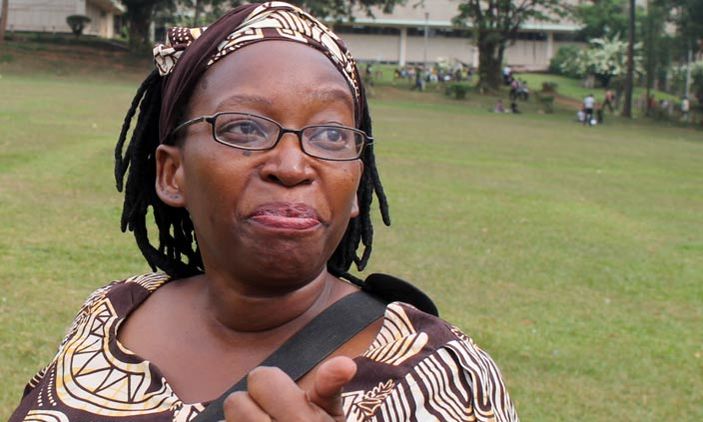
WAR OF PADS: Makerere Don and rights activist appearing on the NBS TV 'Morning Breeze' programme today. PHOTO/NBS TV.

A platform founded by Makerere University academic and human rights activist Stella Nyanzi has so far raised !1 million shillings in a bid to avail sanitary pads for school going girls in Uganda.

According to Ruth Muganzi, another woman activist, the initiative had by this morning raised Shs4.4 million through mobile money remittances and US$2, 000 (about Shs7m) on the GoFundMe platform.

The revelation was made today as the two women appeared on popular NBS TV talkshow ‘Morning Breeze’, where they also blamed the government for doing little to solve the pads’ problem.

The development comes in the wake of recent remarks by the Education and Sports Minister Janet Kataha Museveni, who revealed that government had no money to provide sanitary pads for school-going girls, yet her husband, President Yoweri Museveni, promised to do so in the campaigns leading to the 2016 elections.

“The sanitary pads project is now eight months old; we are looking at distributing 10 million sanitary pads, Ms Muganzi said, adding that initially they had planned to distribute one million pads to a million girls.

Further, Ms Muganzi said they are headed to Masaka for their first assignment, where they will talk to 250 schoolgirls and also give them a ‘pack of pads and two reusable pads for rotational purposes’.

And, speaking during the show Dr. Nyanzi, in her traditional self, attacked the government of President Museveni, saying it was disrespectful to Ugandans and gluttonous.

“The leadership in Uganda is profane. I’m not. All the leaders in this government are obscene,” Dr. Nyanzi, known for her acerbic attacks against perceived bigots, said, adding: “I will not respect those who are disrespecting the poor. I will not hold back when the people are feeding their stomachs instead of the poor.”

It should be recalled that last week Dr. Nyanzi was summoned by the CID in Kibuli to record a statement regarding her social media postings in which she lambasted the President and Mrs. Museveni over the issue of sanitary pads for school-going girls.

On exiting the session she reportedly told journalists that policemen had told her that President Museveni was the complainant in the matter.

Dr Stella Nyanzi first emerged on the public scene when she took on her former boss, the Director of Makerere Institute of Social Research (MISR), Prof. Mahmood Mamdani, accusing him of maligning her.

At the time, she even stripped to near-nudity in protest, sending many to scamper including the police officers who had been deployed to restrain her.

Stories Continues after ad

Aid groups criticize US$ 10,000 South Sudan visa fees

TO SUFFER: A distraught South Sudanese grandmother with her grandchildren. Aid workers say more South Sudanese will suffer if government does not reverse its decision on visa fees

International aid groups have criticised South Sudan’s decision to  sharply increase foreign worker visa fees, warning it would aggravate a humanitarian crisis in the famine-hit country.

South Sudan’s government recently announced it would charge $10,000 for foreigners working in a ‘professional’ capacity, $2,000 for ‘blue collar’ employees and $1,000 for ‘casual workers’ from March 1.

“The government and the army have largely contributed to the humanitarian situation. And now, they want to create profit from the crisis they have created,” Elizabeth Deng, South Sudan researcher with Amnesty International, said.

She said there were hundreds of aid workers operating in the country, and that the new visa costs ‘could further hinder their critical work on the ground’.

South Sudan, formed in 2011 following a split from the north,  declared famine in two counties in late February.

The United Nations said on Saturday more than 7.5 million people were in need of assistance in the country.

The crisis has ‘man-made’ origins, according to the UN and humanitarian organisations groups, as a civil war that started in 2013 has forced people to flee, disrupted agriculture, sent prices soaring and cut off aid agencies from the worst-hit areas.

Humanitarian groups also say their workers have been subject to harassment and attacks.

Julien Schopp, director of humanitarian practice at InterAction, which groups 180 NGOs working worldwide, said if the fee rise measure is put into practice, “it will be impossible for humanitarian workers to pay this kind of sum”.

Schopp said NGOs were still pressing the government to provide details, notably on whether workers with current work permits would have to re-apply for new ones under the new fee structure.

Michael Makuei, South Sudan’s information minister recently said  the new fees for foreign workers were already in effect and confirmed they applied to aid workers.

The UN defines famine as a situation in which at least a fifth of the households in a region face extreme food shortages, acute malnutrition rates exceed 30 percent, and two or more people in every 10,000 are dying each day.


Stories Continues after ad

Former Obote’s minister Karekaho hospitalized

President Obote and his 1st cabinet.

Former assistant Minister for Agriculture in the Obote II regime Karegyesa Karekaho, 95 is undergoing treatment at International Hospital Kampala.

Karekaho was airlifted by a chopper on Thursday after his health deteriorated in his up-country home in Rukungiri.

He is among a few surviving former ministers of Milton Obote’s cabinet.

Stories Continues after ad

Top Makerere bosses swindle convocation money

SEAT OF AUTHORITY: Makerere University Main Building, where decision affecting the university are made.

Three top university leaders who previously served as Makerere University convocation bosses are walking a tight rope as their names are surfacing in the ongoing investigations by the Visitation Committee.

The committee which was set up by President Yoweri Museveni who doubles as the visitor to public universities Makerere inclusive is compiling a report on the root cause of trouble to never ending problems to the university. The said money is said to be in billions of shillings since their tenure of office was more than 10 years.

According to sources, a team of about three or so individuals among who include two flashy young men are at the centre of selling/hiring out convocation land in Katanga and use of convocation funds for personal use with allegations that one of the bosses build two hostels in the neigbouring outskirts from the proceeds.

Also at the centre is a noisy ‘politician’ of sorts who used to be associated with the teaching staff but oversee the affairs of a political party. Whereas the investigations are ongoing, the three who include a young politician in parliament are ever meeting in secret places to make sure they fail the investigators from unearthing the mother of scandal which is likely to rock the university due to their current connections to the university top management and council.

Stories Continues after ad

Return the Shs110m you stole, Muslims tell police

BRING BACK OUR MONEY: JDS spokesperson Siraje Nsambu Kifampa (middle with microphone) flanked by his colleagues

Muslims belonging to the Jamuiyyat Da’wa Assalafiyya (JDS) sect have threatened to go on rampage if police does not return Shs110 million in form of Zakat and other Muslim offerings, allegedly stolen in two separate raids on their mosques.

According to the JDS spokesperson Siraje Nsambu Kifampa, on December 27 policemen stole Shs60 million from their headquarters at the Nakasero Mosque, and then on December 31 the cops again stole Shs50 million from the Masjid Noor Mosque on William Street.

JDS Spokesperson Siraje Nsambu Kifampa and a colleague

“We shall not tolerate any further criminal activities by police of theft and vandalizing of our properties anymore; we shall fight back and defend ourselves against such terrorism and criminal acts,” Nsambu Kifampa said during a hastily-organised press conference after Juma prayers today.

Nsambu Kifampa also demanded that the police repair all property damaged during the said raid in seven days.

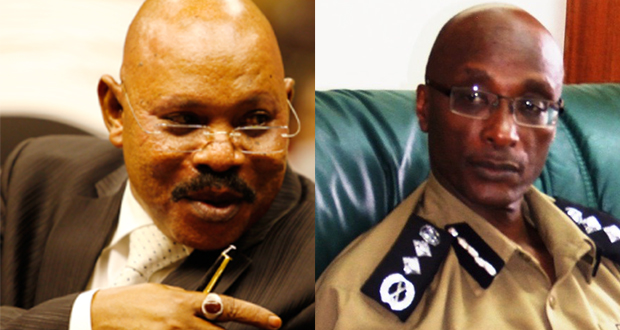
The threats by the JDS followed recent attacks on mosques by police and other security operatives in search of evidence to pin some JDS clerics for the serial murders of their Muslim colleagues, prompting the Inspector General of Police (IGP) Kale Kayihura to send apologies through the speaker of Uganda Muslim Supreme Council when he paid a visit to the Gadhafi Mosque last year.

The raids also rubbed Minister without Portfolio Abdul Nadduli the wrong way, expressing displeasure at the way the police reacted to the whole problem.


Stories Continues after ad