Stanbic Bank
Stanbic Bank
20.2 C
Kampala
Stanbic Bank
Stanbic Bank
Home Blog Page 2046

Photos: When Besigye, wife took defiance campaign to London

Opposition leader Kizza Besigye alongside with his wife Winnie Byanyima over the weekend addressed Ugandans in the United Kingdom at London’s Hilton Hotel about the prevailing political situation in the country.

London

Besigye who is currently facing treason charges, for declaring himself “president” in a mock ceremony- told the London gathering of more than 300 people attendees he won the last election. He called for a “non-partisan, non-violent struggle; a people led movement”, aimed at “reclaiming the power of Uganda’s institutions”.

Prior to his speech, Dr Besigye also separately met with the FDC UK Chapter members and Power 10 (P10) members led by FDC coordinator Thomas Ddumba.

London4

On Monday, the four-time challenged of President Museveni sent his gratitude to his London supporters via a tweet and said: “Thank you London (UK) people for the warm & engaging reception! No turning back till we fully take back our country.”

Besigye is this week expected to travel to the US to meet with the community there.

Londono

Stories Continues after ad

South Sudan slams DRC over Machar evacuation

SANCTIONED: South Sudan information minister Michael Makuei. Photo credit/youtube.com

The South Sudanese government has criticised neigbouring Democratic Republic of Congo (DRC) for allegedly permitting the use of its territory to be used to evacuate armed opposition leader and former first vice president, Riek Machar.

The country’s information and broadcasting Minister Michael Makuei Lueth described evacuation of Machar from inside the country using an aircraft coming from Congo as a violation of international law and asked Congolese government through its embassy to explain why they could not inform them if they did not permit the evacuation plan.

The outspoken minister, in a statement said “such act does not benefit either of the two countries as well as regional and global peace”.

His comments follow a summon by the ministry of foreign affairs of Congolese ambassador in Juba for a meeting at which the ministry officially protested what it calls border limitation by Congolese authorities. Machar fled the capital, Juba, after government forces attacked his residence following a clash between presidential guard force loyal to president and his (Machar) security details at the presidential palace in Juba, resulting in the death of over 200 soldiers on both sides.

Fearing for his life, he moved out of Juba hoping that the ceasefire he and President Salva Kiir declared would hold for him to return and resume his work at the presidency. But continued attacks by government forces pursuing him forced him to flee into DRC where the United Nations airlifted him after suffering from exhaustion and dehydration.

Commenting on Machar’s exit, the foreign ministry spokesman Mawien Makol said the ministry summoned the DRC ambassador in Juba to explain the action by his country. Makol claimed South Sudanese airspace was violated during the evacuation process.

“We summoned the Congolese Ambassador in the Ministry of Foreign Affairs, because we were protesting on the border limitation that happened last week when the forces belonging to the former First Vice President crossed the border with him,” said Mawien.

“They [DRC] entered with a flight into the border without the knowledge of the government of the Republic of South Sudan, so that thing of course annoyed us and we have explained to him that this is what happened and he is going to convey the message to his country and that we were not informed about the coming into our border with the flight from Congolese. So they shouldn’t come to our airspace without getting permission from this country,” he added.


Stories Continues after ad

Uganda Cranes vs Kenya fight takes shape

International Friendly:

Tomorrow, August 30

Uganda vs Kenya, 4pm Namboole

Uganda-vs-Kenya

Uganda Cranes have shifted base to Namboole ahead of Tuesday’s international friendly against Kenya’s Harambe Stars.

Coach Micho Sredjovich will use the friendly against Kenya tomorrow to get a clearer picture on which weapons to deploy ahead of Sunday’s must-win Afcon qualifier against Comoros at the same stadium.

Tottenham midfielder Victor Wanyama and 22 players and seven officials arrived at Entebbe Airport Monday morning and were driven straight to the Grand Imperial Hotel in Kampala.

Wanyama revealed the Stars are ready for the game which will evoke memories of the failed Equatorial Guinea and Gabon 2012 qualification quest when Uganda Cranes needed victory over Kenya at Namboole in 2011 but fired blanks.

Meanwhile, making it to the Kenyan team for the first time is England-based central defender Joshua Kipkemboi, popularly known as Josh Lelan, who most recently tried out with fourth-tier side Plymouth Argyle and was also said to be headed for a trial at Swedish third-tier side Vasteras SK. The 21-year old player has previously played for Derby County, Swindon Town, Gateshead and Northampton Town.

A couple of more players are expected to join the Uganda team on Monday six days before Micho leads the Cranes at Namboole as they look to end a 40-year qualification wait.

Godfrey ‘Jajja Walu’ Walusimbi, Yunus Sentamu (FC Ilves in Finland), Dennis Onyango (Mamelodi Sundowns), Hassan Wasswa Mawanda and Erisa Sekisambu (has been on trials in Lebanon), William Luwagga Kizito (Rio Ave), Moses Oloya (Kuban Krasnodor), Tonny Mawejje (Throttur) and Geofrey Baba Kizito (Than Quang) are the players expected ahead of Tuesday’s international build up with Kenya.

Ismail Watega, Benjamin Ochan, Rashid Toha, Isaac Isinde, Nicholas Wadada, Joseph Nsubuga, Joseph Ochaya, Halid Lwaliwa, Abdulmalick Vitalis Tabu, Kezironi Kizito, Edrisa Lubega, Ivan Ntege,Timothy Awany, Khalid Aucho, Vincent Kayizzi, Goeffrey Serunkuma, Geoffrey Massa and Muhammed Shaban are already in camp

Meanwhile, the Cranes held a closed door trial match against the reigning Azam Uganda Premier league champions, Kampala Capital City Authority (KCCA) on Sunday at Namboole.

Youthful striker Muhammed Shaban who plays at Onduparaka football club scored the lone strike of the day.

Micho used two teams where each featured for a half apiece.

Stories Continues after ad

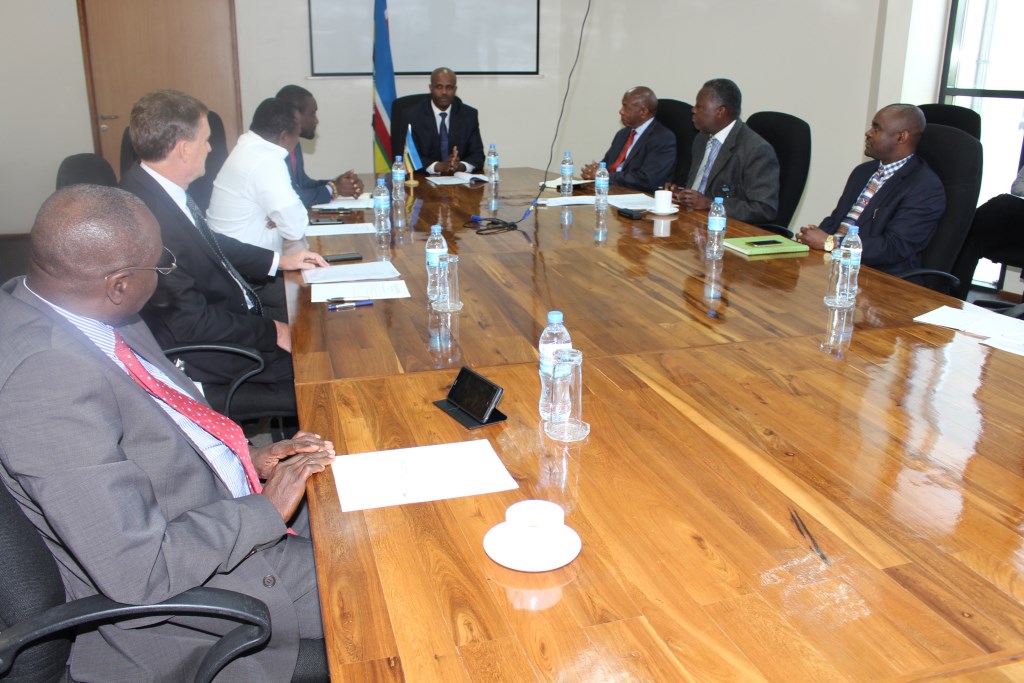
EALA pushes for adoption of Swahili

Hon Abubakar Zein, the mover of the Resolution.

EALA is to push for recognition of Kiswahili as one of the official languages of the Community, and has already passed a Resolution to urge the Summit of EAC to amend the Treaty for the establishment of the Community.

EALA also asked the Council of Ministers to allocate adequate resources to EAC Kiswahili Commission to effectively carry out its mandate.

 Hon Shyrose Bhanji, seconded the Resolution on Kiswahili
Hon Shyrose Bhanji, seconded the Resolution on Kiswahili

The Resolution moved by Hon Abubakar Zein wants the Partner States to promote and allow the use of Kiswahili in official domains. The Resolution which received wide acclaim was seconded by Hon Shyrose Bhanji and Hon Abdullah Mwinyi.

Hon Leonce Ndarubagiye emphasizes a point on the floor of the House

According to the resolution, Kiswahili is the fastest spreading African language across the globe and the African Union has made it one of its official languages.

Hon Zein said embracing the Kiswahili language is also bound to increase the participation of the people of East Africa in the Affairs of the Community as well as promote African culture. Kiswahili is flexible and has its root in the bantu language which constitute more than 50 per cent of African population.

Hon Mike Sebalu supported the Resolution to amend the Treaty to make Kiswahili one of the Official languages of the EAC

The regional legislators commended the Resolution saying its passage would enable the immediate negation of the perception that the Assembly is for the elitist population and instead embrace the principle of a people-centred Community.

Hon Dora Byamukama hailed the move as positive for the region. “The Assembly also needs to be practical to acknowledge that there are some Partner States such as Uganda have a large population that does not speak Kiswahili and in the Treaty there is a provision for development as a lingua franca”, she said.

On her part, Hon Dr Odette Nyiramilimo called for the establishment of a Kiswahili Learning Centre to enable staff, Members an all stakeholders involved in the integration process to fully comprehend the language.

Kiswahili is a Bantu language and the first language of the Swahili people. It is a lingua franca of the East African Community and the Great Lakes region.


Stories Continues after ad

IGAD backs Machar to ‘reclaim’ vice presidency

South Sudan rebel leader Riek Machar meets President Yoweri Museveni, a key player in efforts aimed at restoring peace in the wartorn South Sudan.

The East African regional body, the Intergovernmental Authority on Development (IGAD), said the controversially replaced South Sudanese First Vice President, Riek Machar, must reclaim his position in the transitional unity government in the country as the legitimate First Vice President.

IGAD said they have not changed their position in a communiqué released last month which called for the newly appointed First Vice President, Taban Deng Gai, to step down and for Machar to resume his work as the first deputy president.

The comments from IGAD came days after the United States Secretary of State, John Kerry, said the replacement process was an internal matter and did not break the peace agreement.

Kerry made the comments while on a visit to the Kenyan capital, Nairobi last week.

However, IGAD member states including Ethiopia which chairs the body, ‘questioned’ John Kerry’s comments, according to the CCTV Africa which reported from Addis Ababa.

They reaffirmed their position that Machar is the legitimate First Vice President, who should assume his post upon arrival in Juba, the South Sudanese capital.

Earlier, Machar’s spokesperson, James Gatdet Dak, criticized the comments from the US top diplomat, saying Kerry’s opinion was against the IGAD communiqué as well as against a resolution passed by the United Nations Security Council (UNSC) which described the controversial replacement in Juba as ‘inconsistent’ with the peace agreement.

But President Salva Kiir’s spokesperson, Ateny Wek Ateny, criticized IGAD for wanting Machar to return to the position, saying Gai has a better working relationship with President Kiir.

Opposition officials on the other hand said Gai is liked by Kiir because he will not ask for the full implementation of the peace deal, but will instead allow for scrapping of major provisions and block the needed reforms in the country.


Stories Continues after ad

Museveni, Zuma discuss South Sudan, Burundi clashes

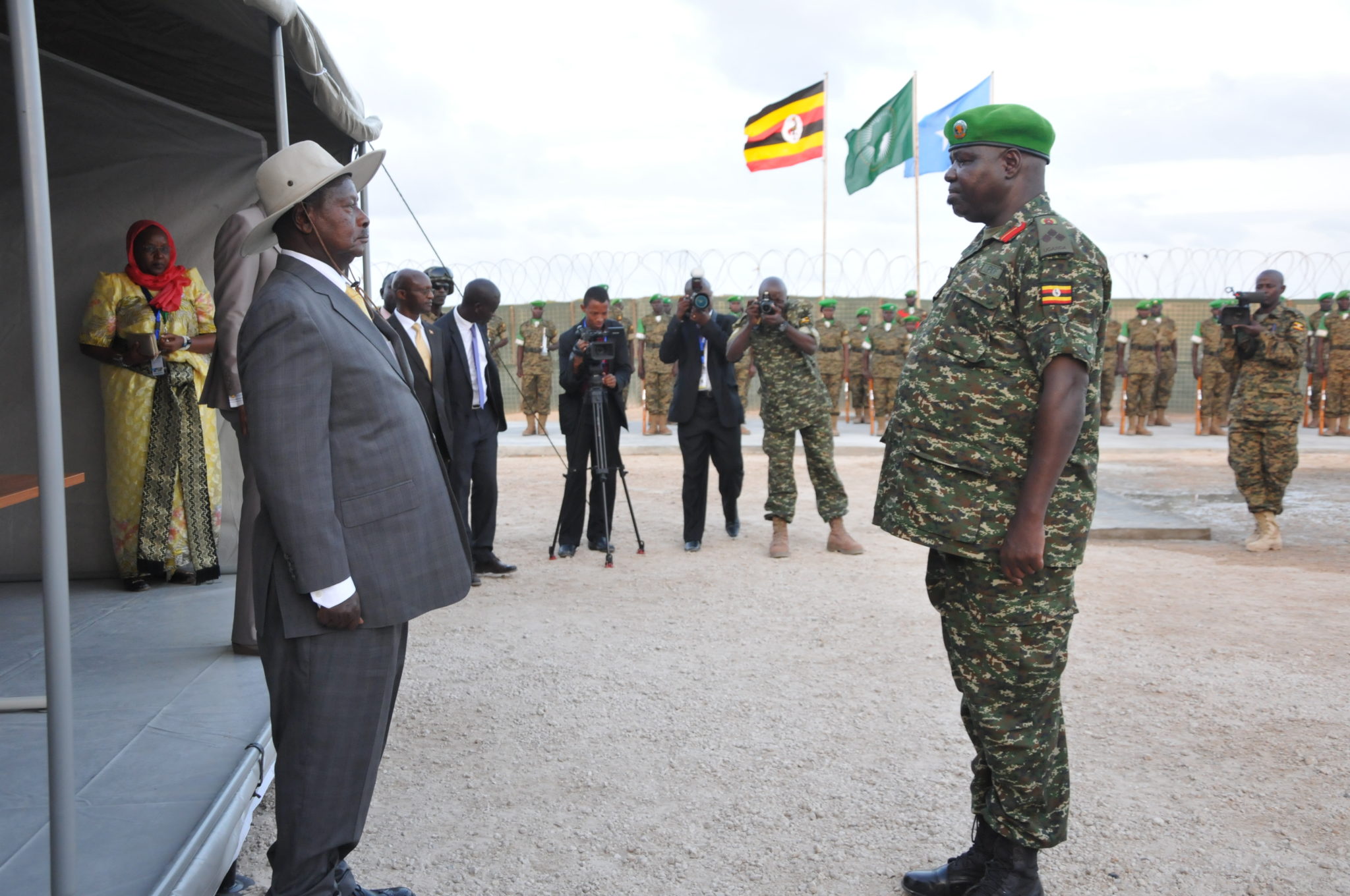
President Yoweri Museveni yesterday held a bilateral meeting with his counterpart, President Jacob Zuma of South Africa at the sidelines of the Tokyo International Conference on Africa Development (TICADVI).

The meeting took place yesterday evening at the Kenyatta International Conference Center in Nairobi, Kenya. The two-day Conference ends today.

President Museveni and President Zuma discussed matters of mutual interest between the two countries.

Uganda has been identified as an anchor state for South Africa, particularly given its geo-political position within the East African region, its relative economic size and importance for trade with South Africa and as a destination for South African investment; and its strategic importance within COMESA, EAC and IGAD and ICGLR for purposes of deepening regional integration, continental development and regional security.

The two countries have participated as key role players in the Burundi Peace Process, with Uganda as Chair of the Regional Initiative and South Africa as Facilitator.

Uganda is currently playing a major role in maintaining stability within the region. For a number of years Uganda’s troops have formed the backbone of the AU Mission in Somalia (AMISOM) which SA supports.

Stories Continues after ad

‘Freedom’ sweeps the board at Uganda film awards

Nisha Kalema (L) poses with her second UFF Best Actress award in a row (Photo/Polly Kamukama)

Richard Mulindwa’s powerful feature set among the in chaotic 1980s Uganda film Freedom, won six prizes at the Uganda Film Festival over the weekend, including best film and best actress.

Set in the pre-NRA war times, the film details the despicable abuse suffered by one unlucky girl at the hands of her adoptive father.

As expected, Freedom won awards for Film of the Year, Best Feature Film and Best Cinematography which came with cash tokens of Shs 20m, Shs 5m and Shs 3m, respectively.

The awards, the only honours devoted solely to Ugandan movies, proved serious in tone with more honours going to new actors and fresh talents. The 23-year-old starlet Nisha Kalema got emotional as she accepted the best actress award for her heartbreaking performance as lead character Amelia, an orphaned girl that suffers despicable abuse at the hands of her adoptive father in the thrilling drama.

Thanking her rumoured screenwriter boyfriend Samuel Saviour for discovering her, the fast-rising actress told the audience how she’s yet to come to terms with her meteoric rise having burst onto the local film scene just last year.

There was disappointment for several films, such as The Athlete by Matt Bish, Ugandan Pollock and the Robert Ernest Bbumba stared American Dream, which might have expected success on the back of critical plaudits.

Hassan Mugeye beat a strong field to be named best actor for Invisible Cuffs, a film a family man’s struggle with cannibalism.

UFF

Stories Continues after ad

Africa should have permanent seat at UN Security Council –Japan

Japan's Prime Minister Shinzo Abe greets Kenya's President Uhuru Kenyatta after addressing a news conference ahead of the Sixth Tokyo International Conference on African Development (TICAD VI), at State House in Kenya's capital Nairobi, August 26, 2016. REUTERS/Thomas Mukoya

The 6th Tokyo International Conference on African Development (TICAD) has opened in Nairobi, Kenya with a call by the Japanese Prime Minister Chinzo Abe for Africa to be given a permanent slot on the United Nations Security Council.

President Yoweri Museveni is among the several heads of state attending the conference that is taking place in Africa for the first time since its inception in 1993. The conference is held under the theme “Partnership for shared prosperity”.

Speaking at the opening ceremony at the Kenyatta International Conference Centre on Saturday morning, Mr Abe said: “Africa does not have a permanent member at the United Nations Security Council. It should have one by 2023”.

PM Abe pledged Japan’s commitment towards helping Africa solve challenges like epidemics and insecurity. He also said his government would allocate US$ 10 billion towards supporting modern transport and electricity supply in Africa for the next three years.

He said Japan would train 18,000 Africans by 2018 to improve the continent’s human resource. Another 20,000 would be trained to tackle infectious diseases.

He observed that the Japanese companies were committed to ensuring high quality products, adding that a quality Africa would be built by providing modern transport and electricity supply, largely geothermal.

The other plans would be to help Africa achieve universal healthcare, ensure the seas linking Africa to Japan are safe and help in peace and stability efforts.

PM Abe noted that young people with high esteem who should be supported to achieve their potential characterize the continent. He called on the delegates to let Africa and Japan share a common vision.

President Idris Deby of Chad, who also doubles as the African Union Chairman, said Japan should invest in Africa with the goal of improving infrastructure, water and energy. He observed that the move would enable the continent to achieve its dreams.

Deby said that peace, stability and security were prerequisites to Africa’s development, calling on Japan and other partners to facilitate the African Fund against terrorism.

The Chairperson of the African Union Commission Nkosozana Dlamini Zuma said that there should be partnership for shared prosperity. She said industrialization needs energy and thanked the World Bank, UNDP and TICAD for their efforts to have progress in the continent.The two-day summit closes tomorrow (Sunday).


TICAD 6 01-2


Meanwhile President Museveni has met Masaharu Kohno, a special envoy of the Japanese Prime Minister Chinzo Abe at Safari Park Hotel in Nairobi, Kenya. Mr. Masaharu is also in charge of the United Nations Security Council reform. The meeting took place at the sidelines of the Tokyo International Conference on African Development (TICAD).

President Museveni and the envoy discussed various issues of mutual interest between Africa and Japan including trade and development.

“I call on Japan to invest in Africa. Africa has been buying goods from Japan and it has been a one sided trade. We encourage Japan to buy more from Africa and balance the trade,” he said.”

Currently, Uganda’s Exports to Japan: 510 million yen (coffee, fish, sesame) and imports from Japan: 19.8 billion yen (automobile, steel) (One yen is approximately 33,000 shillings).

The meeting was attended among others by the State Minister for International relations, Okello Oryem.


Stories Continues after ad

African leaders wasting time on many issues

Your Excellencies Heads of State and Government;

Development Partners;

International Diplomats;

Distinguished ladies and gentlemen;


Greetings.  I am happy, again, to be part of this forum to discuss the common future of Africa.  Whenever I attend such fora, I get one problem.  This is the problem of discussing and handling of African issues in a fragmented way ─ just picking one issue or two issues and highlighting those for some time and, then, after some time, picking another bunch of issues and doing the same with them.  In the 1960s, it was a fashion to talk about “rural development” as if rural development could occur in isolation from other phenomena.  Then, it became a fashion to talk about “education”, again, in isolation from the other factors.  At other times, there is talk about health, women issues, children rights, etc., but always in a fragmented way.

I have been watching this for the last 50 years.  Our Movement, the NRM (National Resistance Movement), utilizing the advantage of the long experience, eventually, distilled 10 strategic bottlenecks that have been a blockage to Africa’s growth and socio-economic transformation.  In order not to forget, there was also talk of “sustainable development”. What were the ingredients of this “sustainable development”? Everybody had differing packages of the relevant ingredients.  Even the Millennium Development Goals did not solve this problem.  These, you remember, were to:

(i)     Eradicate extreme poverty and hunger;

(ii)    Achieve universal primary education;

(iii)   Promote gender equality and empower women;

(iv)   Reduce child mortality;

(v)    Improve maternal health

(vi) Combat HIV/AIDS, malaria, and other diseases

(vii)  Ensure environmental sustainability

(viii) Develop a global partnership for development “Eradicate extreme poverty and hunger” how?  The MDGs did not say.

Utilizing the experience of the last 50 years, therefore, we identified the 10 strategic bottlenecks.  These are:

  1. Ideological disorientation. The main manifestation of ideological disorientation is the opportunistic misuse of identity at the expense of the genuine interests of the people. Such genuine interests should answer the question: “Who will guarantee my prosperity?” “Is it the members of my tribe or my religious sect that will do so or is it the members of the “other communities?”  “Who will buy my milk, my beef, my coffee, my bananas or my tea?”  Ideological disorientation only emphasizes identity and eclipses interests or even acts against the interests of the people.  This generates the sectarianism of tribe or religion you have seen causing so much damage.
  1. As a consequence of number one above, many African countries end-up with weak States ─ weak armies, civil services, etc., because they are not based on merit or are not ideologically oriented with the right attitude.
  1. The under-development of the human resource (lack of education, lack of skills and poor health of the African populations).
  1. Under-developed infrastructure (no electricity, no modern roads, no modern railways, no ICT backbone, no piped water, etc.); this makes the costs of production in the economy go up and cannot, therefore, attract investments so as to expand production and create jobs.

5  As a consequence of number 4 above, there is no industrialization and, therefore, Africa has continued to suffer haemmorhage through the loss of money and jobs, being a donor to other continents by continuing to export raw-materials where we get only 10% of the value of our products (coffee, cotton, minerals, timber, etc., etc).

6.The problem of a fragmented African market on account of colonialism.  The 53 former colonies, the modern African States, are, individually, too small markets to attract, retain investments and cause them to thrive. China, which started liberalizing and opening up in 1978, (China started participating in the UN system in 1982) has since attracted a total of enterprises worth US $ 2.6 trillion.

The whole of Africa in that same period has only attracted enterprises worth US $0.65 trillion. (Source: UNTAD Website).  Yet China is still a communist country while most of Africa is now “democratic” and operating really market-led economies.  What is the problem?  One of them is a fragmented market.  The other bottlenecks also play a role in discouraging and stifling investments. The other good examples are poor infrastructure and a non-skilled workforce.  Fortunately, we have done a good job on this by creating ECOWAS, EAC, COMESA and SADC.  We are aiming at the common market of the whole of Africa.  Unfortunately, some actors continue to allow non-tariff barriers.  Yet the growing Purchasing Power of Africa would have attracted investments if the African market was really integrated.

  1. The under-developed services sector ─ tourism, hotels, banking (financial servicing ─ expensive money, etc), insurance, professional services (e.g. doctors ─ hence medical tourism to India, etc).
  1. The under-development of agriculture ─ no complete commercialization of agriculture (still a lot of subsistence agriculture – 68% in the case of Uganda), no irrigation, low use of fertilizers, poor disease control, poor soil conservation, poor seeds and breeding stock, etc. The population in the agricultural sector has, therefore, no money and their purchasing power is low.
  1. In the 1960s and 1970s, there was the mistake on our part of nationalizing private sector assets ─ banks, shops, farms, etc. This interference with the private sector by policy or by corruption has also been another bottleneck.  The private sector is the most efficient engine of growth.
  1. Suppression of democracy in the past has also been another bottleneck.

I would, therefore, appeal to their Excellencies, the Heads of State, to look at the totality of the challenges we face and if they are convinced by this analysis to instruct the public servants in our individual countries and the continental bodies that service the African Union (AU) to look at the problems we face in a comprehensive manner.

All this must lead to socio-economic transformation of the African population from the various types of pre-capitalist ─ modes of social organizations to middle- class, skilled working class societies.  We cannot go on with the vague slogans of “sustainable development”. How can somebody be “sustainably” a child?  Nature dictates that child must transform into teenager, teenager into youth and youth into adult.  There must be quantitative growth and qualitative transformation for an organism to grow in a healthy way.

I thank you.

26th August, 2016                                    –       KICC, Nairobi


Stories Continues after ad

Gen. Kayihura hasn’t been sacked-police

INVESTIGATIONS ONGOING INT DEATH: AIGP Felix Kaweesi.

Uganda Police Force has released a statement dismissing reports that its boss, Gen. Kale Kayihura has been sacked

In the statement police say the reports are untrue and meant to create unnecessary tension.

However, police in the statement doesn’t elaborate how the ‘sacking’ of Gen. Kayihura would cause tension and unrest in the country.

“Today August 27, 2016, various social media platforms carried information that the IGP, Gen. Kale Kayihura had been appointed Uganda’s Permanent Representative to the UN. The reports also allege that Brig. Leopold Kyanda had been promoted to Major General and appointed IGP. The Uganda Police Force would like to clarify that this information is not true and is aimed at creating unnecessary tension and unrest” Reads the statement signed by Felix Kaweesi, the force’s publicist

It reads further “We request the general public to disregard such reports with the contempt they deserve”

This afternoon, a message came through social media how the IGP who has been at the helm of Uganda Police Force for more than 10 years had been dropped and replaced by equally competent soldier, Brig. Leo Kyanda, Chief of Staff of the Land Forces in the UPDF.


Stories Continues after ad