Stanbic Bank
Stanbic Bank
20.4 C
Kampala
Stanbic Bank
Stanbic Bank
Home Blog Page 2053

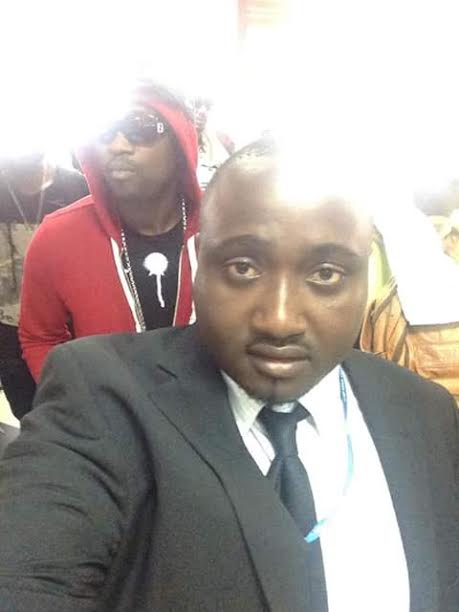
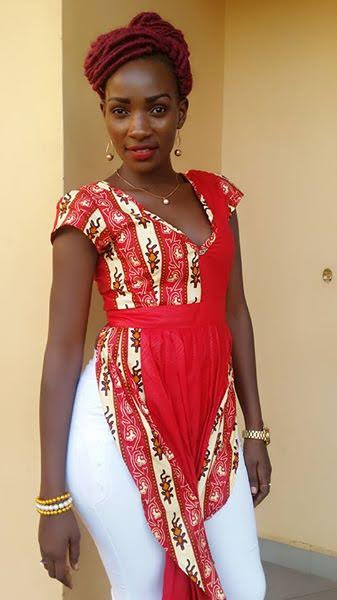
Bukedde Tv’s Fifi Da Queen Stole My Shs70million – Suudiman

Accused the Da-Queen, Suudiman.

Recent reports in local tabloids have always claimed that of renowned events promoter, Suudi Lukwago is broke.

In fact, at one time Kampala Sun reported that he was too broke reaching the extent of selling off his mother’s house.If we are to believe the reports, then Bukedde TV presenter, Fifi Da Queen real name Fiona Nabitengero. However, according to Suudiman, this bad publicity was due to the Da Queen’s invisible hand.

He says the presenter robbed of his Shs70million and apparently the “robbery” was at Timaya’s show in Jinja last year.

da-queen


“Fifi the Queen you robbed me of Shs70miilons at Timaya jinja show,” Suudiman ranted on social media. “But you are still renting…Me I am here at my Shs800=millions house”

Fifi was among the people at the forefront of Timaya’s show. She actually even oversaw his “meet and Greet’ party at Club Ambiance before the artiste left for Jinja, where his show was held. Suudiman said he was reacting from constant attacks from Fifi while on her TV show.


Stories Continues after ad

Ethiopia: 52 dead in anti-government protest at religious festival

Scores of people are feared dead after police in Ethiopia fired teargas and warning shots to disperse anti-government protesters at a religious festival, triggering a stampede.
The Oromiya regional government, where the event took place, confirmed the death toll at 52. A spokesman blamed “people that prepared to cause trouble”.
Opposition parties said at least 50 people had died at the festival on Sunday and other witnesses put the toll higher.
There have been sporadic protests in Oromiya over the last two years. Last year plans to allocate land surrounding Ethiopia’s capital, Addis Ababa, for development prompted fierce demonstrations from members of Oromo minority, the country’s largest ethnic group. Many of those who would have been displaced by the new scheme were Oromo. The scheme was scrapped in January but protests continued.
Several rights groups including Amnesty International and Human Rights Watch have reported that up to 400 people have been killed in clashes between security forces and protesters, the country’s worst unrest in more than a decade.
The deaths on Sunday occurred in the town of Bishoftu, about 25 miles (40km) south of Addis Ababa. Hundreds of thousands of people had gathered at a sacred lake for the annual Irreecha festival of thanksgiving. Crowds chanting “we need freedom” and “we need justice” prevented community elders, seen as close to the government, from delivering speeches.

ethiopia2

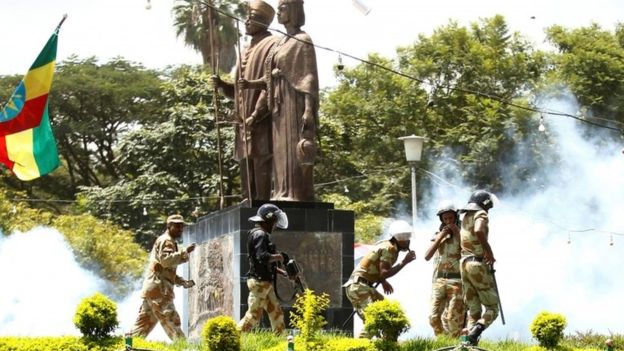
Some protesters reportedly waved the red, green and yellow flag of the Oromo Liberation Front, a rebel group branded a terrorist organisation by the government. According to witnesses, protesters threw stones and bottles and security forces responded with baton charges and then teargas grenades.
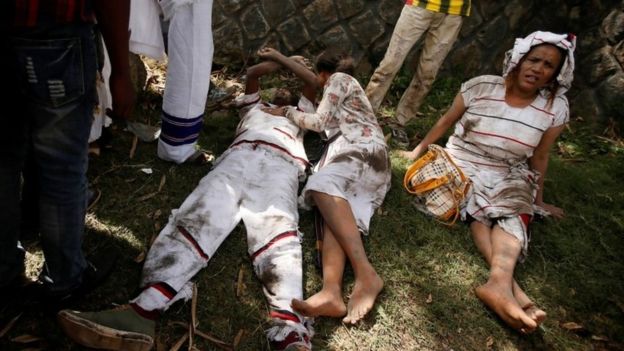
The teargas caused panic and at least 50 people fell on top of each other into a deep ditch. Images from the scene showed dozens of men trying to climb out of a trench that appeared to be at least 6 metres (20ft) deep.
Witnesses said they saw people dragging out a dozen or more victims showing no obvious sign of life. Half a dozen people were seen being taken by pickup truck to a hospital, one witness said.app
“As a result of the chaos, lives were lost and several of the injured were taken to hospital,” the government’s communications office said in a statement. “Those responsible will face justice.”
Merera Gudina, chairman of the opposition Oromo Federalist Congress, told Reuters his group had been talking to families of the victims and it was thought at least 50 people were dead. He said the government had tried to use the event to show Oromiya was calm. “But residents still protested,” he said.
The government blames rebel groups and dissidents abroad for stirring up the protests and provoking violence. It dismisses charges that it clamps down on free speech or its opponents.
Oromos and Amharas, another ethnic group, together make up 60% of Ethiopia’s population of 100 million and have become increasingly vocal in rejecting what they see as the disproportionate power wielded by the northern Tigrean minority in government and the security forces.


Oromia religious festival in Bishoftu.

In parliamentary elections in 2015, opposition parties failed to win a single seat – down from just one in the previous parliament. Opponents accused the government of rigging the vote, a charge government officials dismissed.
Ethiopia, a close ally of the west, has long been one of the world’s poorest nations but has experienced rapid economic growth in the past decade.
In one of the most public recent protests, Olympic athlete Feyisa Lilesa crossed his arms as he finished the marathon at the Rio Games in August, a sign of solidarity with fellow Oromo meant to symbolise being handcuffed by security forces.
The 26-year-old has since sought political asylum in the US, saying he is afraid to go back to his homeland.
In an interview with the Guardian this year, Ethiopia’s Prime Minister, Hailemariam Desalegn, described his country as an island of stability in the troubled Horn of Africa region.
“We have clearly identified why this protest has come about: unemployment and lack of good governance. Building democratic culture will take some time. But we are on the right track. It’s improving,” Desalegn said.
Any sign of unrest is closely watched in Ethiopia, with frequent detentions of alleged dissidents and pressure on the media. Ethiopia is 142nd of 180 in the press freedom index compiled by Reporters Without Borders.

Stories Continues after ad

‘Naughty plate’ embarasses Jennifer Musisi at City Carnival

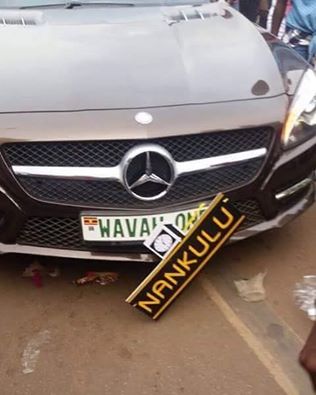
EXPOSED: "Nankulu' peels off to give way to real owner 'Wavah', the tycoon associated with the Spears Motors Group, importers of Mercedes Benz.

The Kampala City Council Authority (KCCA) carnival is known a fete where people come together to socialize and have fun. It is also a good platform for showbiz.

Against all this, the KCCA Executive Director Jennifer Musisi opts for showbiz, perhaps; in one way or the other she always dominates the news at the end of every Carnival.

In one of the first carnivals, she made headlines for turning up in supposedly artificially enhanced hips that many suspected she had just worn. But that was then.

Currently, she gotten more than what is needed to leave all men drooling everywhere she passes – she is now into fancy cars. Last year she made a grand entry to the carnival in a luxurious BMW convertible.

BEFORE COMEDY: The sleek Mercedes with customised number plate before it gave way to reveal real owner, Gordon Wavamunno aka Wavah

And yesterday she showed up at the Shs800 million event in a luxurious sleek Mercedes Benz.

But unlike in the first incidents where the public just suspected her hips had been enhanced, yesterday she was ‘stripped pants down’, leaving nothing to suspicion!

This was after ‘her’ car (in which she had been ushered), which had turned out to be the main attraction, exposed her.

The threads which had been holding the mighty ‘Nankulu’ (her Number plate) in place – finally gave in to exhaustion by the heavy plate, releasing it to reveal the true owner of the car that had earlier captured everyone’s attention.

And then bang! A customised plate of ‘Wavah’ was exposed after ‘Nankulu’ became displaced.

The car actually belongs to the WBS TV boss, Gordon Wavamunno of the Spear Motors fame contrary to what many had believed.

The exposure left many wondering why a person who receives a salary in excess of Shs40 million per month would ‘borrow’ a car.

“Why doesn’t she buy it if she loves it? See, how she has been embarrassed before the public!”

Interestingly however, Ms Musisi never got to know that the car had given out her closely-guarded secret!


Stories Continues after ad

Uganda targets US$50m to US$100m for minerals exploration

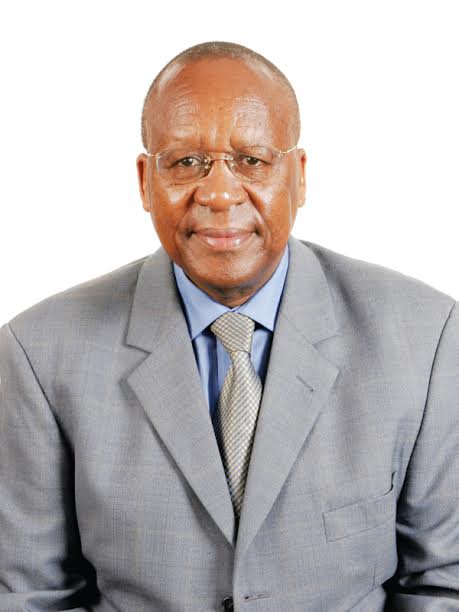
BOUNCED BACK TO LIMELIGHT: Former energy minister Richard Kaijuka

By Hon Richard H. Kaijuka

Uganda is well endowed with mineral resources and like many naturally gifted African countries, is becoming very keen in ensuring that these resources play a transformative role in its long term structural transformation dream – Vision 2040.
This is also in line with the African Union 50 year vision Agenda 2063 as well as the global Agenda 2030 that highlights key Sustainable Development Goals (SDGs).
The African Mining Vision stresses that revenues from minerals should be used for development. It also seeks to demystify the “Curse Paradox” that is often associated with the mineral-rich African countries where, upon their discovery, tension and conflicts are often expected to emerge instead of development.
The only assured path to optimize value from the mineral resources is to attract responsible investments into the sector that lead to value addition and industrialization.
In order to attract responsible investments, it is important that a country is knowledgeable of its mineral wealth. This can be achieved through a comprehensive country exploration programme that involves both the private and public sector investments.

Context

The Uganda Mineral Exploration Initiative (UMEXI) is a private sector led initiative that will drive this minerals’ exploration campaign in Uganda.
To operate like a Public-Private Partnership (PPP), UMEXI will be steered by the Uganda Chamber of Mines and Petroleum (UCMP), with support from the African Union Commission.
It will be based on critical success experiences of countries such as Brazil and Australia. The initiative will also benefit from the expertise of development institutions like the World Bank, African Minerals and Geoscience Centre (AMGC – formerly SEAMIC, of which Uganda is a member) as well as the African Union’s African Minerals Development Centre (AMDC).
A full proposal is being developed and will be presented at the Mineral Wealth Conference that takes place on October 5th and 6th, at the Serena Hotel in Kampala. The UCMP invites everyone to this conference to get an insight into what Uganda’s minerals industry is about.
Subsequently, it is hoped that the success of UMEXI will trigger the development of a regional exploration programme.

Implementation

The execution of UMEXI will be based on a PPP model that is already being realized in other African countries such as the West African Exploration Initiative (WAXI).
It will require the collaboration of the government and the private sector, including mining companies and other institutions that are involved in geological data and information gathering to ensure a countrywide exploration of Uganda’s mineral wealth is completed successfully.
It is envisaged that UMEXI will mobilize about $50 to $100m in the medium term for this comprehensive effort.

The writer is the Vice President of the Uganda Chamber of Mines and Petroleum and a former Energy Minister

Stories Continues after ad

Oulanyah single again, loses custody of kids after divorce

DIVORCE AT LAST: Deputy Speaker Jacob Oulanyah has finally been granted divorce by the High Court.

The Family Division of the High Court has today dissolved the marriage between Deputy Speaker Jacob Oulanyah L’Okori and his wife Lady Winnie Amoo Okot Oulanyah.

In a ruling read by registrar Justin Atukwasa today, Justice Alexandria Rugadya Nkonge, declared Oulanyah and estranged wife as single again, but handed custody of their two kids to the mother who is resident in San Diego, California USA. Oulanyah, who has been granted pre-arranged visiting rights, will however, have to part with US$690 per month for the kids’ upkeep.

Oulanyah married Winnie in 2013 in a high profile wedding attended by VVIPS including President Yoweri Museveni. However, months into the marriage cracks started appearing after Oulanyah accused his wife of ‘abandoning’ their marital home and also for denying him conjugal rights.

And, after prolonged disagreements, in 2015 Oulanyah sought protection of the law by lodging divorce proceedings against Ms Winnie Amoo in court, which have culminated in court ruling in his favour today.

Oulanyah had earlier lost his first wife Dorothy Nangwale Oulanyah, whose name also featured during the divorce proceedings.

Stories Continues after ad

Bebe Cool nominated for MTV Awards in category he ‘hates most’

FLASHBACK: Bebe Cool at HiPipo Music Awards 2014 Artiste of The Year. This year he has been nominated for Listeners' Choice award.

“Fans and friends I av scooped a nomination in Mtv Mama Awards 2016 in the category of Listener’s choice,” Bebe Cool updated on Facebook Monday afternoon.

The Ugandan crooner has finally been nominated in the MTV Africa Music Awards (MAMAs) after having missed out on the first list but unlike last year, this time he has been nominated in a category he ‘hates most’ – the Listener’s Choice category.

Last year Bebe Cool trashed a similar award that had been won by Eddy Kenzo at BET, saying that unlike his song, ‘Love You Everyday’ that had been nominated for its good video, Eddy Kenzo had had to rely on the number of video views from his fans to land a nomination at BET.

He argued that the song had not been nominated because of its quality but rather because of its views on YouTube.

He now finds himself in a similar category because if it were not his fans, he would have missed out on the MAMA list this year.

“Ma fans lets do this together….” he commanded his Gagmel army on Facebook where he has one of the biggest following in Uganda.

Bebe Cool joins Eddy Kenzo, who had earlier been nominated in the Best Live Act category. Meanwhile, singer Sheebah Karungi has also been nominated in the same awards for her ‘Kisasi Kimu’ video.

The MTV Africa Music Awards, now in their 6th edition, recognise and reward musicians and achievers who have made the most impact on African music and youth culture over the previous year. This year’s winners will be awarded on Saturday, October 22, in Johannesburg, South Africa.


Stories Continues after ad

‘Defiant’ Besigye vows on regime change, attacks MPs on remuneration

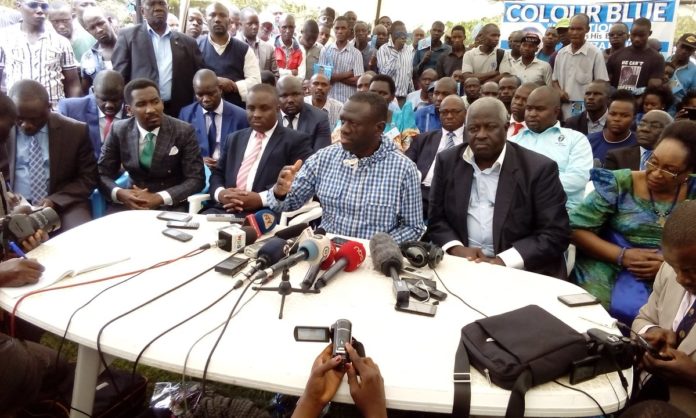
DEFIANT? Dr Kizza Besigye addresses a press conference at an earlier function at his home in Kasangati. Photo credit/nbstv.

Opposition Forum for Democratic Change (FDC) flag bearer for the 2016 presidential elections Warren Smith Kizza Besigye has vowed to ensure that the National Resistance Movement government collapses.

Dr Besigye, who returned from a ‘working visit’ to Europe and the United States today, made the remarks while addressing a press conference at his home in Kasangati.

This followed his arrest at Entebbe International Airport, from where he was whisked off to his home to avoid a procession that was announced about a week ago by his party, the FDC.

Besigye was scheduled to return to Uganda last Thursday but party stalwarts, Deputy Secretary General Harold Kaija and former Leader of Opposition (LoP) in Parliament Wafula Oguttu, announced that he had altered his plans.

“There’s no turning back. This imposter regime must go. The people of Uganda must regain their freedom.  We are going to win by defiance. If people withdraw their support from a regime, that regime falls. That’s what we shall continue rallying our people to do,” Dr Besigye said on his return today.

Dr Besigye, who contends he won the 2016 presidential elections, has always insisted that change can only come to Uganda through ‘defiance’. “This struggle to free Uganda is not a partisan struggle. The struggle we are in is not just for FDC but for all people,” he emphasized, adding: “We are going to use this independence to show that this is our country. We shall communicate the programme later.”

He also took swipe at the haphazard remuneration systems in the country, and called for the establishment of an independent body to oversee the process.

“We must have an independent remunerations body. No public servant should determine their own pay. Not even MPs. Parliament is the only institution that determines its own salaries. This needs to change, Dr Besigye said, before blaming President Yoweri Museveni for the country’s economic woes.

“Museveni is killing investments by the way he behaves. This is our country. Let’s not get tired. The enemy of Uganda’s progress is the regime and its behavior,” he charged.

Meanwhile, earlier today, police spokesperson Andrew Felix Kaweesi had told the media that police would foil any attempts at holding processions and that the FDC had not communicated the new date for Dr Besigye’s return.

Dr Besigye, who is facing treason charges and is expected to appear before court tomorrow, has been out of the country for the last one month, during which time he addressed gatherings at renowned UK think tank Chatham House, and also at the Uganda North American Association (UNAA) convention in Boston, Massachusetts, USA.

Stories Continues after ad

AU names new representative for South Sudan

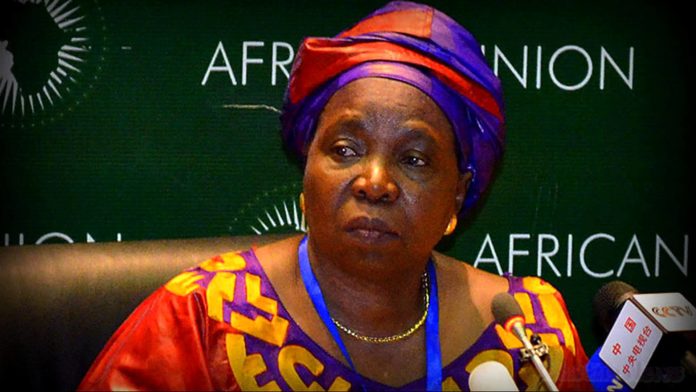
HANDED OVER AU CHAIR: Former AU chairperson Nkosazana Dlamini Zuma

The Chairperson of the Commission of the African Union, Nkosazana Dlamini-Zuma has appointed Ambassador Joram Mukama Biswaro from Tanzania as her special representative as well as head of the AU Liaison Office in South Sudan (AULOSS).

Biswaro replaces Brigadier General Sara Thomas Rwambali.

The appointment of Biswaro, the continental body stated, comes at a critical time in the history of South Sudan as the AU reinforces its engagement in the country facing a civil war since December 2013.

“The Chairperson is confident that he [Bisawaro] will leverage his extensive experience to enhance the pivotal role of the AULOSS in supporting the complex political and security processes in South Sudan and enhance the AU’s overall objective, in partnership with regional and international actors, in finding a sustainable solution to the challenges of peace, security and development in the country,” partly reads a statement posted on the organisation’s website.

The new AU representative has held various senior positions in the Tanzanian foreign affairs ministry from 1973 to 2013, serving as his country’s Ambassador Extraordinary and Plenipotentiary to Latin America and the Caribbean, and the Permanent Representative to the African Union and United Nations Economic Commission for Africa.

He reportedly played a crucial role in the transformation process from the OAU to the AU and, as Chair of the AU Peace and Security Council, visiting several hot spots on the continent.

Biswaro, the AU stressed, also participated in OAU/AU election observer missions to Zimbabwe, South Africa, Ghana and Kenya.

In a related development, Zuma appointed Wahida Ayari of Tunisia, as her new Special Representative for Libya and Head of the African Union Liaison Office in Libya, replacing Mondher Rezgui.

Ayari, an accomplished diplomat, is currently Minister Plenipotentiary and the Deputy Director in Tunisia’s Foreign Affairs ministry.

“She has extensive diplomatic experience in African affairs as she served as Deputy Director for relations with the African Union and was a member of the Tunisian delegation to several Ordinary and Extraordinary AU Summits,” the AU said.

The Chairperson said she is confident Ayari’s appointment will enhance the critical role the AU office is currently playing in supporting the political and security developments in the country, and the AU’s overall objective of restoring lasting peace and stability in the country.


Stories Continues after ad

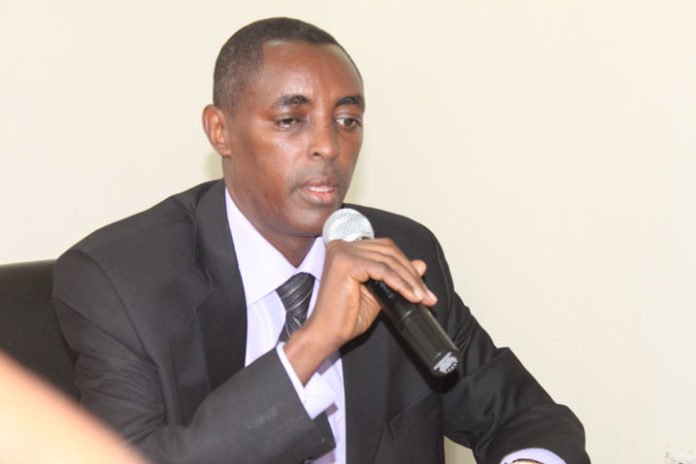
Rwandan Senator collapses, dies at Parliament

DEAD: Former justice minister and one time Prosecutor General Jean de Dieu Mucyo died ealier today.

Rwandan Senator Jean de Dieu Mucyo has died after reportedly slipping on the steps of Parliament.

Mucyo, 55, who previously served as Attorney General and Minister of Justice, and Prosecutor General, was, before his appointment to the Senate in 2015, the head of the National Independent Commission Charged with Gathering Evidence to Show the Implication of the French Government in the Genocide Perpetrated in Rwanda in 1994, also known as the ‘Mucyo Commission’.

Born on 7/12/ 1961 to Thomas Mucyowintore and Marciana Uzanyamaberuka, the late Mucyo studied law at the National University of Butare between 1985 and 1990.

Stories Continues after ad

‘Rwanda refugee problem’ to be solved by 2017 – UN

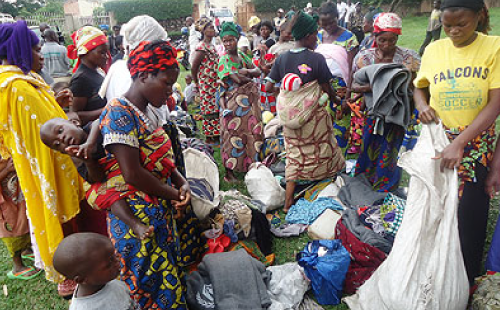
Rwanda refugees returning from the Democratic Republic of Congo (DRC).

Uganda is one of the countries in the Great Lakes region that has committed to help find a lasting solution to the Rwandan refugee problem, arising out of political upheavals that forced millions of Rwandans to flee their country between 1959 and 1998.

Over the years millions of Rwandans have had to flee their country after ethnic clashes that culminated in two genocides against the Tutsi; one in 1959 and the 1994 Genocide in which close to a million lives were lost, with millions of others fleeing the country.

Other countries which have played host to Rwanda refugees over the last 57 years include Angola, Burundi, the Democratic Republic of Congo, Kenya, Malawi, Congo (Brazzaville), South Africa, Zambia and Zimbabwe and, according to the United Nations High Commissioner for Refugees (UNHCR), they have all pledged to help end the ‘Rwanda refugee problem’ by the end of next year.

The decision follows deliberations of the ministerial meeting held in Geneva between officials of the UNHCR, the African Union (AU) and the refugee host countries, following seven years of negotiations that began in October 2009.

‘This ministerial meeting, hosted by the Office of the UN High Commissioner for Refugees (UNHCR)) in Geneva, marks the last phase of a comprehensive solutions strategy for Rwandan refugees who fled their country between 1959 and 1998 to escape inter-ethnic violence and armed conflict’, the UNHCR said.

Speaking about the matter Filipo Grandi, the UNHCR High Commissioner said: “In a world where there are more than 21 million refugees, the focus should not just be on providing protection and humanitarian assistance, but on proactively identifying solutions. The meeting today constitutes a crucial step in providing solutions to the many Rwandans who sought refuge between 1959 and 1998, and in bringing one of Africa’s most protracted refugee situations to a close.”

At the meeting, UNHCR’s Assistant High Commissioner for Protection, Volker Türk, underlined that the agency stands ready to continue working with the States hosting Rwandan refugees to find solutions in accordance with the strategy and within the set timeline of December 2017.

All States confirmed that they will continue to promote the option of voluntary repatriation to Rwanda in safety and dignity, including by providing the refugees with comprehensive information on the conditions of return. At the same time, UNHCR agreed to provide an enhanced return package, and to progressively transition from in-kind support to a more cash-based form of assistance to ensure their sustainable reintegration.

The countries that have invoked the cessation clause reassured that any refugee whose refugee status is maintained after an exemption process will continue to receive international protection and be supported.

The genocide in 1994, followed by armed clashes in the north-west of the country in 1997 and 1998, caused more than 3.5 million Rwandans to flee in search of safety. All but 268,500 of the refugees have found a solution, UNHCR said.


Stories Continues after ad