Stanbic Bank
Stanbic Bank
20 C
Kampala
Stanbic Bank
Stanbic Bank
Home Blog Page 209

Kirinya Health Centre II, Karon Relief Foundation partner to fight increasing rates of HIV in Kampala slums

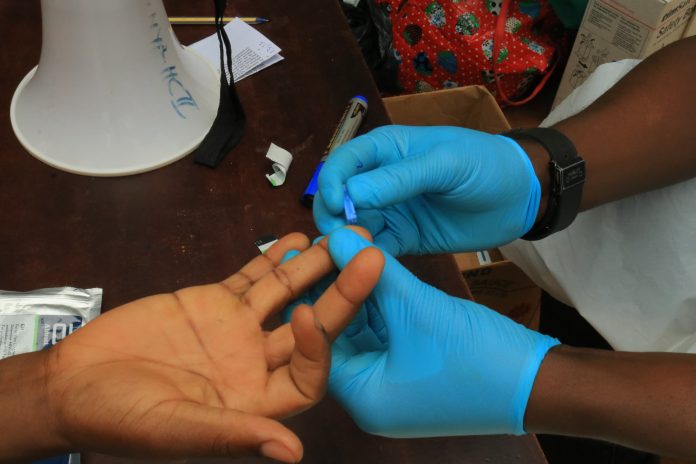
In response to the alarming increase in HIV rates among the youth in Kampala’s slums, Karon Relief and Development Foundation, in partnership with Kirinya Health Centre II, have launched a comprehensive five-day HIV awareness campaign.

The outreach, which took place in Kito village of Kira Subcounty, aimed to educate, test and provide preventive resources to the youth in Kira Municipality.

On the first day, over 150 youths participated in the event, taking the critical step to know their HIV status through on-site testing. In addition to testing, attendees received extensive counseling services tailored to address their concerns and provide emotional support. Preventive measures, including the distribution and proper use of condoms, were emphasized to help reduce the risk of HIV transmission.

Ronald Katwalo, Managing Director of Karon Relief Foundation, remarked, “This campaign is not just about testing; it is about creating a sustainable impact through education and preventive measures. Our focus is on empowering the youth with the knowledge and tools they need to make informed decisions about their health. We believe that by working closely with local health centres and community leaders, we can turn the tide against the rising HIV rates.”

Participants expressed their appreciation for the initiative. One youth stated, “I am grateful for the opportunity to know my HIV status. The counseling I received was insightful, and I now understand the importance of using preventive measures to protect myself and others.”

Michael Oleke, the Program Manager at Karon Relief Foundation, added, “The response from the youth has been overwhelmingly positive. Our team is dedicated to providing continuous support and follow-up to ensure that the information and resources shared during this campaign have a lasting impact. We are committed to reaching as many young people as possible with our message of prevention and health.”

The area chairperson commended the efforts of Karon Relief Foundation and Kirinya Health Centre II, saying, “This initiative is a significant step forward in our fight against HIV. The youth are the backbone of our community and providing them with accurate information and resources is crucial. I hope to see more of such impactful initiatives that address pressing health issues in our community.”

The campaign also included interactive sessions where health professionals discussed various aspects of HIV prevention, treatment options, and the importance of regular testing. Educational materials were distributed to ensure that the information reached beyond the participants and into the wider community.

Stories Continues after ad

Traders announce countrywide shutdown over Museveni’s failure to address their challenges 

Traders listening to Museveni at Kololo at the past event.

Traders under their umbrella bodies of the Kampala City Traders Association (KACITA), Uganda Cargo Consolidators, and Kampala Rice Traders have announced countrywide closure of businesses effective from tomorrow.

According to Isa Ssekitto, the Spokesperson for Kasita, the closure is aimed at seeing President Yoweri Museveni address their challenges, including the implementation of the Electronic Fiscal Receipting and Invoicing Solution (EFRIS).

“We shall close our businesses effective from Wednesday until President Museveni sees sense in meeting or communicating with them in a dignified way,” he said. 

Their stance follows calling off their planned meeting with President Museveni. The meeting was scheduled to happen tomorrow. 

The meeting aimed at assessing the processes implementing EFRIS. City traders decried over taxations and penalties arising from failure to remit VAT and the Chinese invasion of the local markets.

The business community protested the system, closing shops in Kikuubo and downtown, claiming double taxation and lack of information about the system. They stated that the system is costly in terms of implementation since it requires devices like computers or smartphones and a gadget for printing receipts.

They contend that high import values (old ones) are making it hard for traders to clear their goods and that the high cost of living means that most of the essential goods are becoming unaffordable to the common man.

Uganda Revenue Authority started implementing EFRIS in 2021 to address tax administration challenges relating to business transactions and the issuance of receipts. The system helps URA assess the right taxes using accurate and authentically generated information. It also enables businesses to thrive with improved record-keeping and monitored stock and sales, among others.

The implementation of EFRIS will ensure not just equity in tax collection, especially VAT, but also transparency. The system is expected to double total VAT collections from Shs3.5 trillion to about Shs7 trillion.

Tanzania and Rwanda adopted EFRIS over 10 years ago. These countries collect 33% and 30%, respectively, of their total tax revenue through VAT. Uganda is currently collecting about 15% VAT of its total tax revenue, and this amounts to Shs3.5 trillion.

Stories Continues after ad

PACEID, Masheda Foods Ltd partner to open first-ever Uganda trade hub in DRC

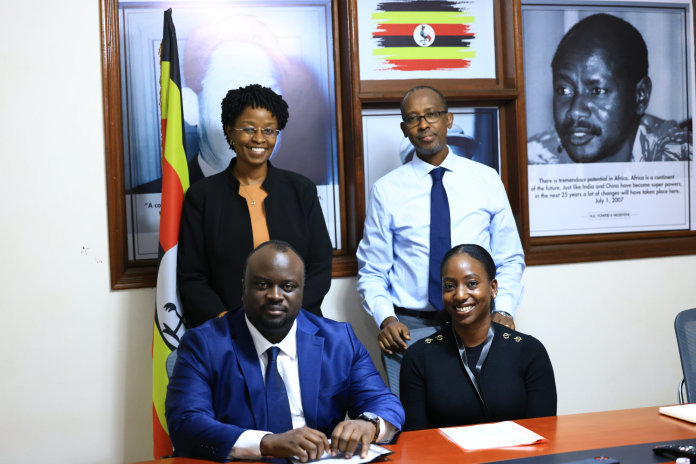
The Presidential Advisory Committee on Exports and Industrial Development (PACEID) has signed a Memorandum of Understanding (MoU) with Masheda Foods Limited, a Uganda-Democratic Republic of Congo (DRC) enterprise to partner on opening the first Trade Hub in Kinshasa and other parts of Central and Southern Africa.

The pact will also see more trade hubs in other parts of Central and Southern Africa.

The signing was done by Matthew Bagonza, Head of Secretariat at PACEID, and Ms. Sherina Nabakooza Ainembabazi, the Chief Operating Officer of Masheda Foods Limited, and it was witnessed by Odrek Rwabwogo, the Chairman of the Presidential Advisory Committee on Exports and Industrial Development and Brenda K. Opus, Head of Markets-PACEID.

The MoU will allow Masheda Foods Limited, a Congolese-registered entity, to partner with PACEID on the export of fish and fish products, beef, dairy products, grains, and many other food and industrial products. It will also allow the two to work together on the price of cargo to reduce charges for Ugandan exporters into Kinshasa, manage publicity for Ugandan products, and ensure return cargo where possible for Congolese entrepreneurs to trade in Uganda.

Rwabwogo expressed excitement about the partnership saying, “I am happy that the efforts that we began in May 2022 to open trading relations at a company level are beginning to bear fruit and I thank our Trade Representative, Mr. Justin Katoto, who has worked on several issues including non-tariff trade barriers for Ugandan businesses to sell in DRC and exchange information and products with Congolese companies.”

In June, Uganda’s head of mission in Kinshasa, Ambassador Alhaji Farid Mansoor Kallisa, said Uganda has a trade surplus with DR Congo amounting to $53.07 million (Shs208.9 billion). Goods from DRC to Uganda include palm oils and paints while Uganda exports fish, mattresses, salt and cereals among others to DRC.

Stories Continues after ad

EC commences demarcation of electoral areas for 2025-2026 general elections

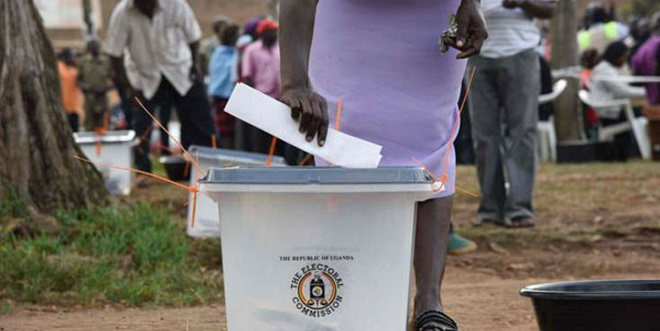
The Electoral Commission (EC) has officially commenced the demarcation of electoral areas and re-organization of polling stations for the 2025-2026 Local Governments Councils elections in a bid to clearly define areas of representation for directly elected councilors, women councilors, and councilors representing special interest groups.

In a keynote address at the National Stakeholders’ Workshop on Demarcation of Electoral Areas and Reorganization of Polling Stations, Justice Byabakama Mugenyi Simon, Chairperson of the Electoral Commission, emphasized the importance of the demarcation exercise.

“The purpose of the demarcation exercise is to clearly define the areas of representation for Directly Elected Councillors, Women Councillors, and Councillors representing Special Interest Groups in various Local Governments Councils,” Justice Byabakama explained.

The demarcation exercise, which was initially scheduled to commence in August 2023, has been delayed due to funding constraints. However, the EC has assured stakeholders that the process will be completed in August 2024.

“We are now set to commence the demarcation of electoral areas for purposes of the 2025-2026 Local Governments Councils elections. This activity ought to have been commenced at the beginning of this month as per the road map but it will now take place in August 2024,” Justice Byabakama said.

The EC has also announced plans to reorganize polling stations across the country, a move aimed at ensuring that each parish and electoral area has at least one polling station.

“The re-organization of polling stations is very crucial and is in line with Section 33 (1) of the Electoral Commission Act. It ensures a manageable number of voters per polling station and enables easy accessibility and adequate space at polling stations,” Justice Byabakama explained.

The demarcation and reorganization exercise will take into account factors such as means of communication, geographical features, and density of population.

“In addition, means of communication, geographical features, and density of population will be factored during the exercise,” Justice Byabakama said.

The EC has called on stakeholders to support the demarcation and reorganization exercise, emphasizing that a credible electoral process is a multi-stakeholder responsibility.

“I wish to emphasize that a credible electoral process is largely a multi-stakeholder responsibility. All stakeholders should therefore take a keen interest in the processes and commit to ensuring an enabling environment that enhances participation at all levels,” Justice Byabakama said.

The EC has also urged stakeholders to mobilize, sensitize, inform, and update the public about the critical duties and responsibilities regarding the demarcation and reorganization exercise.

“My appeal to Stakeholders here present and others not here is to request you to mobilize, sensitize, inform, and update the people under your jurisdiction, about critical duties and responsibilities on their part regarding these critical election activities,” Justice Byabakama said.

The demarcation and reorganization exercise is a critical step towards ensuring that the 2025-2026 Local Governments Councils elections are free, fair, and credible.

Stories Continues after ad

TotalEnergies acquires 28.3% stake in Bujagali Hydropower Plant

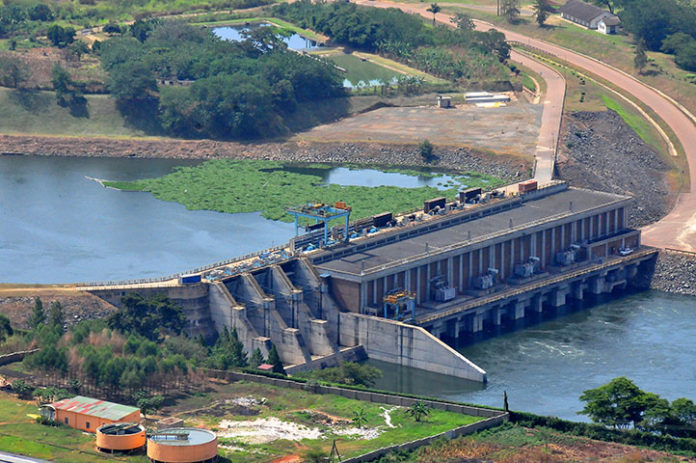
Bujagali Hydropower Plant.

TotalEnergies, a global integrated energy company, has acquired a 28.3% stake in the Bujagali hydropower plant, a critical power generation facility.

The acquisition marks a huge milestone in TotalEnergies’ expansion into Africa’s renewable energy market and underscores the company’s commitment to supporting Uganda’s energy transition.

Located on the Victoria Nile River, approximately 15 kilometers north of Jinja, the Bujagali hydropower plant is a run-of-river power station with an installed capacity of 250 MW. The plant, which began commercial operations in 2012, harnesses the energy of the Nile River to generate electricity, using a dam to divert water into a 1.5-kilometer canal, which drives five turbines to produce electricity. The plant’s output is fed into the national grid, providing clean and reliable electricity to homes, businesses, and industries across Uganda.

The acquisition is part of TotalEnergies’ strategy to increase its presence in Africa’s renewable energy sector and contribute to the continent’s energy transition. The company has set ambitious targets to reach net zero by 2050 and is building a world-class portfolio of renewables and flexible assets to deliver clean firm power to its customers.

“We are delighted to become a player in hydro power in Uganda, a country where we are also developing a major oil project,” said Patrick Pouyanné, Chairman and CEO of TotalEnergies.

Pouyanné added, “This acquisition reflects our desire to contribute to the continent’s energy transition by bringing electricity to the people of African countries.”

The Bujagali hydropower plant is a critical component of Uganda’s energy infrastructure, providing over 25% of the country’s peak electricity demand. The plant’s output will help support Uganda’s economic growth and development, powering homes, businesses, and industries across the country.

TotalEnergies’ investment in the Bujagali hydropower plant demonstrates the company’s commitment to supporting Uganda’s energy transition and reducing its carbon footprint. The acquisition is expected to boost Uganda’s energy sector and increase access to electricity in the country, supporting the government’s efforts to achieve universal electricity access by 2030.

The acquisition is also seen as a positive development for the Ugandan economy, with the potential to attract further investment in the energy sector. “This acquisition is a testament to the attractiveness of Uganda’s energy sector and the government’s efforts to create a conducive investment environment,” said Ms Ruth Nankabirwa Ssentamu, Minister of Energy and Mineral Development.

TotalEnergies’ entry into Uganda’s renewable energy sector is expected to bring new expertise and technologies to the country, supporting the development of the sector and increasing access to clean energy. The company’s investment in the Bujagali hydropower plant is a significant step towards achieving Uganda’s renewable energy targets and reducing the country’s reliance on fossil fuels.

The acquisition is subject to certain conditions and is expected to be completed in the coming months. TotalEnergies will acquire the stake in the Bujagali hydropower plant from SN Power, a Norwegian renewable energy company, which has been a shareholder in the plant since its construction.

Stories Continues after ad

UNEB to end candidates’ examination registration tomorrow

Candidates preparing for exams.

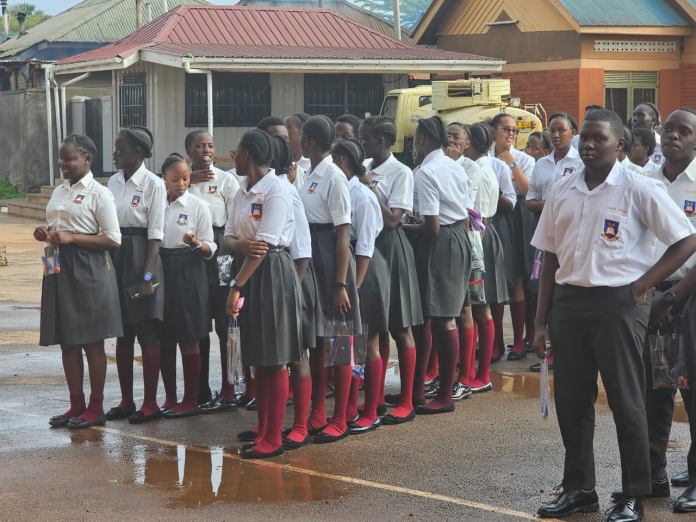
The Uganda National Examinations Board (UNEB) has set July 31, 2024 as the deadline for the registration of all candidates at the different levels in its capacity.

The latest and final registration phase for this year’s Four Examinations (4Es) ends this week on July 31, 2024. Registration for the 4Es the Primary Leaving Examination (PLE), Uganda Certificate of Education (UCE-New Curriculum), UCE -Transitional Examination (Old Curriculum), and Uganda Advanced Certificate of Education (UACE) started in March 2024.”

It should be noted that UNEB in May this year announced how it’s going to conduct four sets of exams this year. The norm has been three sets namely, PLE, UCE and UACE. However, the UCE exams will have another set of exams for the old curriculum. After that the old curriculum will be done away with.

Furthermore, UNEB said that normal registration ended on May 31, 2024, followed by a grace period of one week. Late registration was carried out during June, while July was dedicated to the final and latest phase of registration. Thereafter, UNEB will not register any more candidates for 2024 after the end of July.

Additionally, UNEB communicated in this notice that this final and latest phase of registration attracts a surcharge of 100% of the original fees of 34,000/- for PLE, 164,000/- for UCE, both Transitional and New Curriculum, and 186,000/- for UACE. Besides, Heads of Centers that intend to register candidates this year and have not done so are advised to make use of the last two days to do so.

“The public is hereby reminded that this is the last time UNEB is assessing UCE learners based on the old curriculum. The Board has therefore given a chance to those who qualify, to register for a one-off examination, the Transitional Examination, based on the old curriculum,” UNEB announced.

Those who qualify to register for the transitional examination include learners who sat UCE in 2023 or earlier and would like to improve their grades; those who registered for UCE in 2023 or earlier, but did not sit, and those who failed to register for UCE in 2023. These must have sat PLE in 2018 or earlier.

Others include learners whose results were previously cancelled due to examination malpractice. Adults of 20 years and above, who have never sat for PLE, but would like to get a UCE certificate can also register, as long as they show proof of age and seek permission from the UNEB Executive Director.

This last offer is only given to Ugandans. All those intending to run for political offices but do not have UCE certificates are specifically encouraged to register now for the transitional examination. The transitional examination will be conducted alongside the other UCE examination in October November.

Registration can be done from the Private Halls accredited by UNEB to register candidates in different parts of the country, or other UNEB examination Centers, including USE Schools.

Stories Continues after ad

Gov’t collects Shs80b in visa and dependent pass charges

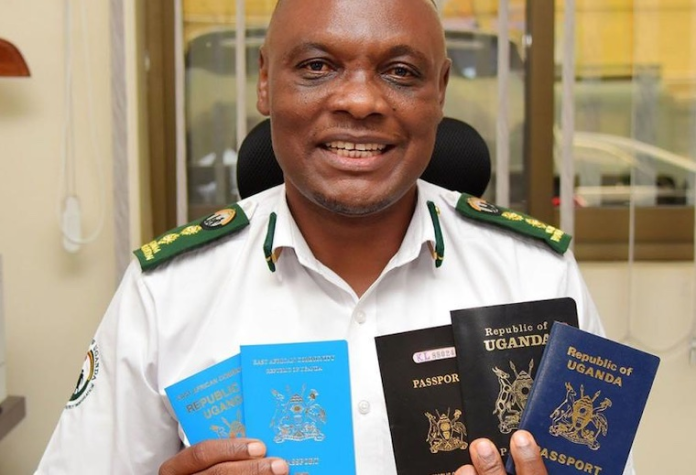
Simon Peter Mundeyi, Immigration Spokesperson.

The government of Uganda has collected Shs80 billion in visa and dependent pass charges in the last financial year, according to statistics released by the Ministry of Internal Affairs.

The Directorate of Citizenship and Immigration Control (DCIC) issued 266,537 visas at $50 each, translating to Shs49.7 billion, and 12,970 dependent passes for $400 each, totaling Shs19.3 billion.

“We have seen an increase in the number of Ugandan women applying for dependent passes for their foreign spouses. A man comes from a foreign country to be taken care of by his Ugandan spouse. This is not a common practice in our African tradition,” Mundeyi said.

The dependent passes are issued to individuals coming to Uganda to stay under the care of their parents, guardians, or spouses. Notably, there has been an increase in Ugandan women applying for dependent passes for their foreign spouses.

Additionally, DCIC collected Shs5.1 billion from student passes issued to foreign students coming for university or secondary studies, indicating growing trust in the Ugandan education system.

Special passes earned the Ugandan government five billion shillings, while Shs2.7 billion were collected from certificates of residence.

“We want to inform people in Uganda and abroad that we don’t give special passes to everybody. You must have rare skills that no Ugandan possesses,” Mundeyi said.

However, the Ministry’s Spokesperson, Simon Peter Mundeyi, raised concerns about East African nationals, especially Kenyans, who do not apply for work permits despite starting businesses in Uganda.

“Even when you are an EAC citizen, you need a work permit. This work permit is free for EAC citizens except for our DRC brothers and sisters. Our friends from Kenya do not visit immigration to get these work permits but just start their businesses. For those from the DRC, they are not charged for entry visas but are charged for other facilities like work permits,” Mundeyi said.

The DCIC also reported notable achievements in combating human trafficking, rescuing 144 Ugandans trafficked by unscrupulous people, and receiving 752 deported Ugandans who had illegally entered other countries or overstayed their visas and work permits.

Furthermore, DCIC deported 972 foreigners for illegal entry or overstaying after their visas, special passes, work permits, or student passes had expired. A manhunt is currently underway for five illegal foreigners who escaped from Namanve cells.

Stories Continues after ad

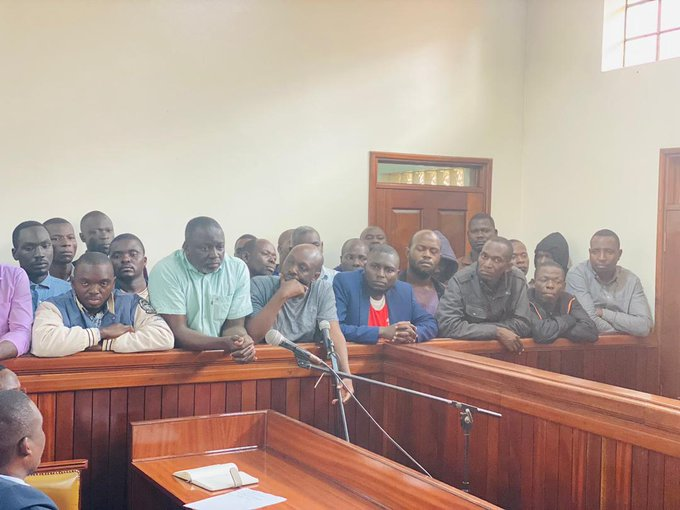
Court remands 36 FDC supporters over terrorism

Forum for Democratic Change (FDC) supporters that have been slapped with terrorism charges.

Nakawa Chief Magistrate’s Court has remanded 36 supporters of the Forum for Democratic Change (FDC) on allegations of terrorism.

The three dozen were arrested in Kenya and handed over to Ugandan authorities by Kenyan security last week. The group is alleged to have been engaged in covert activities suspected to be subversive to Kenyan security forces.

The prosecution alleges that on the 22nd and 23rd of July 2024, the 36 traveled to Kisumu, Kenya, to receive terrorism training. They have been remanded till August 13, 2024.

According to Dr. Kizza Besigye, on July 23rd, 36 of our (FDC) colleagues traveled to Kisumu for a week-long leadership workshop. They were allegedly cleared by Ugandan immigration and security.

He said a few hours later (during the night), their residences at Ukweri Catholic Pastoral Centre, Kisumu, were violently attacked, doors broken, and all brutally arrested. This was by a combination of Ugandan security officers and the Kenyan military.

Their properties were confiscated, including computers and phones. They were tortured and several were injured during and after arrest. They were driven that night back to Uganda—this time without going through Kenyan or Ugandan immigration.

“They were detained in “safe houses” of Uganda’s External Security Organisation (ESO) until they were brought to Kololo grounds to be paraded before the media as having been handed over by the Kenyan government for engaging in suspicious circumstances,” he said.

The group has since been detained at Naggalama Police Station, in Mukono District. “They were lawfully invited into Kenya and entered Kenya lawfully. The place where they were to hold their workshop was lawfully engaged. They were illegally arrested and illegally deported, apart from the torture and other human rights violations done by government forces of both Uganda and Kenya,” he said.

Stories Continues after ad

Museveni commends Deputy Speaker Tayebwa’s father for hard work, offers him five cows

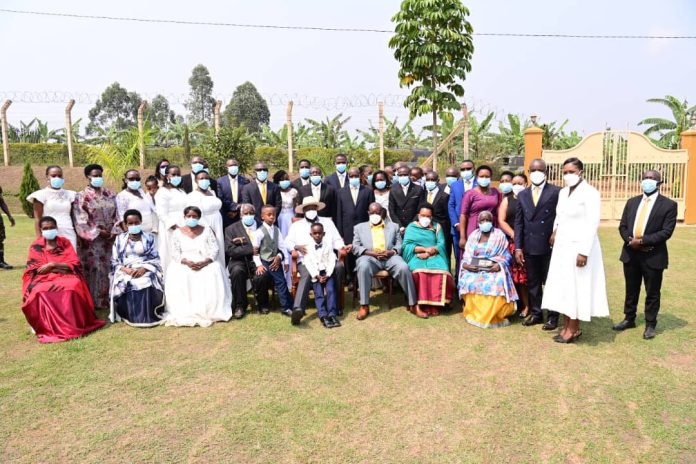
President Museveni and Deputy Speaker Thomas Tayebwa's family.

President Yoweri Kaguta Museveni has commended Mzee Daudi Bangirana, the father of the deputy Speaker of Parliament Thomas Tayebwa, for being a hard-working man.

Museveni said during celebrations to mark Bangirana’s 80th birthday and 48 years of marriage in Nyamiyaga, Bitereko, Ruhinda-Mitooma District.

In a meeting with the family, President Museveni commended Mzee Bangirana for being hardworking and for educating his children, who became responsible citizens in the country. The President further gifted Mzee Bangirana with five Friesian cows.

After the meeting, President Museveni proceeded to a rally at Rwakitandara Playground, where he addressed the residents of Mitooma and cautioned them against the politics of identity-based on religion and tribe, saying it undermines the prosperity of Ugandans.

He cautioned accounts and permanent secretaries against corruption. Last week, Ugandans staged protests against the speaker of parliament, Anita Among, over corruption. According to police, over 100 people were arrested, charged, and remanded to Luzira Prison. The leaked documents show the alleged exorbitant sums of months pocketed by the speaker, Anita Among, in the name of per diem, cooperation, social responsibility, and others.

The funds were being deposited in various accounts of the parliamentary staff. The exhibition revealed that several MPs claimed per diem for the same activity from Parliament and the National Council of Sports.

It further showed that the speaker received over Shs2.4 billion in a space of 39 days. The money that was received by Daniel Adilo and Okwi Emmanuel Emuron was reportedly meant to cater to field mobilisation activities, her outreach activities, community consultation activities, and others.

It also showed that she pocketed, per diem, Shs2.6 billion for the eight trips she made out of the country between September 2023 and January 2024. She also received a per diem of Shs646 million between July 2022 and July 2023.

While speaking at the Rwakitandara rally, Among said corruption does not start in parliament, nor does it happen there, and they are not accounting officers of government.

In a period of four days from October 11, 2023, to October 16, 2023, Shs2,673,000,000 was put into a personal bank account.

Stories Continues after ad

Uganda Prisons commemorates Nelson Mandela day

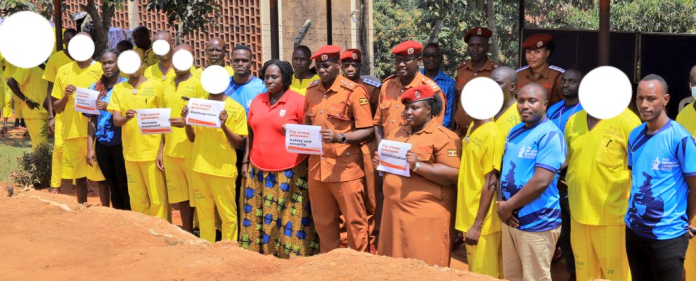
Uganda Prisons Service (UPS), in partnership with Justice Defenders, a Civil Society Organisation and the United Nations Office on Drugs and Crime have commemorated the Nelson Mandela International Day at Murchison Bay Prison, Luzira.

This event is part of the ongoing celebrations across all prisons within the Kampala Extra Region in this month of July, 2024, aimed at promoting human rights, social justice and rehabilitation among inmates.

Mr. Herbert Kaheeru, Superintendent of Prisons (Officer-in-Charge of Murchison Bay Prison), shared the inspiring story of Nelson Mandela’s life, highlighting his 27 years in prison for fighting against apartheid, and his subsequent leadership in South Africa’s transition to democracy.

Mr. Kaheeru encouraged the inmates to draw inspiration from Mandela’s life, saying, “Just like Mandela, you too can overcome your challenges and achieve greatness. Remain disciplined, embrace hard work, and never give up hope. A brighter day starts with the choices you make today.”

He also emphasized how Mandela’s experiences in prison inspired the formulation of the United Nations Standard Minimum Rules for the Treatment of Prisoners, also known as the Nelson Mandela Rules.

Mr. Paul Murangira, Business and Operations Manager at Justice Defenders, emphasized the importance of access to justice and legal aid for prisoners.

“We believe that everyone deserves a second chance, and we are committed to supporting the rehabilitation process through legal assistance, awareness and education,” he added.

Inmates were guided through all the key highlights of the Nelson Mandela Rules, which UPS is practice-basing its principles and standards. The Rules provide a framework for humane treatment and rehabilitation of prisoners worldwide.

The event featured a range of activities, including sports, music, dance and drama, poem presentations, a legal aid clinic, and donation of essentials to inmates.

Stories Continues after ad