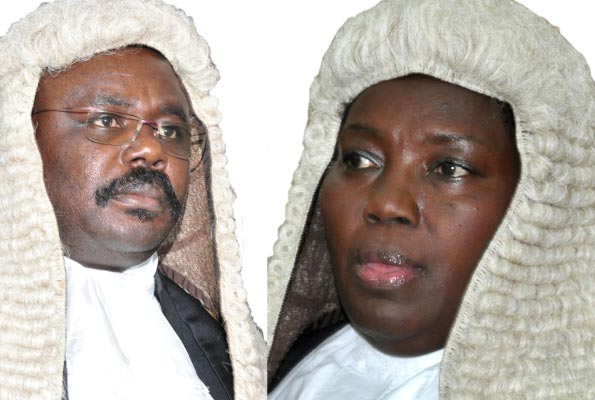
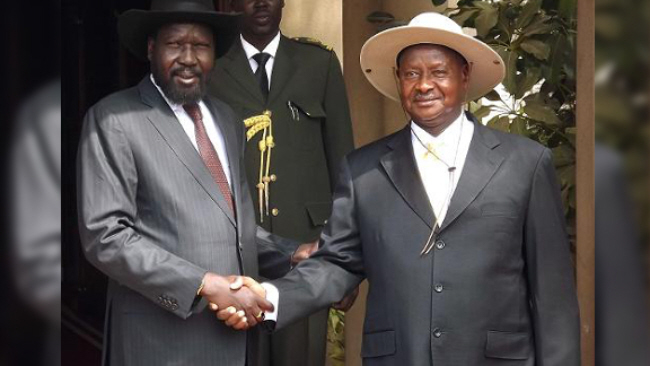
Current Speaker of Parliament Rebecca Kadaga (R) and her deputy Jacob Oulanyah.
President Museveni has reportedly set the record straight about false claims he was favouring one candidate against the other in the race for Speaker of the 10th Parliament.
The battle is Speaker Rebecca Kadaga and her deputy Jacob Oulanyah.
He’s also dealing with talkative Lwemiyaga MP Theodore Sekikubo, Wilfred Niwagaba of Ndorwa East, Mitooma Woman MP Jovah Kamateeka, National Female MP and Kumi Woman MP-elect Monicah Amoding, West Budama South MP Oboth Oboth and Ajuri MP Dennis Hamson Obua.
The President is said to have over the weekend at Entebbe State House warned all of them against ring fencing the position of the speaker and deputy speaker.
We’re told this was during the National Resistance Movement-NRM party Central Executive Committee-CEC meeting held on Sunday.
Museveni, who is alike a big brother to all the contestants insists the positions should be free to contest in a leveled playing ground.
“The President said that as has been done in the past, those interested should state their intentions and the NRM caucus in Parliament will thereafter vote for their preferred candidate,” the source quoted Museveni as saying.
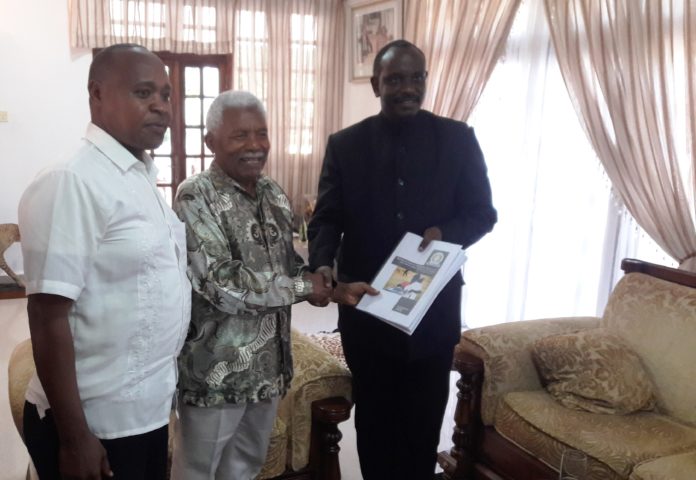
From L-R; Hon Peter Mathuki, EALA MP, H.E. Ali Hassan Mwinyi and Dr Richard Sezibera display EAC Observer Mission Report
The Chairperson of the East Africa Community (EAC) Election Observer Mission to Uganda Ali Hassan Mwinyi, recently handed over the final observation report of Uganda’s presidential elections to the EAC Secretary General Dr Richard Sezibera.
HE Mwinyi, a former President of Tanzania, led the 50-man team that was in Uganda from February 9 to observe the February 18 presidential elections and over the weekend presented to Amb Sezibera the report at his home in Dar es Salaam.
The Mission’s mandate was to observe the overall electoral environment, pre-election activities, the polling day, the counting and tallying of results.
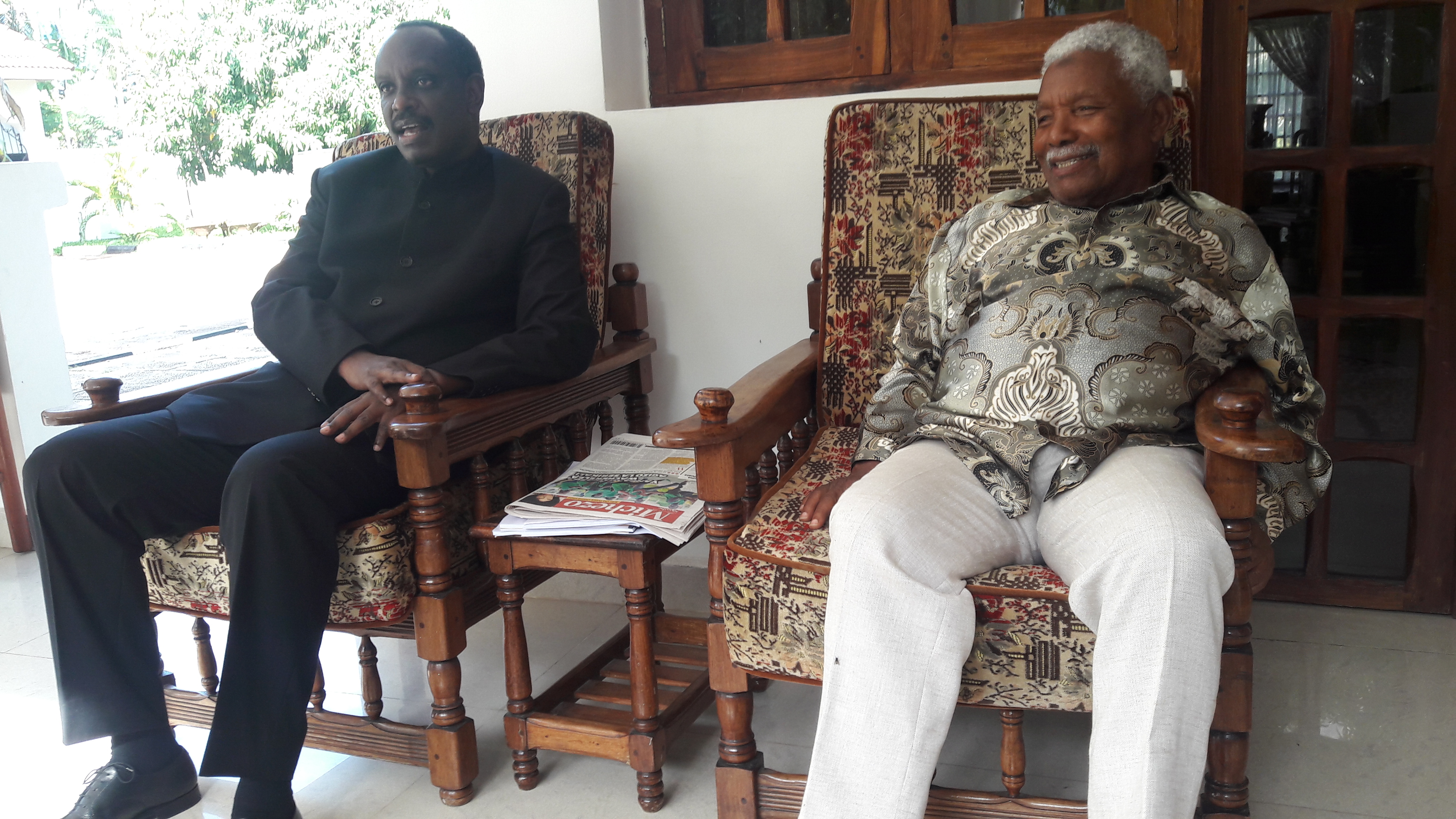
H.E. Ali Hassan Mwinyi, Former President of the United Republic of Tanzania and Amb. Dr Richard Sezibera, EAC Secretary General in discussion
“I was very happy to observe the patience and orderliness with which the people of Uganda conducted her General Elections,” Mr Mwinyi said, adding: “These and many other things that have also been highlighted in the report can be used as benchmarks for which other countries can borrow good practices from.
Receiving the report the Secretary General thanked Mr Mwinyi for his leadership and commitment to the EAC Elections Observers Mission, and noted that: “the cooperation between the EAC and other stakeholders led to sustainable peace in the country.”
The report consists of recommendations to streamline and improve the electoral process for future in Uganda, and will be submitted to, among others, the Electoral Commission of Uganda, through the EAC Council of Ministers for consideration.
The members of the EAC Election Observer Mission were drawn from different but complementary disciplines and include: members of the East African Legislative Assembly, delegates from four Partner States (Kenya, United Republic Tanzania, Rwanda and Burundi), EAC Youth Ambassadors, Mission Leader, Mission Coordinator, one EAC Executive Staff and technical officers from the Secretariat as well as EALA.
The EAC Observer Mission was a response to the invitation of the Uganda Electoral Commission as well as the decision of the EAC Council of Ministers on observation of elections in the Partner States.
Burundi rights activist and laureate Marguerite Barankitse
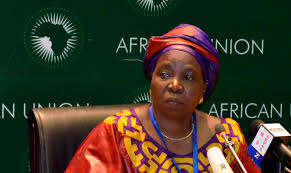
An exiled Burundian laureate has attacked several African leaders and the Africa Union Chairperson Nkosazana Dlamini Zuma, saying their corrupt tendencies and lackluster attitude have helped destroy her country.
Africa Union Chairperson Nkosazana Dlamini Zuma
Speaking in the Armenian capital Yerevan, where on Sunday she became the inaugural laureate of the Aurora Prize, Ms Marguerite Barankitse said the African Union’s efforts were hobbled by corrupt presidents seeking to cling to power themselves.
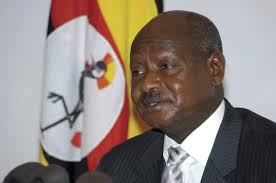
CRITICISED: Uganda’s Yoweri Museveni
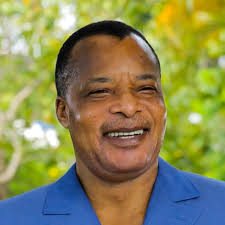
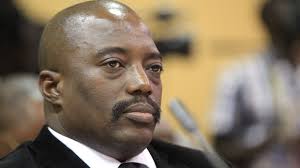
According to Ms Barankitse, who won a $1.1m humanitarian Aurora Prize on Sunday, South African President President Jacob Zuma, Uganda’s Yoweri Museveni, Denis Sassou Nguesso of Congo Brazzaville and Joseph Kabila of the Democratic Republic of Congo (DRC) are among those who have failed to ensure that peace returns to Burundi, a country embroiled in civil war over the last one year when President Pierre Nkurunziza announced he would seek a third presidential term.
Congo Brazzaville President Denis Sassou Ngueso
“How can you expect the African Union to help Burundi when it has so many corrupt presidents?” she asked. “Do you want Sassou Nguesso in Brazzaville, or the president of DRC who wants to run again?
CITED: DRC President Joseph Kabila
“They give us a mediator like Museveni. He’s now spent 30 years in power. They’re making a mockery of us and I’m convinced they’re going to come when it’s too late, like in Rwanda, and they’re going to cry crocodile tears.”
And, taking swipe at Jacob Zuma, Ms Barankitse, who is at times referred to as Burundi’s Mandela, said the South African president had destroyed Nelson Mandela’s legacy of peace-building in Burundi.
“Thanks to Mandela, we completed a peace and reconciliation deal,” she said in an interview. “And now today, it’s a South African president, Jacob Zuma, who has brought shame and destroyed what our hero Mandela had built,” Ms Barankitse, who is currently exiled in Rwanda, said.
She added: “South Africans themselves want to tell him no, and he resists… [African Union Commission chairperson Nkosazana Dlamini-Zuma] decided to send 5 000 soldiers to protect the Burundian people. And it’s African presidents, including her ex-husband, who refused to do that. This is serious. “Zuma, he’s corrupt. And that makes a mockery of us. Quite frankly, it’s a mockery.”
Peace prize
The Aurora Prize was created in memory of the Armenian genocide with the aim of honouring individuals who have risked their own lives to save the lives of others.
A Tutsi who sheltered her Hutu neighbours when the civil war in her country, Ms Barankitse on Sunday received $100 000 to support her own work and a further $1m to donate to other charities who support her causes.
She cared for orphans and refugees, eventually caring for 30 000 children through her Maison Shalom and opening a hospital that has treated 80 000 patients.
The violence last year forced her to close Maison Shalom but she is now working with Burundian refugees in neighbouring Rwanda.
Reports indicate Mandela’s efforts at peace in Burundi helped ended a civil war that left 300 000 dead and forced one million people from their homes in genocidal violence between ethnic Hutus and Tutsis, but Barankitse said her country has returned to a ‘situation of total fear’ with 250 000 people again fleeing the country.
The voting exercise for the winner of ACIA 2016 Special Award category has started this week.
This award aims to recognise the Government of Uganda’s development efforts, especially in the promotion of e-Government.
It’s being contested for by 12 Government Ministries, Departments and Agencies (MDAs) have submitted entries to demonstrate their ICT prowess in offering e-government services to Ugandans. These MDAs are Education Service Commission (ESC), Inspectorate of Government (IGG), Ministry of Education, Science, Technology and Sports (MoESTS), Ministry of Energy and Mineral Development (MoEMD) and Ministry of Finance, Planning and Economic Development (MoFPED).
Others are the Ministry of Lands, Housing and Urban Development (MoLHUD), National Medical Stores (NMS), National Social Security Fund (NSSF), National Water and Sewerage Corporation (NWSC), Uganda Revenue Authority (URA) and Uganda Wildlife Authority (UWA).
The public is being asked to determine who of the above-mentioned MDA offers the Best e-Government Service in Uganda. The voting is being done electronically at: www.acia.ug/vote
The five-day exercise ends onApril 29, 2016. The winner and runners up will be announced during the ACIA 2016 Awards Gala night that will take place at Serena Conference Centre on May 20, 2016.
Overall, there are six major award categories for ACIA 2016. The other five award categories are:Young Innovators, Business Excellence, Service Excellence, ICT for Development, and Digital Content. These winners and runners up of these five categories shall be determined by a panel of eminent and independent judges.
Launched in 2010, ACIA – Annual Communication Innovation Award – is an initiative of the Uganda Communications Commission (UCC) with the aim of encouraging local ICT innovations and applications through ACIA. Since then, the event has now become a signature of Uganda’s innovation industry.
The ACIA 2016 Awards gala will be preceded by a one-day Exhibition held on the same day.
It might have occurred to you as you notice hate speech on different social media platforms that Uganda has a bit of a admiration problem.
But when it comes to countries with the biggest media freedom, Uganda doesn’t even make the top 50.
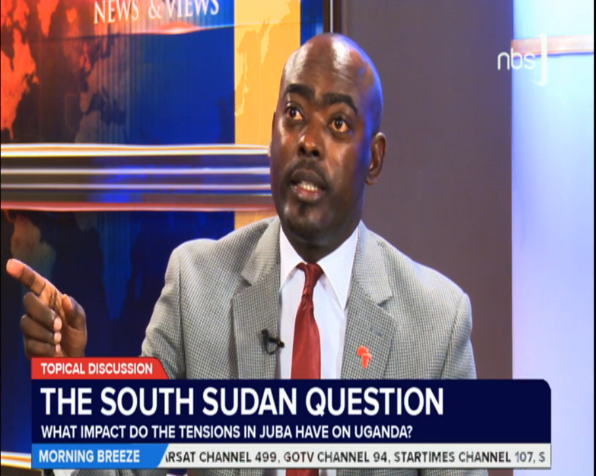
This is all manifested in the manner with which an elected member of the 3rd East African Legislative Assembly representing the republic of Uganda, Hon. Fred Mukasa Mbidde attached the persona of President Museveni to the South Sudan leadership disputes.
Mr Mbidde while appearing on NBS TV on Tuesday alleged President Museveni was the custodian of the ‘partisan politics gone wrong’ in the world’s youngest state. He was answering questions on the impact tensions in Juba have on Uganda.
“President Museveni lacks the moral authority to intervene in South Sudan right now because he partly helped bring in the power the current leaders who are fighting,” Mbidde said.
He hastened to add that that doesn’t mean the Great Lakes region’s longest serving leader has no experience if he wished.
The staunch Democratic Party member claimed that the deployment of Uganda Peoples Defense Force (UPDF) in South Sudan in December 2013 to safeguard the country’s interests was a bad move yet government said it was specifically guarding key installations in Juba and also protecting the strategic town of Bor against being over-run by the rebels.
Mr Mbidde said: “Given its silence, Uganda is perhaps beginning to recollect its initial stand on South Sudan. Remember we fled the country.
“The problem with President Museveni is that he acts alone; Congo, South Sudan. He is deaf to western threats.
“In East Africa, what we have are individuals (Museveni, Kagame) or parties (CCM in Tanzania) that want to remain in power forever.
South Sudan’s President Salva Kiir has apologised to the people of South Sudan for the conflict caused by the leaders of the country, according to a transcript of a speech from Radio Tamazuj.
He was speaking after the swearing in of Riek Machar as the country’s First Vice President in a new unity government.
In a key passage he said: “Though the road ahead will still continue to have challenges… we are committed and determined to move our country forward.Thank you for the long patience and I ask you to to continue to endure with us. I also ask you to join me and my brother Riek Machar in the spirit of forgiveness and reconciliation as our people are tired of war and they need peace now.”
The dour political rivalry between President Yoweri Museveni and his long-time political nemesis Dr Warren Kizza Besigye might take a strange twist if local institutions that are supposed to deal with human freedoms do not fully exhaust their potential in respect to the rights of Ugandans, most especially after the 2016 elections in which Mr Museveni was declared winner by the Electoral Commission.
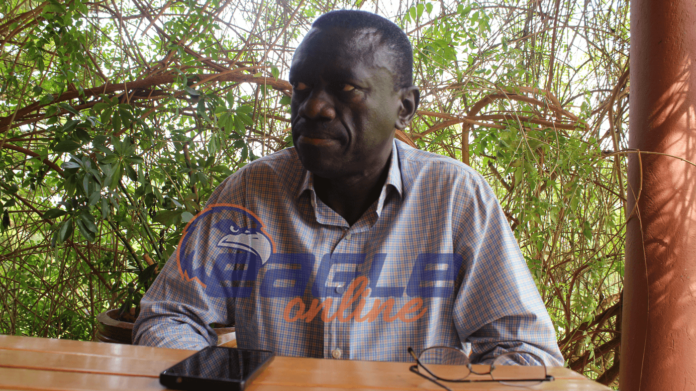
Speaking exclusively to the EagleOnline Dr Besigye, a former Forum for Democratic Change (FDC) presidential candidate in the last elections (whose results he disputes) said that Ugandans had been disenfranchised in the polls and that seeking the intervention of the international community to weigh in on political situation in Uganda was one of the options open to the Ugandan opposition.
“All I am saying is that we will more actively seek the intervention and the support of the broad international community in getting our struggle for a democratic transition better understood and supported and I think the international community can do a lot in exerting pressure on the Museveni regime to respect the will of Ugandans and to accept to have an audit of the election,” he said in an interview at his home in Kasangati.
According to Dr Besigye, he won the 2016 elections with a 52 per cent poll result and that if the National Resistance Movement (NRM) government under Mr Museveni does not give in to demands of an independent international poll audit to authenticate or invalidate his win, the opposition might also consider the possibility of engaging the Hague-based International Criminal Court (ICC).
“We have taken a decision to engage our local institutions and of course, we have been engaging some of the local institutions but we want to demonstrate that they are not capable of mediating the serious human rights violations and that therefore, it is time to seek the intervention of international organizations,” Dr Besigye said in a wide-ranging exclusive interview at his home in Kasangati.
He added: “What has been going on in many areas in our country definitely amount to crimes that fall under the ambit of the ICC but the process of getting the Court to attend to them is such that there must be evidence that local institutions are not in position to deal with these kinds of crimes and so the process is on.”
He however stressed that it is the cardinal responsibility of the Ugandan citizens to fight for their freedoms.
“But let me also hasten to add that much as we might appeal and seek the support of international bodies and the international community, the work of causing change here will have to be done in Uganda by Ugandans.
Those can only help but we cannot run away from the primary responsibility of doing what it takes to cause change here by ourselves,” he said, adding that if government fails to warm up to the issue of an international audit of the results, the opposition would also implore the international community not to recognize Mr Museveni’s regime and also to impose sanctions against it.
“And if we don’t have an audit, (we will ask them) not to recognize his regime and to impose some sanctions that will pile pressure on the regime,” he said.
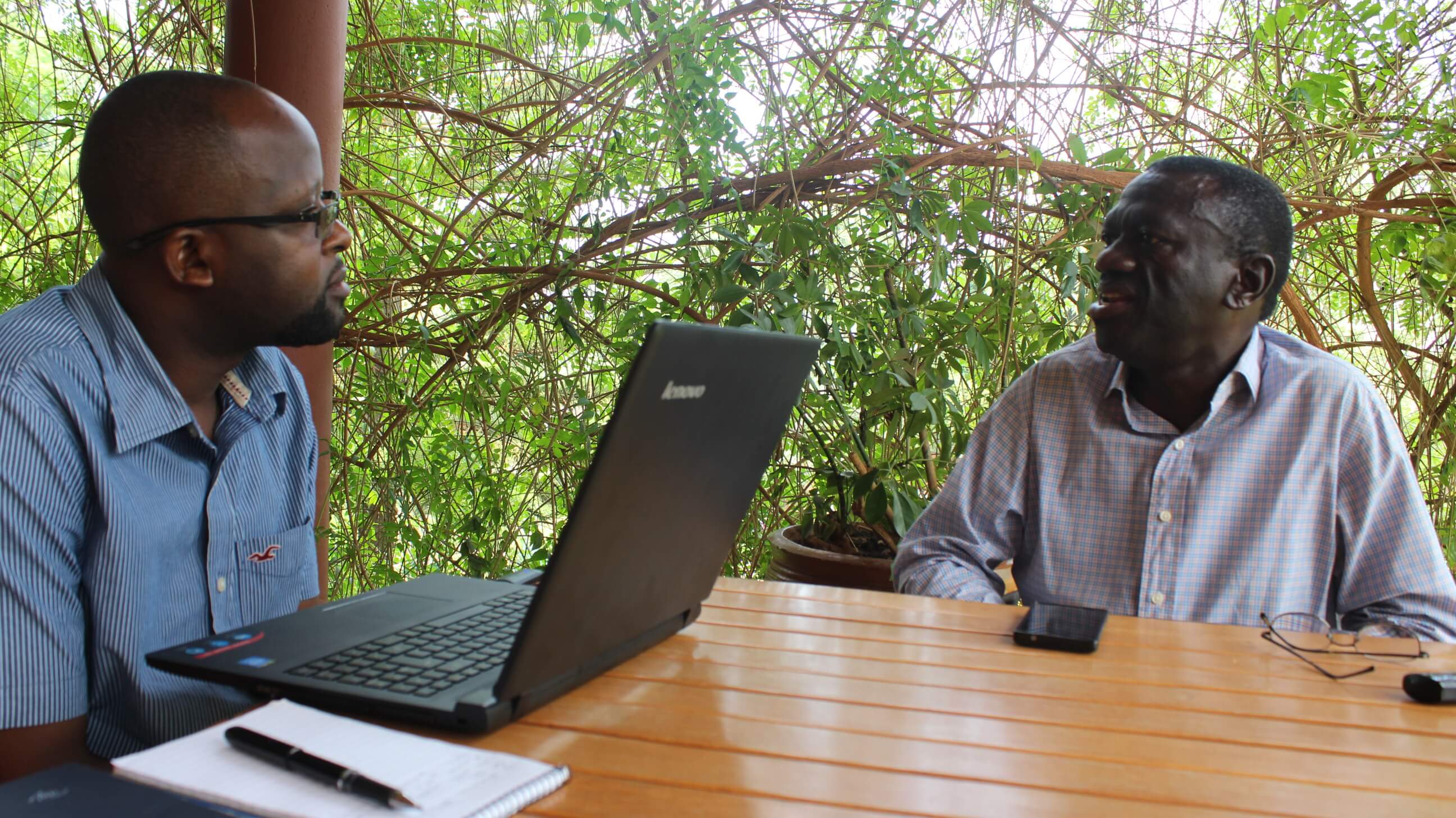
Our reporter, Richard Wanambwa during the interview with Dr. Kizza Besigye
On February 18 this year Uganda held general elections after which the Independent Electoral Commission (IEC) declared Mr Yoweri Museveni the winner. Subsequently the opposition Forum for Democratic Change flag bearer Dr Kizza Besigye disputed the results and has since then had several run-ins with the authorities, including police restricting him at his home in Kasangati for 45 days. The EagleOnline’s Richard Wanambwa caught up with him at home for an interview on a wide range of topics involving politics in Uganda.
Excerpts below.
Do you believe you won the 2016 elections? And can you justify that claim?
Absolutely, we have evidence of our results in a majority polling stations; we do not have the results from all polling stations for reasons that are also very pertinent, but from the results we have one can make a very accurate conclusion as to what exactly we got in that election and that’s why we have come out with a final results of about 52 per cent of the vote. This is based on the results we have and the analysis because, even in polls, opinion polls rely on the information from about 2000 or 3000 people in a whole country; they make an indication that is accurate to very high standard.
So if we have a majority of the actual results from majority of the polling stations and that are scattered across the whole country, there is no reason why one cannot project what the outcome of this election was and we have used highly experienced and qualified statisticians to evaluate both our results and the EC results and they have been able to clearly show that the EC results are fake. We can scientifically show that they are fake and all this evidence is with us and this is why we have demanded for an independent audit so that if Mr. Museveni, as he claims he won the election, it can give him ultimate legitimacy; it’s an opportunity for him to also show his claim that he won, as it would for us show indeed that we won. Now, this audit that we are demanding for is an independent audit, internationally supervised, is not provided for in our constitutional framework.
What is provided for in our constitutional framework is an election petition in the Supreme Court, but this is what we were denied the opportunity to access because right from the day before the election results were announced I was a prisoner for 45 days; our headquarters was taken over by the police for three weeks; our offices in various parts of the country were raided; more than 300 of our leaders and agents were arrested; so the regime deliberately set out to disable our ability to access the constitutional process that is availed to us to challenge the outcome of the elections. Therefore, this was a grave constitutional violation, the constitution was overthrown by the regime in this regard, Mr. Amama Mbabazi who went to Court could not present our case, he could only present his case and yet we are all equally afforded that channel by the Constitution.
Since the Supreme Court ruling has upheld President Museveni’s incumbency, as an individual what are the other options you have on the cards?
So, as it is, there is a constitutional crisis because the candidate declared as a winner by the Electoral Commission is not conclusively elected unless the Supreme Court process has been completed. We were not allowed to complete that process so the election in effect has not been concluded, because you only conclude it when the candidates have had the opportunity to challenge the EC. We have not had the chance to challenge the EC and that is why the ruling in the Mbabazi case is of no consequence, because it would only be of consequence if all the candidates had the opportunity to petition, and for all the candidates. Therefore, to say whatever the outcome of the case is the final outcome but the Court has no opportunity to know what we wanted to present, so there is no conclusively elected president in our country and the only way to do so is through a political process of an independent audit to which we are ready to submit our evidence and to show that we are the rightful winners of the 2016 elections.
There is public talk about the formation of a coalition government; would you consider joining any such arrangement if an opportunity presented itself?
No! Of course we have made it very clear that the government is only formed by the winner. We have categorically stated that we are the winners of this election so if there is any consideration of forming a government of national unity, it should be us forming it and inviting Mr Museveni’s party to join such a government. And in our own manifesto we made it clear that we intend to form a government of national unity and we are already in the process of doing so. And if as it seems our proposal for an independent audit is not taken seriously, then we shall be left with absolutely no option but to go ahead and form government as mandated by the people of Uganda.
During the second presidential debate you met President Museveni; did the two of you talk in that little time? If yes, what did you say to each other?
We only shook hands, we never talked.
It has been variously reported that Mr Museveni has sent you emissaries. First of all, is it true? And if true, who are they and what message do those emissaries including fellow presidential candidate Maj Gen Benon Biraaro, bring to you?
I am not sure whether that is a fair representation of the emissaries that I have met. I think the emissaries that I have met are emissaries who took it upon themselves to work for some process of dialogue including Gen Biraaro, who took it upon himself to start contacting us, advocating for dialogue. There has been a similar initiative by a number of actors, taking it upon themselves to initiate a process of dialogue and we have always welcomed whoever approaches us with an initiative of dialogue. We have always been receptive and we have only demanded that any such dialogue should be based on very clear and sound grounds that would give it an opportunity to deliver meaningful outcomes that would engender a democratic transition and we have pointed out that in order to do so, there are four cardinal areas that need to be agreed upon before such a dialogue gets underway and these are: that we would have an agreed agenda; that we would have an agreed moderator/ facilitator or someone who would be managing the dialogue; that we would agree on who is part of the dialogue; that we would agree on how to ensure the implementation of whatever is agreed upon in the dialogue because often times agreements are made and they remain on paper. So, we want to have a fair understanding of all these four areas before any dialogue would take place and so far that process of agreeing on those basics has not been concluded.
You seem to understand President Museveni far better than any of your colleagues who were with him in the struggle. At what stage did you come to reality that you must part ways with him?
Well, I don’t think that there is a specific point in time when you say that at this point I now knew who Museveni was. I think it’s a process of learning and possibly we still are in that process of knowing who exactly he is because indeed all the time he exudes different colours; like he has called himself a chameleon. I don’t think we are about to know all his colours anytime soon but right from the time we were in the bush, I think some of the areas of serious concerns that we have about him now were already evident. And what we were and how we were responding to those manifestations was, unfortunately at that time, to justify them to say why he was behaving; to start looking for reasons why he could have been behaving that way because we believed in the underlying belief that you know a good person, he had good intentions and that therefore, whatever appeared to the out of line with those beliefs was happening for a purpose that was in the main a good purpose. But quite obviously, once we came to government many of those justifications would no longer hold because for example when we were in the bush and some people made mistakes and he didn’t act on them we could say well, anyway what actions are available to him? There are a few actions; we had no prisons, we had no areas of jurisdiction and so forth.
We read and have been told stories that there were facilities like trenches where some people like Gen David Sejusa were kept, how true is that?
Well, even Tinyefuza was never placed in theandarchies as they were called, which were trenches used to hold people underground. But what I am saying is those were not really areas that you could hold people, have trials in an ordinary sense or hold a court trial that functions as a court. So, there were limitations in the bush and there were limitations of how to replace people if they are doing vital work; there were limitations that we could attach to assign as reasons why Museveni was acting in a particular way or even when he appeared to favour some people over others. We had reasons to assign to why such things were happening but once we came to government things changed for real.
Then for me, this started becoming very serious and of concern because then I could no longer see the justification for some of the things he was doing; they started assuming levels that were quite injurious to what our project was: the project of democratic transition. Whatever he was doing was directly conflicting with that and yes for me, I think by 1989 it was abundantly clear to me that we had a very serious problem in Mr Museveni and it was very clear.
On that note, do you regret going to the bush to fight Obote?
No, because you see again, I didn’t go to the bush to fight Milton Obote, I went to the bush to fight for the freedoms and rights of citizens to fight for democracy, to fight so that our country is in the hands and control of our people and not in the hands and control of a few people.
Actually that was, and that is why I am fighting even this regime because it has perpetuated that situation and I will continue fighting any outfit that presents that system of governance, of minority rule, rule by a small couple of people and, so I cannot regret my participation in that war.
What I consider now based on the experience of that war is that it’s highly unlikely that such a war would deliver democracy. In other words, what has happened since we won the war is more or less the rule rather than the exception that warlords don’t deliver democracy and warlords is what war produces. And that is why now, with the benefit of that experience I am advocating the use of non-violent struggle to take power from the warlords to the citizens without using guns because once that happens and in the process of that happening citizens get empowered with the knowledge that they can assert their will and with methods of how to do so and once they do so, then they know that indeed the ultimate power is with them and not with those who have guns. And accordingly, that is the true process of subordination of the military to civilian authority; that subordination shall not come simply by an administrative or just a declaration of the Constitution, it comes with the actual struggle and people being able to subordinate the military to their will and that is the process which we are undertaking at the moment.
Recently, Information Minister Maj Gen Jim Muhwezi said majority of your supporters are thugs who vandalise merchandise of traders along roads. What is your take on that?
Well, that talk is fairly common within the regime leaders and it is based on their ideological orientation and their current ideological orientation which is being spiteful of citizens and actually even considering citizens as enemies of the state. So, those people they call hooligans are their tax payers as they are the ones who pay their salaries; they are their voters and they are the shareholders of this country but they treat them with contempt because they are not affluent, because they have no money, because they don’t sleep in good places like them, because they don’t have jobs, which are all results of their mismanagement. And yet these are people who are seeking to assert their influence so they can also live decently in their country.
So, quite obviously our supporters are very respectable citizens; they are responsible tax payers of this country; they are the owners of this land and they must be treated with respect. Those who claim that these are hooligans are actually the people who are stealing billions of shillings that belong to these same people.
They are the ones who are causing mass deaths in our hospitals because they steal the money that should be treating our sick and so they are the real hooligans. The people in the regime and government are the real hooligans of this country.
You have stood against Mr Museveni for four times; now that he is constitutionally ineligible to stand because of his age; will you consider offering yourself another shot for the presidency again?
No. As I have already indicated, I consider that I was duly elected in 2016 and before considering anything else I am focused on using the mandate that was given to me in this election to take the country forward. Therefore, regardless of what Mr Museveni’s age would be, he has no business being in government even now and I think anybody suggesting what will happen in 2021 would simply be trying to obstruct people’s focus on what needs to happen now.
You and Gen Sejusa have a long history of friendship and he has said he convinced you to run for the 2016 elections, which you did; do you think that was a good decision?
Well, first of all, for the 2016 elections, very many people implored me to run, and they had various reasons for doing so but ultimately, the decision to run was my decision and I take full responsibility for my decision and I think it was a well-considered decision. I have pointed out that in spite of learning that the election could not be free and fair, but that we could nonetheless rally citizens to defy the injustices and so I run on a very clear agenda, on a very clear platform of defiance and I think it paid off because it helped our people regain their confidence and understand the issues in the country clearly. It also helped them to organize themselves more effectively and indeed to defy the injustices that were arranged against us and that is what I credit for what I clearly said is our win.
What we won was a very clearly unfree and unfair election but that is how struggles go and the struggle is continuing because the struggle won’t end until power has truly returned to the people and it is citizens that are in charge of the country. And so even if Mr Kiggundu and his cohorts had not declared a wrong person as the winner, the struggle would still be on, even when we are in charge of the government the struggle must continue until the transition has been completely achieved; that we have now democratic institutions and we have institutions of state that are independent, competent and that are under the control of the people and that is what our task is.
Once we get to run the authority of the state, we would be undertaking the restructuring of state institutions; we would be reviewing the constitutional order so that citizens have more control and access and influence on state institutions and then the transformation of our people would then be underpinned by those changes so that if we assign money to deal with health it is not going to disappear in thin air. There must be structures for checks and balances that will ensure that our health system will be revamped in a short time and that people can access decent health care, education can be revamped in a short time and that our people can have/ access quality and relevant education; that the infrastructure can be quickly revamped; that you are not paying billions upon billions of dollars and shillings build the types of Katosi road or what we are hearing in Karuma dam and what happened in Bujagali dam and all the rot. So, we must first build the mechanisms that will underpin the running of a people’s government; that will benefit our people maximally and that we can reverse the rot that has taken place over the last 30 years.
You haven’t answered the questions on your friendship with Gen Sejusa and what you discussed with him in Ssembabule?
Well, I have known Gen Sejusa since our college days at Makerere and we have passed through very many challenges together since. He is, therefore, somebody I know fairly well and he is presently committed to working for change which is exactly what we have been doing all this time. Therefore, I consider him as a partner in that project of causing democratic change and he is still struggling with the process of regaining his freedom from captivity in UPDF. He is held as a captive now and we support him in that struggle. So, I went to visit him while he was having a thanksgiving event in his village and to stand with him and to support him in whatever he is going through.
Are the two of you plotting to disrupt the NRM government?
There is nothing absolutely wrong in joining hands and as I have pointed out, we are both working for change and how that change comes is still a matter that I will continue examining and working on; we will do everything within our power. Certainly, I have been committed to doing everything within my capacities that that change comes as quickly as possible. So, if by putting our heads together that helps that would be a good thing.
Last year you were part of a group of opposition politicians who travelled to London and met with former UN Secretary General Kofi Annan and former International Criminal Court Chief Prosecutor Moreno Ocampo, what did you discuss?
At that time, His Excellency Koffi Annan and Mr Ocampo were acting really as friends of Uganda to facilitate a discussion between Ugandan leaders on how to construct a common platform for the election. They were both quite knowledgeable about Uganda and they wish Uganda well and I think the meetings we had were quite beneficial even when the ultimate outcome was not having one candidate. I think it made the approach of both myself and Mr Amama Mbabazi in the election better focused so that we were not hitting at each other but we were all moving in the same direction.
What is your understanding of the recent comments on the 2016 elections made by the US Ambassador Deborah Malac? Also, what is your view on the EU Observer Group report on the same elections?
I am glad and I think the US and the Europeans now seem to appreciate that we are dealing with a dictatorship here. They have not put it in those words but I think it’s now clear to them that the people of Uganda are encumbered with the regime that doesn’t arise out of their free will and that is likely to cause serious reversals in terms of stability and security of our country.
This is vital because Uganda happens to be in an enviable situation of not having ever had any leader peacefully hand over power to another leader. And therefore I hope that what is happening now will be, though late, a good wake up call for all our international friends to weigh in and cause Mr Museveni to relinquish power peacefully.
You recently said that you are moving towards appealing to the international community. Do you intend to move to ICC to be specific?
No, the international community is quite obviously broader than the ICC. However, all I am saying is that we will more actively seek the intervention and the support of the broad international community in getting our struggle for a democratic transition better understood and supported and I think the international community can do a lot in exerting pressure on the Museveni regime to respect the will of Ugandans and to accept to have an audit of the election. And if we don’t have an audit, not to recognize his regime and to impose some sanctions that will pile pressure on the regime.
So we shall continue to engage the international community with those objectives in mind. But like I pointed out last week, we have taken a decision to engage our local institutions and of course, we have been engaging some of the local institutions but we want to demonstrate that they are not capable of mediating the serious human rights violations and that therefore, it is time to seek the intervention of international organizations.
What has been going on in many areas in our country definitely amount to crimes that fall under the ambit of the ICC but the process of getting the Court to attend to them is such that there must be evidence that local institutions are not in position to deal with these kinds of crimes and so the process is on.
But let me also hasten to add that much as we might appeal and seek the support of international bodies and international community, the work of causing change here will have to be done in Uganda by Ugandans.
Those can only help but we cannot run away from the primary responsibility of doing what it takes to cause change here by ourselves.
At some point during the electioneering period your wife Winnie reportedly made some unruffling comments about your candidature and that of Mr Amama Mbabazi; what was your interpretation then, given that you were in the thick of the campaigns?
Well, I don’t know which comments you are referring to. The comment she made I think in respect that was directed to both me and Mbabazi may be related to the London meeting where she was pointing out that everybody in the meeting was a man and that it is men who seem to be meeting to decide the fate of our country without women and I appreciate where she would be coming from with those kinds of comments because all her life she is a woman activist and she was saying that there were no women in that conversation! However, you know that is quite obviously a superficial and misleading comment because you cannot recruit candidates into the presidential race; candidates emerge and in this case the leading candidates that emerged where men, so one needs to pay attention to what causes that.
But recently she tweeted saying she often times agrees with some of the National Resistance Movement (NRM) policies. Do you agree with her?
I think the best person to answer for her comments is Winnie herself. I don’t know even whether what is attributed to her is exactly what she said and I don’t know the context in which it is being said so I think the best reply you can get is from her.
After a long week delay, Mr. Riek Machar, South Sudan’s rebel leader has finally arrived in Juba, and is expected to be sworn in later as the first vice-president in a new unity government.
Sources indicate Mr Machar left Gambella aboard a UN plane after the US withdrew its offer to fly him home yesterday.
Machar’s arrival is key part of a deal aimed at ending more than two years of conflict that has killed tens of thousands and left two million people homeless.
Mr Machar, who fled Juba at the start of the conflict in December 2013, had been accused of trying to organise a coup, which he denied – but it set off a round of tit-for-tat killings which developed into a full-blown conflict.
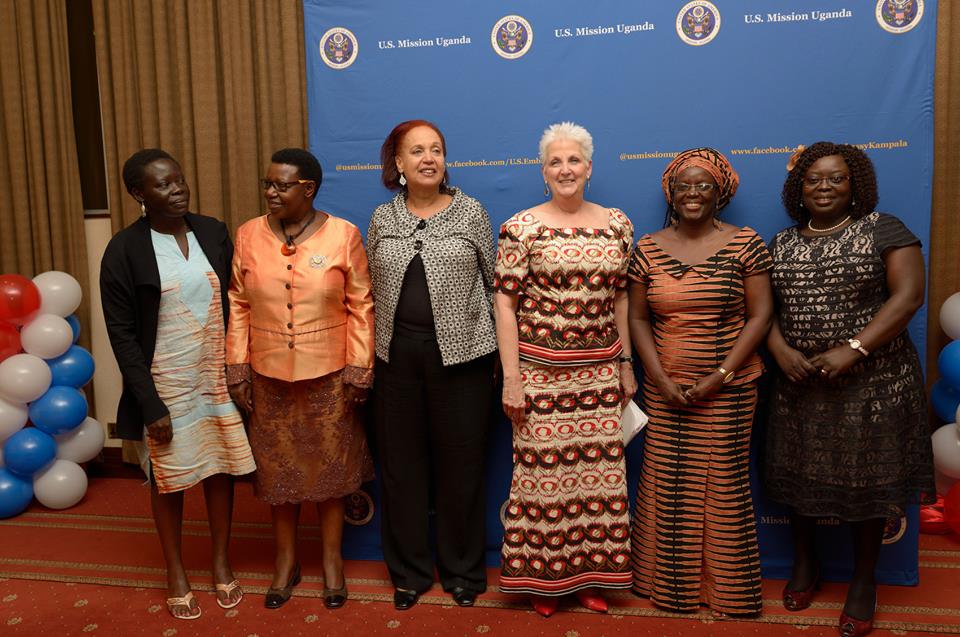
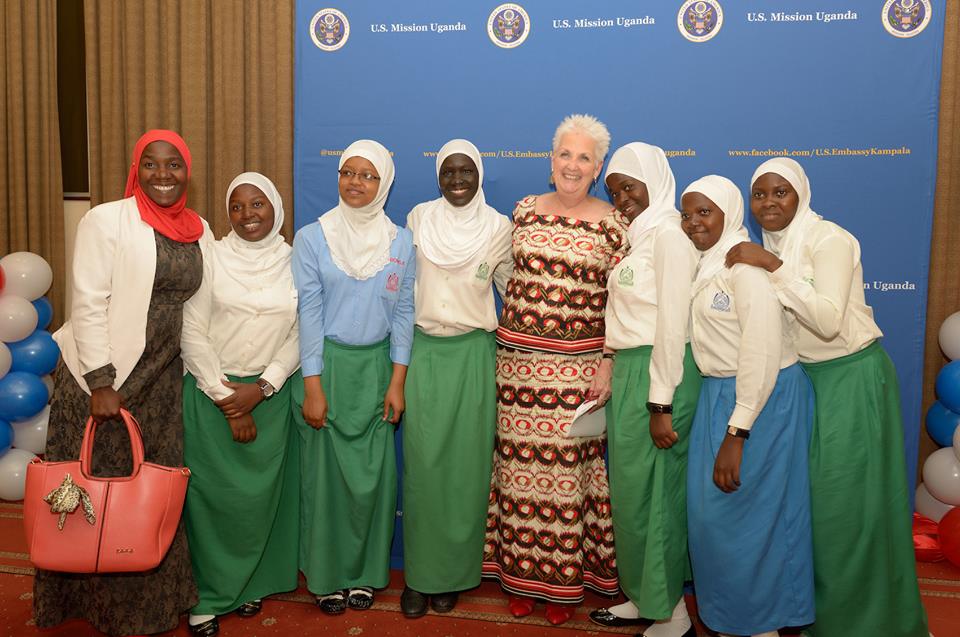
On Monday, in partnership with Uganda Women’s Network, the U.S. Embassy hosted a panel discussion on women’s leadership.
Ms Deborah Malac the new US Ambassador to Uganda delivered an inspiring speech, calling upon men to support their “daughters, sisters and mothers” in the fight for gender equality.
The envoy, a career member of the United States Senior Foreign Service, spoke at the United Nations headquarters in New York on Saturday.
Ms Malac was speaking at a workshop – to discuss deliberate ways that will help in “overcoming invisible barriers to women’s leadership”.
“Let me be clear; gender equality does not mean making one gender better than another or putting women ahead of men,” Ms Malac said. “I have noticed here in Uganda that men sometimes complain that if women’s economic and social situations improve, they’ll suffer. The government should be creating partnerships between women and men to help move countries forward.
The former US envoy to Liberia also said no nation can become a vibrant middle-income country if it leaves half its population out of the development equation.
Malac called on everyone to get involved in the discussion on women in leadership campaign, and extended the invitation specifically to men.
Other top notch women figures that graced the workshop include; Dr. Maggie Kigozi, a consultant at the United Nations Industrial Development Organisation, Ms Ritah Aciro, the Ugandan Women’s Network (UWONET) executive director and Dr. Sylvia Tamale from Makerere University among others.
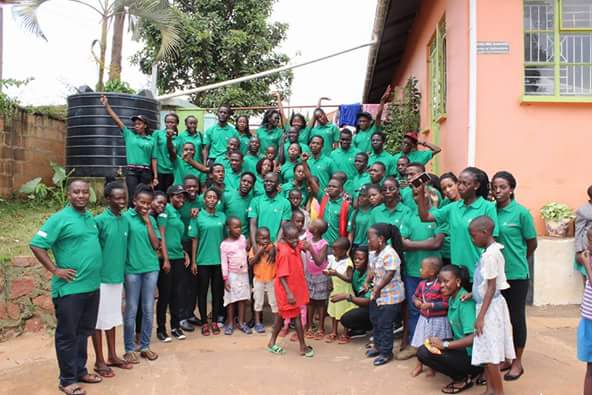
MCF-MUK Scholars pose for a group photo with the vulnerable children at the Missionaries of the Poor (MOP) in Kisenyi. Courtesy photo
About 100 children converge in the dining hall adjacent to their dormitories, their faces beaming with smiles. The administrator, a medium-sized Catholic priest in white robes orders them to get orderly and they all keep quiet except the eight with special needs who continue mumbling.
Brother Roshan Beck Mop smiles at them; they smile back and stop mumbling. “Children, we have special guests today,” the priest of Indian descent says, as he turns and points at about 50 men and women, smartly dressed in green tee shirts, all standing in front of the hall. “Let us clap for our guests,” he orders and the smiling children clap in unison ‘chap-chap-chap chap-chap-chap chap’.
Brother Beck Mop then calls on the charity home’s ‘best singers’, pupils in lower primary, to sing for the guests from University. The kids opt for ‘awesome God’, singing wholeheartedly and thanking the Lord for the visitors who have helped out in cleaning their home and also taken time to counsel them. ‘Eh Makerere Oyee’! the visitors cheer back when the song ends.
The guests are Makerere university students and scholars under the MasterCard Foundation (MCF), a programme that helps the economically disadvantaged but bright children attain education. Every semester, the 95 students under their association meet and agree to visit one charity home and this semester they chose the Catholic funded Missionaries of the Poor (MOP) home in Kisenyi, near Kampala. Founded in 2000, MOP caters for over 200 disadvantaged people and provides medical services to the community: it is home to children with special needs, orphans, elderly and the needy.
Mr Bernard Butare, the MasterCard Foundation Public Relations Officer says they chose the Kisenyi MOP home because it helps very many needy people and their [MCF] efforts are aimed at motivating the disadvantaged.
“These students are given full scholarships funded by MasterCard Foundation. They are given the opportunity to be in school, if you have been given an opportunity you give back. This home has economically disadvantaged children, elderly and those with special needs. It’s a home that needs our help,” Mr Butare notes.
Meanwhile, somewhere seated in a group of five are girls raised, fed, clothed and educated by the Catholic brothers at MOP. After a brief interaction, it emerges only one of them knows her biological parents; the rest don’t even know a single blood relative! Some were brought in aged five and six but Elizabeth, now aged eleven, has no memory of when she arrived at the charity home. “I have spent my entire life here,” she says laughing.
Her colleagues Resty and Pauline say they want to be Air Hostesses; Justine wants to be a businesswoman, while Eve dreams of being a successful footballer. Their counterpart Restuta, who is silent throughout the interaction, only stares blankly.
“I don’t know,” she says when asked about her ambitions, before the rest of the girls giggle. Intriguingly however, it is this very reason that pushed the MasterCard Foundation scholars from MUK to visit MOP home in Kisenyi.
For one to be a beneficiary of the Master Card Foundation program, he or she must be bright, with leadership potential and commited to giving back to the community, traits that are exhibited in all students under the programme.
Mr Denis Galiku, the president of MasterCard Foundation scholars association observes that children growing up in charity homes face the challenge of identifying their ambitions in life and even those that identify them still face the task of how to achieve them.
“We came to motivate them; to tell them that you can achieve whatever you want to be in life no matter the conditions you live in. They share the same needs with us, the only difference is that theirs are special,” says Galiku, a second year student of Biomedical Laboratory Technology.
And, sweeping the MOP Kisenyi compound while taking off time to cater for a girl with special needs who lost her ability to talk and walks with a limp, Tabitha Lanyolo displays her compassion for those in need. MCF has instilled in Tabitha values she has no regrets about. “I really feel happy when I put a smile on other people’s faces; we have put a smile on their faces,” she emphasizes.
And having read several articles about families and societies that treat children with multiple disabilities with contempt, Ms Lanyolo urges them to treat all children and people with special needs fairly.
“These are children too and we need to tell people that people with special needs are part of us,” she adds.
Geoffrey Ariong and Yatim Lubale are both scholars with humble backgrounds, who understand the value of giving back. If it was not for the MCF program, Ariong and Lubale confess they would never have set foot to university. “We get and also give part of the little we get to others. I was helped throughout my entire education and I know the power of giving back. They are disadvantaged, others have multiple disabilities while others are poor and they can’t access some services. The only way they can make it is if they are assisted,” says Lubale.
While some scholars like Macline Banaga, a quantitative chemistry student joined university with a few leadership skills others like her colleague Sandra Nalubega confess they had none.
“I have gained a lot; I had no leadership skills at all, no confidence but joining the MCF association has enabled me a lot. Our core is giving back; I give back every day,” Ms Nalubega, the newly elected minister of women affairs of Mary Stuart hall, says.
“Our biggest problems stem from administrative positions,” Ms Nalubega, who hopes to work in government one day and help in fighting corruption, stresses.
Her colleague Banaga, who admits to having had leadership skills, says she was motivated after the MCF scholars association elected her finance minister.
“That gave me morale; I have gained a lot form MasterCard and other than paying my tuition I am exposed,” Ms Banaga says.
Towards the end of their visit the girls from the MCF scholar program had a ‘girls only’ talk where they shared personal their experiences with all the female residents of MOP charity home.
This prompted Brother Roshan Beck Mop to observe that it is good for those from higher institutions of learning to visit and check on those in need.
“Associating with those in higher places makes them work hard to achieve in life,” he expressed.
And although the MCF visit ended, some of the scholars’ hearts stayed at the charity home, with Lisa Anenocan, a send year Journalism student saying she would visit again as an individual.
”It’s inspiring; I love children and its fun. I have to come back to this place,” Ms Anenocan says.
The MasterCard Foundation offers scholarships to academically bright but economically disadvantaged youth in Uganda, and so far over $20 million has been injected into the program through BRAC and Makerere University; the MCF-MUK partnership began in 2013 and will end in 2023.
Currently, 95 students have been enrolled while the programme expects to receive 200 more this year and another 290 will be received in 2017. MCF sponsorships entail tuition, a stipend, laptop, books, medical insurance and capacity building programmes.
Other than Makerere University, the MCF partners with Akasheshe and Kwame Nkurumah University in Ghana and the University of Cape town in South Africa.
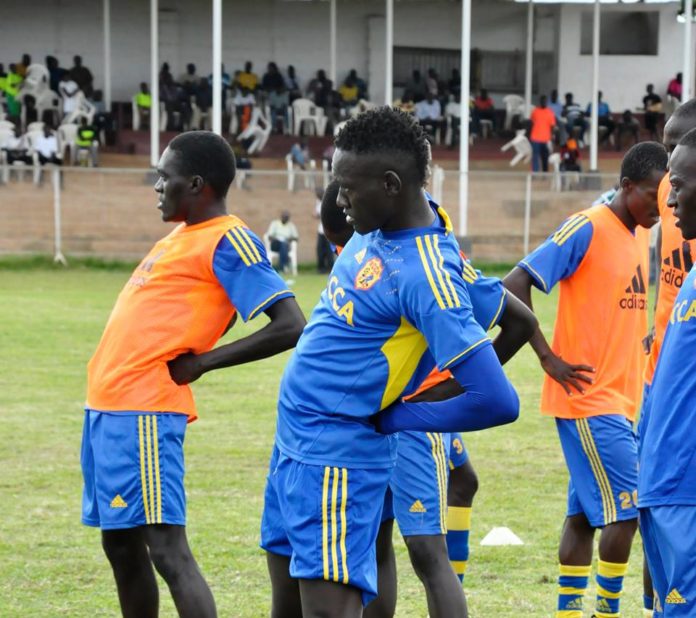
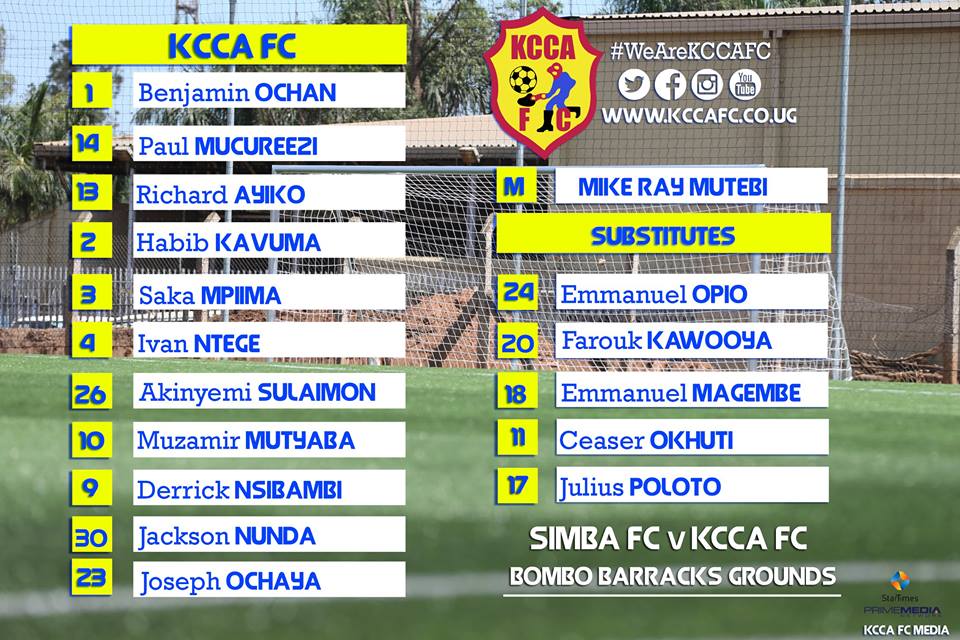
Kampala City Council head coach Mike Mutebi has decided to retain the same team that played against Bright Stars over the weekend for their visit to Simba FC at Bombo in Uganda Premier League this evening.
The team heads into this crucial tie with neither of established starterd Godfrey Ssembatya, Lawrence Kasadha, Hassan Wasswa Dazo, Timothy Awany, Hakim Ssenkumba, Martin Mpuga and Ronald Kikonyogo returning from injury. Instead striker Herman Wasswa (groin) joining the sick bay.
Elsewhere for the Kasisiro boys, Benjamin Ochan returns in goal, Richard Ayiko, Habib Kavuma, Joseph Ochaya and Saka Mpima line up in the defence.
Ivan Ntege, Paul Mucereezi, and, Muzamir Mutyaba, Jackson Nunda man the midfield while Nigerian import Akinyemi Sulaimon and Derrick Nsibambi will hunt for the goals.
KCCA easily beat Simba 2-1 in the first round last year but since then a lot of water has passed under the bridge with then head coach Morley Byekwaso facing the sack among others.
Mutebi’s side still lead the league table by 51 points from 26 games – nine ahead of second placed Vipers who play minnows SCVU on the same afternoon.
According to the former Uganda Cranes coach, the Simba FC match is the biggest game for the club this season.
Forget the Vipers SC game on Friday that many have labeled the title decider, the manager insists that the result from the game at Bombo will have a huge bearing on the title tilt.
“Simba, like The Saints FC, are fighting for their lives and will do anything to win the match. Historically they have stood up against KCCA and they will carry that belief into the game. We must play our best football against them if we are to make a lasting title statement,” Mutebi who once coached the army side told the club website on Tuesday.
He adds that matches between the big sides tend to be defensive and cautious yet the ones against the perceived minor teams open up.
“Every team that plays against us wants to win to make headlines so we are not going to be complacent at all. I have a strong belief that the available fit players will do the job for us to return with happiness and a feel of champions,” the manager emphasized.