Stanbic Bank
Stanbic Bank
18.2 C
Kampala
Stanbic Bank
Stanbic Bank
Home Blog Page 2175

Handling the Kampala Heatwave

Kampala has been experiencing a heavy heatwave for the past few months with a little rain here and there for some days, then right back to the heat.
A heat wave is an extended period of extreme heat, often accompanied by high humidity. Prolonged periods of high temperatures and high humidity can be very dangerous for your health. In extreme heat and humidity, evaporation is slowed and your body has to work very hard to maintain a normal temperature.
The heat can be rather too much since most Ugandans are used to a mixture of both rainy and sunny days that are not extremely hot.
We have a few recommendations on how to handle the heat wave and what not to do to avoid heat associated accidents.
 
Hydrate
Drinking water or juice during the hot season is the most obvious way to handle the increase in environmental temperatures around us. You need to have enough cool water with you wherever you go to be safe. There are several shops that sell portable water bottles that you can fill with juice or water and the best part is most of them regulate the temperatures of their contents. Or make sure you stock up on drinking water if you don’t boil the water at your home.
 
Stay Indoors
If you don’t have to leave the house you can stay in doors especially for people who can do their work at home. The concrete walls on our homes help protect us from the heat, so it is better than being outside in the direct heat.
 
Dress Appropriately
Stay away from heavy material clothing since they hold in the heat, do not wear sweaters, or leather and very tight clothes.
Wear light colored clothes and material such as; Linen, chiffon and cotton which are usually referred to as breathing material because they don’t hold in sweat or heat, keeping your body fresh enough for the heat.
 
Look out for the Vulnerable
People handle heat related issues differently especially the old, sickly and young. Don’t let children play for long hours in the heat especially during weekends, the heat affects them more easily than adults.
Pregnant women have to be monitored too because the heat is rather extreme on their bodies.
If someone is sick as well as old, make sure they stay indoors to avoid any extreme effects on their health during the heat because it can get dangerous.
 
Reduce Your Workouts
We all love staying fit and trim, but the hot season is not the time to over exert your body. If you are to work out avoid heavy and strenuous routines and stick to the light ones, do not workout during the hottest times of the day being; 11am to 3pm. You can do early morning workouts and late evening, but avoid heavy traffic areas due to accidents.
 
Try Swimming
Swimming is the best exercise during the heat since the water regulates your body temperature and keeps you cool at the same time keeping you fit.
You can use the hot season to polish up on your swimming skills and enjoy the hot days too instead of not having much to do.
Do not Leave Children in Cars
If you are always traveling with your children in cars, please avoid leaving them in cars under the heat especially when you have to do a short dash into a market or store. Do park under a shade, leave your windows down or just take them along to whatever short thing you are running for.
 
Buy a Fan or Air Conditioner
Fans are not hard to find around Kampala, so please buy one for the nights and days when the heat is too extreme. It helps to stay cool and if you can afford an air conditioning unit, you can have one installed into your house. There’s nothing better than walking into a cool place after being in the heat all day.
 
Eat light
On hot days, try eating more green than usual or drink as much juice as possible. When having a full meal, eat in phases and small portions.
Salads and juice are good for your body within this season and any foods that are rich in proteins.
Avoid alcohol and too much salt as much as possible and try replacing them with water.
Heavy Makeup
Keep away from heavy makeup ladies, your skin needs to breath when it’s too hot and if you are to wear makeup use mostly that with oil free ingredients.
You need to protect your skin so always apply very light makeup and drink a lot of water to detox or keep wet wipes in your bag for moments when you need to wipe it off easily or cool off.
 
Shower
If you can, take frequent showers during the day and night. Your water bill will be a little higher, but your body won’t get a heat stroke or you have several wet towels in the house to use during the hot parts of the day.
 
 
Stories Continues after ad

NRM delighted with Supreme Court ruling

NRM supporters celebrate after the Supreme Court ruling today

The National Resistance Movement (NRM) has expressed delight after the Supreme Court ruled in the party’s favor by dismissing a presidential elections petition filed by former Go Forward presidential candidate John Patrick Amama Mbabazi, challenging the re-election of NRM’s Yoweri Museveni.

“We have been exonerated, congratulations to Mr Museveni, congratulations to Ugandans,” said the NRM Secretary General Justine Kasule Lumumba, while addressing the press today shortly after the Supreme Court ruling.

More supporters celebrate at Kyadondo today

Ms Lumumba said that since they are on the course to swearing in, the party intends to explain in detail to Ugandans how its manifesto is going to be executed in the next five years.

She also scoffed at Hon Amama Mbabazi for filing ‘a shallow petition’ and asked him to head back to NRM.

“He should come back, tell us the reasons as to why he went and we see how to put them right,” said the Secretary General.

Talking about Dr Besigye statements of disagreeing with the court ruling, Ms Lumumba said that the FDC flag bearer risked contempt of court consequences.

“He should respect the law; he helped mend it in 1995 as a National (Political) Commissar,” she added.

The NRM plans grand celebrations on Sunday at Kololo Independence Grounds, described as a ‘double win’ for the party.

Stories Continues after ad

‘City Square’ cordoned off

CORDONED OFF: The Constitutional Square in Kampala

Police and the military have cordoned off the Constitutional Square, fearing an uprising.

According to an eyewitness, the deployment was effected following the Supreme Court ruling today, where a petition by John Patrick Amama Mbabazi against the declaration of Yoweri Museveni as president-elect was thrown out for lack of evidence.

Earlier today, Chief Justice Bart Katureebe lad a nine-bench Coram that unanimously ruled in favour of the respondents, Yoweri Museveni and the Electoral Commission.

Mr Mbabazi went to court following the Feb 18 elections where Mr Museveni got 62 per cent and his closest challenger FDC’s Dr Kizza Besigye got 35 per cent. Besigye has since rejected the results and said he would take to ‘defiance’ as a means of expressing his disenfranchisement, prompting security to place him under arrest at home.

Meanwhile, today’s ruling has reportedly not gone down well with sections of the community, with some people taking onto social media platforms to vent out their frustration, paving the way for police and the military to deploy in strategic centres around the city including the Constitutional Square.


Stories Continues after ad

I am President of Uganda – Kizza Besigye

Forum for Democratic Change presidential candidate Dr. Kizza Besigye Thursday made a scathing attack on President Yoweri Museveni over the Supreme Court judgment that dismissed Amama Mbabazi’s petition challenging the incumbent’s election victory.

Dr Besigye also accused CJ Burt Katureebe of presiding over an “injustice” and told him to give the power back to Ugandans like the constitution says.

The Supreme Court unanimously ruled to dismiss Mbabazi’s presidential petition after it failed to prove that the noncompliance to electoral laws substantially affected the outcome of the poll.

Reading the short version of the judgment, CJ Katureebe also dismissed all claims against Mr Museveni for lack of evidence to back them up.

“The outcome of the election has not been subjected to an appropriate audit. I was not accorded the opportunity to assemble and examine evidence since I was the second runner up. I had enough evidence that the election was rigged because most who were affected were my supporters,” Besigye roared.

“We have a totally illegitimate president who is overthrowing the will of the people of Uganda by use of guns. Am sure Mr Mbabazi did not expect to be the petitioner but the candidate close to the one announced has best chances in the petition  but Museveni chose to detain me,” a visibly agitated Besigye added.

Besigye said that whereas he respected the Supreme Court judgment, he did not agree with it. “Museveni cannot be validly declared president by anyone. If i was to go to court, it wouldn’t be to annul elections but to announce the rightful winner of the election,” he said. “All institutions under dictatorship are comprised over the will of the people.”

“Article 1, 2 & 3 of our constitution grant all power to the citizens. The will of the people has to be respected so any legal process under our framework, is not meaningful I wouldn’t have sought annulment of the election, I would require the court to announce me as the rightful winner,” Besigye said.

Besigye says if he was given a chance, he would prove that candidate Museveni didn’t even get even 50% of the February 18 elections.

Stories Continues after ad
King Eboue banned for one year

EMMANUEL EBOUE has been banned for one year until he pays money to a former agent.

The Sunderland full-back was handed the punishment by Fifa.

Ex-Arsenal star Eboue was previously hit with a fine for the outstanding payment owed to Sebastien Boisseau.

He had been given 120 days to hand over the cash – but because he missed this, Boisseau requested a one-year ban on the player.

Eboue – who said “the king is back!” upon his arrival at Wearside – has yet to make an appearance for Sunderland after signing earlier this month.

The news comes with Sam Allardyce’s Black Cats two points off safety from the relegation zone.

Sunderland host West Brom at the Stadium of Light this Saturday.

Stories Continues after ad
IGG recovers Shs186m stolen funds

IGG Irene Mulyagonja Kakooza

The Inspectorate of Government (IGG) has recovered over Shillings 186 million from fraudsters in the Ministries, Departments and Agencies (MDAs) and the local governments.

According to a policy statement for the Financial Year 2016/17 by the IGG Irene Mulyagonja Kakooza to the Parliamentary and Legal Affairs Committee of Parliament, the anti-graft institution also investigated and concluded 1,435 corruption cases against an annual target of 1800, and also made 31 arrests in the MDAs.

Some of those arrested and prosecuted include the former Permanent Secretary in the Ministry of Public Service John Lwamafa and the former Principal Accountant in the Office of the Prime Minister Geoffrey Kazinda.

Other notables who faced IGG prosecution include the former Permanent Secretary in the Ministry of Local Government Stephen Kashaka and the former National Forestry Authority (NFA) boss Damian Akankwasa.

“Of these, 272 were investigated in ministries, departments and agencies, 1020 in local governments, 129 were Ombudsman in nature (maladministration and administrative injustices) and 14 concerning implementation of government projects such as NUSAFII, USMID and UPPET.

According to the IGG, a total of 4,792 investigations were reported to be ongoing, of which 300 are in MDAs and 4,492 in Local Governments. The Ombudsman has also concluded 36 corruption cases of the targeted 50, while 101 cases are still ongoing in the courts of law, the IGG report presented in March, states in part.

The IGG also said it registered 1,249 complaints, with 518 registered at the Head Office and 699 registered at its regional offices across the country.

Meanwhile, the IGG has concluded the verification of 20 leaders’ declarations out of a planned 50 verifications, representing a 40 per cent success, while 26 verifications are ongoing at different levels.

However, of the 20 leaders’ verifications carried out so far, two were ‘inconsistent’ and the leaders who submitted them were cautioned by the Inspectorate.


Stories Continues after ad
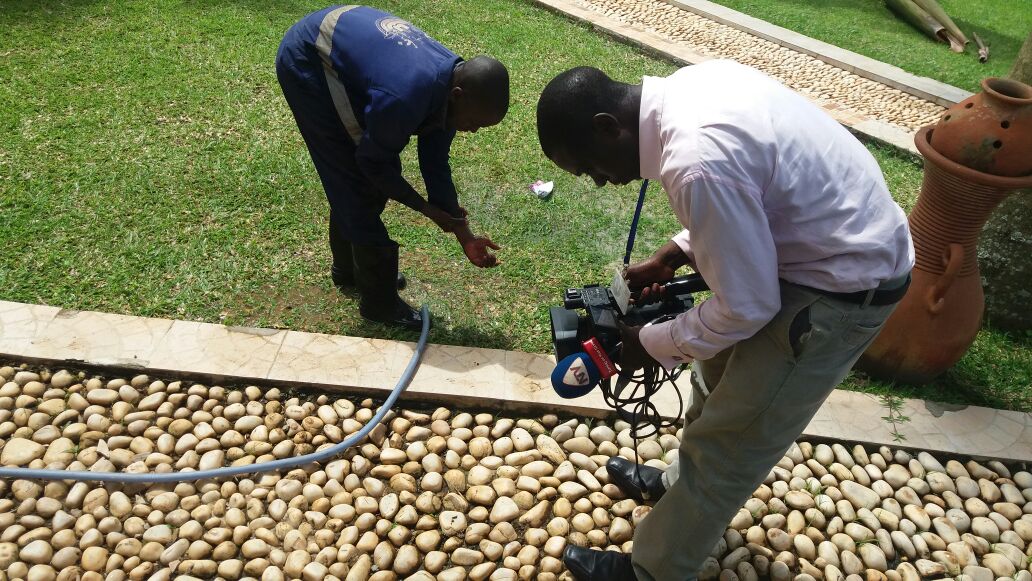
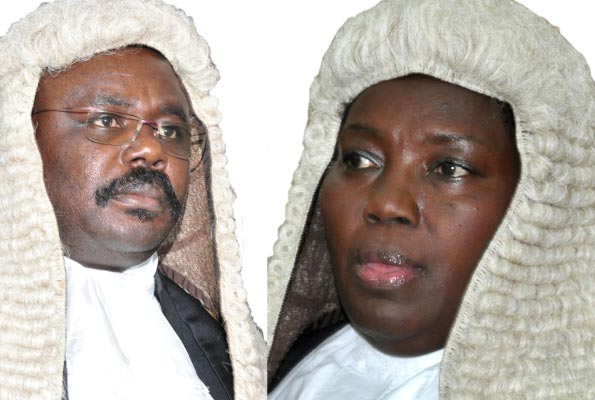
Why Court dismissed Mbabazi polls petition

The Supreme Court has unanimously ruled to dismiss Amama Mbabazi’s presidential petition after it failed to prove that the noncompliance to electoral laws substantially affected the outcome of the February 18 elections.

Reading the short version of the judgment, Justice Burt Katureebe also declined to offer costs to the respondents saying be petition was a public matter.

The full judgment will be given not later than 90 days.

The court also dismissed all claims against Mr Yoweri Museveni for lack of evidence to back them up.

Past Supreme Court rulings (2001 and 2006 involving Kizza Besigye) set a nearly impossible-to-meet and restrictive test in trying to determine that election irregularities substantially affected the election outcome. Amama Mbabazi’s has been no different.

Stories Continues after ad

Four cars trapped in grisly Nakawa accident

Scene of the Nakawa accident this morning

An early morning accident at the traffic lights junction in Nakawa has left a lorry and three vehicles badly damaged.

According to eyewitnesses, the lorry, a Mitsubishi Fuso carrying yet-to-be identified merchandise and coming from the Jinja side failed to brake, ramming into a commuter taxi and two other small cars. No one died in the horrendous accident but witnesses said the injured were all rushed to hospital for emergency treatment.

By press time the affected cars were being towed to the Inspectorate of Vehicles in Naguru.

Stories Continues after ad
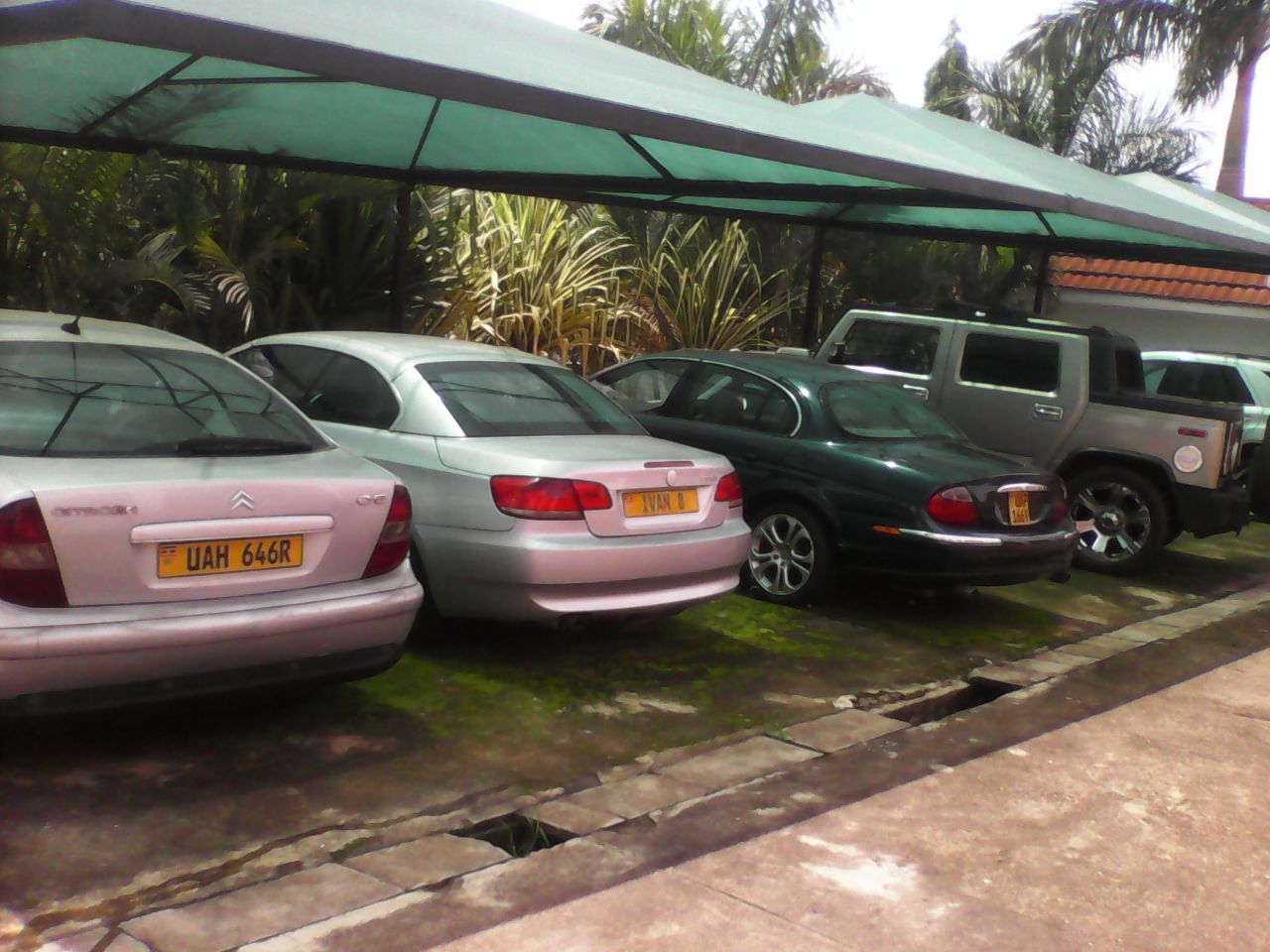
Sudhir Ruparelia: Uganda’s “mad” entrepreneur is self-made

He started his entrepreneurial journey when still a teenager, he dropped out of school to answer the entrepreneurial call, he sees opportunities where others don’t, he is a risk-taker, he is a portfolio entrepreneur, he is self-made, and his entrepreneurial prowess can’t be quenched. These are a few attributes that define Dr. Sudhir Ruparelia, a Ugandan of Asian origin, who remains East Africa’s greatest entrepreneur.

He is Sir Richard Branson, Britain’s “mad” entrepreneur, of sorts. The major difference could be that Branson is left-handed, dyslexic.

Sudhir started his entrepreneurial journey by importing beer and salt from Kenya and subsequently opened a foreign exchange bureau which laid the foundation for his entry into commercial banking.

Sudhir Ruparelia with his wife Joystna after he won an award recently

When former Ugandan president, Idi Amin, gave Asians a 90-day ultimatum to get out of the country in August 1972, he sparked a desperate fight for life for more than 60,000 people. Some, who feared Amin’s brutality, had nowhere to run.

Their bodies were found in the waters of the Nile. Hitherto happy families fretted as they sought survival. Among them was a Ugandan Indian retailer’s family that took flight, leaving behind, in the midst of panic and confusion, a 16-year-old son.

This vulnerable teenager was Sudhir Ruparelia. More than 40 years on from this tearful parting, Sudhir is ranked by Forbes as the 22nd wealthiest person in Africa with an estimated net worth of $1.1 billion. His is a remarkable story of hard work and endurance.

“It was an awful moment for the Asian community. You couldn’t predict what was to happen to you the next day. But I convinced my parents to leave me behind on the promise that I would join them later,” Sudhir said.

Sudhir’s Ugandan-born parents had established a shop and gas station in the middle of Queen Elizabeth National Park in western Uganda. They ran it for years. The bravery and tenacity that helped Sudhir survive and prosper amidst chaos can be traced back to his childhood. Sudhir studied in schools that were far away from the wildlife park where his parents ran their business. This meant he travelled long distances alone.

He cadged lifts on trucks ferrying traders. The trucks would leave the bush loaded with fish and salt and return packed with merchandise. Although the East African railway service was booming at that time, Sudhir says it was only for the rich. At school, there was no communication with his parents until the holidays.

This forged a hard edge to Sudhir. All he wanted from his departing family was money to survive. His wish was granted. For six weeks, Sudhir ran riot with his friends.

“We had a lot of money to party and drink. The security personnel occasionally stopped us but we always sweet-talked them into releasing us,” he said.

His moment of truth came when intelligence men arrested one of his friends. They wanted to extort money.

“Once he was released, we all decided to leave since the city was also getting desolate. There were just about 100 Asians left,” said the property mogul.

Sudhir landed alone in London and didn’t even know where to find his parents. Together with other exiles, he was checked into a refugee camp. On the second day, he set out to find friends in Finchley Central. He found eight of them living in a two-roomed house. He never returned to the camp.

After five weeks in London, Sudhir found his family, but only to tell them that he wasn’t content with his refugee status and that he was moving on. He headed to Birmingham and Manchester where there were jobs that could promise permanency. Sudhir tried to get work at Ford Motor Company but was thwarted by a union closed shop.

He moved to Ilford, in northeast London, where he found a job with a company that made test tubes for laboratories. He handled red-hot wax in making centimetre markings on test tubes.

“This was the most sickening job in the entire factory. I barely had any protection and the heat was unbearable. No wonder I worked for only five months and moved back to Finchley Central,” says Sudhir.

Next, he tried to join the Royal Air Force (RAF). He passed the tests and was on the verge of signing for five years. The problem was he was a minor and needed the consent of his parents. His mother declined. Her idea of the military had been tainted by the cruelty she had witnessed by the Ugandan army. Sudhir’s father differed but the mother held sway.

The RAF offered education. Sudhir hoped for academic success, but it was not to be.

In February 1985, Sudhir returned to Uganda, aged 29, with $25,000 he had earned through real estate deals in London. Due to unrest, Uganda was hit by foreign exchange shortages that caused the decline of the Ugandan shilling to a low in 1985 of Shs 600 to $l. Sudhir says he kept a low profile for over a year to allow him time to study and understand the ruined economy.

In December 1986, Sudhir opened a wholesale store, in Kampala’s central business district, dealing in imported beer, salt and wine. The civil war left the breweries of Uganda in ruins. This made it lucrative to import beer, with household goods, from Kenya. Sudhir positioned himself as a channel between importers and retailers.

He became a trusted business partner to the importers, who supplied him the items on credit and claimed payments after a couple of days, to accelerate returns. He ran the system effectively and set up the first solid distribution structure in Kampala.

“While in London, the strongest trait I learnt was being disciplined. I ensured that the suppliers’ money was always readily available as agreed,” he says.

After just three months, he became the number one dealer in imported beer in Kampala. Armed with a sound supply chain, Sudhir wasted no time in elevating himself to importer. This required piles of foreign exchange. So, he started a currency exchange service, which was another untapped market in Uganda.

Though the sector operated informally, the demand was overwhelming. Sudhir earned $10,000 in profit every day. He invested part of this money in prime properties in Kampala. In 1990, the government moved in with a policy to regulate forex businesses, which had mushroomed. Sudhir’s Crane Forex bureau became the first to be licensed in the country.

This catapulted him beyond his wildest dreams. In just six months, Sudhir says, he was making more money than the commercial banks. He itched to grow his financial services empire and in 1995 created Crane bank with $1 million. Part of his frustration, was the way commercial banks operated as if they were doing everyone a favour. The charges were high and the choice limited. Sudhir came up with a motto for his new bank: Serving To Grow And Growing To Serve.

He lowered bank charges, extended banking hours; becoming the first to operate up to 5pm and on Saturdays. He also cut red tape. Today, Crane bank is worth $120 million in capital and has 38 branches across the country. Crane bank was voted Bank of the Year Uganda in 2009 and also won the Banker of the Year award in 2003, 2005, 2006, 2007 and 2008 by the Financial Times in London, where Sudhir’s working life began.

In 2011, the bank posted a 32.3 increment in profit before tax, rising to UGX.90.23 billion ($37 million) from UGX. 68.19 billion ($28 million) in 2010.

“We are currently about 35 million people in Uganda. Only three and a half million live in Kampala. The rest of the population is in the countryside. That has guided our philosophy of opening more branches upcountry,” says Sudhir.

His plan is to open 10 branches a year for the next three to four years, with the hope of expanding into Rwanda this year, followed by South Sudan. In his office, Sudhir’s wide collection of awards is impressive. He has won most of the top investment awards in Uganda, including the Presidential Export award for 2002, 2006, 2005 and 2009. He also received an honorary Doctorate of Law in Business from the Uganda Pentecostal University for his investments in the Ugandan economy.

Through his floriculture company, Rosebud Ltd, Sudhir has been exporting 13 million roses to Europe a month, earning him a profit of $5 million per year. Production is set to increase once he acquires a planned 200 additional hectares. He will effectively produce one and a half million stems a day, creating 7,000 jobs and projected returns worth $95 to 100 million per year.

Through his estate holding company, Meera Investments Sudhir owns at least 300 residential and commercial properties in Uganda, from Crane Chambers in the central business district, to scores of apartment blocks, shopping centres, office buildings and tracts of valuable land. He estimates his rent is around $600 million a year from his real estate.

His five-star Speke Resort and Conference Centre, situated on 75 acres, by the shores of Lake Victoria near Kampala, played host to the 2007 Commonwealth Heads of Government Meeting, which drew 59 leaders. Built for the Commonwealth meeting, the resort has 780 rooms, 10 conference rooms, a 1,000-seat ballroom and nine meeting rooms that can accommodate groups ranging from 10 to 300 people. It also has Uganda’s only Olympic-size swimming pool, an equestrian centre and a host of bars and restaurants.

The plush hotel, worth around $165 million, caught the eye of the late Libyan president, Muammar Gaddafi, who tried to buy it for $120 million. Sudhir turned him down. His other assets include Speke hotel, Kabira Country club and Speke apartments, all high-end facilities in prime zones of Kampala and worth millions of dollars.

Sudhir also bought Victoria University from Edulink Holdings Ltd to add to his educational institutions portfolio already comprising of Kampala International School Uganda (KISU) and Kampala Parents’ School. The institutions are worth more than $40 million.

Sudhir Ruparelia and Victoria University promoter Ravij Ruparelia welcome President Museveni at the campus in Kampala

Asked what guides his investment, Sudhir says it is instinctive risk taking rather than feasibility studies.

“In Africa, feasibility studies are a waste of time. It’s about ability to see opportunity and take it up. If you did feasibility studies for a country like Uganda, you would never do anything,” he said.

Via Vencha Magazine

Stories Continues after ad
SFC Major arrested for ivory trafficking

Maj Allen Rutagira (blue shirt) and Cpl Kamugisha (white shirt)

The Natural Resource Conservation Network together with Police in conjunction with Uganda Wildlife Authority recently arrested Major Allen Rutagira (Black T-shirt) and Corporal Collins Kamugisha, both Uganda Peoples Defence Forces staff under the Special Forces Command (SFC), while selling 21.5kgs of pure elephant ivory.

The contraband ivory

The duo and others were finally arrested on Thursday March 24 at Hotel Africana Kampala after long time investigations by conservationists and police and according to a release by one Laban Muhindo, the arrested SFC officers are attached to Entebbe International Airport, raising suspicions that they might have obtained the contraband from the vaults at the Airport. The SFC is an elite unit that among others provides guards for the President, his family and for all strategic installations in the country.

Meanwhile, according to Muhindo, Cpl Kamugisha`s confession led to the arrest of George Otika an accountant at Entebbe Handling Services, Able Bamonjobora, a State House driver and Simon Mbonye, a miner and businessman in Kampala who was waiting for the money from the transaction and was arrested at a petrol station in Kampala. Mbonye said the contraband belongs to Alex Sande, a businessman who was also arrested later on the same day

The four civilian suspects are detained at Central Police Station waiting to appear in court as the hunt for their counterparts intensifies while the soldiers were first detained at the Special Investigations Unit (SIU) in Kireka but later transferred to Nalufenya Police Station in Jinja.

This comes at a time when another UPDF officer was arrested for the illicit dealing in Moroto in January.

Dozens of the elephants have been killed in recent years by villagers, who regard the pachyderms as pests that destroy their plantations. The International Union for Conservation of Nature lists elephants as ‘critically endangered’ after their numbers dropped drastically to an estimated 5,000 last year.

CITES lists elephants in Appendix I (18/01/1990), and environmentalists say the elephants could be extinct within three decades unless they are protected.


Stories Continues after ad