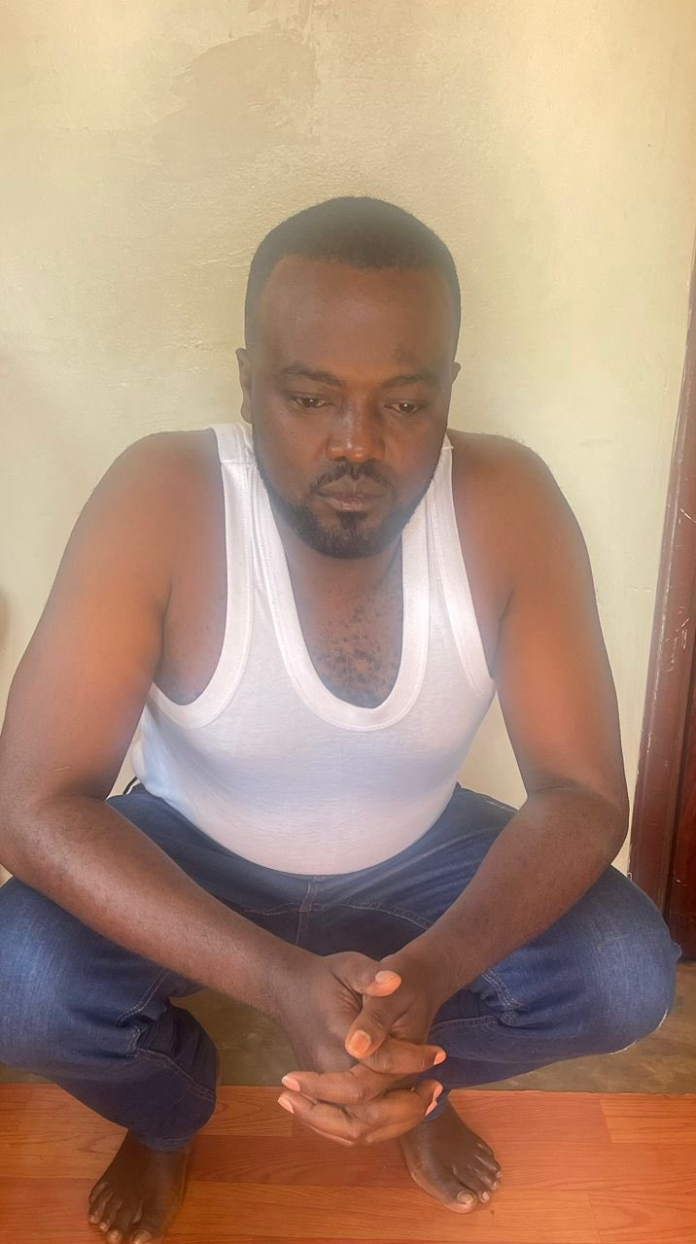
Police are holding Pte. Robert Herbertson Birivumbuka, a soldier attached to Special Force Command (SFC), for shooting four people dead.
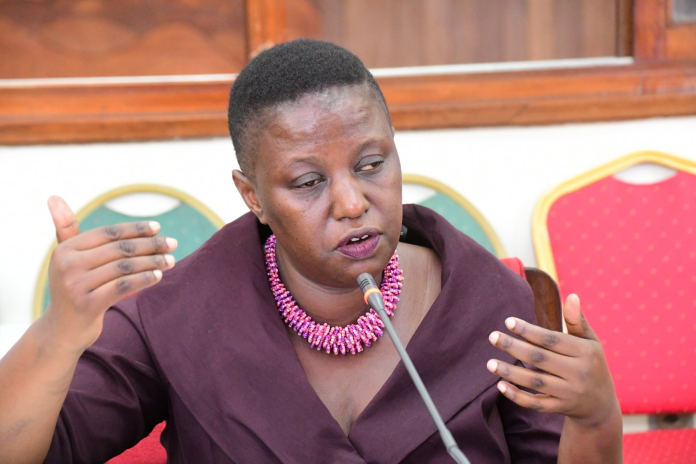
His arrest was confirmed by Claire Nabakka, Deputy Police Spokesperson.
Pte Birivumbuka is reported to have escaped from his place of work and proceeded to Namale village, Kabayingire parish, Buwaya sub-county, Mayuge District, where he walked into the home of Buyinza Mudhasi Isaac 40 and started spraying bullets into the house.
During the shootout, Mudhasi was killed, and his three children died on the spot, while five other family members were critically injured. The shooting is linked to land wrangles.
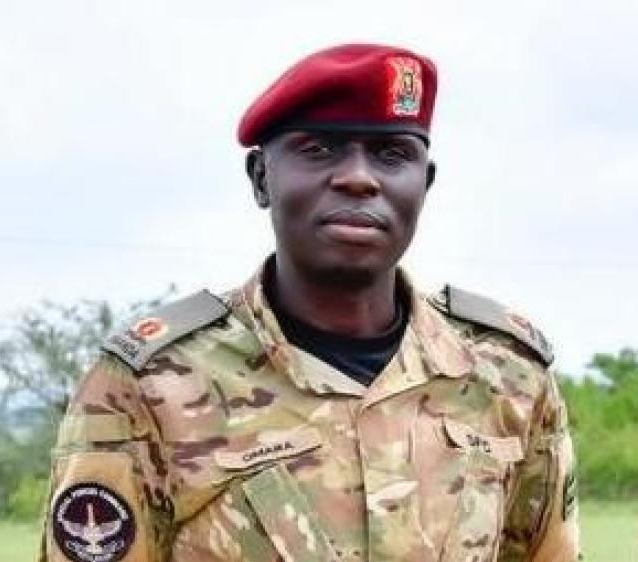
According to Maj. Jimmy Omara, the SFC Spokesperson, upon committing the offense, the said soldier then rushed back to his place of work in a bid to allude to any possible suspicion, but his unit had already detected his absence.
“Once he returned, he was arrested because all fingers pointed to him. He is detained in the SFC facility, awaiting the long arm of the law to dispense justice,” he said.
Maj. Omara urged the people of Namale to cooperate with the investigators so that the suspect is quickly brought forward to face the law.
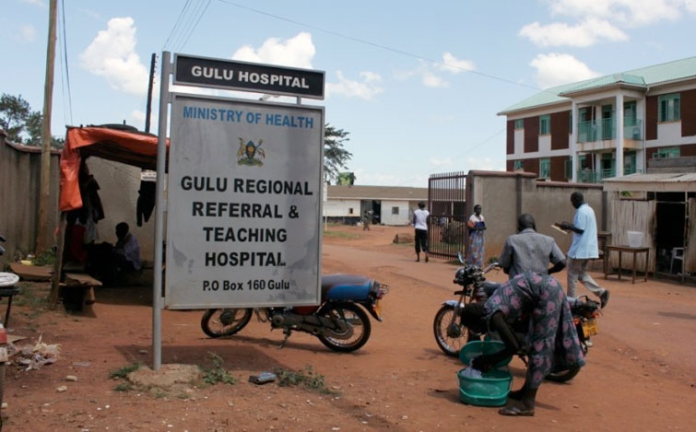
The Parliament Committee on Government Assurances and Implementation is investigating the circumstances surrounding the dismantling of the Intensive Care Unit (ICU) at Gulu Regional Referral Hospital.
Chaired by Abed Bwanika, the committee is scrutinising government commitments in the health sector and developments in new cities and districts.
In 2019, Parliament approved a loan request, permitting the government to borrow approximately Shs200 billion from the International Development Association (IDA) of the World Bank Group under the Intergovernmental Fiscal Transfers (UgIFT) Programme.
The funding was proposed for upgrading health centre II’s to health centre III’s in sub counties lacking government-owned health centre III facilities.
In 2021, a further loan request of Shs352.2 billion from the IDA was approved by Parliament to complete the upgrades, construct and equip new health centre III’s, and recruit staff for all upgraded health centre II’s, among other objectives. Government also procured ICU for all regional referral hospitals.
During the committee’s visit to Gulu Regional Referral Hospital on Friday, 29 June 2024, it was discovered that despite receiving 10 ICU beds, only four were operational as an ICU.
Components such as monitors, ventilators, and ICU beds had been relocated to other hospital areas, severely compromising the ICU’s functionality. Additionally, two ICU beds were out of service.
The committee’s deputy chairperson Joyce Bagala, expressed concern over the incomplete ICU units presented to the committee, noting discrepancies in the equipment supplied by the Japan International Cooperation Agency and the Government.
Bwanika demanded explanations from the hospital administration regarding the whereabouts of the ICU components and the reasons behind their dismantling.
“It is regrettable that expensive ICU equipment has been dispersed within the hospital, rendering the ICU ineffective, the individuals responsible appear unable to account for these items, some of which were repurposed as standard hospital beds,” Bwanika said.
Reports indicated that senior hospital management had decided to redistribute some ICU components to various wards, including maternity, surgical, and emergency units after the end of #Covid-19.
An ICU unit typically comprises an ICU bed, ventilators, drug pumps, oxygen supply, and suctioning machines. However, several ICUs at the hospital were found lacking these essential components.
In response to the situation, the hospital’s storekeeper, Robert Vupale, was escorted to the police station to record a statement on the dismantling of the ICU and the missing equipment.
Robert Ssekitoleeko (NUP, Bamunanika County, Luweero) proposed holding the entire hospital administration accountable for the ICU’s degradation.
“The responsibility for this issue lies with all involved parties, including the director and technical staff managing the ICU. A comprehensive investigation should be conducted to address the breakdown in institutional management,” proposed Ssekitoleeko
Following discussions, the committee decided that the hospital’s Director, Dr Peter Mukobi, currently away on official duties in Kampala, should report to the Gulu Central Police Station and record a statement regarding the situation before the Police can determine how to proceed with investigations into the matter.
Former Rubaga Division Deputy Resident City Commissioner Anderson Burora has been arrested and is currently detained at Kira Division Police Station. He was picked in the wee night hours from his home around Najjera.
“My home has been besieged by unknown men who claim that I should go with them,” Burora wrote on his x handle (formerly twitter).
Burora was in mid-March suspended from office for alleged continued violation of the Uganda Public Service standing orders 2021. He had openly confronted the Speaker of Parliament, Annet Anita Among following reports about suspected cases of abuse of public resources at Parliament.
He recently formed a National Resistance Movement (NRM) group to fight corruption.
Burora lost his job as RCC after he was accused of using his social media accounts to criticize Anita Among the speaker of Parliament over alleged mismanagement of the 11th parliament.
He has resisted attempts by the RDC secretariat to silence his views against corruption at Parliament and other public bodies.
He has turned his guns to the Inspectorate of Government accusing the incumbent of failing to execute her mandate. He says the IGG, Beti Kamya should immediately resign for failure to fight corruption even when she is fully facilitated by the government.
Recently Burora handed in his resignation letter to his bosses and said that he was not ready to take on any NRM job whatsoever citing the increased rate of corruption among party members.
“I resigned and I told them that I am not going back to work, even if I get paid, I will take back that money. I don’t want to be like the IGG who is paid and facilitated with everything but the best she can give is to lament,” Burora stated.
Executive Director of National Identification and Registration Authority (NIRA), Rosemary Kisembo.
The Executive Director of National Identification and Registration Authority (NIRA), Rosemary Kisembo, has decried the low staffing levels at the Authority, saying this has created a huge workload for staff, where each officer is required to serve 80,000 unregistered Ugandans.
Kisembo made the remarks while appearing before Parliament’s Committee of Commissions, Statutory Authorities and State Enterprises (COSASE), where she said that some Ugandans are forced to travel 80-100Km to access their services in 24 districts and 10 cities.
“NIRA was established in 2015, today, it is 9 years. From the time of establishment, to date, it has registered 27.4 million people with NIN and issued 17.3million cards, although it has printed 20 million cards. From the time of inception, NIRA’s staffing levels have never exceeded 50% meaning that the ratio of unregistered Ugandans to staff in NIRA is 1: 80,000. We are present in 112 districts, meaning, we aren’t present in 24 districts and 10 cities,” explained Kisembo.
“There is a bulk of districts where we aren’t present like Kalaki and Kapelebyong in some of those areas, they are quite a distance apart from our service points and people have to travel between 80-100Kms to access the nearest service. The initial budget for the first year, because we would be buying equipment and chairs would come to close to Shs6.7Bn and subsequently, that budget would go down because of recurrent expenditures,” explained Kisembo.
Allan Mayanja (Nakaseke Central) asked Kisembo to explain the modalities that are being undertaken to help Ugandans whose fingerprints were destroyed in line of work, especially those working in salons and the construction industry.
“We have so many Ugandans, specifically those ladies working in salons and gentlemen who are in construction, cement destroyed their fingerprints, and these people cannot access national IDs. How are you trying to help out such people because I have so many in Nakaseke,” Mayanja said?
“The ten fingerprints sometimes all don’t work, but we try to work with the minimum of six. If all the 10 fingerprints fail, we pick the six strongest fingerprints. At the back of your ID is placed your strongest fingerprints. We have one million people on the register that didn’t satisfy fingerprints and for those ones, the biometric used for their identification is their face,” explained Kisembo.
Dfcu bank management, and Guest of honor cutting cake during bank's 60 year anniversary. celebrations at Mestil Hotel
Dfcu Bank marked its 60th anniversary at a grand gala, celebrating six decades of operation and impactful service towards fulfilling its purpose of ‘Transforming Lives and Businesses.
The Diamond anniversary event, hosted at Mestil Hotel, Kampala, brought together distinguished guests, including government officials, business leaders, clients, and partners, to commemorate the Bank’s remarkable journey and legacy in Uganda.
From the very beginning, our purpose was deeply rooted in the aspiration to empower Ugandans and contribute to the prosperity of our country. Over the past six decades, the business has grown together with our nation, and we have been partners of growth and development with Uganda and to ensure that we support industrialization, businesses and other opportunities that come in Uganda,” Charles M. Mudiwa, CEO Dfcu Bank remarked.
The night was marked by impact stories of businesses that have been transformed through their partnership with Dfcu Bank and stories of the deep-rooted legacy that the Bank has entrenched in Uganda. Having started as a development finance institution in 1964, the Bank has evolved over the years into a Tier I commercial bank with a network of 54 branches spread across Uganda and over 2,000 agent banking outlets.
Jimmy D. Mugerwa, Chairman, Board of Directors, Dfcu Limited commented on the growth of the bank saying, “Our transition from a Development Finance Company to one of the largest Commercial Banks in Uganda was made possible by the vision of our funders and shareholders and our formidable investors who over the years have directly enabled our growth and expansion.”
In the past six decades, the bank has been a champion for women-led enterprises and initiatives through its Women in Business (WIB) program which has supported over 80,000 women-owned businesses. One of the WIB beneficiaries, Linette Akol, commended the Bank for helping her improve the governance of her business, Krystal Ice Limited, by guiding her in instituting a Board of Directors.
The 60-year anniversary gala also highlighted transformative partnerships fostered by Dfcu Bank. In particular, the Bank’s partnership with the Agribusiness Development Centre (ADC) was celebrated. This strategic partnership has established Dfcu as a key player within Uganda’s agricultural sector, positively impacting over 28,000 individuals and entities. Through this collaboration, Dfcu actively supports and empowers farmers and agribusiness stakeholders, contributing to positive change across the industry.
“In the soil, we found a diamond! The Best Farmers Competition, which we sponsor underscores our commitment to growing Uganda’s agribusiness. For 60 years, we have focused on enhancing the agricultural sector, recognising Uganda as a global food basket and playing our part to make the sector even more productive,” Dr. Winifred Tarinyeba Kiryabwire, Chairperson, Board of Directors, Dfcu Bank said.
“Celebrating 60 years is truly remarkable, especially when many companies do not survive beyond their first year! I commend the bank for its incredible journey from a Development Finance Company in 1964 to now being a domestically and systematically important bank today. It is an era of growth for Dfcu and we believe that the bank is well-positioned to make even more impact in the coming years,” Dr. Tumubweinee Twinemanzi, the Executive Director Supervision, Bank of, commented, while making his remarks.
The Attorney General of Uganda Kiwanuka Kiryowa, who was the Guest of Honor at the celebratory gala, spoke of his relationship with Dfcu Bank, which spans years. “I am privileged to be here this evening, to celebrate this milestone achievement of a Ugandan institution which has defied both time and odds to get to this day. This is a celebration of innovation, resilience and above all, patriotism.”
“I thank and applaud Dfcu for the role it has played in advancing Uganda’s socioeconomic transformation through its services, people, commitment to local development and focus on demographics such as women, the youth and SMEs which typically find it strenuous to access favourable banking services. As you mark your diamond jubilee, it is our sincere hope that the next years will bear more fruit and that you will continue to live true to your purpose of transforming lives and businesses in Uganda,” the Attorney General concluded.
The night was marked by entertainment from Ugandan artistes and deejays including Afrigo Band and Joseph Sax.
Legislators on the Committee on Commissions, Statutory Authorities and State Enterprises have tasked the finance ministry to present documentation on the criteria used in granting bailouts to companies in financial crises.
According to the committee chairperson, Medard Sseggona, companies belonging to foreign investors have mostly benefited from bailouts compared to companies belonging to Ugandan investors.
“What is the legal and policy framework on which you base to determine who should benefit from your bailouts and who should not? You are helping AYA but you are not helping Sembule who has invested in development of your technology and skills,” said Sseggona.
The delegation appearing before the committee was led by finance minister, Matia Kasaija.
Ssegona also tasked the minister to present a schedule of all companies in which the government has bought shares and appraise the committee with details by Friday July 6, 2024.
He cited companies including Atiak Sugar Factory and Roko Construction Limited.
“We want to know what we have injected, what the worth of our investment is in terms of shareholding, and our level of participation in managing these companies. We must be able to reap back our money,” Sseggona added.
Hon. Timothy Batuwa (FDC, Jinja South Division West) also tasked the minister to appraise the committee on the status of companies that receive tax waivers from the government.
“On that list, let us have Bujagali Energy Limited. Year after year, they seek tax waivers and we want to know what benefit the government has derived from this move,” Batuwa said.
Sseggona added that the ministry ought to show the monetary contribution of companies receiving tax waivers, to the economy over the last three years.
Nathan Itungo (Indep., Kashari South County) raised concern over selective release of funds, citing that some universities receive 100 per cent release of funds whereas others receive only 60 per cent by the close of the financial year.
“If you are releasing, release 70 per cent across the board. But if you give Makerere University 100 per cent and then you give Bunyoro University or Kabale University 55 per cent, that is not good,” Itungo said.
Kasaija told the committee that money for approved budgets is released on a timely basis, adding that the releases are based on the cash available.
On queries by the committee about URA’s inability to assess and collect taxes on gold exports, Kasaija clarified that in May 2024, the Minister for Energy and Mineral Development issued a statutory instrument imposing a levy $200 per kilogramme of processed gold exported.
He added that the level of purity of gold exported was specified to be at 99.9 per cent.
“URA started the assessment and collection accordingly. From July 1, 2021 to 30 June 2023, a total of 65,135 kilogrammes of processed gold were exported and total tax assessed was Shs47.28 billion. Of this, Shs2.17 billion was paid, leaving Shs45.1 billion in outstanding tax arrears,” Kasaija said.
He added that for the period between May 24, 2024 and June 27, 2024, a total of 4,006 kilograms of refined gold was exported and taxes amounting to Shs3.114 billion were collected.
A network of Official Coca-Cola Distributors (OCCDs) is helping to ensure that Coca-Cola products reach Ugandans efficiently in every corner of the country.
As a fast-moving consumer goods manufacturer, Coca-Cola Beverages Uganda (CCBU) has innovated to create a system that helps it to consistently deliver quality products to consumers across the five geographical territories of Kampala, Central, North, East and South.
“We understand that our success is linked to the success of our customers. That’s why we’ve established a robust OCCD system, ensuring efficient distribution and exceptional customer service throughout Uganda,” said Melkamu Abebe the General Manger at CCBU, a subsidiary of Coca-Cola Beverages Africa.
According to Micheal Kaziro the Route-To -Market specialist at CCBU, the foundation of the OCCD system begins with a meticulous selection process in which individuals with ambition to excel and resources such as trucks, warehouses, mobile phones, and a dedicated workforce are verified and appointed to become OCCDs.
Once appointed, CCBU’s user-friendly online system tracks sales, maintains detailed records and empowers OCCDs to plan deliveries with precision. They use the same system to access real-time data for customer details and to track the status of customer orders, including information on products that are out of stock.
“The system also has a call list of all OCCDs’ deliveries in specific areas. This eases their product dispatch process and enables them to talk to customers at all times during the distribution process,” Kaziro says.
The system’s capabilities go beyond record-keeping. It facilitates daily performance tracking, allowing the sales and marketing team to identify areas where OCCDs might require additional support. The data-driven approach ensures challenges are addressed swiftly, keeping the distribution network running smoothly.
In some areas, providing coolers is crucial to maintain optimal beverage temperature. CCBU actively supports OCCDs by providing coolers to customers, to ensure retailers can offer refreshingly cold drinks throughout the day, which boosts their sales.
“CCBU has distributed over 47,000 coolers countrywide and continues to distribute more coolers on a regular basis. This is one of a number of initiatives to help our OCCDs sell more,” Kaziro says.
CCBU’s sales team undergoes rigorous training in stock management, customer service and product knowledge. This expertise is transferred to OCCDs, empowering them to provide exceptional service to customers who make CCBU’s quality products available to consumers.
Research conducted by CCBU is also used to assist OCCDs to increase sales and ensure they have all the tools they need to stay competitive, through customised promotions for specific areas.
“By optimising our network,” says Kaziro, “we aim to achieve greater efficiency, boost sales volumes and ensure exceptional customer service throughout Uganda.”
With the OCCD system in place, CCBU is not just about delivering beverages. It’s about empowering local businesses and contributing to the success of countless Ugandans. With continued investment in technology, training and network optimisation, CCBU and its OCCD partners are poised for a future of shared opportunities.
The establishment of the Institute for Packaging Partners of Uganda by the Ministry of Trade, Industry and Cooperatives in collaboration with the packaging industry players is bringing hope in the industry through promotion of packaging standards for domestic goods and exports.
Poor quality packaging had previously been affecting competitiveness of Uganda’s manufactured products at the global market.
But with the establishment of the Institute in March 2023, there are efforts to work towards provision of improved packaging which will see Ugandan products become competitive.
There are also opportunities for networking, business development, technology advancement and training.
The Institute is encouraging the development of packaging technology, science, access and innovations. This will also see the recognition of the packaging industry as a profession unlike in the past.
With the enhanced competitive packaging and branding, Uganda will maximize the potential trade opportunities within the African Continental Free Trade Area.
The institute was inaugurated into the World Packaging Organisation and Africa Packaging Organisation in 2003.
This brings the packaging industry of Uganda to the exposure that will enable Ugandan traders to benefit from the opportunities, linkages and advanced technologies at the global scene.
There will also be ability to attract funding for the MSMEs from the WPO and the International Trade Centre with hope of implementing a $49 million project in the six EAC Partner states with Packaging industry heavily supported in 2024
The Ministry of Trade has developed a concept with WPO to develop a Centre of excellence for the packaging industry of Uganda which needs funding.
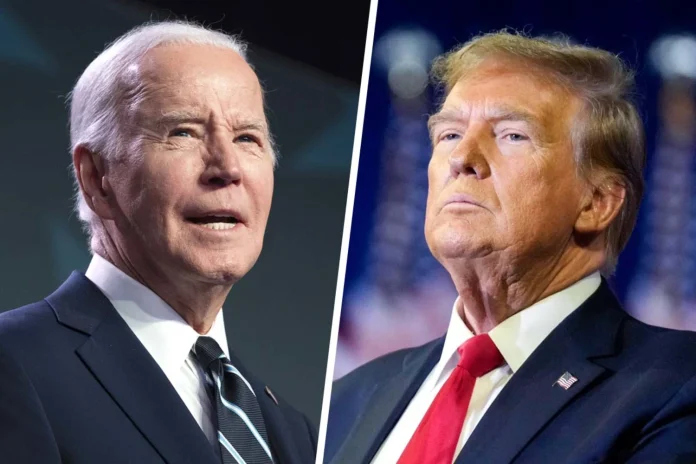
On Thursday June 27, 2024 I watched the full debate of the American Presidential contenders. I tell you it was messy. Many years ago, I missed out on a job because I lost my temper.
It was one of those awful I’m-hour interviews with workshops, team tasks and worst of all, a three-course dinner bang in the middle. I didn’t scream or get abusive, but I did let my frustration get the better of me about something or other.
Given my strong scores in earlier rounds, all I needed to do was a smile, exude an air of calm and the gig was mine. I couldn’t do it. That is what Biden and Trump did when they appeared on TV for the debate.
I was thinking about this experience as I woke up to the news that Joe Biden effectively set his podium alight at the first US presidential election debate. Biden, 81, also had only one job.
This is to demonstrate to the American people, particularly those living in Pennsylvania, Wisconsin, Georgia and Arizona, that he is not too old to be president. The stakes were somewhat higher but the outcome was the same: he couldn’t do it.
I failed that interview I referred to in the opening paragraph not because I didn’t understand the assignment, but because of who I was. I was young and yet to hone a neutral tone and listening eyes. I used temper to reason with those on the panel. They failed me.
History will be written that Biden is old man, and while he managed to mask it in previous debates and various State of the Union addresses, he couldn’t on this occasion. Sometimes we fail, even if we only have one job. That is what happened to Joe Biden – he let down his supporters because of temper. Hate for trump brought him down.
The truth must sink. I am a conflict resolution expert and a political risk strategist. I always tell people not fall in the net of temper. In African politics if you fall in the network of temper and hate you invite a bad situation.
You must calm down a bad situation and do what is called “a fatigue evaluation” that will deliver you out of the hole you have dug. Biden fell to the trap of a known criminal called Trump
Another truth is that for what it’s worth, Donald Trump is a convicted felon who incited an insurrection in the US Capitol to prevent the peaceful transfer of power. From tariffs to alliances, his policies would further undermine the global rules-based order.
The pure bold talk from me is that anybody who talks of democracy of the USA annoys Socrates in the grave – As an African scholar I don’t believe that there is democracy in USA on African NGOs that went to school compounds not classrooms can believe that .
The type of democracy of 250 years in America that takes one inside the holes instead of removing us out our holes as Africans is dangerous democracy. African young generations must not look at USA democracy as a benchmark for a better world. We must look at the new type of democracy that fits Africa.
On the side of Trump -He is frequently unintelligible. His Supreme Court nominees have overturned the constitutional right to abortion. He has overseen vast conflicts of interests with regards to the presidency and his businesses. He has been found liable for sexual abuse. In other words, there are worse things in the world than appearing old on television.
I say this from the bottom of my heart, I still believe the Americans will vote him even when he is in jail. But, given the widely understood threat of a second Trump presidency, shouldn’t that incentivise the Democratic Party to nominate the best possible candidate? They instead named Joe Biden a failure of foreign policy.
I tell you and I can go on record that I don’t like Hillary Clinton on politics of Africa as a Pan African. She killed and helped bomb Libya but she told Americans what would happen if they chose a wrong Democratic candidate.
The warning signs were there when Hillary Clinton ran but at least in 2016, few thought Trump could actually win. The same complacency is around this time.
I always balance my articles to allow my young students across the world to understand the international relations. To be clear, Biden has been a successful legislator, from passing the historic Inflation Reduction Act to the bipartisan Infrastructure Bill, while overseeing a booming economy. But very weak on domestic levels.
One must remove that while corralling the West in the defence of Ukraine he brought defeat home. Yet all this would be seriously, perhaps fatally undermined if his legacy were ultimately a Trump re-run.
There is a notion that Biden might not be the candidate in November seems otherworldly. The steps required to reach such a destination are many and fraught with danger. First, Biden himself would have to voluntarily relinquish the nomination.
Then, Vice President Kamala Harris, even less popular than Biden, would have to be persuaded not to run. So those who love Democratic Party restrain your tears
The debate in USA and the events in Africa have also provided a fascinating insight into the mindset of humans, which in this particular bun fight I would have to self-identify as one.
There had been so much pushback from reporting most notably from the Wall Street Journal, that Biden was “showing signs of slipping”. Suddenly, in the space of a 90-minute debate of the USA like in my failure to get the job because there is a direction that says -practically everyone in the world seem to agree that there is a problem with USA democracy.
I conclude by saying when I lost my job because of anger I learnt how to mediate and negotiate for others without TEMPER – For America or USA as it is commonly known to come back and lead the world again in their CRUSADE OF DEMOCRACY – They must ADOPT my THEORY OF REDEMPTION STRATEGY- if not done then there is Democracy .
Lastly the only good thing that might came out of the anger loaded debate of USA – Biden is LIABILITY and if it gets him not to run… otherwise, it was a BAD day for Democratic Party and the African Allies of Democratic Party.
Keep this article for reference
The writer is a Pan Africanist based in London, Political scientist & International Relations expert, studied conflict Resolution, a member of Royal African Society (RAS) Founder /Chairman Pan African Forum (UK)Ltd @MatsangaDr
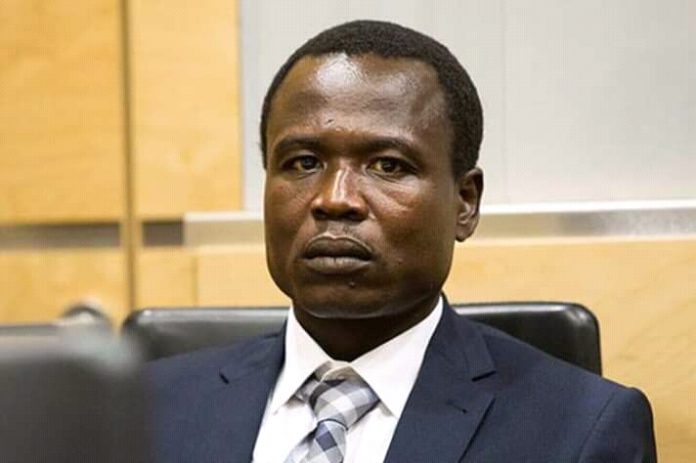
The Trust Fund for Victims (TFV) at the International Criminal Court (ICC) has called for immediate voluntary contributions for the expeditious delivery of reparations to victims of sexual and gender-based violence, former child soldiers, and victims of attacks on four camps for internally displaced persons in the case of Dominic Ongwen.
The TFV Board of Directors urges states, organisations, corporations, and private individuals to urgently contribute EUR5 million (Shs19.9 billion) to allow for a start to the delivery of reparations to prioritise victims in line with the decision of the ICC judges in the Reparations Order.
The First Ongwen Funding Appeal from the TFV Board of Directors is issued at its 26th meeting held in the Hague. At this meeting, the Board of Directors deliberated on the fundraising strategy to enable the implementation of the Trial Chamber’s EUR52.4 million (Shs208.8 billion) Reparations Order of 28, 2024, which seeks to benefit more than 40,000 victims.
In accordance with the Reparations Order’s prioritisation, this urgent appeal for EUR5 million aims to address the victims’ urgent needs and vulnerability. The ordered reparations include symbolic payments, rehabilitation measures, as well as other symbolic and satisfaction measures. After fulfilling this first funding appeal, the Trust Fund for Victims intends to mobilise at least EUR 5 million (Shs19.9 billion) per year to progressively implement the Ongwen Reparation Order. The next appeal from the Board of Directors will focus on the implementation of activities to be approved by the Chamber.
The TFV Secretariat is currently undertaking the 5th week of victim-centred, participatory consultations with more than 2,000 potentially eligible victims of attacks against the camps in Abok, Lukodi, Odek, and Pajule, as well as potentially eligible victims of sexual and gender-based violence and former child soldiers who were abducted from all over northern Uganda within the scope of the conviction.
The consultations with victims, which are taking place in collaboration with local communities, civil society groups, and other stakeholders, are essential to ensure that the needs and concerns of the victims and survivors form the basis of the Draft Implementation Plan for the Ongwen Reparation Programme, which the Trust Fund will submit for approval to the Chamber on September 3, 2024.
In these consultations, survivors have welcomed the recognition of harm in the court order and have expressed the importance that reparations will have on their health, livelihood, overall well-being, and healing.