Stanbic Bank
Stanbic Bank
17.9 C
Kampala
Stanbic Bank
Stanbic Bank
Home Blog Page 2282

Besigye temporarily ‘deserts’ FDC delegates’ conference

Dr Besigye

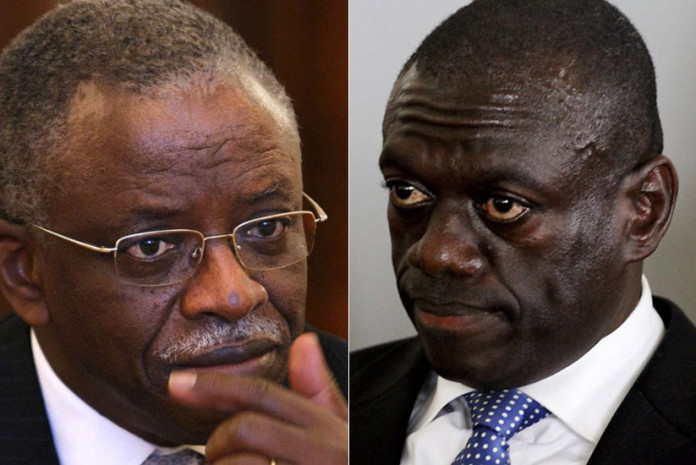
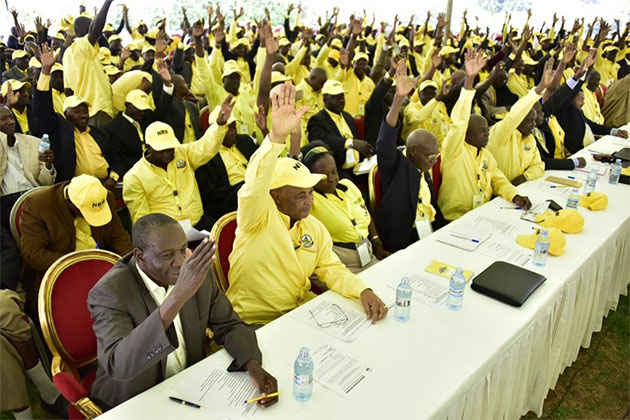
Former Forum for Democratic Change President Col Dr Kizza Besigye temporarily left the party delegates’ conference at Mandela National Stadium, Namboole, where elections for flag bearer are scheduled to be held today.

Earlier, confusion had ensued as party President Major General Mugisha Muntu and his predecessor and challenger for the presidency under the FDC Dr Besigye, each refused to address to the delegates first, ostensibly fearing to ‘arm’ their opponent with ‘artillery pieces’ to shoot them down.

This situation was also not helped by claims that the conference had been infiltrated by non-delegates, prompting organisers to order for re-registration.

The FDC confusion today follows a live public debate on NTV between Maj Gen Muntu and Dr Besigye, where viewers assessed the oratory skills, character and temperament of the two contenders, something that could have led to today’s incredulous approach by the two men.

However, at about 3.15pm Besigye returned to the venue and by filing time the re-registration process was still underway.

Story still unfolding  

Stories Continues after ad

Yes, moneylenders and their cahoots in the justice system should style up

Justice David Batema of the Fort Portal High Court has spoken out against the wanton arrests of civil debtors ordered by the courts and carried out on behalf of moneylenders by bailiffs or, at worst, the police.

Over the past few years, the business of moneylending has blossomed, with many unsuspecting Ugandans falling victim to the loan sharks that at times cause their arrest or confiscate the debtors’ properties.

According to Justice Batema, the law followed to imprison the civil debtors is at times abused, with the some enforcers neglecting the provision that presupposes imprisonment of civil debtors as a ‘last resort’ action.

“… the judiciary is facing a problem, especially in the lower courts, that allow moneylenders and banks to arrest civil debtors as a first resort…’, the learned Judge observed.

In effect our society has created a group of rich men and powerful institutions like banks which have preyed on the hapless borrowers’ lack of knowledge about the procedures of enforcing the payment of debts.

What is surprising is that even our Members of Parliament, some of who have persistently dodged parliamentary sessions for fear of being arrested over civil debts, have never had time to revisit the law on moneylending and how it is being applied against the civil debtors like them.

For if they had, then the country would have a more elaborate law to deal with civil debtors, with foreclosure being an imperative part of the process of recovering civil debts.

Parliament should take the cue!

Stories Continues after ad

Youth unemployment tops agenda at EA manufacturing business summit

Front row: (L-R) Hon. Amelia Kyambadde, Burundi Minister of Trade; Dr. Mukisa Kituyi, UNCTAD Secretary General; Rt. Hon. Dr. Ruhakana Rugunda, Prime Minister of Uganda; Amb. Richard Sezibera, EAC Secretary General and Mr. Dennis Karera, EABC Chair.
President Yoweri Kaguta Museveni has said that high and growing youth unemployment in Africa can lead to instability.
Citing the illegal immigrants trying to cross the Mediterranean Sea on rickety boats through North Africa, Museveni, in a speech read by Prime Minister Ruhakana Rugunda, said many African youth had lost lives as they attempted to cross the Mediterranean Sea in search of employment opportunities in Europe.
“This is a painful lesson and we as leaders must think of a collective regional strategy to respond to unemployment including expanding the manufacturing sector capacity, promoting micro, small and medium enterprises (MSMEs) and youth entrepreneurs,” the President, who was this afternoon officiating at the official opening of the 1st East African Manufacturing Business Summit and Exhibition 2015 (EAMBS’15) at the Speke Resort, Munyonyo in Kampala, Uganda said.

The President noted that EAC Partner States were giving high priority to the development of infrastructure and energy, which were critical for efficient operations of the manufacturing sector in particular, and facilitating business and cross-border investment. He said the regional target was to eliminate electricity supply deficits and achieve full interconnectivity of the region by 2017, making it (EAC) attractive for investment in heavy industries such as steel mills, petrochemicals, paper and cement among others.
“East Africa is on its way to become a regional hub for manufacturing and a gate-way to investing in Africa,” said the President.
Uganda’s Minister of Trade, Industry and Cooperatives Amelia Kyambadde hailed the EAC Secretariat, East African Business Council and the private sector for initiating the Manufacturing Business Summit. She said the Summit creates a relevant regional platform for building partnerships for growth of cross-border businesses and also facilitates advocacy on the need to improve business environment for a competitive manufacturing sector.
 
Minister Kyambadde urged the private sector in the region to bring on board the youth as part of the aggressive apprenticeships, internships and other skills development programmes.
 The Secretary General of the EAC Amb Dr Richard Sezibera urged Partner States’ governments to take some tough decisions so as to turn the region into one viable economic entity by eliminating all barriers to the factors of production in the bloc; active involvement and commitment to industrialization and; financing of technology transfer and innovation.
 
“Governments in the region should also be bold enough to undertake investments in those areas where the private sector are afraid to venture into, as well as use of public preferential treatment to support locally manufactured goods, and the labour mobility by freeing labour market in the region,” said the Secretary General.
 
Amb. Sezibera said improving the business environment was critical, adding that the recent Kenya-Uganda sugar saga was the most unfortunate thing in the recent years of the integration process.
 
“Sugar produced in Uganda or in any of the Partner States is EAC sugar, there is no such a thing like Burundi avocado, Rwanda pineapple, Tanzania Rice, Kenya beef or Uganda sugar. These are all products produced within the EAC and are bound by the EAC Customs Union and Common Market protocols,” said Dr Sezibera.
The Secretary General of the United Nations Conference on Trade and Development (UNCTAD), Dr Mukhisa Kituyi, called for sustainable investment in an integrated manner in the region and noted that EAC was the gateway for Africa.  Dr Kituyi said the region needs to model itself to the realities of the market otherwise it will be left behind on the global market.
 
The Chair of the East African Business Council Mr Dennis Karera, called for fast-tracking the harmonization of domestic taxes, work permits and residence regimes within the bloc in order to improve on the business environment.
“In addition, governments need to improve road networks, do away with non-tariff barriers, and use the procurement system to promote local industries by providing opportunities for local sourcing so as to enhance the business environment and make the region competitive,” said Karera.
 The Chief Executive Officer of Bidco Africa, Mr. Vimal Shah said this was an exciting moment for region and Partner States should start thinking of removing all the borders in readiness for rapid transformational change.  
The two-day summit is running under the theme “Unleashing the Manufacturing Potential for Accelerated Development and Employment Creation in East Africa.”
Stories Continues after ad

Kabila in China for commemoration of WWII end

TOUGH ROAD AHEAD? DRC President Joseph Kabila
President Kabila
President Kabila

Democratic Republic of Congo (DRC) President Joseph Kabila is in China to attend the commemoration of the 70th anniversary of the end of World War II and celebrate DRC veterans who fought alongside Allied Forces during the war.

While in China President Kabila will meet various leaders including President Xi Jinping to review the status of current Sino-Congolese projects and discuss ways to strengthen and enhance relations between the two countries.

Over the last 25 years, Chinese investment in the DRC, as well as Congolese exports to China have grown at a rapid pace, with reports indicating that bilateral trade between the two countries accounts for approximately two percent of total Sino-African trade.

In 2008, the Chinese government entered into a contract with the DRC government for US$6 billion worth of infrastructure projects—from the development of roads and railways to the construction of hospitals, health centers and universities in exchange for China’s participation in DRC’s mining investments.

In addition to contributing to the DRC’s infrastructure capabilities, the Sino -Congolese ventures have created thousands of jobs for the Congolese people, generated tax revenues for the DRC and provided a critical knowledge transfer between the two countries, a release states in part.

“The work we have done with Chinese investors represents a critical development and capacity-building endeavor for the DRC, improving the lives of Congolese across the country by boosting employment and the economy,” said Mr. Moïse Ekanga Lushyma, Executive Secretary of the Bureau for Coordination and Monitoring of the Sino-Congolese Programme.

He added: “These innovative projects strengthen key growth sectors and create opportunities for other foreign investors that are interested in capitalizing on the incredible potential of the DRC.”

Between 2008 and 2014 China invested US$459.764 million in ten infrastructure projects in the DRC, while this year China is set to invest US$250 million on public arenas, roads and solar projects.


Stories Continues after ad

Where are they?

Gen. Salim Saleh
The post-Independence story of Uganda cannot be told without mention of the National Resistance Movement/Army (NRM/A) that fought a five-year war against soldiers of the Uganda National Liberation Army (UNLA) culminating into the ascendency to power of Yoweri Museveni, hitherto Uganda’s longest-serving president. During the war otherwise referred to as the Bush War, Mr Museveni was commanding some youthful men and women, some of who are currently holding high profile positions in the Army.
In a four-part series Eagleonline retraces some of them, both living and those who have since passed on, writes Steven F Mandu.
 
General Yoweri Museveni (RO0001)
To many he probably needs no introduction. But General Yoweri Kaguta Museveni is the President of Uganda and Commander-in-Chief of the Uganda Peoples Defence Forces (UPDF) for the last 29 years since 1986.Before that, between 1981 and 1986, RO0001 Museveni commanded the Peoples Resistance Army (PRA)/National Resistance Army (NRA) troops in the jungles of Luwero and in parts of western Uganda.
    M7-
Museveni studied at the University of Dar es Salaam, where he studied Economics and Political Science, graduating in1969. A political activist during his varsity days, after graduation he joined the President’s Office in Uganda as a Research Assistant in 1970, but his first official job was cut short by the 1971 coup carried out by then Army Commander Major General Idi Amin Dada. In 1973 Museveni founded the Front for National Salvation (Fronasa), a quasi military-politico organization that participated in the ouster of Amin in April 1979. In the same year he was appointed Minister of Defence by then President Professor Yusuf Kironde Lule. When Prof Lule was deposed after only 69 days in power, Museveni continued serving in the same position under new president Godfrey Lukongwa Binaisa, but was suddenly appointed Minister of Labour. But shortly after that Binaisa was also toppled in May 1980 and Museveni emerged in the new administration called the Military Commission, deputizing Paulo Muwanga, who was the Chairman. It was during this time that he vowed to go to the bush if the scheduled elections of December1980 were rigged.Indeed, the elections were held and Obote announced winner, prompting Museveni and 27 armed fighters to launch the Bush War on February 6, 1981, with an attack on Kabamba Military Barracks.And, on January 26 1986 a triumphant Museveni and the NRA captured power, after which he was sworn in as president by then Chief Justice Peter Allen on January 29, 1986. In 1987, Museveni was officially decorated as a Lieutenant General of the National Resistance Army (NRA), the highest ranking officer then.
Family: Museveni was born in September 1944 to Amos Kaguta and Esteri Kokundeka, both now deceased. He is married to Janet Kataha Kainembabazi Museveni and together they have four children, a son Brigadier Muhoozi Kainerugaba and three married daughters: Natasha Karugire, Patience Rwabwogo and Diana Kamuntu.  
 
 
Brigadier (Honorary) Eriya Kategaya (RO0002)
Born on July 4, 1945, Honorary Brigadier Eriya Tukahirwa Kategaya was a lawyer who graduated from Dar es Salaam University. He was a close associate of President Museveni and the two were Fronasa operatives, fighting the Idi Amin regime. In 1980, Kategaya was a founding member of the Uganda Patriotic Movement headed by Museveni to contest in the elections of December that year.
Eriya
When Museveni launched the guerrilla struggle against the Milton Obote regime in 1981 Kategaya fled to exile in Nairobi, where he served in the External Wing of the National Resistance Movement/Army (NRM/A). RO0002 Kategaya served in various capacities, notably as the NRM National Political Commissar (NPC) and First Deputy Prime Minister, but was to fall out with Museveni in 2003, over the contentious issue of term limits. He then went into private law practice but returned to the fold as First Deputy Prime Minister and Minister for East African Affairs after the 2006 elections.
He served in that capacity till he passed on in 2013 aged 67.He is survived by a widow, Joan Kategaya and children.
General Caleb Akandwanaho aka Salim Saleh (RO00016)
In 1976, aged just16, Salim Saleh left Kako Secondary School in Masaka to join the Front for National Salvation to fight against the regime of  Idi Amin.
RO00016 General (rtd) Saleh trained in Mozambique with Samora Machel’s FRELIMO fighters and was part of the FRONASA forces under his elder brother Yoweri Museveni that helped topple Amin’s regime in 1979. At the time Museveni went to the bush, Saleh was serving as Platoon Commander under the UNLA in Moroto. However, in 1982 he managed to join the NRA, where he became one of the most accomplished fighters, commanding several successful armed missions against forces of his former employer, the UNLA, culminating in the fall of the Tito Okello regime on January 26, 1986.
gen._saleh
On entry in Kampala the Senior Officer Saleh was the Commander of the NRA Mobile Brigade, which laid the final assault on the city. In between he also served as the Chief of Combat Operations (CCO) and, in February 1987 Saleh was decorated with the rank of Major General alongside Elly Tumwine and Fred Rwigyema, and later appointed Army Commander, a post Gen Saleh held till 1989. He was later appointed Senior Presidential Advisor on Defence and Security from 1996 to 1998 and the Commander of the Reserve Force between 1990 and 2001. In 2006, General Saleh was appointed Minister of State for Microfinance but was dropped in a 2006 cabinet reshuffle. He is currently a Senior Presidential Advisor on Defence and Security and also takes time off to farm.
Gen Saleh is married to Jovia Saleh Akandwanaho and the two have children.
 
 
Major General Fred Gisa Rwigyema (RO00015) 
After completing high school in 1976, Fred Gisa Rwigyema joined the Fronasa and later trained with Frelimo in Mozambique. A good friend of Gen Saleh, Rwigyema was one of the fighters involved in the overthrow of Amin, and served in the Uganda National Liberation Army (UNLA), before teaming up with Museveni in the NRA in 1981.
fred_rwigema
On capturing Kampala in 1986, RO00015 Rwigyema was a Senior Officer, and commanded several operations in Northern Uganda. In 1987, Rwigyema, a son of Rwandan Tutsi refugee parents, was decorated Major General by then Rwandan President Major General Juvenal Habyarimana, considered a strong proponent of Hutu extremism. The decoration raised eyebrows, with many Rwandan refugees in Uganda then ‘predicting’ that Rwigyema would at one time replace Habyarimana as president as president of Rwanda. Anyhow, rwigyema went on to become Minister of State for Defence in Uganda, before he led a group of his countrymen under the Rwanda Patriotic Front/Army (RPF/A) to launch an armed struggle against Habyarimana’s government on October 1, 1990. He was killed on the first day of battle and was later to be replaced by then Major Paul Kagame, who was recalled from the United States of America (USA) where he was pursuing a military course at Fort Leavenworth Military Academy.
Today, Major General (rtd) Paul Kagame is the President of Rwanda, while Major General Rwigyema is one of Rwanda’s national heroes whose remains are interred at the Heroes Cemetery in Kigali.
Maj Gen Rwigyema is survived by a widow and children.
 
General Elly Tumwine   (RO00023)
A teacher by profession, Elly Tumwine Tuhirirwe is a graduate of Fine Art from Makerere University. However, in 1978 he joined Fronasa and was one of the armed men who participated in the overthrow of Amin in 1979. He then went for a cadet course at Monduli in Tanzania, and was commissioned Second Lieutenant in 1980.
tumwine
On February 6, 1981 Tumwine was one of the 27 armed men who attacked Kabamba Military Barracks, and he fired the first shot of the nascent guerilla force, losing an eye in the ensuing battle. RO00023 Tumwine was appointed NRA Commander in 1984 and on capturing state power in 1986 he still served in that post for over a year before being replaced by Salim Saleh.
In 1987 Tumwine was decorated Major General and has served in various capacities including Minister of State for Defence in 1989; Director General of External Security (ESO) from 1994 to 1996 and Senior Presidential Advisor from 1996 to 1998.    
General Tumwine is a Member of Parliament representing the UPDF and in September 2005 he was decorated a four-star General and named Chairman of the UPDF General Court Martial. Currently, he is the Chairman of the National Medal Awards Committee.
 
Major General Mugisha Muntu 
Born in 1958 Mugisha Muntu is a graduate of Political Science from Makerere University, who joined the National Resistance Army (NRA) on the day he completed his exams. By 1986, the youthful Muntu had risen to the rank of Senior Officer and was head of the Military Intelligence, where he was deputized by Paul Kagame. In 1987 Muntu was a Major, quickly rising to Colonel and commanding the NRA Division 4 in Gulu after he returned from a military course in the then Soviet Union. He was then promoted to Major General and appointed Army Commander, serving in that post from 1989 to 1998, the longest serving officer to hold that office. Between 1994 and 1995 Muntu was a member of the Constituent Assembly, but later fell out with the NRM over term limits. It is said that Muntu at one time turned down a ministerial appointment by Museveni and decided to join the opposition Forum for Democratic Change (FDC) and, in 2001 he was named as one of Uganda’s nine representatives to the East African Legislative Assembly (EALA). 
Mugisha-Muntu
In 2012 Gen Muntu was elected FDC party president and isd today challenging his predecessor Colonel Dr Kizza Besigye for the position of party flag bearer for the 2016 general elections.
Muntu is married to Julia Kakonge Muntu, and the two are blessed with a son and daughter.
 
 
General Aronda Nyakairima
Born in 1959, Robert Aronda Nyakarima joined the National Resistance Army in 1981, soon after leaving Makerere, where he studied Political Science. In 1986, after the fall of Kampala Aronda, then a Junior Officer One (JO1) worked as an Intelligence Officer based at the Central Police Station in Kampala.
aronda1
He served in various high-profile positions in the UPDF before he was appointed Chief of Defence Forces (CDF) in 2003. He has also represented the UPDF in Parliament since 1996 and was named Minister for Internal Affairs in 2013, triggering debate about the military and politics.
General David Sejusa (RO00031)
Born in 1954, David Munungu Sejusa, formerly David Tinyefuza, is a lawyer, politician and military officer who joined the NRA in 1981 after serving in the Uganda Police, where he held the rank of Assistant Superintendent of Police (ASP). By the time of capturing power in 1986, Sejusa was a senior officer and by 1987 he was one of the four officers decorated Brigadier alongside Matayo Kyaligonza, Tadeo Kanyankole and Honorary Brigadier Eriya Kategaya.
Sejusa
In the UPDF he has held several administrative and command positions including 4 Division Commander, Chief of Combat Operations (CCO), Director General of External Security (ESO), Minister of State for Defence (MSOD) and UPDF Member of Parliament, Senior Presidential Advisor and, until recently the Coordinator of Intelligence Services. Famed for his intransigent character, in the 1990s RO00031 Sejusa challenged a decision not to honour his request to retire from the army. His case went up to the Supreme Court, which ruled against him, meaning he remained a serving officer. In 2005 he was appointed Coordinator of Intelligence Services, holding that post up to 2013, when he again disagreed with the CIC, forcing him to flee to exile in London, where he formed a pressure group, the Freedom and Unity Front (FUF).Early this year Sejusa returned from exile but he has continued to rivet the authorities.
 
Major General Pecos Kutesa (RO00026)
Pecos Kutesa joined the Fronasa in 1976 and was part of the group that participated in the overthrow of Amin in 1979. He received cadet training in Monduli in Tanzania and joined the ‘bush war’ in 1981.At the capture of state power in 1986 Kutesa was a Senior Officer and in 1987 he was decorated Colonel alongside Joram Mugume Kanyaruhara and Julius Chihanda.
Major-General-Pecos-Kuteesa
The author of a book ‘The way I saw it’ Kutesa has also served in various positions in the NRA and UPDF and, in the diplomatic service as Uganda’s Military Attaché to India. Currently a Major General, Kutesa is the head of Doctrine in the UPDF.
Maj Gen Kutesa is married to Dora Kutesa, a former NRA officer and diplomat, just like her husband.
 
Continues
Stories Continues after ad

Illicit financial flows worry African finance ministers

African ministers and Central Bank governors meeting in the Angolan capital Luanda have expressed concern at the illicit financial flows from the continent.

Speaking at the African Caucus forum, the President of the African Group and Minister of Finance of Angola, Armando Manuel noted that savings can be made by reducing on the financial outflows.

“This obliges us to look for other sources of financing including savings that can be made from restricting illicit financial flows from Africa, especially measures that can be taken to radically reduce these mass monetary outflows and guarantee that they are used for development in the African continent,” he noted.

Nineteen African ministers of finance and fourteen Central Bank Governors are meeting in preparation for the annual meetings of the International Monetary Fund (IMF) and the World Bank Group, and emphasis today fell on combatting illicit financial flows to improve the mobilisation of internal resources, a topic addressed by former South African president Thabo Mbeki.

The African Caucus represents 40 African countries including hosts Angola, whose Vice President Manuel Vicente opened the Caucus meeting earlier today ahead of meetings with the Bretton Woods Institutions.

‘The African Caucus was created with the aim of preventing African Governors from presenting in the Annual Meeting of the IMF and WBG the economic and financial problems that affect the respective countries alone,’ a release by Africa Press Organisation (APO), states.

And, speaking at the forum, Vicente underscored the importance of poverty alleviation, saying it leads to sustainable development.

Vicente further noted that African countries must have a more comprehensive outlook, integrating the diversification of the economy based on national and regional value chains in potential competitive sectors.

“In truth, we have to add more value to our resources, whether in the directly productive activities, or through infrastructure and additional or supporting activities such as, transport and telecommunications systems, banking and financial systems generating integrated development hubs, “he said.

Discussion panels for the opening day included regional economic outlooks, economic transformation and diversification, combating illicit financial flows to improve mobilisation of internal resources, environmental and social safeguards and consultations for the governors.
Meanwhile, David Robinson, the Vice-Director of the International Monetary Fund (IMF), and one of the speakers at the African Caucus said that the fall in oil prices is a significant negative shock for the oil exporting countries which have had to make marked adjustments.

Mr Robinson, who presented the theme ‘Africa: Regional Economic Outlooks’  pointed to the following public financial measures:  budget cuts  in the 2015 expenditure, above all in investments, fuel subsidies reform, taxation measures, including tax rate increases, and greater exchange rate flexibility wherever possible.

The representative of the IMF to the African Caucus noted that the oil producing countries have to tackle issues such as the orderly implementation of spending cuts, prioritise social sectors and infrastructure and mobilise non-oil revenues.

“It is necessary to address low liquidity in the foreign exchange markets in countries with flexible arrangements and the absence of foreign exchange instruments in countries whose currency is indexed to the Euro,” the APO release states in part.


Stories Continues after ad

Support for youth innovativeness is a good way to go

Government has pledged to support youth who are creative and innovative, and one sure way of solving the massively high unemployment rate in the country is supporting the youths to start up youth their own businesses.

Indeed, support in form of long term low interest rates and sometimes direct funding must be extended to the young people who engage in business in order to ensure sustainability.

There is also need for technical support in various forms like training in order to improve skills as this would help reduce the burden of our young generation having to rely on government and the private sector for provision of employment after completion of their education.

It would also reduce on the number of the young people who are taken to foreign countries by certain agencies claiming to they are linking them for jobs only to end up in slavery and sexual exploitation.

Special attention ought to be directed to vocational skills like weaving, knitting, carpentry as this is one of the ways of getting the youth occupied and also acquire the skills knowledge and understanding required to transform their lives and contribute positively to the growth of the Ugandan society.

The government must also put in place mechanisms to ensure that market for the products that the youths produce is available and competitive prices negotiated. There is need to focus on the global and international market in order to increase sales, a precursor for massive production.

It is also important for the youths themselves to be financially disciplined in order to put the funding they receive to the proper use, rather than spending it on wasteful activities like drinking and gambling.

Stories Continues after ad

Museveni cautions Kayunga leaders on land

President addresses Kayunga leaders at Entebbe State House

President Yoweri Museveni has cautioned local leaders to handle land matters carefully, in order to avoid mistakes that will discourage investors.

The President, who made the remarks while meeting a delegation of councilors and mobilisers from Kayunga District Local Councils at State House in Entebbe, said the investors pay taxes and create jobs for Ugandans.

He told the leaders that land matters need to be handled with care and that victims in Kayunga land wrangles will be handled by the Office of the Inspector General of Police. He also clarified that public land users are customary and lawful owners as the law clearly stipulates adding that squatters who bought plots from land owners should not leave their land.

President addresses Kayunga leaders at Entebbe State House

“NRM leaders, you should speak the truth about the squatters’ land wrangles so that we can buy land for them and the matter is settled. But all these should be legal,” he said.

Mr Museveni urged the people of Kayunga to desist from land fragmentation saying land which is consolidated is advantageous because one can carry out large scale commercial farming. He called on all Ugandans to appreciate the need for a balanced national economy adding that people should not ignore other important economic sectors like roads, electricity, tourism, education and health.

He commended the Kayunga delegation for their forward looking ideas of nurturing markets not only internally but also at regional and continental levels.

“You are real Africans because you have mentioned the issue of the South Sudan market which is growing. We cannot be prosperous on small markets,” he said.

The President was reacting to remarks by members of the delegation who commended his efforts to bring peace in Uganda and to South Sudan following the recently signed peace deal signed in Addis Ababa and in Juba by President Salva Kiir and Mr Riek Machar. They noted that the peace deal between the leaders in South Sudan had increased market opportunities for Ugandan entrepreneurs.

The Minister of State for Lands who is also Woman MP for Kayunga district, Aidah Nantaba thanked the president for promoting development programmes and for entrusting her with the responsibility of following up on programmes that are aimed at enhancing the development of the people.

Stories Continues after ad

SA envoy presents credentials to EAC

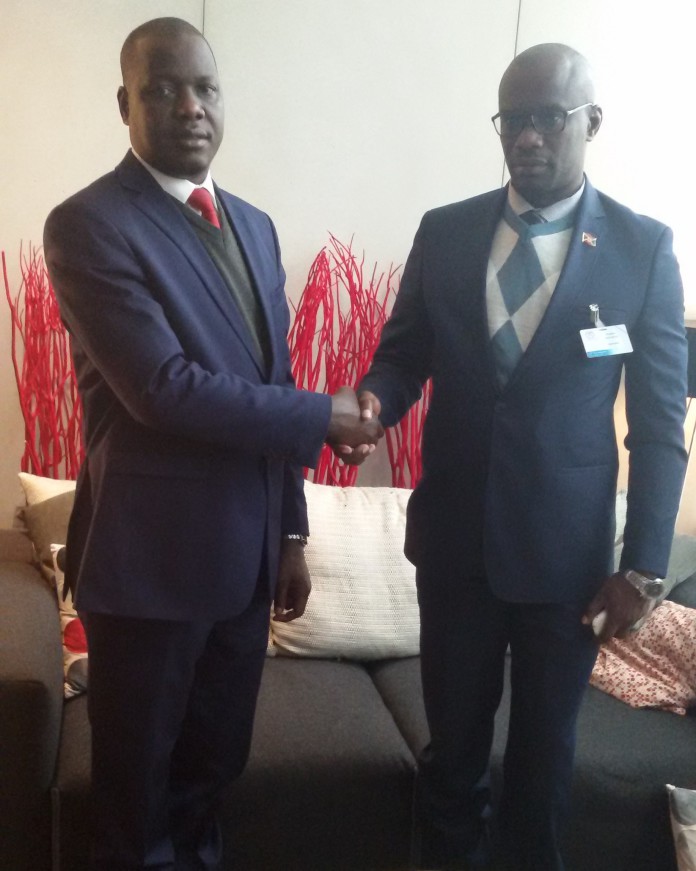
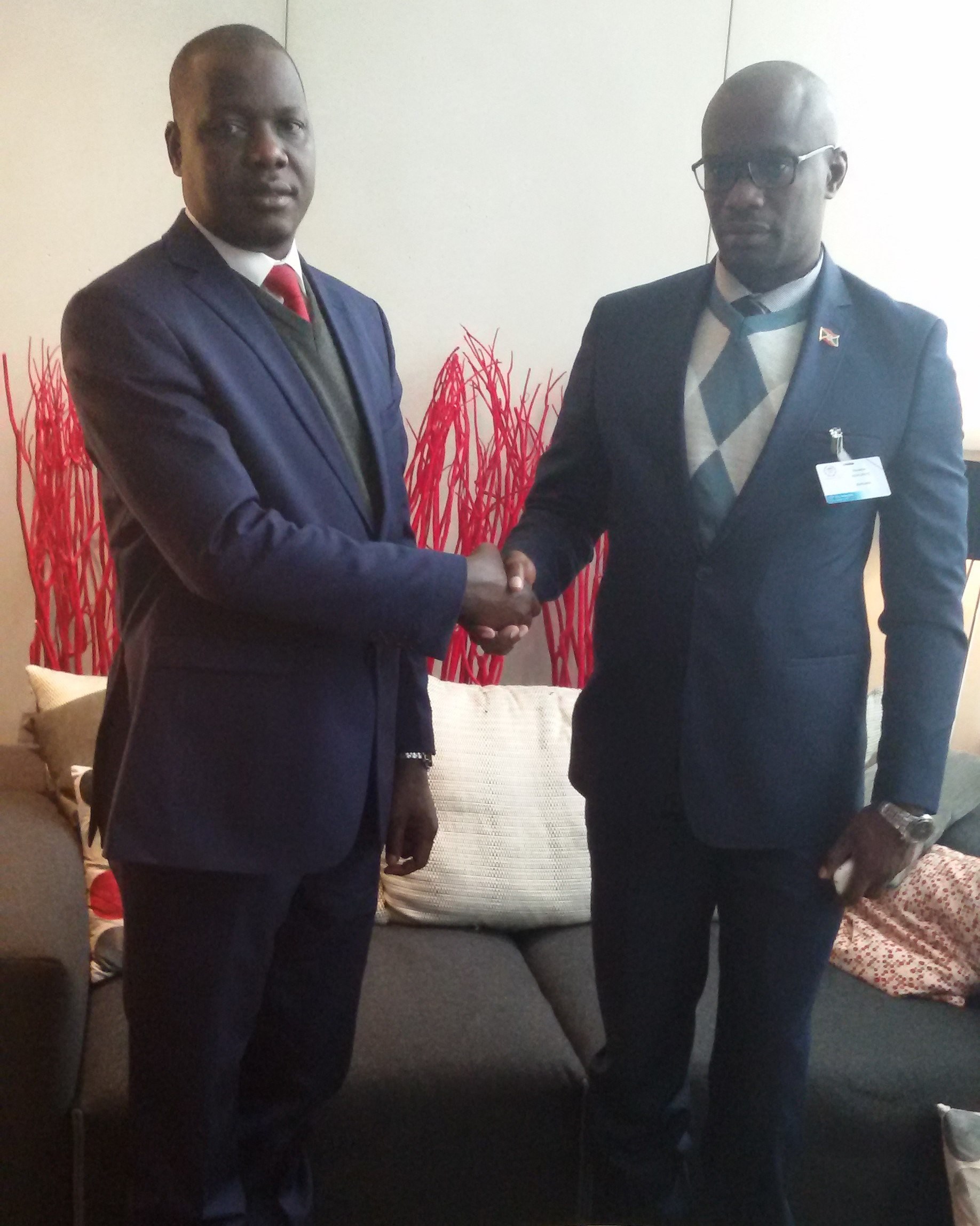
East African Community Secretary General Amb. Dr Richard Sezibera receives credentials from the South African High Commissioner to Tanzania and the East African Community, Amb. Thamsanqa Mseleku (right), at the EAC Headquarters in Arusha, Tanzania.
South Africa’s High Commissioner to Tanzania and the East African Community Thamsanqa D. Mseleku, has said his country was committed to the creation of strong and viable Regional Economic Communities (RECs) across the entire continent, adding that RECs were the surest way to achieve the founding fathers’ dream of Pan-Africanism.
Amb Mseleku said South Africa was keen to ensure that African countries build on the gains made in regional integration, democratisation, economic growth, good governance, security and political stability.
While presenting credentials to the EAC Secretary General Ambassador Richard Sezibera, Amb Mseleku noted that while Africa had made significant gains in these areas, there were still major challenges to be surmounted citing the situations in Burundi, South Sudan, the Central African Republic and Somalia.
East African Community Secretary General Amb. Dr Richard Sezibera receives credentials from the South African High Commissioner to Tanzania and the East African Community, Amb. Thamsanqa Mseleku (right), at the EAC Headquarters in Arusha, Tanzania.
 “On the economic front, there are sudden problems emerging in the world which have a negative impact on African economies most of which are mainly resource based,” he said.
The envoy said his country was open to increased cooperation and partnerships with the EAC, which he described as Africa’s fastest growing economic bloc.
In his remarks, Dr Sezibera hailed Amb. Mseleku on his appointment as South Africa’s High Commissioner to the EAC.
 
“We consider South Africa as a very strong partner of the EAC. South Africa is a strong leader in terms of Pan-Africanism. South Africa’s leadership cuts across regional economic blocs and countries,” said Dr Sezibera.
Dr Sezibera said the EAC was trying to form a Political Federation as its contribution to Pan-Africanism, the realisation of which he said would reverse the negative legacy of colonialism on the continent.
 “We have a Customs Union, a Common Market and are working towards the attainment of a single currency for the region by 2024. We are also working together with the South African Development Community and the Common Market for Eastern and Southern Africa to create a free trade area and to make it work,” said the SG, adding that he looked forward to South Africa providing leadership during the tripartite negotiations.
He said that for regional integration to succeed, big economies must be willing to make sacrifices more because in the end they will be the biggest beneficiaries.
“There will be a temporary loss but big economies like South Africa, Kenya and Egypt will inevitably gain more in the end,” he said.
He also praised South Africa’s efforts in trying to mediate a peaceful resolution to the conflict in Burundi and South Sudan.
Stories Continues after ad

Shs70bn for fallen soldiers’ children

PRESIDENT M7 ADDRESSING CHILDREN OF FALLEN HEROESAT NAMBOLE STADIUM

The government has earmarked 70 billion shillings to help the children of fallen soldiers.

The President was addressing 2000 children of fallen soldiers at Namboole Stadium, whom he assured of support to improve their welfare.

He also said government will ensure that they access the Youth Livelihood funds under Ministry of Gender, Labour and Social Development and directed the Permanent Secretary Mr Pius Bigirimana to explain to them more about the program.

PRESIDENT M7 ADDRESSING CHILDREN OF FALLEN HEROESAT NAMBOLE STADIUM

Mr Museveni further assured the children that government will support them since the Uganda Peoples Defence Forces (UPDF) has the records of their parents.

He also urged them not to squander their lives but utilize the opportunities availed to them to transform their lives.

“The most important thing is that you should look after your life. Don’t drink, don’t involve in promiscuity because your life is wealth. If you are alive, other things will come. Please look after your health, be disciplined and utilise all the opportunities the government will give you and we shall support you,’’ Mr Museveni said.

He said that government would find ways of helping those whose parents did not register ‘as they are all Ugandans’.

The President said he was happy to see that the youth are organized and called on them to work together.

“I’m happy to see that you are organized. If you are organized, it is easy to address your issues,’’ he said.

The State Minister for Defence General Jeje Odongo thanked the President for coming to share with the children of the fallen comrades.

Maj Gen Wilson Mbadi, the Joint Chief of Staff said the UPDF will continue to interact with the children of the fallen comrades through encouraging them to join the forces and added that the army would follow up on payment of the survival benefits to the families and also help them access youth livelihood funds.

Stories Continues after ad