Stanbic Bank
Stanbic Bank
22.7 C
Kampala
Stanbic Bank
Stanbic Bank
Home Blog Page 2284

Mbabazis invited for NRM conference


Former National Resistance Movement Secretary General John Patrick Amama Mbabazi and his wife Jacqueline, the NRM Women’s League chairperson have been invited to attend the party’s delegates conference slated for October 30 and November 2.

According to NRM Deputy Secretary General Richard Todwong, Mr Mbabazi has been invited in his capacity as the Member of Parliament for Kinkizi West constituency, elected on the NRM party ticket.

Mbabazi, also a former Prime Minister, is aspiring to become President after falling out with his party chairman and fellow presidential contender Yoweri Museveni.

Both men have been cleared by the Electoral Commission to contest for the presidency in the 2016 elections alongside Dr Warren Kizza Besigye Kifefe of the Forum for Democratic Change (FDC) party.

It is not clear whether Mbabazi will attend the said conference that will also see members endorse Museveni as NRM flag bearer, but sources intimated to the Eagleonline that the former NRM SG might not honour the invitation.

According to the source, Mbabazi is already deeply entrenched in his new alliance, gained when he joined opposition pressure group The Democratic Alliance (TDA), where he contested for flag bearer with Dr Besigye and former Vice President Professor Gilbert Balibaseeka Bukenya.

Prof Bukenya has since decamped to support Museveni, while Mr Mbabazi is enjoying the TDA support, orchestrated most by the Democratic Party (DP) and its President General Norbert Mao.

Stories Continues after ad

Suruma, Odoki recommended for Makerere Chancellorship

Dr Ezra Suruma

Kampala-Makerere University Council has recommended former Finance Minister and Economic Planning Dr Ezra Suruma and Former Chief Justice Benjamin Odoki to president Museveni for appointment of Makerere University Chancellor.

President Yoweri Museveni who doubles as the Visitor of public universities, Makerere inclusive will have to choose between the two fine gentlemen.

Dr Ezra Suruma
Dr Ezra Suruma

The search team led by Chairman of the Makerere University appointments committee Bruce Balaba received four nominees and these were Dr. Suruma, Prof Charles Olweny, formerly Vice Chancellor Uganda Martyrs’ University Nkozi, Justice Odoki and former National Council for Higher Education Executive Director, Prof A.B Kasozi


ustice Benjamin Odoki

The search team is guided by the Universities and Other Tertiary Institutions Act of 2001. A chancellor is a none executive director of the university with no veto powers as he only presides over graduation ceremonies. If any of the two is picked, he will replace Prof. Mondo Kagonyera who has served his two none renewable terms.


Stories Continues after ad

NRM Treasurer involved in accident

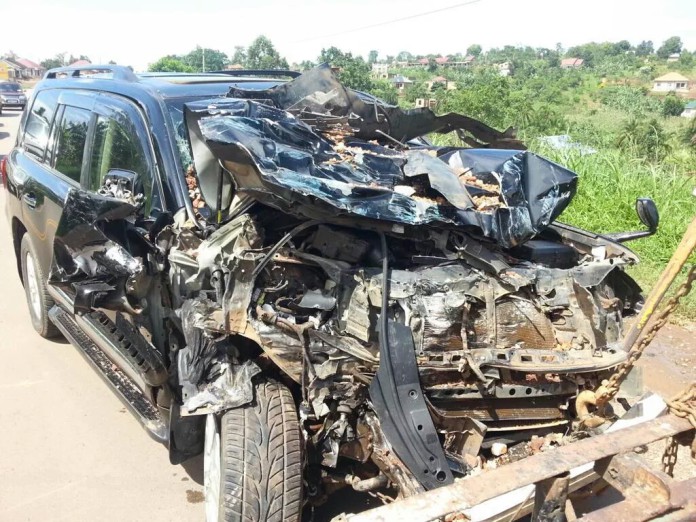
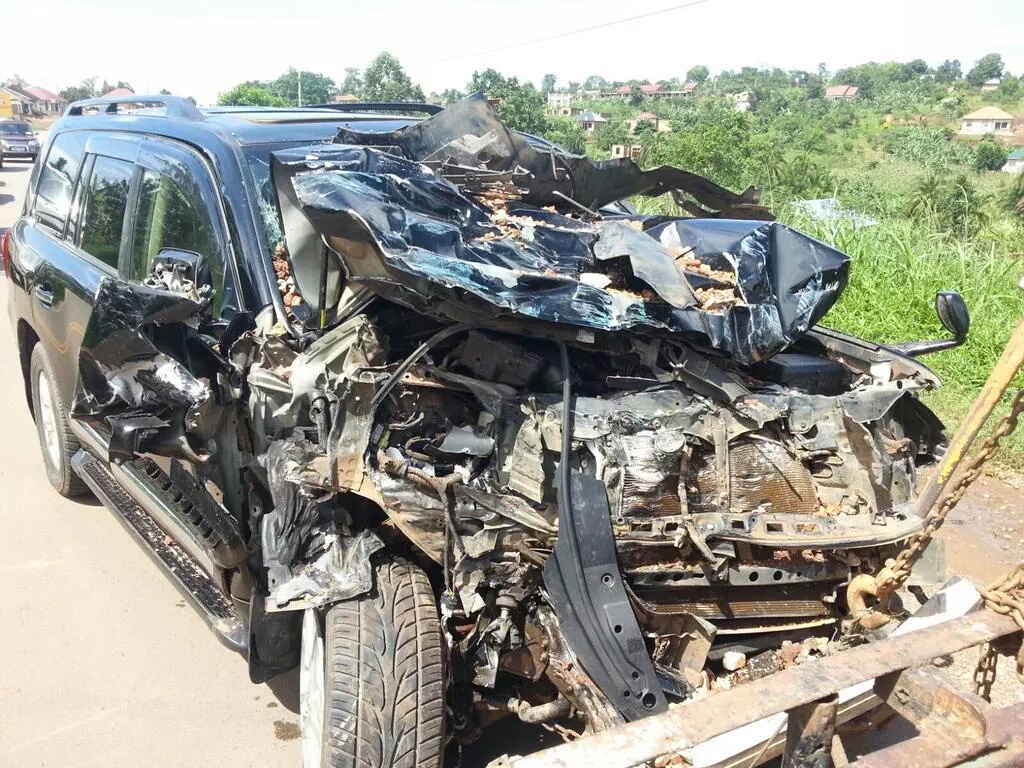
The NRM National Treasurer Rose Namayanja Nsereko has been involved in an accident and fractured but her life is out of danger.

A team of medical doctors led by Dr Ben Mbonye, have confirmed that her life is out of danger despite the fracture on her upper thigh.

Hon Namayanja
Hon Namayanja

Dr Mbonye said Namayanja’s mother, the bodyguard and driver are also safe although they sustained several injuries.

The Prime Minister Dr Ruhakana Rugunda, NRM National Vice Chairman Moses Kigongo and NRM Deputy Treasurer  Kenneth Omona are among the many dignitaries that paid her a visit at Nakasero Hospital.

IMG-20151020-WA0051
The NRM National Treasurer, Rose Namayanja Nsereko, was involved in a road accident at Kigogwa Trading Centre, Kampala-Nakaseke Rd.

The Party Communications Officer, Rogers Mulindwa, has however requested the public not to visit her until tomorrow as the medical team continues to asses her condition.


Stories Continues after ad

Burundi journalist held in DRC

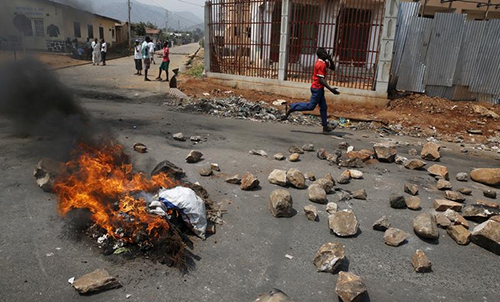
A man runs past a burning barricade on a rock strewn street in Bujumbura's Niyakabiga district on Presidential election day in Burundi, July 21, 2015. A policeman and an opposition official died in violence marring the start of Burundi's presidential election, already hit by opposition boycotts and protests over President Pierre Nkurunziza's decision to run for a third term. REUTERS/Mike Hutchings - RTX1L6Z1


A journalist who fled Burundi after the attempted coup against President Pierre Nkurunziza on May 13 is being held by authorities in the Democratic Republic of Congo, without charges.

According to the Committee to Protect Journalists (CPJ) Egide Mwemero, who works for Radio Publique Africaine, was arrested in Uvira in eastern Democratic Republic of Congo on October 13 after fleeing from Burundi following violence that erupted when President Nkuruunziza announced he would run for a third ‘unconstitutional’ term.

In a release earlier today the CPJ says Mwemero was arrested together with two Congolese reporters, Manzambi Mupenge and Lucien Kanana, who work with local community station Radio le Messager du Peuple, which had partnered with Mwemero’s station to broadcast the latter’s show, ‘Humura Burundi’ on its airwaves. Mupenge and Kanana were released two days later, but the Congolese station that was airing the show was ordered by the authorities to stop broadcasting it on October 9.
‘Unrest in Burundi earlier this year, in which several radio station were forced off air and had equipment damaged, forced Radio Publique Africaine to stop broadcasting from Burundi,’ the CPJ says in the release, and adds that Bob Rugurika, the managing director of Radio Publique Africaine had confirmed that Mwemero was still in custody.

“Radio is a vital information source for people in this region and journalists should be allowed to do their jobs,” said CPJ Africa Program Coordinator Sue Valentine. She added: “We are extremely concerned that Egide Mwemero is being held without any public disclosure of charges against him and we urge Democratic Republic of Congo authorities to release him immediately.”

According to reports DRC President Joseph Kabila, who is himself trying to vouch for a third unconstitutional term and participate in the elections in November 2016, has maintained good relations with Burundi.

‘Journalists in the Democratic Republic of Congo are often faced with a hostile environment, and the government has attacked press freedom in an effort to silence critics or dissenting opinions, the CPJ says. In January, authorities briefly blocked Internet and cellphone service throughout the country; in March during a pro-democracy rally, government forces arrested about 30 individuals, several of whom were journalists covering the protest and some of whom reported being assaulted’ the CPJ release adds.

The journalists’’ rights lobby group says efforts to get comments about the arrest of Mwemero from the DRC ministers for communications, human rights, and justice were futile.


Stories Continues after ad

Tanzania seeks adjournment of EALA ‘Forest Bill’ over elections

The Tanzanian government recently sought the adjournment of the Forest Management and Protection Bill, saying it wanted to be given more time to make an input.
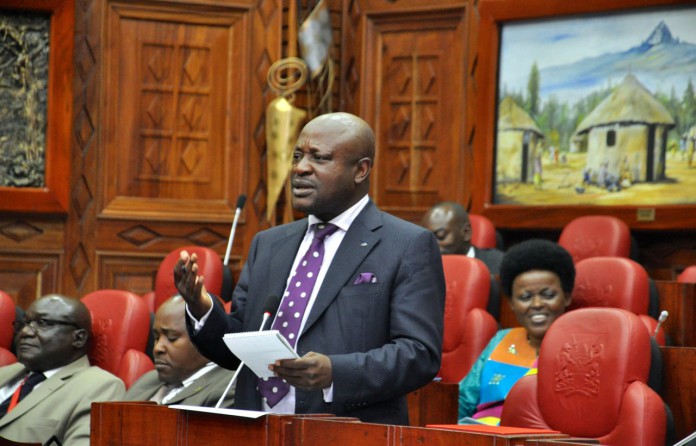
The adjournment followed the successful Motion tabled by the Chair of EAC Council of Ministers, Hon Dr Harrison Mwakyembe, who said his country would hold elections (on October 25) and that it was necessary that the debate be put on hold until such time the incoming Government is in place to make input. 
The EAC Forestry and Management Protection Bill, 2015 hopes to promote the development, protection, conservation, sustainable management and use of the forests in the Community especially trans-boundary forests ecosystems, in the interest of present and future generations. 
DSC_0738
It further wants to espouse the scientific, cultural and socio-economic values of forests and harmonise national forest laws.
The adjournment was supported by the majority of members, with a few dissenting voices saying the practice should be discouraged.
 “We committed to the EAC as Partner States and not based on tenure of sitting Governments, it is important that the records of the House state so”, Martin Ngoga (Rwanda) said.
Judy Pareno (Kenya) told the Assembly to check the emerging trend of the Council of Ministers taking over Bills and then stalling them over periods of time, citing the EAC Disaster Risk Reduction and Management (DRR) and the EAC Cross-Border Legal Practice Bill as examples.
“The Executive should not be seen to be torpedoing the function of the Assembly”, she noted, while Dora Byamukama (Uganda) also lamented that the EALA should not stall when there are elections in Partner States saying it would set a bad precedence.
Adam Kimbisa (Tanzania) and Mukasa Mbidde (Uganda) also voiced support for the Bill, whose mover is Hon Christophe Bazivamo (Rwanda).
 
The Speaker Daniel F Kidega (Uganda) ruled that the debate on the key Bill be brought back on the Order Paper when the Assembly resumes in Kigali, Rwanda in November.
Also put on hold was debate on Motion for a Resolution to ratify and deposit the required instruments of the amended Protocol to the Constitutive Act of the African Union.   The import of the Resolution whose mover is Mike Sebalu (Uganda) is to enable Pan African Parliament to achieve the important pillar of legislation. 
Dr Odette Nyiramilimo (Rwanda) moved the motion to adjourn debate to enable Members acquaint themselves with the said Protocol.


Stories Continues after ad

Algeria to support UPDF to counter terrorism


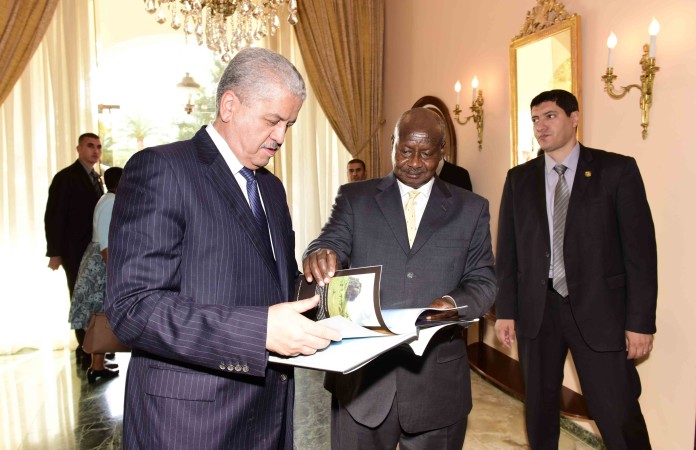
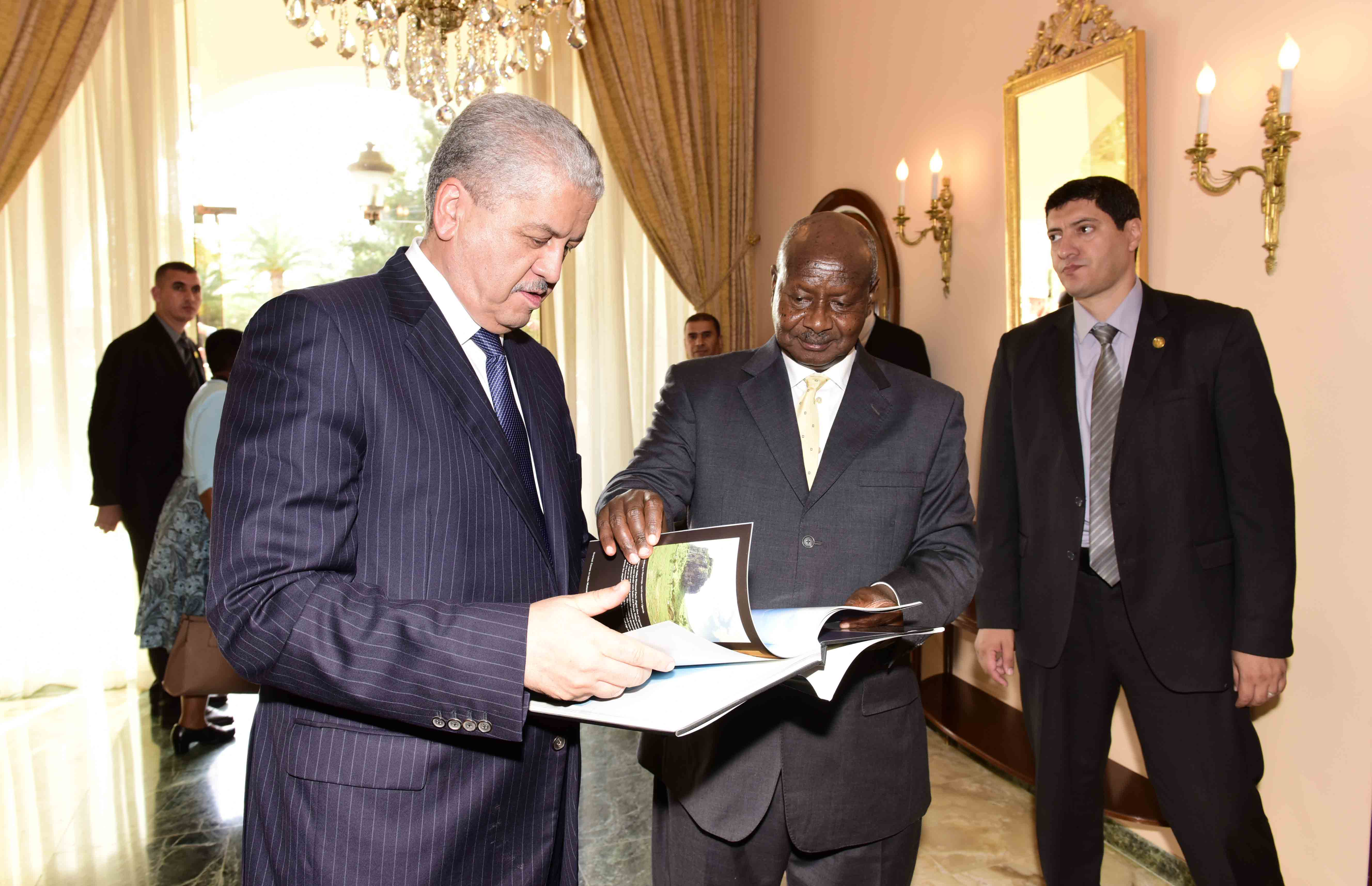
President Yoweri Museveni and the Algerian Prime Minister Abdelmalek Sellal have discussed military cooperation between their two countries, with Sellal promising that Algeria will help support the Uganda Peoples Defence Forces (UPDF) in counterterrorism and peacekeeping operations.

At a meeting held at the Zeralda State Residence, in the Capital Algiers Sellal hailed President Museveni’s efforts in finding solutions in South Sudan and Somalia and pledged additional support to stabilize the region and bring back security and development.

The two leaders also discussed military cooperation in Africa to ensure African unity, sovereignty and stability, with focus mainly on the security situation in the Sahel Region, Tunisia, Libya and the migration crisis, South Sudan and Somalia.

algier PM2

Meanwhile, President Museveni has called for the immediate resumption of the joint Ministerial Commission between Uganda and Algeria to push for the engagement of the business sector and table the trade proposal for tea, coffee, maize and maize products and milk to boost trade between the two countries.

While meeting the Algerian Prime Minister, the two leaders agreed on the proposal to bring the business communities of both countries together to exploit the economic potential of the two countries.

“I am happy to be here and I start with business. I want to sell a lot of agriculture products here especially, tea and coffee. We have a lot of tea. And for coffee, after a long time, we are starting to add value through processing. Nescafe have been buying our coffee at a dollar per kilo and selling at US$15 a kilo in London. We lose jobs and money. But when we process we sell directly,” he said.

algier PM3

Prime Minister Sellal noted that the visit by President Museveni is a great opportunity to make and update relations between the two countries in order to boost development cooperation.

“From the economic view, there are not great deals of trade exchanges. We look forward to building economic relations. We have some importers of coffee, tea and cocoa from Uganda but this is an opportunity to increase more trade,” he said.

Mr Sellal said his country has great opportunities in promoting cooperation in the Agriculture and fisheries sector and called for the biannual cooperation commission to meet and look at the possibilities of cooperation and exchange.

Uganda’s exports to Algeria are low with the major products being cocoa, coffee and tea. Uganda’s imports from Algeria are less than USD$ 1m per annum.

Stories Continues after ad

Museveni, Bouteflika discuss Libya crisis

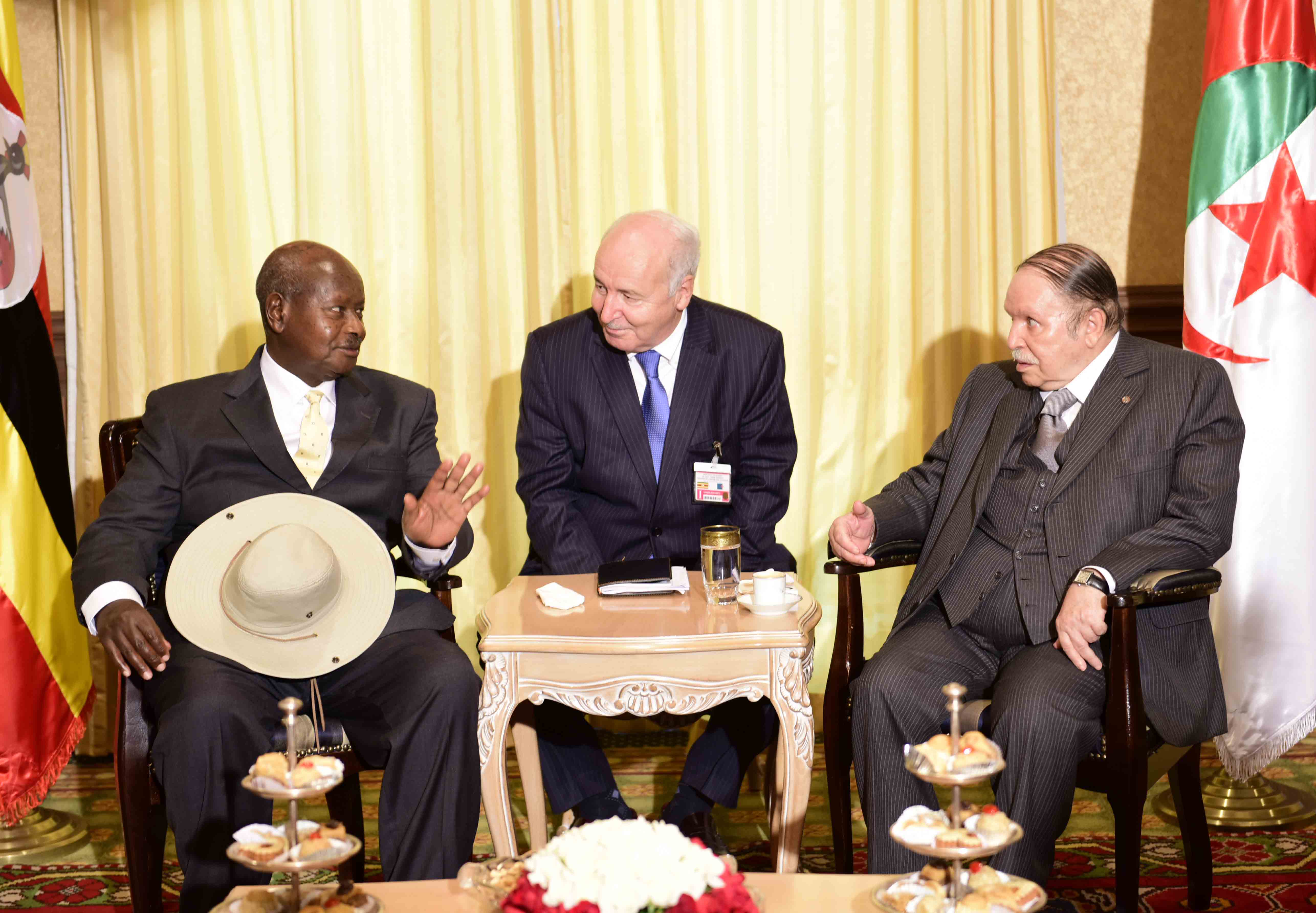
President Yoweri Museveni and his Algerian counterpart Abdelaziz Bouteflika have held a bilateral meeting during which the two discussed bilateral interests and other matters on the African continent including the crisis in Libya.
The two leaders also discussed about cooperation in education, vocational training, defense and security and in the oil and gas sector.
Speaking shortly after their meeting President Museveni, while addressing the press, referred to President Bouteflika as a freedom fighter and that the two had discussed the security situation in North Africa particularly on how to bring about lasting peace in Libya.
Mr Museveni further said that he, together with his host, had discussed ways of enhancing trade between the two countries and cooperation in the areas of energy especially in the oil and gas sector and in human resource development through exchange of scholarships and training programmes.
Presidents1
Currently trade between Uganda and Algeria is minimal and this can be attributed to the limited infrastructure connectivity between the two countries.
Uganda’s exports to Algeria are low with the major products being cocoa, coffee and tea, while Uganda’s imports from Algeria are less than US$ 1m per annum. In 2011 and 2013 the imports rose to approximately USD$ 2m as a result of sugar imports during the time when Uganda requested for stay of EAC CET application on sugar imports.
Presidents2
The major industries of Algeria are agriculture, cement, clothing, fertilizers, food processing, iron and steel, mining, machinery, oil and natural gas production and refining, petrochemicals, textiles, transport equipment and wine production.
Main exports are crude oil, dates, fruit and vegetables, natural gas, petroleum products and wine. In 2010, Algeria was named the fourth largest crude oil producer in Africa and the eighth largest global producer of natural gas.
Stories Continues after ad

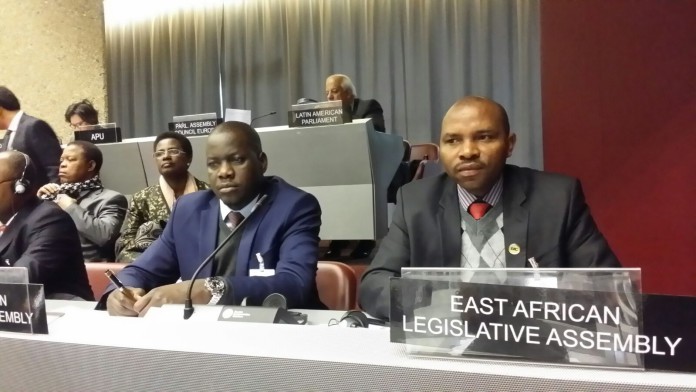
EALA Speaker in Geneva for IPU meet

The 133rd Inter-Parliamentary Union General Assembly has commenced in Geneva, Switzerland with sustained calls for fairer and more humane migration.
 
The IPU General Assembly brings together over 50 Speakers and 600 Members of Parliament from 130 Parliaments globally and over the next 5 days the delegates will discuss key thematic areas on migration under the ‘the moral and economic imperative for fairer, smarter and more human migration’.
 
Addressing the Assembly, EALA Speaker Daniel Fred Kidega said that migration was a predominant and persistent characteristic of humanity, and that it occupied a central place in human history and current affairs.
 
The Speaker pushed for the uptake of the Political Federation in the East African region saying such move would demystify the refugees’ problem.  “At worst, under the Political Federation, we can only be talking about internally displaced persons and not refugees,” he remarked.
 
He urged the delegates to push for more humane and smarter migration.
‘As Parliamentarians, we need to focus on the migration challenge by probing the root causes of international migration, particularly global processes that are unprecedented in their power to encourage the crossing of borders’, he said.
He also decried instability in EAC neighbouring countries like Somalia, South Sudan, the Democratic Republic of Congo (DRC) and Burundi, saying it had led to the escalation of the refugee problem in the region.
 
Speaker Kidega is leading a delegation of EALA consisting of Straton Ndikuryayo and two EALA staff, and the top leadership of the Parliaments of Uganda, Rwanda, Kenya and Burundi are in attendance while Parliament of Tanzania is represented by senior staff.
 
The issue of humane migration is taking central stand following the recent Syrian crisis among others.  According to the IPU, although the more than 230 million migrants, refugees and asylum seekers in the world today represent a small percentage of the global population, rising xenophobia combined with the ongoing impact of the global economic crisis continue to warp any reasoned debate and policy response on the migration phenomenon.
 
In his speech IPU President Hon Saber Chowdhury said it was necessary for IPU to consider better migration in order to impact on people’s lives. He noted that IPU and the UN were working closely together and that more collaboration was expected in the coming year.
 
The Director of ILO said that migration was a major trend given that 1 in every 7 persons globally are migrating.   He cited degradation of environment, instabilities, demand for labour and instabilities as some of the reasons for migration.  He maintained that Parliaments can also pass legislation on diaspora and ensure policies on the same are effected.
 
The 133rd Assembly has also considered and approved the re-admission of Fiji into the Inter-Parliamentary Union (IPU) in a move welcomed by the organization as a significant step forward in ongoing efforts to cement democracy in the country and in IPU’s engagement with parliaments from Pacific Ocean Island nations.
 
The readmission at Fiji today increases the Organization’s membership to 167 national parliaments. Fiji had first joined IPU in 1997. However, a military coup in 2006, the fourth since 1970, had led to the dissolution of parliament and Fiji’s formal expulsion from the Organization in 2007.
 
The 133rd Assembly will also convene several IPU bodies including the Meeting of Women Parliamentarians, IPU’s Forum of Young Parliamentarians, the Committee on Middle East Questions as well as the Committee on the Human Rights of Parliamentarians. Cases involving the violations of the human rights of nearly 120 MPs from 21 countries will be examined by the IPU Committee, which will also hold up to 12 hearings with parliamentary authorities, victims and others who could assist in investigations.
Stories Continues after ad

Machar to announce his return to Juba as UPDF pullout

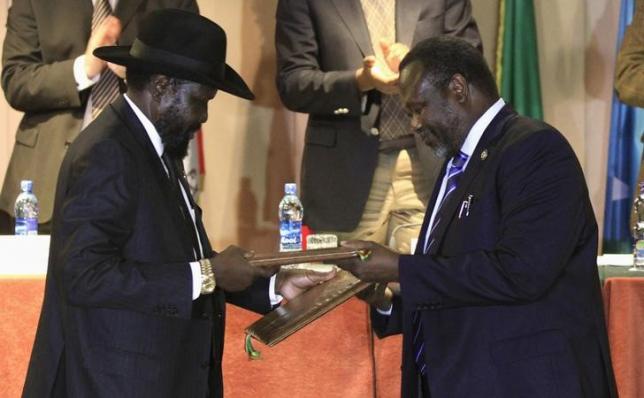
South Sudan's President Salva Kiir (L) and First Vice President Riek Machar exchange documents at a past function in Addis Ababa, Ethiopia.
KAMPALA: South Sudan rebel leader Riek Machar is on Sunday expected to announce his return to the capital Juba, one week after Ugandan troops announced they were pulling out of the war-ravaged country.
The fallout between Machar and President Salva Kiir followed accusations leveled against the former, of plotting a coup, accusations that resulted in a war that has killed thousands and left millions displaced. 
Under an agreement signed by the warring parties in Addis Ababa on August 26, 2015, Dr Machar is recognized as the First Vice President of South Sudan but it is not clear whether his planned return to is accordance with the agreement.
But according to a statement issued by the rebels’ deputy spokesperson Dickson Gatluak Jock on Saturday, Dr Machar will make the announcement on return from the United States where he attended meetings with top US officials on the sidelines of the UN General Assembly meeting.
“The briefing will be on when the first team of the chairman [Machar] will be going to Juba,” Galuak Jock said.
Mr Galuak Jock also says Dr Machar will also talk about the security arrangements in South Sudan and give his position on the proposed creation of 28 new states by President Salva Kiir.
The UPDF deployed in South Sudan in 2013 December to ostensibly protect Uganda’s interests but last week government announced the army’s withdrawal.
The UPDF withdrawal is in compliance with the Addis Ababa Agreement that directed all foreign troops in the world’s youngest nation to withdraw within 45 days.
Stories Continues after ad

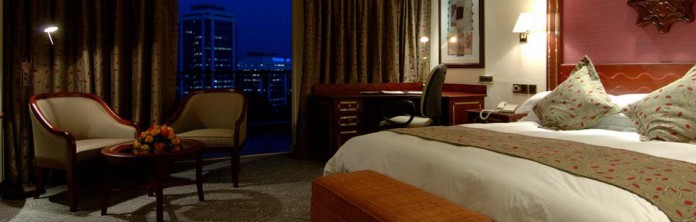
Could hotels in Uganda be spying on you as you enjoy their comfort?


Kampala: There are twenty one hotels in Uganda that reportedly colluded with government to hack and spy on potential opponents through computers, phones or any communication device.
The Serena Kampala, Sheraton Hotel, Hotel Africana, Speke Resort Munyonyo, Imperial Royale, Emin Pasha, Grand Imperial, Tourist Hotel, and Fairway Hotel are some of hotels named in a just-released report titled ‘For God and My President: State Surveillance in Uganda by Privacy International. Others named include Hotel Triangle, Golf Course Hotel, Protea Hotel, Mamba Point, Equatorial Hotel, Cassia Lodge, Travellers Inn, Imperial  Resort Beach Hotel; Imperial Botanical Golf View Inn, Flight Motel and Brovad Hotel in Masaka.
In the 80-page report Privacy International says government, through an operation code-named ‘Fungua Macho’ (open eyes) reportedly carried out surveillance on opposition politicians, journalists and people deemed a threat to state security after the 2011 elections.  
According to the report, through the Fungua Macho operation, the high-end hotels in Kampala, Entebbe and Masaka were reportedly compromised as part of the spying operation. These hotels, the report says, were specifically selected because they were known to be meeting points for politicians and journalists and also as places known for hosting political events.
How it is done
To do its work, the report says, government bought a computer virus called FinFisher that it used to corrupt electronic gadgets of its targets.
FinFisher access points were reportedly installed on the Wi-Fi networks and/or business centers of these hotels and according to Privacy International, it would take less than five minutes for the FinFisher malware to be inserted directly onto a phone or computer.
For particularly security-savvy targets, FinFisher can be disguised as a PDF, word processing document or other file that the target will inadvertently download and execute; or as a fake website which, when visited by the target, will download FinFisher onto the target’s device, the report states.
A device can also be infected by connecting to a fake network access point. This can be a Wi-Fi log-in screen disguised as an ordinary hotspot portal. FinFisher is designed to activate with a simple inadvertent click by the user. It is designed to bypass most antivirus programs.
In the report, Privacy International notes that it visited all 21 hotels in 2015 and found that computers in two-thirds did not protect administrator privileges, meaning that covert installation of a program onto the desktop computers would have been a simple task.
What is worrying, the report notes, is that many hotels have collaborated either consciously (overt penetration) or unconsciously (covert penetration).
“The potential collaboration of hotels with security services has serious implications. Guests and visitors pay expensive rates for physical security, comfort and privacy that these largely high-end establishments claim to offer,” the report notes.
The Hotels respond
In letter to Privacy International, a copy of which Eagle Online has seen, Serena Hotel General Manager, Anthony Chege, describes the contents of the report as ‘allegations that are very disturbing and untrue.”
“Serena Hotels Africa is a company of integrity that values and protects that privacy, safety and security of all clients staying or visiting our properties.
“Neither the undersigned nor any of my staff is aware that the Ugandan military (UPDF) and the police were engaged in a surveillance operation specifically targeting the organizers of the walk to work protests as well as parliamentarians, intelligence officials and media house during 2011 and 2012 or at any time,” the letter reads in part.
On behalf of Speke Resort Munyonyo, Sudhir Ruparelia, in a letter to Privacy International, wrote: ‘totally false and fabricated lies that we have allowed any forms of surveillance knowingly’.
“This is not the policy of the Group nor any of its entities unless it is prescribed in the laws of Uganda which I do not have knowledge whereby government has requested any such thing.
“It looks like you and your charity is dealing in rumours and may I suggest you correct your records or give us proof and or evidence for your accusations,” Sudhir’s letter reads in part.
Stories Continues after ad