Stanbic Bank
Stanbic Bank
29.6 C
Kampala
Stanbic Bank
Stanbic Bank
Home Blog Page 516

A Private Members Bill on Startup to be introduced in Parliament

The national stakeholder consultative meeting organized by Private Sector Foundation Uganda, Start-up Uganda, Mastercard Foundation and the Innovation Village at Imperial Royale hotel

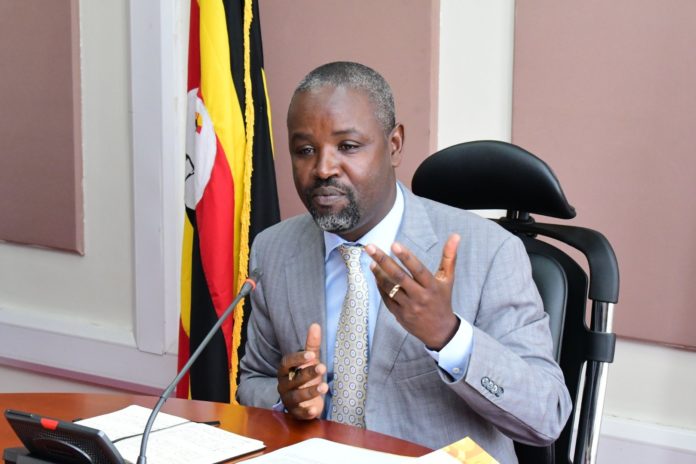
Youth MP for Northern Uganda Boniface Okot is set to table a private member’s bill on startups in the country.  

This announcement was made during the national stakeholder consultative meeting organized by Private Sector Foundation Uganda, Start-up Uganda, Mastercard Foundation and the Innovation Village at Imperial Royale hotel during the commissioning of the Regulatory Impact Assessment report on the challenges affecting the start-up ecosystem in Uganda.

In his remarks, Okot said, the Start-up Act is one of the progressive legislative interventions and incentives for young people to actively participate in matters of socio-economic transformation. “We have seen countries like Nigeria whose start-up ecosystem have leading entrepreneurship hubs in the continent thanks to a conducive start-up regulatory environment.”

Okot said, “Ugandan entrepreneurial ecosystem consists of young people whose businesses have failed due to lack of capital, stiff competition amidst declining demand, high cost of inputs, Covid-19 disruptions, and heavy taxation. The private member’s bill on startups to be drafted will cater for regulation, tax incentives and relief financing that is required to foster business resilience, increase economic activities and provide for innovative interventions that will promote sustainable growth of start-ups.”

Speaking on behalf of the Permanent Secretary, Zackey Kalega, the commissioner for the Ministry of Trade, Industry and Cooperatives said, the Regulatory Impact Assessment report will provide strategic direction to interventions to unlock the existing social, economic, and regulatory bottlenecks hindering the establishment, growth, and sustained performance of established start-ups in Uganda.

 “The RIA report will provide evidence-based guidance on the right course of action to pursue the private member’s bills. Beyond designing interventions, we ensure the implementation of these interventions especially in ensuring that the ecosystem is conducive,” Kalega said, adding that the National Development Plan III aims to strengthen the private sector to create the much-needed employment opportunities for the population and drive social economic transformation.

 Eric Ssempambo, Investment Specialist Business Environment at Private Sector Foundation Uganda said, “the deliberations for today’s consultative meeting will greatly contribute towards guiding the technical working team in the right direction and interventions which the RIA could take.

“We appreciate the steps taken by  Okot to move a private members bill on Start Ups to parliament. As representatives of the private sector, we remain committed to continuously pursuing the formulation and implementation of the Startup Act and I believe with collaboration, we will jointly make this ecosystem a better place for establishment, innovation, and growth.”

Further noting, Hellen Mukasa, LegalTech Lab Lead at Innovation Village said, the startup Act will be very instrumental in defining what a start-up is, provide the creation and management of a National Start-up Database, provide comprehensive incentives for startups, convene the disintegrated startup ecosystem player, and regulate venture capitalists and investor interactions with startups. 

“If enacted, the Startup Act will foster the growth of innovation, attract increased venture capital investment, better global innovation index score, create employment opportunities for the youth and social economic benefits from innovative products and services,” Mukasa said.

Stories Continues after ad

Express announce Shs1.5 billion sponsorship deal with BetSure

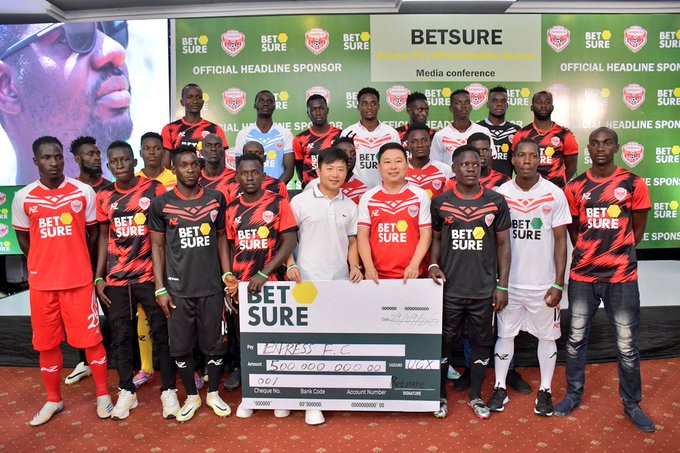
Uganda Premier League side Express FC have announced a land-mark partnership that will see online gaming platform BetSure become the club’s new headline sponsor for the next three seasons in a deal worth Shs1.5 billion.

The deal which was unveiled at an event held at Serena Hotel, becomes the biggest in the Club’s history and will see the BetSure logo feature on the front of all of the Club’s senior teams’ playing shirts and training wear, starting with Saturday’s first-team fixture with UPDF.

It was revealed that the deal will be Shs500 million each year, with an option of renewal following expiry.

The club CEO, Isaac Mwesigwa said; “The club should expect Shs400 million in cash, and there are many other tangible benefits coming like replicas, merchandise and we are happy about this sponsorship in these tough economic times.”

Speaking on behalf of the Club chairman Kiryowa Kiwanuka, Mr. Ssubi Kiwanuka (an Express FC board member) said “We call out our fans to come in numbers. BetSure is here because of them, this package is big but we’re going to utilise it fully and to players this is our opportunity to be great and there will no be other chance, Express FC is going to grow stronger and stronger.”

According to the deal, Express will receive Shs700 million if they win the league and Shs600 million if they come second.

BetSure country representative Mr. Ronald Mugulusi said; “The partnership will run for the next three years and it will have an option to increase to 600,000,000 shillings if the club finishes 2nd next season, 700,000,000 shillings if it finishes 1st and after 3 seasons there is a chance that we will extend.”

BetSure is a Pan-African global betting company based in Dubai, currently in 5 African countries; Uganda, Nigeria, Kenya Tanzania and Ghana. This is not the brand’s first venture into local Ugandan sports as it has sponsored local community based tournaments.

Stories Continues after ad

Byabashaija reshuffles prisons officers

The Commissioner General of Prisons Dr. Johnson Byabashaija

The Uganda Prisons Commissioner General, Dr. Johnson Byabashaija, has transferred several senior officers.

In a notice dated September 28, Byabashaija said the appointments and transfers take immediate effect.

Mr. Anatoli Biryomumaisho, Assistant Commissioner Education has been appointed Ag. Commissioner in charge of Rehabilitation and Reintegration Services. He takes over from Ms. Elizabeth Nanfuka, Commissioner of Prisons, whose Contract appointment has expired.

Ms. Madina Nabaggala, SP, Prisons Headquarters takes over the Education Division, which will be under the Department of Rehabilitation and Reintegration.

Mr. Edward Mulabya Muwatwa, SP, Officer in Charge, U.G. Prison Farm Kijjumba is appointed Officer in Charge, U.G. Prison Farm Odina, Kamuda Sub County, Soroti County, Soroti District. He is to open the Farm.

Mr. Raphael Ogwal, SP, Officer in Charge, U.G. Prison Ssaza, Masaka is appointed Officer in Charge, U.G. Prison Farm Awea in Awea Sub County, Ajuri County, Alebtong District. He is to open the Farm.

Mr. Adon Banshanga, ASP, U.G. Prison Farm Lugore is appointed Officer in Charge, U.G. Prison Farm Kijjumba in Mubende District.

Mr. Joel Othieno, ASP, U.G. Prison Ntungamo, is appointed Officer in Charge, U.G. Prison Ssaza, Masaka District.

Mr. Francis Asiku, CASP, U.G. Prison Farm Ruimi is transferred to U.G. Prison Mbale Main for duty.

Mr. Vanity Nyathirombo, CASP, U.G. Prison Mbale main is transferred to U.G. Prison Farm Ruimi for duty.

Mr. Amon Tusiime, CASP, U.G. Prison Kitalya mini-Max is transferred to U.G. Prison Farm Ruimi for duty.

Mr. Bernards Nuwagira,                P.0.II, Prisons Academy and Training School is transferred to Prisons Headquarters for duty.

Mr. Osbert Nowamani, P.0.II, U.G. Prison Mbale Main is transferred to U.G. Prison Ngora as Deputy Officer in Charge.

Stories Continues after ad

Museveni urges Emyooga beneficiaries to produce goods and save Uganda from importing

The President after meeting Emyoga Regional Coordinators at state House Entebbe.

President Museveni believes that if the Emyooga program is well managed with a clear strategy, it has the capacity to transform Uganda into a money economy.

Emyooga, a presidential initiative was rolled out in 2019 as part of the broad government strategy aimed at lifting at least 68 percent of Ugandans from subsistence to market-oriented production through wealth and job creation.

It is intended to support 18 categories among which include; market vendors, welders, taxi drivers, carpenters, boda-boda riders, women, performing artists and restaurant owners who come together in the form of Savings and Credit Co-operative Societies (SACCOs).

While meeting Emyoga Regional Coordinators at state House Entebbe, the President urged Emyooga beneficiaries to specialize and concentrate on their product so that they join the business of import substitution and export promotion in addition to just borrowing and returning the money.

“So that they stop us from importing. Where are the products? For instance, we shall say; Don’t import furniture anymore because the Emyooga people are now producing enough furniture for the country and they’re now beginning exporting to somewhere else,” Mr. Museveni said.

The President said SACCOs should not only be borrowing and returning but also developing that product the group is engaged in and then the government will have to market the product internally and externally.

The Minister of State for Microfinance and Small Enterprises, Haruna Kasolo Kyeyune, said although the program is intended to fight poverty which cannot be fought in a day, the team of coordinators deployed countrywide is engaged in continuous preaching to achieve the desired objective.

He said the program has been embraced countrywide.

“Even opposition Members of Parliament cannot miss when we are in their area because many beneficiaries have embraced the saving culture and are giving successful testimonies,” Minister Kasolo said, adding that a total of 4,114,200 Ugandans have embraced the saving culture and are actively mobilised in small associations and SACCOs (6,748) at parish level.

“As we speak today, a total of 72 billion shillings has been mobilized as savings courtesy of this program. Initially they didn’t understand it but now they feel it’s their program and are appreciating you,” Minister Kasolo told the President.

He further informed President Museveni that they intend to officially launch the program in November this year at Kololo Independence grounds where beneficiaries across the country will exhibit their products.

“We want you to see with your own eyes Your Excellency,” Minister Kasolo remarked.

Each Parish Sacco receives a revolving seed capital of 30 million shillings as startup fund and many have grown this fund to a tune of 300 to 400 million shillings and many are no longer going to money lenders to get credit, according to Kasolo.

He added that they have a proposal to elevate and upgrade the Microfinance Support Centre into a People’s Microfinance Development Bank where each Mwooga (sacco groups) will be a shareholder.

The executive director for the Microfinance Support Center-MSC, Mr. Peter Mujuni said the most exciting experience about the Emyooga is that it has stimulated the saving culture among the poor.

“Originally, we thought the poor cannot put money together but actually they can if they’re given good guidance and direction.We are excited about the saving experiences that we have seen in the rural communities,” Mr. Mujuni said, adding that the tremendous success has been registered in areas where they have had good leadership in the communities and SACCOs should be guided on picking the right leaders.

The Permanent Secretary Ministry of Finance, Mr. Ramathan Ggoobi said the ministry has observed that the performance of Emyooga has improved and they will continue supporting them.

The Emyooga initiative is financed by the Ministry of Finance, Planning and Economic Development through the Department of Microfinance. The Microfinance Support Centre Ltd (MSC) is responsible for the planning, management, budgeting, reporting and accountability of all funds disbursed for the programme, including disbursements to the groups.

The meeting was also attended by among others; the Deputy Executive Director of the Microfinance support centre-MSC, Mrs. Hellen Petronilla Masika, the Chairperson Emyooga coordinators, Mrs. Ritah Namuwenge and other regional coordinators some of whom gave successful testimonies about the performance of the program in their areas.

Stories Continues after ad

Tayebwa summons PM, Ministers over human rights violations

Deputy Speaker, Thomas Tayebwa.

The Deputy Speaker of Parliament, Thomas Tayebwa, has summoned the Prime Minister and party leaders in the House to discuss and try to resolve the unending allegations of human rights violations in the country.

The meeting scheduled for Friday, will also involve the Ministers for Security and Internal Affairs, the Leader of the Opposition and the Government and Opposition Whips and the Shadow Minister of Security.

Tayebwa’s decision follows a concern over continued human rights violations raised by the Leader of the Opposition, Mathias Mpuuga, during plenary sitting on Wednesday, 28 September 2022.

Mpuuga, said that despite several concerns raised on human rights violations, forced disappearances and torture seem to be getting worse. 

He said that no action has been taken since May when he presented names and contacts of persons reported missing, and asked government to at least declare them dead and avail their remains.

He added that the ministers responsible for Security and Internal Affairs have not reported on the same despite orders by the House to do so.

“From the Opposition side, in the first and second sessions, the most critical matter was human rights abuses, forced disappearances and torture. Despite government commitment that abductions and forced disappearances are under control, the devil is back,” said Mpuuga. 

He wondered if the President was aware of the continued human rights violations having condemned murders and disappearances of citizens while chief guest at the commemoration of the disappearance and murder of the first Chief Minister of Uganda, Benedicto Kiwanuka in the 1970s. 

Deputy Speaker, Tayebwa, said that failure by government to take action against human rights violations taints the image of Parliament, saying that MPs made recommendations on the recently adopted reports on human rights violations and state of prisons. 

“We extensively discussed this matter a month ago because we handled two critical reports. There was a commitment here, that indeed some of these issues were glaring and they were making us look ugly and this report was signed by members from both sides, we never even had a minority report. 

The meeting will be held at Parliament Building.

Stories Continues after ad

Local farmers meet to see manufacturers embrace full sourcing of raw materials

Farmers

Local farmers across the country have met to discuss the potential to scale up farming to see manufacturers embrace full sourcing of raw materials they use in their production.

Speaking at the forum, the Managing Director of Uganda Breweries Mr. Andrew Kilonzo said that at the core of the Local Raw Materials (LRM) agenda, UBL is making farming more productive and profitable for Ugandan farmers, which is critical in reducing poverty, boosting prosperity and creating jobs. “The use of Local Raw Materials is acknowledged to have a highly positive impact on the economy as it puts earnings directly into the pockets of more local farmers” he said adding that manufacturers could benefit from a fairer operating environment which means they are able to pay farmers more. 

“Research from Euromonitor puts the contribution of the packaged drinks in the industry at only 35.5 percent. A significant portion of the industry 64.5 percent is unpacked and illicit.  We seek support in enacting policies and laws that protect our industries against the illicit and counterfeit products which costs the government over Shs 1.6 trillion annually in leaked taxes. We also continue to advocate for a well-regulated environment for all players in the sector so that Building Uganda through Buying Uganda is truly a mutually beneficial program,” he said.

 “The support from government and lawmakers will go a long way in incentivizing manufacturers to source more, pay more taxes so that the BUBU agenda is mutually beneficial for all parties.”

The Minister of Agriculture, Animal Industry and Fisheries, Frank Tumwebaze, commended Uganda Breweries for their efforts in working with farming communities and for organising this dialogue. “This kind of initiative the private sector at the center of supporting government to realise its objectives as laid out in the National Development Plan III which is poised on creating value addition to strengthen the private sector capacity to drive growth and create jobs.”

“The Uganda Bureau of Statistics, estimates that Agriculture employs 70 percent of the population, contributes about 33 percent of Uganda’s export earnings and makes up about 24 percent of our GDP. By harnessing the potential that a Private Sector led initiative to improve farming output and yield in the country, I am confident that we shall see an even bigger spike in the contribution of Agriculture to our GDP

“I would like to recognize Uganda Breweries for the important work they are doing with their Local Raw Materials Program, which I have heard that so far benefits over 40,000 farming households and we encourage them to do even more as we all strive to promote the excellence of our Ugandan products and produce here and abroad if we are to actualize the Buy Uganda Build Uganda strategic imperative,” he concluded.

Uganda Breweries currently works with over 25000 farmers from all over the country to purchase over 8,000 Tonnes of Barley, 15,000 Tonnes of Sorghum, 18,000 Tonnes of Maize, and 1,000 Tonnes of Cassava; 30 percent of that from Northern Uganda, 25 percent from Eastern Uganda, 35 percent from Western Uganda and 10 percent from Central Region.

Other investments that Uganda Breweries has made in the agriculture sector include; investing in a Mash Filter worth $21.3 million to enhance the capacity to increase the usage of local raw materials in 2010, USD $10 million investment into the local grain sector promotion in 2017, conducting large sorghum trials in Ngenge/Kapchorwa and Nwoya in the last seven years, supplying farmers with quality seeds, modern farming equipment and training throughout the seasons. This has seen the total contribution to the Farming communities jump from an annual injection of Shs 5.7 billion in 2011 to Shs 45 billion Shillings by year ending 2020. The brewery also announced partnerships with the National Agricultural Research Organisation (NARO) and Operation Wealth Creation (OWC) in 2020, geared towards using research and technologies to improve productivity in agriculture.

The Farming Community makes up over 60 percent of the UBL Value chain, indirectly creating employment opportunities for the farming community ecosystem including, hardware supplies, seed and pesticide companies and transportation just to mention a few.

Stories Continues after ad

Police hails Fulltime Security Services for reskilling, upskilling security guards

Uganda Police Force-UPF have highly praised Fulltime Security Services Limited, a Kireka based private security company for keeping their guard force up to the standards by reskilling and upskilling them.

Through the Commissioner of Private Security Organizations-PSO, Charles Ssebambulidde, Police has hailed the management for ensuring an effective and thorough training always extended to the security guards.

Speaking at the pass out function of over eighty (80) highly reskilled and upskilled security guards over the weekend, the Commissioner in charge of PSO revealed that keeping the workforce skilled is very important, and it should be embraced by every employer that expects a productive outcome from their employees. He said there are few private security companies that invest in training their security guards.

“Fulltime Security is one of those few unique private security companies that I have seen that think of having a trained guard force. With all the demonstrations that you have exhibited here, you guys are wonderful, keep it up.”

Afande Ssebambulidde further revealed that lack of training among security operatives has cost many. He cited how some have lost lives, property and others firearms for improper handling.

One of the issues that Afande Ssebambulidde is concerned about is keeping security guards equipped with skills by always conducting refresher training.

He remarks that what Fulltime Security is doing is very right, and that they should keep the ball rolling. He noted that most people who joined security guarding are always green about security issues, therefore there is a big need for training them before sending them out for work. He urges other private security companies to borrow a leaf from Fulltime, and train guards.

“Am impressed that you are giving these people training. There is no difference in security, once you put on uniform, you’re qualifying and when a thug is coming to you, he comes with a mindset that they are attacking a trained person, and once they find you are not trained, it becomes a different story,” he added.

Paddy Tumuhimbise, the Managing Director of Fulltime Security Services Limited, while reacting to Commissioner Ssebambulidde’s comments, said it is unprofessional to deploy untrained guards. He said this is mediocrity in the industry, adding that he does not see a motive why someone should be sent for work before attaining training.

“Our aim at Fulltime Security Services Ltd, is to make sure that our clients are satisfied. Am not saying that we are angels in this business. We are not even 100% perfect, but we make sure that at least we satisfy most of them,” he clarifies.

Ssebambulidde also used the same platform to address the trainees about the tricks that thieves/thugs use to trick most of the security guards while doing their duties. He cautioned them to always remain security conscious to avoid problems of such nature.

According to the Commissioner, it is because of poor training among some private security companies that leads their staff into funny behaviors like begging for food stuff that the thugs use as a trick to feed them with food stuff mixed with chloroform to douse them off, so that they can execute their missions.

Ssebambulidde further cautioned them to be watchful especially to those people who find them working, and try to show them mercy by offering them eats and drinks. The Commissioner said, this trick by thieves has led many security guards to death, and others to prisons.

Just like Commissioner Ssebambulidde, Mr. Tumuhimbise noted that he and his team spend most of the time briefing the staff about the dangers of accepting offers from such people, adding that most of them come with their ambitions.

He confessed that he is lucky because all the years that he has managed Fulltime Security, they have not had such incidents. He attributes this achievement to having a disciplined guard force that takes instructions seriously.

“My employees are always keen and cautious of such scenarios. When we are sending them out for work, we have always briefed them, both the group that stays near us and those that are out post-away from offices, through their immediate supervisors,” he explained.

He also explained how he established the communication system that enables the system controller and managers to keep in touch with security guards who are in the field. Because of this, he said guards are always notified of any update that needs to be communicated.

The Managing Director recalls how he has heard, read and seen sad news of guards dying, and others losing property because of accepting offers from strangers.

It should be noted that most serial robbers use this trick and they sedate guards and end up fulfilling their plans. Many of these thieves use the advantage of some guards being always hungry and when they see food, they fail to think twice, hence falling victim.

Ssebambulidde Tasks Security Guards To Comply With Police’s Directives

Afande Ssebambulidde narrated how he one day sent a District Police Commander-DPC to check on private security guards, and when they saw him they ran away and refused to give him firearms. He said this was not right, and warned that security guards must know that once an identifiable police officer asks them to check on them, they should not hesitate.

All you should know is that private security companies are working under, and hand in hand with other security agencies. When a site is robbed, a police officer in charge will not be happy,” he asserts.

He therefore asked Fulltime Security guards to always comply when the police officers in charge of the area they are operating from approach them and in a right way, request the guard to check how the firearm(s) is functioning.

He adds that once the guard accepts to work as a security guard, he/she is answerable to Police, therefore, Police in an area where the private security company is operating will always make sure that guards are safe and their firearms are in good working condition.

He furthermore reminded security guards to be exemplary and be good ambassadors of Fulltime Security Services Ltd, by offering quality services and acting professionally. By doing this, the company shall get business hence creating more jobs for unemployed citizens.

According to the Statutory Instrument No.11 of 2013, it is the role of Inspector General of Police to ensure that the PSOs provide quality service to clients, use firearms in their custody properly and keep them safely. The IGP must also ensure that PSO personnel meet minimum standards of operational capability and discipline. The RPCs and DPCs carry out the day to day functions of overseeing the PSOs on behalf of the IGP. Every year, the IGP must issue an assessment certificate for each PSO in the country.

Stories Continues after ad

Kingfisher Oil Fields: Oil Drilling Rig Equipment arrives in Uganda

The most advanced Chinese oil drilling equipment in the oil and gas Industry exploration and development sector represented by the ‘Drilog and Welleader’ system and the land rig ‘LR8001’ has arrived at the Kingfisher Oil fields. LR8001” is a deluxe land rig customized for the KingFisher project in Uganda. 

As the first 8km fully automated silent rig in Africa, it is equipped with industry-leading technologies such as well site de-noising control, zero discharge system, and pipe column automation system. The whole set of equipment supports the integrated operation of various wellbore and well types, and during the operation effectively protects the regional ecological environment.

18 to 20 trucks are expected to be delivered daily for the next 3 weeks from Malaba to Well pad 2 at the Kingfisher Development area. This reaffrims CNOOC Uganda Limited’s commitment to delivering first oil on schedule.

“This oil drilling equipment will support Uganda to become an important crude oil producer in East Africa. The equipment shall also provide some localization job opportunities for Ugandans during the well drilling and completion process, train more localized talents for oilfield development and bring tangible changes to local economic development and livelihood to make the ‘Pearl of Africa’ brighter” said Mr. Chen Zhuobiao, President, CNOOC Uganda Limited.

“We are happy that CNOOC Uganda Limited has delivered the rig as promised. We shall continue supporting the company to fast track development of the Kingfisher project in Uganda,” stated Ernest Rubondo, Executive Director, Petroleum Authority of Uganda.

CNOOC Uganda Limited reiterates shows its determination to promote the high-quality development of ‘The Belt and Road’ Initiative and build a China-Africa community with a shared future.

Stories Continues after ad

Uganda’s first Aflatoxin Removal machine in Soroti

The TOXI-SCRUB® at PELA Commodities

Recently PELA Commodities in Soroti completed the installation of Uganda’s first Aflatoxin removal machine (TOXI-SCRUB).

The machine was designed by Eye-Grain and delivered together with the grain handling equipment by Perry Engineering Ltd who is an authorized reseller of the TOXI-SCRUBⓇ system. It was installed by Eye-Grain ApS, its local partner Grain and Toxin Solutions LLC (Uganda), and Perry Engineering.

As part of the final installation procedure before it begins regular operation, the experts from Eye-Grain and PERRY will start the commissioning process of the TOXI-SCRUBⓇin the coming weeks and will allow potential customers and stakeholders to visit the PELA and experience how the machine works.

The TOXI-SCRUBⓇ will remove aflatoxins from high levels to 10ppb or less. It has different treatment programs and can be adjusted to make the necessary treatment to bring the contamination well below allowed levels. The machine can also eliminate not only Mycotoxins, but other biologic activity as well e.g., bacteria, mites and insects.

The TOXI-SCRUBⓇ processing line can be tailored to any product in the Agro, Feed, and Cereal supply chain. Including all types of grain, nuts, beans and cakes from the oilseed industry.

Aflatoxins is a type of mycotoxin produced by Aspergillus species of fungi, such as A. flavus and A. parasiticus. The umbrella term aflatoxin refers to four different types of mycotoxins produced, which are B1, B2, G1, and G2. Aflatoxin B1, the most toxic, is a potent carcinogen and has been directly correlated to adverse health effects, such as liver cancer in many animal species. Aflatoxins are largely associated with commodities produced in the tropics and subtropics, such as cotton, peanuts, spices, pistachios, and maize.

Agro industrialisation is one of the major programs in the third phase of the National Development Plan, intending to increase household incomes. The sector has intrinsic potential, and the Uganda government anticipates it to expand by 4.3% or about a quarter of the nation’s economic output. The addition of theTOXI-SCRUBⓇ at PELA Commodities is a welcome development and has been eagerly anticipated by grain farmers and traders in the region.

Perry isadesigner and manufacturer of grain handling, cleaning, drying, and storage equipment and systems, small-scale flour mills, feed mills, and associated products. The company supports key industries such as agriculture (farms & commercial grain stores), feed mills, flour mills, flaking mills, waste and recycling, pelleting plants, aggregates, and biomass (woodchip, shavings & sawdust, grass and herbs).

All Perry products in Uganda are supported by our local engineering, sales and administration team and we hold a large stock of spare parts in Uganda to service our customers.

 Perry have a wide range of products which include; continuously mixed flow driers, belt driers, moisture sensor systems, chain & flight conveyors, belt conveyors, belt & bucket elevators, screw conveyors & augers, aspirator pre-cleaners, twin trace conveyors, grain samplers and bins/silos.

Perryalso offers key services such as plant layout and design, manufacturing, installation & commissioning, and a comprehensive after-sales service package for its customers.

Stories Continues after ad

Why internet is so expensive in Uganda compared to other countries in East Africa

Unlimited data bundles will help subscriber stay on the internet for longer hours

Uganda’s telecom companies have invested heavily in infrastructure services to boost internet access but the low users have limited their ability to lower internet costs for their customers including the Small and Medium Enterprises.

This comes two months since Members of Parliament urged telecommunication service providers to adopt friendlier data and voice bundles.

“Uganda Communications Commission should also enhance engagements with the telecommunication operators to develop and provide a broad range of bundles that will encourage customers to access the internet and call subscriptions,” Moses Magogo, the chairperson of the Committee on ICT and National Guidance told Parliament.

State Minister for Information and Communication Technologies, Joyce Nabbosa Ssebugwawo, said during the Fintech Landscape Exhibition recently that the government is working with partners to achieve seamless internet connectivity that will drive down the cost of internet.

“We are working with partners towards seamless internet connectivity and affordability of internet data,” she said, adding that affordable internet has partly been achieved even as more still needs to be done.

Enid Edroma, the general manager, Corporate Affairs at MTN Uganda says only about 35 percent of their customers are using smartphones.

“We are also using only five percent of our underground internet cables yet the operational costs remain the same,” she said.

Edroma says an increase in internet users will drive down the price of the internet and consequently stimulate digital activities that are now rekindling hope for Small and Medium Enterprises (SMEs).

Currently, Uganda’s internet penetration stands at merely 29.4 percent compared to Tanzania’s 38 percent and Kenya’s 53 percent.

But the government has been reluctant to review tax policies to stir up internet access.

For instance, the government charges a VAT of 18 percent, an excise duty of 12 percent on new imported mobile phones as well as other taxes on the internet, a move industry experts say has slowed down access to internet-enabled devices especially smartphones which would have ideally increased internet access and driven down internet costs.

However, industry experts say in order to support telecommunications industry initiatives and make internet services more accessible and affordable to customers, the government needs to take some appropriate steps. 

These include; a reduction in import duties on smartphones to lower overall prices for prospective customers, especially those in the rural areas as well as assign more spectrum to telecom companies to support a new technology that would easily translate into a reduction of cost in operations and prices.

Stories Continues after ad