Stanbic Bank
Stanbic Bank
19.6 C
Kampala
Stanbic Bank
Stanbic Bank
Home Blog Page 593

Peace Proscovia wins season top scorer’s Award in England

Peace Proscovia

Uganda Netball She Cranes skipper, and Surrey Storms sharp Shooter, Peace Proscovia, finished Vitality Netball Super League of United Kingdom as the top scorer after the regular season.

The former Lightning shooter, banged 853 goals in 20 played games, a record scoring in the Vitality Super League, she won the Gilbert Golden Shot accolade.

She wins this award for the first time since 2017.

Nicknamed the ‘Warid Tower’, Peace returned to England after the expiry of her contract in Sunshine Coast Lightning in Australia also had the best shooting accuracy, in the 906 shots she had on ring, she managed to put away 853 which put it to a 94.15%.

Mary Nuba also a Ugandan plying her trade in Loughborough Lightning finished in the top five scorers, in 13 appearances she scored 564 goals in 629 shots putting her shooting accuracy on 89.67%.

Peace’s side, Surrey Storm finished seventh on the log of 11 teams, they managed to score 1088 goals and 853 of those belongs to Proscovia.

This is the second consecutive season when the Uganda internationals dominating the Golden shot award. In 2021 it was won by Mary Nuba Cholhok who banged 849 goals.

Stories Continues after ad

Police arrest security guard who shot journalist dead in Masindi

Police in Masindi have arrested Ekou Simon, a 38-year-old security guard working with Blue whale security company Ltd for shooting and causing the death of a journalist.

The PRO of Albertine Region, ASP Hakiza Julius, said the incident happened on June 1, 2022 when the suspect was on guard duty at Coca cola depot, Masindi branch, Central division in Masindi District.

It is alleged that on June 1, 2022 at around 0030hrs, the suspect while armed and on normal duty at a Coca Cola Depot along Persey Street, saw the victim identified as Asera Gerald, a news anchor at Kings Broadcasting services in the same area, gaining entry in the Coca-Cola compound through the main entrance that has no gate.

“The victim allegedly went straight to where cartons of sodas were and picked four of them. However, as he was leaving, the suspect shot him in the chest,” ASP Hakiza Julius said.

Police were informed, immediately responded and took the victim to Masindi Hospital under critical condition. Unfortunately, he succumbed to the injuries.

“A rifle number UG. PSO21008209637 and three rounds of ammunition have been recovered from the suspect and exhibited.”

The suspect has also been arrested and is being held at Masindi CPS to aid in the investigations.

Stories Continues after ad

Women Councils & Committee Elections: Voters to line-up behind candidates  

EC chairman Justice Simon Byabakama.

The Chairperson of the Electoral Commission (EC) Justice Simon Byabakama has set July 7, 2022 as polling day for election of the five members of Women Councils and Committees at village level. The elections follow an eruption of a four years term of the current committees.

Speaking earlier today, Justice Byabakama said voting shall be by lining up behind the nominated candidates, their representatives, portraits or symbols.

“The election of members of the Village Women Committee shall be by the electorate lining up behind the nominated candidates, their representatives, portraits or symbols. Voting shall take place in a public or open place within the village, starting at 9:00am,” he said adding that, “All eligible women should turn up in high numbers and exercise their right to elect leaders of their choice at the above elective levels.”

The current Women Councils and Committees were elected during the period June to August 2018, and the Executive Committee of the National Women’s Council was constituted on 23rd – 24th August 2018.

According to the National Women’s Council Act, the terms of office of the said Councils and Committees is four years, implying their term will elapse in August 2022. The Village Women’s Committee consists of the following five positions; Chairperson, Vice Chairperson, Secretary, Publicity Secretary and Secretary for Finance.

Byabakama said in preparation for the Women Councils and Committees Elections, the Electoral Commission will compile a register of willing female residents in each village throughout Uganda from Friday 10th June to Monday 13th June 2022.

“The purpose of this registration exercise is to enable all willing female residents aged 18 years and above, to register in order to participate in the above elections within their respective villages. The registration will be conducted from 7:00am until 6:00pm on each of the appointed dates, including weekends,” he said.

According to a tentative electoral program, the nomination of candidates for Village Women Executive Committees will be conducted from 27th June to 1st July 2022 at the respective Sub County/City Division Headquarters.

The display of the Register will be from June 23rd to 24th in all the villages across the country. During the display, Byabakama urged voters to turn up in large numbers and check for the correctness of their particulars, such as names, National ID Number or Application ID Number, age, gender and village of residence.

He said the candidates’ campaigns for election of the Village Women Committee will be conducted from 4th to 6th July 2022 ahead of the elections on Thursday 7th July 2022.

Stories Continues after ad

NRM, United Russia Party leaders sign a cooperation agreement

Rt Hon Richard Todwong with the Chairman of the United Russia Party International Affairs Commission, Dr. Andrey Klimov

The Secretary-General of the ruling National Resistance Movement (NRM) party Rt Hon Richard Todwong has today Wednesday morning signed an agreement with the Chairman of the United Russia Party International Affairs Commission, Dr. Andrey Klimov, which is intended to enhance the cooperation of both parties.

The two supremos who virtually met held a brief interaction before they put ‘pen to paper’ to the agreement. 

Todwong expressed great willingness and commitment to the United Russian party to cordially work together in order to mitigate the existing world political challenges and benefit both countries.  

According to Rt.Hon.Todwong, the agreement entered today will enable both parties to expand and uphold interparty contacts at various levels. 

“Both parties shall contribute to the development of mutual beneficial dialogues between the young people of the two parties, women, those in the academia to strengthen friendship and raise a younger generation in the spirit of patriotism and strong work ethic,” Todwong said.

The signing ceremony on the NRM side which took place at party headquarters at Plot10, Kyadondo Road was attended by Russian envoy to Uganda, H.E Vladlen Semivolos, NRM director for external affairs Maj(Rtd) Awich polar and Maj(Rtd) Okwir Rabwoni, the director for youth and institutions.

Stories Continues after ad

WHO is supporting African countries to strengthen monkeypox surveillance and response actions

MonkeyPox

Seven African countries have cumulatively reported to the World Health Organization (WHO) nearly 1400 monkeypox cases so far this year. This case count is for the year up until mid-May and is based on preliminary reports.

The 1392 suspected, 44 confirmed  cases have been reported from Cameroon, Central African Republic, the Democratic Republic of the Congo, Liberia, Nigeria, the Republic of the Congo and Sierra Leone. The number of cases in 2022 are slightly fewer than half of cases reported in 2021.

While the virus has not spread to new non-endemic countries in Africa. Within countries with outbreaks, the virus has been expanding its geographic reach in recent years. For example, until 2019, monkeypox in Nigeria was reported mainly in the south of the country but since 2020, the virus has moved into central, eastern and northern parts of the country.

WHO and partners are working to better understand the magnitude and cause of a global monkeypox outbreak which is atypical as many cases are being reported in non-endemic countries that have not previously had significant spread among people with no travel to endemic zones.

 “We must avoid having two different responses to monkeypox  one for Western countries which are only now experiencing significant transmission and another for Africa,” said Dr Matshidiso Moeti, WHO Regional Director for Africa. “We must work together and have joined-up global actions which include Africa’s experience, expertise and needs. This is the only way to ensure we reinforce surveillance and better understand the evolution of the disease, while scaling up readiness and response to curb any further spread.”

Monkeypox was first detected in humans in 1970 in the African region and since then most cases have been reported in rural and rainforest areas. For decades only a few cases were reported sporadically. Then in 2017, there was a sudden spike, with more than 2800 suspected cases reported in five countries. This surge continued, peaking in 2020 with more than 6300 suspected cases, with the Democratic Republic of the Congo accounting for 95% of the total. The numbers then dropped last year to around 3200 suspected cases. The reasons for these spikes are not fully known but may be due to deforestation and the encroachment of people into the habitats of monkeypox animal hosts.

 “Africa has successfully contained past monkeypox outbreaks and from what we know about the virus and modes of transmission, the rise in cases can be stopped,” said Dr Moeti. “It is critical that the continent has equal access to effective monkeypox vaccines and that globally we ensure vaccine doses reach every community in need. While parts of the continent might have built up some immunity against the disease, there are populations that are particularly vulnerable such as health workers and contacts of cases.”

Since the global eradication of smallpox in 1979, monkeypox has emerged as the most prevalent orthopoxvirus infection in humans. Vaccination against smallpox has been shown to be protective against monkeypox. A new vaccine against smallpox and monkeypox has been approved but is not yet widely available.

Working closely with African countries, regional institutions, technical and financial partners, WHO is supporting efforts to bolster laboratory diagnosis, disease surveillance, readiness and response actions to prevent further infections. The Organization is also providing expertise through crucial technical guidance on testing, clinical care, preventing and controlling infections as well on how to inform and educate the public about monkeypox and its risks, and how to collaborate with communities to support disease control efforts.

Monkeypox is a viral disease that can spread from animals to humans but can also spread between people through close contact with an infected person, and /or objects including clothes and bedsheets as well as droplets. Symptoms typically include skin rash or lesions, fever, intense headache, muscle aches, back pain, low energy and swollen lymph nodes and last from two to four weeks. In many patients, the symptoms clear up on their own but severe cases and even death can occur. The case fatality ratio, or the percent of people dying compared to those diagnosed, is around 3-6 per cent.

Stories Continues after ad

Renewed violence in DRC displaces over 72,000 people

Some of Congolese refugees.

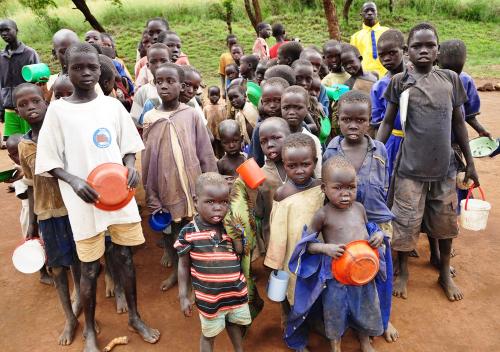
Intense and continuous clashes between the Armed Forces of the Democratic Republic of Congo (FARDC) and M23 fighters in Rutshuru territory have caused more than 72,000 people to flee their homes in the space of a week.

The International Committee of the Red Cross (ICRC) calls on the actors concerned to protect civilians and facilitate the work of humanitarian personnel who are working to help the population .

The fighting has moved closer to several villages including those of Katale and Buvunga northwest of Rumangabo, creating panic among the population for several days. “On the road between Rutshuru and Goma, you can see thousands of people fleeing on foot or on motorbikes. Some villagers left with their cattle because it is often their only means of subsistence,” Raphaël Ténaud, head of the sub-delegation for the ICRC in Goma said.

Due to clashes not far from a site used to distribute food in Rugari, the ICRC was forced to suspend the current distribution in this area on 24 May 2022. “We call on all actors involved to do everything in their power to spare civilians and facilitate the work of Red Cross personnel who are working to help the population,” said Rachel Bernhard, head of the delegation for the ICRC in the DRC.

With the arrival of new displaced persons, living conditions are extremely precarious in the makeshift camps. Thus, in the locality of Kanyaruchinya, located nearly ten kilometers from Goma, more than 3,600 people have found refuge in churches, as well as inside and around a school. They are mostly women and children.

“Families are crammed into classrooms. Others sleep on the ground in the yard next to their cattle at the mercy of the weather. They lack water, shelter and food. Precarious hygiene, the absence of clean water and overcrowding are all risks of seeing cholera appear,” Raphaël Ténaud said

Faced with the emergency, an ICRC team installed flexible drinking water tanks to improve hygiene conditions and ensure a daily supply for 10,000 people, including those affected by the volcanic eruption The latter showed exemplary solidarity by welcoming in turn the new displaced families.

The ICRC continues to do everything in its power to obtain the security guarantees necessary to reach the populations whose access to healthcare and basic necessities is seriously compromised in this period of armed confrontation.

“We strive to maintain a bilateral and confidential dialogue with armed forces and groups to ensure that the civilian population is respected and protected and that the evacuation of the wounded and sick can take place without hindrance,” concludes Rachel Bernhard.

In coordination with the Congolese authorities and with other humanitarian actors stands ready to meet the needs of displaced populations and host communities in the areas of health, drinking water supply and the distribution of food and essential household items.

Stories Continues after ad

Supreme Court indefinitely closed over safety concerns

The Chief Justice, Hon. Justice Alfonse Owiny-Dollo

The Supreme Court has been indefinitely closed by the Judiciary over a number of safety concerns, the Chief Justice, Alphonse Owiny Dollo has said.

In April, there was a fire broke at the Court damaging the chambers of the Chief Justice and other properties.

An internal memo dated May 30th from Owiny-Dollo reads; “The landlord has been duly notified to assess and rectify the defects. For these reasons, the top management of the Judiciary has decided, and I hereby direct that the Supreme Court be closed as the premises undergo renovations and rectification of defects.”

The Judiciary said water leakages resulting from the damaged ceiling have seen ceilings collapse and also flooding in the chambers of the justices of the court, damaging furniture, books, and other Court properties hence making it unsafe to continue without proper assessment of the damages.

“In the meantime, you are all advised to execute your work from home until further notice,” the CJ added.

However, the Court registry and the ECCMIS center will remain in operation to conduct Court’s usual business.

Dollo said “the registry and the Electronic Court Case Management Information System centre will remain open to the public to handle case filing while judgments may be delivered using virtual electronic means”.

The Court will resume its operations after issuance of the certificate of safety for occupants from relevant authorities.

Stories Continues after ad

Museveni passes out over 2000 Local Defence Personnel in Katakwi District

Kaguta Museveni has passed out 2593 Local Defence Personnel in Katakwi

The President of the Republic of Uganda and Commander in Chief of the UPDF H.E Gen Yoweri Kaguta Museveni on Tuesday May 31st passed out 2593 Local Defence Personnel at Olilim Training School, Palam Sub County, Ngariam County in Katakwi District.

President Museveni, in his address, expressed his happiness at the fact that the graduates volunteered to join the UPDF but were not conscripted.

He thanked the army leadership for developing infrastructure for the army including the training schools.

“The old armies had a few training schools like Jinja, Kabamba and Nakasongola but now we have Singo, Kaweweta which have a special history. Others like Labwordwong and Butiaba, among others, were identified by the army leadership,” he noted.

He directed the Commandant to use part of Napak Mountain in their training of recruits as mountain training produces a better army.

The President thanked the UPDF leadership for enabling a young country defend itself using simple means.

He invited the press to take pictures of the simple huts in which the soon to be passed out soldiers used to sleep as an indicator to show the parasites in Kampala (Bamulyabiyidde) that one can begin humbly within their means and serve their people.

He expressed happiness at the fact that the recruits are well educated with degrees, A Level and the lowest with UCE certificates.” Educated people are easy to train because they learn quickly,” he added.

He called on leaders to fight corruption so that development of infrastructure can blossom.

President Museveni promised to eliminate cattle rustling and called on cattle rustlers to stop the vice because they are wasting their time.

 “Cattle rustlers are sabotaging themselves – money we would use to develop them as we have done with the Soroti – Moroto-Kotido road and a power line, is instead used to fight them,” he scoffed.

He congratulated graduates and reminded them that health is very important and that the dangers to health are known; i.e., Pombe (alcoholism), umalaya (promiscuity) – umalaya hatari kwa maisha (promiscuity is dangerous to health) and indiscipline,” he cautioned them.

He then declared the graduates passed out after which they took their oath of allegiance.

The Deputy Chief of Defence Forces Lt Gen Peter Elwelu thanked the President for honouring their invitation and further remarked that more and better infrastructure like more classrooms, accommodation for recruits and instructors, piped water and a health facility will be constructed at Olilim Training School.

He also noted that in future the Airforce training school may be relocated to Olilim as Nabugabo is getting more and more squeezed.

”Believe and practice patriotism, Pan Africanism and humility to have a happy life in the army. Selfishness, arrogance and indiscipline will push you out of the army,” the Deputy CDF cautioned graduands.

The Commandant of the Training School Lt Col Eria Katorogo Mugasa reported that the 8th Intake of 21/22 started with 2,611 students, 475 of them women, on the 1st November 2021.

2593 successfully completed the 24 weeks (6 months) course.

The trainees were voluntarily recruited from the districts of Kampala, Wakiso, Greater Mukono, the Greater Jinja and the Greater Iganga with qualifications ranging from Uganda Certificate of Education (UCE) to Masters Degrees in various disciplines.

238 of the graduates were from the Internal Security Organisation.

The Commandant commended the graduates for their exceptional discipline during the course and assured the UPDF leadership that the graduates were a group the army leadership would strongly rely on after deployment.

 “The zeal, discipline and enthusiasm with which they endured the robust training is a clear manifestation of their desire to protect their families, villages, neighbourhoods and country at large”, he emphasized.

He congratulated the graduates upon their successful completion of the rigorous course and reminded them of their duty to keep the oath of allegiance, which they affirmed to uphold at all times.

 “As members of the LDP, always be ready to serve Uganda, its people and protect our national interests. Always put the mission before personal needs,” the Commandant advised.

He was especially grateful to the UPDF leadership and sister Schools of the Field Artillery and Air Defence (SOFAAD) and Counter Terrorism Police Training School (CT-PTS) for their support towards the training course.

During the course, the graduates acquired basic military skills and knowledge, several tactical field training exercises and drills. They also received external lecturers from Senior Military and Government officials to familiarise them with current political trends and leadership at different levels.

The pass out was also attended by the Deputy Commander Land Forces Maj Gen Sam Okiding, Deputy Commander Air Force Maj Gen Charles Okidi, 2 Division Commander Maj Gen Francis Takirwa, Chief Political Commissar Maj Gen Henry Masiko, the RDC Katakwi District Maj Godfrey Katamba, the Katakwi Distict Chairman, Mr. Geofrey Omolo and many other Senior Security, civil and religious leaders.

Stories Continues after ad

Shs10 billion supplementary to Lands Ministry illegal – Kasaija

Finance Minister; Matia Kasaija

The Minister of Finance, Planning and Economic Development, Hon. Matia Kasaija, has apologised for the Shs10.6 billion supplementary budget for Uganda Land Commission (ULC) to pay land claimants in Buganda and Bunyoro sub-regions in the Financial Year 2020/2021.

Kasaija admitted that the request for the supplementary was an illegality and erroneously approved without following the rightful procedures in accordance with the Public Finance Management Act, 2015.

Kasaija made the admission while appearing before the Committee on Commissions, Statutory Authorities and State Enterprises (COSASE) on Tuesday, 31 May 2022. The committee is investigating the origin of the supplementary after the Auditor General’s report raised a red flag.

Preliminary investigations show that the legal procedures were flouted while processing the supplementary which was allotted to benefit six land claimants some of whom were allegedly ghost beneficiaries.

Initially, Kasaija in his presentation said that supplementary was legal and binding and that it went through all the established government procedures in accordance with the law before it was approved.

However, when the committee interrogated him further on the legal procedures of initiating a supplementary, the minister was quick to apologize and accepted that there were some irregularities in the process.

“This supplementary was in error; it was not supposed to be initiated by the Minister of Lands. If you are to follow the law strictly, then my ministry should have rejected this and should not have approved it. It is the Uganda Land Commission that should have sent in the request [for a supplementary] and not the Minister of Lands,” Kasaija said.

According to Kasaija, the supplementary budget in question was initiated by the then Minister of Lands, Hon. Beti Kamya on 12 March 2021 who requested the Ministry of Finance to avail Shs10.62 billion for ULC to compensate six land claimants as reportedly directed by the President.

However, he could not furnish the committee with the alleged letter from the President.

The six land claimants who benefited from the Shs10.6 billion supplementary are, Kasiya Rwabukurukuru (Shs6.43 billion), Stephen Peter Nagenda (Shs1.06 billion), Julius Busuulwa (Shs1.4 billion), Natalia Namuli (Shs1.6 billion), Yisaka Lwakana (Shs125.3 million), and Geoffrey Mugisha (Shs1.49 billion).

“I think we should ask Hon. Beti Kamya to give us a copy of this letter from the President because I do not have a copy but I will check if I was given one,” he said.

Kasaija faulted his technical staff for misguiding him into approving a supplementary request which was not initiated by the end-user agency.

He further proposed that the committee summons the then Secretary to the Treasury, Keith Muhakanizi, to explain some of the illegalities surrounding the said supplementary.
 
The MPs challenged the minister to always do due diligence before approving proposals that may result in gross loss and misuse of public funds.

“Why does our Finance Minister not read these documents and do proper due diligence before signing them? Your signature is a very powerful one because it releases money and so on. You should have done due diligence by being sure who is initiating the supplementary and the whereabouts of the presidential directive,” COSASE chairperson, Hon. Joel Ssenyonyi said.

Mityana District Woman Representative, Hon. Joyce Bagala called upon the Minister of Finance to reign over his ‘misleading’ technical staff and resign if he feels overwhelmed by government duties.

“It sounds to me that the minister is overwhelmed by the work he is doing and if he feels so, then he should resign. And if you [minister] feel the technical officers have failed you, then why not take action against them because it is not the first time you have told this committee that you have been failed by your technical staff,” Bagala said.

Stories Continues after ad
Deputy Speaker Tayebwa calls for dialogue on contraceptive use

Deputy Speaker, Thomas Tayebwa.

The Deputy Speaker, Thomas Tayebwa has called for more discussions about the use of contraceptives as a means of stopping unwanted pregnancies.

Tayebwa made this call while meeting a delegation of the All Party Parliamentary Group from the United Kingdom on Monday, 30 May 2022.

The meeting was also attended by officials from Marie Stopes Uganda, the United Nations Population Fund (UNFPA), and members of the Parliament on forums of Food Security, Population, and Development.

The meeting centred on issues of family planning and sexual reproductive health and rights.

According to Tayebwa, poverty is the biggest driver of challenges related to reproductive health like early pregnancies adding that, ‘these are some of the things that the Parish Development Model will address’.

He said that when Ugandans have money and can pay for school fees and take children to hospitals, it leads to improved reproductive health.

Tayebwa added that there is a need for intervention and dialogue, especially on interventions not in line with African customs and beliefs.

“On early childhood pregnancy, our concern is that more investment should be made in preventing it instead of handling a pregnancy. If your focus can be more on that, you will win more and more people,” he said.

Tayebwa said that it is also part of the government’s policy now that pregnant students should be allowed to sit for their final examinations.

The Chairperson of the Committee on Health, Hon. Charles Ayume said that Uganda is registering tremendous contraceptive prevalence rate which is at 39 per cent compared to 20 or30 years ago.

Ayume added that although it looks corrosive, it is important for Uganda to have a healthy and productive population.

“I was in the UK recently and I was impressed that they can do early screening of these challenges before the baby is born. I think this should be where we are going…where they can do surgical procedures intra-uterine, “he said.

The Leader of the UK Parliamentarians, Baroness Liz Sugg said that for both UK and Uganda to grow, women and girls need to be supported in their sexual reproductive health and rights.

Stories Continues after ad