Stanbic Bank
Stanbic Bank
17.9 C
Kampala
Stanbic Bank
Stanbic Bank
Home Blog Page 674

Emirates launches new lounge for young flyers

Young travellers flying Emirates as unaccompanied minors can now relax and wait for their flight in a newly upgraded lounge dedicated for them at Dubai International Airport, located next to Emirates’ First Class Lounge in Concourse B. Emirates’ lounge for unaccompanied minors is open 24/7, and the newly upgraded facility offers fun video games, drinks and snacks, comfortable seating areas, free wi-fi, and washrooms designed for kids. 

Parents or guardians who have pre-booked Emirates’ Unaccompanied Minor service, can drop off their young flyers at Dubai Airport Terminal 3, where Emirates’ airport team will check them in for their flights in a special lounge area for unaccompanied minors. The  facility is located in between the Economy and First and Business Class Check-in halls.

After check-in formalities are completed, one of Emirates’ friendly airport services team members will escort the young flyers through immigration and security, onward to their dedicated departure lounge in the airside concourse, and later, from the lounge to the boarding gate.

Young flyers enjoy priority boarding, and Emirates cabin crew will be waiting to welcome young flyers at the aircraft door, and help them to find their seats and settle in for their flight.

Onboard, young flyers can look forward to delicious meals and snacks designed for their palates, toys and activity packs, and kid-sized headsets to enjoy the selection of over 50 Disney movies and 130+ TV channels for young travellers. Emirates is currently offering young flyers cool take-home toys and bags onboard, inspired by Expo 2020 Dubai and featuring little Emirates characters. All toys and bags use recycled material and bags are made from 100% recycled plastic bottles.

Young solo flyers with a connecting flight in Dubai are also well cared for while in transit. Emirates’ ground services team will meet and escort them from their flight to one of the dedicated lounges for unaccompanied minors, while they wait for their next flight.

Emirates’ services for unaccompanied minors must be booked in advance of travel and are available for children from 5 to 11 years of age, who are travelling without an adult. The service can also be booked for young travellers between 12 and 15 years old.

Stories Continues after ad

UAF launch Commonwealth Games program

Athletics

The Uganda Athletics Federation has launched the Commonwealth Games program as the 2022 competition season kicks off February 12, 2022 with the National Cross Country Championships in Tororo.

The launched 2022 Program also leads the country to the 22nd Africa Senior Championships in June, Oregon World Championships in July and U20 World Championships qualifications respectively for August 2022 among other internationals.

The federation has in this regards therefore lined up 15 track and field local competitions to offer athletes opportunity to qualify for the above mentioned international engagements.

The qualification period for these internationals is now open and runs up to June 27, 2022.

Because of the heavy 2022 competition schedule and importance of the forthcoming international engagements, the federation’s recent Annual General Assembly approved the 2022 budget with an injection of Shs800 million towards running national competitions and Shs2.5 billion on international engagements out of the Shs5 billion to be sank in the entire seasonal activities.

The 2022 calendar also includes newly introduced Mt. Elgon and Fort Portal Tourism City and Elgon road races to create awareness about dangers of environmental destruction in the country. 

Stories Continues after ad

Supreme Court orders BoU to pay Sudhir, return Crane Bank

Sudhir

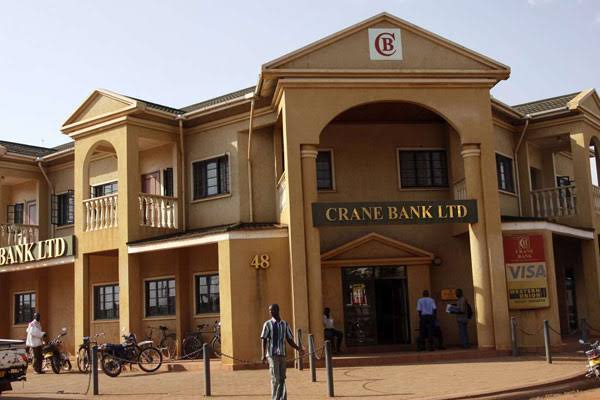
Supreme Court has dismissed Bank of Uganda’s appeal against Sudhir Ruparelia and Meera Investments, and ordered the central bank to directly pay costs at all Court levels.

Court also ordered that Crane Bank is reverted to the owners/shareholders marking an end to the 5-year dispute.

Crane Bank Limited was closed by Bank of Uganda (BoU) on October 20, 2016, after it failed to comply with a capital call on July 1, 2016.

“If all the parties to the appeal do not consent to the withdrawal of the appeal, the appeal shall stand dismissed with costs, except as against any party who has consented, unless the court on the application of the appellant, otherwise orders. At the time of filing the suit, Bank of Uganda had taken over management. Counsel for the Plaintiff/Respondent submitted that the proceedings were not commenced by Bank of Uganda but by Crane Bank Limited in Liquidation. A persual of the affidavit in reply to the application throws light on who brought the suit to court. The affidavit is deponed by Margaret K. Kisule who describes herself” reads the ruling.

It further continues “We agree with the learned Judge in dismissing HCCS 493 of 2017 and awarding costs following the dismissal. The preliminary objection in this case wholly disposed off HCCS 493 of 2017. There was therefore nothing left to try following the dismissal. We for those reasons find this ground in the negative……. in the instant case, we find no such misconduct relating to litigation on the part of the respondents and as such, we find no reason to deny the respondents costs of the suit. We therefore, uphold the trial Judge’s order as to costs”

The judges in their ruling further said that in ruling civil application No.32 of 2020 and found that indeed, receivership of the appellant had ended on January 20, 2018. The said the implication of the finding in their view was that the management of the appellant had reverted to shareholders after January 20,2018.

“In the result, this appeal is dismissed with costs to the respondents in the terms found by the lower courts. The dismissal of the instant appeal takes effect as of the date of endorsement of this ruling. Weso order. Justices Ruby Opio Aweri, Faith Mwondha, Prof. Tibatemwa-Ekirikubinza and Percy Night Tuhaise”

For his part, Sudhir said justice had prevailed the judiciary and courts had done its part. He further thanked his lawyers led by Senior Counsel Peter Kabatsi. He said if BoU is dissatisfied with the ruling, they can go and appeal to God.

“I want to thank the judiciary and the courts for giving me justice. It has taken more than five years to fight this case and it has impacted on our businesses. I want to thank all the lawyers for their time. Honestly BoU stole money in the name of Crane Bank and even Auditor General has said so. The legal department of BoU is so corrupt and is misleading the board. BoU legal department should go and appeal to God” Sudhir said.

On his part, Counsel Kabasti hailed the ruling as well but said he wasn’t surprised by the ruling as it was expected. He said BoU should accept the consequences of the ruling since they dragged Sudhir to court.

“The implications are actually many and if anyone goes to court, he or she like BoU did should expect the consequences”. First of Sudhir lost a bank and time, That isn’t cheap and first he lost his bank which shouldn’t have been but because of the mistakes of BoU” He said.

Counsel Kabatsi the costs to be awarded will be calculated in accordance with the law.

After selling the assets to DFCU, Bank of Uganda filed a suit under Crane Bank in Receivership against Sudhir and Meera Investments seeking to recover over Shs400 billion and 48 land titles.

The suit by Crane Bank was dismissed by High Court with costs to be paid by Bank of Uganda on ground that a bank under receivership cannot sue, receivership had ended and Crane Bank was a non-citizen company which could not hold freehold titles. Bank of Uganda appealed to the Court of Appeal which unanimously upheld the findings of the High Court. Thereafter, Bank of Uganda appealed the matter to the Supreme Court.

“An interlocutory mandatory injunction doth issue returning the status quo of the 1st respondent to what it was at the time of filing Civil Appeal No.07 of 2020. A declaration doth issue that the 2nd respondent is in contempt of court’s order,” the ruling read.

“The 1st respondent was closed as a financial institution and placed under receivership. Upon closer, it ceased being a financial institution under the Act and it could therefore, not be progressed to liquidation. The 2nd respondent’s act therefore of moving the 1st respondent to liquidation are contrary to the above clear provisions of the law and the same cannot be sanctioned by this court,” reads the ruling.

However, before the hearing of the appeal, Bank of Uganda decided to place Crane Bank into liquidation which materially altered the status of the Bank before the Court. Bank of Uganda’s application to change the status of the appellant from Crane Bank in Receivership to Crane Bank in Liquidation was equally dismissed by the Supreme Court.

After issuing a notice to the public placing Crane Bank into Liquidation, Sudhir through his lawyers, Kampala Associated Advocates filed an Application against Bank of Uganda for a temporary injunction objecting to the move by the Bank of Uganda placing Crane Bank under Liquidation yet there was an appeal before Supreme Court.

Earlier Bank of Uganda withdrew Supreme Court appeal that was contesting the Court of Appeal’s dismissal of the case it filed on behalf of Crane Bank Ltd (in Receivership) versus Sudhir Ruparelia and Meera Investments Ltd.

In a September 15 notice of withdrawal, the Supreme Court Registrar indicated that BoU has decided not to prosecute the appeal and will pay costs.

Justice David Wangutusi of Commercial Court in August 2019 dismissed the first case in which BoU claimed that Sudhir and his Meera Investments fleeced his own Crane Bank (now in receivership) of Shs397 billion.

On Tuesday, June 30, the BoU insisted that receivership does not take away the corporate personality of a company which includes the right to trace and recover assets and the right to sue for those assets.

In the preliminary stages of the appeal, the Supreme Court in August this year, dismissed with costs, an application by lawyers representing BoU in which they sought to substitute the court record from Crane Bank Limited (in receivership) to Crane Bank Ltd (in Liquidation), with the court rejecting the move, as in bad faith and intended to circumvent facts.

Stories Continues after ad

Uganda U-17 Women’s team summoned for World Cup Qualifiers

uganda-u17-women

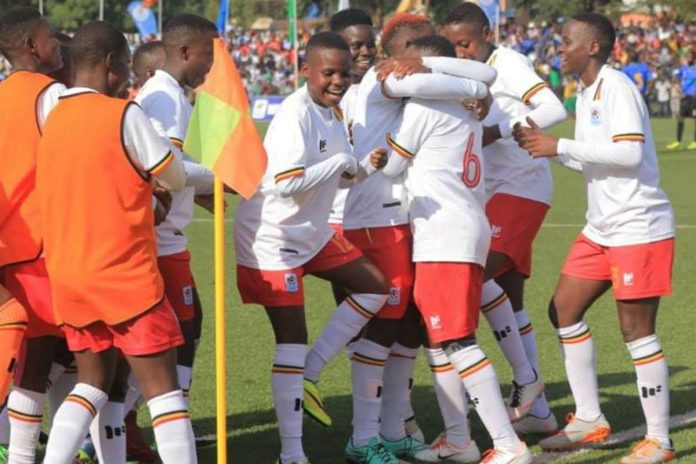
The Uganda U17 Women’s National Football team coach Ayub Kiyingi has summoned a squad of 50 players to start preparing for the first round of the FIFA U17 Women World Cup qualifiers, India 2022 against Ethiopia.

“The reason behind summoning such a big number is basically because these girls for more than 2 years have not been playing any competitive football so we mainly relied on the recommendation of the various coaches who we contacted seeking their help to share names of players they feel have the potential to play for the national team. In the next two weeks my technical team is going to engage in a vigorous exercise of preparing these girls for the task at hand and for that I promise by the time we face Ethiopia we will be ready for the challenge,” Ayub Khalifa Kiyingi stated upon releasing the squad.

Uganda is slated to host the first leg of the two encounters between CECAFA rivals on March 4th before travelling to the horn of Africa nation for the return leg fixture two weeks later.

The team will start residential training on Saturday February 12, 2022 at the FUFA Technical Centre in Njeru.

The technical team will comprise of; Ayub Khalifa Kiyingi – Head Coach, Olive Mbekeka – Assistant coach, Arthur Kyesimire – Fitness coach, James Magala – GoalKeepers’ coach, Cissy Nakiguba – Equipment manager, Stella Nankumba and Kabatalindwa Mable – Team Medics. Conrad Musiime will be the media officer of the team.

The summoned squad;

Goal Keepers; Akayo Anita – Isra Soccer Academy, Nansamba Bridget – Riness SS WFC, Nambuya Josephine – Jinja SS WFC, Kaidu Sharon – Uganda Martyrs HS Ladies WHC, Tsyabake Vivian – Lady Doves FC

Defenders: Nanyanzi Nakato Patricia – Riness SS WFC, Birabwa Justine – Wakiso Hill WFC, Asiimwe Molly – Watoto WFC, Nabanja Maria Goretti – Taggy HS WFC, Nakimera Sharifah – Kawempe Muslim LFC, Namusoke Esther – Uganda Martyrs HSL FC, Nabulobi Patience – Uganda Martyrs HSL FC, Nadhengo Rebecca – Uganda Martyrs HSL FC, Nagawa Jufah Justine – Lubaga Girls WFC

Midfielders; Natooro Desire Katisi – Kataka She FC, Anishani Christine – Lubaga Girls WFC, Naiga Patricia – Wakiso Hill WFC, Namata Teddy – Wakiso Hill WFC, Bwire Risty Maggie – Jinja SS WFC, Okori Phiona Hope – Lango Queens FC, Amoding Mercy – Isra Soccer Academy, Kisakye Dorcus – Kawempe Muslim Ladies FC, Namutebi Krusum – Kawempe Muslim Ladies, Kanyiginya Olivia – Tooro Queens FC, Atuhairwe Sharon – Tooro Queens FC, Elizabeth Nanyombi – Devine Soccer Academy, Nabulime Phiona – Kawempe Muslim Ladies, Odaru Immaculate – Mukono HS WFC, Nyinagahirwa Shakira – Kawempe Muslim Ladies, Nandago Hadijah – Kawempe Muslim Ladies, Nakato Bridget – Lady Doves FC, Tamale Anisha – Gaddafi Intergrated WFC, Nyafwono Teddy – Asubo Gafford Ladies FC, Asio Berinda – Sacred Hearts WFC

Forwards; Katusiime Evelyn – Tooro Queens FC, Madera Nancy – St. Noah WFC, Namataka Esther – Kataka She FC, Nassazi Allen – Kawempe Muslim Ladies, Najjuma Shamsa – Uganda Martyrs HSL WFC, Nagadya Catherine – Uganda Martyrs HSL WFC, Munyana Brenda – Uganda Martyrs HSL WFC, Nalumu Sumaiyah – Uganda Martyrs HSL WFC, Namazzi Aisha – Watoto, Nagadya Joweria – Lady Doves FC, Cynthia Morgan Nyirashirambere – Golden Impact WFC, Kamiyati Naigaga – Taggy HS WFC, Nangendo Esther – Kawempe Muslim Ladies, Nalugema Pamela – Divine Soccer Academy WFC, Lotiang Mary Allegonda – Olila HS WFC, Babirye Hairat – Isra Soccer Academy WFC.

Stories Continues after ad

Supreme Court to give ruling tomorrow on Crane Bank in Receivership

Meera Investment Limited properties that Dfcu had illegally acquired through bogus transaction.

Supreme Court has announced that it will give its ruling tomorrow in the case Crane Bank (in receivership) as the appellant dragged Sudhir and Meera Investments Limited to court.

“Take notice that the judgment in the appeal has been fixed for the 11th day of February, 2022 at 9:30am, in the fore/afternoon or soon thereafter as Court will convene,” reads part of the letter from the Supreme Court Registrar.

After selling the assets to DFCU, Bank of Uganda filed a suit under Crane Bank in Receivership against Sudhir and Meera Investments seeking to recover over Shs400 billion and 48 land titles.

The suit by Crane Bank was dismissed by High Court with costs to be paid by Bank of Uganda on ground that a bank under receivership cannot sue, receivership had ended and Crane Bank was a non-citizen company which could not hold freehold titles. Bank of Uganda appealed to the Court of Appeal which unanimously upheld the findings of the High Court. Thereafter, Bank of Uganda appealed the matter to the Supreme Court.

“An interlocutory mandatory injunction doth issue returning the status quo of the 1st respondent to what it was at the time of filing Civil Appeal No.07 of 2020. A declaration doth issue that the 2nd respondent is in contempt of court’s order,” the ruling read.

“The 1st respondent was closed as a financial institution and placed under receivership. Upon closer, it ceased being a financial institution under the Act and it could therefore, not be progressed to liquidation. The 2nd respondent’s act therefore of moving the 1st respondent to liquidation are contrary to the above clear provisions of the law and the same cannot be sanctioned by this court,” reads the ruling.

However, before the hearing of the appeal, Bank of Uganda decided to place Crane Bank into liquidation which materially altered the status of the Bank before the Court. Bank of Uganda’s application to change the status of the appellant from Crane Bank in Receivership to Crane Bank in Liquidation was equally dismissed by the Supreme Court.

After issuing a notice to the public placing Crane Bank into Liquidation, Sudhir through his lawyers, Kampala Associated Advocates filed an Application against Bank of Uganda for a temporary injunction objecting to the move by the Bank of Uganda placing Crane Bank under Liquidation yet there was an appeal before Supreme Court.

Earlier Bank of Uganda withdrew Supreme Court appeal that was contesting the Court of Appeal’s dismissal of the case it filed on behalf of Crane Bank Ltd (in Receivership) versus Sudhir Ruparelia and Meera Investments Ltd.

In a September 15 notice of withdrawal, the Supreme Court Registrar indicated that BoU has decided not to prosecute the appeal and will pay costs.

Justice David Wangutusi of Commercial Court in August 2019 dismissed the first case in which BoU claimed that Sudhir and his Meera Investments fleeced his own Crane Bank (now in receivership) of Shs397 billion.

On Tuesday, June 30, the BoU insisted that receivership does not take away the corporate personality of a company which includes the right to trace and recover assets and the right to sue for those assets.

In the preliminary stages of the appeal, the Supreme Court in August this year, dismissed with costs, an application by lawyers representing BoU in which they sought to substitute the court record from Crane Bank Limited (in receivership) to Crane Bank Ltd (in Liquidation), with the court rejecting the move, as in bad faith and intended to circumvent facts.

Stories Continues after ad

Fraud: Dfcu Bank staff arrested for diverting client’s money

dfcu bank

The Mbale Central Police Station (CPS) has arrested Dfcu Bank staff for diverting client’s money.

According to Rogers Taitika, the police spokesperson of Elgon region, Claud Adicho was nabbed yesterday after Rebecca Wabomba lodged her complaint.

Wabomba avers that money was withdrawn from her account and after investigating, she found that it had been withdrawn by Claud Adicho after she forged the ATM pin.

Adicho is held at Mbale CPS pending trial.

Stories Continues after ad
Attorney General: International Court of Justice’s ruling did not meet the standard of fairness as expected

AG Kiryowa Kiwanuka

The Government of Uganda has faulted the International Court of Justice’s ruling saying it has failed to understand and appreciate African matters.

Yesterday, the International Court of Justice ordered Uganda to pay DR Congo $325 million in reparations for damages caused by the Ugandan troops in eastern Congo over two decades ago.

Uganda was accused of plundering Congo resources and killing Congolese in the two wars when Uganda invaded Congo the then Zaire in early 2000s.

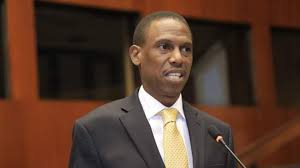
Speaking earlier today, Kiryowa Kiwanuka, the Attorney General of Uganda said the decision did not meet the standard of fairness as expected.

“We challenge and reject the findings of wrongdoing on the part of the UPDF which was singled out notwithstanding the acknowledgement by the court of the existence of so many belligerents in the conflict. The UPDF was and remains a disciplined force and a force for good in all the countries it has operated in to this day,” he said.

He said the conflict from which this dispute arose was resolved in a peace accord in Lusaka which confirmed the existence of the problems faced by the countries neighboring the DRC.

“As it turns out, the court’s decision is yet another failure to understand or appreciate African matters and makes no contribution to current efforts at resolving, on our own, the security issues that persists. This however shall not deter us from continuing to engage the government of the DRC to resolve this matter,” Attorney General said.

History of the DRC-Uganda reparations case

Congo first brought the case before the court in 1999.

In 2005 the ICJ ruled Uganda had to pay compensation for invading Congo in a war that left hundreds of thousands of people dead and displaced millions.

At its height, the conflict drew in nine African countries, with Uganda and Rwanda backing rebel forces against the government in Kinshasa.

The Hague-based court ordered Uganda and DRC to negotiate reparations, but could not reach an agreement. In 2015 the DRC took the case back to the ICJ for a final decision on the amount of compensation.

The DRC told the court it wanted more than $11 billion in reparations. Uganda said it could ruin its economy.

The ICJ rules in disputes between countries, and its decisions are final and cannot be appealed.

Stories Continues after ad
Top diplomatic Embassy building underground bunkers

An underground safety bunker

An embassy accredited to Uganda is reported to be building underground bunkers/tunnels at its Kampala mission.

Steel Bunkers and Bomb Shelters are built from high quality plate steel and structural metals on the market today. This makes the entire underground shelter extremely rigid and strong.

No matter how and where pressure is applied; the steel exoskeleton frame used in engineering adds tremendous strength to the structure while distributing weight and pressure across the entire structure. There is no chance of a structural “weak spot” and these bunkers will not collapse under weight or unexpected changes in the earth.

Sources to close to the mission say construction has been ongoing and disguised as extension of its fence and security features but the real reason is the underground bunkers.

The construction is being undertaken by Egyptians and Turkish nationals with construction material all being imported from the embassy’s country.

The said embassy is located south of Makindye Division.

A bunker is a defensive military fortification designed to protect people and valued materials from falling bombs or other attacks. Trench bunkers are small concrete structures, partly dug into the ground.

Sources say the mission must be constructing the bunkers for their own defense in the likelihood that there is war or internal turmoil in the country.

Stories Continues after ad

Africa on track to control #Covid-19 pandemic in 2022

Testing for covid-19

Almost two years after Africa identified its first case of COVID-19, the World Health Organization (WHO) finds that, if current trends continue, the continent can control the pandemic in 2022. However, WHO warned that continued vigilance is key.

Over the last two years, the continent has witnessed four waves of COVID-19, each with higher peaks or more total new cases than the previous one. The surges have been mostly driven by new variants of the SARS-CoV-2 virus which were highly transmissible though not necessarily more fatal than prior waves. Each subsequent wave has triggered a response that has been more effective than the previous, with each surge shorter by 23% on average from the one before. While the first wave lasted about 29 weeks, the fourth wave was over in six weeks, or about a fifth of the time.

“Over the past two years, the African continent has gotten smarter, faster and better at responding to each new surge in cases of COVID-19,” said Dr Matshidiso Moeti, WHO Regional Director for Africa. “Against the odds, including huge inequities in access to vaccination, we’ve weathered the COVID-19 storm with resilience and determination, informed by Africa’s long history and experience with controlling outbreaks. But COVID-19 has cost us dearly, with more than 242 000 lives lost and tremendous damage to our economies.”

According to the World Bank, the COVID-19 pandemic is estimated to have pushed up to 40 million people into extreme poverty on the continent, and every month of delay in lifting containment measures is estimated to cost Africa US$ 13.8 billion in lost gross domestic product.

“Although COVID-19 will be with us for the long-term, there is light at the end of the tunnel. This year we can end the disruption and destruction the virus has left in its path, and gain back control over our lives,” added Dr Moeti. “Controlling this pandemic must be a priority, but we understand no two countries have had the same pandemic experience, and each country must, therefore, chart its own way out of this emergency.”

When Africa experienced its first wave, attributed to the spread of the wild SARS-CoV-2 virus, the average case fatality ratio (CFR) or the proportion of infected people who die from COVID-19 was high (2.5%). That figure rose to 2.7% during the Beta-driven second wave, before going back down to 2.4% during the Delta-powered third wave. In contrast, the average CFR during the fourth wave is low (0.8%), representing the first time a wave’s surge in cases has not led to a commensurate increase in hospitalizations and deaths.

Since the start of the pandemic, the continent’s capacity to manage COVID-19 cases has gradually improved, with the increased availability of trained health workers, oxygen and other medical supplies. The number of Intensive Care Unit (ICU) beds has increased across the continent, from 8 per 1 million people in 2020 to 20 today. WHO has also helped increase the number of oxygen production plants in Africa from 68 to 115 a 60% rise through supporting the repair, maintenance and procurement of new oxygen plants. Where plants have been set-up, the cost of oxygen has decreased by 40%. Despite these improvements, oxygen availability remains a concern, and a large majority of patients who require oxygen as part of their clinical treatment plan are unable to access it.

“As we enter this new phase of the COVID-19 pandemic, we must use the lessons learned over the past two years to strengthen our continent’s health systems so that we are better prepared to handle future waves of the disease,” said Dr Moeti. “Since new variants have fueled waves, it is critical that countries strengthen their capacity to detect them through improved genome sequencing. This will also ensure we spot other deadly viruses swiftly.”

WHO has increased the number of laboratories able to detect COVID-19 from two to more than 900 today and is bolstering genetic sequencing efforts in Africa through several initiatives including setting up the Regional Centre of Excellence for Genomic Surveillance and Bioinformatics in South Africa in collaboration with South African National Bioinformatics Institute (SANBI) at the University of Western Cape. These efforts have led to more than 7500 samples being sequenced every month in southern Africa compared to a year ago and a more than 54% increase in sequencing data on the continent.

The most powerful weapon against the emergence of new variants is vaccination. To date, around 672 million doses of COVID-19 vaccines have been received in Africa, of which 65% were facilitated by COVAX, 29% via bilateral deals and 6% through the African Union’s Vaccines Acquisition Trust. In January 2022, 96 million doses were shipped to Africa, which is more than double the amount shipped six months ago. Since January, COVAX is only shipping vaccines to countries on demand, ensuring that countries get the right volume at the right time.

“Although Africa still lags behind on vaccination, with only 11% of the adult population fully vaccinated, we now have a steady supply of doses flowing in,” Dr Moeti said. “While vaccination is critical, we must not forget testing and surveillance which we know are basic tools for returning our lives to some semblance of normalcy.”

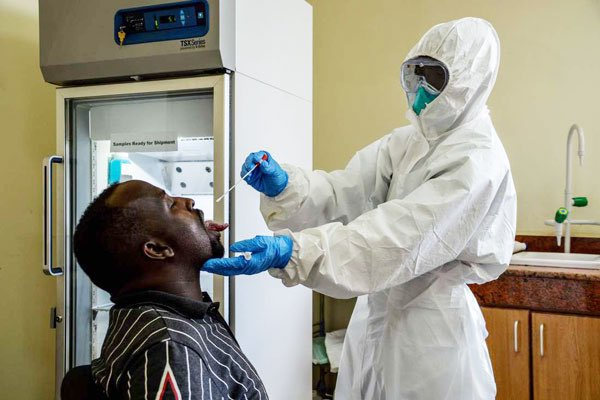
Testing is key to controlling the spread of COVID-19, and since the start of the pandemic 95 million tests have been conducted across the continent. Testing has gradually improved, with 21 out of 47 countries now testing within the WHO recommended benchmark of 10 tests performed per 10 000 people per week, up from 15 countries this time last year. Since COVID-19 transmission in Africa is driven mostly by asymptomatic people, it is important to increase community -based testing and response interventions.

WHO is spearheading an initiative which is conducting mobile antigen-based rapid testing in communities in 15 countries, as well as supplying masks, hand gels and other infection prevention tools. The use of rapid antigen diagnostic tests is on the rise. Recently, the Diagnostics Consortium for COVID-19 procured at least 50 million rapid tests for distribution on the continent. Data received from Zimbabwe, one country which has consistently reported on testing, showed rapid testing has overtaken PCR testing, increasing by 88% between April and December 2021.

With the aim of controlling the pandemic, WHO is focusing on scaling-up COVID-19 vaccine uptake in countries, which will hopefully limit the emergence of variants, expanding or sustaining the network of laboratories with the capacities to do genome sequencing, increasing testing to facilitate early detection and response to cluster of cases. WHO is also continuing to support countries to adhere to public health and social measures until the pandemic is controlled.

Stories Continues after ad

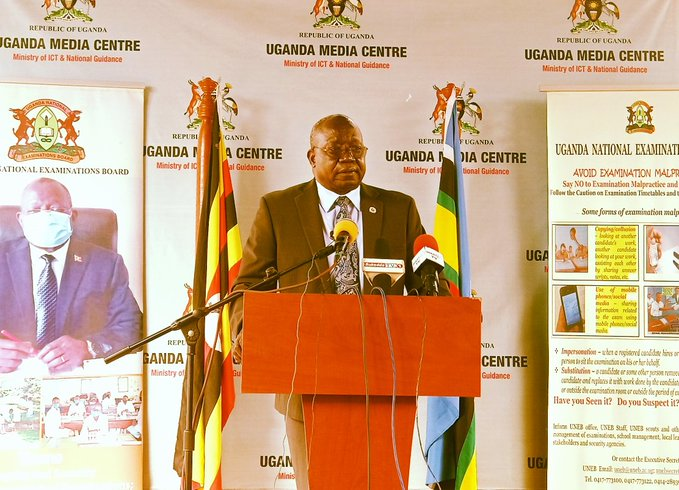
UNEB releases 2022 calendar for national exams

Dan Odong, UNEB Executive Director

The Uganda National Examinations Board (UNEB) has set October – December 2022 as the period for conducting the national examinations.

Primary Leaving Examinations (PLE) will take place from November 7 to 9, Uganda Certificate of Education (UCE) examinations will be held from October 14 to November 18, 2022, and the Uganda Advanced Certificate of Education (UACE) examinations will be from November 18 to December 9, 2022.

The registration fees for candidates have been maintained – PLE is Shs34,000, UCE Shs164,000 and UACE Shs186,000.

According to Dan N Odong, the UNEB Executive Director, normal registration of candidates at all levels (PLE, UCE, and UACE) commences this month of February and will go on until 31st May 2022.

“A period has been set for late registration starting from 1st to 30th June 2022. For late registration, the surcharge is 50% of the total registration fees at the UCE and UACE levels and 100% at the PLE level,” He said.

Issuance of detailed timetables for the national examinations will be on August 31.

Stories Continues after ad