Stanbic Bank
Stanbic Bank
18.9 C
Kampala
Stanbic Bank
Stanbic Bank
Home Blog Page 749

UK donates life-saving oxygen cylinders to support Uganda’s #Covid-19 response

UK donates life-saving oxygen cylinders

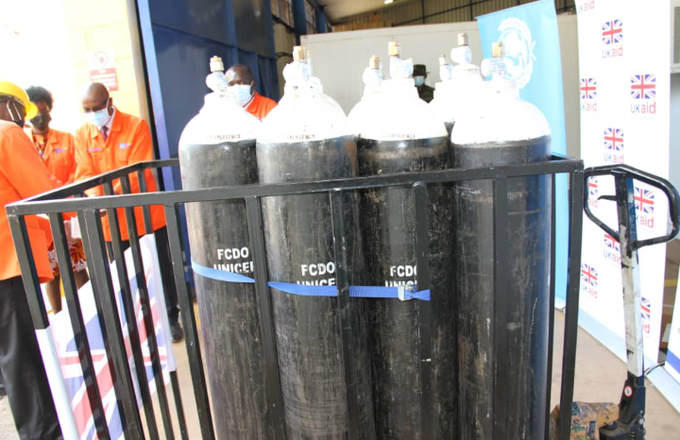
The UK Government has handed over 100 oxygen cylinders to Uganda’s National Medical Stores, to provide lifesaving treatment to #Covid-19 patients in Uganda.

This support is part of the £500,000 that the UK committed to UNICEF Uganda’s #Covid-19 appeal in July 2021.The money, which was provided to rapidly increase Uganda’s oxygen delivery capacity and build its production capability, went towards the procurement of one hundred 7,500-litre oxygen cylinders for Mulago National Referral Hospital, Namboole #Covid-19 Treatment Centre; Soroti Regional Referral Hospital, Mbale Regional Referral Hospital and Moroto Regional Referral Hospital and the provision of operational support to  four oxygen plants for three months.

The funding will also enable the procurement, installation and maintenance of a new oxygen plant, in Kayunga Referral Hospital, and provide training and Personal Protective Equipment (PPE) to #Covid-19 treatment units in Arua, Mbale, Soroti and Moroto. This will also increase the intensive care capacity of health care workers and ensure effective use of the equipment, as well as protect health care workers as they treat the sick, supporting us all.

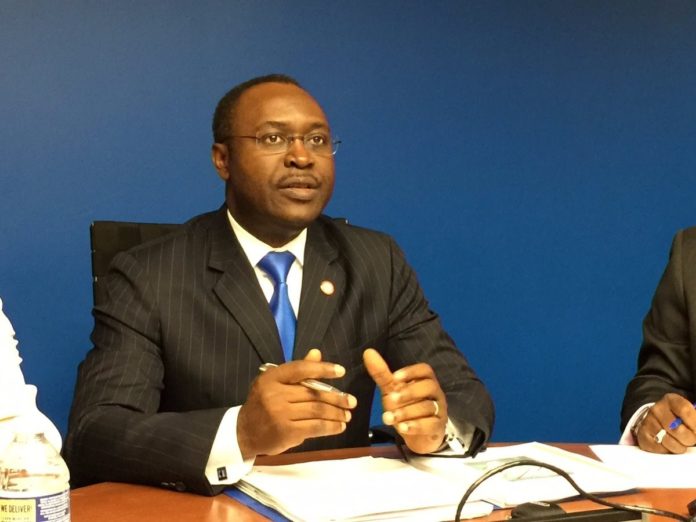
Today’s official handover ceremony was attended by Andrew Ockenden, The British High Commission’s Development Director, UNICEF Uganda Country Representative, Dr. Mohamed El Munir A. Safieldin and the General Manager of the National Medical Stores Mr. Moses Kamabare.

The UK Development Director Andrew Ockenden said, “The #Covid-19 pandemic is a global challenge and the UK continues to be at the forefront of efforts to tackle it. We are pleased to have been able to provide this immediate support to help the Ugandan health system cope with the ongoing wave of cases, saving lives and strengthening the health care systems for the future”.

The UNICEF Representative in Uganda Dr. M. Munir A. Safieldin said, “Access to oxygen can be the difference between life and death for patients with severe #Covid-19. It is also a critical treatment for mothers with birth complications, sick newborns, and children with pneumonia, which remains the leading infectious disease which still kills a child every 39 seconds (globally), despite being preventable and treatable.”

Munir said the Government of Uganda and UNICEF Uganda are grateful for the support from the UK Government., adding that the oxygen will help save the lives of thousands of patients.This support is just one way the UK is helping countries respond to #Covid-19.

In Uganda the UK has also donated test kits and supplied PPE, provided training and helped deliver messaging on #Covid-19 prevention, helped children continue learning through the provision of distance learning lessons, provided media training to help counter misinformation and ensure accurate #Covid-19 reporting and funded two #Covid-19 Isolation rooms at home for children suffering from cancer in Kampala.

The UK was also one of the first countries to back COVAX and to date has committed £548 million to ensure global access to vaccines and has consistently called on other donors to step up their support. Through the COVAX equitable access facility Uganda has received over 1 million AstraZeneca #Covid-19 vaccines.

Stories Continues after ad

My opinion on the MTN IPO

Counsel Julius Galisonga.
By Julius Galisonga


A lot of opinions about the MTN IPO have been doing rounds, with many lambasting investing in MTN, primarily apparently because the dividends earned are very small and conclusions have generally been than ROI on investing in MTN would take ages to be achieved.

Even I who divorced MTN, because I was not satisfied with their services found these opinions obnoxious, disappointing and an exhibition of lack of proper knowledge of how trading in stocks/shares works. This is more so, because, some of their writers claim to be investment experts but fail to take into account that beyond just dividends, there are many other parameters that determine investment decisions, eg, ROI, NPV, personal/religious beliefs ( eg a staunch Moslem would consider investing in a pork factory however profitable), etc

In very simple terms, shares in public limited companies are much like any good that can be bought and sold. For example maize, Sesame, beans, etc. For public limited companies, unlike Private Limited companies, these shares can be freely transferable, meaning, they can be sold at anytime on the basis of willing buyer willing seller.

For the purposes of a “man of everyday” (omuntu wabulijo), I’ll leave out the involvement of the USE in this.

When a company like MTN goes public, The Company’s share price at the time of the IPO is determined by the valuation of the Company, it’s assets against liabilities, market share, investments, etc, divided by the total number of shares at listing.

After the IPO, the prices in the stock market are driven by “supply and demand”. This makes the stock market similar to other economic markets. When a stock is sold, a buyer and seller exchange money for share ownership. The price for which the stock is purchased becomes the new market price. When a second share is sold, this price becomes the newest market price, etc.

For example the dealers in produce know how prices of agricultural products fluctuate. A kilo of maize that costs say 100/- will cost 1,000/- in a day or in a week. Such that within a week, a person who has bought maize today at 100/- will make a gross profit of 900/-. Just as the price can fall from say 100/- to 50/-

When the price falls what we, from Busembatia do, is to hold on to our maize until the price improves, and it always does, then we sell.

All this, is because a major event can rapidly increase or decrease the price. Like we saw recently, the FB, Whatsap and Instagram outage caused Mark Zuckerberg’s personal wealth to fall by nearly $7 billion. This was because as a result of the outage, the FB Whatsap and IG stock value plummeted by around 5%

Much like in Agriculture too much rain or too little rain can cause low or high yields which affects the price and the knockoff effect could be people choosing to shift to other products, etc. all these lead to price fluctuations.

After resolving the challenges, the share price of Facebook is stabilizing and recovering and probably in a week, the price will be back to old price if not higher. Now, assuming one bought the FB shares a the time the price had plummeted at say $100 per share. And bought 10,000 shares for one million dollars and in a week, after stabilization of FB operations the shares gain by say 5% and the new price is say $250, the new value of your investment is now $2,500,00 in under one week. This makes you $1,500,000 richer. In under one week.

We saw this same trend when Nike signed a deal with former NFL quarterback Colin Kaepernick. The Nike stocks suffered a dip because of concerns about consumer boycott because of that deal. However, when the demand of the Nike products surged upwards largely because black Americans started buying nike products in high numbers. The company’s stock started to rise, surging to a year high of 33%.

There are many reasons why people trade in stocks but the primary goal most times is not dividends, because dividends are always small, but it’s to target benefiting from the price fluctuations. As seen in the above hypothetical case.

That’s why wise investors buy into companies whose stock prices are going down and the bide out their time and at the right moment they sale and make a killing. You need to read about how the Warren Buffets have made their money!

Eg. Nike stock this week has appreciated by $2.96 per share. If at the start of the week you bought stock worth $1,000,000 at $154.32 that would amount to 6,480.04 shares. If you were to sell each share at the new price of 156.30, you would earn about 1,017,042.51, netting you a gross profit of $17, 042.51. In just under a week. Tell me any other business capable of earning you that much in the comfort of your seating room?

When you buy and sell at the right moments, nothing beats it. Only problem is that African belief is that until one has brick and mortar, read buildings, he’s not rich.

It is very funny that for example, a person who sells maize in kisenyi, failing to see the connection between what he does and dealing in stocks! All because of this misleading information.

For example, as between buying shares and investing in fixed deposits, I’d invest in stock. Because profitability on stocks potentially is much higher in a much short time like we have seen above and more importantly because investing in fixed deposits is subject to a 15% capital Gains tax yet on sales of stock doesn’t attract any tax.

I have used simple/ simplicity in this post to make it easy for everyone to understand and make a contribution to the debate.

The Uganda Stock Exchange must invest in educating the public on how these things work.


The writer is an Advocate of Court
Stories Continues after ad

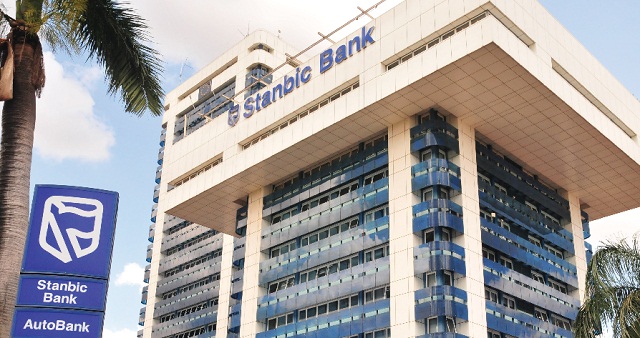
Stanbic Bank, KACITA partner to ease traders’ ability to source goods from Asian markets

Stanbic Bank

Stanbic Bank Uganda Limited and Kampala City Traders Association (KACITA) have partnered to ease traders’ ability to source for goods from Asian markets as well as pay the stipulated taxes on the imported items.

The partnership is expected to improve compliance, but the bigger aim is to help transform Uganda’s small and medium enterprises (SMEs).

Anne Juuko, Stanbic Bank Uganda Chief Executive said, “Our purpose as a bank is ‘Uganda is our home, we drive her growth’, SMEs are the heartbeat of the country employing over 2.5 million Ugandans, but they have been hit hard by the pandemic which is why it is important to have this partnership now.”

Juuko said the partnership will provide some relief to traders as a result of disruptions in the global supply routes and their ability to source for goods.

Under the partnership, Stanbic Bank has agreed to facilitate importation of goods from China and other Asian countries through its Subula Express proposition. On top of that, the bank will create special trade accounts at various branches to cater for the traders’ requirements and at lower transaction charges.

Juuko said the bank has also agreed to scale-up lending to bankable enterprises which previously was not possible since they did not meet certain internal lending thresholds.

Most importantly, the partnership will see Stanbic Bank provide tax loans to qualifying customers in line with its lending criteria. Under this arrangement, already existing bank customers recommended by KACITA will qualify for unsecured loans not exceeding Shs 200 million.

New to bank customers, will also qualify for loans not exceeding Shs 200million under a collateral management arrangement.

On its part, KACITA will ensure free flow of information between itself, the bank, and the Uganda Revenue Authority to give effect to the intended project. In order to ensure compliance, KACITA will also work with Stanbic Bank in the development of these initiatives to improve and expand support to the traders they transact with. KACITA will also allow Stanbic Bank to carry out monitoring and evaluation activities to assess the impact of these activities on the participating traders.

Meanwhile, in a bid to ease tax collection and compliance, KACITA will ensure that all recommended customers will have to be enrolled on the Electronic Fiscal Receipting and Invoicing System (EFRIS) where applicable.

KACITA will also ensure that the customers recommended are of good standing in the trader community. The Association will verify their physical premises and confirm the specific business the traders are involved in.

This partnership has been strongly endorsed by the Government of Uganda through its agencies namely, URA and Uganda National Bureau of Standards.

Stories Continues after ad

Gov’t loses Shs1.6 trillion annually in illicit alcohol – Euromonitor report

Onapito Ekomoloit

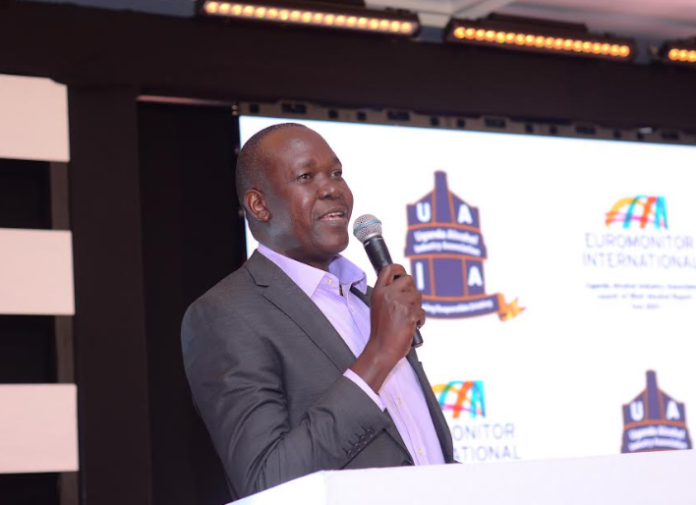
The Uganda Alcohol Industry Association has launched an industry report that shades light on the trade and consumption of Illicit Alcohol in Uganda.

Among other explosive revelations, the report found that the Government of Uganda loses approximately Shs1.6 trillion in unrealized taxes due to evasion of tax by the illicit trade as well as lax enforcement of existing laws that govern the production and sale of Alcohol.

Titled Understanding and Sizing Illicit Alcohol Consumption in Uganda, the report was released from research done in 2021 by Euromonitor International, a leading independent provider of strategic market research for the past 40 years. In compiling this report, Euromonitor conducted an extensive review of publicly available secondary resources, retail channel observations, opinions from Multiple Stakeholders to identify where and how Illicit Alcohol is sold, distributed and consumed and also its Socio- Economic impact on society

Speaking at the launch of the report, the state Minister of Finance Planning and Economic Development David Bahati said he was surprised by the amount of money that government is losing through some lax and the not so strong laws on enforcement of the Enguli act which prohibits the manufacture and consumption of Enguli if one does not have a Licence.

“We shall relook at this law and seek to update it in enforcing the production and sale of alcoholic beverages to prevent the issues we have heard today that are attributed to the consumption of unregulated alcohol like health issues and importantly the loss of revenue to government”

He said that his is money that could be put to good use providing much needed social services to the people and promised that the Ministry pledges to take this tax leak seriously and to address it conclusively.

According to the report, Current penalties and punishment stipulated in the act is not sufficient in curbing regular or new illicit players in the production, sales and smuggling of illicit alcoholic drinks. Punishment imposed and paying of fines is considered worth the risk in trading illicitly. Moreover, the inadequate enforcement allows illicit traders to continue operating and distribute their goods across formal and informal channels.

Between 2017-2021, the value market size of illicit alcoholic drinks increased at a 18.3% Compound Annual Growth Rate (CAGR) from $577.8 million in 2017 to $956.8 million in 2020. In the same period, the total consumption of illicit alcohol recorded increased volume growth at a 9.1% CAGR, impacted by high inflation rates, low disposable incomes, poverty and a lack of regulation enforcement. Illicit alcohol is widely sold directly from private households which are involved in the production, as well as consumption of these beverages

Mr. Onapito Ekomoloit the Association chairman, said that as an Industry, they are heavily impacted by the thriving illicit alcohol trade noting that the industry has to carry the heavy taxation burden and regulatory measures that are not fairly distributed yet the sector that is taking the most out of this trade goes unregulated, untaxed.

 “The scale of illicit alcohol is often underestimated, making the formal sector an easy target of regulatory bodies; a disproportionate blame for alcohol related harm and the resultant punitive taxation regime. Illicit alcohol currently makes up 65% of the total market volume. That means the rest of the industry players make 35% and yet, we are among the top 10 taxpayers in the country due to the heavy taxation imposed on our products. A fairer, more balanced approach on equitable taxation of the industry would have positive ripple effects across the entire value chain. It would mean we are able to support more farmers, invest more in our industries and create more employment opportunities across the board” Okomoloit said

He commended government on the Digital Stamp Tax that has seen the importation and sale of illicit spirits reduce substantially in the last one year, but also noted that the proposed changes under 2021 Amendment of Excise Duty Bill would lead to increase of retail unit prices in spirits, beer and other alcoholic drinks. As a result, legally produced alcoholic drinks would become even less affordable for more Ugandans driving them to illicit consumption.

Stories Continues after ad

Pressure groups aim at undermining political parties – Kiwanda Ssuubi

Godfrey Kiwanda Ssuubi

The NRM Vice Chairperson for Buganda regionm, Godfrey Kiwanda Ssuubi has said that the formation of pressure groups by the different political players is aimed at undermining political parties in the multiparty dispensation in the country.

Kiwanda’s words come at a time when Dr Kizza Besigye, a four time Presidential Candidate launched a new pressure group named People’s Front for Transition (PFT) a force aimed at overthrowing the gov’t of Gen Yoweri Museveni.

“These pressure groups are not formed in good faith because they try to paint a picture that multi party politics is not working well in the country and that the only way is use waves and pressure groups to take power,” he said.

Kiwanda said there is a lot of hate speech especially from the opposition political players whose words can easily lead Uganda into an insurgency.

“Uganda is a peaceful country with no one interested in war especially when people look back at where this country came from. these pressure group are fronts that the opposition wants to use to cause chaos, start riots and bring about insecurity in the country,” Kiwanda said.

Stories Continues after ad

DRC starts Ebola vaccination

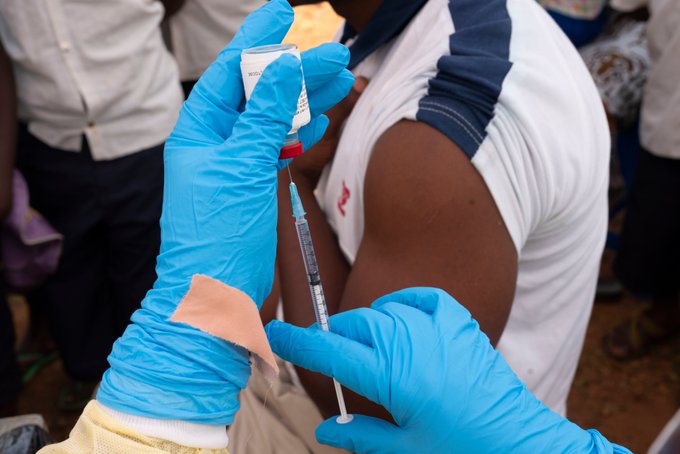
Health worker prepares to vaccinate a man

Ebola vaccination began today in the Democratic Republic of the Congo’s North Kivu Province where a case was confirmed on 8 October. People at high risk, including contacts of the confirmed case and first responders will receive the doses as the health authorities move to curb the spread of the virus.

The confirmed case was a two-year old boy who died on 6 October in a local health facility. He lived in the same community where three members of the same family died in September after experiencing Ebola-like symptoms.

About 1000 doses of the rVSV-ZEBOV Ebola vaccine and other medical supplies were delivered from the capital Kinshasa to Goma city in North Kivu and around 200 doses were sent onward to Beni city, which is near the Butsili health area where the confirmed case was detected. Vaccinators are using the “ring vaccination” approach, where contacts and contacts of contacts are vaccinated. The Democratic Republic of the Congo has more than 12 000 vaccine doses in Kinshasa that can be deployed if necessary.

“Ebola is a virulent, lethal virus that can spread aggressively and fast. But vaccines can create a firewall of protection around cases, stopping the chain of transmission, averting a potentially large outbreak and saving many lives,” said Dr Matshidiso Moeti, World Health Organization (WHO) Regional Director for Africa. “The Democratic Republic of the Congo is spearheading the efforts to halt this latest Ebola resurgence, banking on expertise built in responding to previous outbreaks.”

In addition to organizing vaccination activities, emergency response teams are working around the clock to trace contacts, decontaminate infected spaces and step up surveillance and testing. Already, more than 170 contacts have been identified and teams are monitoring their health. To support the national authorities in the response efforts, WHO has released US$ 200 000 through its Contingency Fund for Emergencies. WHO is also in the process of shipping five tons worth of response supplies, including therapeutics, personal protective equipment and laboratory materials.

Among the first members of the 15-person WHO surge team deployed to Beni is an expert in the prevention of sexual exploitation and abuse. The expert will brief WHO employees and partners on how to prevent any inappropriate and abusive behaviour. The expert will also work with local non-governmental organizations to sensitize communities on sexual abuse and how to report it.

Beni was one of the epicenters of the 2018–2020 Ebola outbreaks in eastern Democratic Republic of the Congo and is about 50 km from Butembo city which experienced a new Ebola outbreak earlier this year. Sporadic cases can occur following a major outbreak, but further genomic sequencing is needed to determine if this latest case is linked to the previous outbreaks. The Democratic Republic of the Congo’s National Institute of Biomedical Research’s main laboratory in Kinshasa is currently testing samples of the confirmed case to identify the strain and results are expected this week.

Stories Continues after ad

Police to deploy 160 to Somalia

ASP Figalo Maxime

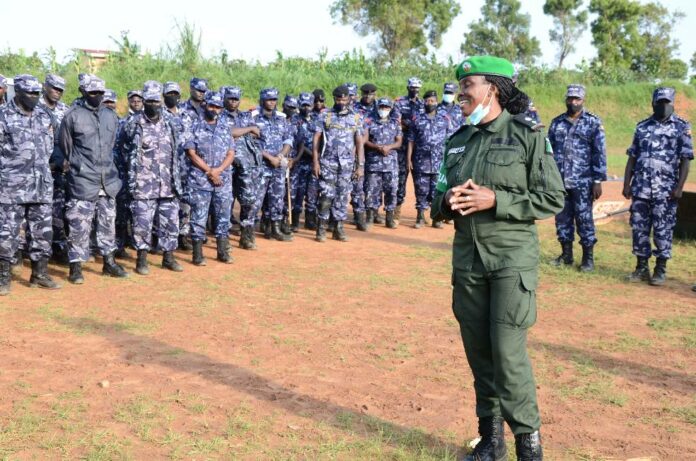
Uganda Police Force is set to deploy 160 officers to Somalia this December.

The team is part of the Formed Police Unit (FPU) who, today, completed a 6 months intensive Pre-deployment training course in Peacekeeping Operations of African Union Mission in Somalia (AMISOM).

The Officers, during the training at Kigo, were assessed by a team of five Formed Police Assessment officers Led by ASP Figalo Maxime from AMISOM Headquarters.

In Somalia, the officers will provide Public Order management, Protection of African Union personnel and facilities within means and capabilities, and Support police operations that require a formed response.

The Government of Uganda deployed the first Formed Police Unit (FPU) in Somalia under AMISOM in July 2012 after the UPDF had deployed there earlier on in 2007.

Units have rotated on annual basis and the deployment of this Unit will make the tenth rotation of Uganda FPU in Somalia under African Union (AU).

Stories Continues after ad

Prof. Barnabas Nawangwe to seek another term as Makerere Vice Chancellor

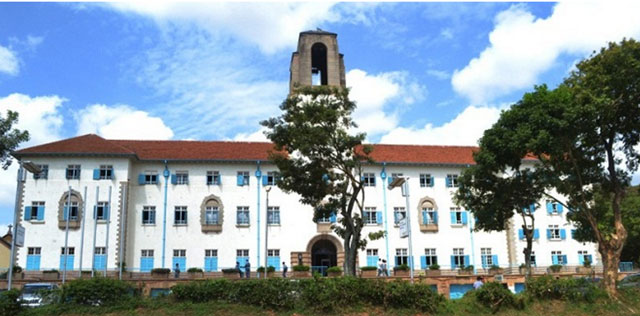
MUK Vice Chancellor Prof. Barnabas Nawangwe.

Prof Barnabas Nawangwe is set to seek another term as Makerere University Vice Chancellor. Nawangwe is serving his fifth and final year as the institution’s CEO after being appointed in 2017.

Section 31(4) of the Universities and Other Tertiary Institutions Act stipulates that the Vice Chancellor shall be appointed on terms and conditions determined by the University Council for five years and shall be eligible for re-appointment for one more term.

Whereas procedures allow him to seek another term, age is not on his side since he is 65 years old. His allies are inquiring whether the age limit can be circumvented. The plan is reportedly to have a friendly search committee which can tilt things a bit in his favour. And this has happened before. During the 2012 search process that saw Prof John Dumba Ssentamu become VC and Prof Venansius Baryamureeba kicked out, the age limit was put between 40-60 years for applicants.

However, during the 2017 VC search process that brought in Prof Nawangwe, they changed it from to between 40-65 years. Nawangwe allies feel this time it can be changed from 65 to at least 68 or so.

Nawangwe allies are consulting on whether his tenure can automatically be renewed or extended without going through a search process. This option, though it may block other potential candidates, is also reportedly being examined. Those pushing for it reason that the VC’s stellar performance should be rewarded.

They are also reasoning that Covid-19 pandemic has eaten into his time which needs to be compensated with an automatic renewal of his contract. These and many other options are being examined by Nawangwe allies to see him serve a second term.

The staff is also unhappy with Prof. Nawangwe led administration which has set a record of running an institution of Makerere caliber without a substantive Deputy vice chancellor in charge of Finance and Administration (DVC (F&A)) for four years which they see as incompetence.

Under Nawangwe’s tenure, most of the top University management jobs have been occupied in acting capacity. The best practice is that top management gets to know of the impending vacancy, plan and have it advertised on good time so that the day the incumbent leaves there is a competitively recruited successor to immediately take charge.

Many Nawangwe critics have been wondering why this isn’t being done by his administration yet Makerere is supposed to be a model of excellence for the rest of the country to emulate on many of these matters. The institution has spent four years without a substantive DVC (F&A). Here is what happened. The DVC (F&A) search process started in 2018 but the process was flouted as evidenced in the court ruling of June 2019 on the instigation of one of the candidates Prof Anthony Mugisha.

On the 14th of June 2019, court quashed the appointment of Prof. William Bazeyo as DVC F&A. Court also ordered the repeat of the search process. This was after the court finding that the process had been flawed. Instead of repeating the search process and filling up the position, Makerere University decided to re-appoint Prof. William Bazeyo in acting capacity.

After waiting for over six months Prof Mugisha on the 17th of December 2019 lodged an application in the High Court for contempt of court (MISC APPN No. 848, 2019).

To comply with the court order, at a special meeting on the 19th of February 2020, Council directed Senate to repeat the search process. And in June after waiting for over four months, an advert was run in the media for a whole month (June-July).

In response to the advert, four candidates applied, that is Prof Mugisha, Prof. William Bazeyo, Dr. Allan Katwalo Mulengani and Dr. Eddie Ekakooro.

After sieving through applicants papers, only three were shortlisted and were invited for face to face interviews and later invited to public presentations. The shortlisted applicants were Prof Mugisha, Prof. William Bazeyo and Dr. Allan Katwalo Mulengani.

On the 7th of August 2020, an invitation was sent out for special Senate slated for Friday the 14th of August 2020 to consider the search report. However on the 11th of August 2020 a day after public presentations, a circular was sent out to Senators cancelling the Senate Meeting that was earlier called to consider the search report. During that period, everyone was waiting for a report to be presented to Senate with three applicants who had successfully gone through the search process, that is, Prof. William Bazeyo, Prof. Anthony Mugisha and Assoc. Prof. Allan Katwalo Mulengani. Senate should have selected one name through voting as it has always been the practice, recommend the name to Chancellor for appointment with approval of Council.

After two months of waiting, on the 8th of October 2020 Prof Bazeyo resigned from acting in the position of DVC (F&A) and withdrew from the search process citing personal and family reasons. Instead of presenting the report to Senate for voting on the two remaining applicants, Senate was informed that it could not discuss the search report since the term of the search committee had expired. And also that court had ordered that five names had to be submitted to Senate which was not true.

After shunting Senate, management presented a report in Council which sat on the 27th of October 2020. The management report had a section on the search for DVC (F &A) and the resignation of Prof. Bazeyo. The search of the DVC is a business of Senate and not management. In the report of Management to Council, no reason was given as to why Special Senate was postponed indefinitely.

Instead of completing the search process, and appoint a substantive Deputy Vice-Chancellor (Finance and Administration), on the 11th of November, Dr. Josephine Nabukenya was appointed in acting capacity and she has been acting up to today.

On the 6th of November 2020, the Ag. University Secretary sent out a letter to the Academic Registrar instructing him to repeat the search process including re-advertising the position for the Deputy Vice-Chancellor (Finance and Administration

Court on 22nd of January, 2021 stopped the repeat of the search process for the DVC (F&A) for the third time, and the Judge counseled the Makerere University lawyers to advise their bosses to do what is right by completing the earlier search process which was halted without any sound reason.

Stories Continues after ad

Sub-Saharan Africa exits recession in 2021 but recovery still vulnerable

Mr.-Albert-Zeufack-World-Bank’s-Chief-Economist-for-Africa

Sub-Saharan Africa is set to emerge from the 2020 recession sparked by the COVID-19 pandemic with growth expected to expand by 3.3 percent in 2021.

This is one percent higher than the April 2021 forecast according to the latest edition of Africa’s Pulse. This rebound is currently fueled by elevated commodity prices, a relaxation of stringent pandemic measures, and recovery in global trade, but remains vulnerable given the low rates of vaccination on the continent, protracted economic damage, and a slow pace of recovery.

According to analysis in the Pulse, the World Bank’s twice-yearly economic update for the region, growth for 2022 and 2023 will also remain just below 4 percent, continuing to lag the recovery in advanced economies and emerging markets, and reflecting subdued investment in SSA.

“Fair and broad access to effective and safe COVID 19 vaccines is key to saving lives and strengthening Africa’s economic recovery. Faster vaccine deployment would accelerate the region’s growth to 5.1 percent in 2022 and 5.4 percent in 2023 as more containment measures are lifted, boosting consumption and investment,” said Albert Zeufack, Chief Economist for Africa at the World Bank.

The analysis shows that current speeds of economic recovery in the region are varied, with the three largest economies, Angola, Nigeria, and South Africa, expected to grow by 0.4 percent, 2.4 percent, 4.6 percent respectively. Excluding South Africa and Nigeria, the rest of SSA is rebounding faster at a growth rate of 3.6 percent in 2021, with non-resource-rich countries like Côte d’Ivoire and Kenya expected to recover strongly at 6.2 and 5.0 percent, respectively.

A positive trend, according to the report authors, is that African countries have seized the opportunity of the crisis to foster structural and macroeconomic reforms. Several countries have embarked on difficult but necessary structural reforms, such as the unification of exchange rates in Sudan, fuel subsidy reform in Nigeria, and the opening of the telecommunications sector to the private sector in Ethiopia.

Additionally, thanks to prudent monetary and fiscal policies, the region’s fiscal deficit, at 5.4 percent of GDP in 2021, is expected to narrow to 4.5 percent of GDP in 2022 and 3 percent of GDP in 2023. However fiscal discipline, combined with limited fiscal space, has prevented African countries from injecting the level of resources required to launch a vigorous policy response to COVID-19.

Apart from mounting fiscal pressures and rising debt levels as they implement measures for a sustainable and inclusive economic recovery, Sub-Saharan African countries are also faced with worsening impacts of climate change. The Pulse authors advise that just as the countries have used the crisis to introduce reform measures, they should also harness this opportunity to make sustainable, resilient transitions toward low-carbon economies that can provide long-term benefits in the form of reduced environmental hazards as well as new economic development openings.

The reports highlights Africa’s unique context of low baseline development, pre-existing climate vulnerabilities, limited energy access, and high reliance on climate-sensitive sectors as posing challenges but also providing opportunities to transform the economy and create jobs.

Private firms and governments in Africa are providing training for jobs in solar energy   Investments in climate-smart infrastructure can help cities create jobs. Decarbonization is an opportunity to foster manufacturing activity in the region, including the production of components of the Internet of Things, value-addition to minerals that will power the green economy, and insertion into regional value chains.

Stories Continues after ad

Makerere University summons six students over online exam malpractices

Makerere Main Building

Makerere University College of Natural Sciences (CONaS) and School of Education and External Studies have summoned students for engaging in exam malpractice.

Recently, Makerere University conducted online examinations for all its students following the closure of schools in June this Year. The closure peddled at curbing the spread of Covid-19 Pandemic.

According to the University Academic Registrar, Mr. Alfred Namoah Masikye informed the alleged students will appear before the committee without fail.

“The following students are required to appear before the examinations, malpractice irregularities and appeals committee on Wednesday 20th October 2021 at 2:30 pm in chemistry board room without fail,’’ reads in part of the statement released by Mr Masikye.

The committee will make its decision on the students’ fate after thorough engagement. The student will either re-do the exams or be dismissed by the Senate which is the highest decision-making body at the University.

The suspected students include; Kakuru Jonas Mugume (BSEDP), Magunda Micheal (BSEDp), Musige Fred (BSEDP), Okiror Solomon (BSEDP), Jungiera Alfred (BSEDP) and Bemanya Anthony (BSFA).

Stories Continues after ad