Stanbic Bank
Stanbic Bank
18.9 C
Kampala
Stanbic Bank
Stanbic Bank
Home Blog Page 758

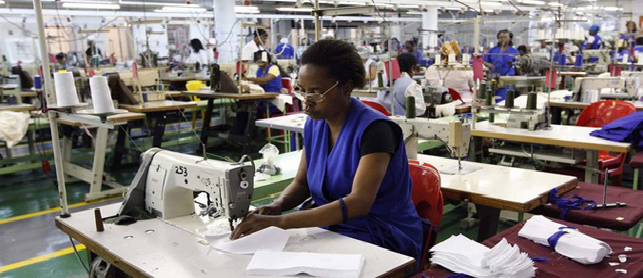
Gov’t stays taxes on fabrics and garments

textiles

The Minister of State for Trade, Hon. Harriet Ntabazi has told Parliament that government stayed imposition of the specific duty rates of USD 3 and USD 3.5 per kilogramme for fabrics and garments respectively.

Ntabazi made this revelation while presenting a ministerial statement on the-would have been strike by textile dealers in Kampala due to the decision by Uganda Revenue Authority (URA) to use textile weight for taxation.

“Government considered the traders’ concerns and revised its earlier position on the remaining 47 products (tariff lines) and stayed application of the specific duty,” she said.

Ntabazi added that after a meeting with the traders in the presence of the Finance Minister, they agreed to deal with the traders concerns. The issue had been earlier raised by the Kasilo County MP, Hon Elijah Okupa, who then noted that traders were unhappy with paying taxes per kilogramme when fabrics and garments do not weigh the same.

Speaker Jacob Oulanyah was concerned about the provisions in the law which relate to taxation.

“Did they amend the laws mid-term without Parliament? These are points we need to know; we are in the budget process, why would you break the financial year into two regimes? Why don’t we review it with the budget so that we don’t disrupt the market,” he asked.

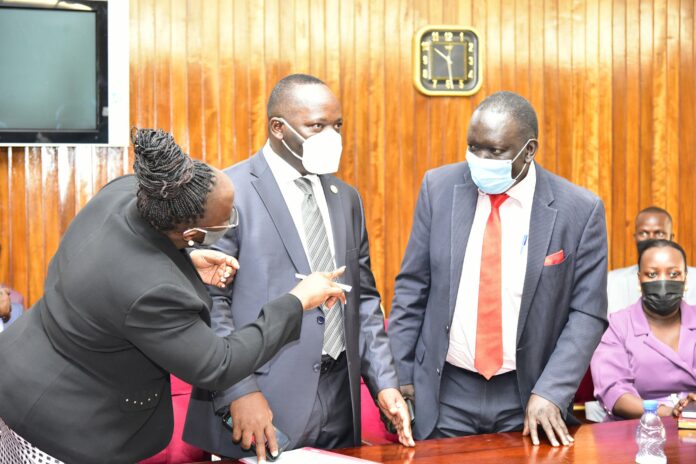
The State Minister for Finance, Hon Amos Lugoolobi said that they had to choose one line of tax because there was a stalemate in the industry and containers were stuck in customs.

He added that after the specified period, when the law was passed some goods were in transit.

“We saw that many traders had already ordered for their goods; we thought this time would enable them to clear their goods that were already in transit. After that period, we shall have a review with them to see if we should keep the 35 per cent or keep the US$3 or US$3.5 per kilogramme,” he said.

Stories Continues after ad

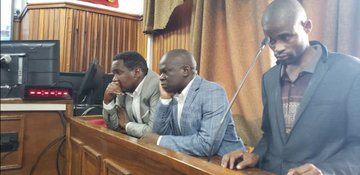
Court remands MPs Ssegirinya, Ssewanyana on new murder charges

MPs Ssegirinya and Ssewanyana

Kawempe North MP Muhammad Ssegirinya and Makindye West Legislator Allan Ssewanyana have been remanded to Kigo Prison.

The two were re-arrested moments after being released from Kigo government Prison. Appearing before Masaka Chief Magistrate Charles Yeitesi, they were slapped with new charges of murder allegedly committed at Kissekka village in Lwengo district.

Prosecution avers that that Ssewanyana, Ssegirinya and others still at large 2nd August 2021 at Kisekka B Village, Kankamba Parish, Kisekka Sub- County in Lwengo district with malice aforethought killed Bwanika Joseph.

Last week, Masaka High Court Judge Nakintu Victoria released Ssegirinya and his counterpart Ssewanyana on Shs 20 million cash bail each and bonded each of their sureties with Shs 100 million non cash.

They are accused of terrorism contrary to section 7 (1) and (2) (d) and (d) of the Anti-Terrorism Act 2002 in count one, aiding and abetting terrorism contrary to section 8 of the Anti-Terrorism Act 2002 in count two, murder contrary to sections 188 and 189 of the Penal code Act in Counts three, four, five and attempted murder contrary to section 204 (a) of the Penal code Act.

They in tandem have been remanded till 13th October 2021.

Stories Continues after ad

Kyambogo Guild president John Mbaziira sacks two of his ministers

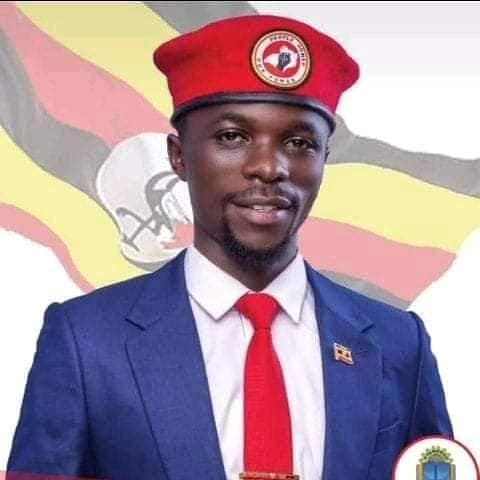
NUP's John Mbaziira

The National Unity Platform (NUP) Guild president at Kyambogo University John Mbaziira has sacked two of his cabinet ministers for misrepresentation, misconduct and disruption of guild affairs.

The sacked ministers include; Minister of Ethics and Integrity, Kamya Carols and Deputy Prime Minister Nkurunziza Alphonse.

According to a letter dated 28th September, the duo was informed of the termination of their offices. The latter is accused of misconduct and disruption of cabinet meetings while the former, the minister of integrity, fell short of his integrity. Carols is accused of dodging cabinet sessions as well as summons on the same matter.

The two, according to the letters issued to them, are expected to quit office with effect from 28th September. However, sources indicate that the two are not willing to step aside as they believe Mbaziira John Senior is not working towards the good of the students community but rather satisfying his own interests.

“Your continued absence from duty has greatly created a gap in the performance of the executive via your office. The letter is therefore to formally announce the termination of your service as the as the 17th Guild minister for Ethics and Integrity as well as dismissing you from the executive as mandated by Article 10 Clause 2(a) and Article 8 Clause 8(h) respectively,” reads in part of letters.

Stories Continues after ad

Opposition MPs resolve to snub parliamentary sittings until Ssegirinya and Ssewanyana are presented in court

Opposition MPs

The Opposition Member of Parliament have resolved not attend plenary until Kawempe North MP Muhammad Ssegirinya and Makindye West Legislator Allan Ssewanyana are produced in courts of law.

The two were re-arrested moments after being released from Kigo government Prison. They are accused of terrorism contrary to section 7 (1) and (2) (d) and (d) of the Anti-Terrorism Act 2002 in count one, aiding and abetting terrorism contrary to section 8 of the Anti-Terrorism Act 2002 in count two, murder contrary to sections 188 and 189 of the Penal code Act in Counts three, four, five and attempted murder contrary to section 204 (a) of the Penal code Act.

Speaking at Parliament, the MPs led by the Leader of opposition Mathias Mpuuga, demanded a government explanation on the whereabouts of other opposition supporters who have allegedly been in detention for a while.

“We cannot attend to Parliament business when the rights of our colleagues are being violated. The two haven’t been produced in court beyond the 48 hours and we are here legislating normally. We know that even if they were guilty, the laws of the land state how they must be treated,” LoP said.

“Without the state explaining this, we are constrained to move as though it is normal business when MPs have been abducted. We ask through you for an immediate explanation from the government. We seek your guidance on whether u have been briefed as was the first time,” he said.

Mpuuga said the presumption of innocence is cardinal in our criminal procedure system. Today you may think it is Ssewanyana and Ssegirinya but tomorrow, it may be you.

Yesterday, opposition MPs stormed out of the Parliament after the Attorney General, Kiryowa Kiwanuka’s comments about the re-arrest of Ssewanyana and Ssegirinya. Kiwanuka said the two MPs will be presented in court and they can go back as many times as the offences they commit.

Stories Continues after ad

PM Nabbanja, Hillary Onek feud over Shs5b

PM Nabbanja

There is a growing feud between the Prime Minister Robinah Nabbanja and the Minister for Relief, Disaster Preparedness and Refugees Hillary Onek.  The disagreement is alluded to the Shs5 billion diverted from his budget.

The minister is disappointed about how money is being diverted from his budget to the Prime Minister’s office. According to a leaked letter dated September 15, from Eng. Onek to Nabbanja, the minister expressed his dismay over the decision to divert Shs5 billion from his Shs15 billion budget.

“I would like to protest against the change in our work plan and diversion of the little resources intended to address the massive disasters that have befallen our people,” the letter reads in part.

He went ahead and asked the PM in the letter to notify the Ministry of Finance, Planning and Economic Development, as well as the Auditor General. This would be in the event that she goes through with the diversion of the Shs5 billion. He said through this, they will make proper accountability for the Shs15 billion.

However, the source in the Relief Department at OPM said Onek’s protest letter is aimed at absolving himself from any misuse of the funds.

On the contrary though, another source close to the PM said she diverted the money to personally supervise the process of resettling those affected by floods. The source added that corruption has crippled the handling of relief situations.

In July, Nabbanja rejected relief items donated to people displaced by floods in Kasese district saying they were sub-standard. The items included beans, sugar, mosquito nets, among others. She said the supplier must bring better quality items because Kasese is not a dumping site.

Stories Continues after ad

Emirates SkyCargo marks five years in transporting temperature sensitive pharmaceuticals

500_emiratesskycargogdpcertifieddedicatedpharmaceuticalfacility

Emirates SkyCargo, the global leader in the air transport of temperature sensitive pharmaceuticals, is marking an important operational milestone.

Five years ago, in September 2016, Emirates SkyCargo raised the bar in the air cargo industry for the safe and efficient transport of pharmaceuticals by launching its dedicated GDP certified pharma handling facility at Dubai International Airport and at the same time unveiling its three-tiered specialised product – Emirates Pharma.

Nabil Sultan, Emirates Divisional Senior Vice President, Cargo, said: “At Emirates SkyCargo, we recognised very early on that our customers were looking for increasingly specialised solutions for their cargo and this was true especially for valuable and life-saving medicines that have to be transported under very strict conditions. After extensive planning and significant investment to our infrastructure, processes and people, we introduced our 360 degree transportation solution backed by state of the art GDP certified Dubai handling facility for our pharma customers in September 2016.

“The response from the market was overwhelmingly positive and we managed to very quickly transform the perception that Dubai was a destination to be avoided for pharma cargo in the summer to that of Dubai being a reliable hub for pharma customers all year round. Our pharma volumes have continued to grow over the years and to date we have transported more than 400 million kilos of pharma cargo under our Emirates Pharma umbrella.”

Emirates SkyCargo has over 20,000 sq. metres of GDP compliant storage and handling space at its hub in Dubai processing close to 200,000 kilos of pharmaceuticals every single day comprising vaccines, biologics, medicines for illnesses such as cancer, diabetes and a range of other medical treatments.

Emirates SkyCargo’s pharma operations in Dubai have undergone rigorous evaluation for compliance to GDP guidelines by Bureau Veritas, Germany including two full certification cycles involving multiple certification and surveillance audits. Emirates SkyCargo’s pharma operations have also successfully undergone multiple audits conducted by customers and pharmaceutical manufacturers.

The carrier has one of the world’s largest fleets of Cool Dollys which help maintain cargo at a stable temperature between aircraft and terminal. Close to 50 of these Cool Dollys are dedicated for pharmaceutical cargo. Emirates SkyCargo also works with a number of specialized container providers in order to offer customers a better choice and fit for their shipping needs.

Building connections to deliver cures: The establishment of a world class transportation hub for pharmaceuticals at Dubai by Emirates SkyCargo has facilitated the rapid and secure transport of pharmaceutical products from manufacturing locations to end destinations. Over the years, the carrier has been able to connect increasing volumes of pharma cargo between markets spread across six continents including India, Germany, Belgium, the Netherlands, UK, Russia, United States, Brazil, Australia, Korea, Japan, UAE, Saudi Arabia and Egypt. Nearly one third of the total pharma cargo exported on Emirates SkyCargo every year originates from India.

Emirates SkyCargo has also worked with ground handlers across more than 35 leading pharma origin and destination airports to ensure high standards of pharma handling from origin to destination. In Chicago, one of the major pharma stations in the Emirates SkyCargo network, the carrier worked closely with the local ground handler for developing a GDP certified airside pharmaceutical handling facility spread over 1000 sq. metres. Pharma operations at Copenhagen, another important pharma station, were also moved to a dedicated GDP certified facility in 2019.

During the pandemic, it became even more essential for Emirates SkyCargo to maintain the supply chain across the world for pharmaceutical products, for treatment of COVID-19 and other illnesses. By deploying an increasing number of cargo only flights on passenger aircraft, Emirates SkyCargo offered continued connectivity for the transport of urgently required pharmaceuticals.

As early as August 2020, Emirates SkyCargo commenced preparations to make its hub fit for purpose for the transportation of COVID-19 vaccines. More recently, the carrier expanded its cool room infrastructure with 94 airline pallet positions at its EU GDP certified dedicated pharma facility at Dubai International Airport. The extended cool room provides additional capacity in a temperature-controlled environment (2-25 degrees Celsius), allowing for the equivalent of between 60-90 million doses of COVID-19 vaccines to be stored at any one point of time.

Between October 2020 and September 2021, Emirates SkyCargo has transported more than 250 million doses of COVID-19 vaccines to more than 75 destinations through its hub in Dubai.

As part of the Dubai Vaccine Logistics Alliance, Emirates SkyCargo joined hands with DP World, International Humanitarian City and Dubai Airports to combine expertise and strengths to expedite the movement of vaccines to developing nations through Dubai. The carrier also entered into an MoU with UNICEF to facilitate the distribution of COVID-19 vaccines in support of the COVAX facility for equitable distribution of vaccines.

 In May 2021, Emirates SkyCargo set up the Emirates India Humanitarian Air Bridge and donated cargo capacity to transport essential supplies including oxygen cylinders, concentrators and relief tents free of charge on flights from Dubai to Indian destinations to help the Indian community battle the COVID-19 pandemic.

Stories Continues after ad

PM Nabbanja commends Next Media’s Pablo Bashir for being a professional Protocol Officer

PM Nabbanja and Next Media Protocol Officer Pablo

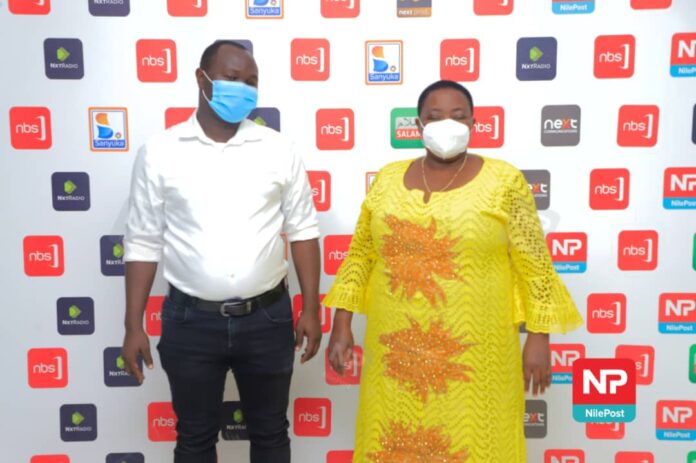
The Prime Minister of Uganda Robinah Nabbanja has applauded the Media Chief of Protocol Officer Pablo Bashir Sewalu for ushering her into NBS TV studios in a professional way.

Nabbanja was on Sunday at Next Media’s NBS TV to be part of the station’s Eagle show as a guest. The show was hosted by Simon Kaggwa Njala.

“I thank the Next media chief of protocol @pablo_bashir for the great job done when I stepped at Next Media @nbstv @KKariisa @UgandaMFA @UgandaMediaCent @KagutaMuseveni,” the Prime Minister tweeted on Sunday.

Pablo is one of the few protocol officers in Uganda who are on top of their game.

He has been in this business of ushering in highly sensitive high profile guests to where they need to be for more than 6 years.

As Next Media’s Chief Protocol Officer, keen-eyed Pablo brings in clients and guests for media interviews. On top of that, he prepares the way for his boss Dr Kin Kariisa and whenever he is travelling he goes there first to make sure everything is in place.

Recently, during an interview with this news website, Pablo disclosed that as a professional protocol officer he has rules he follows and his first priority is to get his guests to where they need to be and achieve what took them there.This is why Pablo never leaves the side or sight vision of the persons he is charge of be they are delivering an important speech at a business lunch or appearing for the first time for a TV interview.

Pablo has been in the room with everyone from President Yoweri Museveni, Next Media Services CEO Kariisa to prime ministers, ministers like General Katumba Wamala, police officers among others.

He has also handled continental dignitaries like Kenya’s President Uhuru Kenyatta, his vice William Ruto and Mufti Menk. He has even had the honour of handling part of Pope Francis’s protocol during the 2016 papal visit to Uganda.

Why is a Protocol Officer important?

A protocol officer is someone employed to facilitate meetings, ensure proper etiquette for official engagements, and streamline interactions with dignitaries and other important people.

The job typically involves some elements of event planning, but focuses more on personnel issues. A protocol officer’s main job is to guide leaders, be elected officials or corporate executives, away from etiquette or cultural mistakes. This typically requires a lot of research and a great deal of tact.

What makes a good Protocol Officer?

  1. Discretion is key

Pablo has been in the room with everyone from President Yoweri Museveni, Next Media Services CEO Kin Kariisa to prime ministers, ministers like General Katumba Wamala, police officers and he says what makes him welcome in these rooms is discretion. He has handled continental dignitaries like Kenya’s President Uhuru Kenyatta, his vice William Ruto. He has even had the honour of handling part of Pope Francis’s protocol during the 2016 papal visit to Uganda.

A protocol officer must be an expert at seeing and hearing everything while not talking about it. A protocol officer is like a bodyguard, the best are never noticed, they are the gel that puts at ease those in their care.

A protocol officer will witness many embarrassing moments but the best of them earn the trust of the protocol officer that no one else who was not at the scene will ever know of it. Being at the scene leads to another important rule Pablo has learned as he practiced his trade.

  1. Anticipation

The best protocol officer will minimise to remove opportunities for faux pas to happen. On Pablo’s watch, his first priority is to get his guests to where they need to be and achieve what took them there. This is why Pablo never leaves the side or sight vision of the persons he is in charge of, be they delivering an important speech at a business lunch or appearing for the first time for a TV interview.

Having been around a dignitary for hours or years helps Pablo to ensure the environment around them at a highly stressful time will be as comfortable as possible. Equally important, he will organise the environs of the hotel or high stakes event in such a way that his principal is able to function and do what they are supposed to do there.

Pablo was on hand to ensure that the then Director General at Angie-Primature in the Office of the President of Guinea Camara Namory had a memorable, productive visit to Alam group of companies. Namory met with the top management team of Alam Group of Companies before embarking on a tour of some of the group’s various business ventures.

Escorted by the senior Alam, Namory was given a tour of the Sugar & Allied Industries Limited whose lead product is Kaliro Sugar with Pablo overseeing every step of the visit.

3.The Moderator

Few skills are more necessary for the work Pablo does than diplomacy. His ability to bring down the temperature in a room is key as he has to work with personalities who are often on opposite sides of a political fight. Pablo is as comfortable in the company of fiery government critic Mathias Mpuuga (LOP) as he is with government spokesperson Ofwono Opondo.

The protocol officer must expect to mediate at some point in their career. Sometimes over a long span of time. Pablo relishes this challenge.

  1. Exit strategy master

Pablo believes that many aspiring protocol practitioners forget it is as important how a guest leaves a location as they arrived. He argues that these final touches are what actually determine the lasting impression a guest will have of an occasion or service they have received while in your care.

This is why time does not matter in his protocol calling. Pablo will ensure that he is at the airport past midnight to receive a guest like revered Mufti Ismail ibn Musa Menk when he visited Uganda in April 2021. The celebrated but unassuming Mufti Menk who shirks an entourage congratulated his hosts on having the only assistant he would consider hiring if he had no choice but to have an entourage after experiencing Pablo’s all round care while in the Pearl of Africa.

Stories Continues after ad

NSSF members to get 12.15% interest for FY 2020/21

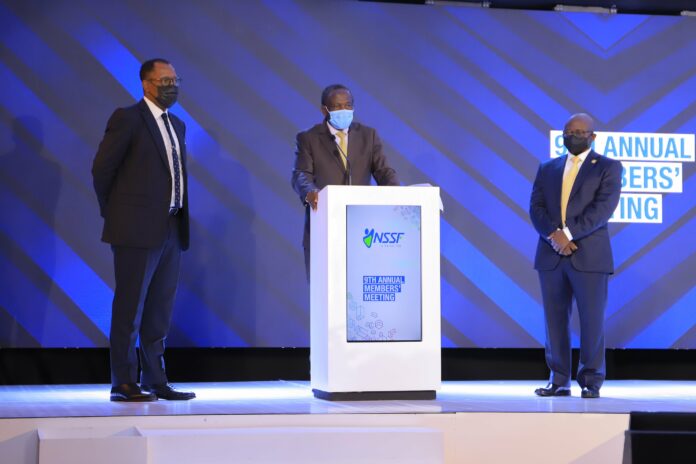
Finance Minister Matia Kasaija during the 9th NSSF Annual Members meeting

The National Social Security Fund (NSSF) has announced a 12.15 per cent interest rate for its members for the Financial Year 2020/2021.

The announcement was made today by Finance Minister Matia Kasaija during the 9th Annual Members meeting held at Sheraton Hotel.

“In exercise of the powers conferred upon me by section 35(2) of the NSSF Act, I have the pleasure to declare an interest of 12.15 per cent to be paid in interest to members for the Financial Year 2020/2021,” Kasaija said.

This is higher than the 10.75 per cent paid by the fund in the previous financial year 2019/20. In the 2017/18 financial year, NSSF paid the highest interest rate to its members at 15 per cent.

According to Kasaija, the fund will now pay Shs1.52 trillion to all its members which is an increase from the Shs1.14 trillion paid last financial year.

“This new rate equals Shs1.52 trillion. It is above the 10 years average rate of inflation which currently stands at 5.43 per cent. It is one of the most competitive rates in the market this year,” Hon Kasaija said.

“As provided for in the NSSF Act, this new rate will be calculated and credited on the balance outstanding on the members’ accounts as of 1st July 2020. I would like to congratulate the NSSF Board, Management and Staff once again for a stellar performance,” he added.

Kasaija called upon Ugandans to adopt the culture of saving saying the #Covid-19 pandemic has taught many a tough lesson.

The NSSF Managing Director Richard Byarugaba said the fund grew its asset base by 17 per cent translating into Shs15.5 trillion largely driven by investment incomes. He added that their biggest growth was registered in incomes from Shs1.4 trillion to Shs1.8 trillion.

Stories Continues after ad

Keeping schools closed is Museveni’s master plan to ruin Uganda’s Education system

School Children

The Former Kabale University Prime Minister Twinomuhangi Angello has lashed at President Yoweri Kaguta Museveni and his National Resistance Movement Government for intentionally manipulating and killing Uganda’s Education system.

Twinomuhangi who ventures in the Education sector says that it’s unfortunate that Museveni and his accomplices as well as the Ministry of Health are blindfolding Ugandans when it comes to reopening Educational institutions hiding in COVID-19.

In an exclusive interview with our reporter, Twinomuhangi stressed that Museveni and his people should stop the hide and seek games especially on the Education of poor Ugandans when other bigwigs are commercializing the virus in fake deals.

Disgruntled Twinomhangi poured cold water on Muuseveni’s measures on easing lockdown where he reopened Places of worship and mobile markets at the expense of Educational institutions which accommodate a reasonable number of learners and from a defined origin.

He is concerned that the President reopened Places of worship with a maximum of 200 attendants yet there is no classroom that can accommodate such a number of learners at ago. This ideally means that the church translates to six classrooms.

On the issue of mobile markets, Twinomuhangi is concerned that these gather masses from many corners of the community which according to him might spread the virus more than learners in Schools.

John F Kennedy once said “deny them education to lead them for a long time”.

“Museveni was like School going children will contract the scourge and spread it to the elderly after returning to homes, where do those that attend players and mobile markets end up? Don’t they go back home? What of those in betting halls? Won’t they infect the vulnerable group?” he said.

Twinomuhangi notes that the government is keeping a lock on Schools since they are a lesser privilege especially in remunerating taxes compared to markets and other sectors of the economy that have been reopened.

For the Church, he said they were reopened on pressure from religious leaders thus calling upon all players in the Education sector to rise up and force the government to move from this state of slumber.

On Schools reopening being tagged on teachers vaccination, Twinomuhangi wonders why the government is putting emphasis on teachers alone where a single teacher is in charge of over 50 pupils. “Are they targeting saving a teacher’s life at the expense of the pupils?” he questioned.

On registering private schools even before the schools are reopened, Twinomhangi they are targeting money from the private institutions without considering the service they render to the Country and the situation they are currently going through.

He rather insists that the government should think of renewing their licenses other than forcing them to register again stressing that they are targeting those in opposition to revoke their licenses.

“What’s the significance of re-registering these institutions? they are targeting those in opposition to revoke their licenses. What’s next for those who will have passed in those schools if they totally collapse because of the new measures? This is a master plan to kill the education system,” he lamented.

Twinomuhangi who is ambitious to take over the leadership of this country come 2026 questions why are all vaccination efforts turned against teachers as if it’s the only sector of the economy bitterly affected by the scourge.

He is optimistic that there is a Team benefiting from this so called covid-19 for example in transportation of drugs, those enforcing curfew guidelines stressing that every Ugandan will suffer in paying covid-19 debts.

On safe reopening of all Educational facilities, Twinomuhangi wants the government to provide learners, teachers and all stakeholders in the education sector with vaccines at the schools and reopening so that the citizens learn how to live with COVID-19 since it’s here to stay.

The Ambitious Head of the state says that it’s unfortunate that the government is channeling all the efforts to fighting COVID yet there are other illnesses killing Ugandans such as Malaria, cancer among others. This government will not prevent people’s death.

He stressed that corruption is killing the country and the only solution is overhauling the leadership to fresh blood. “You can confuse people but time and age will not” he added.

Twinomuhangi Angelo laughed at Tibuhaburwa for closing bars and allowed beer making companies to keep up the production question of where this alcohol is being sold. He is concerned that bars of prominent people are normally working at the expense of the poor Ugandans.

“Why did the government allow beer making companies to keep producing liquor which is sold in the said closed bars? Some people are using the covid-19 lockdown as a stepping stone on them would be businessmen and women,” he added.

Twinomuhangi’s concerns come days after the President announced that Primary and secondary schools will reopen next year after 4.8 million people in priority and vulnerable groups are fully vaccinated including teachers and 330,000 students aged 18 years and above.

Museveni said this in his address that institutions of higher learning can reopen effective November 1st, as soon as vaccinations of the priority groups are done. He also announced that places of worship can re-open with strict SOPs, and numbers limited to 200. Also allowed are funerals and weddings, also at a limit of 200.

Stories Continues after ad
Innovation can enable equal participation in tourism sector

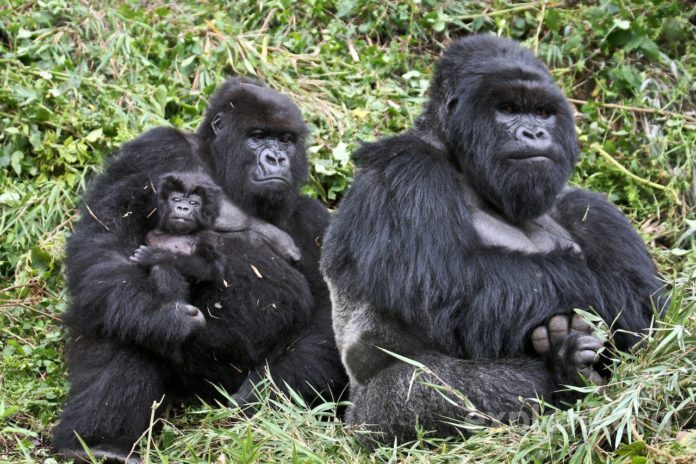
Mount gorillas are a major tourist attraction to Uganda

Yesterday, Uganda joined the rest of the world to commemorate World Tourism Day celebrated under the theme “Tourism for Inclusive Growth”.

The theme aimed at ensuring the sector draws in marginalized communities and empower them to benefit from decent jobs, cultural preservation and conservation. This aligns with the Sustainable Development Goals (SDGs) that place emphasis on the participation of local communities in the tourism sector as key to enabling wealth redistribution and collective development.

“For decades, the tourism business was for a select few, educated, rich and well connected enough to inject big bucks into things like hefty registration and expensive tour vehicles,” Brian Namanya, Founder of digital platform Tubayo says about breaking into the tourism industry.

Namanya says that as the technology gap gets narrower, it is redistributing the business opportunities to startups as well as locals who can earn an income as tour guides in their community.

“The internet has removed barriers of entry from the industry. One no longer needs a physical office address but a profile on an app to meet their customers. A tour guide in the ghetto just needs a few internet bundles to reach their customer who wants a trip around Kampala,” he says.

Up in Northern Uganda, Loremi Tours is entirely redefining tourism, veering away from eco-tourism to indigenous culture.

Gloria Adyero, its founder, says the Tour and Travel Company seeks to develop livelihoods by encouraging the community to participate in tourists’ activities including hosting and sharing their culture with guests. So far, the company is making strides with community tourism among the Acholi people.

“We are now linking tourists to cultural experiences, where members of the community host visitors and allow them to participate in activities like shea butter or peanut butter processing,” Adyero says.

She believes that in creating value chains in tourism and experiences that are not alien and exclusive of host communities, tourism becomes beneficial, empowering and sustainable. It provides a livelihood for communities while reinforcing indigenous existence.

This year the World Tourism Day comes at a time when the sector is experiencing revenue losses, closures of businesses and loss of human resources or jobs.

Sharing insights into the status of the sector, the Senior Public Relations Officer of the Uganda Tourism Board (UTB), Sandra Natukunda, says over a five-year period (2016-2020), the contribution to Gross Domestic Product (GDP) grew in the first three years from Shs6 trillion in 2016 to Shs8 trillion in 2018. It had a brief fall in the subsequent two years from Shs8 trillion in 2018 to Shs2 trillion in 2020.

Natukunda points out that with a contribution of 2.5 per cent to the GDP in 2020, this has been the lowest contribution of the tourism sector to Uganda’s GDP in the last 10 years and the pandemic is to blame.

In regards to encouraging sector recovery and inclusion, UTB is doing a few things. Guided by the trends in 2020 that showed that the majority (99.8%) of tourists were Ugandan visitors, the sector has pivoted business to capitalize on domestic tourism. It has also innovated to entice international tourists to experience destination Uganda.

“Many tourism operators are running subsidized rates that are aimed to increase arrivals and stay in the facilities during the periods of relaxed restrictions. This will keep the revenue of tourism flowing into local communities and increase the amount of people benefiting from the value chain.” Natukunda says. In addition to the above, they are also focusing on encouraging product diversification such as selling products online or expanding the range of products and experiences.

Other key players are coming together to ensure that the sector survives and forges a new path in what has become a new reality.

Under Young Uganda Tour Operators (YUTO), a group of youth who own Small Medium-Sized Enterprises (SMEs) in tourism are combining efforts to address the various challenges they find in the Tourism and Hospitality sector.

YUTO Operations Lead, Steven Mukalazi says while Uganda’s tourism is doing poorly at this point YUTO member companies are concentrating on boosting domestic tourism. The strategy is to design tour packages that suit the local market in price and appeal.

They are doing this through aggressive marketing on social media platforms and creating partnerships with Uganda Tourism Board. Mukalazi hopes that in encouraging domestic tourism, local communities that host tourists will be able to eke a living.

The Innovation Village has been working along other stakeholders as well. As an ecosystem that seeks to increase innovation through unlocking the potential of entrepreneurs in every sector, the belief is that investment facilitation and sector innovation can deliver a more inclusive and sustainable growth even in the areas with traditionally-marginalized communities.

Currently within its ecosystem are young entrepreneurs like Tubayo and Loremi Tours among others who are given the necessary support including networking and mentorship opportunities to disrupt the sector.

In March, 2021 The Innovation Village organized an Agri-Tourism Expo in Mbarara to highlight opportunities that arise from merging of Agriculture and Tourism. It further explored how farmers can fuse agriculture into tourism and be part of a long and lucrative value chain.

Stories Continues after ad