Stanbic Bank
Stanbic Bank
23 C
Kampala
Stanbic Bank
Stanbic Bank
Home Blog Page 929

Nexus Bar owner Ivan Kakooza dead

Late Ivan Kakooza in a T-Shirt chatting with clients at a past event at Nexus Bar.

The owner of the Najjera based popular bar and restaurant Ivan Kakooza is dead

Kakooza died on Friday morning at Mulago hospital where he has been undergoing treatment for sometime. Reports indicate he had stressed related complications.

Kakooza’s businesses were hit hard by the Coronavirus pandemic especially Nexus and his events businesses when government   introduced  Standard Operating Procedures for #Covid-19.

Reports indicate loans from commercial banks which kakooza had secured in expanding his businesses could have caused much stress leading to his death.

#RIPIvanKakooza


Stories Continues after ad

Museveni sacks Kaka Bagyenda, names Oluka and Katabazi as DG/Deputy DG respectively

Col. Kaka Bagyenda

President Yoweri Museveni has sacked Internal Security Organisation (ISO) Director General Col. Kaka Bagyenda and replaced him with Lt. Col. Charles Oluka as new DG for the spy agency.

Museveni further named Lt. Emmy Katabazi who has been ISO’s liaison officer in charge of small arms at Immigration as Deputy Director General.

Lt. Emilly Katabazi

ISO is charged with collection and processing of internal intelligence gathering. Kaka Bagyenda is blamed among other things the raid on MTN data centre last basing on false intelligence and also authoring of fake intelligence reports by thugs he recruited when he returned when he was named DG.

Col. Oluka’s role will be to encounter the influence of Forum for Democratic  Change (FDC) party president Eng. Patrick Amurait who has been chosen as a flag bearer in their Teso sub-region.

Stories Continues after ad
Uganda Bankers Association joins DTB to appeal court’s ruling in favour of Ham

dtb

Uganda Bankers’ Association (UBA), an umbrella organization for financial institutions licensed and supervised by Bank of Uganda is to join Diamond Trust Bank (DTB) in appealing against court’s ruling in the loans case against Ham Enterprises Ltd, owned by businessman Hamis Kiggundu.

Commercial Court head Justice Henry Peter Adonyo on Wednesday ruled that the credit facilities DTB-Kenya offered to Ham Kiggundu are illegal since it is not licenced by Bank of Uganda as required under the law to carry out financial business in Uganda and therefore directed DTB to refund Shs120 billion which was debited from the accounts of Ham plus interest of 8% (shs9.6 billion).

“Uganda Bankers Association has learnt of the judgment delivered yesterday 7th October 2020 in the High Court of Uganda (commercial division) arising from an interlocutory application in H.C.C.S No 43 of 2020 involving one of our members, Diamond Trust Bank  (U) Ltd and related parties.” Reads part of the press release.

Although UBA is yet to receive a copy of the detailed judgement, the ramification of the judgement has sent shock waves across the entire industry and related stakeholders.

The Chief Executives of all the 35 member institutions of Uganda Bankers Association that includes all the tier I commercial Banks the Development Banks and Tier II & III (Micro Finance and Deposit taking institutions) supervised by Bank of Uganda this morning resolved to join DTB in its appeal at the higher court.

“To join Diamond Trust Bank (Uganda) Limited as an interested party in its appeal at the higher court to determine the case on its merits.” Reads part of the resolutions taken by the Chief Executives of all the 35 member institutions.

“To join Diamond Trust Bank (Uganda) Limited to file for a stay of execution of the orders the Hon Justice as ruled yesterday.”

The association also called upon all concerned parties to pronounce themselves on the matter.

“To call upon Central Bank of Uganda to pronounce itself on this matter.”

“To call upon the Executive Arm of Uganda Government through the Minister for Finance, planning and Economic Development and the Attorney General to pronounce themselves on this mater, more so because they are accountable officers for syndicated facilities contracted by Government including where foregoing counter parties are involved and re-assure the financial sector, the international lending partners and entire country of the commitment to continue honoring all debt obligations in line with agreed protocols.”

UBA also called upon esteemed good borrowers and all customers to remain calm as appropriate action is being taken.

“To call upon our esteemed good borrowers and all customers to remain calm as appropriate action is undertaken to address the challenges arising from this specific judgement.”

Stories Continues after ad

UK gives £1.3 million to fight COVID-19 in Uganda

Covid-19 testing kits

The British Government recently released a grant of GBP 1.322 million (Shs6.11 billion) to support various aspects of Uganda’s fight against COVID-19. Activities funded by the UK grant are being implemented by two United Nations agencies, the World Health Organization (WHO) and the International Organization for Migration (IOM).

WHO and IOM are using their respective expertise to help “strengthen and maintain the capacity of the health sector to prevent, prepare for, detect and respond to the COVID-19 outbreak” over a seven-month period.

As the lead implementing agency, WHO will strengthen coordination of COVID-19 preparedness and response activities at national and sub-national level, and surveillance, detection, laboratory confirmation of cases and reporting system for prompt containment of cases.

IOM, meanwhile, will work at border crossing points to ‘prevent and protect against the importation of COVID-19 and provide a public health response at Points of Entry’.

Since March, the government, with technical support from WHO and other UN agencies, has run an internationally acclaimed COVID-19 response, including testing and treatment, contact tracing, quarantining, and public education. DFID has extended support to WHO and IOM to support the national, regional and district response to COVID-19, including in 10 high-risk districts to functionalise the task forces and implement the national contingency plan. These districts are Mbale, Tororo, Mubende, Masaka, Kabale, Wakiso, Iganga, Busia, Kisoro (Kyanika) and Adjumani.

Project activities will include: Recruitment of staff at national, regional and district level to facilitate coordination; Support functionality of the national and district taskforces in high risk and affected areas; orientation of district officials on the Incident management system; Orientation of surveillance teams; Supporting follow-up of contacts of the confirmed cases; sample collection, transportation and analysis at designated laboratories; and procurement of laboratory supplies and testing kits.

Other activities will include; Support supervision and monitoring of screening at PoEs in areas that are likely to be affected by central and district teams; equipment and supplies to support airport/PoE screening; as well as training of border/port health staff (immigration, revenue) on standard operating procedures of infection prevention and control.

The WHO Representative to Uganda, Dr Yonas Tegegn Woldemariam said, “This is a multi-faceted, multi-level intervention that should help strengthen the country’s response. For instance, the project will support an epidemiologist attached to the Incident manager to support the functionality of the preparedness and response mechanism. And specialists will be deployed at regional hubs to provide technical assistance and oversight to build the capacity of the health system and referral network to respond to the outbreak.”

Speaking about the project, IOM Uganda Chief of Mission Mr. Sanusi Tejan Savage said: “As the UN Migration Agency, with increasing mobility we are particularly concerned about mitigating risk of COVID-19 transmission at the border we are pleased to team up with WHO to improve the resilience at our Points of entry to mitigate that risk.”

As of 06 October 2020, Uganda’s cumulative confirmed cases of COVID-19 was 9,260, with 5,588 recoveries and 84 deaths.

Currently, there is a surge in the number of cases identified because of increasing community transmission. While the initial majority cases were registered in the mobility continuum specifically from the transnational truck drivers several measures were instituted to mitigate the spread.

Consequently, Uganda has successfully initialised containment of the spread of COVID-19, with most cases currently identified from the community.

Stories Continues after ad
One stillbirth occurs every 16 seconds – UN estimates

One stillbirth occurs every 16 seconds

Almost two million babies are stillborn every year or one every 16 seconds according to the first ever joint stillbirth estimates released by UNICEF, WHO, the World Bank Group and the Population Division of the United Nations Department of Economic and Social Affairs.

The vast majority of stillbirths, 84 per cent, occur in low- and lower-middle-income countries, according to the new report, A Neglected Tragedy: The Global Burden of Stillbirths. In 2019, three in four stillbirths occurred in sub Saharan Africa or Southern Asia. A stillbirth is defined in the report as a baby born with no signs of life at 28 weeks of pregnancy or more.

“Losing a child at birth or during pregnancy is a devastating tragedy for a family, one that is often endured quietly, yet all too frequently, around the world,” said Henrietta Fore, UNICEF Executive Director. “Every 16 seconds, a mother somewhere will suffer the unspeakable tragedy of stillbirth. Beyond the loss of life, the psychological and financial costs for women, families and societies are severe and long lasting. For many of these mothers, it simply didn’t have to be this way. A majority of stillbirths could have been prevented with high quality monitoring, proper antenatal care and a skilled birth attendant.”

The report warns that the COVID-19 pandemic could worsen the global number of stillbirths. A 50 per cent reduction in health services due to the pandemic could cause nearly 200 000 additional stillbirths over a 12-month period in 117 low and middle income countries. This corresponds to an increase in the number of stillbirths by 11.1 per cent. According to modeling done for the report by researchers from the Johns Hopkins Bloomberg School of Public Health, 13 countries could see a 20 per cent increase or more in the number of stillbirths over a 12 month period.

Most stillbirths are due to poor quality of care during pregnancy and birth. Lack of investments in antenatal and intrapartum services and in strengthening the nursing and midwifery workforce are key challenges, the report says.

Over 40 per cent of stillbirths occur during labour a loss that could be avoided with access to a trained health worker at childbirth and timely emergency obstetric care. Around half of stillbirths in sub-Saharan Africa and Central and Southern Asia occur during labour, compared to 6 per cent in Europe, Northern America, Australia and New Zealand.

Even before the pandemic caused critical disruptions in health services, few women in low- and middle-income countries received timely and high quality care to prevent stillbirths. Half of the 117 countries analyzed in the report have coverage that ranges from a low of less than 2 per cent to a high of only 50 per cent for 8 important maternal health interventions such as C-section, malaria prevention, management of hypertension in pregnancy and syphilis detection and treatment. Coverage for assisted vaginal delivery – a critical intervention for preventing stillbirths during labour is estimated to reach less than half of pregnant women who need it.

As a result, despite advances in health services to prevent or treat causes of child death, progress in lowering the stillbirth rate has been slow. From 2000 to 2019, the annual rate of reduction in the stillbirth rate was just 2.3 per cent, compared to a 2.9 per cent reduction in neonatal mortality, and 4.3 per cent in mortality among children aged one to 59 months. Progress, however, is possible with sound policy, programmes and investment.

“Welcoming a baby into the world should be a time of great joy, but every day thousands of parents experience unbearable sadness because their babies are still born,” said Dr. Tedros Adhanom Ghebreyesus, WHO Director-General. “The tragedy of stillbirth shows how vital it is to reinforce and maintain essential health services, and how critical it is to increase investment in nurses and midwives.”

The report also notes that stillbirth is not only a challenge for poor countries. In 2019, 39 high-income countries had a higher number of stillbirths than neonatal deaths and 15 countries had a higher number of stillbirths than infant deaths. A mother’s level of education is one of the greatest drivers of inequity in high-income countries.

In both low and high-income settings, stillbirth rates are higher in rural areas than in urban areas. Socioeconomic status is also linked to greater incidence of stillbirth. For example, in Nepal, women of minority castes had stillbirth rates between 40 to 60 per cent higher than women from upper-class castes.

Ethnic minorities in high-income countries, in particular, may lack access to enough quality health care. The report cites that Inuit populations in Canada, for example, have been observed to have stillbirth rates nearly three times higher than the rest of Canada, and African American women in the United States of America have nearly twice the risk of stillbirth compared to white women.

“COVID-19 has triggered a devastating secondary health crisis for women, children and adolescents due to disruptions in life-saving health services,” said Muhammad Ali Pate, Global Director for Health, Nutrition and Population at the World Bank and Director of the Global Financing Facility for Women, Children and Adolescents. “Pregnant women need continued access to quality care, throughout their pregnancy and during childbirth. We are supporting countries in strengthening their health systems to prevent stillbirths and ensure that every pregnant woman can access quality health care services.”

Stories Continues after ad
2021 Elections: Amuriat named FDC presidential flag bearer

amuriat

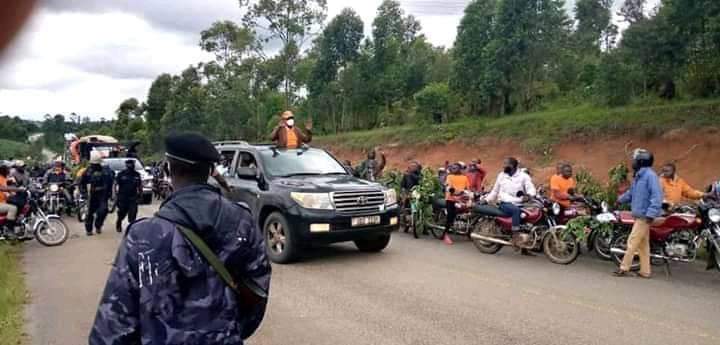
The President of Forum for Democratic Change (FDC) Patrick Amuriat Oboi has been named the Party presidential flag bearer in the 2021 general elections.

He was confirmed by Mr. Toteremuka Bamwenda, the FDC Party electoral commission Chairperson after Wasswa Biriggwa opted out of Presidential flag bearer race during the National Council which convened at the party headquarters at Najjanankumbi.

Eng. Patrick Amuriat pledged to play his part in the forthcoming presidential election where he hopes to oust the incumbent president Museveni from power.

Amuriat became the FDC Party President having won elections on 24th November 2017, in the party’s 7th National Delegates Conference that was held at Mandela National Stadium, becoming the third (3) President after Maj Gen. Gregory Mugisha Muntu (November 2012-November 2017) and Dr. Kizza Besigye (2005 – November 2012).

“Thank you for welcoming me as the president of the FDC and as the presidential flag bearer. I came here for nothing but to add on what my predecessors have done towards taking the presidential leadership of this country,” he said.

He applauded Leaders from various districts and that party headquarters who have accorded him support since he assumed the presidential leadership of the party.

“I remember Semujju Nganda was the chief campaigner of Gen Mugisha Muntu, Now the founder of the Alliance for National Transformation (ANT) Party in 2017. When the elections were done and I was declared the winner, Semujju came to me and said since you are the new party president,  I am here and ready to serve my party,” Amuriat said.

He said that he will not watch on as the ruling party, the National Resistance Movement (NRM) enslave deprived Ugandans as it did in the just concluded NRM primaries.

“We are this time changing the tone, 2021 elections is not the same cup of tea that Museveni has been grabbing over the years,” he said adding that starting from tomorrow, he will traverse all over the country seeking signatures for a head of presidential nominations.

He decried state machinery deployed to cramp down the opposition parties in the country.

Stories Continues after ad

MTN refutes Shs10 billion loss claim after mobile money heist

MTN Uganda CEO Wim Vanhelleputte

The Chief Executive Officer of telecom service provider MTN Uganda Wim Vanhelleputte has refuted claims that the hacking into Pegasus Technologies Ltd affected the company’s mobile money services.

On 3rd October 2020, an aggregator, Pegasus Technologies Ltd experienced a security breach that impacted bank to wallet transfers. Reports indicate that over Shs10 billion was stolen in the security breach. The telecom company provides select mobile money services aggregated or integrated through third parties.

Wim said the incident did not affect any customer money mobile balances, a limited number of other services aggregated through the third-party provider were suspended as a precautionary safety measure.

“The core of MTN Mobile Money services namely cash deposits, withdrawals, person to person transactions and MoMo payments were never affected nor compromised at any stage,” he said.

Investigations led by the Uganda Police Force are ongoing to identify the root cause of the incident. “We are confident the Uganda Police Force will conclude their investigations timeously and take appropriate action against the culprits,” he added.

He said MTN mobile money platform complies with the highest international ICT security standards and is subjected to regular assessments and reviews by internal and external assurance providers.

Stories Continues after ad
Ham vs DTB case: Bank to appeal against Justice Adonyo’s ruling

dtb-ham

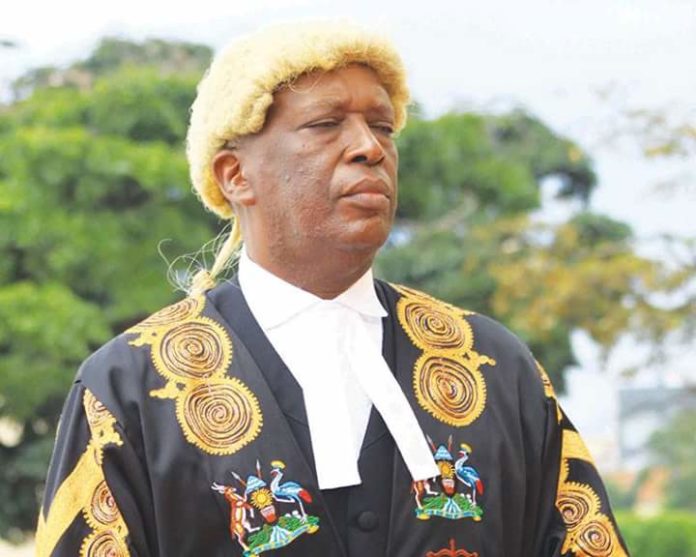
Diamond Trust Bank (DTB) has filed a notice of appeal against the judgment of Justice Henry Peter Adonyo in the matter between the Bank and Ham Enterprise Limited.

In his ruling yesterday, the judge directed DTB to refund Shs 120 billion which was debited from the accounts of Hamis Kiggundu and interest of 8% (shs9.6 billion) as penalties.

He faulted DTB Kenya for appointing its counterpart saying it had no license to carry out financial business in Uganda as per the financial institutions act of 2004.

“The act contravenes regulation number five and therefore DTB Uganda is penalized for taking part of illegal business,” he ruled.

Upon the ruling, DTB, in consultation with its legal advisers filed notice of appeal. “We look forward to the expeditious resolution of the matter in court in the court of appeal and are confident that the case will be determined on its merits.” the bank said.

The bank assured its stakeholders that they remain in good standing and their operations continue uninterrupted.

In February 2011 and August 2018, Kiggundu sought and offered $4,014,444 and $6,974,600 loans by the banks for construction of commercial properties. To secure the loan Kiggundu mortgaged Kyadondo Block 248, Plot 328 land at Kawuku, FRV 1533, Folio 3, Plot 36-38, Victoria Crescent II Kyadondo and LRV 3176 Folio 10, Plot 923, and Block 9 located at Makerere Hill Road.

DTB Kenya contacted its counterpart in Uganda to collect loan facility from the Business man. However DTB-Uganda insist that it did not act as an agent of DTB-Kenya to conduct business in Uganda, but only sought its services as a collection agent for it to receive its payments from Ham Enterprises Limited.

In March, Ham dragged both banks to court for siphoning over sh120b from his accounts without his consent. He also wanted court declare that the banks demand for $4,014,444 and $6,974,600, which was advanced to him by DTB-Kenya, is illegal and unenforceable on the grounds that the Kenyan bank had no license to carry out financial business in Uganda.

Stories Continues after ad

Court throws out DAPCB application challenging COSASE from investigating them over departed Asians Properties

Muhammed Allibhai

Justice Musa Ssekaana, in a seating at the Civil Division of the High Court in Kampala, has thrown out an application filed by three members of Departed Asians Properties Custodian Board (DAPCB) in which they were challenging parliament’s COSASE from investigating their involvement in the alleged mismanagement of the said properties and a number of mischievous activities within the board.

In a ruling issued by Justice Sekaana on May 26th 2020, the Expropriated Properties Act (EPA) does not leave room for repossessed properties to be recalled or investigated unless the responsible minister appeals for change of the law.

“The act under section 7 (a) provides that a certificate of repossession issued under section 5 and 6 shall be sufficient authority for the chief registrar of tiles to transfer title to the former owner.

“Having issued the said certificate of repossession, the Minister is functus officio according to the act as it did not leave a window for which the ministers decision would be changed or amended unless by way of appeal under section 15 of the act which is to be made within 30 days from the date of communication of the decision to the High court,” Justice Ssekaana ruled.

“Retention of any implied power by the minister to revoke his decision on the ground that it was made in error would perpetuate that very uncertainties about ownership of the expropriated properties, which the act intended to eliminate,” he added.

Sekaana’s ruling by then reinforced last year’s opinion by the Attorney General Mr Willian Byaruhanga who explained that Asian properties already allocated to different individuals through court processes cannot be reversed.

In yesterday’s ruling whereby applicants including Muhammed Allibhai, Pradip Nandlal Karia and Minex Karia brought separate applications for judicial review combined with enforcement of rights under articles 28, 42, 44 (c) and 50 of the constitution and sections 36 and 38 of the Judicature Act cap 13 and rules 3, 6, 7 and 8 of the judicature rules, S.I no. 11 of 2009, Justice Ssekaana ruled, ordered and declared that;

A DECLARATION that the respondents’ parliamentary sub-committee on commission, statutory authorities and state enterprises COSASE acted ultra vires when it held out to act as court of law, sat in judgments of court and issued warrant of arrest against applicants and the same is null and void.

A DECLARATION that the respondents COSASE decision to hear disputes involving private individuals and make decisions and order of a criminal nature usurped and hijacked the jurisdictional mandate of the constitutional court by continuing to conduct parallel proceedings to interfere with the Independence of the judiciary and is ultra vires, illegal, unfair, null and void.

A DECLARATION that the respondents directive to the applicant to cede his statutory rights and privileges to petition the speaker and get her decision excusing him from proceedings and production of documents without her making a decision or else contemporaneously/forcefully issue a criminal arrest warrant against him is irrational, illegal unfair, null and void

A DECLARATION that the speaker of parliament decision to abdicate and/or not to act on the applicants petition and objections and letting the COSASE committee to continue with the impugned proceedings was a breach of discretion and the law governing Parliament is ultra vires, illegal, null and void

A DECLARATION that COSASE acted irrationally when it usurped and subjected the applicants petition to the speaker of parliament to the jurisdiction whose very decision it was against orders and pronouncement without waiting speakers decision and this was vires and denial of a fair hearing and null and void

A DECLARATION that the COSASE decision to disregard the applicants petition to the speaker of parliament before she exercised her discretion on excuisn him from the hearinf and producing documents as part of his statutory rifht and privilege under s. 1 of the parliamentary act and proceeding to make contrary pronouncements, orders and directives was a denial of a fair hearing and the same is ultra vires, null and void.

An ORDER OF CERTIORARI doth issues to call for and quash the respondents decision and proceedings of 10th mach 2020 and 16 march 2020 into court for quashing for being an illegality

An ORDER OF PROHIBITION doth issues barring the respondent, their agents or any other person acting under them enforcing the decision to issue an arrest warrant without the involve of the speaker of parliament as required by law to commenced criminal proceedings against the applicants

An ORDER OF INJUNCTION doth issue restraining the respondent , their servants, agents or any other person acting under their authority from subjecting the applicant to any criminal proceeding arising from the decision contained in the respondents impugned proceeding dated 10th march 2020 and 16th march 2020

Punitive and exemplary damages for the respondents arbitrary, highhanded and oppressive treatment of the applicants.

General damages

Costs

Background of the case: Under decree no. 27 and 29 of 1972, all property for non-citizen Asians and Ugandan citizens of Asian origin was vested in government upon their expulsion from Uganda. The laws on the management of expropriated property were eventually consolidated into the assets of Departed Asians Act Cap 83 which vested the departed Asians property Custodian Board with power to manage the assets until 1982 when the Expropriated Properties Act was enacted.

Upon its enactment, the property which had been expropriated during the military regime was vested in the hands of the Minister for Finance on behalf of the government to provide for a return to its former owners.

Meanwhile, under the law, the Act Cap. 87 guides the repossession of formerly expropriated Asian properties in Uganda and this provides that eligible persons to repossess the property include; a former owner who was a registered proprietor at the time of expropriation or a shareholder and a duly appointed attorney of any former owner.

Some of the property under investigation include plots 33-37 on Kampala road Entebbe and plot 65 on Kampala road Entebbe which the committee queried on how the ownership of such property changed from leasehold to freehold.

Stories Continues after ad

Covid-19: Gulu, Jinja, Kasese among worst districts affected by hunger

Covid-19 testing kits

Ugandans in nine urban areas were at crisis levels of food insecurity or worse for months leading to August because of negative impacts of the COVID-19 lockdown. The worst affected were Gulu, Jinja and Kasese where nearly one in three people struggled to find nutritious food on a regular basis.

For the rest of the year, Gulu and Kasese are expected to remain at Crisis levels even while their markets are supplied with harvests.

These were some of the findings of the most comprehensive Integrated Food Security Phase Classification (IPC) analysis conducted in Uganda to date, covering Kampala and other urban areas, the Karamoja region and refugee settlements and host communities for the first time.

The analysis was carried out by the Government of Uganda and three UN agencies and measures food insecurity from June through August and projected from September to December. It was informed in part by real-time data gathered by remote telephone monitoring of households in 13 urban areas, refugee hosting districts and Karamoja region in the northeast. It is the first time, real-time data informed the IPC on urban areas.

The IPC attributed Crisis food insecurity to the loss of livelihoods in the informal sector, tourism, the travel and events industry and the education sector, reduced remittances and reduced commercial networks due to the closure of borders.

Releasing the results of the analysis, the Minister for Disaster Preparedness and Refugees, Eng. Hillary Onek, said that the Government is committed to ensuring food and nutrition security and well-being for all people in Uganda, including those in urban areas.

Speaking while releasing the results of the analysis, the Minister for Disaster Preparedness and Refugees, Eng. Hillary Onek, said the Government is committed to ensuring food and nutrition security and well-being for all people in the country, including those in urban areas.

“With these new findings, we now know, reliably, who the most food-insecure people are in Uganda, where they are and what we can do to save lives and preserve livelihoods. Such knowledge is critical before we take any decisions,” Mr Onek said.

“We thank our partners for working with us to come up with this very important analysis. We now must continue to work together to find solutions to the issues raised in the study,” Mr Onek added.

Currently, through a collaboration with the Uganda Bureau of Statistics, the United Nations makes 10,000 calls a month to monitor food security in refugee areas, 12 urban areas and Karamoja region.

Using the real-time and other data, the IPC found that refugees in all 13 settlements in Uganda along with more than 1.3 million Ugandans in refugee-hosting districts and Karamoja region experienced Crisis or worse levels of hunger between June and August.

In Karamoja, all districts had worrying levels of malnutrition among young children and pregnant and nursing women, with malnutrition above emergency levels in Moroto and Napak.

The IPC attributed the high levels of food insecurity in refugee hosting districts and Karamoja to WFP’s ration cuts for refugees, the lockdown, floods and subsequent food losses, animal and human diseases, and insecurity in some parts of Karamoja and reduced remittances as key contributors to the situation.

“Ration cuts for refugees will remain in place until we secure sufficient funding. To be able to provide full rations for refugees in the settlements until the end of 2020, WFP needs nearly US$41.7 million immediately,” said WFP Uganda Country Director, Mr El-Khidir Daloum.

FAO’s Deputy Representative, Ms Priya Gujadhur said “As part of the UN Uganda’s Emergency Appeal launched earlier this year, FAO has appealed for USD 7.8 million for food security, nutrition and livelihoods interventions. This will allow FAO to provide agricultural livelihood support and training in climate smart agricultural practices to help up to 10,000 of the most vulnerable households produce for their own consumption and diversify income sources through value chain development, thereby strengthening their resilience.”

Even with coming harvests this year, it is expected households will continue to struggle with food shortages partly because of lost incomes during the lockdown. All refugee settlements are expected to remain at Crisis level at best. Food security should improve in nine out of 12 worst-affected refugee-hosting districts. Malnutrition is expected to decline in two districts in Karamoja in the coming months.

The Ministry of Agriculture, Animal Industry and Fisheries, the Ministry for Disaster Preparedness and Refugees, Kampala Capital City Authority, the Uganda Bureau of Statistics, the United Nations High Commissioner for Refugees, the Food and Agriculture Organization of the United Nations and WFP participated in the IPC analysis. The European Union, World Bank and UK Aid funded the exercise.

Stories Continues after ad