President Yoweri Museveni has called on African nations to tap into their vast pension and social security reserves, estimated at Shs53 quadrillion ($14 trillion), to fund key infrastructure projects instead of relying on expensive foreign borrowing.
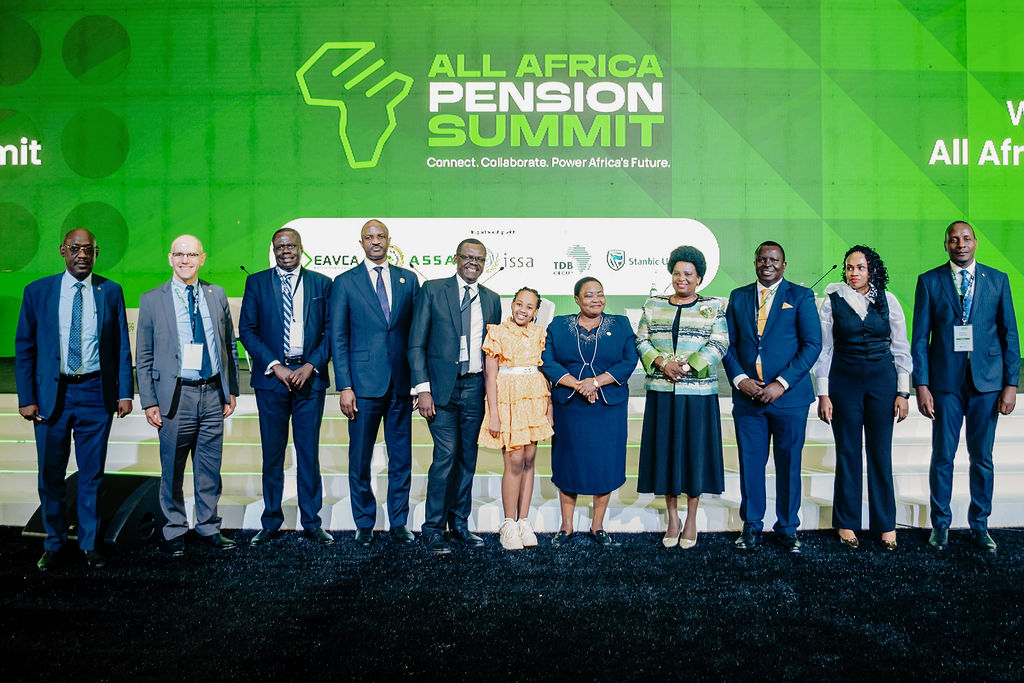
In a speech delivered on his behalf by Prime Minister Robinah Nabbanja during the All Africa Pension Summit held at Speke Resort Munyonyo in Kampala, Museveni emphasized that the continent’s real problem lies not in a shortage of wealth, but in its failure to effectively utilize existing financial resources.

“Africa’s pension funds now stand at about $14 trillion, a figure larger than the lending capacity of the World Bank,” Museveni said.
“If we strategically deploy these funds, we can finance electricity, roads, housing, and education without being trapped in foreign debt,” he noted.
The president commended Uganda’s National Social Security Fund (NSSF) for channeling investments into affordable housing and renewable energy, saying such ventures demonstrate how local resources can foster inclusive growth. He stressed that development should translate into jobs and wealth creation for ordinary citizens.

The Minister for Gender, Labour and Social Development, Betty Amongi, who supervises NSSF, reinforced the president’s message, urging African countries to transform pension funds into engines of domestic growth.
“Our overdependence on external loans has left many nations in debt cycles,” Amongi said.
She added,“We must reimagine our pension schemes as platforms for financing our own transformation.”
She cited successful examples such as South Africa’s Government Employees Pension Fund investing over $1 billion in renewable energy and Nigeria’s National Pension Commission channeling $25 billion into infrastructure.
NSSF Managing Director Patrick Ayota hailed the strong turnout at the summit, 600 delegates, surpassing the expected 350, as proof of Africa’s growing appetite for self-reliant financing.
Ayota disclosed that pension funds across East Africa are exploring the idea of pooling 1 percent of their combined $40 billion portfolio to jointly finance regional projects.
“Even one percent amounts to $400 million, enough to co-finance projects like the Kampala Expressway, which costs about $12 billion,” Ayota said.
“Such initiatives would attract additional investors while retaining more economic value within the continent,” he added.
Amongi urged pension managers to think beyond traditional savings and become active contributors to Africa’s transformation.
“Let us move from passive savings to active investment. We must invest in ourselves for ourselves,” she said.