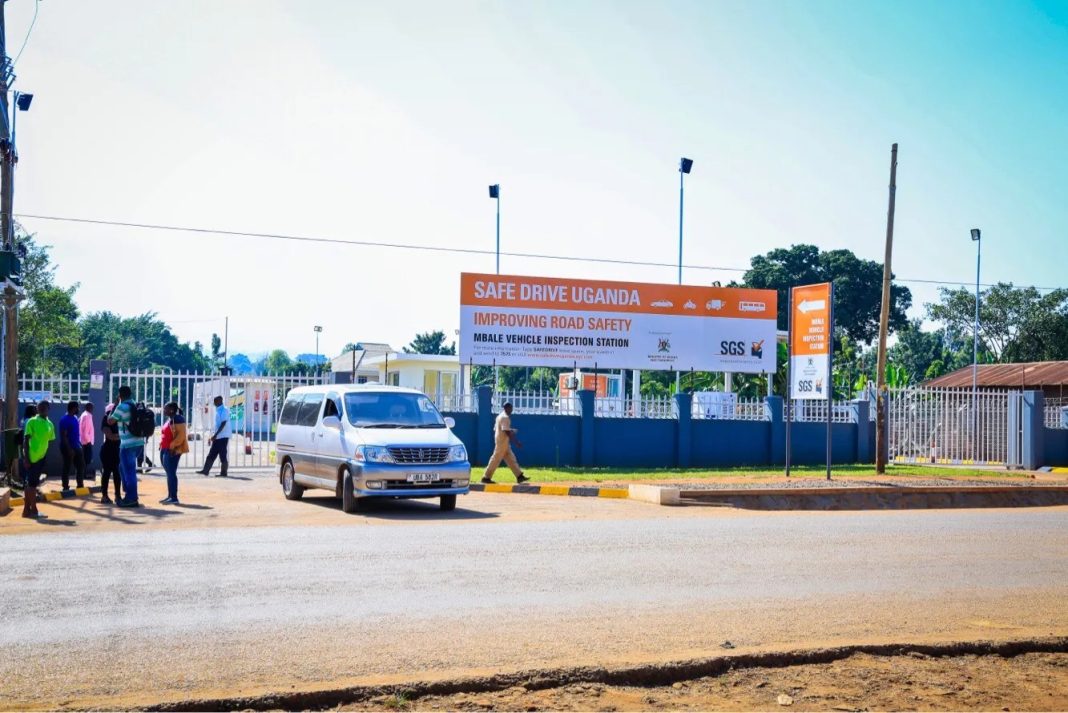
The Ministry of Works and Transport has taken over the nationwide mandatory vehicle inspection program, ending nearly a decade of involvement by the Swiss firm Société Générale de Surveillance SGS.
Speaking in Kampala during the launch of a new Road Safety Campaign themed “Safe vehicles for a safer Uganda,” acting vehicle inspector Kharim Kibuuka said the transition formally began this week.

“The inspection of government vehicles kicked off on Monday and this phase will run until February next year,” Kibuuka announced.
Commercial and public service vehicles will follow in March, while private vehicles will be inspected later. He however encouraged the public to bring in their vehicles earlier if ready.
The revamped inspection program is a central component of the country’s broader strategy to curb accidents attributed to mechanical failure and reduce environmental pollution from poorly maintained vehicles. Uganda has seen a surge in vehicle numbers in recent years and authorities say this has placed new pressure on the safety standards of vehicles operating on public roads.

“Many accidents, pollution incidents, and even cases of traffic congestion stem from vehicles that are simply unroadworthy,” Kibuuka noted.
He said government inspectors will assess essential features such as lights, visibility, emission levels, brakes, suspension, undercarriage condition, bodywork and internal security components.
Successful vehicles will be issued with certificates of fitness, which are required for any vehicle to operate legally on public roads. Commercial vehicles will undergo annual inspections, while private saloon cars and SUVs will be inspected every two years. Vehicles that fail will be given 30 days for a free reinspection.
Those found driving without valid inspection certificates face penalties including impoundment.
The ministry has also announced the new inspection fees, which are significantly lower than those previously charged under SGS. Motorcycles will cost Shs5,500, saloon cars and SUVs Shs50,000, passenger service vehicles Shs49,000, and heavy trucks and buses Shs60,000.
Government has already taken over the seven former SGS inspection centers located in Namave, Kawanda, Nabbingo and Namulanda around Kampala, as well as upcountry facilities in Mbale, Mbarara and Gulu. More centers will be opened to reduce congestion and increase access.
Kibuuka assured motorists that the ministry will rely on automated systems to eliminate human error and ensure transparency. He urged the public to book appointments to avoid long queues.
Works and Transport Minister Gen Katumba Wamala appealed for maximum cooperation, saying the new system is essential to reducing road carnage.
“Let us have our vehicles inspected to protect the lives of Ugandans on the roads. We must find a way of reducing and reversing the rising number of fatal accidents. ,” he said.
He also addressed concerns over the suspended Electronic Penalty System EPS, saying it will return after a full review.
“We found flaws in the system including inconsistencies between speed limit signs and the camera settings,” Katumba explained, pointing to cases where a road sign showed 60 kph but cameras were fining motorists at 45 kph. He said the ministry is fixing speed calibrations, reviewing fines and upgrading the payment process before reintroducing the system.
The government contracted SGS to run mandatory inspections in 2015, and operations began in 2016. However, Parliament halted the program the following year over high fees and public outcry. The ministry eventually terminated the contract in 2023, paving the way for its full takeover.