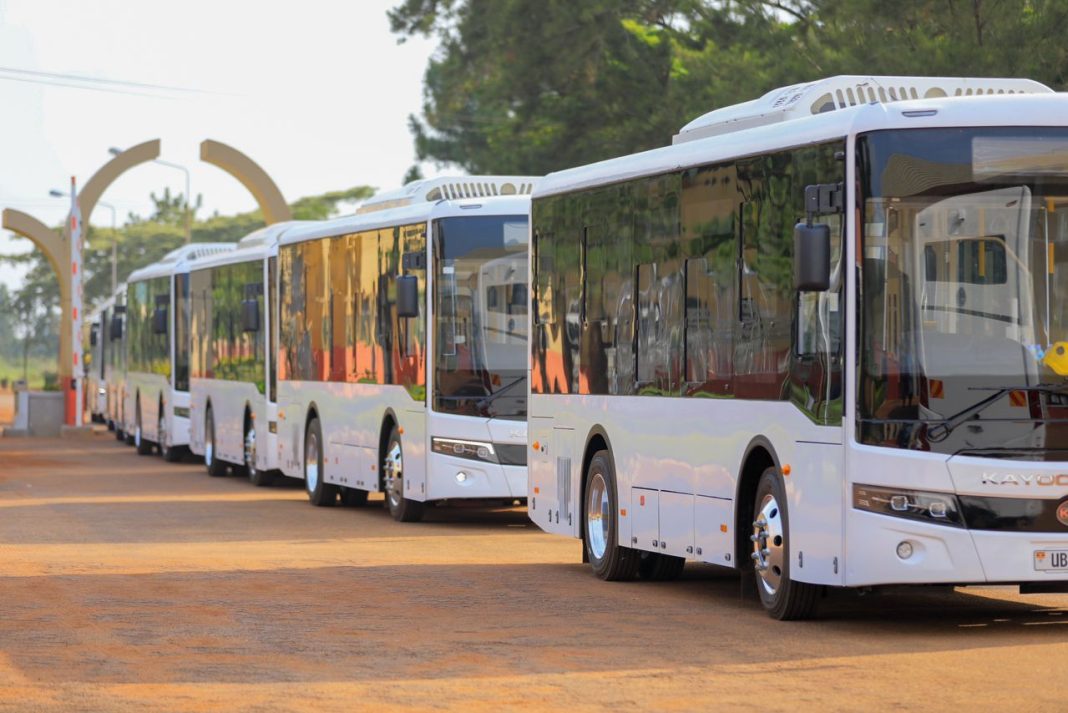
Uganda’s automotive industry has registered a historic breakthrough after Kiira Motors Corporation clinched a $250 million contract to supply 820 electric buses to South Africa.
The agreement positions the government-backed manufacturer at the forefront of Africa’s electric mobility transition and signals growing international confidence in Uganda’s industrial capabilities.

The announcement was made by the Minister of Science, Technology, and Innovation, Monica Musenero Masanza, who revealed that contracts had already been signed following months of negotiations.
According to the minister, the deal was bolstered by a successful 7,125-kilometre demonstration journey undertaken last year from Kampala to Cape Town, which showcased the reliability and endurance of Kiira’s electric buses across diverse terrains and weather conditions.
To execute the order within the agreed timelines of six to 12 months, the government is mobilizing an additional $143 million to ramp up production at the Kiira Vehicle Plant. The 100-acre facility in Jinja currently has the capacity to assemble 9 buses per day, with plans to scale up to 22 units daily to meet rising demand.

While Kiira Motors has made strides in strengthening local manufacturing, some inputs such as automotive grade steel and specialised components are still imported to meet global standards. However, the company is intensifying efforts to deepen localisation of its supply chain.
The South African contract forms part of Kiira’s broader ambition to manufacture 30,000 buses for regional markets by 2030. The corporation is working closely with strategic partners, including Chinese automotive technology firm Golden Dragon, to increase local content in its vehicles to at least 65 percent within the next four years.
Beyond the export market, Musenero disclosed that local transport operators have expressed interest in acquiring thousands of electric buses, a sign that Uganda’s domestic transport sector is gradually embracing clean energy solutions.
She noted that producing the buses locally reduces reliance on imports, preserves foreign exchange, and creates skilled industrial jobs.
The deal, she added, demonstrates that Uganda is steadily building the capacity to compete in advanced manufacturing while contributing to the continent’s green transition.