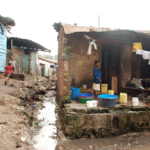
The Karamoja sub region has emerged as the most affected area by multidimensional poverty in Uganda with more than half of its population experiencing overlapping deprivations, according to the newly released Multidimensional Poverty Index Census Monograph 2024 Volume 5.
The report, published by the Uganda Bureau of Statistics, shows that 56.9 percent of people in Karamoja are multidimensionally poor, more than double the national average of 27 percent. This is followed by West Nile at 39 percent and Sebei at 33.5 percent, while Kampala recorded the lowest levels at 8.8 percent.

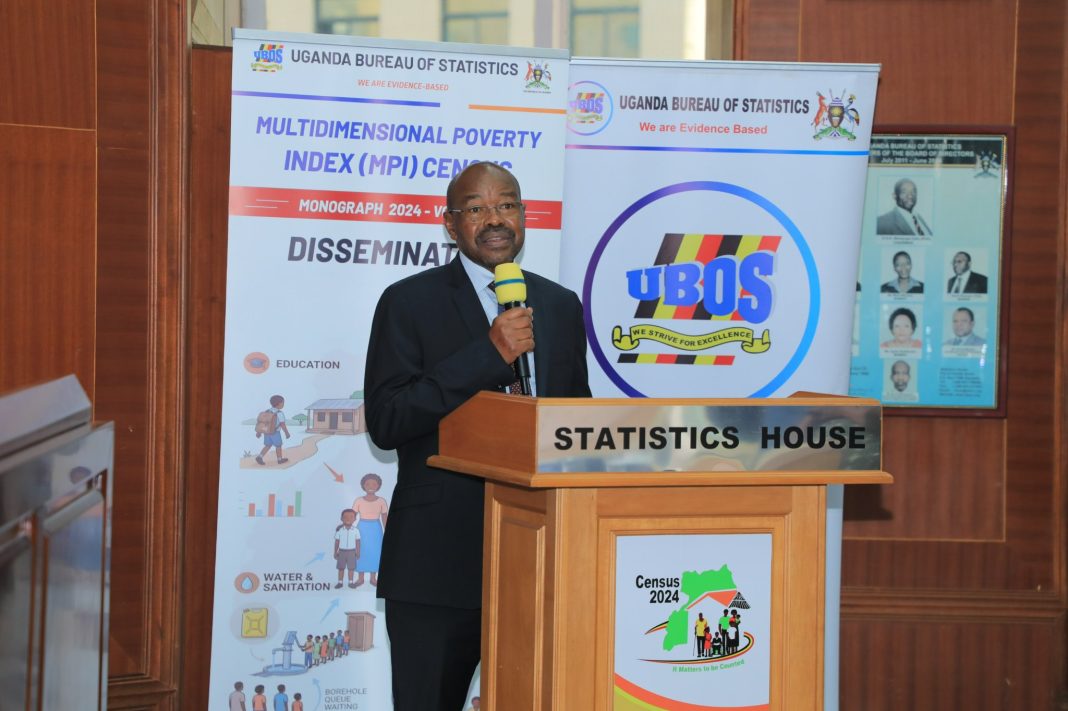
Speaking at the dissemination of the findings, UBOS Executive Director Dr Chris N Mukiza said the report is derived from the 2024 National Population and Housing Census and forms part of a series of thematic publications aimed at deepening understanding of socio economic conditions in the country.
“This Multidimensional Poverty Index Census Monograph 2024 Volume 5 will give us critical indicators that will support progress towards SDG 1 on eliminating poverty in all its forms,” Mukiza said.
He added that the data goes beyond income measures to capture multiple deprivations, urging policymakers to adopt targeted interventions.

“These indicators should equip governments and policymakers with up to date data to look beyond income poverty and focus on other challenging aspects of poverty whose dynamic nature requires more targeted policies and mindset change,” he noted.
Representing the UBOS Board, Irene Birungi Mugisha emphasized the central role of data in national development, describing it as a strategic asset.
“Quality statistics are instrumental in supporting the success of government programmes. From the first National Development Plan up to the current one, evaluations consistently show that statistics is an essential part of development processes,” she said.
The report indicates that multidimensional poverty is more prevalent in rural areas at 31.5 percent compared to urban areas. It is also higher among female headed households and most severe in child headed households, where it stands at 36 percent.
Senior Economic Advisor at United Nations Development Programme, Dr Thangavel Palanivel, described the index as a vital tool for identifying inequalities and guiding policy.
“The MPI is not merely a measurement tool, but a driver of human development that helps identify who is being left behind, where, and in what ways,” he said.
At the same event, World Bank economist Dr John Ilukol said the report provides a broader understanding of poverty beyond income and will inform programme design and targeting.
“This offers a clear picture of poverty patterns across the country and regions and will guide efforts towards reducing poverty in all its forms and promoting shared prosperity,” Ilukol said.
Minister of State for Planning Amos Lugoloobi called for increased utilisation of the data generated by UBOS, noting that statistics must translate into practical action.
“While UBOS continues to generate extensive and valuable statistics, there is a growing need to strengthen the utilisation of this data by users,” Lugoloobi said.
He pointed to persistent challenges such as limited access to improved sanitation, saying more effort is required to address existing gaps while protecting progress already made.
“Quality statistics are central for planning, policy formulation, and evaluation of national programmes. Without reliable data, it is not possible to effectively assess progress or undertake meaningful reviews,” he added.
Lugoloobi further stressed the importance of addressing poverty in all its dimensions rather than focusing solely on income, urging collective action from government, the private sector, and academia.
He said the findings will be critical in tackling regional disparities, particularly in hard hit areas like Karamoja, and in guiding targeted interventions under the national development agenda.
The report also highlights that Uganda’s overall MPI stands at 0.270, with Karamoja recording the highest index at 0.569 and Kampala the lowest at 0.088. At district level, Kaabong was identified as the most deprived.
Members of Parliament, including Faith Nakut, said the findings reflect persistent poverty challenges in Karamoja, with districts like Napak seeing 56 out of every 100 people affected.
“I wish to commend UBOS for producing data that supports more informed decision making,” Nakut said, while calling for more targeted interventions to improve outcomes.
The findings will inform evidence based planning, strengthen resource allocation, and guide implementation of programmes such as the Parish Development Model aimed at transitioning households into the money economy.
The Multidimensional Poverty Index Census Monograph 2024 Volume 5 will help the government to reduce poverty and improve livelihoods across all regions.