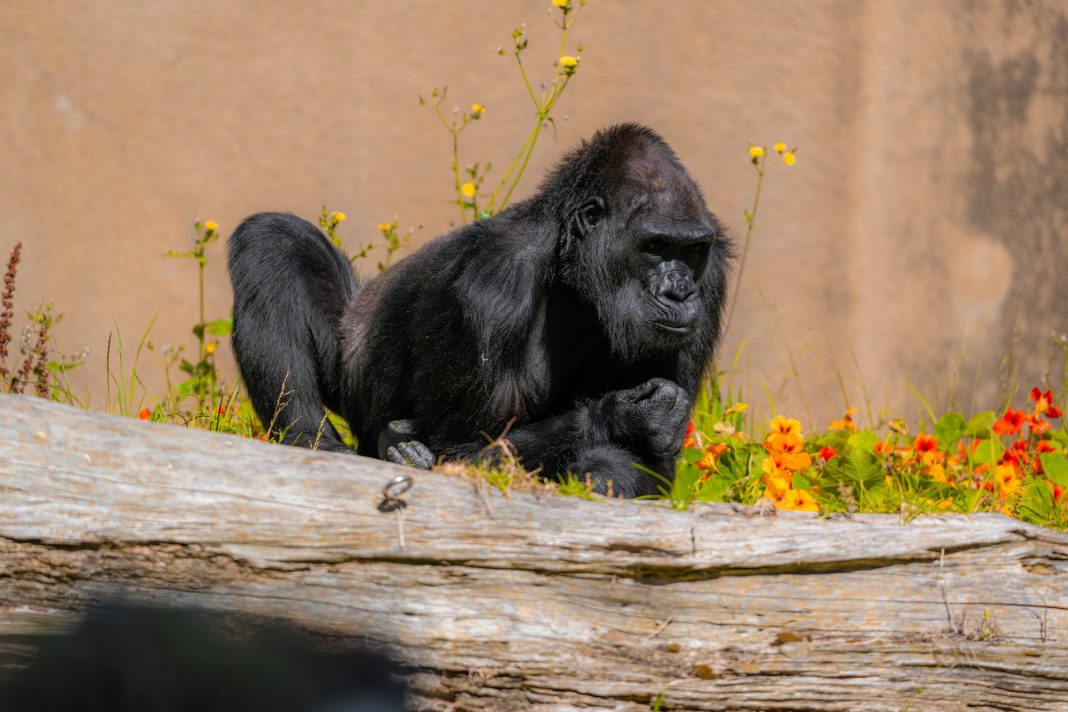
As Uganda joins the rest of the world to mark the World Gorilla Day celebrated every year on September 24th, local communities around Bwindi Forest have joined hands in promoting gorilla conservation and highlighting the plight of mountain gorillas in Mpungu subcounty, Kanungu District, South Western Uganda.
From September 19th to 21th 2026, several activities have been conducted in the Ruhija sector of Bwindi, a programme that has been spearheaded by Change a Life Bwindi in partnership with the Uganda Wildlife Authority and other stakeholders. The local communities have participated in different activities that include community cleaning, tree planting, free medical camps, community dialogue among others.

Though the national celebration will be held on October 1st 2026, Bwindi Communities have made news around the world this week by planting trees around Bwindi National Park in order to keep people out of the gorillas’ habitat.
The Bwindi Communities have planted trees for medicine, firewood and crafts along the edge of Bwindi Impenetrable Forest in a bid to reduce pressure on gorilla habitats. The idea behind the tree planting is simple: If residents can find the trees they need outside the park, they will have less reason to cut them inside the forest.
Conservationists, Government agencies and community organizations argue that the link between gorilla conservation and preserving the forest habitat is important in protecting the Bwindi gorillas for the present and future generation.

It is also important to have programs that aim at improving the livelihoods of communities around Bwindi Impenetrable and Mgahinga National Park.
Uganda’s gorilla conservation efforts are increasingly shaping the livelihoods of communities living adjacent to the national parks. Tourism has also promoted community development and communities around Bwindi Impenetrable Forest and Mgahinga National Park have registered several benefiting from the growing tourism industry.
Over the past two decades, the gorilla conservation story has become particularly significant for Uganda, a country that which is home to nearly half of the world’s remaining mountain gorillas. It should be noted that Uganda is home to two of the only four national parks that protect the mountain gorillas. These are Bwindi and Mgahinga National Park in South Western Uganda. The other two national parks that host the mountain gorillas are Volcanoes National Park of Rwanda and the Virunga National Park in DR Congo.
For communities around Bwindi and Mgahinga, the importance of gorilla conservation extends beyond tourism revenues. In the financial year ending June 2025, UWA disbursed sh2.97b to local communities living around the two parks under its revenue-sharing scheme.
These funds are channeled into local community projects, social enterprises and businesses so that the local communities can realize direct benefits from gorilla tourism. In Buhoma, for instance, the Porters’ Association, established in 1992, has 100 members, while more than 50 other community members are stationed at the Nyamishamba outpost.
Within the other sectors of Rushaga, Ruhija and Nkuringo, there are community associations whose combined membership is estimated at about 500 people providing services to tourists.
Christine Katushabe, founder of Change a Life Bwindi, a non-profit organisation based in Ruhija says the benefits of gorilla tourism can be seen beyond the trekking trails. She says the growth of tourism has encouraged the development of local businesses such as the lodges, campsites and other accommodation establishments around the park. She noted that some of these projects are high-end lodges that employ local people and create markets for locally produced goods and services such as food.
“Gorillas are not just an attraction for tourists. They are the reasons our communities have hope for a better future. When we protect the forest, we protect our children’s livelihoods, our culture and our identity,” Katushabe says.
Tourism development within Bwindi and Mgahinga has also been accompanied by improvements in social services such as telecommunications, electricity, roads and air connectivity in areas surrounding Uganda national parks.
For communities that once viewed the protected areas mainly through restrictions on access to natural resources, tourism has created an alternative economic value for keeping forests intact. This therefore means that tourism is a win-win scenario if well planned and developed.