Political parties under the Inter-Party Organisation for Dialogue (IPOD) have agreed to integrate the proposed Consociational Democracy Agreement (CDA), championed by retired General Caleb Akandwanaho alias Salim Saleh into Uganda’s National Dialogue Framework in an effort to address political divisions and promote national reconciliation.
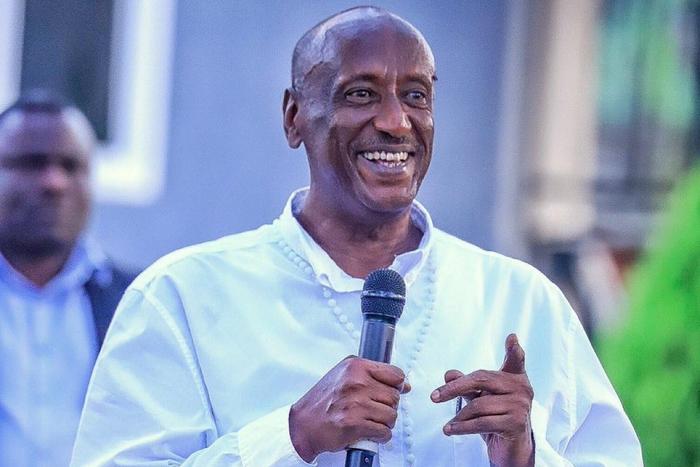
The resolution was reached during a consultative meeting held on November 13, 2026, at Kirema Heritage Farm in Nakaseke District, hosted by Saleh, who is also the Chief Coordinator of Operation Wealth Creation.

The meeting brought together representatives of political parties under IPOD, the National Consultative Forum (NCF) for Political Parties and Organisations, the CDA team and other stakeholders to examine Uganda’s political and governance challenges and explore ways of building national consensus.
In a joint statement signed by NCF chairman Godfrey Kiwanda Ssuubi, IPOD Council chairman Gerald Blacks Siranda and CDA team leader Prof. Ogenga Otunnu, the participants said the decision followed recognition of previous dialogue efforts and the need to respond to emerging national challenges.
“Participants agreed to the integration of the Consociational Democracy Agreement (CDA) initiative into the Uganda National Dialogue (UND) Framework, established under the authority of the President on December 18, 2018, and chaired by Dr. Ruhakana Rugunda, Prime Minister Emeritus,” the three signatories stated.

They added that the integration would provide an established national platform for broader engagement among political parties and other stakeholders.
“This would provide an established National Platform for broader, inclusive and structured stakeholder engagement towards political reconciliation, socioeconomic transformation and national cohesion,” the statement signed by Kiwanda, Siranda and Otunnu reads.
The agreement comes amid growing debate over Saleh’s proposed political cooperation arrangement, which seeks to address what its proponents describe as longstanding problems of political exclusion, marginalisation, sectarianism and unequal access to national opportunities.
The proposal, developed by Saleh and Otunnu, is contained in a 137-page working paper titled “Consociational Democracy Agreement: Addressing the Root Causes and Consequences of Sectarianism, Exclusion, Marginalisation and Conflicts in Uganda”.
At the centre of the proposal is a National Consociational Council that would bring together government, political parties and other sections of society to negotiate and coordinate national cooperation.
The proposed arrangement also envisages participation by civil society organisations, religious and cultural institutions, women, youth, and other interest groups in discussions about the country’s political and socioeconomic future.
Kiwanda has previously explained that the proposed arrangement would link political cooperation to the electoral strength of participating parties, rather than leave political representation entirely to the party that wins an election.
“For example, as we went to the polls recently, if NUP got 30 percent of the vote, how can it be involved in power-sharing in a way that the party remains holding 30 percent of the government?” Kiwanda said while explaining the proposal.
Prof. Otunnu has also defended the arrangement, arguing that cooperation between political parties would not eliminate their ability to compete against one another.
“We will remain opponents in politics, but we are development partners,” Otunnu said.
The proposal has, however, faced resistance from sections of the opposition, with the Forum for Democratic Change (FDC) and the National Unity Platform (NUP) among parties that have declined to participate in some of the engagements.
FDC president Patrick Oboi Amuriat said his party was uncomfortable with the choice of Saleh’s private farm as the venue for the November 13 meeting, arguing that political dialogue should be conducted in a neutral environment and follow agreed procedures.
Amuriat said his party had received the CDA document presented by Otunnu and Saleh’s team and had agreed to consult its internal structures before communicating its position.
“We were taken by surprise by this invitation for parties to interface with Gen. Saleh at his farm,” Amuriat said.
He called for a formal meeting under the IPOD and NCF framework where political parties could present their positions and discuss the proposal in an environment acceptable to all participants.
The concerns highlight the difficulty facing the proposed initiative, particularly its ability to secure the participation of major opposition parties whose involvement would be important in achieving the broad political consensus its promoters are seeking.
IPOD was formed in 2009 with support from the Netherlands Institute for Multiparty Democracy (NIMD) as a platform for political parties represented in Parliament to engage in dialogue, strengthen multiparty democracy and resolve political disagreements.
It was subsequently incorporated as a legal entity in 2021, with its mandate including promoting inclusive democracy, good governance, human rights, institutional strengthening of political parties and cooperation among political actors.
The Uganda National Dialogue Framework, which the participants have agreed to accommodate the CDA initiative, was established on December 18, 2018, under the authority of President Yoweri Museveni and is chaired by former Prime Minister Ruhakana Rugunda.
By bringing the two initiatives together, the participants hope to avoid parallel dialogue processes and establish a common platform through which political parties and other stakeholders can address national issues.
However, this agreement does not amount to a concluded power-sharing deal between the NRM and opposition parties. It is an agreement among the participants at the Nakaseke meeting to integrate the CDA initiative into the existing national dialogue framework, with wider political acceptance and implementation still to be secured.