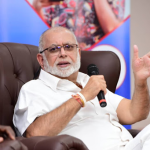

Businessman Sudhir Ruparelia is seeking at least €200 million (Shs889 billion) in damages from Dutch banking interests and other parties over the controversial takeover and sale of Crane Bank, as his long-running legal battle enters a crucial stage before the United Kingdom High Court.
The case, which dates back to the Bank of Uganda’s takeover of Crane Bank in October 2016, centres on allegations that the financial institution was unlawfully seized and transferred to Dfcu Bank in a transaction that undervalued its business and benefited parties involved in the deal.

Mr Ruparelia, who founded Crane Bank in 1995, argues that the takeover and subsequent transfer of the bank’s selected assets and liabilities were part of an unlawful scheme that deprived him and other shareholders of their investment.
The substantive London proceedings, which opened on October 5, 2026, bring together a complex dispute involving Dfcu Bank, international investors, a Rabobank subsidiary, and former banking executives accused of participating in or benefiting from the controversial transaction.
The businessman is among the claimants seeking compensation for the losses they say resulted from the takeover. The defendants have denied the allegations and are contesting the claims.

The London case is particularly significant because Mr Ruparelia has already secured several important legal victories in Uganda in his battle against the Bank of Uganda, successfully challenging aspects of the proceedings and decisions arising from the Crane Bank takeover.
The dispute has passed through Uganda’s High Court, Court of Appeal and Supreme Court, with the courts delivering favourable decisions to Mr Ruparelia on key issues. His legal victories have strengthened his position in the wider battle, although they should not be confused with a final determination of the separate damages claims now before the London court.
One of the most important developments came in July 2023 when the UK Court of Appeal ruled that the English courts had jurisdiction to hear the dispute, rejecting arguments by dfcu that the case should not proceed in Britain.
The three-judge court, comprising Sir Julian Flaux, Lord Justice Popplewell and Lord Justice Phillips, found that there were serious issues to be tried, including whether exceptions relating to commercial activity and public policy could apply to the foreign act of state doctrine.
The Court of Appeal also ordered dfcu to pay £700,000 in legal costs arising from the appeal, equivalent to approximately Shs2.8 billion at the time.
dfcu subsequently attempted to challenge the ruling before the UK Supreme Court, but on December 20, 2023, the country’s highest court refused permission to appeal, leaving the Court of Appeal decision intact and clearing the way for the substantive proceedings.
The claimants are now pursuing their case against several parties, including Rabo Development BV, a subsidiary of Dutch banking group Rabobank, and two former Rabobank executives, Albert Jonkergouw and Willem Cramer, who previously served on dfcu’s board.
According to the claimants, the two former bankers received an email in late 2016 concerning an alleged $27.5 million (approximately Shs99 billion) payment linked to the disposal of a portfolio of Crane Bank loans.
They allege that the money was intended for the Bank of Uganda without being properly recorded, describing the arrangement as evidence of possible corruption.
Mr Ruparelia further alleges that dfcu had been approached about acquiring Crane Bank before the central bank formally intervened and that the transaction proceeded without an independent valuation reflecting the bank’s actual market value.
However, the defendants have rejected the accusations. dfcu maintains that Crane Bank was seriously undercapitalised and that the Bank of Uganda acted lawfully to protect depositors and maintain stability in the financial sector.
The bank also argues that it acquired selected assets and assumed specified liabilities rather than purchasing Crane Bank as a corporate entity. On the disputed $27.5 million, dfcu maintains that the money was used for a legitimate purpose, including repayment of emergency financial support extended by the central bank. It has also pointed to the involvement of KPMG and other valuation experts in the transaction.
The London proceedings are unfolding alongside a fresh disagreement between Mr Ruparelia and the Bank of Uganda over Shs219.459 billion that the central bank says remains outstanding following its intervention in Crane Bank.
On November 10, 2026, Bank of Uganda Governor Michael Atingi-Ego appeared before Parliament’s Committee on Commissions, Statutory Authorities and State Enterprises (COSASE), chaired by Kyadondo East MP Muwada Nkunyingi, where he maintained that the outstanding amount was recoverable from Crane Bank and its former shareholders.
Atingi-Ego told MPs that the central bank had extended liquidity support to Crane Bank to meet its financial obligations before and during statutory management, adding that part of the money had not been recovered despite dfcu paying Shs200 billion following the transfer of selected assets and liabilities.
“It is because part of the liquidity support is yet to be recovered that you find it being reflected as a note in our account, and that is the Shs219 billion that we talked to,” Atingi-Ego told the committee.
However, Mr Ruparelia rejected the demand in a written response to Parliament, arguing that the central bank had taken control of Crane Bank on October 20, 2016, suspended its board and appointed a statutory manager, leaving the former shareholders without control over subsequent decisions and expenditure.
“At this point in time, the Bank of Uganda had not spent any money on the affairs of Crane Bank Limited,” Mr Ruparelia wrote.
He further argued that the former shareholders were not involved in the arrangements through which the bank’s assets and liabilities were transferred to dfcu in January 2017 and should therefore not be held personally responsible for expenditure incurred by the central bank after taking over the institution.
Mr Ruparelia also relied on the legal principle of limited liability, arguing that any outstanding obligations should be pursued against Crane Bank as a corporate entity rather than its former shareholders.
During the same parliamentary proceedings, Atingi-Ego warned MPs that discussing the disputed liquidity support could affect the ongoing London proceedings because the central bank’s actions during the Crane Bank takeover were among the matters being examined by the foreign court.
He asked the committee to defer substantive questions until the London case is determined or consider handling some matters in closed sessions.
The committee had not made a final determination on the Shs219.459 billion claim by the time of the hearing. Mr Ruparelia indicated that he would be available to appear before the committee in the first week of December after returning to Uganda.
The Crane Bank dispute has previously attracted parliamentary scrutiny. In 2019, COSASE, then chaired by Abdul Katuntu, investigated the closure of several commercial banks, including Crane Bank, and criticised aspects of the Bank of Uganda’s handling of the institution, concluding that the central bank had breached several legal provisions during the process.
An Auditor General’s special audit also questioned the handling of funds used during Crane Bank’s statutory management, including Shs478.8 billion withdrawn from an undisclosed Bank of Uganda account for liquidity support and other interventions.
The audit raised questions about the supporting documentation for the expenditure and the absence of adequate information to establish how the terms of the subsequent transfer of assets and liabilities to dfcu were determined.
The legal battle has also involved substantial financial and legal resources, with Mr Ruparelia previously indicating that he had spent millions of dollars pursuing the case and was prepared to continue until he obtained justice.
The London proceedings involve seven claimants, including Crane Bank Limited, Mr Ruparelia, members of his family and former shareholder Tom Mugenga, against 15 defendants.
Among the defendants are dfcu Bank, dfcu Limited, Rabo Development BV, Norfinance AS, Arise BV, former dfcu executives and individuals associated with the financial institutions involved in the transaction.
The claimants are represented by international law firm Greenberg Traurig, while dfcu is represented by Freshfields. Other defendants have also engaged international legal teams.
The financial consequences of the dispute have extended to dfcu, which warned shareholders in July 2026 that it expected to record a loss in the first half of the year, partly attributed to high legal expenses associated with the ongoing English High Court proceedings.
Crane Bank was founded by Mr Ruparelia in 1995 and grew into one of Uganda’s largest indigenous commercial banks before the Bank of Uganda placed it under statutory management on October 20, 2016, citing serious financial difficulties.
Three months later, in January 2017, the central bank transferred selected assets and liabilities to dfcu Bank under a purchase of assets and assumption of liabilities arrangement.
Nearly a decade after the takeover, Mr Ruparelia’s legal fight has produced important victories in Uganda and a major breakthrough in the United Kingdom, but the London court is yet to deliver a final judgment on the damages claim and the allegations against the defendants.