KAMPALA/ SEPT/17/2026-The Ndere Cultural Centre has initiated a new programme to digitise Uganda’s cultural heritage and introduce indigenous knowledge to primary school children through the Uganda Primary Schools Cultural Digitisation and Musicality Festival.
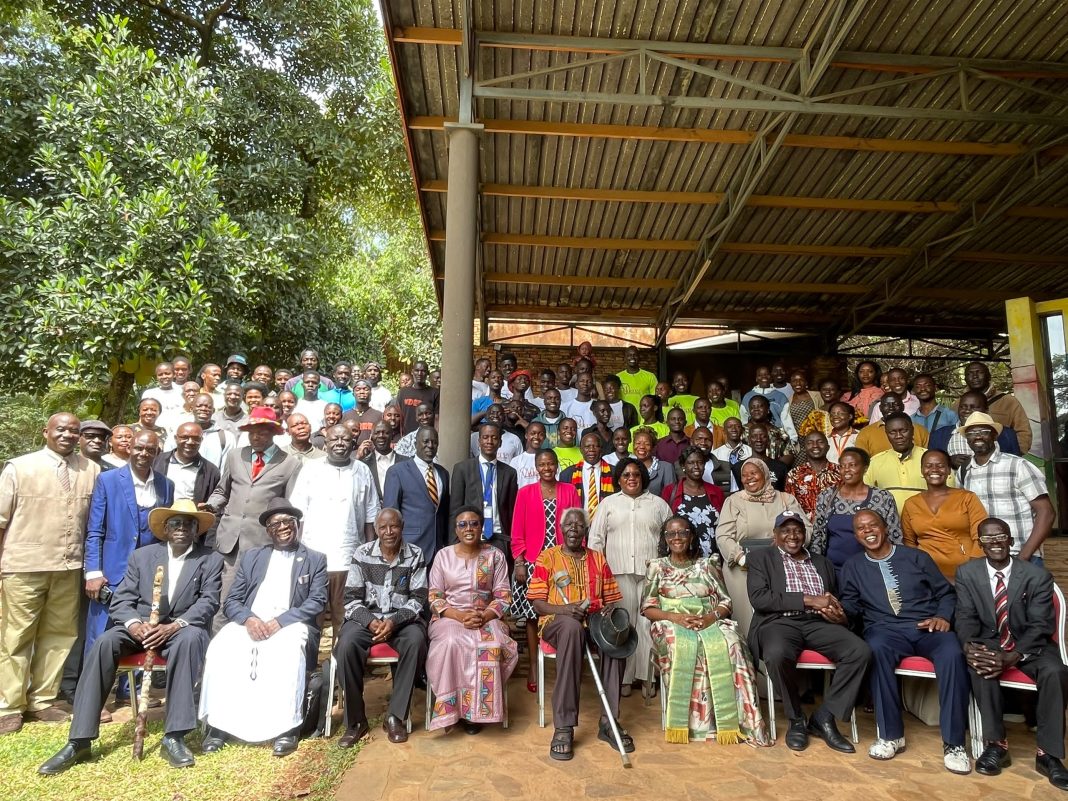
The initiative was unveiled during a Culture Consultation Group workshop, bringing together Ndere Cultural Centre and government partners to develop a system for recording, preserving, teaching and promoting Uganda’s diverse cultural heritage using modern technology.

The programme will focus on documenting cultural knowledge held by elders, processing it into an accessible digital archive, developing teaching materials and taking the content into schools where pupils will learn about Uganda’s languages, music, dance, food, traditions and other aspects of indigenous life.
Dr Stephen Rwangyezi, the founder of Ndere Cultural Centre, said the initiative builds on more than four decades of work by the centre to preserve and develop Uganda’s culture while ensuring that it remains relevant in the modern world.
“For 42 years, we have been working on this tirelessly. When we say culture, it is not only dance. We are also talking about food, architecture, clothes, and many other areas. That is why we are now saying civilisations, not just culture,” Rwangyezi said.

He said Uganda had reached a stage where its indigenous knowledge should no longer be viewed simply as something to be preserved in museums, but as a living heritage that should be developed and passed on to younger generations.
Rwangyezi said the project will begin by recording knowledge from elderly Ugandans who remain important custodians of traditions and practices that could otherwise disappear.
“The first aspect is recording and recapturing the knowledge from the remaining working encyclopedias, the remaining elders who are still out there,” he said.
The second stage will involve processing and archiving the information so that specific cultural knowledge can easily be accessed instead of being stored as large volumes of unorganised material.
“Archiving is different from storage because now we process it into accessible content. If I am looking for a marriage song of the Iteso or marriage customs of the Baganda, I only need to click and that is the only thing that will come out, not the whole thing stored in one area,” Rwangyezi said.
He said the information would then be analysed and divided into teachable units that can be used to develop reference and teaching materials for schools, cultural clubs, and researchers.
The final stage will involve taking the content into schools and teaching children about their cultural heritage. Pupils will then participate in the Uganda Primary Schools Cultural Digitisation and Musicality Festival as a practical way of testing their understanding and appreciation of the knowledge.
Rwangyezi said the involvement of the education sector was therefore critical because schools will provide the main platform through which children will access the cultural content.
“Because the competition is in schools, it was imperative that the Minister of Education comes on board. The Ministry has come on board to allow us into the schools, to introduce us to their structures and systems, and to facilitate us to make sure that the festival succeeds,” he said.
The Uganda Communications Commission is supporting the digitisation component of the programme, while the Ministry of Education and Sports and the Ministry of Gender, Labour and Social Development are partners in implementing the initiative.
Rwangyezi said the scale of the project requires additional partners because documenting Uganda’s cultural heritage across different communities will require substantial resources, technology and infrastructure.
“We are looking for other partners because this is huge. No single entity can fund it sufficiently and no single entity can provide the infrastructure in which it will work. Culture goes into every aspect of our life,” he said.
He said the ultimate objective is to create a comprehensive digital library of Uganda’s indigenous knowledge by documenting different aspects of culture over time.
“We are hoping that when we do this particular phase of the project, we shall have sufficient support from the existing and other funders and supporters so this can keep rolling as an annual event and every year we tackle different aspects of the culture until we have a full library of the indigenous knowledge that exists in Uganda,” Rwangyezi said.
Speaking at the workshop, Minister of State for Gender and Culture Mary Kamuli Kuteesa described the initiative as an important step towards preserving Uganda’s cultural heritage and making it accessible to future generations.
“Today is a very impressive day in the life and history of this country because we gathered at the Ndere Centre to start the digitalisation journey of Uganda’s culture,” Kuteesa said.
She commended Rwangyezi and the Ndere Group for their contribution to the development and preservation of Ugandan culture, saying the new partnership provides an opportunity to take that work into the digital age.
Kuteesa said the programme will cover different aspects of Uganda’s heritage, including language, food, music and dance, with the aim of creating a digital record that can be accessed by Ugandans at home and abroad.
She said technology should be used to strengthen, rather than weaken, young people’s connection to their cultural identity.
“The arrival of phones and technology requires that we know our identity and put it into the phones and into the technology, such that even as we interact with the phones and the technology, our identity, our cultural and social creativity is created on those platforms,” Kuteesa said.
The minister said social media platforms such as TikTok and Instagram already command significant attention among young people and should therefore be used to deliver cultural content to the same audience.
“We must find the linkage of how we bring our culture to these platforms as a bridge that transmits them to our children’s mindsets, actions and real life,” she said.
Kuteesa also called for the documentation of knowledge held by elderly Ugandans before it disappears.
“When we lose an older person, all the knowledge that sits with him will be lost. What do we lose if we have it written? If it evolves, you go back to the book and create a second edition, a third edition and a fourth edition. Very simple. But there is a reference somewhere,” she said.
She said schools should become an important avenue for transmitting cultural knowledge because children spend much of their time in the education system.
“We must bring the culture back to school. Our children are most of their year and most of their day in school. And so if they don’t learn what they should learn in school, they will never learn it,” Kuteesa said.
She also urged schools to stop treating indigenous languages as a problem, saying children should be allowed to speak and learn their mother tongues.
“We must stop punishing children in school for speaking Luganda. Like seriously, what crime is that? That you spoke your mother language, and you go for punishment,” Kuteesa said.
The minister further urged parents to reinforce cultural learning at home by deliberately speaking indigenous languages and teaching children about their traditions.
“Speaking English doesn’t make you more intelligent. It is just another tool, another language. But do not allow it to disconnect you from who you are,” she said.
Kuteesa said Uganda’s cultural diversity should be viewed as a strength and used to promote unity while allowing different communities to preserve their distinct identities.
“Let us use our diversity within the country not to cause confusion or disunity, but to enjoy our diversity and each of us make money with our diversity,” she said.
She also argued that culture should not be reduced to entertainment because it influences virtually every part of society, including family life, governance, justice, medicine, land management, food, greetings and conflict resolution.
“We must stop seeing culture as just a source of entertainment. It is the very fabric of our social infrastructure,” Kuteesa said.
She called for cultural heritage to be developed as an economic opportunity, saying cultural sites and traditions can contribute to livelihoods if properly managed and promoted.
“Now let us allow our culture to progress from just being a museum. If we leave it as a museum, it will become irrelevant. Because we are in a world driven by money, our culture must make money,” she said.
The Uganda Primary Schools Cultural Digitisation and Musicality Festival is aimed at providing a platform through which children can learn about Uganda’s diverse cultural heritage while also encouraging schools and communities to participate in its preservation.
The organisers hope the programme will eventually create a growing digital repository of Uganda’s indigenous knowledge, ensuring that cultural information held by current generations is documented and made available to future generations.