

The Ministry of Gender, Labour and Social Development today held an orientation workshop for members of the Graduate Volunteer Technical Committee (GVTC) under the National Apprenticeship Programme (NAP) at Golden Tulip Hotel in Kampala.
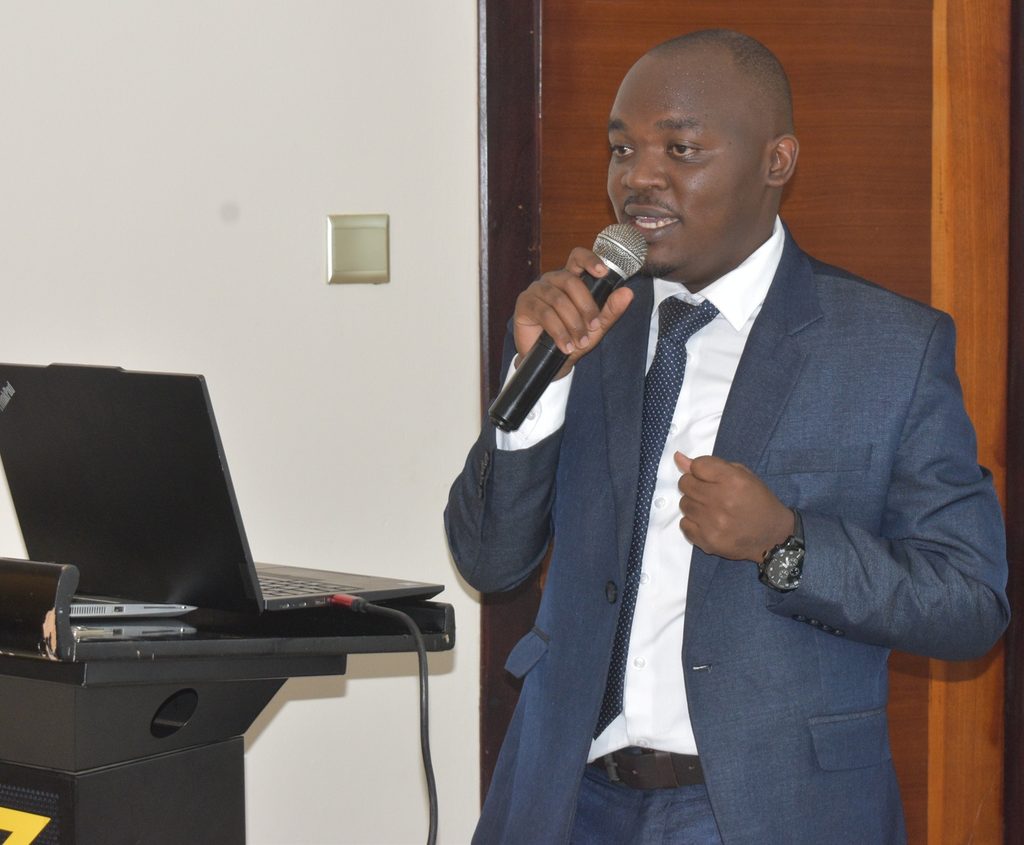
Speaking on behalf of the Permanent Secretary, Alex Asiimwe, Commissioner Labour, Industrial Relations and Productivity, underscored the Committee’s critical role in providing technical guidance and oversight for the Graduate Volunteerism Window, as Government scales up structured workplace learning to tackle youth unemployment and skills mismatches.

His remarks highlighted Uganda’s pressing labour market challenges. “The importance of this intervention cannot be overstated, particularly in light of Uganda’s prevailing labour market challenges. It is estimated that between 600,000 and 700,000 young people enter the labour market annually, while fewer than 68,000 formal jobs are created each year,” he said.

The 2024 National Population and Housing Census found that 50.9 per cent of young people aged 18–30 were not in employment, education or training (NEET). Nearly nine in ten employed persons work in the informal economy. The National Labour Market Survey 2025 further indicated a working-age population of approximately 26.4 million, of whom about 13.4 million participate in the labour force.
These realities, the Ministry noted, make work-based learning interventions essential. The National Apprenticeship Programme, anchored in the Uganda National Apprenticeship Framework (UNAF) approved by Cabinet under Minute No. 358 (CT 2018), seeks to equip young people with practical occupational competencies, improve labour productivity, and ease the transition from education into productive employment or self-employment. The Framework defines stakeholder roles and promotes structured workplace learning aligned with labour market needs.

Since the Programme’s inception in 2018, 335 Graduate Volunteers have been supported and placed in more than 60 host institutions, achieving an employment transition rate of 82.2 per cent. In the current financial year, Government funding has supported expansion and institutionalisation. The Apprenticeship Management Information System (A-MIS) has digitalised applications and placements, registering 20,083 applications from graduates, 502 host institutions, and more than 640 placement offers.
The Permanent Secretary emphasised that expansion must prioritise quality over quantity. This requires clear institutional needs, well-defined work assignments, learning objectives, and competent workplace supervisors and mentors, alongside stronger partnerships with host institutions responsive to emerging industry skills requirements.
The Graduate Volunteer Technical Committee has been operationalised to provide this technical oversight. Its mandate includes advising on labour market and industry skills needs, identifying opportunities to expand placements, strengthening private-sector and institutional participation, promoting quality workplace learning, and recommending measures to improve the relevance, effectiveness and sustainability of the Graduate Volunteerism Window.
Members were urged to bring their expertise, institutional experience and professional networks to bear during their three-year tenure, focusing on tangible results and measurable contributions to improved employment outcomes for graduates.
The orientation will cover the NAP, its implementation arrangements, the Graduate Volunteerism Window, and the Committee’s Terms of Reference.
Policy, International Context
The Programme aligns with national frameworks including the Employment Act 2006, the National Employment Policy 2011, the Employment Regulations 2011, and Human Capital Development priorities under the Fourth National Development Plan (NDP IV). It also supports Uganda’s broader economic ambitions, including the Tenfold Growth Strategy.
Regionally and internationally, the initiative is consistent with the African Union’s Agenda 2063, the Continental TVET Strategy 2025-34, and the Plan of Action for the African Decade for Technical, Professional, Entrepreneurial Training and Youth Employment (2019-2028). It draws on the International Labour Organization’s Quality Apprenticeships Recommendation, 2023 (No. 208), which provides a normative framework for quality, inclusive and relevant apprenticeships. The ILO has previously supported Uganda in developing the UNAF and piloting apprenticeship schemes, particularly in the hospitality sector under the PROSPECTS partnership.
The Ministry reaffirmed its commitment to working with all stakeholders to ensure the Graduate Volunteerism Window remains responsive to the needs of young graduates, host institutions and the wider labour market.