
The Ministry of Gender, Labour and Social Development has unveiled an initiative to strengthen Uganda’s labour market governance, evidence-based decision-making, and productivity monitoring.
Dubbed Labour, Employment, Productivity and Reporting Programme (LEAP), the initiative’s goal is to establish an integrated, reliable, and timely administrative data ecosystem for labour, employment, and productivity reporting.


The Permanent Secretary for the Ministry of Gender, Labour and Social Development, Mr Aggrey David Kibenge, said the initiative will be fully compliant with the Employment Act (Cap 226), national statistical requirements, and International Labour Organisation labour‑statistics conventions, to support evidence‑based planning, monitoring, and policy formulation.
During a consultative workshop on the draft programme in Entebbe today, Monday, June 15, 2026, Mr Kibenge said the initiative responds to the increasing demand for reliable labour market information to guide policy formulation, enterprise development, job creation, wage reforms, social protection expansion, and productivity enhancement across all sectors of the economy.
In his opening remarks delivered by Mr Alex Asiimwe, Commissioner Labour, Industrial Relations and Productivity, Mr Kibenge said Uganda’s labour market governance system faces persistent gaps in the generation, quality, and utilisation of administrative data required for national planning, compliance monitoring, and international reporting.


“Although the UBOS 2024 Census and Labour Force Survey 2021 provide nationally representative statistics, showing 12.3% unemployment, 42% labour underutilisation, and 88% informality, administrative data from labour inspections, employment records, enterprise productivity assessments, and social security contributions remain fragmented, incomplete, and inconsistently reported,” he said.
He added that while the Employment Act requires employers to maintain registers, submit employment returns and provide information to labour officers, weak reporting systems, limited digital infrastructure and low compliance levels undermine the availability of real-time, enterprise-level data needed to track employment trends, productivity performance, working conditions, and labour market transitions.
“The LEAP Programme has, therefore, been developed as the national mechanism to strengthen administrative data generation, harmonise reporting standards, and ensure that labour market information is timely, accurate, and actionable,” Mr Kibenge said.
He called upon all stakeholders represented to actively contribute to the discussions and support the implementation of the programme once it is finalised.
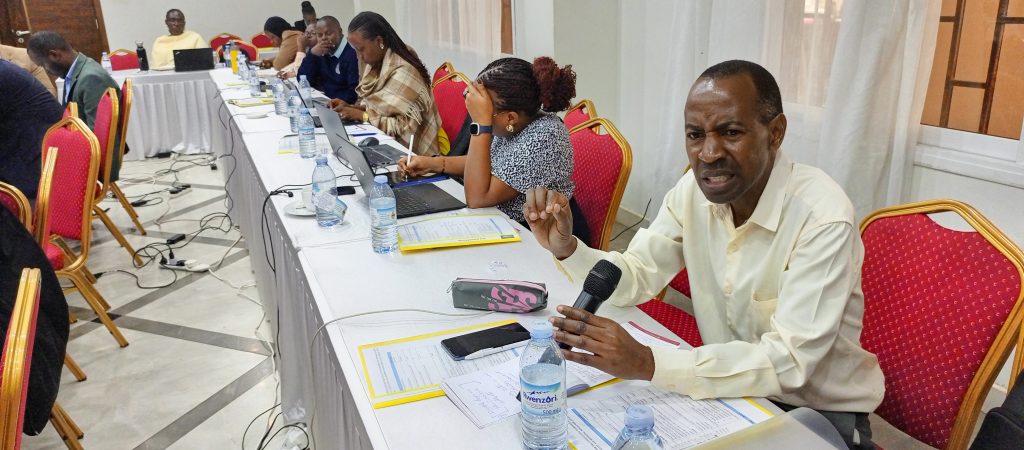
“This workshop is a critical step in the development of the LEAP Programme. It provides an opportunity to draw upon the knowledge, expertise, and experiences of key stakeholders to ensure that the programme is practical, responsive, and aligned with the realities of Uganda’s labour market,” he said
The four-day workshop is being attended by representatives from Employers’ and Workers’ Organisations; Ministries, Departments and Agencies; Local Governments; and Development Partners.